

















You probably already know that Reverse Osmosis is the gold standard for water purity…
But did you know that stripping away contaminants often creates a new problem: acidic water?
It’s the “RO Paradox.” You get water that is 99.9% pure, but the pH drops, leaving you with a “flat” taste and unstable chemistry.
As a manufacturer, I can tell you that remineralization isn’t just a marketing buzzword—it is the engineering solution to this chemical imbalance.
In this guide, we are going to break down exactly why RO water pH drops, the science behind calcium and magnesium restoration, and how to turn “pure” water into healthy, alkaline water.
Let’s dive right in.
The Science: Why Does RO Water Drop in pH?
When we talk about high-performance filtration, specifically the 0.0001-micron membrane technology we use at DripLife, we are aiming for purity. However, many users are surprised to find that their ultra-pure water is slightly acidic. To understand the role of remineralization, we first have to look at the chemistry behind Reverse Osmosis acidity.
Understanding the Drop: Removal of Alkaline Minerals
The primary reason for the drop in pH is actually a testament to how well the filtration works. Our RO membranes are designed to strip away up to 99% of contaminants, including heavy metals, lead, and fluoride.
However, this process is non-discriminatory. It also removes dissolved solids that act as natural pH buffers, specifically:
- Calcium
- Magnesium
- Potassium
These minerals are alkaline. When you remove them, you lower the Total Dissolved Solids (TDS) to near zero, effectively removing the water’s ability to neutralize acid.
The CO2 Factor: Carbonic Acid Formation
Once the water is stripped of its mineral content, it becomes somewhat unstable chemically. Pure water is an aggressive solvent; it wants to bond with something.
When highly purified water is exposed to air, it rapidly absorbs Carbon Dioxide (CO2). This CO2 reacts with the H2O molecules to form mild carbonic acid. Without the alkaline minerals to buffer this reaction, the acidity of the water increases immediately.
The Resulting pH: Analyzing Standard Levels
Because of the removal of buffering minerals and the introduction of carbonic acid, standard RO water—before any post-processing—typically tests in the pH range of 5.0 to 6.0. While this is safe to drink, it is distinctly on the acidic side of the scale compared to neutral tap water (pH 7).
Why This Matters: Taste and Plumbing
The shift in pH isn’t just a number on a test strip; it has real-world implications for your home and hydration experience:
- Taste Profile: Acidic water often tastes “flat” or slightly sour, lacking the crisp, refreshing mouthfeel of natural spring water.
- Corrosive Water Prevention: Water with low pH is “hungry.” If left unchecked, acidic water can be corrosive to metal plumbing fixtures, potentially leaching copper or lead from pipes over time.
This is exactly why we don’t stop at the RO membrane stage. We understand that while purity is the goal, balance is the requirement.
How Remineralization Restores Balance
We understand that stripping water down to its purest form creates a vacuum that needs to be filled. To correct the acidity caused by the reverse osmosis process, we utilize a specialized post-filtration stage designed to act as a pH buffer. This isn’t just about flavor; it is about chemistry.
The Mechanism: Mineral Media
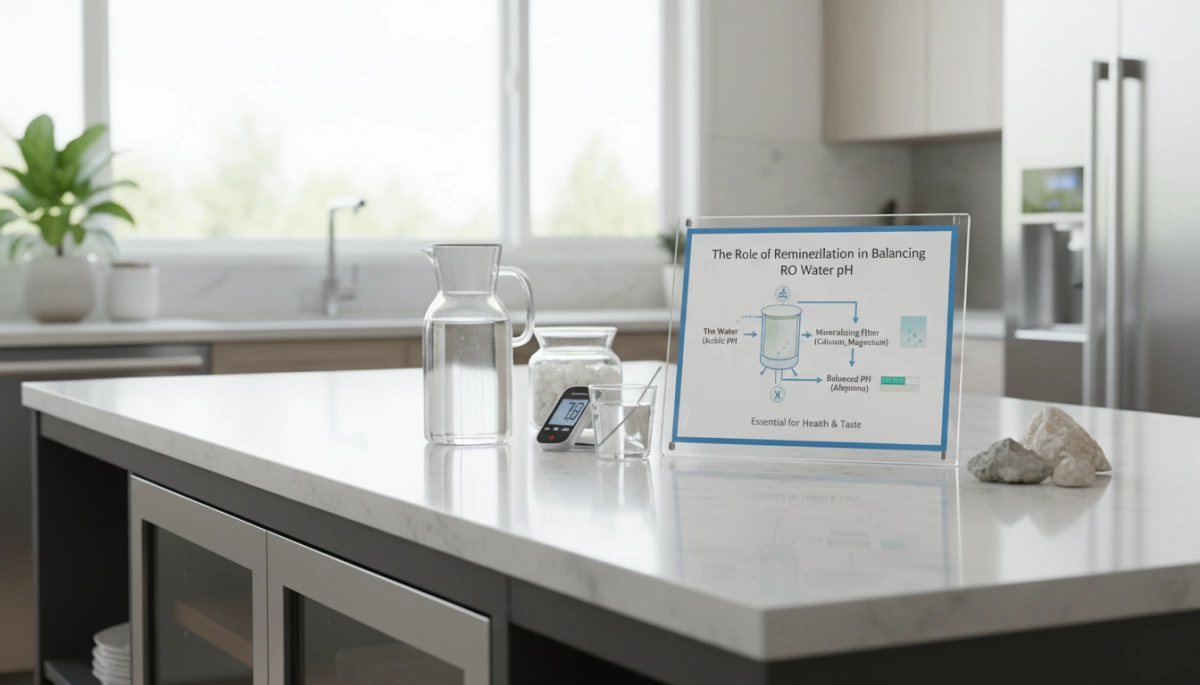
Our systems don’t just stop at the 0.0001-micron membrane. We pass the purified water through a dedicated remineralization cartridge containing high-quality Calcium Carbonate and Magnesium media. As the slightly acidic water flows through this stage, it naturally dissolves trace amounts of these essential minerals. This process mimics how water picks up nutrients as it flows through rocks in nature, providing effective electrolyte restoration.
The Chemical Reaction and Buffering
When the slightly acidic RO water (often carrying mild carbonic acid) interacts with the mineral media, a neutralization reaction occurs. The minerals act as a base, effectively neutralizing the acid and raising the pH level.
- Acid Neutralization: The media binds with the carbonic acid, preventing corrosion in your plumbing.
- pH Shift: We successfully elevate the pH from a sterile 5.0–6.0 range to a neutral or alkaline state of ~7.5+.
- Stability: This creates a stable environment where the water is no longer “hungry” or aggressive.
TDS Distinction: Good vs. Bad Solids
A common misconception involves Total Dissolved Solids (TDS). Customers often strive for a reading of zero, but that isn’t the goal for healthy hydration. It is crucial to distinguish between the harmful contaminants we remove and the beneficial minerals we add back.
You can learn more about how we measure these levels by understanding TDS in water filters, but here is the simple breakdown of what is happening in your glass:
| Feature | Harmful TDS (Removed) | Beneficial TDS (Restored) |
|---|---|---|
| Source | Lead, Arsenic, Fluoride, Heavy Metals | Calcium, Magnesium, Potassium |
| Effect | Health risks, bad taste, toxicity | Electrolyte restoration, alkaline balance |
| Goal | 99% Removal via RO Membrane | Controlled addition via Remineralization |
By reintroducing these specific minerals, we ensure the TDS reading on your smart faucet reflects healthy mineral content, not pollution.
The Three Key Benefits of Remineralized RO Water
While the primary goal of a 0.0001-micron membrane is to remove contaminants, stopping there leaves the job half-finished. We integrate remineralization not just as an add-on, but as a critical stage to optimize the water for consumption and infrastructure safety. Here is why balancing the pH matters.
Enhanced Taste Profile
Standard RO water is often described as “flat” or slightly bitter. This happens because the filtration strips away the natural minerals that give water its character. By reintroducing essential minerals through a remineralization cartridge, we dramatically improve the mouthfeel.
- From Sterile to Crisp: The addition of Calcium Carbonate and Magnesium shifts the flavor profile from chemically pure to refreshing, mimicking the taste of natural mountain spring water.
- Eliminating Acidity: Neutralizing the slight acidity caused by carbonic acid formation removes the sharp bite associated with low-pH water.
Health & Hydration
Water is a key source of daily mineral intake. Drinking completely demineralized water can be less efficient for hydration. Our systems focus on electrolyte restoration to ensure every glass supports your body’s needs.
- Mineral Intake: We restore beneficial ions that support metabolic functions.
- Better Absorption: Alkaline water is often cited for better absorption rates, aligning with the benefits of improved pH and antioxidants found in high-quality hydration solutions.
- Healthy Hydration: Balanced water prevents the body from having to pull minerals from its own reserves to buffer acidity.
System & Pipe Protection
One often overlooked issue with standard Reverse Osmosis acidity is its aggressive nature. “Hungry” water with low TDS (Total Dissolved Solids) seeks to bond with anything it touches, which can be detrimental to your home’s plumbing.
- Corrosive Water Prevention: Acidic water can leach copper and lead from household pipes over time.
- pH Buffer: By raising the pH to a neutral or slightly alkaline level (7.5+), the water becomes stable and non-corrosive.
- Metal Leaching Defense: This buffering effect ensures that the water remains free of heavy metals even after it leaves the filtration unit and travels through your faucet.
Comparison: Standard vs. Remineralized RO
| Feature | Standard RO Water | Remineralized RO Water |
|---|---|---|
| pH Level | Acidic (5.0 – 6.0) | Alkaline / Neutral (7.5 – 8.5) |
| Taste | Flat, slightly bitter | Crisp, sweet, spring-like |
| Mineral Content | Near Zero TDS | Rich in Calcium & Magnesium |
| Plumbing Impact | Potentially Corrosive | Safe & Non-Aggressive |
| Hydration Quality | Basic H2O | Healthy hydration with electrolytes |
Driplife’s Approach: Advanced 7-Stage Filtration
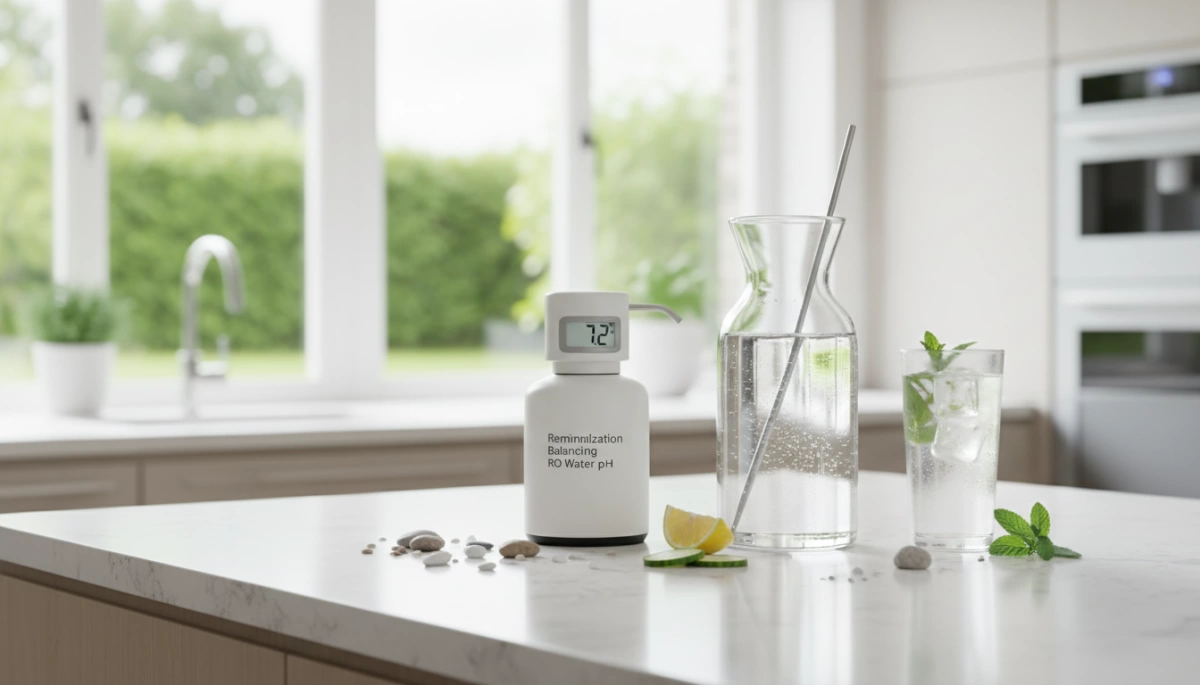
At Driplife, we recognize that removing contaminants is only half the battle. While standard reverse osmosis is exceptional at stripping away harmful elements, we engineered our advanced systems to go a step further. Our approach integrates a comprehensive 7-stage filtration process designed to deliver water that is not only pure but also chemically balanced and optimized for healthy hydration.
Beyond Standard RO: The Alkaline Advantage
Most conventional systems leave water slightly acidic and void of taste. We address this by incorporating a specialized remineralization stage immediately after the 0.0001-micron membrane filtration. This final stage utilizes bio-ceramic balls and mineral media to actively restore essential electrolytes.
- Calcium & Magnesium: We reintroduce these vital minerals to neutralize acidity and improve taste.
- Potassium & Sodium: Trace amounts are added to support body balance and electrolyte restoration.
- pH Stabilization: The process naturally buffers the water, shifting it from an acidic state to a neutral or slightly alkaline range (pH 7.5+).
This method ensures you get the benefits of high-purity filtration without the downside of “hungry” water. For homeowners interested in the specifics of this restoration, understanding how to add minerals to water reveals why this step is crucial for long-term health and plumbing protection.
The Tankless Advantage and Smart Monitoring
Our tankless RO design is a critical component in maintaining this pH balance. Traditional systems with storage tanks often suffer from “pH creep,” where water becomes stagnant and re-acidifies over time. By eliminating the tank, we ensure that every cup is filtered and remineralized on demand, preventing secondary pollution and maintaining consistent alkalinity.
To give you complete confidence in your water quality, our systems feature a Smart Faucet with an integrated LED display. This provides real-time data on your water’s status:
- Real-Time TDS Monitoring: Instantly verify the Total Dissolved Solids levels, confirming that harmful contaminants are out while beneficial minerals are present.
- Filter Life Indicators: Takes the guesswork out of maintenance, ensuring your alkaline water filtration stages are always performing at peak efficiency.
Comparison: Standard RO vs. Remineralized RO
When we analyze Reverse Osmosis acidity, the distinction between a standard setup and a system equipped with alkaline water filtration is stark. Standard RO technology is relentless; it uses a 0.0001-micron membrane to strip away up to 99% of contaminants. While this guarantees purity, it also removes the natural minerals that stabilize water, leaving you with a product that is technically clean but chemically aggressive and acidic.
Standard RO Characteristics
Without a pH buffer, standard RO water typically drops to a pH level between 5.0 and 6.0. Because the process removes almost all Total Dissolved Solids (TDS), the water lacks the mineral content required for a rounded flavor profile.
- Acidity: pH 5.0–6.0 (Mildly Acidic).
- Taste: Often described as “flat,” sterile, or slightly bitter due to the lack of minerals.
- Composition: Near-zero TDS, meaning it is devoid of both harmful toxins and beneficial nutrients.
Remineralized RO Characteristics
Our systems take purification a step further by reintegrating essential minerals. By passing the purified water through a post-filter rich in calcium and magnesium, we restore the water’s natural balance. This process transforms the water from acidic to alkaline, ensuring healthy hydration that supports your body’s needs. Whether you are using a dedicated under-sink system or a versatile countertop 4-in-1 RO purifier, the goal is to deliver water that tastes crisp and refreshing, similar to natural spring water.
Key Differences at a Glance:
| Feature | Standard RO Water | Remineralized RO Water |
|---|---|---|
| pH Level | 5.0 – 6.0 (Acidic) | 7.5 – 8.5 (Alkaline/Neutral) |
| TDS Content | < 10 ppm (Near Zero) | 30 – 60 ppm (Mineral Rich) |
| Taste Profile | Flat, Sterile | Crisp, Spring-like |
| Mineral Content | Depleted | Restored (Ca, Mg, K) |
| Pipe Safety | Corrosive over time | Non-corrosive |
By correcting the pH balance, we ensure the water is not only safe to drink but also enjoyable and beneficial for your health.
Frequently Asked Questions About RO Remineralization
Does remineralization significantly increase TDS levels?
Yes, but this is a positive change. Standard Reverse Osmosis filtration strips water down to a near-zero Total Dissolved Solids (TDS) level, removing both harmful contaminants and beneficial minerals. Our remineralization stage intentionally reintroduces specific minerals like Calcium and Magnesium. This results in a slight increase in TDS, but unlike the random mix found in untreated sources, these are controlled, healthy electrolytes. This process helps you understand the key differences between still water and tap water where mineral content defines the quality of hydration.
Is acidic RO water actually harmful to drink?
While mildly acidic water isn’t toxic, it isn’t optimal for healthy hydration. Water with a pH below 7.0 can be “aggressive,” meaning it may leach metals from plumbing fixtures over time. From a taste perspective, acidic water often feels flat or sharp. By using a remineralization cartridge, we shift the water back to a neutral or slightly alkaline state, ensuring it is safe for your body and your pipes.
How long do remineralization filters typically last?
In our tankless systems like the PD600 and PD400 series, the Post-Activated Carbon/Remineralization filter typically has a lifespan of 6 to 12 months, depending on your local water quality and daily usage. We designed these with a “Twist-and-Pull” mechanism, allowing you to swap the filter in seconds without tools. Our smart faucet also features a filter life indicator, so you never have to guess when the minerals are depleted.
Can remineralization improve the taste of coffee and tea?
Absolutely. Brewing coffee or tea with completely stripped, acidic water often results in a sour or flat flavor profile because minerals are essential for proper extraction. The restored minerals act as a pH buffer and bind with the compounds in coffee beans and tea leaves. This results in a richer, smoother, and more aromatic cup, similar to what you would expect from a high-end cafe using professional water filtration.