

















What Causes Sulfur Smell in Water?
If your water smells like rotten eggs, you’re almost always dealing with hydrogen sulfide (H₂S) or sulfur bacteria. This is especially common in well water and older plumbing.
Hydrogen Sulfide in Well Water
Hydrogen sulfide gas forms naturally when organic matter breaks down underground. In private wells, it can get into your water from:
- Natural sulfur-bearing rocks and shale
- Sulfur-reducing bacteria in low-oxygen (anaerobic) zones
- Chemical reactions with iron and other minerals in the aquifer
Even very low levels of H₂S (as low as 0.5 ppm) can create a strong rotten egg smell in water.
Why Well Water Smells Like Rotten Eggs
Well water is more likely to smell like sulfur because:
- It’s not disinfected the way city water is
- It often sits in low-oxygen conditions, where sulfur bacteria thrive
- Iron and manganese in well water can interact with sulfur compounds
In some homes, the odor appears only in hot water, often due to a water heater anode rod reacting with sulfur bacteria and creating extra hydrogen sulfide.
Common Signs of Sulfur in Tap Water
You may need a sulfur water filter for well water if you notice:
- Rotten egg smell at one or more faucets
- Odor stronger after water sits in pipes or overnight
- Black or yellow stains on fixtures from sulfur and iron
- Metallic or “spoiled” taste in drinking water
- Strong sulfur smell in shower water or when doing laundry
When to Test for Sulfur and Other Contaminants
Any time you notice a new or stronger sulfur smell in well water, you should test, not guess. Test when:
- You buy a home with a private well
- You notice sulfur smell in hot water only
- Family members complain about taste or smell
- You’re planning to install a sulfur removal system for well water
Use a test kit for hydrogen sulfide in water or send samples to a certified lab. At the same time, check for iron, manganese, hardness, pH, and bacteria. Accurate test results are the starting point for choosing the best water filter for sulfur smell that actually works in your situation.
Is Sulfur Smell in Water Harmful?
When your water smells like rotten eggs, it’s almost always sulfur-related (hydrogen sulfide gas). In most U.S. homes, the smell is more of a quality-of-life issue than a serious health emergency—but it’s not something I’d ignore.
Health effects of sulfur smell in drinking water
Low levels of hydrogen sulfide in drinking water are usually not toxic, but they still come with problems:
- Headaches and nausea for some people sensitive to strong odors
- Upset stomach or reduced water intake because the taste is so bad
- Bacterial growth risk in well systems where sulfur bacteria thrive
- High sulfur levels (rare in households) can cause diarrhea and dehydration
If your well water has a strong sulfur smell or taste, I’d treat it like a warning sign and get it tested, especially if kids or older adults are using that water every day.
Impact on plumbing, fixtures, and appliances
Sulfur smell in well water isn’t just annoying—it’s hard on your home:
- Corrosion of metal pipes and fittings, especially when sulfur mixes with iron
- Black or yellow stains on sinks, tubs, toilets, and dishware
- Shortened life of water heaters, dishwashers, and washing machines
- Build-up in plumbing that leads to clogs and higher maintenance costs
Hydrogen sulfide can react with metals and anode rods in your water heater, making the rotten egg smell worse in hot water and damaging equipment faster.
How sulfur smell affects taste, cooking, and bathing
Sulfur smell in tap water changes how you use water every day:
- Bad taste in drinks – coffee, tea, ice, and mixed drinks all pick up the odor
- Food flavor problems – boiling pasta, rice, or veggies in sulfur-smelling water can give them an off taste
- Smelly showers – sulfur smell in shower water makes the whole bathroom reek
- Dry, irritated skin and hair for some people due to bacteria and minerals associated with sulfur
If you’re avoiding your tap and buying bottled water because of sulfur odor, it’s a clear sign you need a water filter for sulfur smell—either a whole house sulfur filter or an under sink sulfur filter just for drinking and cooking water.
How Water Filters Remove Sulfur Smell
When we talk about a water filter for sulfur smell, we’re really talking about two main ways to get rid of that rotten egg odor: oxidation and adsorption. The right setup depends on how bad the sulfur smell is and whether you want whole-house protection or just better drinking water at one faucet.
Oxidation systems for hydrogen sulfide removal
For medium to high hydrogen sulfide (H₂S) levels, oxidation is usually the workhorse:
- Air injection oxidizing filters pull air into the water line, oxidize H₂S into sulfur particles, then trap them in filter media.
- Other systems use chlorine, ozone, or peroxide to oxidize H₂S before it reaches your taps.
- These are typically point-of-entry sulfur filters (installed where water comes into the house), so they treat water for showers, laundry, and all taps.
Oxidation systems are ideal if your well water smells like rotten eggs everywhere in the home, or if you also have iron and sulfur together.
Activated and catalytic carbon for sulfur smell
For lower sulfur levels or targeted use, carbon-based filters shine:
- Activated carbon filters can adsorb light sulfur odors and improve taste and smell for drinking water.
- Catalytic carbon filters are more advanced and handle hydrogen sulfide removal better than standard carbon, especially on well water.
- Often combined with KDF media for sulfur removal to boost performance and protect the carbon.
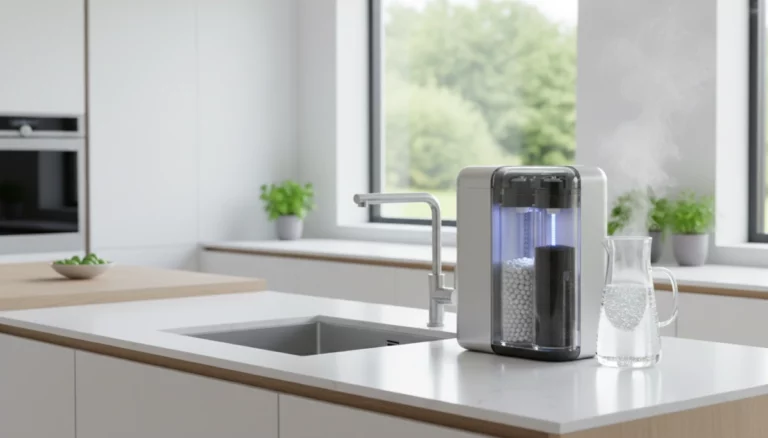
You’ll see this tech in under sink sulfur filters and countertop purifiers designed to remove sulfur odor from water while also improving taste and reducing other common contaminants. For example, a compact countertop cold water purifier like this style of system can be an easy point-of-use option when the smell is mild and limited to drinking water.
Point-of-entry vs point-of-use sulfur water filters
You’ll usually choose between:
Point-of-entry (POE) sulfur filters
- Treats all water in the house
- Best for sulfur smell in shower water, laundry, and every tap
- Often uses air injection oxidizing filters or oxidizing media filters for H₂S water treatment
Point-of-use (POU) sulfur filters
- Installed at one tap (like an under sink water filter for sulfur smell)
- Focused on drinking and cooking water
- Uses activated or catalytic carbon to eliminate sulfur smell and improve taste
If you only notice a light sulfur smell at the kitchen faucet, a POU sulfur removal system is usually enough. But if your entire home smells like rotten eggs when you turn on the water, a whole house sulfur filter at the point of entry is the smarter move.
Types of Water Filters for Sulfur Smell
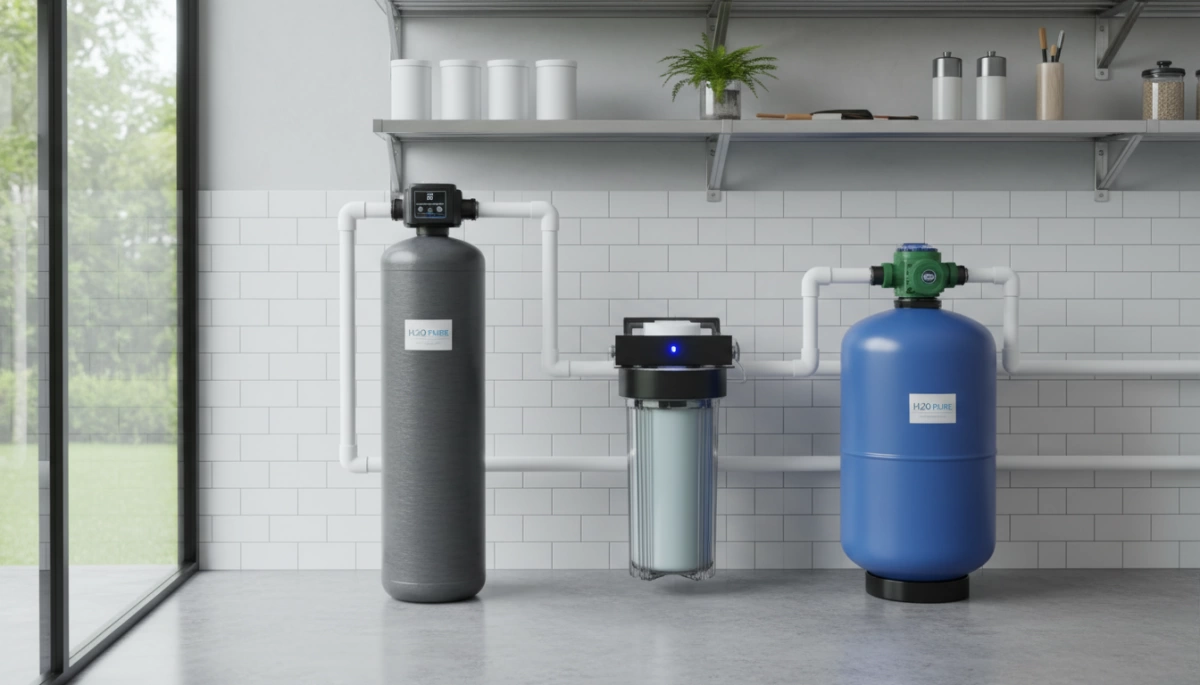
When you’re dealing with that rotten egg sulfur smell in well water, not all filter systems work the same. Here’s how the main sulfur water filter options compare so you can pick the right setup instead of throwing money at the wrong tech.
Activated Carbon Water Filter for Sulfur Smell
For light sulfur odor (water just slightly smells like rotten eggs), a good activated carbon water filter for sulfur smell can be enough.
How it helps:
- Adsorbs low levels of hydrogen sulfide (H₂S)
- Improves taste and odor at the tap
- Works well as an under sink sulfur filter for drinking and cooking
Best for: City water or low-sulfur well water where the odor is mild, not overpowering.
Catalytic Carbon Sulfur Filter for Well Water
If your well water rotten egg smell is stronger, regular carbon usually won’t cut it. You need a catalytic carbon filter for sulfur designed for well water.
Why it’s better:
- More aggressive hydrogen sulfide removal than standard carbon
- Can also help with some iron and manganese when paired with oxidation
- Ideal as part of a sulfur water filter well setup
Best for: Moderate sulfur levels, especially in private wells.
Air Injection Oxidizing Filter for Rotten Egg Smell
When the sulfur smell is strong the moment you turn on the tap, an air injection oxidizing filter is one of the most effective options.
How it works:
- Injects air into the water line to oxidize H₂S gas
- Uses a tank of media to trap the oxidized sulfur
- System backwashes automatically to flush out buildup
Best for: Medium to high sulfur levels and whole house sulfur filter needs.
Oxidizing Media Filters for Iron and Sulfur
If your water has both iron stains and sulfur smell, an oxidizing media filter for sulfur and iron is a smart move.
Key points:
- Uses media like manganese dioxide or similar blends
- Targets iron, manganese, and hydrogen sulfide together
- Usually installed as a point of entry sulfur filter before the home
Best for: Wells with orange/brown staining plus rotten egg odor.
Under Sink Water Filter for Sulfur Smell in Drinking Water
If the sulfur smell is mild or you mostly care about what you drink and cook with, an under sink water filter for sulfur smell is the most practical choice.
Why I like this approach for U.S. homes:
- Targets sulfur odor right at the kitchen sink
- Lower cost than a full whole home sulfur odor system
- Easy to service and upgrade over time
Systems like our compact under-counter water filter for odor and taste improvement are built around high-grade carbon media, making them ideal when you only need sulfur removal at a few key taps.
Pros and Cons of Sulfur Filter Technologies
Activated Carbon Filters
- Pros: Affordable, simple, great for mild sulfur smell and taste
- Cons: Not strong enough for heavy H₂S; media can exhaust quickly with high levels
Catalytic Carbon Filters
- Pros: Stronger hydrogen sulfide removal, good for moderate sulfur in well water
- Cons: Higher cost, often needs pre-oxidation or pairing with other treatment
Air Injection Oxidizing Filters
- Pros: Very effective on strong rotten egg smell; good for whole-house use
- Cons: Higher upfront cost; needs proper setup, drain, and periodic service
Oxidizing Media Filters
- Pros: Treats iron, manganese, and sulfur together; ideal for problem wells
- Cons: More complex; requires enough flow, backwash capacity, and proper sizing
Bottom line:
- Mild odor at a few taps? Go under sink with quality carbon or catalytic carbon.
- Strong sulfur smell or whole-house issues? Look at air injection or oxidizing media systems sized to your well and water usage.
Choosing the Best Water Filter for Sulfur Smell
Picking the right water filter for sulfur smell comes down to three things: how bad the odor is, how much of your home you want to treat, and how much work you’re willing to put into maintenance.
Match Filter Type to Sulfur Level
First, test your water for hydrogen sulfide (H₂S) so you’re not guessing. As a simple rule:
Mild sulfur smell (under ~1 ppm)
- Best fit:
- Under sink sulfur filter with activated or catalytic carbon
- Use it for drinking and cooking water only.
- Best fit:
Moderate sulfur smell (1–5 ppm)
- Best fit:
- Whole house sulfur filter using catalytic carbon or a backwashing oxidizing filter
- Good for homes on well water with light to moderate rotten egg odor.
- Best fit:
Heavy sulfur smell (over 5 ppm or strong rotten egg smell everywhere)
- Best fit:
- Air injection oxidizing filter or oxidizing media filter (often combined with iron and manganese removal) at the point of entry
- This is the go-to option for serious sulfur smell in well water.
- Best fit:
Whole House Sulfur Filter vs Under Sink Sulfur Filter
Here’s how I look at it:
Whole house sulfur filter (point of entry)
- Fixes sulfur smell in shower water, laundry, and all taps.
- Ideal when well water smells like rotten eggs throughout the house.
- Pairs well with a whole house water filter system if you also need sediment or chlorine control.
Under sink sulfur filter (point of use)
- Targets sulfur smell in drinking water only.
- Perfect if your main complaint is taste/odor at the kitchen sink and the smell is mild.
- Cheaper upfront and easier to install.
If you’re on a tight budget, many homeowners start with an under sink sulfur filter for drinking water, then upgrade later to a whole house sulfur filter if the odor in showers and laundry becomes too annoying.
Budget, Maintenance, and Filter Lifespan
When comparing sulfur water filters, focus on total cost over 3–5 years, not just purchase price.
Upfront cost
- Under sink sulfur filters: lower cost, usually a few hundred dollars.
- Whole house sulfur filters: higher cost, especially air injection and oxidizing media systems.
Maintenance & media replacement
- Carbon filters (under sink or whole house):
- Cartridges/media typically last 6–12 months for cartridges, 2–5 years for tank-style carbon.
- Air injection oxidizing filters / oxidizing media filters:
- Media often lasts 5–10 years, but valves and injectors need periodic servicing.
- Always check: media lifespan, availability of replacement parts, and estimated yearly cost.
- Carbon filters (under sink or whole house):
Power & water use
- Some air injection and backwashing sulfur filters use electricity and extra water for backwash cycles.
- Factor that into the long-term operating cost.
DIY Sulfur Filter Setup vs Professional Installation
You can install some systems yourself, but not all are DIY-friendly:
Good candidates for DIY
- Under sink sulfur filter systems with quick-connect fittings.
- Simple whole house carbon filters if you’re comfortable cutting and sweating copper or working with PEX.
When to call a pro
- You have high sulfur levels, iron, and manganese together and need a combined iron and sulfur filter.
- You’re installing an air injection oxidizing filter or oxidizing media filter that needs proper drainage, backwash programming, and sizing.
- Your home has complex plumbing or limited space at the main line.
If you’re in the U.S. and rely on well water with rotten egg smell, I always suggest at least getting a quote from a licensed installer before committing. The system has to be sized to your flow rate and sulfur level or you’ll be chasing sulfur odor problems for years.
Under Sink Water Filter for Sulfur Smell
When to Choose an Under Sink Sulfur Filter
I recommend an under sink water filter for sulfur smell if:
Whole House Sulfur Water Filter Systems
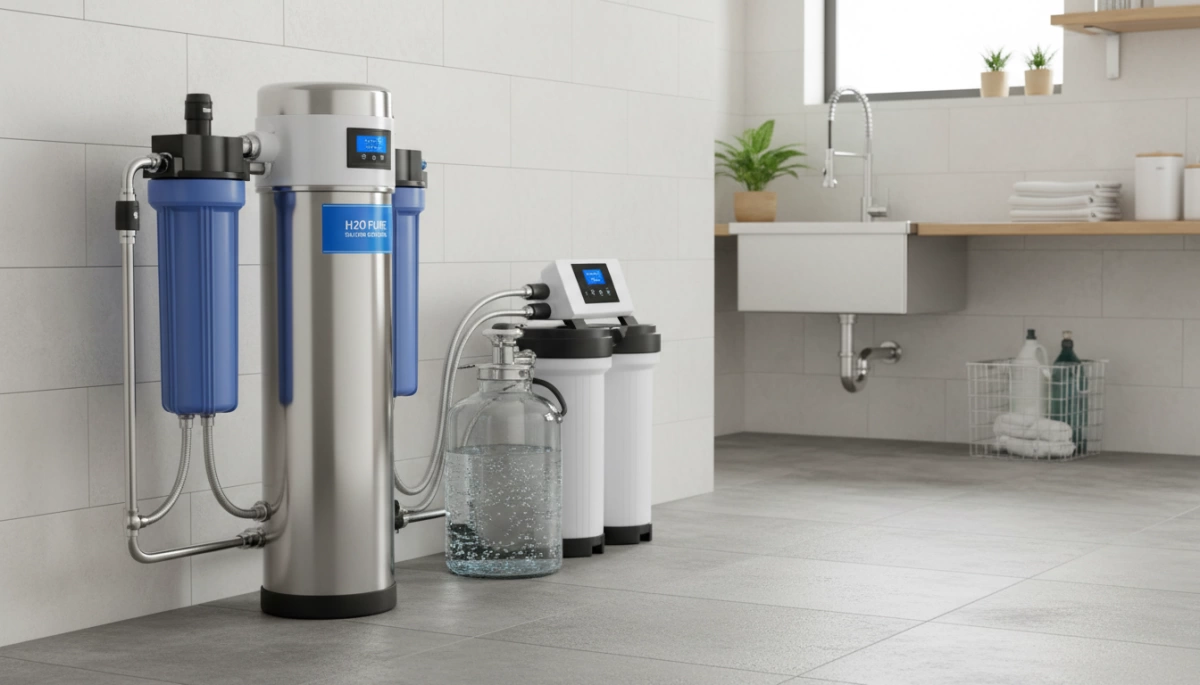
A whole house sulfur water filter is what you want when the rotten egg smell shows up in every tap, every shower, and the laundry. Point-of-use filters (like under sink systems) only fix drinking water. A whole house sulfur filter treats all incoming water at the main line, so your showers, appliances, and fixtures all get odor-free water.
When You Need a Whole House Sulfur Filter
You should look at a whole home sulfur odor system if:
- The sulfur smell in well water is strong (you smell it as soon as you turn on any tap).
- Both hot and cold water smell like rotten eggs, not just one faucet.
- You also see orange/brown iron stains or black/gray manganese staining.
- You want to protect plumbing, water heaters, dishwashers, and washing machines from sulfur, iron, and scale buildup.
Combining Iron, Manganese, and Sulfur Removal
Most homes on problem well water need more than just hydrogen sulfide removal. A solid iron and sulfur filter system is usually built to handle:
- Hydrogen sulfide (H₂S) – removes the sulfur smell in shower water and at every tap.
- Iron – reduces orange stains on sinks, tubs, and toilets.
- Manganese – cuts dark staining and metallic taste.
This is often done with an oxidizing media filter or an air injection oxidizing filter, which uses air plus media to convert dissolved iron, manganese, and sulfur into solids that can be backwashed out.
Flow Rate, Tank Size, and Backwash Requirements
To choose the best sulfur filter for 2026 for a whole home setup, you need to match the system to your usage:
Flow rate (GPM):
- 1–2 bathrooms: 7–10 GPM
- 3–4 bathrooms: 10–15 GPM
- Larger homes: 15+ GPM
If the system is undersized, you’ll see pressure drops when showers, washing machines, and sprinklers run at the same time.
Tank size:
Bigger tanks hold more media, handle higher sulfur levels in well water, and need fewer regenerations. Common residential sizes range from 1.0 to 2.5 cubic feet of media.Backwash requirements:
Oxidizing media and air injection systems must backwash to flush out oxidized sulfur, iron, and manganese. Make sure you have:- Enough well pump capacity and pressure to hit the required backwash GPM.
- A proper drain line and discharge location.
- A control valve programmed for the right backwash length and frequency based on your water quality.
If you want to polish your drinking water after whole-house treatment, pairing a sulfur system with a reverse osmosis system for the sink (like a high-output unit from our best reverse osmosis water filter system guide) gives you both clean taste and extra protection at the tap.
Installation Tips for Sulfur Water Filters
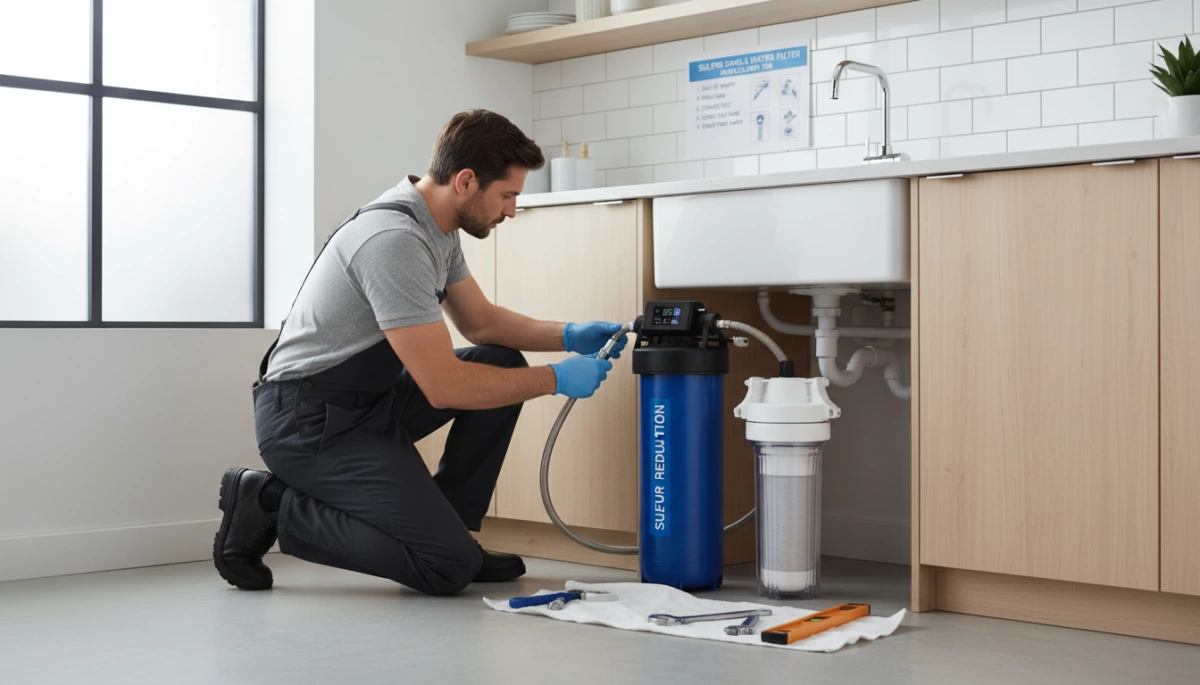
Pre‑installation checks for sulfur water
Before installing any water filter for sulfur smell, I always
Maintenance for Sulfur Smell Water Filters
Keeping a water filter for sulfur smell in good shape is simple if you stay on a schedule and know the warning signs.
How often to change sulfur filter media
How often you replace sulfur filter media depends on your setup and hydrogen sulfide (H₂S) level:
- Activated carbon / catalytic carbon: typically 6–24 months
- Oxidizing media (like manganese dioxide blends): usually 3–7 years
- Pre-filters (sediment cartridges): every 3–6 months
Always:
- Follow the manufacturer’s replacement schedule
- Replace media sooner if sulfur smell comes back or flow rate drops
- Log install dates so you don’t guess when it’s time to change
Signs your sulfur water filter is failing
If your sulfur removal system is struggling, you’ll usually notice:
- Rotten egg smell returning at some or all faucets
- Smell is stronger in the morning or after water sits in pipes
- Reduced water pressure or flow through the filter
- Water taste getting worse even if smell is light
- Backwashing system using more water or getting stuck in regen mode
Once you see these, it’s time to:
- Check media age
- Inspect valves, timers, and backwash cycles
- Replace cartridges or media before the problem gets worse
Troubleshooting persistent rotten egg smell in water
If you still have rotten egg smell in water after installing a sulfur water filter:
- Test before and after the filter
- If water smells before and after the system, media is likely exhausted or undersized
- If water is clean after the system but smells at the faucet, you may have bacteria in plumbing
- Make sure your system is sized for the actual H₂S level in your well water
- Check that backwash and regeneration cycles are set correctly for your water hardness and iron levels
- For stubborn sulfur bacteria, you may need shock chlorination of the well and plumbing, followed by proper filtration
Dealing with water heater anode rods and bacteria
A lot of sulfur smell in hot water has nothing to do with your main sulfur water filter. It’s often the water heater:
- Standard magnesium anode rods can react with sulfate in water and create H₂S gas
- If you only notice sulfur smell in hot water, especially at the shower:
- Inspect and possibly replace the anode rod with an aluminum/zinc or powered anode rod
- Flush and sanitize the water heater to remove sulfur bacteria
- Temporarily turn up heater temperature (carefully and safely) to help kill bacteria, then return to normal
If you’re treating sulfur smell for drinking water at the sink, pairing an under-sink system with a whole-house approach for hot/cold lines can give you full coverage. For apartments or smaller setups, a compact under-sink RO with carbon stages, like a high-capacity under-sink reverse osmosis filtration system, is a strong option for point-of-use odor control.
Driplife Under Sink Filters for Sulfur Smell
If your tap has that rotten egg smell but you don’t want to overhaul your whole plumbing system, a Driplife under sink water filter for sulfur smell is the most practical move.
Why Choose a Driplife Under Sink Water Filter for Sulfur Smell
I design these under sink sulfur filters to hit three main needs US homeowners care about:
- Targeted sulfur odor removal right where you drink and cook
- Fast install under the sink, no major plumbing changes
- Affordable fix compared to a full whole house sulfur filter system
You get clean, better‑tasting water at the faucet without paying for the entire house to be treated if you don’t need it.
Filtration Media Driplife Uses for Hydrogen Sulfide
For hydrogen sulfide removal (H₂S), we typically combine:
- Catalytic carbon – speeds up oxidation and grabs sulfur compounds
- High‑grade activated carbon – polishes taste and removes leftover odor
- Optional KDF media – helps with sulfur, some metals, and bacteria control
This mix lets the under sink sulfur filter adsorb and convert sulfur compounds, cutting that sulfur smell in well water down to non-detectable levels in most normal residential setups.
Space-Saving Sulfur Odor Control at Point of Use
Every under sink sulfur filter I build is designed to:
- Fit tight under-sink spaces in US kitchens and apartments
- Work as a point-of-use sulfur filter with a dedicated faucet or existing cold line
- Keep a strong flow rate for drinking, cooking, and coffee makers
If you’re already comparing different treatment options like reverse osmosis system manufacturers for broader purification, you can still use our sulfur filter as a pre-odor control stage before RO, helping protect and extend RO membrane life (see how RO systems work in detail in our guide on reverse osmosis system manufacturers).
OEM and Private Label Sulfur Filter Options
Beyond our own Driplife brand, I also supply:
- OEM under sink sulfur filters built to your specs
- Private label sulfur odor filters with your branding, packaging, and marketing angle
- Modular cartridges that let you combine sulfur removal with sediment, chlorine, and taste improvement for different US regional water profiles
For dealers, project contractors, and importers who want a reliable sulfur water filter for well water or city water odor issues, I can customize media blends, capacities, and connection types so your product line actually matches sulfur levels and user habits in your market.
FAQs About Water Filters for Sulfur Smell
Why does my water smell like rotten eggs only in hot water?
That rotten egg smell in hot water is usually from hydrogen sulfide gas or sulfur bacteria reacting inside your water heater. Common causes:
- Magnesium anode rod in the heater reacting with sulfate
- Sulfur bacteria growing in the tank
- H₂S already in your well water that becomes stronger when heated
Quick fixes:
- Switch to an aluminum/zinc anode rod
- Flush and disinfect the water heater
- Use a whole house sulfur filter or under sink sulfur filter for added control
Can I remove sulfur smell from water without chemicals?
Yes, up to a point. For low to moderate sulfur smell, you can use:
- Activated carbon filters (pitcher, faucet, or under sink units)
- Catalytic carbon filters for better hydrogen sulfide removal
- Air injection oxidizing filters (use air, not chemicals, but need a tank/system)
For strong sulfur smell in well water, non-chemical systems might struggle, and you may need oxidation with chlorine, peroxide, or ozone.
How long do sulfur water filters last?
| System Type | Typical Media/Filter Life* |
|---|---|
| Faucet / Pitcher carbon filter | 2–3 months |
| Under sink carbon sulfur filter | 6–12 months |
| Catalytic carbon whole house sulfur filter | 3–5 years (media) |
| Air injection oxidizing filter | 5–10+ years (tank; parts vary) |
*Real life depends on sulfur level, iron, and water usage. Heavy well water use will shorten life.
Is sulfur smelling well water safe to drink?
- Low H₂S levels: Usually more of a smell/taste issue than a health risk.
- High levels or strong odor: Can cause nausea, headaches, and make water basically undrinkable.
- Sulfur bacteria themselves are usually not harmful, but they can corrode plumbing and create slime.
Bottom line: if your water smells like rotten eggs, test it and use a sulfur water filter or H₂S water treatment system to be safe.
Differences in sulfur treatment for well water vs city water
| Water Source | Common Sulfur Issue | Typical Treatment |
|---|---|---|
| Well water | Natural H₂S gas, sulfur bacteria, iron | Air injection, oxidizing media, catalytic carbon, iron & sulfur filter |
| City water | Rare sulfur; usually from plumbing or heater | Under sink carbon filter, heater anode change, point-of-use odor filter |
Well water often needs a sulfur removal system for well water at the point of entry. City water is usually handled at point of use (sink, fridge, fountain). If you’re running a small office or shop, pairing sulfur filtration with a wall-mounted drinking fountain or a RO system for taste polish can be a smart move, similar to how we pair filtration with our reverse osmosis RO water setups.
How to test for hydrogen sulfide and sulfur smell at home
You can start simple, then go deeper if needed:
- At-home H₂S test strips/kits
- Cheap, quick, good for basic “do I have sulfur?” checks
- Lab or professional water test
- Measures hydrogen sulfide, iron, manganese, pH, TDS, bacteria
- Best if you’re planning a whole house sulfur filter or iron and sulfur filter
For most U.S. homeowners, I recommend:
- Use a home test kit for hydrogen sulfide in water.
- If the smell is strong or constant, get a full lab test before buying a large sulfur removal system for well water.
That way, you choose the best water filter for sulfur smell the first time, instead of guessing and wasting money.