














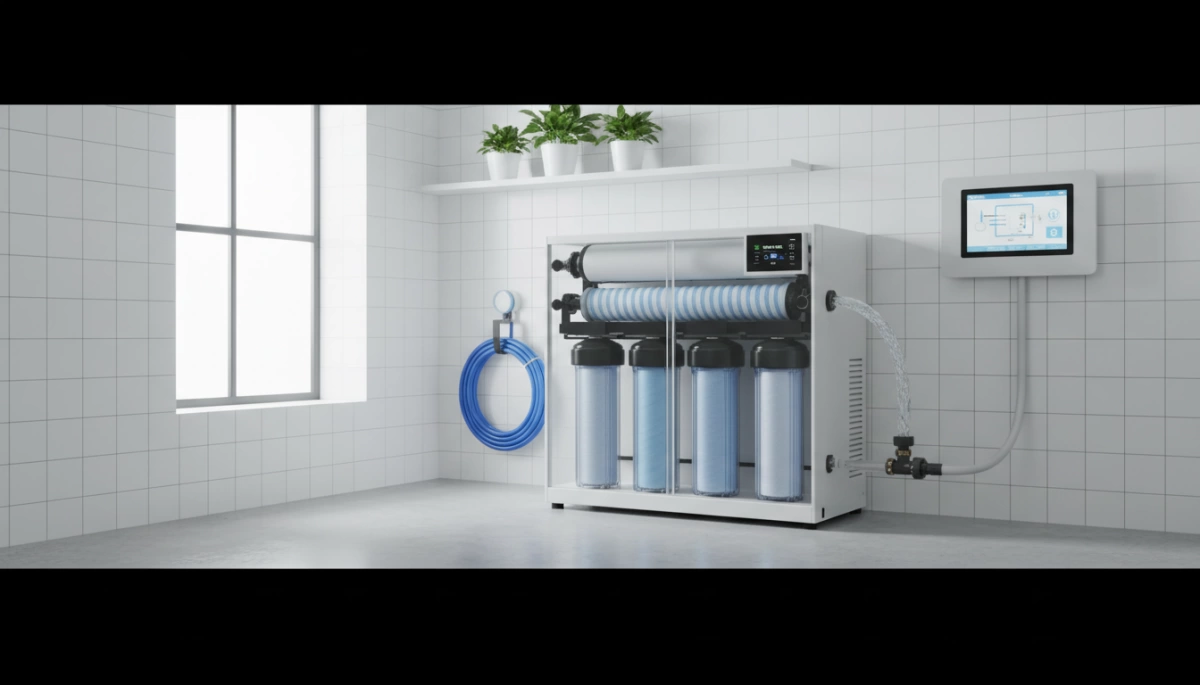
Are you seeing your commercial RO systems fail long before they should?
Replacing membranes is the single highest cost in Commercial Water Station Maintenance.
As a manufacturer, I can tell you that Reverse Osmosis Fouling isn’t just bad luck—it’s usually an engineering oversight.
The solution?
Auto-Flush technology.
This simple function is the difference between a system that lasts years and one that fails in months due to Scaling and TDS Creep.
In this guide, you’ll discover the physics behind self-cleaning and why it is non-negotiable for Membrane Longevity and ROI.
Let’s dive in.
The Science of Failure: What Kills an RO Membrane?
When I inspect a failed commercial water station, the culprit is rarely a manufacturing defect. It is almost always a lack of maintenance on the microscopic level. To understand Why Auto-Flush Functions are Essential for Membrane Longevity, we first have to look at the physics of filtration failure. It isn’t just about dirty water; it is about how that dirt behaves under pressure.
Understanding Concentration Polarization
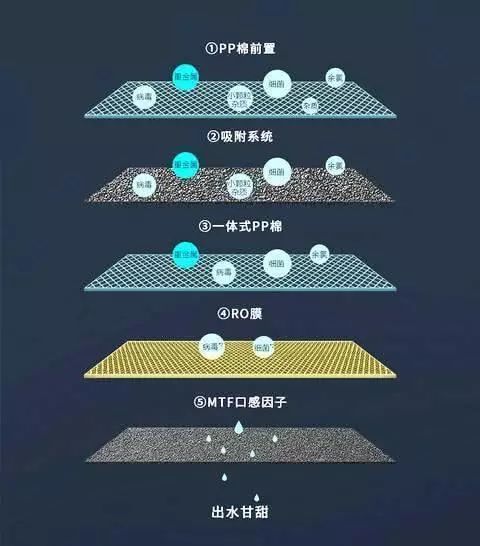
The primary mechanism behind early failure is a phenomenon known as Concentration Polarization. Think of it like a busy security checkpoint. As pure water molecules are pushed through the membrane barrier, the rejected salts and minerals (TDS) are left behind on the surface.
If these dissolved solids aren’t swept away immediately, they form a super-saturated boundary layer right against the membrane sheet. This accumulation creates an osmotic barrier that fights against your pump, drastically reducing efficiency.
The Two Enemies: Scaling vs. Biofouling
In my experience, Reverse Osmosis Fouling generally comes from two distinct sources, and both are lethal to TFC Membrane Lifespan:
- Inorganic Scaling (The Hardness Factor): This is the most common issue in the US. Calcium and magnesium precipitate out of the super-saturated layer, forming a concrete-like scale on the membrane surface. This is RO Membrane Scaling in its purest form.
- Organic Biofouling (The Slime Factor): If your feed water contains organics, bacteria can colonize the membrane surface. They form a sticky biofilm that acts like a glue for other debris, making Biofouling Control nearly impossible without harsh chemicals.
Consequences of Neglect: Reduced Permeate Flux
Ignoring these buildup mechanisms doesn’t just mean you change filters more often; it destroys the system’s hydraulic balance. As the pores clog, the Permeate Flux Rate (the speed at which you produce clean water) nosedives.
To compensate, your system has to work harder, increasing pressure until the membrane physically compacts or tears. Once this happens, the damage is irreversible. You aren’t just cleaning a membrane at that point; you are replacing it entirely, driving up your operational costs significantly.
How Auto-Flush Works: The Mechanics of Self-Cleaning
At Driplife, we engineer our systems to handle high TDS levels—sometimes up to 3000 PPM—which makes the internal cleaning mechanism critical. The magic behind extending membrane life isn’t actually magic; it is a precise engineering feature involving a Solenoid Flush Valve.
The Solenoid Flush Valve and Bypass Mechanism
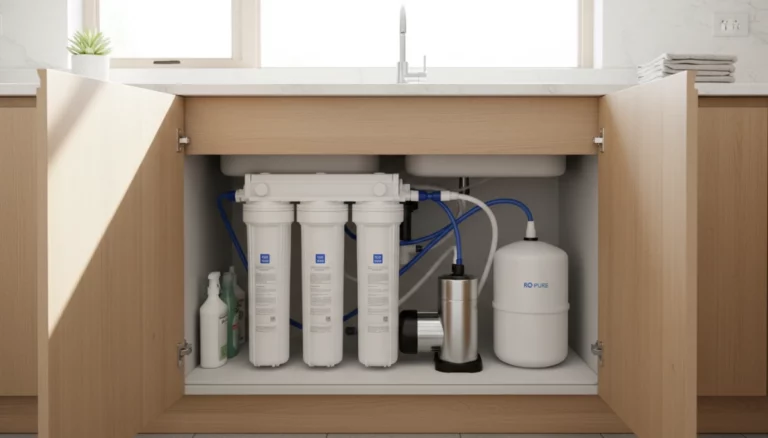
In a standard operation, your RO system uses a flow restrictor to create the backpressure needed to force water through the microscopic pores of the membrane. However, this pressure also traps contaminants against the membrane surface.
The auto-flush system works by utilizing a Solenoid Flush Valve installed in parallel with the flow restrictor. When activated, this valve opens a “bypass highway.”
- Normal Mode: Valve closed. Water is forced through the membrane (filtration).
- Flush Mode: Valve open. Water flows freely across the membrane (cleaning).
This bypass action drops the pressure instantly, allowing water to rush through the system without being filtered, carrying away the rejected solids that were starting to settle.
High-Velocity Scouring: Turbulence Sweeps Debris
The real cleaning power comes from speed. When the Flow Restrictor Bypass is active, the water velocity inside the membrane housing increases dramatically. We call this the High-Velocity Rinse Cycle.
Think of it like using a garden hose. If you just let the water trickle, dirt stays on the driveway. If you put your thumb over the end to create a jet, the dirt blasts away. Inside the RO housing, this rapid flow creates turbulence—or scouring—that physically sweeps away standing salts, calcium, and magnesium before they can harden into scale. This is far more effective than manual cleaning methods often found in basic types of water purification methods, ensuring our Super Saver Technology remains efficient over time.
The Flush Cycle: Startup Logic vs. Hourly Cycling
We program our Automated RO Maintenance logic based on the specific needs of the hardware.
- Startup Flush: The most common configuration. Every time the system turns on to fill the tank, it runs a quick 18-second flush. This clears out any “TDS creep” (dissolved solids that migrated to the clean side) that occurred while the unit was idle.
- Cumulative Hourly Cycling: For commercial units running continuously, the system pauses periodically to perform a flush.
By automating this process, we ensure the membrane is rinsed exactly when it needs to be, preventing the buildup that leads to premature failure.
Key Benefits for Commercial Water Stations
In my experience managing high-volume filtration setups, the reliability of your system hinges on how well you treat the membrane. Integrating an auto-flush function isn’t just a luxury; it is a necessity for Commercial Water Station Maintenance. By automatically scouring the membrane surface, we prevent the buildup of contaminants that leads to downtime and expensive repairs. This is the backbone of our Super Saver Technology, ensuring that efficiency doesn’t drop even when processing thousands of gallons.
Combating TDS Creep and Extending Lifespan
One of the biggest complaints in commercial settings is the “first cup” issue, where stagnant water on the membrane allows solids to seep through, spiking the TDS levels. An auto-flush system eliminates this TDS Creep Prevention issue by rinsing the membrane before production begins, ensuring consistent taste and purity. Furthermore, this regular cleaning cycle drastically reduces mechanical stress. While standard manual units struggle with high TDS water (up to 2000-3000 PPM), our auto-flush equipped systems extend TFC Membrane Lifespan by 50-100%.
Here is a breakdown of how auto-flush impacts operational efficiency:
| Operational Metric | Manual / No Flush System | Auto-Flush System |
|---|---|---|
| Membrane Lifespan | 12 – 18 Months | 24 – 36 Months |
| Water Quality | Inconsistent (High TDS at startup) | Consistently Pure |
| Maintenance Frequency | Frequent chemical cleaning required | Minimal (Automated) |
| Pressure Stability | Drops rapidly due to scaling | Maintains Permeate Flux Rate |
Reducing OPEX and Ensuring Consistency
For business owners, the bottom line is Reducing Operational Expenditure (OPEX). A system that cleans itself reduces the need for frequent service calls and premature filter replacements. By maintaining consistent water pressure and Water Recovery Efficiency, you avoid the energy spikes associated with clogged membranes. Whether you are running a large scale filling station or looking to filter water for sink applications in a busy office kitchenette, the auto-flush mechanism ensures the system operates at peak capacity without constant human intervention. This “set it and forget it” approach protects your investment and guarantees that your GPD production remains stable year-round.
Auto-Flush vs. Manual Flush: A B2B Comparison
In the commercial water industry, relying on manual labor to maintain equipment health is a gamble I rarely see pay off. When we look at Commercial Water Station Maintenance, the difference between a manual flush valve and an automated system often determines whether a business is profitable or drowning in service calls.
The “Human Factor” Failure
Manual flush systems rely entirely on human memory. You are essentially betting your TFC Membrane Lifespan on an employee remembering to turn a bypass valve for two minutes every single day. In a busy US office or a high-traffic filling station, this simply doesn’t happen.
When the flushing schedule is missed, Concentration Polarization sets in immediately. Dissolved solids accumulate on the membrane surface, leading to rapid fouling. I have seen membranes that should last three years fail in six months because the manual flush protocol was ignored.
The Waste of Continuous Bleed Systems
Some older commercial setups try to cheat the system by using a “continuous bleed.” They intentionally leave the flow restrictor slightly open to constantly wash the membrane. While this might help with Biofouling Control, it is a financial nightmare.
- Water Waste: You are sending gallons of usable water down the drain 24/7.
- Pressure Loss: It makes it harder to maintain the necessary osmotic pressure for efficient production.
- Poor Efficiency: Your Water Recovery Efficiency plummets, driving up utility bills.
Smart Auto-Flush: The Set-and-Forget Solution
The industry standard for modern businesses is Automated RO Maintenance. An auto-flush system uses a Solenoid Flush Valve controlled by an integrated circuit board. It automatically bypasses the flow restrictor for 18-30 seconds upon startup and periodically during operation.
This triggers a High-Velocity Rinse Cycle that physically scours the membrane surface with turbulent water flow. It effectively strips away standing salts and prevents TDS Creep Prevention issues without anyone lifting a finger. While chemical inhibitors are useful, similar to how we utilize antiscaling technology in filtration, the mechanical action of a high-speed flush is the first line of defense against hard water damage.
Comparison of Flushing Methods
| Feature | Manual Flush Valve | Continuous Bleed | Smart Auto-Flush |
|---|---|---|---|
| Reliability | Low (Human Error) | High (Mechanical) | Very High (Automated) |
| Water Efficiency | High | Very Low (High Waste) | Optimized |
| Membrane Life | Inconsistent | Moderate | Extended (50-100%) |
| Maintenance Cost | High (Labor/Replacement) | High (Water Bills) | Low (Set-and-Forget) |
| Scaling Control | Poor | Moderate | Excellent |
By switching to smart auto-flush, you ensure that the Osmotic Pressure Balance is maintained and the membrane remains clean, drastically reducing Operational Expenditure (OPEX).
Smart Integration for Modern Filling Stations
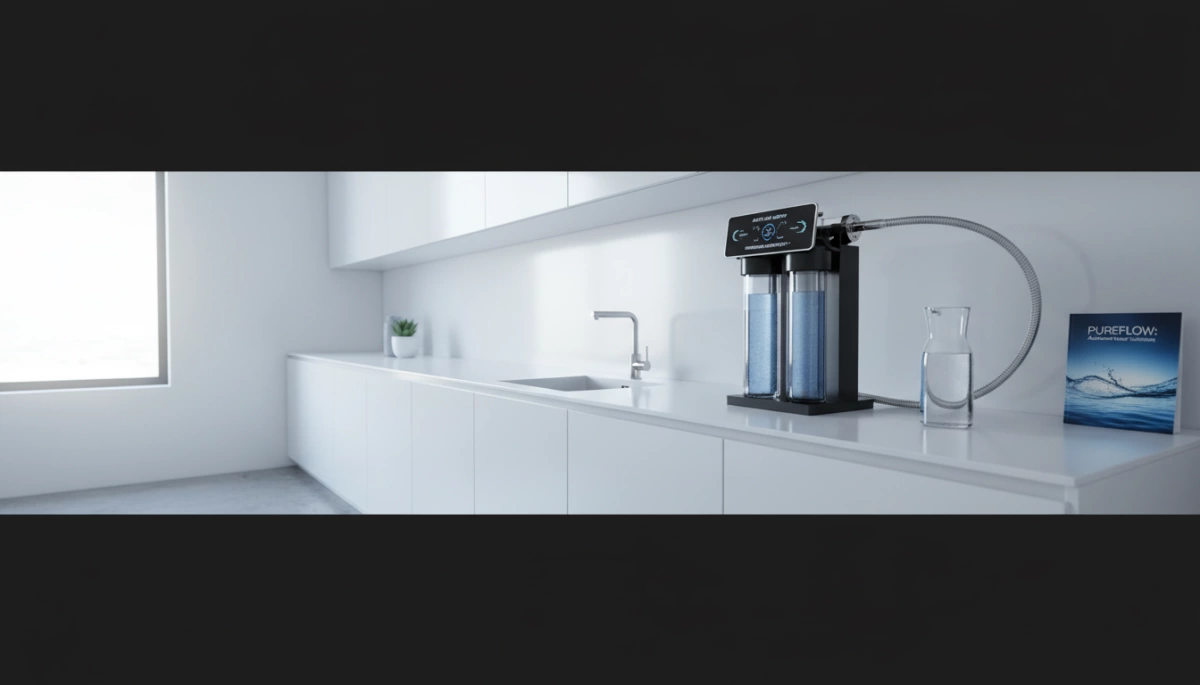
We have moved past the days of clunky mechanical timers. Today’s commercial water stations rely on Intelligent controller boards that bring true Automated RO Maintenance to the table. Unlike old-school mechanical timers that blindly cycle based on a clock regardless of water flow, smart boards react to actual system status. They trigger the auto-flush sequence precisely when it is needed—typically at startup to clear standing water or at shutdown to rinse away concentrated salts—ensuring the membrane remains pristine without human intervention.
Sustainability Through Efficiency
It might sound contradictory, but using water to flush the system actually increases Water Recovery Efficiency in the long run. When a membrane gets fouled with scale, the Permeate Flux Rate drops, forcing the system to waste more water in the reject stream just to produce a single gallon of clean water. By keeping the membrane pores open with high-velocity scouring, our Super Saver technology operates at peak performance, preventing the waste associated with clogged filters. This efficiency is a massive factor in the ROI of RO systems, as it keeps utility bills low and extends the hardware’s life.
Adaptive Application Scenarios
Smart auto-flush systems adapt their logic based on the environment:
- High-Traffic Airports: In zones with constant demand, the system performs short, frequent flushes to prevent scaling caused by rapid on/off cycling.
- Intermittent Office Use: In corporate breakrooms, the controller detects periods of inactivity. It initiates a flush after a weekend to clear stagnant water, ensuring the top benefits of counter water coolers are realized with fresh, safe water first thing Monday morning.
Frequently Asked Questions About RO Auto-Flush Systems
Does auto-flush completely eliminate the need for membrane replacement?
No, and don’t let anyone tell you otherwise. While an auto-flush system significantly aids in Service life extension, it does not make the membrane immortal. TFC Membrane Lifespan is finite. Eventually, chlorine damage or microscopic Reverse Osmosis Fouling that cannot be rinsed away will degrade performance.
Think of auto-flush like changing the oil in your car. It keeps the engine running smoothly for much longer, but parts will still wear out over time. You can expect to replace membranes 50-100% less frequently, but replacement is still part of long-term maintenance.
How much water does the auto-flush cycle actually use?
Many facility managers worry about waste, but the High-Velocity Rinse Cycle is surprisingly efficient. The flush typically lasts only 18 to 30 seconds.
- Short Duration: It uses a quick burst of water to scour the surface.
- Net Savings: By preventing scaling, the system maintains high Water Recovery Efficiency.
Without flushing, a fouled membrane rejects more water to produce the same amount of clean water. So, spending a few gallons on a flush actually saves thousands of gallons in waste water over the year.
Can I retrofit an auto-flush valve onto an existing commercial system?
Yes, in most cases. Retrofitting is a popular upgrade for Commercial Water Station Maintenance. It usually involves installing a Solenoid Flush Valve parallel to the flow restrictor and connecting it to a controller.
This is especially valuable for high-capacity units. For example, upgrading a heavy-duty 800GPD RO system with Automated RO Maintenance components ensures that your high-volume investment is protected against premature failure without requiring daily manual intervention.