














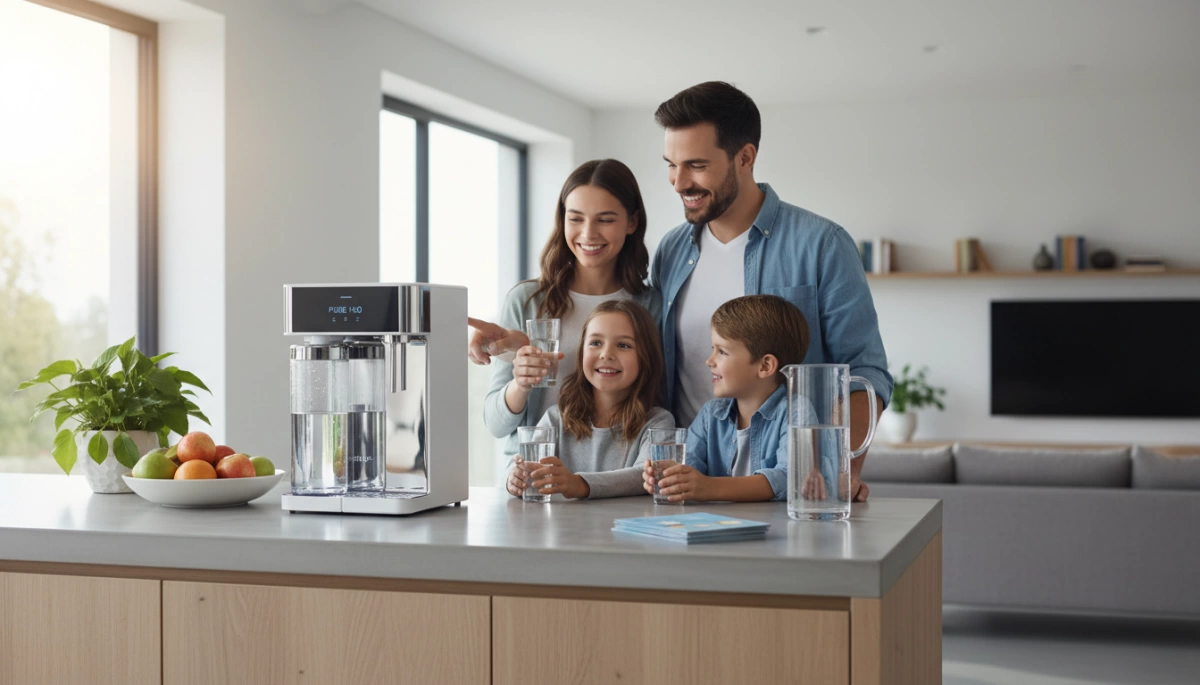
Do you know exactly how much your family spends on bottled water every year?
It might seem like a few dollars here and there, but the reality is often shocking.
Most families are unknowingly spending over $1,000 annually for “convenience” that hurts their wallet and the planet.
As an industry expert, I can tell you there is a much smarter investment: a Reverse Osmosis (RO) system.
Switching isn’t just about getting pure drinking water at home; it’s about securing a massive return on investment (ROI).
In this guide, we’ll break down the real cost of bottled water, calculate the RO system payback period, and show you exactly why every family should replace bottled water with a home filtration solution.
Let’s dive in.
The Real Cost of Your Bottled Water Habit
Most families don’t realize that their hydration habit is quietly draining their bank account. When we analyze the bottled water annual expense, the average household is spending anywhere from $800 to $1,500+ per year just on single-use plastic. That is a massive premium for water that is often just filtered tap water packaged in plastic. As experts in water filtration, we see this financial leak constantly—families paying luxury prices for a basic utility.
Hidden Costs of Plastic Bottled Water
The price on the shelf is only the beginning. The true cost of bottled water for family budgets includes several invisible drains on your resources that go beyond the receipt:
- Delivery & Service Fees: Relying on delivery apps or subscription services adds surcharges that significantly inflate the cost per gallon.
- Fuel & Transport: Specialized trips to the store just to restock heavy cases burn gas and valuable time.
- Prime Storage Real Estate: Stacking cases takes up critical space in your pantry, garage, or fridge that could be used for better things.
Calculating the Effort vs. Value
There is also a physical “tax” we pay for bottles. Hauling heavy cases from the store to the car and then into the house is a chore that never ends. When you compare the daily cost of bottled water vs. per-gallon equivalent, you realize you are paying top dollar to do manual labor. We focus on engineering high-capacity systems because the alternative—hauling plastic—is simply inefficient. Before even considering the environmental impact, the sheer economic and physical weight of bottled water makes it a burden on the modern home.
Upfront vs. Ongoing Costs: What a Quality RO System Really Requires
When you compare the price of a single case of bottled water to a filtration machine, the initial difference is obvious. However, viewing this purchase as a long-term utility rather than a consumable good changes the financial perspective entirely. We need to look at the RO system initial cost vs long term savings to understand the true value.
Overview of Investment Ranges
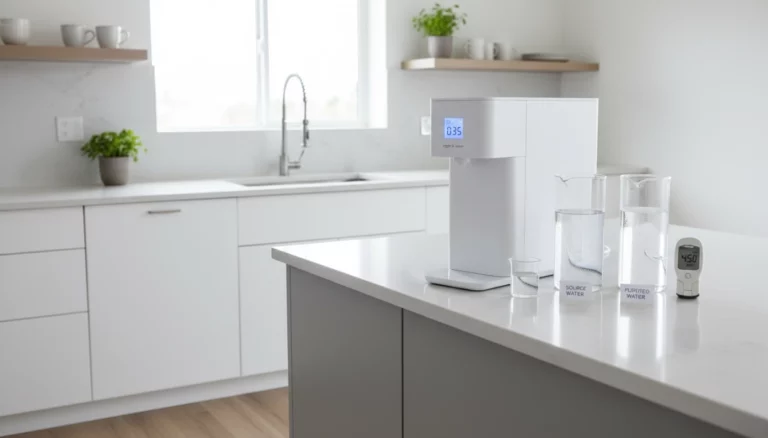
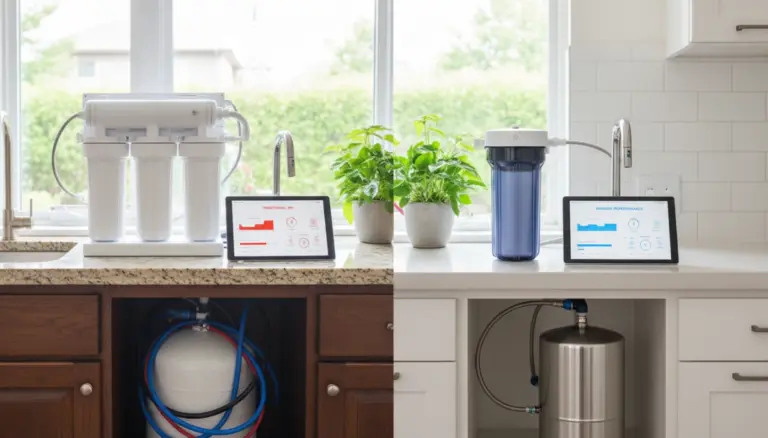
Entering the world of home filtration requires an upfront investment, typically falling between $200 and $1,000. This range depends heavily on the form factor and features you choose. A standard under-sink unit focuses purely on filtration volume, while a modern, multi-functional countertop water filter offers added convenience like instant hot water, cooling, and ice-making capabilities. While the sticker price is higher than a year’s supply of bottled water, this is a one-time hardware purchase that secures your water supply for years.
Realistic Annual Maintenance Costs
The only recurring expense with a reverse osmosis system is the filter replacement. Unlike the weekly drain on your wallet from buying cases of water, filter changes are infrequent.
- Filter Capacity: Our high-capacity filters are rated for 2,000 gallons. For an average family, this translates to significantly longer intervals between changes compared to standard pitchers or faucet attachments.
- Cost Efficiency: When you break it down, the cost of replacement cartridges is a fraction of what you would spend on the equivalent volume of bottled water.
Membrane Replacement and System Longevity
The core of the system is the Reverse Osmosis membrane. This component does the heavy lifting, removing the microscopic contaminants.
- Membrane Lifespan: You typically only need to replace the RO membrane every 2 to 3 years, depending on your local water quality and usage.
- Hardware Durability: The unit itself is designed for the long haul. With proper care and timely maintenance, a quality RO system is built to last 10+ years.
By shifting from a disposable mindset to a durable goods mindset, the filter longevity and system durability prove that the upfront cost is quickly recovered through daily operational savings.
The Clear ROI: Payback Period and Long-Term Savings
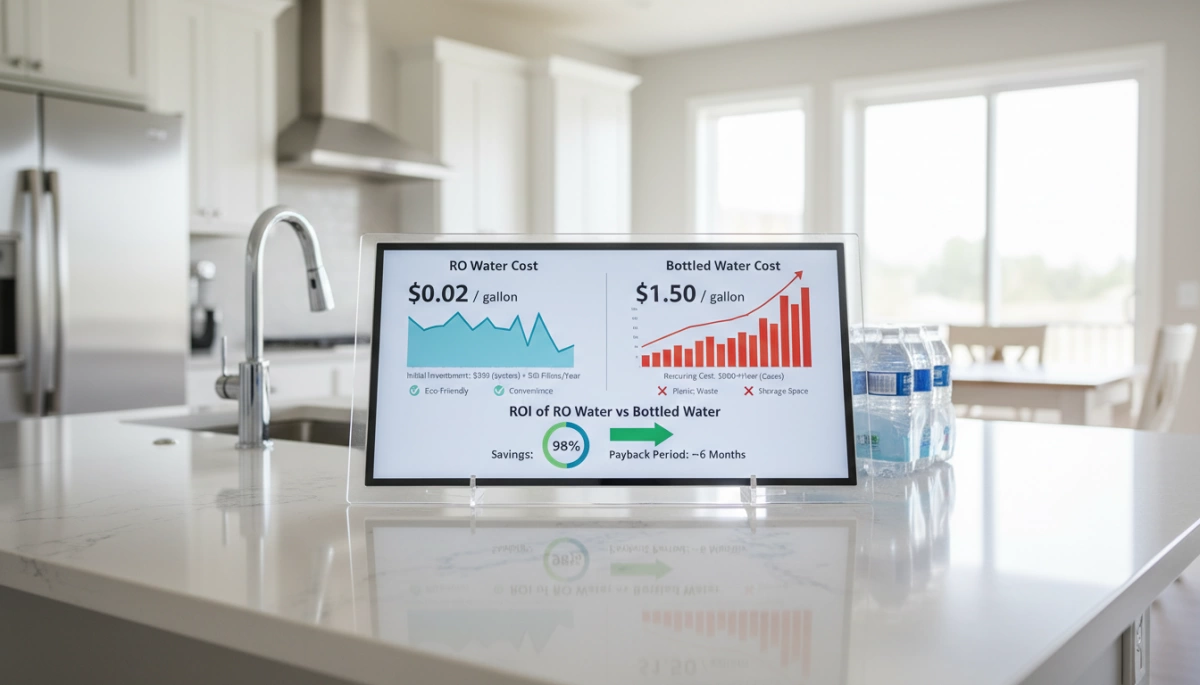
When we crunch the numbers, the financial gap between a bottled water annual expense and owning a filtration system is staggering. We aren’t just talking about saving a few pennies; we are looking at a significant shift in household economics. While a single bottle of water might seem cheap at the checkout, the cumulative cost over a year is massive compared to the efficiency of a home system.
Direct Cost Comparison: Bottled vs. RO
The math is simple. If your family consumes about 2-3 gallons of drinking water daily, you are likely spending hundreds, if not thousands, on bottled water every year. In contrast, the reverse osmosis water cost per gallon drops to mere pennies once the unit is running. Our high-capacity filters are designed to handle up to 2,000 gallons per cycle. To match that volume with store-bought water, you would need to purchase over 15,000 standard plastic bottles.
Analyzing the Payback Timeline
For most households, the RO system payback period is surprisingly short—typically between 12 to 24 months. This timeline accounts for the initial purchase of the unit and the first round of filter replacements. By installing a robust under sink reverse osmosis system, you effectively stop paying a premium for plastic packaging and marketing, shifting that budget back into your pocket.
5-Year Savings Projection
The real magic happens after the break-even point. Over a five-year period, the savings switching to RO water can range from $4,000 to $7,000. This projection considers the rising cost of consumer goods versus the stable, low maintenance costs of our systems, which are engineered for longevity and high-volume output (up to 150GPD for countertops and faster flow rates for under-sink models).
Breakdown of Financial Impact
Here is a realistic look at where your money goes over five years:
| Expense Category | Bottled Water Habit (5 Years) | Home RO System (5 Years) |
|---|---|---|
| Initial Investment | $0 (Pay-as-you-go) | $200 – $600 (Estimated Unit Cost) |
| Annual Cost | $800 – $1,500+ | $50 – $150 (Filter Replacements) |
| Logistics/Fuel | High (Weekly store trips) | $0 (Direct to tap) |
| Total 5-Year Cost | $4,000 – $7,500+ | $450 – $1,350 |
| Net Savings | N/A | ~$3,500 – $6,000+ |
Investing in a professional-grade system isn’t just about water purity; it is a smart financial strategy that pays dividends for years.
Purity and Health: Why RO Delivers Better Water Than Bottled
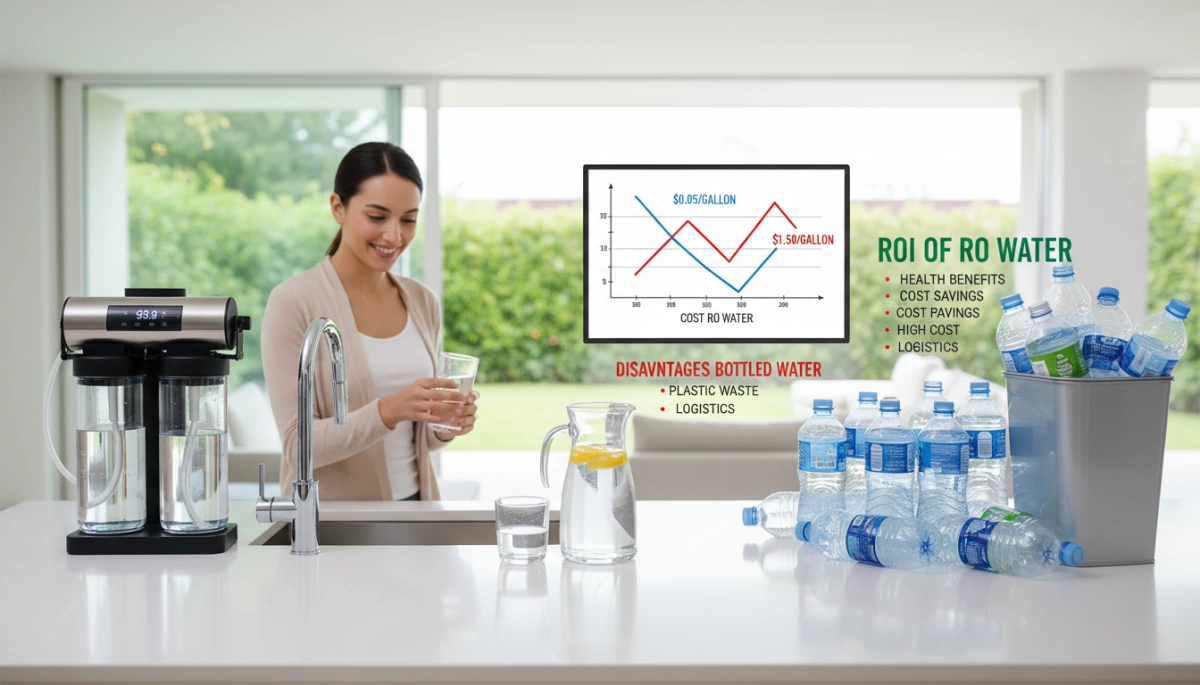
When analyzing the health benefits of RO filtration, the difference comes down to precision. Many consumers assume bottled water is superior, but a significant portion of it is simply municipal tap water run through basic filtration before being packaged in plastic. In contrast, our Reverse Osmosis (RO) systems utilize advanced membrane technology with a pore size of 0.0001 microns. This allows us to remove up to 99% of difficult contaminants that standard carbon filters miss, including lead, arsenic, and PFAS (forever chemicals).
Debunking the Bottled Water Myth
We need to address the container itself. Storing water in single-use plastic introduces the risk of chemical leaching and microplastic contamination, especially if cases are stored in warm warehouses or delivery trucks. An RO system eliminates this variable entirely by purifying water at the point of use.
- Superior Contaminant Removal: RO targets dissolved solids and heavy metals that simple filtration cannot catch. For homeowners concerned about municipal additives, understanding how filtered water has fluoride removed is essential for choosing the right system.
- Safe for the Vulnerable: Because RO water is free from bacteria and heavy metals, it provides the safest base for mixing baby formula and preparing meals for those with compromised immune systems.
- Better Taste and Hydration: By removing chlorine and organic compounds, RO water offers a crisp, clean taste that encourages better hydration without the flat flavor of stored bottled water.
Switching to a home purification system isn’t just about saving money; it is about securing a verified standard of purity that plastic bottles simply cannot guarantee.
Convenience and Lifestyle Wins: No More Hassles
We often focus heavily on the financial savings, but the time and effort saved by switching to a home system offers an incredible return on investment. Having pure drinking water at home means you never have to make a late-night run to the grocery store because you ran out of bottles. With our high-flow technology delivering up to 5.2 liters per minute, you get instant hydration without the wait associated with slow pitcher filters.
Eliminating the Heavy Lifting
The physical toll of a bottled water habit is real. By installing a high-capacity under sink RO filtration system, you eliminate the chore of hauling heavy cases from the store to your car and into your pantry. This shift also clears out the clutter in your garage or recycling bin, as you no longer have to manage piles of empty plastic waste every week.
Multi-Function Utility Beyond Filtration
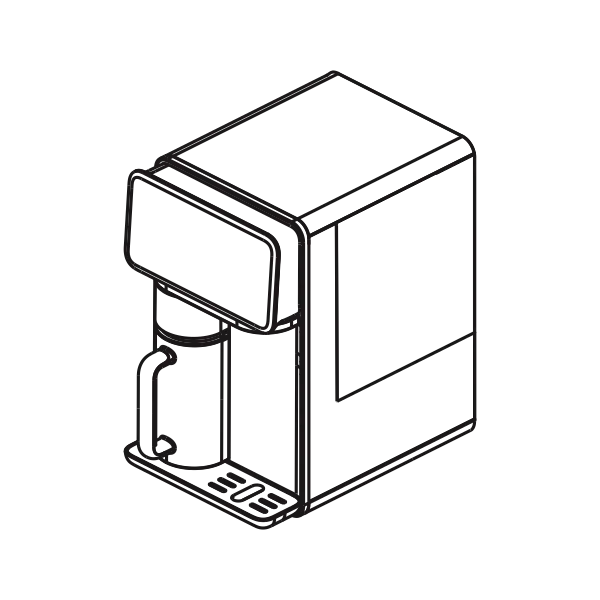
Modern RO solutions have evolved into 4-in-1 appliances that replace multiple kitchen gadgets. We design our countertop systems to be versatile hubs for the modern family, offering more than just purification:
- Ice Making: Built-in capabilities eliminate the need for buying bags of ice or using messy trays.
- Temperature Control: Instant access to cold water for drinking and hot water for tea or coffee.
- Soda Production: Some configurations even support sparkling water, replacing expensive carbonated beverages.
Seamless Integration into Daily Life
When you replace bottled water with RO, you start using purified water for things you previously wouldn’t have justified, like boiling pasta, washing vegetables, or making soup. It removes the “rationing” mindset. Whether you are prepping a family meal or hosting guests, having an endless supply of clean, temperature-controlled water simplifies kitchen tasks and elevates your hosting game without the logistical headache of stocking up on bottles.
The Bigger Picture: Environmental and Peace-of-Mind ROI
When we talk about the environmental impact of bottled water, the numbers are staggering. Switching to a high-capacity RO system isn’t just about saving cash; it’s about stopping the flow of single-use plastic into our ecosystem.
Our under-sink filters are rated for 2,000 gallons per cycle. If you do the math, a single filter replacement cycle eliminates the need for roughly 15,000 standard plastic water bottles. That is a massive reduction in waste that would otherwise end up in local landfills or oceans.
Sustainability and Carbon Footprint
The “cost” of bottled water includes the diesel burned to ship heavy crates across the country and the energy used to manufacture plastic resin. By producing pure drinking water at home, you cut out the entire supply chain. You get high-volume output—up to 5.2L/min—without the carbon emissions associated with bottled water transportation.
The Emotional ROI: Confidence in Safety
There is a tangible value in knowing exactly what is in your glass. Bottled water regulations can be vague, but a home RO system puts you in control. You gain the peace of mind that comes with removing contaminants and fixing issues like bad odors. Using a high-quality water filter for chlorine taste ensures that every sip is crisp and clean, giving you confidence in the water safety for the whole family.
Why the switch matters:
- Zero Plastic Waste: No more overflowing recycling bins.
- Reduced Carbon Footprint: Stop paying for water to be trucked to your store.
- Health Assurance: Trust your own filtration rather than a factory bottling plant.
Frequently Asked Questions About RO System ROI
How much does a reverse osmosis system cost to install?
Installation costs depend heavily on the type of unit you choose. For our countertop 4-in-1 systems, the installation cost is effectively zero—you simply plug it in and fill the tank. This makes them an ideal water filter for apartment residents or renters who cannot modify plumbing. For under-sink models, we design for effortless installation that most homeowners can handle themselves in under an hour, eliminating the need for expensive professional plumbing services.
Is reverse osmosis water actually better than bottled water?
Yes, primarily because of freshness and control. Bottled water often sits in plastic containers for months, risking microplastic leaching and chemical exposure. An RO system provides freshly purified water on demand. Furthermore, our advanced systems go beyond basic filtration by offering temperature control and carbonation, giving you all the benefits of owning a seltzer water machine built directly into your primary water source.
How often do I need to change RO filters to maintain savings?
To maximize your savings switching to RO water, filter longevity is key. Our high-capacity filters are engineered to process up to 2,000 gallons per cycle. For an average family, this translates to significantly fewer filter changes compared to standard pitchers—often lasting 12 to 24 months depending on daily usage. This extended lifespan ensures your maintenance costs remain far lower than the bottled water annual expense.
Does an RO system waste water, and does that affect the cost?
While the reverse osmosis process does use water to flush out contaminants, modern high-efficiency systems have drastically reduced this ratio. The cost of the tap water used in this process is pennies per gallon, which is negligible when you calculate the reverse osmosis water cost per gallon versus buying bottles. The environmental impact of avoiding plastic waste far outweighs the minimal water usage required for purification.
What is the average payback period for a home RO system?
Most families see a full return on investment within 12 to 18 months. When you factor in the elimination of bottled water purchases, the removal of delivery fees, and the durability of a system designed for a 10+ year lifespan, the RO system payback period is incredibly short. After that break-even point, you are essentially generating premium quality water for free.