


















What Is a Post-Carbon Block and Where Does It Fit?
At DripLife, we believe that water shouldn’t just be safe—it should be delicious. The Post-Carbon Block is the unsung hero in this equation. Technically known as a compressed activated carbon filter, this component is designed specifically for final stage water filtration taste. Unlike loose granular carbon, a carbon block is densely packed, forcing water to navigate through a complex maze of micropores. This structure maximizes contact time, ensuring that even the faintest residual odors or volatile organic compounds (VOCs) are trapped before the water hits your glass.
Pre-Filters vs. Post-Filters: The Critical Difference
Many users confuse the roles of the carbon filters found in our systems. While both use carbon, their jobs are completely different.
| Feature | Pre-Carbon Filter | Post-Carbon Filter |
|---|---|---|
| Position | Stages 2 or 3 (Before RO Membrane) | Stage 5 (After RO Membrane) |
| Primary Goal | Protection | Taste Enhancement |
| Target | Chlorine, Sediment, Large Particles | Residual Odors, VOCs, “Flat” Taste |
| Function | Prevents damage to the RO membrane | Polishes water for a crisp finish |
The 5-Stage RO Flow Explained
In a typical high-efficiency system like our RO-500G, the filtration process is a precise sequence. The Post-Carbon Block is the final gatekeeper.
- PP Sediment: Removes rust and sand.
- Granular Activated Carbon (GAC): Adsorbs chlorine and organics.
- Carbon Block: Further protects the membrane.
- RO Membrane (0.0001 micron): The heavy lifter, removing 99% of dissolved solids.
- Post-Carbon Block: The polishing stage that restores a fresh, natural flavor profile.
Tankless Systems vs. Storage Tank Issues
Traditional RO systems store filtered water in a pressurized tank with a rubber bladder. Over time, this can leach a “rubbery” or plastic taste into the water, forcing the post-filter to work overtime just to mask that tank flavor.
We designed our DripLife tankless systems to eliminate this problem entirely. By producing water on demand with a high flow rate, we bypass the need for storage. This means our Post-Carbon Block isn’t fighting tank residue; it is strictly focused on post-carbon filter polishing, ensuring every drop is as fresh as the moment it was filtered.
How the Post-Carbon Block Improves Water Taste
At DripLife, we understand that removing contaminants is only half the battle. The water has to taste good, or you won’t want to drink it. While our RO membrane does the heavy lifting by removing up to 99.99% of dissolved solids, the post-carbon block is the critical final step that transforms pure water into delicious water.
The Science of Adsorption Explained
The magic happens through a process called adsorption. Unlike the physical barrier of a membrane, the activated carbon block acts like a microscopic sponge with a massive surface area. It attracts and traps dissolved gases and organic molecules that the RO membrane might miss. This is essential for RO post filter odor removal, ensuring that no lingering smells make it to your glass.
Why RO Water Needs Polishing
Pure water coming directly off a high-efficiency RO membrane can sometimes taste “flat” or slightly acidic due to the removal of minerals and the presence of dissolved carbon dioxide. We use the post-carbon stage for post-carbon filter polishing. This step “wakes up” the water, eliminating that lifeless sensation and delivering a balanced and crisp mouthfeel.
Targeting Specific Flavor Killers
To achieve that premium bottled-water taste, our post-carbon block specifically targets the compounds that ruin flavor. Even in high-end filtration, trace elements can slip through or develop in the lines.
Key contaminants removed during the polishing stage:
- Trace Chlorine and Chloramines: Eliminates that swimming pool smell often found in city water.
- Volatile Organic Compounds (VOCs): Traps organic chemicals that contribute to funky odors.
- Residual Gases: Removes dissolved gases that cause a metallic or bitter aftertaste.
Whether you are using a full under-sink RO unit or a simple faucet water filter, the principle remains the same: activated carbon is the standard for final stage water filtration taste, ensuring every drop is refreshing.
Why Coconut Shell Carbon Excels in Post-Carbon Applications
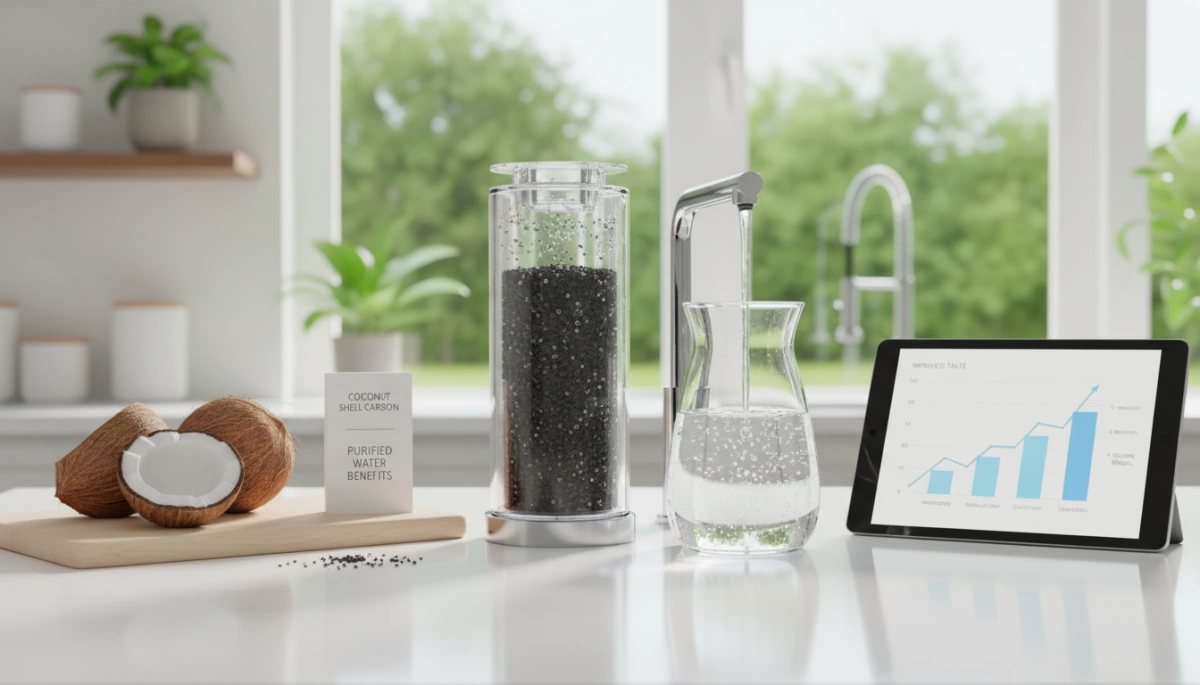
When we engineer our filtration systems, the choice of material for the final stage is non-negotiable. We rely on Coconut Shell Activated Carbon rather than standard coal or wood-based alternatives because it offers superior performance for that final polish. Understanding how charcoal filtration works reveals why the source material dictates the quality of your drinking water.
Coconut Shell vs. Coal-Based Carbon
The difference isn’t just in the source; it’s in the purity. Coal-based carbon often contains high ash content, which can leach heavy metals or introduce a “dusty” taste back into the water. In contrast, coconut shell carbon is a renewable resource that creates a cleaner, harder, and more effective filtration medium. It is the gold standard for Coconut shell carbon final stage applications because it targets taste-altering contaminants without adding anything back into the water.
| Feature | Coconut Shell Carbon | Coal-Based Carbon |
|---|---|---|
| Pore Structure | High density of micropores | Larger macropores |
| Ash Content | Very Low (Clean taste) | High (Can taste dusty) |
| Target Contaminants | VOCs, Chlorine, Taste/Odor | Larger organic molecules |
| Hardness | High (Less dust) | Softer (More fines) |
Benefits of High Micropore Density
The secret to achieving a crisp fresh water after RO lies in the surface area. Coconut shell carbon possesses an incredibly high density of micropores (tiny holes invisible to the naked eye). These micropores are perfectly sized to trap the smallest, most stubborn volatile organic compounds (VOCs) and gases that survive the initial filtration stages. This high micropore density ensures that every drop of water has maximum contact with the carbon, effectively stripping away any lingering odors.
Preventing Residual Bitterness with Composite Designs
Standard loose granular carbon can sometimes leave water tasting slightly acidic or bitter due to pH fluctuations or “channeling,” where water creates a path of least resistance and bypasses the filter media. We utilize composite designs in our High-quality post carbon block filters. By compressing the carbon into a solid block, we force the water to pass strictly through the dense carbon matrix. This uniform flow prevents bitterness and ensures the water retains a neutral, refreshing profile that rivals premium bottled water.
Common Taste Problems Solved by the Post-Carbon Block

When we talk about achieving the perfect flavor profile, the post-carbon stage is where the real work happens. Even after water passes through a high-precision RO membrane, it can still carry lingering sensory issues. This final polishing step is the difference between water that is technically clean and water that is genuinely enjoyable to drink.
Fixing Rubbery or Plastic Flavors
One of the biggest complaints with traditional RO systems is the “tank taste.” Water sitting in a storage tank’s rubber bladder can absorb a distinct plastic-like flavor over time. A high-quality post-carbon filter polishing stage is essential here; it scrubs away those leached odors right before the water hits your glass. While our tankless designs naturally avoid this storage issue, the carbon block remains the final safeguard against any residual system odors.
Eliminating Metallic and Bitter Notes
Sometimes, reverse osmosis water flat taste is accompanied by a slight acidity or metallic tang. This occurs because the water is so pure it effectively becomes “hungry,” picking up trace tastes from tubing or fittings. The carbon block helps neutralize these defects, ensuring the water doesn’t taste like the plumbing it traveled through.
Reviving Flat or Lifeless Water
Pure water shouldn’t taste like a laboratory experiment; it should taste crisp. Without this final stage, demineralized water can feel heavy or “dead” on the palate. The odor removal capabilities of the carbon block restore that fresh, mountain-spring mouthfeel we all expect from a premium system.
Dealing with “Dusty” Taste After Replacement
If you notice a charcoal-like or “dusty” taste immediately after installing a new filter, don’t panic. This is simply loose carbon fines from the manufacturing process.
- The Cause: Harmless carbon dust released during initial activation.
- The Fix: Flush the system for about 5–10 minutes until the water runs clear.
- The Result: The flavor profile returns to being clean, sweet, and perfectly polished.
The Tankless RO Advantage for Optimized Post-Carbon Performance
Traditional reverse osmosis setups often rely on storage tanks, where purified water can sit for hours, potentially picking up a rubbery taste from the bladder before it even reaches the final filter. At DripLife, we focus on tankless designs to solve this specific issue. By eliminating the tank, we ensure you get fresh on-demand water that passes through the post-carbon block immediately before hitting your glass. This direct flow maximizes the polishing effect, ensuring the water tastes crisp rather than flat or stale.
Our systems are engineered for high-flow efficiency, such as our 500 GPD models. Unlike slow-drip tank systems, the consistent flow through the carbon block prevents channeling, ensuring uniform contact time for superior adsorption of residual odors. If you want to dive deeper into the mechanics, understanding how the reverse osmosis process works highlights why pressure and flow rate are critical for optimal filtration results.
Here is why a tankless configuration is superior for taste:
- No Secondary Pollution: Without a storage tank, there is zero risk of bacterial growth or “tank taste” interfering with the post-carbon filter’s job.
- Smart Monitoring: Our integrated displays show real-time TDS levels and filter life status, so you know exactly when the carbon block needs replacing to maintain that premium taste.
- Eco-Friendly Efficiency: We utilize a 1:1 pure-to-drain ratio, minimizing waste while maximizing the freshness of every cup.
Maintenance Tips to Maximize Taste Benefits
To keep your water tasting crisp and free of odors, consistent maintenance of the post-carbon filter is non-negotiable. This final stage is the gatekeeper of flavor; if it becomes exhausted, even the purest RO water can taste flat or pick up stale notes. We always emphasize that a high-quality post-carbon block is only as good as its maintenance schedule.
Recommended Replacement Intervals
While the Reverse Osmosis membrane can last up to two years, the post-carbon filter has a shorter lifespan because it actively adsorbs volatile organic compounds (VOCs) and odors. For most households using our DripLife RO-500G or similar systems, we recommend the following schedule to ensure taste enhancement:
| Filter Stage | Replacement Frequency | Signs It’s Time to Change |
|---|---|---|
| Post-Carbon Block | 6 – 12 Months | Water tastes “flat,” metallic, or has a faint chlorine odor. |
| RO Membrane | 12 – 24 Months | High TDS readings or significantly reduced water flow. |
| Pre-Filters (PP/GAC) | 6 – 12 Months | Drop in water pressure or visible sediment buildup. |
Proper Flushing Techniques
When you install a fresh replacement filter, you might notice the water looks slightly cloudy or gray initially. This is normal and is caused by loose carbon fines (dust) and trapped air bubbles. To avoid a “dusty” initial taste, you must flush the new cartridge properly.
- Run the Faucet: Turn on the pure water faucet and let it run for 3 to 5 minutes continuously.
- Check Clarity: Fill a clear glass. If the water is still cloudy, continue flushing until it runs crystal clear.
- Discard First Batch: Do not drink the first few gallons produced after a filter change; use this water for plants or cleaning instead.
Monitoring TDS and Taste Changes
While a TDS (Total Dissolved Solids) meter is excellent for checking the efficiency of your RO membrane, it doesn’t tell the whole story about taste. A post-carbon filter polishing step doesn’t significantly lower TDS; its job is to adjust the flavor profile.
If your smart faucet shows a low TDS reading (indicating the membrane is working) but the water tastes unpleasant, the issue is almost certainly the post-carbon block. For the ultimate refreshing experience, many users find that pairing a well-maintained filtration system with an under sink water chiller further enhances that crisp, premium mouthfeel by keeping the temperature consistently low.
Pairing with Full System Care
Replacing the carbon block alone isn’t enough if the rest of the system is dirty. When swapping out cartridges, we suggest sanitizing the filter housing (if applicable) to prevent bacterial growth that could bypass the carbon block. Keeping the entire flow path clean ensures that the activated carbon block taste improvement capabilities are fully utilized, delivering bottle-quality water directly from your tap.
Frequently Asked Questions About Post-Carbon Filters
Does a post-carbon filter add minerals back to the water?
A standard high-quality post carbon block is designed primarily for post-carbon filter polishing, meaning it focuses on refining taste and removing lingering odors rather than adding nutrients. While it excels at RO post filter odor removal and eliminating volatile organic compounds (VOCs), it does not typically reintroduce minerals like calcium or magnesium. If you are looking to alter the mineral content, you would generally need a separate remineralization stage, but the carbon block ensures the water is clean and crisp—perfect if you plan to use it with home soda machines for sparkling beverages.
How often should I change my post-carbon block?
To maintain that final stage water filtration taste, we recommend replacing the post-carbon filter every 6 to 12 months, depending on your local water quality and daily usage. Even if the flow rate remains strong, the carbon’s adsorption sites can become saturated over time. Sticking to this schedule prevents the “exhausted” carbon from releasing captured contaminants back into the water and ensures you always get activated carbon block taste improvement.
Can I add a post-carbon filter to my existing RO system?
If you have a standard modular RO setup, adding a final polishing stage is often possible. However, with integrated systems like the DripLife RO-500G, the post-carbon stage is already built into the optimized 5-stage design. This engineering ensures the coconut shell carbon final stage works in perfect sync with the membrane and pump, so there is no need for aftermarket modifications to achieve premium water quality.
Why does my water taste acidic even with a post-filter?
Reverse Osmosis removes dissolved solids, including alkaline minerals, which can slightly lower the pH of the water. While the post-carbon filter polishing step removes the “flat” or “plastic” taste associated with storage tanks and residual gases, it does not drastically raise the pH. The result is a pure, neutral profile that feels “crisp” rather than heavy. If the taste is sharply acidic, it may indicate that the membrane is functioning correctly (removing all buffering minerals) but the post-filter needs flushing or replacement to smooth out the flavor profile.