

















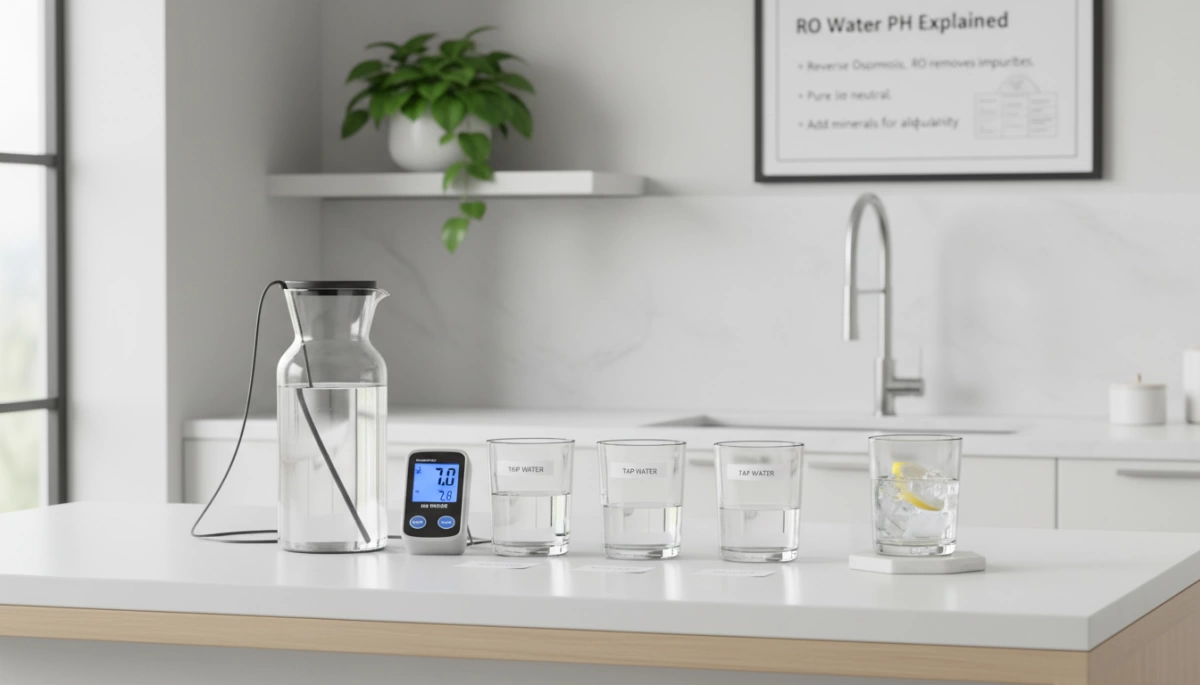
The Science Behind Acidic RO Water
The ‘Hungry Water’ Phenomenon and TDS Removal
When we discuss the purity of water from our DripLife G2 or G3 systems, we are talking about the near-total removal of Total Dissolved Solids (TDS). Our 0.0001-micron Reverse Osmosis Membrane is incredibly efficient at stripping away contaminants, heavy metals, and salts. However, this process creates what is scientifically known as “hungry water.”
Because the water has been stripped of its mineral content (calcium, magnesium, etc.) which acts as a natural pH buffer, it becomes chemically unbuffered. This Water Demineralization leaves the water in a highly pure state, eager to bond with gases it encounters. This isn’t a flaw in the system; it is the direct result of achieving industry-leading purity levels.
Understanding Henry’s Law and Carbon Dioxide Absorption
The primary reason for the pH shift in RO water lies in Henry’s Law. While our high-precision filters block solid contaminants and bacteria, gases are small enough to pass through the semi-permeable membrane.
- Gas Permeability: Carbon dioxide (CO2) from the air easily permeates the membrane.
- Absorption: Once inside the system, the highly pure water absorbs this CO2 rapidly because there are no competing dissolved solids.
The Chemical Reaction: Water Plus CO2 Equals Carbonic Acid
Once the CO2 dissolves into the filtered water, a specific chemical reaction occurs, leading to Carbonic Acid Formation. This is the scientific root of the pH drop.
The Reaction:
H₂O (Water) + CO₂ (Carbon Dioxide) → H₂CO₃ (Carbonic Acid)
This reaction creates a very mild acid. Because we have removed the alkaline minerals that would normally neutralize this acid, the pH of the water naturally dips below neutral (7.0). This indicates that the Reverse Osmosis Membrane is functioning correctly by removing the buffering TDS.
Comparing RO pH Levels to Rainwater and Soda
To put the “acidic water” debate into perspective, we must look at the pH scale comparatively. The acidity found in RO water is negligible compared to common beverages.
- Standard RO Water: pH 6.0 – 6.5 (Mildly acidic)
- Natural Rainwater: pH 5.6 – 6.0 (Naturally acidic due to atmospheric CO2)
- Coffee: pH 4.5 – 5.0 (Moderately acidic)
- Soda/Soft Drinks: pH 2.5 – 3.5 (Highly acidic)
The slight acidity in our purified water is similar to natural rainwater. It is chemically distinct from the corrosive acidity found in sodas. The drop in pH is simply a byproduct of removing the impurities that artificially inflate the pH in tap water.
Health Implications: The Truth About Acidosis
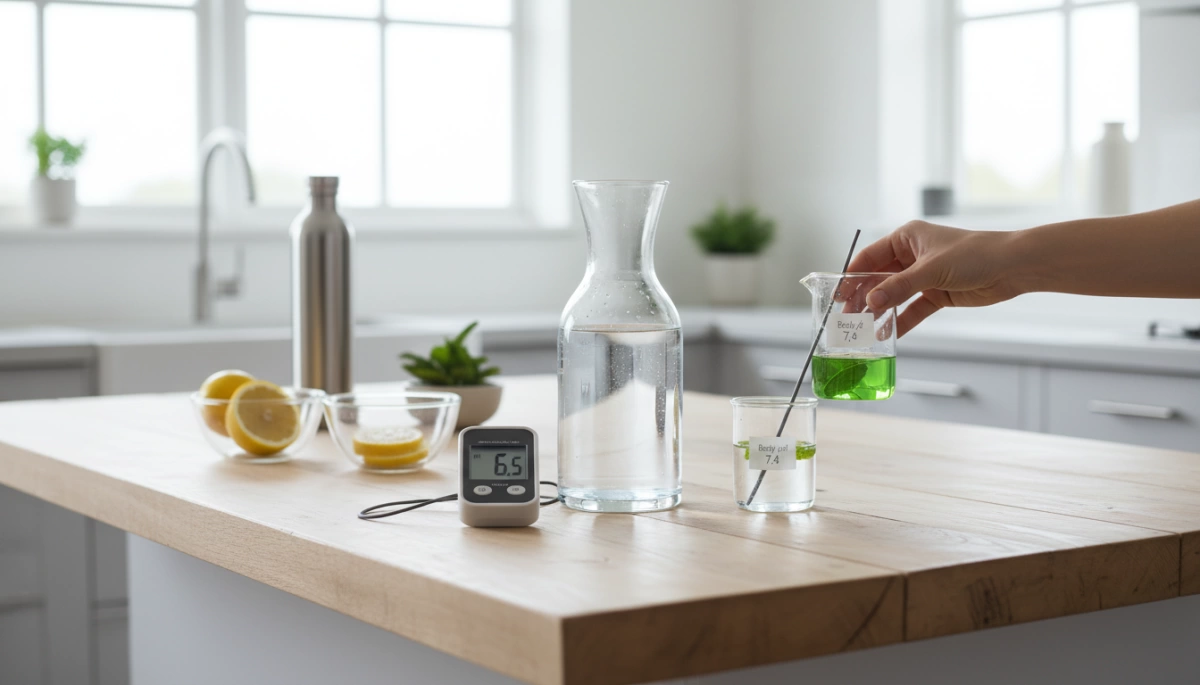
There is a pervasive myth in the water industry that drinking slightly acidic reverse osmosis (RO) water will cause your body to become acidic, a condition known as acidosis. Let’s be clear: drinking purified water with a pH slightly below 7.0 does not alter your blood pH. The human body is incredibly resilient and has robust mechanisms to maintain balance regardless of whether your water is slightly acidic or alkaline.
Homeostasis 101: How Lungs and Kidneys Regulate pH
Your body is a biological machine designed to maintain pH Homeostasis. The pH of human blood is strictly regulated between 7.35 and 7.45. If it deviates even slightly from this range, your body immediately corrects it.
- The Lungs: They regulate pH by exhaling carbon dioxide (CO2), which is acidic. If your blood becomes too acidic, your breathing rate increases to expel more CO2.
- The Kidneys: They filter out excess acids or bases through urine and adjust the reabsorption of bicarbonate to buffer the blood.
Because of this efficient system, the pH of the water you drink has a negligible impact on your systemic pH balance. The “acidic water” fear is largely a marketing tactic rather than a medical reality.
Comparing Water Acidity to Common Foods
To put the acidity of RO water into perspective, we need to look at what else we consume daily. Pure RO water typically has a pH between 6.0 and 6.5 because it absorbs CO2 from the air, forming mild carbonic acid. However, this is far less acidic than many healthy foods and drinks we enjoy without hesitation.
pH Comparison of Common Beverages:
| Substance | Approximate pH Level | Acidity Level |
|---|---|---|
| Stomach Acid | 1.5 – 3.5 | Extremely Acidic |
| Soda / Cola | 2.5 | Highly Acidic |
| Orange Juice | 3.5 | Highly Acidic |
| Black Coffee | 5.0 | Moderately Acidic |
| RO Water | 6.0 – 6.5 | Slightly Acidic |
| Tap Water | 7.0 – 7.5 | Neutral |
As you can see, a cup of coffee is significantly more acidic than RO water. If your body can handle a morning brew or a glass of orange juice without going into acidosis, it can certainly handle the high-purity water from our systems. Understanding the benefits of under-sink RO systems helps clarify that the priority is removing harmful contaminants like lead and PFAS, which pose a far greater health risk than a slight shift in pH.
Clarifying the WHO Stance on Demineralized Water
The World Health Organization (WHO) has published reports on Water Demineralization, which some critics cite to claim RO water is unhealthy. However, the context is crucial. The WHO’s primary concern regarding demineralized water is twofold:
- Cooking: Cooking food in demineralized water may cause minerals to leach out of the food and into the water.
- Dietary Intake: Populations that rely solely on water for mineral intake (which is rare) might suffer deficiencies.
However, for the average person in the United States with a balanced diet, the Bioavailability of Minerals from food is far superior to that from water. You would need to drink bathtubs full of tap water to equal the calcium found in a single piece of cheese.
The Difference Between Acidity and Mineral Deficiency
It is important to distinguish between acidity (pH level) and mineral deficiency (low TDS).
- Acidity: Caused by the lack of buffering minerals (calcium, magnesium) allowing the water to absorb CO2. This affects taste but is not harmful.
- Mineral Deficiency: The absence of dissolved solids. While RO removes minerals, it also removes 99.99% of toxins.
The trade-off is clear: we sacrifice a negligible amount of trace minerals to ensure the absolute removal of heavy metals, bacteria, and industrial runoff. For those concerned about Electrolyte Balance, a simple diet rich in fruits and vegetables easily compensates for the minerals removed during filtration.
Taste, Corrosivity, and Sensory Experience
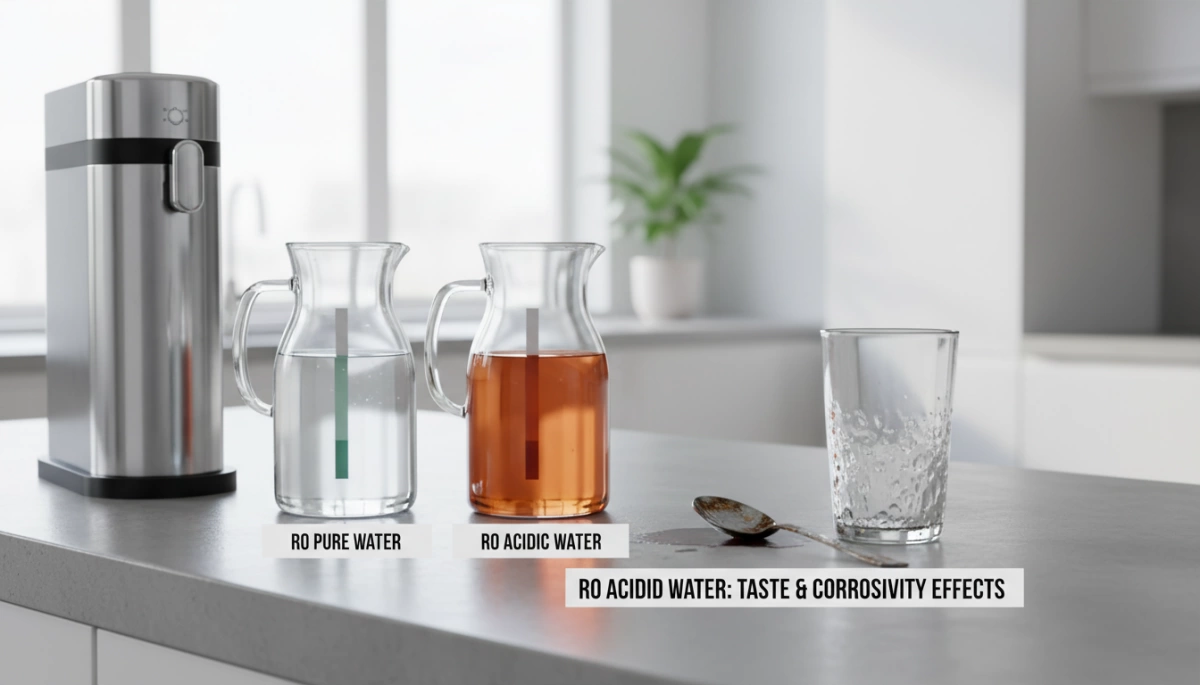
When we strip water down to its molecular basics, we change more than just its purity; we alter the entire sensory experience. While the goal of a high-efficiency RO system is to remove harmful contaminants like lead and arsenic, the resulting drop in Total Dissolved Solids (TDS) has noticeable effects on how the water tastes and interacts with its environment.
Why Low pH Water Tastes Flat or Metallic
Pure RO water is often described as “hungry.” Because the Reverse Osmosis Membrane removes 99.99% of dissolved solids, the water lacks the minerals—specifically calcium and magnesium—that give tap water its familiar, crisp mouthfeel or “body.” Without this natural Buffer Capacity, the water readily absorbs carbon dioxide from the air, forming weak carbonic acid.
To some palates, this shift makes the water taste “flat,” while others might detect a slightly metallic tang. This isn’t a sign of contamination; it is actually a sign of extreme purity. However, if you miss the mouthfeel of spring water, you might look into solving the bland taste of pure water with remineralization to restore that mineral balance and neutralize the flavor profile.
Impact of Acidic Water on Coffee and Tea Extraction
For coffee aficionados and tea lovers, water chemistry is just as important as the beans or leaves. Water acts as a solvent, and its mineral content dictates how well it extracts flavor compounds.
- The Scale Trade-off: Using pure RO water is excellent for protecting expensive espresso machines and kettles from limescale buildup.
- Flavor Extraction: However, water with extremely low pH and zero mineral content can lead to “hollow” extraction. Magnesium helps pull out fruity and sharp notes, while bicarbonates buffer acidity. Without them, your morning brew might taste overly bright, sour, or lacking in body.
Potential Corrosivity Issues with Copper Piping
The concept of “hungry water” extends to your plumbing as well. Water with very low TDS seeks to bond with ions to reach equilibrium. If this slightly acidic, aggressive water sits in copper pipes for extended periods, it can slowly leach metal ions from the plumbing walls. Over many years, this can potentially lead to pinhole leaks in older metal infrastructure.
This is exactly why DripLife systems utilize an integrated waterway design and food-grade plastic components internally. We ensure the water remains pure and travels through safe materials, preventing any interaction with corrosive metals before it hits your glass.
The Solution: Combining Purity with Alkalinity
Why You Need Both Clean and Mineral-Rich Water
When we talk about water quality, the conversation often gets stuck on pH, but the real priority should always be purity. In the US, where tap water can carry unseen contaminants like lead, arsenic, and PFAS, the primary goal of any filtration system is to strip these harmful elements away. However, we understand the desire for balance. The ideal scenario for drinking water is a foundation of absolute purity—free from heavy metals and bacteria—followed by the consideration of mineral content. Our tankless systems, such as the DripLife G3, focus on creating this ultra-pure base by removing Total Dissolved Solids (TDS) that contribute to bad taste and health risks.
Deep Dive into Multi-Stage Filtration Technology
To achieve this level of purity, we utilize a sophisticated multi-stage filtration process compressed into a high-efficiency 2-filter setup. This isn’t just about passing water through a screen; it’s a comprehensive purification engine.
- PPC Filter (Composite): This is the first line of defense. It combines PP cotton and a carbon block to tackle large particles. It effectively removes sediment, rust, and residual chlorine, which are common culprits for foul odors and bad tastes in municipal water.
- RO Filter (0.0001 Micron): This is the heart of the system. Our high-precision Reverse Osmosis Membrane operates at a 0.0001-micron accuracy. This stage is responsible for intercepting dissolved salts, heavy metals, and organic matter.
By integrating these stages, we ensure that the water you drink is chemically clean. While traditional systems might use bulky 7-stage setups, our integrated design achieves superior filtration efficiency without the risk of secondary pollution found in storage tanks.
The Role of Mineral Balance and pH
A common question regarding high-precision RO filtration is the reduction of minerals like calcium and magnesium, which can result in slightly acidic water. This happens because the Reverse Osmosis Membrane is so effective it doesn’t discriminate between harmful lead and beneficial calcium. However, understanding the trade-off is vital: the health risk from contaminants far outweighs the lack of trace minerals, which are better sourced from a balanced diet.
For those specifically looking to alter the taste profile or acidity of their purified water, understanding Calcium and Magnesium Restoration is key. Reintroducing these alkaline earth metals is the standard method for shifting pH back towards neutral or alkaline. While our primary focus is the removal of harmful TDS, users interested in tweaking their water chemistry can explore methods for pH of RO water levels testing and adjustment to find their perfect balance of purity and taste.
Standard Reverse Osmosis vs. Remineralized RO
When you are shopping for a filtration system, you usually face a choice between pure reverse osmosis and systems that add minerals back in. Understanding the difference between purified water vs filtered water helps clarify why standard RO focuses on removing contaminants first and foremost.
Differences in pH Levels and TDS Counts
The core difference lies in the Total Dissolved Solids (TDS) and the resulting pH balance. Our DripLife G2 and G3 systems utilize a high-precision 0.0001-micron RO membrane. This creates “standard” RO water, which is exceptionally pure but chemically distinct from mineral-added water.
- Standard RO: The filtration process strips away 99.99% of solids, including heavy metals and dissolved minerals. Without minerals to act as a buffer, the water absorbs CO2 from the air, forming mild carbonic acid. This results in a lower pH (often 6.0–6.5) and extremely low TDS readings.
- Remineralized RO: These systems add a post-filter stage (often calcium or magnesium) to artificially raise the TDS and shift the pH back to an alkaline state (7.5+).
| Feature | Standard RO (DripLife) | Remineralized RO |
|---|---|---|
| Filtration Focus | Absolute Purity (0.0001 micron) | Purity + Mineral Additives |
| TDS Level | Very Low (High Purity) | Moderate to High |
| pH Level | Slightly Acidic (Natural Outcome) | Alkaline (Artificially Adjusted) |
| Primary Benefit | Safety & Contaminant Removal | Taste & Mineral Intake |
Taste Comparison: Flat vs. Crisp
The absence or presence of minerals significantly alters the sensory experience.
- Flat/Smooth: Standard RO water is often described as “smooth” or “light.” Because it lacks heavy minerals, it doesn’t have a distinct flavor profile. This makes it the perfect blank canvas for cooking, brewing coffee, or mixing baby formula, as it doesn’t alter the taste of your ingredients.
- Crisp: Water with added calcium or magnesium tends to have a “crisp” or slightly heavier mouthfeel, similar to bottled spring water.
Visualizing Water Quality with Smart Monitoring
Regardless of where you stand on the pH debate, knowing your water is clean is non-negotiable. This is why we integrated Smart Monitoring into our tankless designs.
We don’t believe in guessing games. The DripLife G2 and G3 feature real-time TDS displays directly on the faucet or system body.
- Instant Feedback: You see the exact purity level of every cup.
- Filter Life Indicators: The system alerts you exactly when the PPC or RO filter needs a “twist-and-pull” replacement.
This technology ensures that even if the pH is slightly lower due to the high-efficiency filtration, the TDS readout confirms the absence of harmful solids like lead, arsenic, and PFAS. You get verifiable proof of purity in roughly 6 seconds.
FAQs: Common Concerns About Reverse Osmosis pH
We hear these questions every day. When you upgrade to a high-efficiency system like the DripLife G3, you are dealing with advanced filtration that fundamentally changes water chemistry. Let’s clear up the confusion surrounding acidity and health.
Does RO Water Leach Minerals from Your Body?
This is the most persistent Acidosis Myth out there. The short answer is no. The idea that drinking water with low Total Dissolved Solids (TDS) will strip minerals from your bones is not supported by clinical evidence.
Here is the reality of Bioavailability of Minerals:
- Source Matters: We get the vast majority of our essential minerals (calcium, magnesium, potassium) from a balanced diet, not from hydration.
- Homeostasis: Your body is an expert at maintaining pH Homeostasis. Drinking purified water does not override your kidneys’ ability to regulate internal chemistry.
- Safety: The World Health Organization (WHO) has clarified that while demineralized water lacks minerals, it does not actively leach them from a healthy body in a dangerous capacity.
Is Slightly Acidic Water Safe to Drink Long-Term?
Absolutely. The slight drop in pH in Reverse Osmosis Membrane filtered water occurs because the purification process removes the buffering minerals, allowing the water to absorb carbon dioxide (Henry’s Law). This results in a pH usually between 6.0 and 6.5.
To put this in perspective:
- Orange Juice: pH ~3.5
- Coffee: pH ~5.0
- RO Water: pH ~6.0–6.5
If your body can handle a morning coffee or a glass of juice without issue, it can certainly handle pure water. When understanding the key differences between still water vs tap water, it becomes clear that the removal of harmful contaminants like lead and arsenic far outweighs the minor shift in acidity.
How Does Remineralization Change the Taste?
Taste is subjective, but chemistry is not. Standard RO water is often described as “crisp” or “clean” because it lacks heavy metals and chlorine. However, some people find it tastes “flat” due to the low mineral content.
Alkaline Remineralization—the process of adding calcium or magnesium back into the water—changes the sensory experience:
- Texture: Minerals add a slight “body” or smoothness to the water.
- Flavor Profile: It neutralizes the perceived acidity, making the water taste more like natural spring water.
- Cooking: Interestingly, many chefs prefer the “hungry,” pure state of non-remineralized RO water for extracting flavors in stocks and coffee.
What is the Ideal pH for Drinking Water?
Regulatory bodies like the EPA suggest a pH range of 6.5 to 8.5 for municipal water, primarily to prevent corrosion in city pipes, not because other levels are toxic to humans.
For a home system, the “ideal” depends on your goal:
- For Purity: A pH of 6.0–7.0 is standard for high-purity RO systems protecting you from PFAS and bacteria.
- For Alkalinity: A pH of 8.0+ is sought after by those prioritizing Electrolyte Balance, though this requires an additional remineralization stage.
Ultimately, the safety of your water is defined by what is absent (toxins, bacteria, heavy metals) rather than a specific pH number.