













How Does a Carbon Water Filter System Work?
When I look at the core of effective water purification, the carbon water filter system stands out as the unsung hero of flavor and safety. While Reverse Osmosis (RO) membranes do the heavy lifting against dissolved solids, the carbon stage is what makes the water actually enjoyable to drink. In our DripLife systems, we utilize high-grade carbon specifically designed to polish water, removing the harsh chemical bite found in municipal supplies and delivering that “pure, crisp taste” we all crave.
The Adsorption Process Explained
To understand why these filters are so effective, we have to look at the adsorption process. Unlike a sponge that absorbs liquid, activated carbon works by adsorbing contaminants—meaning impurities stick to the surface of the carbon like a magnet.
We treat our carbon with oxygen to open up millions of tiny pores between the carbon atoms. This creates a massive surface area; in fact, a single pound of activated carbon can have a surface area equivalent to over 100 acres. As water flows through our system, organic compounds and chemicals get trapped in these microscopic pores, leaving the clean water to pass through.
What Contaminants Do Carbon Filters Remove?
A robust activated carbon water filter system is essential for targeting chemicals that affect both health and sensory experience. While our RO membrane handles heavy metals like lead and arsenic (down to 0.0001 microns), the carbon stages focus on:
- Chlorine and Chloramine: These are the primary culprits behind that “swimming pool” smell and taste in city water.
- Volatile Organic Compounds (VOCs): Carbon is highly effective at reducing herbicides, pesticides, and industrial solvents.
- Taste and Odor: By removing organic compounds, the filter restores the natural, neutral taste of water.
- Sediment and Rust: When used as a pre-filter, carbon blocks also help trap larger particulates.
Granular Activated Carbon vs Carbon Block
Not all carbon filters are created equal. In the industry, you will generally see two types: Granular Activated Carbon (GAC) and Activated Carbon Block (CTO).
- Granular Activated Carbon (GAC): These contain loose granules of carbon. While they allow for high flow, water can sometimes create paths (channeling) around the granules, letting some contaminants sneak through.
- Activated Carbon Block: This is the superior choice for high-performance filtration. We compress fine carbon powder into a solid structure.
At DripLife, we prioritize carbon block filtration made from natural coconut shell carbon. This dense structure forces every drop of water to pass through the carbon matrix, maximizing contact time and ensuring consistent micron rating accuracy. This design not only prevents channeling but also acts as a final polishing stage to ensure your water tastes fresh immediately after the RO process.
Comparing Types of Carbon Water Filter Systems
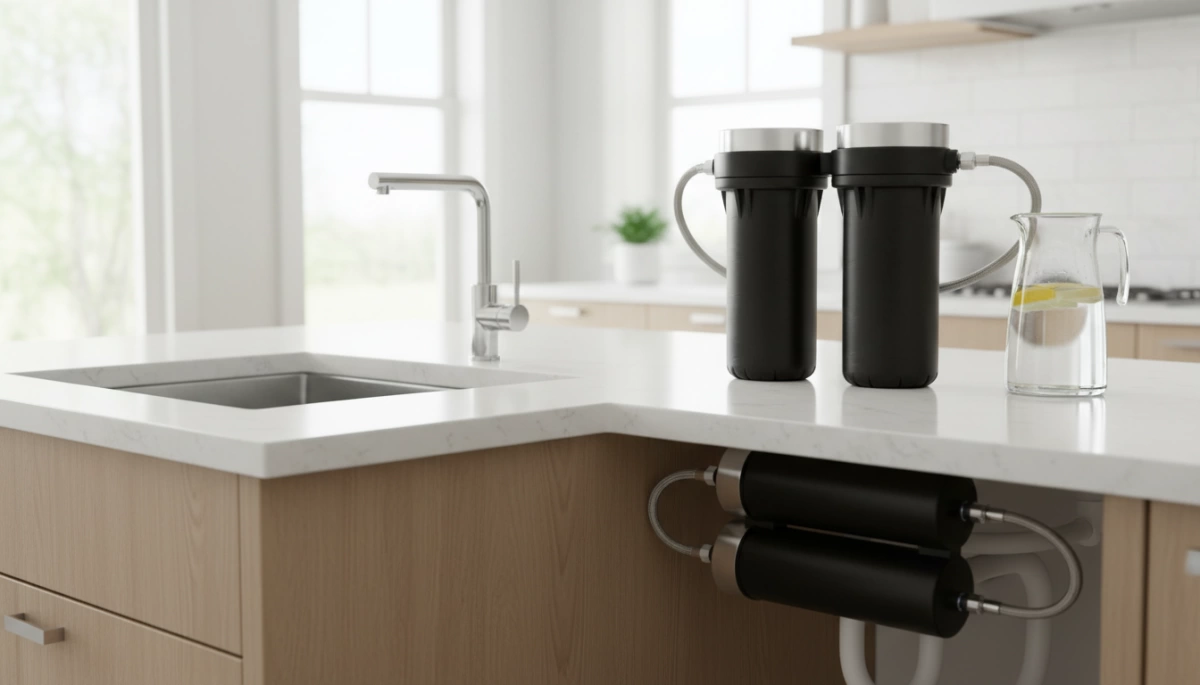
When selecting a carbon water filter system, it is crucial to understand that the application determines the design. We see three main categories in the market, each serving a distinct purpose in how they manage water flow and filtration density. Whether you are looking for a comprehensive whole house carbon filter or a precision-focused point-of-use (POU) system, the goal is always cleaner, safer water.
Under-Sink Water Filtration (Point-of-Use)
This is where we focus our innovation. Under-sink water filtration systems are designed to provide the highest level of purity right where you fill your glass. In our tankless Reverse Osmosis (RO) units, we combine Activated Carbon Blocks with RO membranes to achieve a filtration accuracy of 0.0001 microns. This setup does more than just remove sediment; the carbon stage specifically targets chlorine, taste, and odors, while the RO membrane handles heavy metals and dissolved solids.
Because these are point-of-use (POU) systems, we can engineer them for high performance without wasting space. Our tankless design saves 70% of under-sink space compared to traditional bulky tanks, eliminating the risk of secondary pollution. With flow rates up to 800 GPD, you get a 6oz cup of purified water in just 8 seconds. For homeowners dealing with varying local water conditions, tailoring your RO system features for specific regional water qualities ensures that the carbon and membrane stages work efficiently together to tackle specific contaminants like lead or arsenic.
Whole House Carbon Filter Options
A whole house carbon filter is installed at the main water entry point of your home. These systems are excellent for general water treatment, specifically for chlorine and chloramine removal across all taps, showers, and appliances.
- Pros: Protects plumbing from scale and chemicals; improves shower water quality.
- Cons: Generally has a lower filtration precision compared to under-sink RO systems. They are not designed to remove ultra-fine contaminants like TDS (Total Dissolved Solids) or heavy metals to the same degree as a dedicated drinking water system.
While a whole house unit handles volume, it lacks the “polishing” capability of a dedicated carbon water filter system designed for drinking.
Countertop and Faucet Mount Units
For renters or those unable to modify plumbing, countertop and faucet-mount units offer a middle ground. These typically use Granular Activated Carbon (GAC) or smaller carbon blocks.
- Installation: Zero plumbing required; attaches directly to the faucet nozzle.
- Performance: Limited by size. The contact time between the water and the carbon is shorter, which can reduce the effectiveness of adsorption compared to our high-capacity under-sink Activated carbon block (CTO) filters.
- Maintenance: Filters require frequent changing due to smaller surface area.
Comparison of Carbon Filtration Setups
| Feature | Under-Sink RO + Carbon (POU) | Whole House Carbon Filter | Countertop/Faucet Mount |
|---|---|---|---|
| Primary Goal | Maximum Purity (Drinking/Cooking) | General Utility (Bathing/Cleaning) | Basic Filtration (Convenience) |
| Filtration Precision | High (0.0001 micron with RO) | Low to Medium (5-20 microns) | Medium (1-5 microns) |
| Contaminant Removal | 1,000+ (Lead, Fluoride, TDS) | Chlorine, Sediment, VOCs | Chlorine, Taste, Odor |
| Flow Rate | High (400-800 GPD) | Very High (Entry Flow) | Low to Medium |
| Space Required | Compact (Under Cabinet) | Large (Garage/Basement) | Counter Space/Faucet Tip |
We engineer our under-sink solutions to bridge the gap between speed and purity. By utilizing a 2:1 pure-to-drain ratio, we save 600% more water than traditional systems while ensuring the carbon block has sufficient contact time to deliver that crisp, clean taste.
How to Choose the Best Carbon Water Filter System
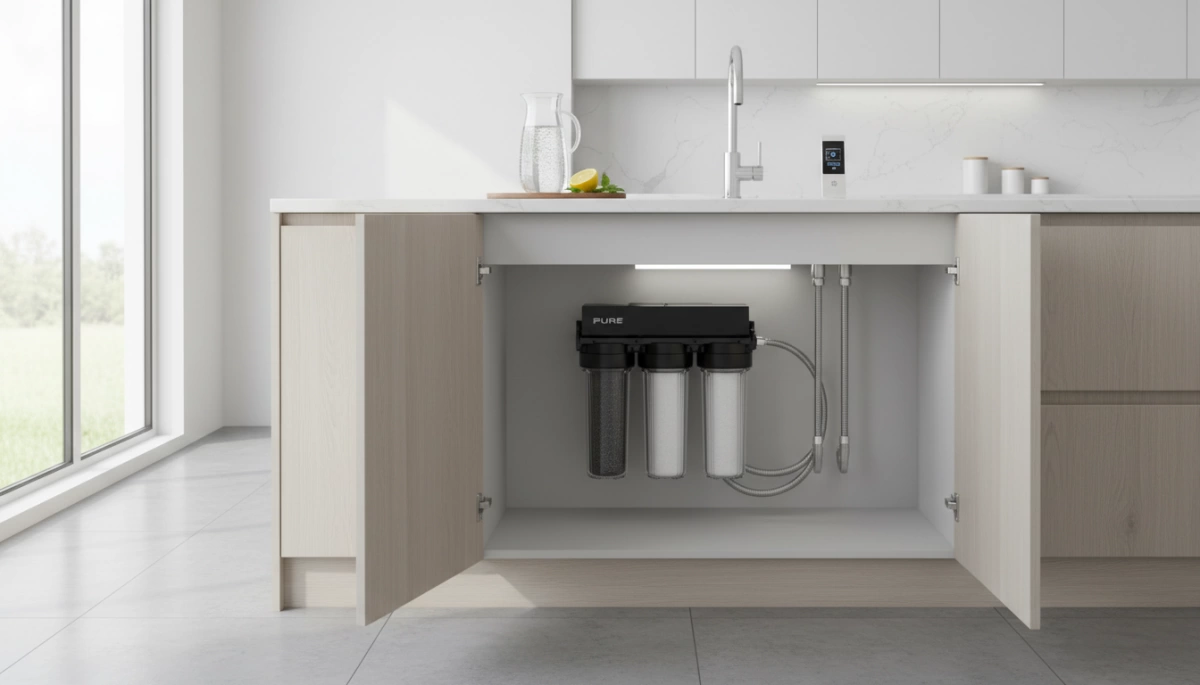
Selecting the right filtration setup requires looking beyond just the price tag. You need a system that balances purification power with daily convenience. We focus on integrating advanced activated carbon block (CTO) technology with high-precision membranes to ensure every drop is safe and refreshing.
Filtration Performance and Micron Rating Accuracy
The effectiveness of any carbon water filter system comes down to what it can actually catch. While standard granular carbon handles basic taste and odor issues, a solid activated carbon block provides a denser structure that traps finer particles. However, for total peace of mind, micron rating accuracy is the most critical metric.
Our systems combine carbon filtration with Reverse Osmosis precision, reaching down to 0.0001 microns. This multi-stage approach ensures effective VOC reduction and removal of heavy metals like lead and arsenic, which simple carbon filters might miss. Understanding what a water filter does at a microscopic level helps you realize why precision matters for health.
High-Flow Water Filter Rates Matter
In a busy American household, speed is a non-negotiable feature. Traditional systems often rely on slow trickles and storage tanks, but modern engineering has shifted toward high-flow water filter designs. We utilize tankless technology that delivers water instantly, eliminating the wait time associated with older models.
Flow Rate Comparison:
| Feature | Traditional Systems | Our Tankless Systems |
|---|---|---|
| Daily Output | 50–75 GPD | 400–800 GPD |
| Fill Speed | Slow (requires tank) | Fast (8 seconds per 6oz cup) |
| Water Efficiency | High waste | 2:1 Pure-to-Drain Ratio |
| Space Required | Bulky (Tank + Unit) | Compact (Save 70% space) |
A high GPD (Gallons Per Day) rating ensures your point-of-use (POU) system keeps up with demand, whether you are filling a coffee pot or a large stockpot for dinner.
DIY Water Filter Installation and Maintenance
We believe that clean water shouldn’t require hiring a plumber. DIY water filter installation is a standard expectation for our products. Our under-sink units are designed to be installed in under 30 minutes, connecting directly to your existing water line with minimal tools.
Maintenance is equally streamlined. Instead of guessing about filter cartridge replacement life, our systems feature smart monitoring with real-time indicators. When it is time for a change, the “Twist-and-Pull” design allows you to swap out the carbon block or membrane in just 3 seconds. This ease of use ensures your system maintains peak performance without becoming a household chore.
Why Manufacturing Quality and Materials Count
When you invest in a carbon water filter system, the build quality determines whether you get pure water or just a placebo effect. As a water filter manufacturer, we know that what goes inside the cartridge is just as important as the housing itself. Cheap fillers and poor structural design lead to channeling—where water bypasses the filter media entirely—and leaks that can damage your cabinetry. We prioritize premium materials and engineering precision to ensure every drop is actually treated.
Raw Materials and Coconut Shell Carbon
Not all carbon is created equal. We strictly use 100% natural coconut shell carbon for our activated carbon block (CTO) filters. Unlike coal-based carbon, coconut shell carbon has a vast network of micro-pores that are specifically sized to trap volatile organic compounds (VOCs) and chlorine.
- Superior Adsorption: The density of our carbon blocks ensures maximum contact time with water, effectively polishing the taste.
- Safety: Natural materials mean we aren’t introducing ash or heavy metals back into the water supply.
- Taste: This is the secret behind that “crisp” flavor profile that generic filters often miss.
Integrated Waterways and Structural Integrity
The biggest fear with under-sink installation is leakage. Traditional systems rely on a spiderweb of tubing and dozens of connectors, each one a potential failure point. We engineered our systems with an integrated waterway board. This consolidates water flow into a single, solid unit, reducing leakage risks by eliminating unnecessary connections.
This structural stability supports high-pressure environments required for efficient filtration. To keep the system running smoothly for years, we combine this robust hardware with advanced internal components. You can read more about how we maximize system longevity with our antifouling water filter membrane technology, which protects the core filtration stages from clogging prematurely.
Sustainability and Reducing Plastic Waste
Modern filtration is about efficiency and environmental responsibility. Our tankless design saves 70% of under-sink space and eliminates the need for bulky plastic storage tanks that eventually end up in landfills.
- Water Efficiency: Our systems operate at a 2:1 pure-to-drain ratio, saving 600% more water than traditional RO setups.
- Extended Filter Life: High-capacity filters mean fewer replacements.
- BPA-Free Materials: We ensure that the water you drink never touches harmful plastics during the filtration process.
Frequently Asked Questions About Carbon Filters
Does a carbon water filter system remove fluoride?
A standard activated carbon block (CTO) or granular activated carbon (GAC) filter is excellent for chlorine and chloramine removal and improving taste, but it is generally not effective at removing fluoride. To significantly reduce fluoride levels, you typically need a more advanced filtration method, such as Reverse Osmosis (RO). Our systems combine high-quality carbon stages with RO membranes to ensure you get the best of both worlds: the fresh taste from carbon filtration and the deep cleaning power that handles fluoride, arsenic, and heavy metals.
How often should I handle filter cartridge replacement?
Filter cartridge replacement life depends on your local water quality and daily usage, but sticking to a schedule is vital for maintaining micron rating accuracy.
- Composite Filters (Sediment + Carbon): Typically replaced every 6 to 12 months.
- RO Membranes: Usually last 12 to 24 months.
- Post-Carbon Filters: Replaced every 6 to 12 months to ensure a crisp finish.
We design our units with smart indicators that monitor life in real-time, so you aren’t guessing. Ignoring replacement can lead to clogging and reduced VOC reduction capabilities.
Is DIY installation hard for under-sink systems?
Not at all. Modern under-sink water filtration has moved away from complex plumbing. We focus on point-of-use (POU) system designs that are tankless and compact, saving significant space. Most homeowners complete the DIY water filter installation in under 30 minutes. The process usually involves a simple “Twist-and-Pull” mechanism for filters and quick-connect tubing. While a simple faucet tap water filter is the easiest entry point, our under-sink RO units are designed to be just as user-friendly for anyone with basic tools.
Sediment pre-filter vs carbon filter: What is the difference?
These two work as a team but handle very different jobs.
- Sediment Pre-filter: Acts as a physical barrier. It traps visible particulate matter like sand, rust, dirt, and dust. This protects the finer filters downstream from clogging prematurely.
- Carbon Filter: Uses the adsorption process to target dissolved chemicals. It removes chlorine, bad tastes, odors, and volatile organic compounds (VOCs).
For the best results, you want a system that integrates both. As a dedicated lead water filter manufacturer, we ensure our multi-stage systems meet rigorous NSF/ANSI 42 & 53 standards by layering these technologies effectively.