














If you manage facilities at schools or busy transit hubs, you’ve probably faced the frustration of public water dispensers handing out warm water during peak hours. The core question: Compressor vs Non-Compressor Cooling—which technology actually delivers reliable chilled water when demand is highest? Understanding why refrigeration matters isn’t just technical jargon—it’s key to ensuring consistent hydration, user satisfaction, and operational efficiency. In this post, we break down the critical differences between thermoelectric and compressor-based systems, showing why only compressor refrigeration meets the intense cooling needs of high-traffic environments. Let’s get to the heart of the matter.
The Physics of Cooling: How the Systems Differ
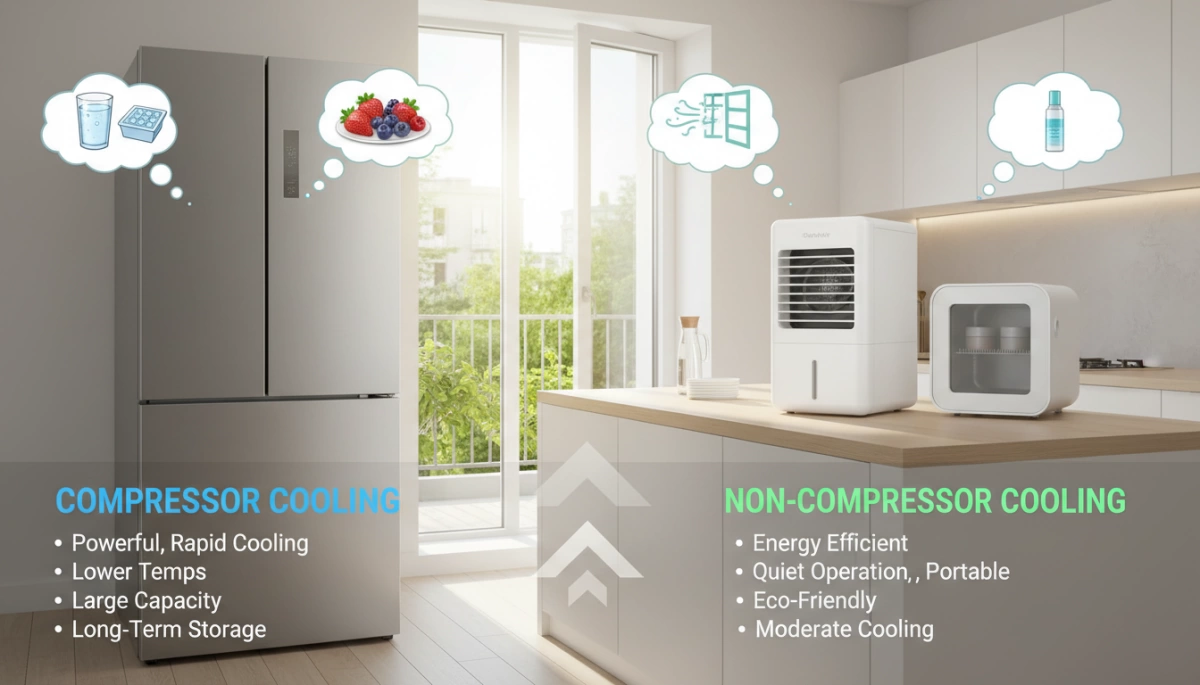
Non-Compressor (Thermoelectric/Peltier) Cooling uses the Peltier effect to transfer heat via electrical current across semiconductor materials. This solid-state method is compact and quiet, ideal for low-capacity applications. However, it struggles with high ambient temperatures and rapid recovery demands, limiting chilled water output stability and overall hydration station recovery rate. Best suited for light-duty or personal-use environments, thermoelectric coolers lack the robustness needed for high-footfall venues like schools and transit hubs.
Compressor Refrigeration (The Heavy Lifter) operates by compressing refrigerant gas, cycling heat through condenser and evaporator coils, and rejecting heat efficiently. This results in high-capacity cooling with steady chilled water output, measured in Gallons Per Hour (GPH), even under peak usage water cooling conditions. Compressor systems deliver superior refrigeration efficiency, consistent cooling performance, and resilience against ambient temperature fluctuations—critical for institutional water filtration systems in public hydration stations. This makes compressor refrigeration the gold standard for high-volume, demanding settings.
The “Peak Hour” Stress Test: Cooling Performance Under Pressure
Recovery rate is critical when it comes to hydration stations in schools and transit hubs. It’s all about how fast a cooler can chill water again after heavy use—peak usage means steady cold water or else disappointed users.
| Feature | Non-Compressor Cooling | Compressor Refrigeration |
|---|---|---|
| Cooling Recovery Speed | Slow; limited chilled water output | Fast; high chilled water capacity (GPH) |
| Performance Under Peak Use | Drops quickly, struggles to keep up | Maintains steady, reliable chilled output |
| Heat Impact | Sensitive; ambient heat reduces efficiency | Resilient; handles high ambient temperature well |
School Recess Scenario: Non-Compressor Struggles
During recess, student hydration stations face bursts of heavy usage. Non-compressor, thermoelectric coolers slow down, delivering tepid water as they struggle to recover chilled water fast enough. That’s a problem when kids need quick hydration, impacting health and focus.
Transit Hub Scenario: Compressor Resilience
Transit hubs face constant flow with fluctuating ambient heat. Compressor refrigeration units excel here, thanks to robust cooling cycles and strong ambient temperature performance. They handle 24/7 high-footfall venues without losing chilled water capacity, ensuring traveler hydration stays uninterrupted regardless of heat.
This resilience in cooling recovery speed and output stability marks compressor refrigeration as the clear choice for high-demand public bottle filling stations, making them essential for any facility prioritizing performance and user satisfaction. For more on robust water cooler specs and maintenance, see our guide on school water dispenser maintenance.
Why Schools Specifically Need Compressor Cooling
Schools face high-volume bursts of water usage, especially during recess and between class changes. Compressor refrigeration systems handle these peak usage water cooling demands by delivering consistent chilled water output, unlike non-compressor coolers that lag behind during rushes. Their robust housing and durable components withstand daily wear and tear better, crucial for busy school environments where equipment gets heavy use and occasional bumps are inevitable.
Beyond durability, chilled water from compressor refrigeration encourages safer, healthier hydration habits. Cold water helps maintain student alertness and cognitive performance, aligning with school health protocols. For facility managers, choosing a reliable school bottle filler refrigeration system means fewer maintenance headaches and a stable supply of refreshing water—critical for supporting large groups efficiently.
Considering these factors, compressor coolers provide the cooling consistency for high demand essential to school hydration stations, meeting both performance needs and wellness goals. For the best overall system, it’s smart to consider both cooling capacity and durability when selecting institutional water filtration systems that include refrigeration, ensuring smooth operation during peak school hours. For insights into water purification paired with reliable cooling, see our guide on multistage RO micron ratings.
The Transit Hub Imperative: Reliability Around the Clock
Transit hubs demand cooling solutions that work 24/7 without fail. High traveler volume means constant use of hydration stations, pushing water cooler systems to their limits. Compressor refrigeration units excel here, offering unmatched durability and consistent chilled water output stability even during peak usage water cooling.
Compared to thermoelectric or non-compressor coolers, compressors handle extended operation far better, reducing downtime and maintenance frequency. While electronic coolers may need more frequent servicing or replacement, compressor refrigeration bottle fillers are built for longevity, ensuring facility managers get reliable performance and lower lifecycle costs in high-footfall venues.
Choosing compressor-based public bottle filling station specs tuned for heavy-duty use maximizes uptime and meets the round-the-clock demands transit hubs face daily. This reliability is key to providing sustainable public hydration solutions that keep travelers refreshed without interruption.
The Facility Manager’s Guide: Choosing the Right Specs
When picking a water cooler, capacity ratings like Gallons Per Hour (GPH) are crucial. Schools and transit hubs need units that can handle peak usage water cooling without faltering. High-capacity water chillers ensure chilled water output stability during high-footfall events, avoiding those frustrating warm water moments.
A common myth is that compressor refrigeration means energy inefficiency. In reality, many commercial refrigeration units are designed for energy efficiency and consistent performance under heavy loads, offering better long-term savings than non-compressor coolers. Don’t let outdated ideas steer your choice away from reliable cooling performance.
At Driplife, our products undergo rigorous factory testing to guarantee durability and high chilled water capacity. Plus, we offer customization options tailored for specific needs, be it a busy school hallway or a high-traffic public bottle filling station. This OEM water solutions approach ensures your hydration station recovery rate matches real-world demands, cutting maintenance time and boosting user confidence.
For detailed insights into water filtration and competitive specs for institutional water filtration systems, check out our guide on how to conduct a competitive analysis of local water filter brands.