













Core Electrical Safety Standards (The “Big Three”)
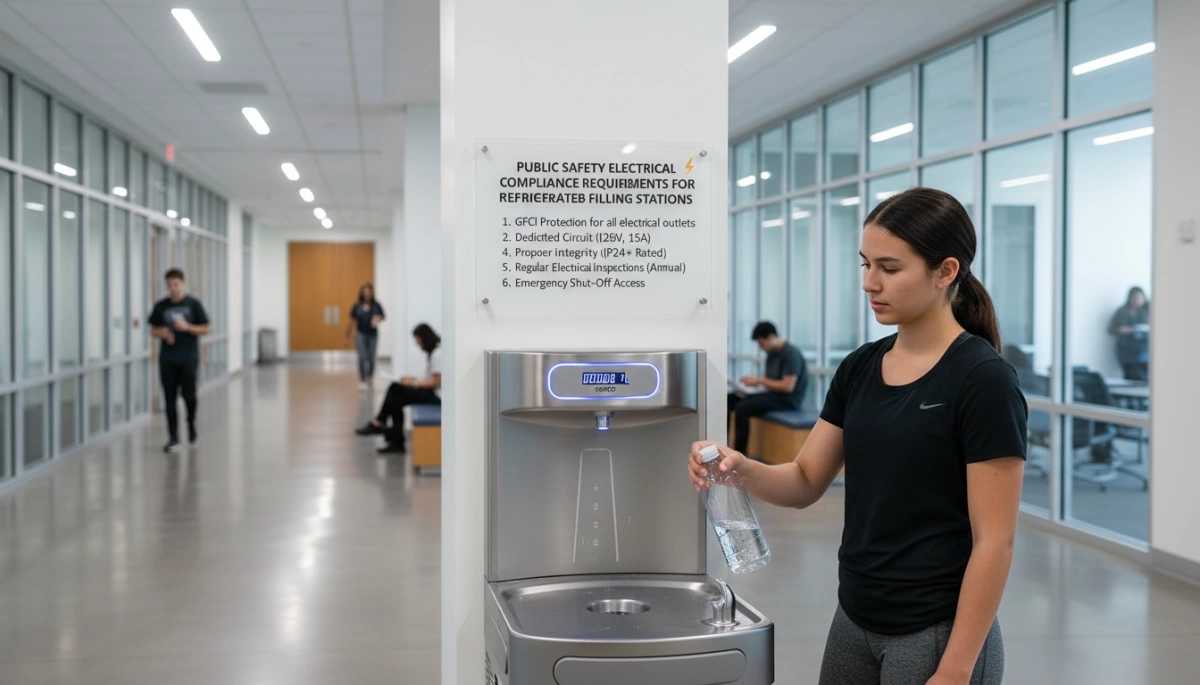
Public safety electrical compliance for refrigerated bottle filling stations hinges on adherence to three primary standards governing electrical safety and performance:
| Standard | Region | Focus & Requirements | Key Impact on Bottle Filling Stations |
|---|---|---|---|
| UL 399 | United States | Safety for drinking water coolers; UL Listed mark ensures verified electrical integrity and safety. | Confirms product meets strict electrical shock protection and component safety for public hydration stations. |
| IEC 60335-2-15 | International | Household and similar electrical appliances; mandates safety for refrigeration and water dispensing equipment. | Addresses safe operation under typical use, including electrical insulation and fault prevention in refrigerated systems. |
| CE Marking | Europe/Global | Compliance with Low Voltage Directive (LVD) and Electromagnetic Compatibility (EMC) requirements. | Ensures electrical safety and limits electromagnetic interference, critical for reliable operation in public environments. |
UL 399 is the cornerstone for U.S. public facility hydration stations, guaranteeing tested electrical components withstand operational stresses.
IEC 60335-2-15 defines international benchmarks for electrical risk controls in refrigeration and water dispensing appliances, guiding design to avoid shock hazards.
CE Marking, mandatory in Europe and recognized globally, combines safety and EMC rules ensuring devices not only operate safely but also do not disrupt other electronic systems—a vital factor in densely populated public areas.
Meeting these “Big Three” standards provides assurance against electrical hazards, supports regulatory compliance for public use, and reduces liability in refrigerated bottle filler installations.
Specific Electrical Risks in Refrigerated Systems
Refrigerated bottle filling stations come with their own electrical challenges that must be addressed for safe operation.
Compressor Load & Startup Surges
- Refrigeration compressors cause high electrical draw during startup.
- Wiring and breakers must handle surge currents beyond normal running loads to prevent tripping or overheating.
- Use wiring sized to accommodate at least 125% of the compressor full-load amps.
Condensation Management
- Moisture is a constant threat inside refrigeration systems.
- Electrical components must be isolated or sealed to prevent water ingress, reducing shock hazards and corrosion.
- Proper drip pans and moisture barriers are essential.
Grounding (Earthing) Requirements
- All refrigeration equipment requires redundant grounding paths to ensure any fault current safely dissipates.
- Effective grounding prevents electrical shock hazards in public hydration stations.
- Regular checks on grounding continuity are non-negotiable for compliance.
This targeted approach to electrical risks safeguards both equipment longevity and public safety in refrigerated bottle filling stations. For system reliability, addressing these points in installation and maintenance is key.
Protection Mechanisms: What to Look for in the Spec Sheet
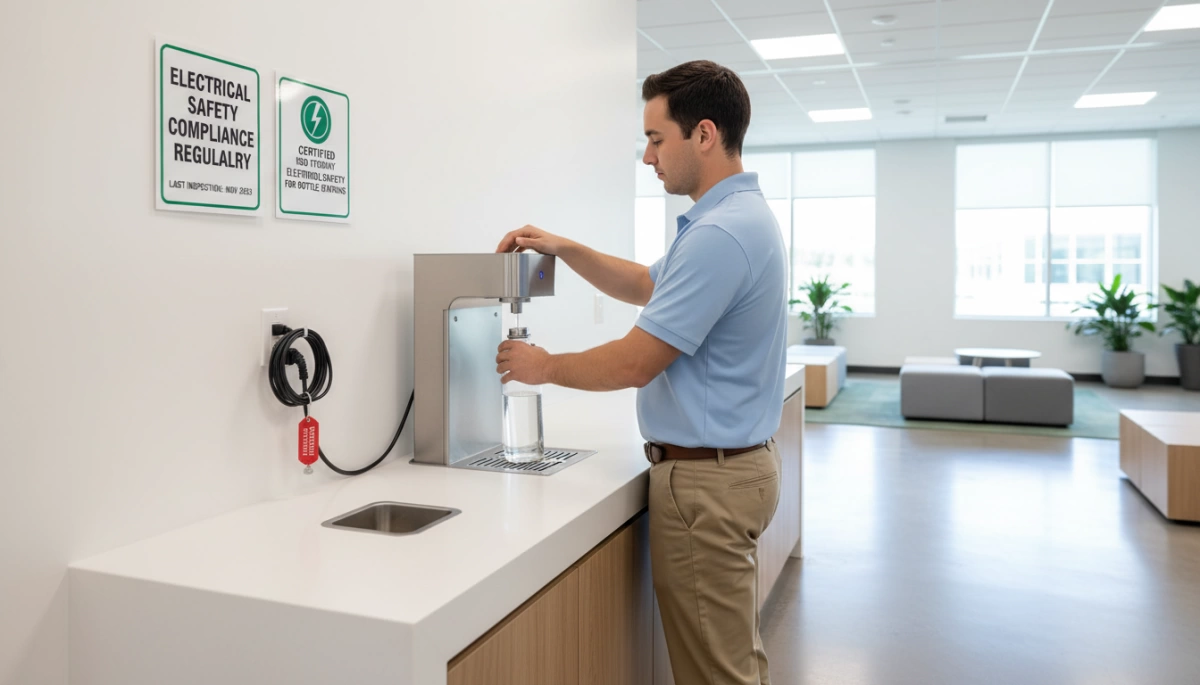
When choosing refrigerated bottle filling stations, focus on these key protection features to meet public safety electrical compliance and ensure reliable operation:
| Feature | Why It Matters | What to Check |
|---|---|---|
| GFCI / RCD Compatibility | Prevents electrical shock by cutting power in faults | Confirm device supports GFCI/RCD protection for water dispenser safety |
| IP Ratings (Ingress Protection) | Shields equipment from dust and moisture intrusion | Indoor units: Minimum IP20; Outdoor units: IP54 or higher required |
| Thermal Overload Protection | Prevents compressor damage from overheating | Look for built-in thermal overload relays on refrigeration compressors |
GFCI (Ground Fault Circuit Interrupter) and RCD (Residual Current Device) are essential for public facility hydration stations. They safeguard users against shock hazards by instantly disconnecting power during ground faults, especially critical around water.
Ingress Protection (IP) ratings classify how well the unit resists elements:
- IP20 suits dry indoor environments
- IP54+ needed for outdoor or semi-exposed installations to handle dust and water spray
Thermal overload protection ensures refrigeration compressors don’t burn out from excessive current or heat, extending equipment life and reducing downtime.
Be sure your spec sheet clearly states these features to meet electrical safety and compliance standards while protecting public users effectively.
For reliable bottle filler electrical safety, it’s wise to review detailed compliance documentation during procurement, like certificates confirming GFCI compatibility and valid IP ratings. Ensuring these protections align with your local electrical code prevents costly reworks and safety risks.
The Procurement Checklist: Documentation & Tenders
When sourcing refrigerated bottle filling stations, insist on valid Certificates of Conformity (CoC) rather than generic claims. A genuine CoC verifies compliance with electrical safety and public facility hydration station regulations, ensuring your units meet mandatory standards. Avoid products with vague or unverifiable certifications—these often create risk and can cause issues during inspections.
Energy efficiency is equally critical. Look for units bearing the Energy Star label or equivalent certifications, which guarantee that the refrigeration compressors and electrical components are both safe and cost-effective. High-quality components reduce energy draw and enhance long-term reliability.
Lastly, verify third-party lab testing credentials. Choose products tested by accredited laboratories over factory self-declarations. Independent labs provide impartial validation of electrical safety, reliability, and electromagnetic compatibility (EMC) testing, essential for public safety electrical compliance bottle filling station refrigeration systems.
Solid documentation upfront saves headaches later and ensures your hydration stations are safe, efficient, and fully compliant with public electrical inspection standards. For trustworthy water dispensers with verified certifications, you can explore options like those in our water dispenser product range.
Installation & Operational Compliance
Ensuring electrical compliance for refrigerated bottle filling stations means following strict installation and maintenance rules:
Dedicated Circuits
- Refrigerated units must have dedicated electrical circuits per local electrical code to handle compressor startup surges and prevent overloads.
- This avoids tripped breakers and reduces risk of electrical hazards.
Regular Electrical Inspections (PAT Testing)
- Periodic inspections verify wiring integrity, grounding, and safe operation.
- Portable appliance testing (PAT) detects potential faults early to maintain public safety compliance.
Vandalism & Electrical Safety
- Use tamper-proof electrical access panels to protect wiring and components from unauthorized access or damage.
- This reduces shock hazards and extends equipment lifespan.
| Compliance Area | Key Action | Benefit |
|---|---|---|
| Dedicated Circuits | Install separate circuits | Handles compressor load safely |
| Electrical Inspections | Schedule regular PAT testing | Early fault detection |
| Vandalism Protection | Use secure, tamper-resistant panels | Prevents electrical hazards |
Proper installation and ongoing checks keep public hydration stations safe and code-compliant. For detailed specs on water dispensing units, take a look at our guide on evaluating filter cartridge connection types.
How Driplife Ensures Global Compliance
Driplife takes electrical safety seriously by engineering every refrigerated bottle filling station with rigorous insulation and leakage current testing. This hands-on approach guarantees electrical shock hazard prevention aligned with public safety electrical regulation standards. Our certification portfolio covers key international benchmarks like UL 399 for the U.S., IEC 60335 for global markets, and CE compliance, ensuring your hydration station meets stringent Electrical Safety Approval requirements.
We also provide custom solutions that adapt voltage and safety features to various regional grids, preventing common electrical issues in refrigeration compressor systems and safeguarding public facility hydration station operations. If you’re looking for reliable refrigerated bottle filling stations, check out our expertise on how we integrate advanced protection mechanisms—helpful when assessing your hydration station tender specifications. For deeper insights into water cooler benefits and maintenance, Driplife’s content on the top benefits of counter water coolers is a solid resource to understand overall public drinking equipment certification and compliance.