

















What Is a Countertop Water Filter System?
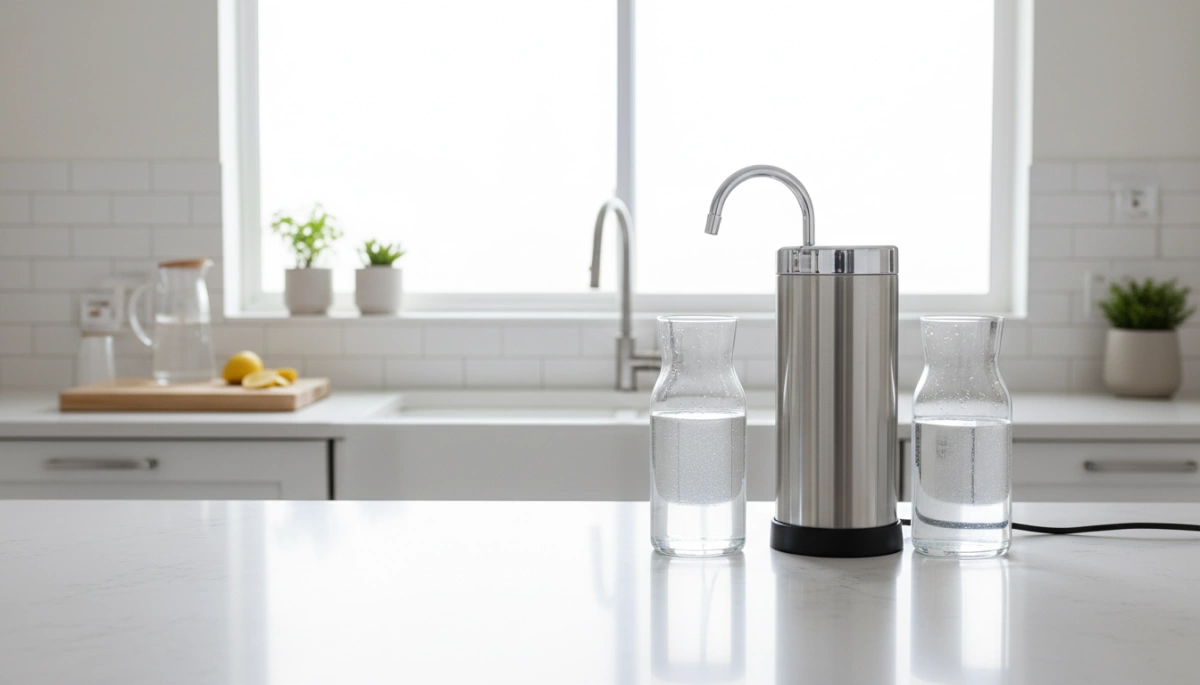
A countertop water filter system is a compact, point-of-use filtration solution that sits directly on your kitchen counter and connects to your existing faucet or works as a stand‑alone no installation water filter. It’s designed to purify drinking and cooking water right where you use it, without cutting pipes, drilling cabinets, or committing to permanent plumbing changes.
How Countertop Water Filters Work
Most systems fall into two main designs:
- Diverter-connected countertop filters
- Attach directly to your faucet with a small diverter valve
- Let you switch between unfiltered tap water and filtered water with a lever
- Water flows through internal filters (usually carbon, multi-stage, or RO) and comes out of a dedicated spout
- Ideal if you want a plug and play water filter that stays connected but is still easy to move
- Tank-filled or reservoir countertop filters
- You manually pour tap water into an upper tank or reservoir
- Water passes through gravity-fed or pressurized filters into a lower clean-water chamber
- Often used as no installation water filters in homes, dorms, RVs, or offices
- Great when faucet compatibility is an issue or you don’t want anything attached to the tap
Both styles deliver true point of use filtration, meaning the water is filtered just before you drink it, maximizing freshness and reducing the chance of recontamination.
Why Countertop Systems Are Popular
Countertop units have exploded in popularity because they solve real everyday problems:
- Renter-friendly water filter
- No drilling, no permanent plumbing changes
- Easy to take with you when you move
- Perfect for apartments, condos, and student housing
- Fast, simple setup
- Most models install in minutes with basic hand-tight connections
- No plumber, no tools, no hidden installation costs
- Truly plug and play water filter convenience
- Space-efficient and flexible
- Sit neatly beside your sink without taking up cabinet space
- Compact footprints work in small kitchens and shared spaces
- Can be used in homes, offices, vacation rentals, and RVs
If you’re trying to cut back on bottled water, upgrade tap taste, or get safer drinking water without renovating your kitchen, a countertop water filter system offers one of the most practical, affordable, and flexible ways to do it.
What Makes a Countertop Water Filter “The Best”?
When I look at a countertop water filter system, I don’t start with the brand name — I start with what’s inside, how it’s certified, and how it fits everyday use in a U.S. kitchen.
Filtration Technology: Carbon, RO, UV & Multi-Stage
The core of any countertop water filter is its filtration tech:
- Activated Carbon Filters
- Great for: chlorine removal, bad taste, odor, some VOCs.
- If your tap water “smells like a pool,” a chlorine removal filter with high-quality carbon is usually enough.
- Countertop RO (Reverse Osmosis) Systems
- Great for: TDS reduction, heavy metals, PFAS, fluoride, nitrates.
- A countertop RO water filter system is what I recommend if you’re dealing with high TDS, questionable well water, or you just want bottled-water-level purity at home.
- UV Disinfection
- Great for: killing bacteria and viruses.
- Often paired with carbon or RO in multi-stage systems for people worried about microbiological safety.
- Multi-Stage Hybrids
- Combine carbon, sediment, RO, sometimes UV.
- Best if you want broad-spectrum contaminant reduction in one unit.
The “best” technology depends on your water quality: city water with chlorine vs. well water with high minerals vs. older homes with lead pipes will all need different solutions.
Certifications: NSF/ANSI Standards That Actually Matter
If a NSF certified water filter doesn’t list specific standards, I’m not interested. The key ones for countertop water filters are:
- NSF/ANSI 42 – Improves taste & odor, reduces chlorine.
- NSF/ANSI 53 – Reduces health-related contaminants like lead, some heavy metals, some PFAS, and cysts.
- NSF/ANSI 58 – For reverse osmosis systems, covering TDS reduction and performance.
- NSF/ANSI 401 – Targets emerging contaminants (pharmaceuticals, some PFAS, pesticides).
When you’re comparing systems, look for actual filtration performance data or test reports, not just marketing claims. A real “best home water purifier” shows numbers for chlorine, lead, PFAS, fluoride, and TDS reduction.
If you’re curious about how standards and filtration play out in real-world setups, guides that walk through water treatment methods and maintenance (like this breakdown of iron water filtration types and methods) can give you a good feel for quality vs. hype.
Contaminant Reduction: What You Should Expect
For a solid countertop filtration comparison, I look for systems that can realistically hit:
- Chlorine: 90–99%+ reduction
- Lead: 95–99%+ (NSF 53 verified)
- PFAS: 90–95%+ (ideally tested to current PFOS/PFOA standards)
- Fluoride: Usually only meaningful with RO or special media
- Heavy metals (mercury, cadmium, chromium): NSF 53 or 58-tested
- TDS: RO systems often cut TDS by 90–95%+
If a filter doesn’t show lab-tested numbers for your main concern (lead, PFAS, TDS, etc.), I don’t rank it as “best” for health-focused filtration.
Ease of Use, Filter Life & Maintenance Costs
A renter friendly water filter or no installation water filter has to be easy to live with:
- Filter life:
- Carbon cartridges: typically 3–6 months
- RO membranes: 1–2 years
- Sediment prefilters: 6–12 months
- Flow rate:
- Carbon countertop systems: usually 0.5–1.5 GPM
- Countertop RO systems: slower but much cleaner; some use storage tanks to keep dispensing speeds reasonable.
- Maintenance cost:
- Add up annual filter replacements; a cheap unit with expensive filters isn’t really budget-friendly.
- I aim for systems that cost a reasonable amount per gallon over the year, not just a low upfront price.
If a system needs tools, plumbing knowledge, or constant babysitting, I don’t consider it the “best” for most U.S. households that want plug-and-play convenience.
Design, Capacity & Daily Use
The right countertop water filter system has to fit your actual lifestyle:
- Capacity:
- Singles/couples: smaller, compact units are fine.
- Families or offices: look for higher capacity and faster flow, especially if you’re filling bottles, coffee makers, and cooking pots daily.
- Footprint & style:
- Small kitchens and apartments: compact, vertical designs that sit next to the sink.
- Offices or shared spaces: a countertop water dispenser style with easy access and larger reservoirs.
- Connection style:
- Faucet-diverter systems for instant tap-to-filter use.
- Tank-style or no-installation water filters that just plug in or sit on the counter, perfect if you can’t modify plumbing.
The “best” countertop system isn’t one-size-fits-all. It’s the one that hits your key contaminants, has the right certifications, keeps maintenance simple, and fits your counter, budget, and daily routine.
Types of Countertop Water Filter Systems Compared
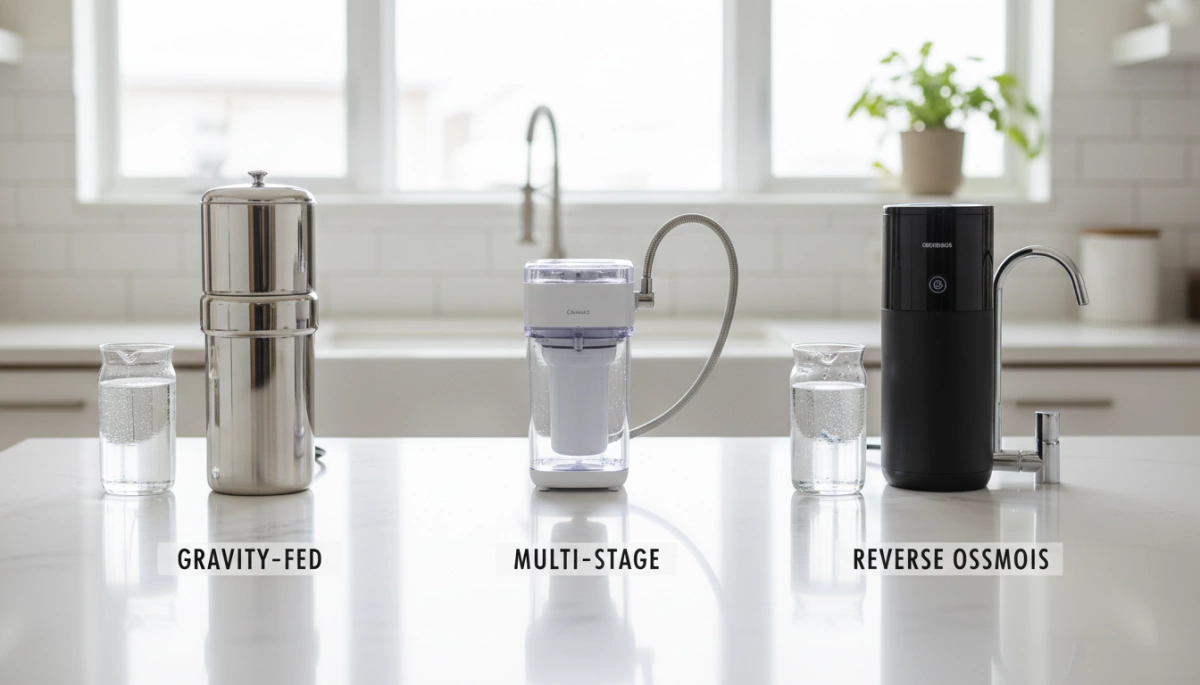
When people ask “what is the best countertop water filter system,” they’re usually comparing a few core types. Each style shines in a different situation, so I’ll break down how they stack up in real everyday use.
Countertop Carbon Water Filter Systems
A countertop carbon filter is the classic chlorine removal filter and the go‑to for better taste and odor.
How it works:
- Uses activated carbon (often block carbon) to trap chlorine, some VOCs, and certain chemicals
- May be a faucet‑connected unit or a no installation water filter that you just fill from the sink
Best for you if:
- Your city water is “safe” but tastes like a swimming pool
- You mainly care about chlorine taste and odor, not extreme contamination
- You want a renter friendly water filter that’s compact and simple
Pros:
- Great taste improvement for the price
- Fast flow and easy setup
- Low maintenance cost
Cons:
- Limited impact on TDS, heavy metals, or PFAS
- Not ideal if you have serious water quality issues
Countertop Reverse Osmosis (RO) Systems
A countertop RO water filter system is what I recommend when someone has high TDS, possible heavy metals, or they just want the cleanest water possible at the tap.
How it works:
- Pushes water through a reverse osmosis membrane that removes dissolved solids
- Usually includes pre-filters (sediment + carbon) and often a post filter for taste
Best for you if:
- You need serious TDS reduction RO performance
- You’re worried about lead, PFAS, arsenic, nitrates, fluoride, and other tough contaminants
- You’re okay with a slower flow and possibly some wastewater
Pros:
- Top‑tier contaminant reduction for a countertop system
- Many models require no permanent installation
- Great for well water or questionable tap water
Cons:
- Higher upfront price
- Filters and RO membrane cost more over time
- Some models produce wastewater (check the ratio)
If you want a deeper look at how RO compares to other filter types across the whole home, I suggest reading this breakdown of the best home water purifier options and their pros and cons.
Gravity-Fed Countertop Water Filters
A gravity water filter is a non electric water filter that sits on your counter and uses gravity instead of pressure to move water through the filters.
How it works:
- You pour tap water into the top chamber
- Water passes through one or more filters into the bottom tank over time
- Often uses a mix of carbon + other media to remove chlorine, some metals, and some microbes
Best for you if:
- You want something that works during power outages
- You like the idea of a gravity fed water filter that’s portable and simple
- You want to retain some minerals instead of stripping everything out
Pros:
- No electricity or plumbing required
- Great for cabins, RVs, or backup emergency use
- Often higher capacity than a pitcher
Cons:
- Slower filtration compared to pressurized countertop systems
- Performance varies a lot between brands, so check test data
UV-Enhanced & Multi-Stage Hybrid Countertop Systems
These are “all‑in‑one” systems that combine carbon, sometimes RO, plus UV or extra stages for more complete protection.
How it works:
- Multi‑stage filters handle sediment, chlorine, chemicals, and sometimes TDS
- UV light is added to neutralize bacteria and viruses as water passes by
Best for you if:
- You want added pathogen protection (especially on questionable or well water)
- You don’t want to manage separate UV units and filters
- You’re okay paying more for a “max safety” setup
Pros:
- Strong coverage: chemicals + particles + microbes
- Still countertop and often plug and play water filter style
- Good option for families, immunocompromised users, and rural homes
Cons:
- Higher cost and more complex internals
- UV bulbs may need periodic replacement
- Not all models are NSF certified, so check certifications carefully
At the end of the day, the “best” countertop water filter system depends on whether you care more about taste only (carbon), deep contaminant removal (RO), off-grid use (gravity), or maximum protection (multi-stage + UV).
Top Countertop Water Filter Recommendations for 2026
Here’s how I’d break down the best countertop water filter systems for 2026 based on real‑world use, not just specs on paper.
Best Overall Countertop RO System (Reverse Osmosis)
Best for: Households that want bottled‑water quality and serious contaminant reduction.
Why it stands out:
- Multi‑stage RO filtration for high TDS reduction, heavy metals, PFAS, fluoride, nitrates, and more
- Usually tested to NSF/ANSI 58 (RO performance) and often 42 & 53 (taste + health contaminants)
- Plug‑in, no‑drill design – perfect renter friendly water filter
- Built‑in tank and faucet-style dispenser for easy daily use
Performance highlights:
- Can reduce TDS by 90–95%+
- Excellent for well water or city water with high contaminants
- Many models now feature improved waste ratios (around 2:1 or better) to cut water waste
If you’re stuck between RO and other filtration methods, it’s worth checking a detailed difference between RO and UF filtration guide to see which tech fits your water quality.
Best Countertop Filter for Basic Filtration & Taste
Best for: City water that’s “safe” but tastes bad or smells like a pool.
Why it stands out:
- Uses activated carbon and sometimes a sediment pre‑filter
- Focuses on chlorine removal, taste, and odor improvement
- Often certified to NSF 42 for aesthetic contaminants
- Low cost, simple design, quick setup (faucet diverter or direct‑pour style)
Performance highlights:
- Noticeably better taste and smell within minutes
- Good first step if your main concern is chlorine taste and odor, not heavy metals
- Filters typically last 2–6 months depending on usage
Best Portable / Compact Countertop Water Filter
Best for: Small apartments, RVs, dorms, and people who move often.
Why it stands out:
- Lightweight, countertop or desktop footprint
- Often a no installation water filter – pour‑in tank or quick hose connection
- Easy to pack, ideal for renters and travelers
- Some compact units double as desktop water dispensers with chilled/room temp options
Performance highlights:
- Solid basic filtration for chlorine, taste, and some metals
- Designed for 1–2 people or light office use
- Low power or non‑electric operation in many models
If you like the convenience of desktop hydration, you can also look at top desktop water dispensers and their features as a companion option.
Best for High‑Contaminant or Questionable Water
Best for: Older homes with lead plumbing, well water, or areas with PFAS alerts.
Why it stands out:
- Typically a countertop RO water filter system with multi‑stage filtration
- Targets lead, PFAS, arsenic, chromium, nitrates, pesticides, and micro‑plastics
- Often carries NSF 53 (health contaminants) and NSF 401 (emerging contaminants)
- May include remineralization to improve taste after RO
Performance highlights:
- Strong PFAS reduction, high TDS reduction, and broad contaminant coverage
- Great fit for people with kids, pets, or anyone drinking a lot of water daily
- Higher upfront cost but serious peace of mind
Best Budget‑Friendly Carbon Countertop Filter
Best for: Families who want better water on a tight budget.
Why it stands out:
- Simple countertop carbon filter with long‑life cartridges
- Affordable entry point into home water purification
- Easy DIY install with faucet diverter; no plumber needed
- Good chlorine removal filter for better taste and everyday cooking/drinking
Performance highlights:
- Helps reduce chlorine, some VOCs, and sediments
- Some units meet NSF 42, with select models also addressing lead under NSF 53
- Lower long‑term cost than buying bottled water or replacing pitcher filters constantly
For budget‑minded users who like pour‑in options, a high‑quality water filter pitcher with a wooden handle can be a nice backup or complement to a countertop unit.
When you’re deciding what is the best countertop water filter system, match the system to your reality:
- Light city use and bad taste? Go carbon.
- High contaminants or unknown water quality? Go countertop RO.
- Tight space or constant moving? Pick a portable, no‑installation water filter.
Which Countertop Water Filter System Is Best for Your Needs?
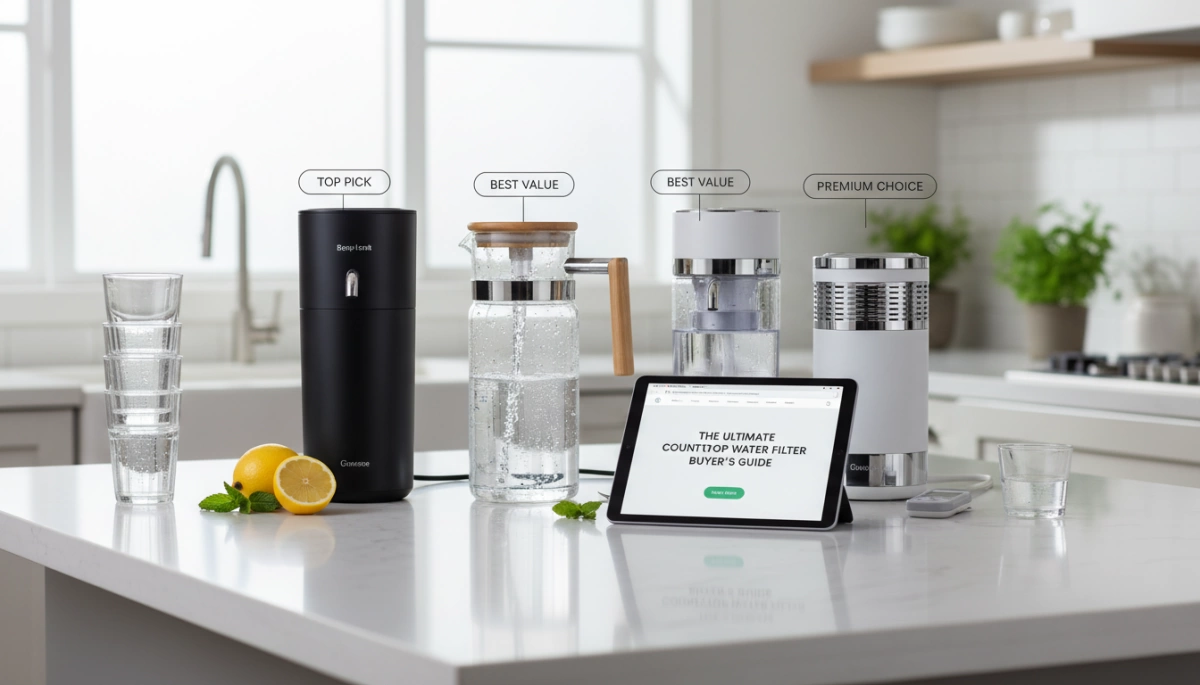
Not every “best” countertop water filter system is right for every home. It comes down to your water quality, your space, and how you actually use water every day. Here’s how I break it down for U.S. households and small offices.
For Apartments & Renters: No-Installation Countertop Models
If you’re renting or moving often, you want a no installation water filter that doesn’t require drilling or plumbing work.
Look for:
- Diverter-style countertop water filter systems that connect to your faucet in seconds and disconnect just as fast
- Tank or reservoir-style units that sit on the counter and fill from the tap (true plug-and-play water filters)
- NSF certified water filters for chlorine, taste, and lead reduction (NSF/ANSI 42 & 53)
- Compact footprints that fit in smaller NYC-style kitchens or studio apartments
These renter friendly water filters give you clean drinking water without having to ask your landlord for permission.
For Families & Offices: Higher Capacity and Fast Flow
For busy kitchens or shared spaces, you need a high-capacity home countertop water filter that keeps up with everyone.
Priorities:
- Fast flow rate so you’re not waiting to fill bottles and coffee pots
- Larger tank size or direct-flow designs for all-day use in offices
- Long-life filters (6–12 months) to keep maintenance low
- Optional hot/cold pairing with systems like an instant hot water dispenser for tea, coffee, and cooking
A solid office water purification setup should feel like a small water bar on your counter—simple, reliable, and always ready.
For Well Water or High TDS: Advanced Countertop RO Systems
If your water has a high mineral content, strange taste, or known contaminants, you’re in high TDS territory. This is where a countertop RO water filter system is usually the best choice.
Look for:
- Reverse osmosis countertop systems with multi-stage filtration
- Clear TDS reduction claims and, ideally, NSF/ANSI 58 certification
- Strong performance for PFAS, fluoride, heavy metals, and nitrates
- Optional remineralization if you prefer more natural-tasting water
For homes on well water or areas with questionable municipal supply, an advanced countertop RO system is the closest you’ll get to bottled-quality water at home.
For Eco-Conscious Users: Low-Waste, Long-Life Filters
If you care about waste and sustainability, not all systems are equal.
Focus on:
- Low waste ratios on RO units (aim for 2:1 or better if possible)
- Gravity-fed or carbon countertop filters that don’t need electricity
- Long-life filter cartridges (up to 12–24 months) to cut down on plastic waste
- Systems that use recyclable filter housings or reduced-plastic designs
Pairing efficient countertop filtration with the broader benefits outlined in a solid guide to why water filtration is crucial helps you get cleaner water while keeping your footprint in check.
When you match the countertop water filter system to your real-world use—renter vs. owner, solo vs. family, city tap vs. well—picking the “best” option becomes straightforward instead of confusing.
Installation, Maintenance, and Long‑Term Costs
Simple Setup for Most Countertop Water Filter Systems
Most countertop water filter systems are truly “plug and play” and renter friendly. A basic step-by-step setup usually looks like this:
- Unbox & rinse parts
- Rinse the filter cartridges and housing with clean water.
- Check O-rings and seals are seated correctly.
- Connect to your faucet or set on counter
- For faucet-connected units:
- Unscrew the faucet aerator.
- Attach the diverter valve and included adapter ring (if needed).
- Tighten by hand only, no tools needed.
- For tank / gravity / RO countertop systems:
- Place the system on a flat, stable surface.
- Connect the inlet tube to the faucet or fill the top tank with tap water.
- For faucet-connected units:
- Flush the filters
- Run water through the system for 5–10 minutes (or as the manual says) to flush out carbon dust and air.
- Don’t drink the first full tank or first few minutes of flow.
- Check for leaks & flow
- Inspect all joints and tubing while water is running.
- If there’s a drip, re-seat the tubing and tighten the fittings gently.
If you prefer a reverse osmosis countertop system that’s already designed for quick, no-plumbing setup, a compact unit like a table-top RO water purifier gives you a clean, self-contained solution.
Filter Replacement Tips & Average Annual Costs
To keep your countertop water filter system performing at its best, you need to stay on top of filter changes. Here’s a simple rule of thumb:
- Sediment/Pre-filters: Every 6–12 months
- Carbon filters: Every 6–12 months (or 300–600 gallons, depending on the model)
- RO membranes: Every 24–36 months under normal use
- Post-carbon/polishing filters: About 12 months
Most U.S. households can estimate annual filter costs roughly like this:
- Basic carbon countertop water filter system:
- $40–$80 per year in filter replacements
- Countertop RO system:
- $80–$150 per year, depending on filter stages and water quality
- Gravity-fed filter:
- $60–$120 per year, with longer-life cartridges
Practical tips:
- Set calendar reminders based on months or filtered gallons.
- Watch for slower flow, flat taste, or odor—these usually mean your filters are done.
- Always use OEM or certified compatible filters to keep performance and NSF claims valid.
Troubleshooting Common Countertop Filter Issues
Even the best countertop water filter system can run into small issues. Here’s how I usually handle the common ones:
1. Low flow rate
- Check and clean faucet aerator and diverter valve screen.
- Replace clogged pre-filter or carbon filter.
- For RO, make sure the unit’s tank is full and not over-pressurized.
**2. Leaks at the faucet
Countertop Water Filter vs. Other Filter Types
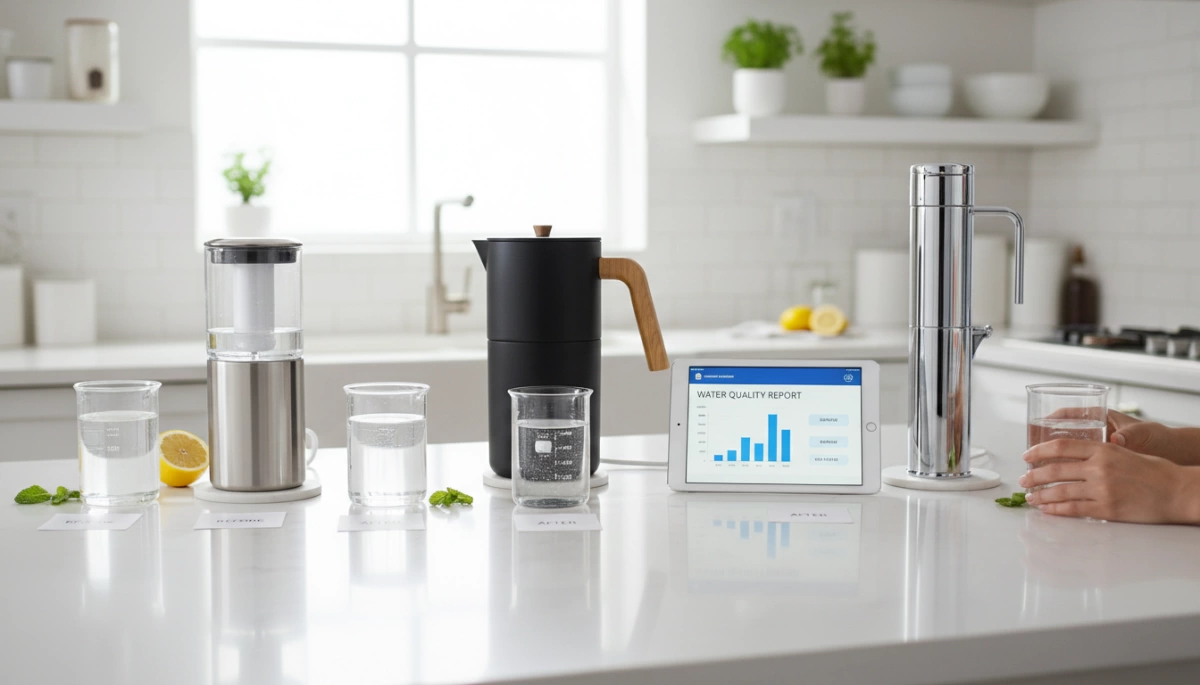
When people ask “what is the best countertop water filter system,” they’re really asking how it stacks up against under-sink systems, pitchers, and whole-house filters. Here’s the quick, no-nonsense comparison.
Countertop vs. Under-Sink Systems
Countertop water filter systems win on flexibility; under-sink wins on being out of sight.
Countertop advantages:
- No drilling or plumber needed – perfect for renters and anyone who doesn’t want to mess with plumbing.
- Portable – you can take a countertop RO system or carbon unit with you if you move.
- Easy access & monitoring – filters are visible, so it’s simple to see, clean, and swap cartridges.
Under-sink advantages:
- Hidden design – clean look, no equipment on the counter.
- Dedicated faucet – constant access without taking up sink space.
- Good for long-term homes – once installed, you forget about it until filter-change time.
If you’re in a rental or move often, a countertop water filter system is usually the smarter play. If you own and care more about a clean look than portability, under-sink might edge it out.
Countertop vs. Pitcher Filters
Pitcher filters are simple, but a solid countertop water filter system is on another level.
Countertop advantages:
- Much faster flow – no waiting for gravity to drip through a small cartridge.
- Higher capacity – better for families, offices, or anyone who drinks a lot of water.
- Stronger filtration options – countertop RO and multi-stage units can cut TDS, PFAS, heavy metals, and more; most pitchers mainly tackle chlorine and basic taste.
Pitcher advantages:
- Lower upfront cost – cheap to start, but replacement filters add up.
- Fridge-friendly – good if you only need a couple of quarts at a time.
If you’re serious about everyday drinking water and don’t want to refill a pitcher all day, a countertop system is a clear upgrade over basic pitcher-style filtration. For a deeper dive on how filtration compares to purification, I’ve broken that down in detail in this guide on the difference between a water filter vs. purifier.
Countertop vs. Whole-House Filters
Whole-house systems and countertop water filter systems solve different problems.
Countertop advantages:
- Targeted drinking water purity – you get high-quality water right where you drink and cook.
- Much lower cost – no need to re-plumb your home.
- Better fine filtration – countertop RO or multi-stage units typically remove more specific contaminants at the tap than many whole-house systems.
Whole-house advantages:
- Every tap is filtered – showers, laundry, bathroom sinks all get treated water.
- Great if your well water is rough – can help protect pipes and appliances.
If your main goal is safe, great-tasting drinking and cooking water, a countertop system gives you more bang for the buck. If you’re dealing with problem water throughout the house, a whole-house system plus a high-performance countertop unit at the kitchen sink is often the best combo.
OEM & Custom Countertop Water Filter Solutions
If you’re a retailer, DTC brand, or bulk buyer, OEM and custom countertop water filter systems are the fastest way to launch or scale without building everything from scratch.
Why Partner With an Experienced Countertop Water Filter Manufacturer?
A good OEM partner does the heavy lifting so you can focus on branding and sales:
| Benefit | What You Get |
|---|---|
| Faster time to market | Ready-made countertop RO systems, gravity filters, and carbon units that can be customized. |
| Lower R&D risk | Proven designs, tested components, stable filtration performance. |
| Scalable production | Capacity for small pilot runs up to large retail orders. |
| Regulatory support | Help aligning with NSF, FDA-contact material, and local US compliance expectations. |
We work with U.S. buyers every day, so we understand typical requirements around NSF certified water filter performance, lead-free materials, and clear contaminant claims.
For buyers comparing multiple suppliers, it’s worth reviewing broader water purifier suppliers and sourcing options to benchmark quality and pricing before you lock in a long-term partner.
Customization Options for Countertop Water Filter Systems
You don’t have to accept a generic “me-too” unit. We can tailor:
- Branding & Design
- Custom logo, color, and housing shape
- Retail-ready packaging for big box, Amazon, or DTC
- Filtration Specs
- Carbon-only, multi-stage, or countertop RO water filter system
- Targeted reduction: chlorine, PFAS, heavy metals, high TDS, fluoride
- Filter life and flow rate tuned to your market positioning
- Materials & Components
- BPA-free and lead-free contact materials
- Metal finishes, premium plastics, tubing and fittings selected for US expectations
This lets you position your product as a best home water purifier, a renter friendly water filter, or a no installation water filter depending on your niche.
Chinese Manufacturing & Quality Assurance
High-volume countertop systems are usually built in China for a reason: cost, capacity, and experience.
We control quality with:
- Incoming material checks (plastics, RO membranes, carbon media)
- In-line pressure and leak tests
- Batch performance testing for TDS reduction, chlorine removal, and flow rate
- Final QC aligned with U.S. retail standards
For brands planning long-term distribution, partnering with a reliable countertop water filter manufacturer in China is the most efficient way to secure consistent supply, stable costs, and repeatable quality.