












Are you concerned about the hidden dangers lurking in your facility’s drinking fountains?
Ensuring safe hydration in schools, hospitals, and public parks isn’t just about plumbing—it’s about protecting lives.
As a facility manager or administrator, you likely know that standard residential filters simply can’t handle the volume, pressure, or contaminant risks of a busy public space. You need a robust defense against lead, PFAS, and bacteria.
In this guide, we’ll cut through the noise and show you exactly how Ensuring Public Health with High-Capacity Water Filter for Water Fountain Solutions is the strategic game-changer your infrastructure needs.
Backed by Driplife’s 15 years of commercial manufacturing expertise, we’ll cover everything from mitigating health risks to selecting high-flow systems that deliver consistent safety.
Let’s secure your water supply.
The Public Health Risks in Unfiltered Drinking Fountains
Is the water flowing through your facility actually safe to drink? For facility managers and administrators, this is the question that keeps us up at night. While municipal treatment plants do their job, the journey water takes through aging infrastructure often introduces invisible hazards. At Driplife, we have spent over 15 years in R&D analyzing these variables, and the data shows that public drinking fountain filtration is no longer optional—it is a critical safeguard.
Hidden Dangers in Municipal Lines
Even when water leaves the treatment plant meeting federal standards, it faces a gauntlet of risks before reaching the tap. Old piping systems are notorious for leaching heavy metals. Lead reduction drinking fountains are a top priority because lead exposure, even in trace amounts, causes irreversible damage. Beyond lead, we are seeing a rise in “forever chemicals” like PFAS and harmful chlorine byproducts used in sanitation.
Without a robust barrier, your public fountains become dispensing points for:
- Lead and Heavy Metals: Leached from aging service lines and plumbing fixtures.
- PFAS (Per- and Polyfluoroalkyl Substances): Persistent chemicals linked to long-term health issues.
- Chlorine Byproducts: Resulting in unpleasant tastes and potential health risks over time.
Bacterial Risks in High-Traffic Fountains
Public fountains face a unique challenge: inconsistent usage patterns. Periods of stagnation followed by high demand create the perfect breeding ground for biological contaminants. Biofilm buildup inside the dispensing nozzle or internal tubing is a silent threat in many unfiltered units.
In high-traffic environments, Legionella prevention water fountains are essential. Without effective bacterial retention water filters, warm stagnant water can facilitate the growth of Legionella and other pathogens. This is why our approach to design emphasizes strict hygiene standards and advanced filtration technologies like Ultrafiltration (UF) to physically block these microscopic threats.
Critical Stakes for Schools and Healthcare
The implications of poor water quality are magnified in sensitive environments. School drinking fountain safety is paramount; children absorb contaminants more readily than adults, making lead and PFAS removal non-negotiable. Similarly, healthcare water filtration systems must guarantee purity to protect patients with compromised immune systems.
When water tastes like swimming pool chlorine or has a metallic tang, people stop drinking it. This leads to reduced hydration, which directly impacts cognitive function in students and recovery rates in patients. Implementing commercial water fountain solutions isn’t just about removing dirt; it is about ensuring the water is safe, palatable, and healthy enough to encourage proper hydration across your facility.
Why High-Capacity Filtration Is Essential for Public Fountains
When we talk about public hydration, standard residential filters simply cannot keep up with the demand. A High-Capacity Water Filter for Water Fountain Solutions isn’t just a luxury; it is an operational necessity for high-traffic environments like schools, airports, and shopping malls.
Defining High-Capacity Performance
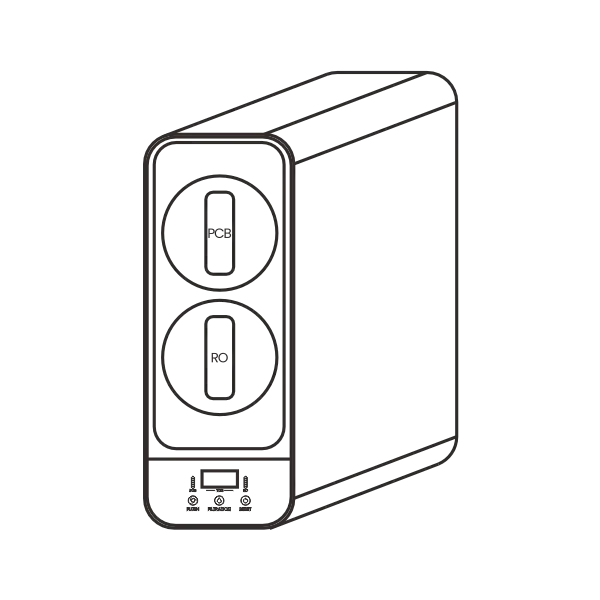
True high-capacity filtration is defined by two critical metrics: flow rate and service life. In a busy public setting, a trickle of water frustrates users and creates bottlenecks. That is why our under-sink distribution systems are engineered to deliver a robust 5.2 liters per minute (approximately 1.37 GPM). This high-flow rate ensures that users can fill bottles or drink directly without waiting, maintaining efficiency in crowded spaces.
Beyond speed, longevity is paramount. Our commercial-grade systems are rated for 2000 gallons of purification. This extended filter life reduces the frequency of maintenance cycles, allowing facility managers to focus on other tasks rather than constantly swapping out cartridges.
Commercial vs. Residential Grade
Using a home filter in a public fountain is a recipe for failure. Residential units are designed for intermittent use by a small family, whereas commercial water fountain solutions must withstand continuous operation.
- Durability: Industrial-grade housings prevent leaks under constant pressure.
- Throughput: High-capacity systems handle volume spikes during break times or rush hours without a drop in pressure.
- Consistency: Advanced filtration, such as our UF (Ultrafiltration) devices, ensures the 100th gallon is as clean as the first.
Improving Taste and Reducing Waste
Public perception of water quality often comes down to taste. If fountain water tastes like chlorine or metallic pipes, people avoid it. By implementing a specialized water fountain filter, we remove the impurities that affect flavor and odor. When the water tastes crisp and clean, public consumption increases, leading to better hydration outcomes for the community.
Furthermore, reliable filtration directly supports sustainable public hydration solutions. When people trust the quality of fountain water, they are less likely to purchase single-use plastic bottles. This shift not only lowers the carbon footprint of the facility but also significantly reduces plastic waste accumulation, aligning with modern environmental standards.
Key Features of Effective High-Capacity Water Fountain Filters

When we engineer solutions for public spaces, we know that standard residential filters simply cannot handle the volume. A truly effective high-capacity water filter for public fountains requires a combination of robust flow rates, advanced contaminant removal, and durable construction. At Driplife, our R&D focuses on integrating these critical features to ensure safety and efficiency in high-traffic environments like schools and transit hubs.
Advanced Filtration Technologies: UF and Carbon Blocks
To guarantee water safety without sacrificing speed, we utilize Ultrafiltration (UF) technology in our commercial-grade systems. Unlike basic filters, UF devices effectively reduce bacteria and suspended solids while maintaining essential minerals. We often pair this with activated carbon blocks to tackle chlorine, taste, and odor issues. For facility managers looking to upgrade their infrastructure, understanding the mechanics of a comprehensive guide to choosing under sink water filters is the first step toward securing public health.
Critical Performance Metrics
Public fountains demand consistency. A filter that clogs after a few hundred gallons causes downtime and frustration. Our manufacturing standards prioritize high-flow capabilities and extended lifespans to meet these demands.
| Feature | Specification | Benefit for Public Fountains |
|---|---|---|
| High Flow Rate | Up to 5.2L/min | Ensures rapid filling of bottles and strong stream for drinking, reducing lines in busy areas. |
| Extended Capacity | 2000+ Gallons | Reduces maintenance frequency and operational costs for facility managers. |
| Precision Filtration | 0.5-micron / UF | Effective cyst and lead reduction while capturing particulate matter. |
Design Considerations for Public Settings
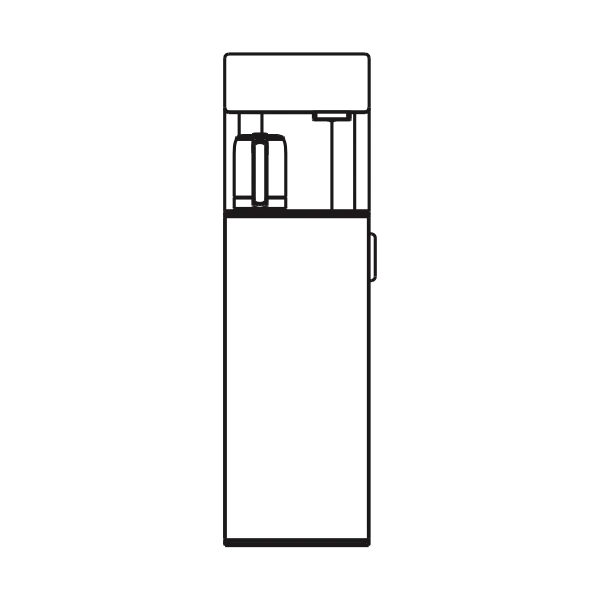
Beyond the internal media, the physical design of the commercial water fountain solutions matters. We design our under sink distribution systems with quick-change sanitary designs, allowing maintenance staff to swap cartridges in seconds without exposing the internal media to outside contaminants. Furthermore, tamper-resistant housings and impact-resistant materials are essential to prevent vandalism and ensure the system remains secure in uncontrolled public environments.
Importance of Manufacturing Standards
Reliability starts at the factory. We adhere to strict online inspection protocols and quality control standards in our 60,000 sq. ft. facility. Ensuring that filtration systems meet rigorous industry benchmarks—comparable to NSF/ANSI Standard 42 & 53 for aesthetic and health effects—is non-negotiable. This commitment to quality ensures that every drop dispensed meets the “Healthy Living” standard we promise to our global partners.
Driplife’s High-Capacity Solutions for Public Drinking Fountains

At Driplife, we understand that public infrastructure demands robust engineering that goes far beyond standard residential filtration. With over 15 years of R&D experience and a 60,000 sq. ft. manufacturing facility, we engineer commercial water fountain solutions designed to withstand the rigors of high-traffic environments. Our focus is on delivering industrial-grade reliability that facility managers can trust to protect public health.
We don’t just assemble parts; we manufacture high-performance systems. Our under-sink distribution systems are built to handle heavy demand while maintaining consistent water pressure and purity. By utilizing advanced Ultrafiltration (UF) technology and strict online inspection protocols, we ensure every drop meets rigorous safety standards.
Key Technical Specifications:
- High-Flow Performance: Our systems deliver a rapid output of 5.2L/min, essential for high-flow rate drinking fountain filters in busy schools or transit hubs.
- Extended Lifespan: Engineered with a 2000-gallon capacity, significantly reducing maintenance frequency and downtime.
- Versatile Functionality: Options for purification, cooling, heating, and soda integration within a single cycle work design.
- Scalable Production: An annual capacity of 500,000 machines ensures we can meet bulk procurement needs for large municipal projects.
We also specialize in OEM/ODM services, allowing us to tailor our drinking water fountain technology to your specific project requirements. Whether you need custom software for filter monitoring or specific factory-direct technical specs for a bid, our R&D team provides the flexibility required for modern infrastructure. By partnering directly with the manufacturer, you gain access to a transparent supply chain and high-capacity water filter for water fountain solutions that are built to last.
Implementation and Maintenance Best Practices
When upgrading public infrastructure, the decision often lies between ripping out old units or upgrading what you already have. We find that retrofitting existing fountains is frequently the most practical route for schools and commercial buildings. Our under-sink distribution systems are engineered for flexibility, allowing retrofit fountain water filters to integrate seamlessly with standard plumbing configurations. This approach transforms a standard dispenser into a high-capacity water filter commercial station without the heavy capital expenditure of new construction.
Establishing a solid water management plan is essential for long-term safety. While our filters boast a robust 2000-gallon capacity, regular monitoring ensures that lead reduction drinking fountains continue to meet safety standards. For facilities in areas with specific contamination concerns, incorporating a specialized water filter to remove PFAS is a critical component of a modern maintenance protocol. We recommend a schedule based on flow volume rather than just time to ensure microbiological safety protocols are never compromised.
Switching to high-capacity filtration offers clear operational advantages:
- Cost-Effectiveness: Cost-per-gallon optimization is significantly better than bottled water services or low-capacity residential filters that require frequent swapping.
- Reduced Downtime: With extended filter life, your maintenance team spends less time on service calls and more time on critical facility tasks.
- Sustainability: These sustainable public hydration solutions directly reduce reliance on single-use plastics, aligning facility operations with modern environmental goals.
Frequently Asked Questions About Public Fountain Filtration
How often should high-capacity filters be replaced in public settings?
In high-traffic environments like airports or universities, replacement schedules depend heavily on usage volume and local water quality. While standard residential units might last six months, our commercial-grade under-sink systems are engineered for a 2000-gallon capacity. For most public facilities, this translates to a replacement cycle of every 4 to 6 months to ensure consistent public drinking fountain filtration. However, if you notice a drop in the flow rate—specifically dipping below our optimized 5.2L/min output—it is time to swap the cartridge. Regular maintenance ensures the system continues to block contaminants effectively without disrupting service.
Can commercial fountain filters remove lead and PFAS effectively?
Yes, but it requires the right technology. Lead reduction drinking fountains typically utilize advanced activated carbon blocks combined with Ultrafiltration (UF) devices. These systems are designed to capture heavy metals and emerging contaminants like PFAS before they reach the bubbler. At Driplife, our R&D team focuses on creating commercial water fountain solutions that target these specific invisible threats. By employing high-density filtration media, we ensure that the water provided in schools and municipal buildings meets stringent safety standards, effectively reducing the risks associated with aging infrastructure and industrial runoff.
What is the difference between residential and commercial water fountain filters?
The primary differences lie in flow rate and capacity. A standard home filter often struggles to keep up with the demand of a busy hallway, leading to low pressure and frustration. In contrast, high-capacity water filters commercial units are built to sustain high throughput. For example, our under-sink distribution systems deliver a rapid 5.2L/min flow, ensuring users aren’t waiting for their bottles to fill. Furthermore, commercial systems often employ multi-stage filtration, starting with a 5 micron water filter to catch larger sediment and protect the finer, more expensive filtration stages downstream. This tiered approach extends the lifespan of the system under heavy use.
How do I choose the right filtration system for a school or hospital?
Selecting the right system for school drinking fountain safety or healthcare water filtration systems starts with analyzing your daily foot traffic and specific water quality challenges. You need a system that balances high bacterial retention with ease of maintenance. For sensitive environments, we recommend looking for NSF certified fountain filters or OEM solutions that offer verified contaminant reduction. Additionally, consider the physical setup; many institutions are now upgrading to stainless steel water dispensers that integrate seamlessly with high-capacity filtration units. Our OEM/ODM services allow facility managers to customize these specifications, ensuring the chosen solution fits both the infrastructure and the health requirements of the population served.