
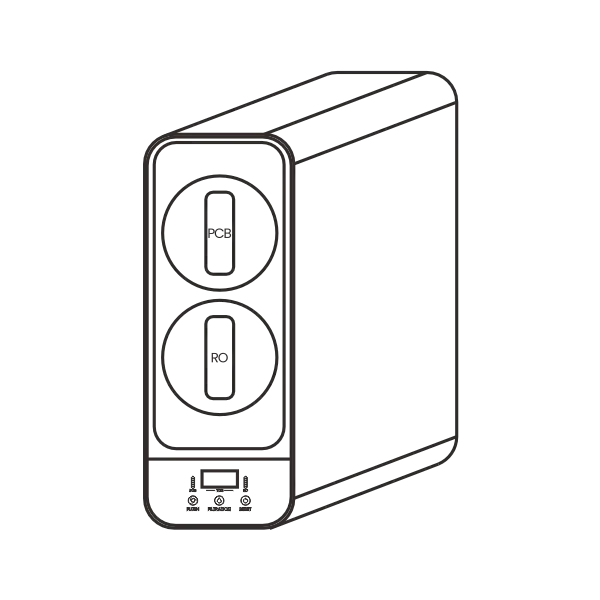















The Science: Why Does TDS Creep Happen?
To understand why your first cup of water might show higher impurity levels, we have to look at the physics inside the filter housing. TDS Creep isn’t a malfunction; it is the natural result of the battle between Osmotic Pressure and the mechanical pressure we apply to the system. Think of it as a constant tug-of-war happening inside your filtration unit.
Osmosis vs. Reverse Osmosis: The Tug-of-War Mechanics
In a standard environment, water naturally flows from a cleaner solution to a dirtier solution to dilute it—this is osmosis. To get purified water, we have to reverse this process. We apply external pressure to force water against its natural inclination, pushing it from the “dirty” side to the “clean” side. This dynamic creates a constant tension across the Reverse Osmosis Membrane.
Active Mode: Forcing Purity Through
When you turn on your DripLife faucet, the system enters “Active Mode.” Our internal booster pump generates significant pressure, far exceeding the natural osmotic pressure of the feed water.
- The Mechanism: This pressure forces water molecules through the 0.0001-micron filtration layer of the RO membrane.
- The Rejection: Because the pores are so microscopic, Feed Water Concentration (contaminants and dissolved solids) is physically blocked and flushed down the drain, leaving only Permeate Water (pure water) to flow to your glass.
Idle Mode: When the Pressure Drops
The moment you close the faucet, the pump stops, and the mechanical pressure vanishes. However, the water inside the membrane housing doesn’t disappear.
- The Shift: Without the pump’s force, the system reverts to natural osmosis.
- The Imbalance: Highly concentrated water (brine) sits on one side of the membrane, while pure water sits on the other. Nature immediately tries to balance these two concentrations.
The Result: Ion Migration
During these idle periods, Ion Migration occurs. Small ions—such as salts, minerals, and metals—begin to sneak back through the membrane’s pores from the dirty side to the clean side. Over several hours (like overnight), these ions accumulate in the small volume of water sitting inside the membrane housing. This accumulation causes a temporary spike in Total Dissolved Solids (TDS), resulting in that “first glass” having a higher conductivity reading than the water dispensed immediately after.
Is the First Glass Safe to Drink?
When we talk about TDS creep, the immediate concern is safety. For most households using treated municipal water, that initial spike in Total Dissolved Solids (TDS) primarily results in a distinct mineral taste rather than an immediate health hazard. The “creep” water essentially contains a higher concentration of the harmless minerals—like calcium and magnesium—that the Reverse Osmosis Membrane usually filters out. However, the taste difference is noticeable, often described as “hard” or slightly metallic compared to the crispness of permeate water.
Risks with High Toxicity Sources
While a mineral taste is manageable, the situation changes if your feed water concentration includes harmful contaminants. If your water source contains heavy metals like lead, arsenic, or nitrates, TDS creep allows these dangerous ions to migrate into the clean water side of the membrane housing during idle periods. In these cases, the first-cup purity is compromised by substances you definitely do not want to consume. This makes the issue more than just a matter of flavor; it becomes a question of long-term exposure to toxins.
The 30-Second Flush Rule
To mitigate this, the general industry recommendation for standard RO systems is simple: never drink the very first draw of water after the system has been sitting overnight.
- Manual Flushing: Run the faucet for 10 to 30 seconds. This allows the system to flush out the high-TDS water that gathered in the membrane.
- Commercial Standards: You see this logic applied in commercial bottle filling stations, which often have automated purge cycles to ensure consistent quality.
- System Quality: Dealing with this manually can be a hassle, which is why identifying the best reverse osmosis water filter system for your home often means looking for units that handle this flushing process automatically.
By discarding that initial volume, you allow the system to return to its optimal membrane rejection rate, ensuring the water in your glass is as pure as the system was designed to produce.
Tank vs. Tankless: The Impact on TDS Creep
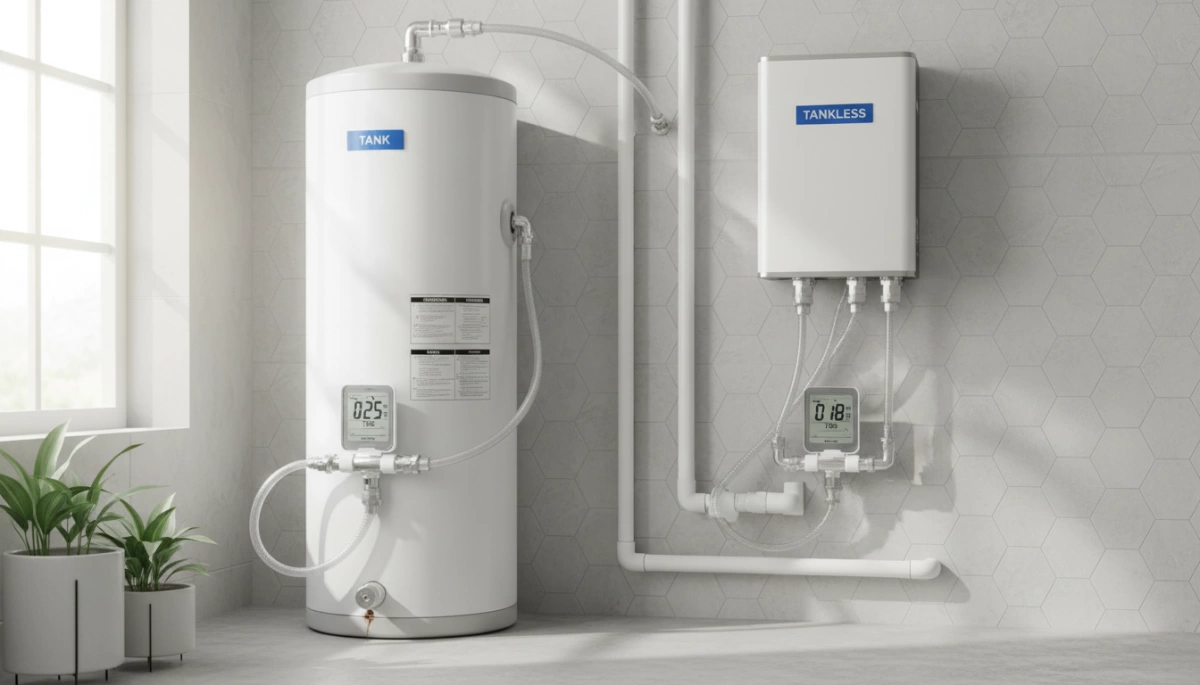
When dealing with TDS creep, the design of your hardware dictates the quality of that first sip. Traditional systems with storage tanks suffer from a dilution problem. When ions migrate through the membrane, that “creep water” eventually gets pushed into the storage tank, mixing with the clean water already there. You can’t isolate it, and you certainly can’t flush it out without draining the entire reserve. Furthermore, these stagnant tanks are notorious for secondary pollution, where bacteria can grow over time.
The Driplife Tankless Advantage
We engineer our units to eliminate this variable. In a tankless RO system, any potential high-TDS water is isolated strictly within the membrane housing, not a storage reservoir. As a professional water purifier company, we integrate internal circulation technology that automatically flushes the membrane with fresh, filtered water during idle periods.
- Isolation: Creep water never contaminates a clean water supply because there is no tank.
- Instant Flush: Our high-flow systems (600-800 GPD) push out any residual high-TDS volume immediately upon activation.
- Rapid Efficiency: The system returns to a 95-99% membrane rejection rate within seconds, ensuring first-cup purity without the massive water waste associated with flushing a tank.
Modern Solutions: How We Mitigate TDS Creep
We understand that TDS Creep is a natural physical phenomenon, but that doesn’t mean you have to drink it. At DripLife, we engineered our tankless RO systems to actively combat this issue, ensuring that the water in your glass is as pure as the water leaving the membrane.
Automated Flushing Technology
The most effective way we tackle high initial TDS is through Auto-flush Technology. Unlike older systems that let water sit stagnant against the membrane, our 600 GPD and 800 GPD models utilize an internal circulation system.
- Idle Rinsing: When the system is not in use, it automatically circulates fresh, filtered water to rinse the RO membrane.
- Ion Removal: This flushes away the concentrated “brine” water that causes ion migration, preventing dissolved solids from creeping into the clean side.
- Instant Readiness: This process ensures that automated flushing happens in the background, so your system is ready the moment you need it.
Real-Time TDS Monitoring
We believe you shouldn’t have to guess about your water quality. That is why we integrated Real-time TDS Monitoring directly into our smart faucets. A built-in sensor constantly measures the water conductivity and displays the exact purity level on the faucet screen. To fully grasp why these readings matter, it helps to understand how a water filter works to remove microscopic contaminants.
Ensuring First-Sip Purity
With our smart display, you have total visibility. When you turn on the tap, simply glance at the TDS display.
- Check the Screen: You might see a brief fluctuation for a second if the system has been idle for a long time.
- Wait for Stability: Watch the number drop instantly to the target range (usually below 50 ppm, often much lower).
- Drink with Confidence: Once the number stabilizes, you are guaranteed First-sip purity.
This combination of internal circulation and sensor accuracy eliminates the “first cup” problem, giving you peace of mind without the need to manually drain the system every morning.
Practical Tips for RO Owners
Managing your water quality doesn’t have to be a guessing game. While our tankless systems are engineered to minimize maintenance, following a few best practices ensures you always get that First-Cup Purity. Here is how you can actively manage TDS Creep and keep your system running at peak efficiency.
The Morning Flush Routine
If your system has been idle overnight, the concentration of dissolved solids in the membrane housing has likely increased due to natural osmosis. To ensure you aren’t drinking this “creep water,” establish a simple startup routine.
- Turn on the tap: Let the water run for about 15 to 30 seconds.
- Watch the display: If you have a DripLife smart faucet, monitor the real-time TDS reading. You will see the number drop rapidly as the Startup flush cycle clears the accumulated ions.
- Wait for stability: Once the reading stabilizes near your normal low range (usually below 10-20 ppm depending on feed water), fill your glass.
- Troubleshooting: If you notice persistent issues even after flushing, you might need to look into troubleshooting strange particles or discoloration to rule out other filter issues.
Check Your Check Valve
The check valve is a small but critical component that prevents water from flowing backward into the Reverse Osmosis Membrane. If this valve fails, wastewater or drain water can seep back into the membrane housing, causing a massive spike in TDS levels that a simple flush won’t easily fix.
- Listen for noise: A system that constantly cycles on and off or makes draining sounds when not in use often indicates a check valve failure.
- Inspect the drain line: Ensure there is no backflow from the drain saddle.
- Replace if necessary: A faulty check valve compromises the 0.0001-micron filtration barrier and should be swapped out immediately to stop RO System Troubleshooting headaches.
Membrane Replacement
Even the best Reverse Osmosis Membrane has a finite lifespan. Over time, the membrane layers degrade or become fouled by contaminants, reducing the rejection rate.
- Monitor the baseline: If your post-flush TDS reading starts creeping up consistently over weeks—even after a long flush—your membrane is likely depleted.
- Check the timeline: Our RO membranes typically last up to 24 months, but this depends heavily on your usage and local water quality.
- Consider your source: Hard water areas may require more frequent changes. Tailoring your system features to your specific water conditions can help extend the life of your filters and maintain safer drinking water.
Frequently Asked Questions About TDS Creep
We get plenty of questions about why water quality fluctuates, especially from new owners of reverse osmosis systems. Here is the breakdown of the most common concerns regarding TDS creep and how to manage it.
Why is my RO water TDS high in the morning?
This is perfectly normal physics at work. When your system sits idle overnight, the internal pressure relaxes. Without the high pressure driving the reverse osmosis process, natural osmosis takes over. Dissolved solids from the feed water side migrate through the Reverse Osmosis Membrane into the pure water side. Since the water has been sitting stagnant in the membrane housing for hours, that first-cup purity takes a hit, resulting in a temporary spike in Total Dissolved Solids.
Does a high TDS reading mean my filter is broken?
Not necessarily. A high initial reading is usually just ion migration during downtime. Watch your smart faucet display; if the number drops significantly within 10–15 seconds of running the water, your system is functioning correctly. However, if the TDS reading stays high constantly and never drops, your membrane may be depleted. A healthy membrane is critical for removing contaminants, much like the technology found in the best water filters to remove fluoride, ensuring your water remains safe.
How long should I run my RO water before drinking?
For traditional systems without circulation technology, the industry standard is to flush the tap for about 30 to 60 seconds after a long period of disuse. However, with a modern Tankless RO System like the DripLife 600 or 800 GPD models, this time is drastically reduced. Our systems utilize internal circulation to rinse the membrane automatically, meaning you often get fresh water almost immediately. Always check the Real-time TDS Monitoring on the faucet; once the number stabilizes in the low range (typically below 50 ppm depending on your source water), it is ready to drink.
Can a tankless system completely eliminate TDS creep?
While no membrane can defy the laws of physics completely, a tankless design with Auto-flush Technology is the most effective solution available. Unlike tank systems where “creep water” gets diluted into a large storage reservoir (permanently raising the baseline TDS of the stored water), a tankless unit isolates that small volume of water. The system can flush that specific amount of high-TDS water out of the drain line instantly or recirculate it through the filter, ensuring you aren’t drinking the byproduct of osmotic pressure.