













You might already know that the traditional water fountain is rapidly disappearing from public spaces…
But are your new Public Bottle Filling Stations actually safe?
As a facility manager, I know that Managing Water Quality goes far beyond just swapping a filter once a year. You are constantly balancing user accessibility with strict health compliance, and the risk of invisible pathogens is a liability you can’t afford to ignore.
In this guide, you’re going to learn exactly how to engineer a “Defense in Depth” strategy for your building’s hydration systems.
We will cover the critical synergy of UV sterilization, advanced Filtration, and the smart Hygiene Protocols needed to automate safety.
If you are looking for a technical, low-maintenance solution that guarantees pure water, this guide is for you.
Let’s dive right in.
The First Line of Defense: Advanced Filtration Technologies
When we talk about Managing Water Quality in Public Bottle Filling Stations: UV, Filtration, and Hygiene Protocols, the conversation always starts with what we physically remove from the water. Municipal infrastructure is aging, and by the time water travels through miles of piping to reach your facility, it often picks up unwanted passengers. At Drip Life, we treat filtration as the foundation of our point-of-use water purification strategy. It’s not just about meeting basic standards; it’s about ensuring the water is crystal clear and safe before it ever hits the UV stage.
Sediment and Pre-Filtration Essentials
The first step in our defense strategy is the physical barrier. We utilize robust pre-filtration to act as the “bouncer” for your water supply. This stage targets:
- Particulates: Sand, dirt, and silt.
- Infrastructure Debris: Rust flakes from aging plumbing.
- Turbidity: Cloudiness that makes water unappealing.
By catching these larger contaminants early, we protect the more delicate downstream filters and ensure the machine operates at optimal flow rates.
Chemical Adsorption with Activated Carbon
Clear water isn’t enough; it has to taste premium. We rely on an activated carbon block filter to handle the chemical side of water quality. Through chemical adsorption, this layer acts like a magnet for impurities that affect sensory quality.
- Chlorine and Chloramines: Removes that chemical “pool water” taste and smell.
- VOCs: Reduces Volatile Organic Compounds.
- Odor Elimination: Ensures a crisp, fresh dispensing experience.
Lead Reduction Filtration Standards
Safety is non-negotiable, especially in schools and corporate campuses. Our filtration approach prioritizes lead reduction filtration capable of meeting rigorous safety benchmarks like NSF/ANSI 53. While sediment filters catch solids, this stage targets dissolved heavy metals and cysts that are invisible to the naked eye but pose significant health risks. We ensure that every drop dispensed meets the highest safety criteria for public consumption.
High-Capacity Engineering for High-Traffic Zones
In a busy airport or university, you cannot afford downtime. Standard residential filters clog too quickly in these environments. We design our systems with high-capacity filters specifically for commercial bottle filler maintenance schedules. These filters are engineered to handle massive throughput, maintaining high flow rates and superior filtration performance over longer periods. This reduces the frequency of replacements, lowering the operational burden on facility managers while maintaining consistent water quality.
The Biological Firewall: UV-C LED Sterilization
We can scrub water clean of sediment and lead, but that doesn’t necessarily make it safe from a biological standpoint. While we invest heavily in prolonging active carbon life with KDF to handle heavy metals and chlorine, filtration alone is often insufficient for neutralizing microscopic pathogens like viruses and bacteria. In high-traffic public spaces, we need a mechanism that actively destroys biological threats rather than just trapping them.
UV-C LED Technology and DNA Disruption
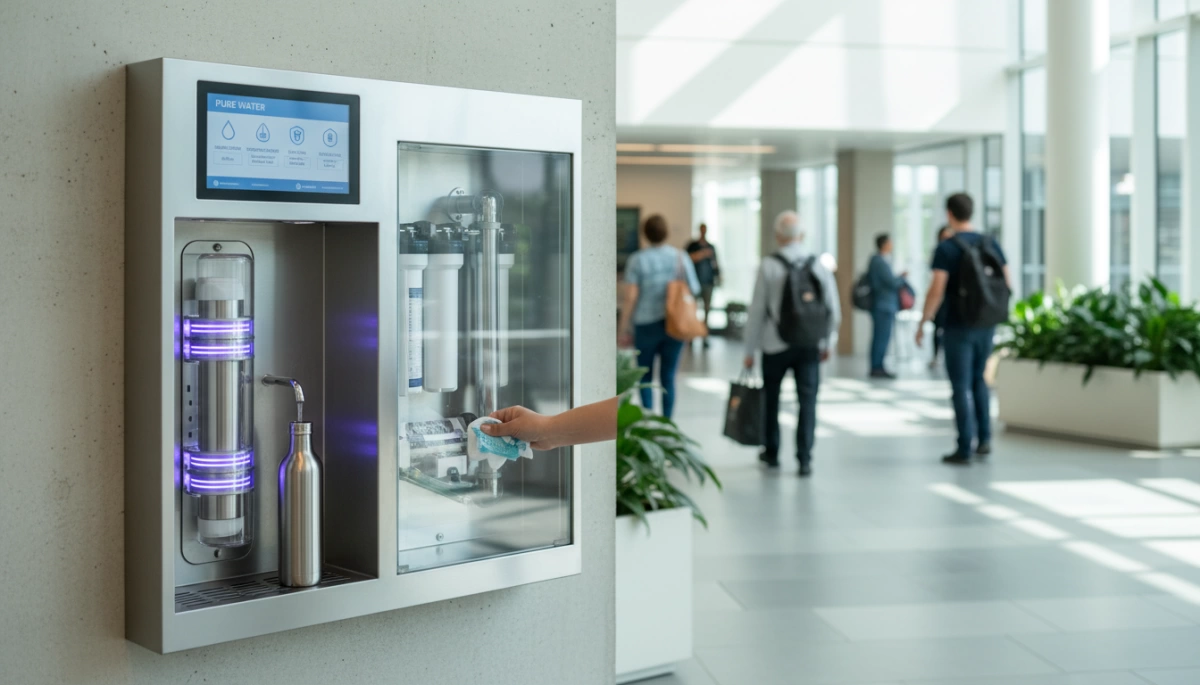
This is where UV-C LED disinfection becomes the standard for safety. Unlike chemical additives that alter the taste, UV-C light works at a genetic level. It penetrates the cell walls of microorganisms and disrupts their DNA or RNA. Once that genetic code is scrambled, the bacteria or virus cannot reproduce and is effectively rendered harmless. It provides a 99.9% reduction in pathogens without adding a single drop of chemical sanitizer to the water.
Point-of-Dispense vs. In-Tank Sterilization
Location matters when it comes to point-of-use water purification. Many older systems rely on in-tank UV lamps, which keep the reservoir clean but do nothing to protect the water as it travels through the final tubing to the nozzle.
- In-Tank: Good for storage, but leaves the dispense point vulnerable to biofilm control in plumbing issues.
- Point-of-Dispense: We prioritize placing UV-C LEDs right at the outlet. This combats retrograde contamination, preventing airborne germs or bacteria from the user’s bottle from migrating back up into the system.
Mercury-Free Safety and Efficiency
Transitioning to LED technology isn’t just about better sterilization; it’s about facility safety and sustainability. Traditional UV lamps contain mercury—a hazardous material that complicates disposal and poses a risk if broken. UV-C LED units are solid-state, mercury-free, and instant-on. They don’t require warm-up time and only consume energy when water is actually flowing, making them a cornerstone of modern, energy-efficient public water quality management.
Hygiene Protocols: Engineering Out the Human Error
We know that the biggest risk to water safety in public spaces isn’t always the water source itself—it’s the people using it. To maintain strict public health water compliance, we have to design systems that minimize human contact. Our approach focuses on removing the physical touchpoints that act as vectors for germ transmission.
Touchless Hydration Solutions
In high-traffic environments like airports or campuses, a shared button is a biological hazard. We utilize advanced infrared sensors to trigger dispensing. This touchless activation ensures that users never have to place their hands on the machine, effectively halting the spread of surface-borne pathogens. It’s a simple but critical layer of defense that modern facilities demand.
Antimicrobial Protection and Nozzle Defense
The dispensing nozzle is the most vulnerable point for retrograde contamination—where germs from a user’s bottle migrate back into the system. To combat this, we rely on antimicrobial surfaces and silver-ion additives embedded directly into the plastic components. This technology actively inhibits the growth of bacteria and mold on the unit’s exterior, keeping the dispense area sanitary between cleanings.
Automated Stagnation Management
Water that sits still is dangerous. Stagnation allows chlorine levels to drop and encourages biofilm control in plumbing issues.
- The Flush Protocol: Our systems are designed to support automatic system flushing. If the unit hasn’t been used for a set period, it briefly cycles water to clear the lines.
- Freshness Guarantee: This prevents the buildup of sediment and ensures every sip is fresh, reducing the risk of bacterial colonization like Legionella.
By integrating these features, we ensure that our public bottle fillers and under-sink water chiller dispenser units remain safe, reliable, and clean without constant manual intervention.
The Future of Maintenance: IoT and Real-Time Monitoring
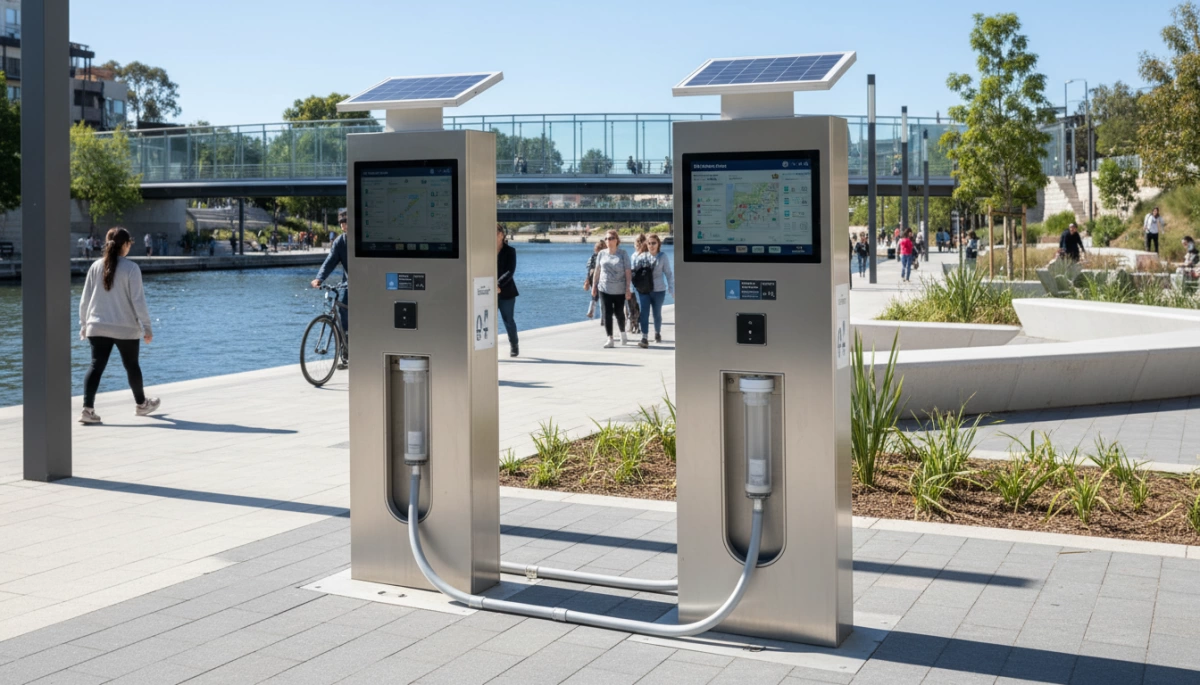
Managing water quality across a large campus or facility used to be a guessing game, relying on manual checks and paper logs. We are shifting the industry standard from reactive fixes to predictive maintenance strategies. By integrating an IoT water management system, facility managers gain immediate visibility into the health of every unit without ever leaving their desks. This technology transforms how we approach public water safety, ensuring that maintenance is performed exactly when needed—never too early, and definitely never too late.
Moving From Reactive to Predictive Strategies
Old-school maintenance relied on “check-ups” or waiting for a user to complain about low flow. Smart facility management tools change the equation by constantly analyzing system performance. We can now anticipate needs before they become problems, ensuring zero downtime for end-users.
- Filter Tracking by Volume: Instead of arbitrary six-month schedules, we track actual gallons dispensed. This ensures filters are changed based on real usage load, maximizing efficiency while guaranteeing water quality.
- Real-Time UV Functionality: If a UV-C LED malfunctions, the system triggers an immediate alert. This creates a robust water quality monitoring plan that prevents unsterilized water from ever being dispensed.
- The Dashboard View: For facility managers overseeing multiple floors or buildings, a centralized dashboard provides a status overview of every hydration station in the network.
Sustainability Tracking and ROI
Beyond maintenance, these smart systems provide tangible data to justify the investment. We track metrics that matter to your ESG goals, specifically the number of single-use plastic bottles saved. This data allows organizations to visualize their environmental impact in real-time, validating the return on investment while promoting a greener facility culture.
Essential Maintenance Checklist for Facility Managers
Managing Water Quality in Public Bottle Filling Stations requires a proactive approach rather than a reactive one. We design our units for durability, but consistent oversight ensures that every drop dispensed meets the highest hygiene standards. Implementing a strict facility operations SOP protects your investment and the health of your building’s occupants.
Here is the hydration station sanitation checklist we recommend for optimal performance:
Daily Visual Inspections:
- Sensor Check: Verify that the infrared sensors trigger immediately without ghost activation.
- Nozzle Hygiene: Inspect the dispensing area for any physical debris or blockage.
- Status Indicators: Glance at the LED display to ensure filter status lights are green and the UV system is active.
Monthly Exterior Sanitization:
- Surface Cleaning: Wipe down the housing and basin using EPA-approved disinfectants. While our surfaces are designed to be antimicrobial, regular cleaning prevents dust buildup.
- Drain Check: Ensure the catch basin drains quickly to prevent standing water, which can lead to biofilm accumulation.
Quarterly and Bi-Annual Maintenance:
- Filter Replacement: Adhere to the schedule based on gallon usage. Utilizing high-capacity water filter for water fountain solutions ensures that chlorine, lead, and particulates are effectively removed even in high-traffic zones.
- System Flushing: Perform a full system flush after filter changes to clear any loose carbon fines and reset the flow rate.
Compliance Logging:
- Audit Trail: Maintain a physical or digital log of all maintenance activities. This compliance operations checklist is vital for health and safety audits, proving that your facility actively mitigates risks like Legionella and lead contamination.
Frequently Asked Questions About Bottle Filler Water Quality
How often should public bottle filling station filters be replaced?
For most high-traffic facilities, we recommend replacing filters every 6 months or after 3,000 gallons of use, whichever comes first. However, local water conditions play a huge role. If your municipal water has high sediment levels, the physical barrier in the filter may clog faster. Understanding how a water filter works helps facility managers recognize why flow rate reductions are often the first sign that a change-out is needed. Our units feature visual status indicators to take the guesswork out of this schedule.
Does UV-C light kill all bacteria in water fountains?
While no technology can claim 100% sterilization in an open environment, UV-C LED disinfection is incredibly effective, neutralizing 99.9% of bacteria, viruses, and cysts. It works by disrupting the DNA of microorganisms, preventing them from reproducing. We use this as a final barrier to ensure the water is safe the moment it hits your bottle.
What is the best way to prevent Legionella in idle water systems?
Legionella prevention protocols rely heavily on eliminating stagnation. When water sits still in pipes or tanks, biofilm can form. The best defense is regular usage or automated flushing systems that purge the lines if the unit hasn’t been used for a set period. Keeping the water moving and maintaining proper chlorination levels from the source (which our filters then remove right before dispensing) is the industry standard for safety.
Can IoT monitoring save money on facility maintenance?
Absolutely. An IoT water management system shifts you from a reactive to a predictive maintenance model. Instead of paying staff to manually check filters across a large campus every week, you only dispatch a technician when the data tells you a specific unit needs attention. This reduces labor hours and prevents the waste of replacing filters that still have plenty of life left.
What is the difference between point-of-use and in-tank sterilization?
Point-of-use water purification treats the water immediately before it dispenses, which is superior for preventing retrograde contamination (germs traveling back up the nozzle). In-tank sterilization keeps the stored water clean, but it leaves the tubing and dispense point vulnerable to airborne bacteria or cross-contamination from users. We prioritize point-of-use UV to ensure the highest hygiene standard right where it matters most.