














You might think that tighter filtration always equals better water quality…
But in the world of low-pressure faucet systems, going too small is a fatal engineering mistake.
As a manufacturing partner, I know that the real challenge isn’t just filtration—it’s UF Membrane Pore Size Optimization.
Select a pore size that is too tight (like 0.01 micron), and the flux rate drops to a useless trickle. Choose one that is too loose, and you compromise on pathogen rejection and safety.
In this guide, you’re going to learn exactly how we balance hydraulic permeability with filtration efficiency to hit the 0.1-micron sweet spot for Point-of-Use (POU) systems.
Let’s dive into the physics behind the flow.
Understanding Membrane Morphology and Optimization
When we approach UF Membrane Pore Size Optimization for Faucet Filters, we are engineering a balance between microscopic precision and hydraulic reality. We aren’t just poking holes in a material; we are manipulating polymer structures to create a selective barrier that functions effectively under standard household water pressure.
Defining the Ultrafiltration Range (0.01µm to 0.1µm)
In our manufacturing process, we define the ultrafiltration (UF) window strictly between 0.01 microns and 0.1 microns. This range is critical for Point-of-Use (POU) applications.
- Above 0.1µm (Microfiltration): Larger pores allow higher flow but fail to reliably exclude smaller bacteria and viruses.
- Below 0.01µm (Nanofiltration): Tighter pores require high pressure (pumps) to force water through, making them unsuitable for passive faucet attachments.
For a faucet filter, 0.1-micron filtration accuracy is the industry standard target. It is tight enough to physically block bacteria (which typically range from 0.2µm to 2.0µm) and cysts, yet open enough to maintain a user-friendly flow rate without causing immediate backpressure issues.
Pore Size vs. Molecular Weight Cut-Off (MWCO)
A common misconception in membrane engineering is treating geometric pore size and Molecular Weight Cut-Off (MWCO) as interchangeable metrics. They are not.
- Geometric Pore Size: This refers to the actual physical diameter of the voids on the membrane surface, measured in microns (µm). This is the primary metric we use for sediment and pathogen exclusion.
- MWCO: This measures the membrane’s rejection capability based on the molecular weight of solutes, expressed in Daltons (Da).
For faucet filtration, we prioritize geometric pore size optimization. While MWCO is vital for industrial protein separation, residential users care about physical particle exclusion. We correlate a 0.1µm pore size roughly to an MWCO of 100,000 to 200,000 Da, ensuring that while we stop biological contaminants, we allow beneficial dissolved minerals to pass through.
The Asymmetric Structure: Skin Layer vs. Support Layer
To achieve high ultrafiltration precision without sacrificing flow, we utilize an asymmetric pore structure in our hollow fiber membranes. If the membrane were dense and tight throughout its entire thickness, the resistance would be too high for tap water pressure. Instead, we engineer two distinct zones within a single fiber wall:
- The Skin Layer (Active Layer): This is the ultra-thin, dense surface layer facing the feed water. It dictates the pore control filtration and determines the 0.1µm cutoff. It is responsible for the actual separation process.
- The Support Layer (Substructure): Beneath the skin, the polymer opens up into a porous, finger-like structure. This layer provides the mechanical strength to withstand Transmembrane Pressure (TMP) but offers negligible resistance to water flow.
This hollow fiber membrane morphology allows us to maximize hydraulic permeability. The water encounters resistance only at the very surface (the skin), and once it passes that barrier, it flows freely through the support structure, delivering a fast, clean stream to the user’s glass.
Why 0.1 Micron is the Sweet Spot
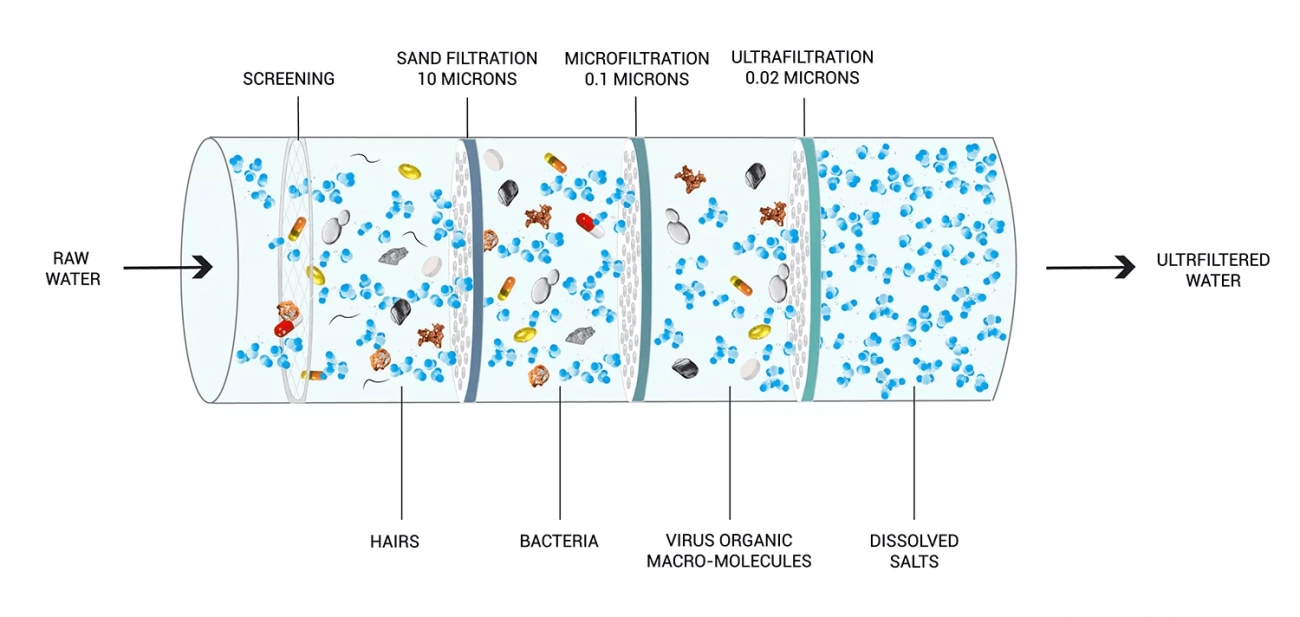
In the world of pore size optimization uf, finding the perfect balance is critical. We don’t just pick a number arbitrarily; we target the 0.1-micron range because it represents the ideal intersection of safety, flow rate, and filter longevity. If the pores are too tight, the water barely trickles; if they are too loose, contaminants slip through. This specific membrane specification faucet filter design ensures we hit the “sweet spot” for residential performance.
Bacteria and Cyst Exclusion Mechanics
The primary goal of a uf membrane pore size faucet system is biological safety. We rely on bacteria size exclusion uf principles to physically block pathogens. Most common waterborne bacteria, such as E. coli and Salmonella, range from 0.5 to 5.0 microns in size. Protozoan cysts like Giardia and Cryptosporidium are even larger.
By strictly engineering a 0.1-micron filtration accuracy, we create a mechanical sieve that is significantly smaller than these microorganisms. This allows us to achieve a high Log reduction value for bacteria and cysts without using chemical disinfectants. The membrane acts as an absolute barrier, ensuring that the ultrafiltration precision is sufficient to turn tap water into safe drinking water instantly.
Preserving Flow Rate (Flux) at Low Pressure
One of the biggest challenges in pore control filtration is managing the flux rate vs. rejection trade-off. While a 0.01-micron pore size might theoretically catch viruses, it creates massive resistance. Standard household water pressure is often insufficient to push water through such tight pores without a booster pump, leading to a frustrating user experience.
At 0.1 microns, we maintain high hydraulic permeability. This pore size allows water to flow freely at the typical Transmembrane pressure (TMP) found in kitchen faucets. Unlike a gravity-fed glass water filter pitcher that can take minutes to filter a liter, our optimized UF membranes deliver immediate, continuous flow, making them practical for washing vegetables or filling pots quickly.
Mineral Retention vs. Reverse Osmosis
Many consumers confuse Ultrafiltration (UF) with Reverse Osmosis (RO), but the filtration accuracy uf system serves a different purpose. RO membranes have a pore size of roughly 0.0001 microns, which strips water of everything, including essential minerals.
Our approach to sediment cutoff uf membrane technology focuses on selective exclusion. We effectively remove suspended solids, turbidity, and pathogens, but we allow dissolved minerals like calcium and magnesium to pass through. This form of Point-of-Use (POU) water treatment retains the healthy mineral content of natural water, providing a crisp taste that doesn’t feel “flat” or demineralized.
Material Science Beyond Pore Size
Achieving the perfect filtration balance isn’t just about drilling microscopic holes into a membrane; it comes down to the advanced polymers we use. In our manufacturing process, we look beyond simple pore dimensions to focus on the chemical interaction between the water and the filter material. If the material fights the water, you lose pressure. If it welcomes the water, you get efficient flow without sacrificing ultrafiltration precision.
Hydrophilicity and Water Flow Resistance
The biggest enemy of a faucet filter is resistance. We utilize advanced hydrophilic coating technologies and intrinsically hydrophilic polymers (like modified PAN or PS) to ensure water passes through easily. A hydrophobic (water-repelling) material would require high pressure to force water through the pores, which isn’t feasible for standard residential faucets.
By increasing the hydraulic permeability of the membrane surface, we reduce the surface tension. This allows water to glide through the 0.1-micron pores effortlessly, maintaining a strong flow rate even when the transmembrane pressure (TMP) is low. This material science is critical because it allows us to retain beneficial minerals while removing contaminants, highlighting the practical differences between distilled and filtered water where mineral retention is key for taste and health.
Fouling Resistance and Pore Distribution
Longevity is just as important as initial performance. We engineer our hollow fibers with a distinct asymmetric pore structure. This means the pores on the skin layer are tight (0.1µm) for separation, while the support layer beneath is more open. This structure provides structural integrity without adding unnecessary resistance.
Membrane fouling resistance is heavily dependent on pore distribution uniformity. If the pores vary wildly in size, the larger pores take all the flow and clog instantly, while the smaller pores do nothing. We ensure a tight distribution curve so every square millimeter of the membrane shares the workload equally.
Preventing Pore Blocking vs. Cake Filtration
Understanding how a filter clogs helps us design better ones. We aim to shift the fouling mechanism from pore blocking to cake filtration.
- Pore Blocking: This happens when particles get stuck inside the pore throat. This is irreversible and kills the filter lifespan immediately. We prevent this by ensuring our surface pores are smaller than the target contaminants.
- Cake Filtration: This occurs when particles pile up on the surface of the membrane. This forms a permeable “cake” layer that actually aids filtration.
By optimizing for cake filtration rather than internal pore blocking, we ensure that the pore control filtration remains effective for months rather than weeks, providing consistent protection against sediments and cysts.
Integrating UF Optimization with ACF
Optimizing the uf membrane pore size faucet systems is critical for stopping bacteria, but pore size alone doesn’t solve every water quality issue. A membrane with 0.1-micron pores is excellent at physical exclusion, yet it cannot remove dissolved chemicals or improve taste on its own. To create a truly comprehensive filter, we integrate a hybrid approach that addresses both physical pathogens and chemical contaminants.
The Hybrid Solution: Pre-filtration Synergy
We don’t rely on a single barrier. We pair the ultrafiltration membrane with high-performance carbon to create a multi-stage defense. This setup ensures that the filtration accuracy UF system isn’t compromised by heavy sediment loads. The carbon stage handles the chemistry—removing chlorine and odors—while the membrane handles the biology. This synergy ensures that the water isn’t just safe; it actually tastes good, solving many of the quality issues often found in still water vs. tap water comparisons.
Role of Activated Carbon Fiber (ACF)
Activated Carbon Fiber (ACF) synergy is a game-changer compared to old-school granular carbon. We use ACF because it offers:
- Faster Adsorption: It absorbs contaminants like lead and chlorine 10 to 100 times faster than standard carbon.
- Membrane Protection: It acts as a crucial pre-filter, significantly aiding in turbidity reduction before the water reaches the tight membrane pores.
- Extended Lifespan: By catching larger sediments, rust, and organic compounds early, the ACF protects the delicate hollow fibers from premature fouling.
This allows the ultrafiltration precision stage to focus strictly on excluding microscopic threats without getting clogged by larger sludge.
Visual Verification via Transparent Window
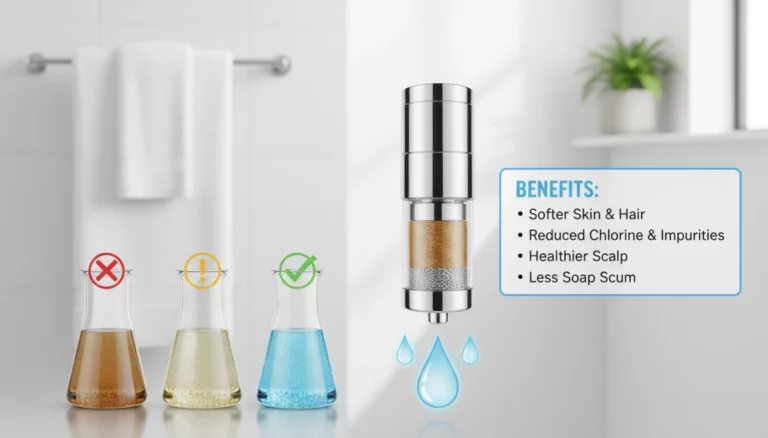
Point-of-Use (POU) water treatment needs to be trustworthy. We incorporate a clear view window into the faucet filter housing so you can verify performance instantly. This allows users to physically see the sediment cutoff UF membrane and ACF layers working. As contaminants are trapped, the filter media visibly darkens from white to gray or brown. This visual cue eliminates the guesswork regarding filter life, providing immediate proof that the pore control filtration is actively trapping dirt.
Manufacturing Precision and Quality Control
When it comes to UF Membrane Pore Size Optimization for Faucet Filters, the difference between a reliable product and a failure lies entirely in the manufacturing process. We don’t leave filtration accuracy to chance. Achieving a true ultrafiltration range requires rigorous validation protocols to ensure that the theoretical design matches the physical reality of the fiber.
Ensuring 0.1 Micron Accuracy with Bubble Point Testing
To verify that our membranes meet strict 0.1-micron filtration accuracy, we utilize the Bubble Point Test. This is the industry standard for non-destructive testing of membrane integrity. By wetting the membrane and gradually increasing pressure, we can identify the exact pressure point where air bubbles first pass through the largest pore.
This test confirms that no pore exceeds the specified limit, ensuring that bacteria and cysts cannot bypass the barrier. Meeting these rigorous benchmarks is often a prerequisite for achieving NSF certified water filter status, which gives American consumers peace of mind regarding the safety of their tap water.
Consistency in Pore Size Distribution
It is not enough for the average pore size to be correct; the distribution must be uniform. A wide distribution curve means some pores are too tight (reducing flow) while others are too loose (compromising safety).
We focus on pore control filtration to maintain a tight distribution. This consistency ensures:
- Predictable Flux: Water flows evenly across the entire surface area.
- Reduced Fouling: Uniform pores prevent specific areas from clogging prematurely.
- Reliable Exclusion: Every section of the membrane performs identical separation duties.
OEM/ODM Customization Capabilities
As a manufacturer, we understand that different markets have different water conditions. Through OEM water filter manufacturing, we can adjust the membrane specification faucet filter parameters to suit specific needs. Whether a client requires a slightly tighter structure for high-risk areas or a modified surface chemistry for better hydraulic permeability, we can tailor the production process. This flexibility allows us to optimize the balance between flow rate and contaminant rejection based on the unique requirements of your brand.
Frequently Asked Questions About UF Membrane Optimization
How does pore size affect water flow rate?
It comes down to the flux rate vs. rejection trade-off. In simple terms, tighter pores create more resistance, which can slow down the water flow if the transmembrane pressure (TMP) isn’t high enough. However, we engineer our uf membrane pore size faucet systems to maintain high hydraulic permeability. By optimizing the hollow fiber membrane morphology, we ensure you get a steady stream of water without sacrificing filtration performance. If the pores are too large, water gushes out, but you lose that critical ultrafiltration precision.
Is 0.1 micron enough to remove bacteria?
Absolutely. This is the core of bacteria size exclusion uf. Most common waterborne bacteria, like E. coli and Salmonella, range from 0.2 to 2.0 microns in size. By setting our 0.1-micron filtration accuracy, we create a physical barrier that is significantly smaller than the pathogens. This ensures a high log reduction value, effectively blocking bacteria and cysts (like Giardia) from passing through the pore control filtration layers while still allowing water molecules to flow freely.
What is the difference between UF and RO pore sizes?
The difference is magnitude. Pore size optimization uf targets the 0.01 to 0.1-micron range, which is perfect for removing suspended solids, bacteria, and turbidity reduction while retaining beneficial minerals like calcium and magnesium. Reverse Osmosis (RO) is much tighter, around 0.0001 microns, designed to remove dissolved solids and salts. While UF is excellent for microbiological safety, understanding the benefits of reverse osmosis water for home is important if your goal is to remove heavy metals or desalinate the water entirely.
How often should UF faucet filters be replaced?
For most Point-of-Use (POU) water treatment setups, I recommend replacing the filter cartridge every 3 to 6 months. This timeline depends heavily on your local water quality and the membrane fouling resistance of the unit. You will usually notice a drop in water pressure when the sediment cutoff uf membrane has reached its capacity. This flow reduction is actually a good sign—it means the membrane specification faucet filter is successfully trapping contaminants and preventing them from entering your glass.