

















What Are Micro Particles in Tap Water?
When we talk about water quality, we often focus on invisible chemicals like chlorine, but micro particle filtration efficiency is equally critical for a truly clean shower. Tap water travels through miles of aging municipal infrastructure before reaching your home, picking up physical debris along the way. These aren’t just invisible molecules; they are physical solids that impact your water quality and your body.
Identifying Suspended Solids
The most common culprits in unfiltered water are suspended solids. These are physical contaminants that have not dissolved in the water but float within it.
- Rust Flakes: Corroded iron from aging metal pipes.
- Silt and Sand: Fine earth materials that enter the water supply during main breaks or construction.
- Micro-Sediment: Tiny particles that contribute to shower water turbidity, making water appear cloudy or “milky.”
The Hidden Dangers of Micro-Sediment
While large debris is easy to spot, micro-sediment poses a stealthier threat. These particles, generally ranging between 1 and 50 microns, are often too small to see with the naked eye but large enough to cause physical damage. Additionally, hard water contains precipitated calcium carbonate crystals. These microscopic shards of hardness minerals don’t just dissolve; they physically accumulate on surfaces.
Physical Impact on Skin and Hair
We design our filtration solutions because we understand that showering in sediment is essentially sandblasting your skin on a microscopic level.
- Skin Barrier Damage: Micro-particles can act as abrasives, disrupting the delicate skin barrier and leading to irritation or dryness.
- Hair Health: Suspended solids cling to hair shafts, weighing them down and preventing moisture absorption, which leads to brittle textures.
The Clogging Effect
Beyond health concerns, physical sediment is the primary cause of mechanical failure in bathroom fixtures. Rust and silt accumulate inside the fine nozzles of showerheads, leading to uneven spray patterns and drastically reduced water pressure over time. Without effective particulate removal, your shower system becomes a trap for debris.
The Engineering Challenge: Filtration vs. Water Pressure
Designing a shower filter is always a balancing act between purity and performance. The core dilemma of Micro Particle Filtration Efficiency in Shower Water Filters is simple: the tighter you weave the filter media to catch smaller contaminants, the harder it is for water to pass through. If we focused solely on the smallest micron rating possible, you would end up with a trickle instead of a shower. Our priority is ensuring that low pressure drop filtration is achieved so you don’t have to sacrifice a strong spray for clean water.
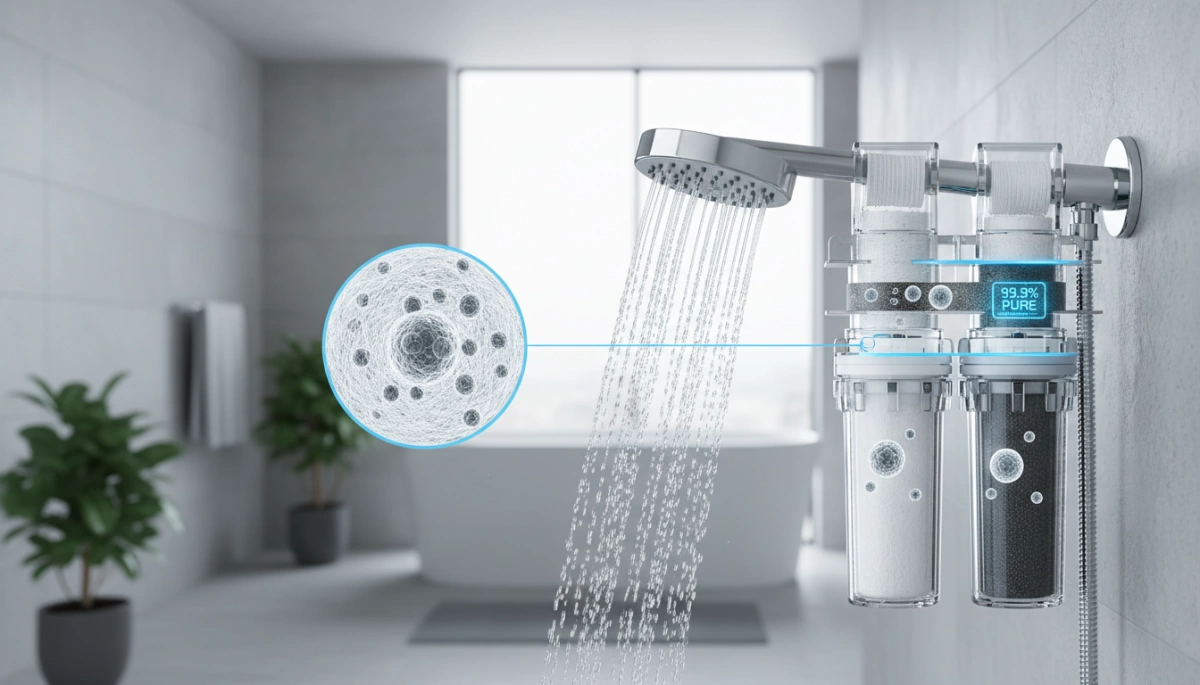
We engineered our 15-stage system to hit the “sweet spot”—maximizing contaminant removal while maintaining a standard 2.5 GPM flow rate. This is where the concept of depth filtration comes into play. Instead of forcing water through a single, restrictive barrier, we utilize a multi-layered approach.
- Physical Stages: Layers like PP cotton filter cartridges and high-density stainless steel mesh trap physical debris without clogging the entire system immediately.
- Kinetic Flow: The water maintains its kinetic energy as it moves through granular media like KDF 55 and magnetic energy balls, ensuring consistent pressure.
This “High Output” design allows us to deliver 15-stage filtration system benefits without the frustration of reduced water pressure, effectively solving the engineering challenge of keeping flow rates high while stripping out sediment and rust.
Anatomy of Efficiency: How the 15-Stage System Works
When we analyze Micro Particle Filtration Efficiency in Shower Water Filters, it becomes clear that a single screen isn’t enough. A single layer would clog almost instantly under the load of US municipal water sediments. That’s why we utilize a 15-stage system. It breaks the filtration process into distinct zones, ensuring large debris doesn’t prematurely block the finer chemical media that handles the invisible contaminants.
Layer 1: The Physical Barrier (Entry)
The first line of defense is purely mechanical. Before the water interacts with any chemical media, it passes through a high-density stainless steel mesh. This acts as a gatekeeper for the heavy hitters—rust flakes, sand, and larger grit that often break loose in aging plumbing.
Immediately following the steel mesh is the PP cotton filter cartridge. Think of this layer as a micro-sponge designed to tackle shower water turbidity. It traps the finer sediments and silt that slipped past the initial mesh. By prioritizing suspended solids removal shower elements here, we prevent them from coating the deeper filtration layers, preserving the lifespan of the entire cartridge.
Layer 2: The Electro-Chemical Barrier (Middle)
Once the physical debris is stripped away, the water enters the core treatment zone. This section relies on physical vs. chemical filtration principles to handle dissolved threats.
- KDF 55 Media Performance: We use Kinetic Degradation Fluxion (KDF 55) because it thrives in high temperatures. Unlike standard carbon, which can release contaminants in hot water, KDF uses an electro-chemical redox process to neutralize chlorine and heavy metals effectively.
- Calcium Sulfite: Paired with KDF, calcium sulfite provides high-efficiency chlorine removal. It is incredibly fast-acting, which is crucial given the high flow rate of a shower, ensuring the steam you breathe is less irritating.
Layer 3: The Polishing Barrier (Exit)
The final stage is the exit strategy. We place a secondary high-density stainless steel mesh and ultra-fine mesh layers at the bottom. This “Polishing Barrier” ensures that no filtration media or residual fine particulates escape into your water stream. It guarantees that the only thing exiting your shower head is clean, filtered water, protecting your nozzles from clogging.
Comparative Analysis: 15-Stage vs. Standard Carbon Filters
When evaluating Micro Particle Filtration Efficiency in Shower Water Filters, it becomes clear that not all filtration systems are built the same. Many standard options on the market rely heavily on a single stage of Granular Activated Carbon (GAC). While carbon is effective for taste and odor, these basic filters have severe limitations regarding suspended solids removal in the shower. Without a dedicated physical barrier, the carbon quickly becomes coated in silt and rust, rendering it useless against chemical contaminants and leading to rapid pressure loss.
If you are noticing common signs you need a water filter—like a sudden drop in flow or water that still smells like the pool—it is often because a standard filter has been choked by physical debris it wasn’t engineered to handle.
The 15-Stage Advantage: Engineered for Longevity
Our 15-stage filtration system benefits stem from a “graded density” design that standard filters lack. We don’t just pack media into a canister; we arrange it strategically to handle different types of impurities at specific stages. This ensures shower head clogging prevention and consistent high output.
Here is how the 15-stage architecture outperforms basic models:
- Physical Defense: We place high-density stainless steel mesh and PP cotton filter cartridge layers at the very beginning. These act as a shield, trapping physical sediment before it can reach the sensitive inner layers.
- Chemical Media Protection: KDF 55 media performance relies on direct contact with the water to neutralize chlorine and heavy metals. In standard filters, sediment coats the KDF and Calcium Sulfite, blocking this reaction. Our sediment pre-filter layer keeps the chemical media clean, allowing it to function at peak efficiency for the full life of the cartridge.
- Sustained Water Pressure: By trapping larger particles in the initial mesh and cotton layers, we prevent the deep compaction that kills water pressure in single-stage carbon filters.
This multi-layered approach ensures that we aren’t just filtering chemicals; we are physically purifying the water stream to protect both your skin and the filter itself.
Maintenance for Maximum Efficiency
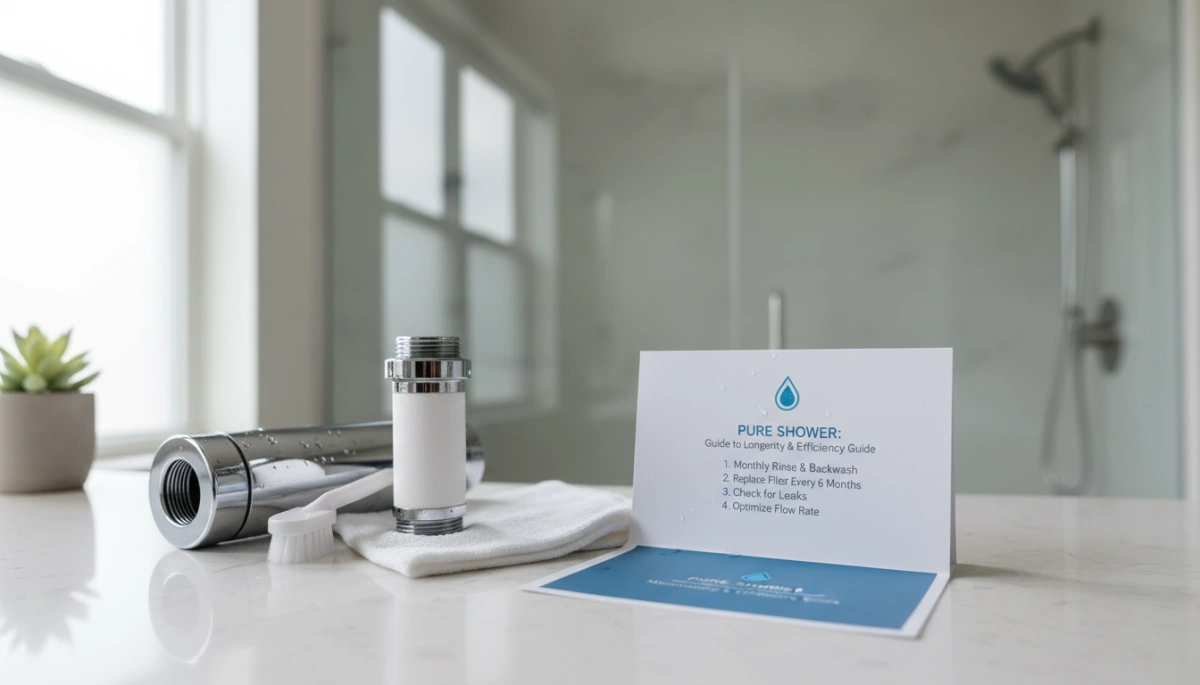
To ensure consistent micro particle filtration efficiency in your shower, regular maintenance is non-negotiable. The very mechanism that traps rust and silt—the PP cotton filter cartridge and high-density stainless steel mesh—will eventually reach capacity. Unlike chemical media that might expire silently, physical filtration gives you a clear signal when it is time for a change.
Recognizing Signs of Saturation
The most obvious indicator that your filter has reached its limit is a noticeable reduction in water pressure. While our system is designed for low pressure drop filtration, a significant decrease in flow usually means the physical barriers are clogged with suspended solids. Watch for these signs:
- Reduced Flow Rate: Water trickles rather than sprays, indicating the sediment pre-filter layer is saturated.
- Visual Discoloration: If you inspect the cartridge, the white PP cotton layer turns dark brown or orange from trapped rust and debris.
- Return of Symptoms: Dry skin or a chlorine smell returns, suggesting the chemical stages are no longer effective.
Replacement Schedule and Setup
We generally recommend replacing the cartridge every 4 to 6 months, depending on your local water quality and usage frequency. Leaving a saturated cartridge in place too long can lead to bacterial growth and reduced hygiene. Fortunately, we designed the 15-stage system for tool-free maintenance. The unit uses universal 1/2″ threads, making it compatible with most standard setups. If you are unsure about your specific plumbing fixtures, evaluating filter cartridge connection types can help you confirm compatibility before installation. Simply unscrew the housing, swap the cartridge, and hand-tighten the unit back in place to restore full particulate removal high efficiency.
Frequently Asked Questions About Micro Particle Filtration
Does filtering micro particles significantly reduce water pressure?
One of the biggest concerns we hear is that adding layers like high-density stainless steel mesh and PP cotton will turn a strong shower into a weak trickle. We designed our 15-Stage High Output Universal Shower Filter specifically to solve this engineering challenge. By optimizing the density of the filtration media, we ensure that water flows freely while still trapping contaminants. Unless your home already suffers from extremely low water pressure, you will not notice a reduction in flow. You get the purification you need without sacrificing the shower experience you want.
How often should the PP cotton layer be replaced?
The PP cotton filter cartridge layer is integrated directly into the main replaceable cartridge. You do not need to replace the cotton separately; you simply swap out the entire cartridge. For most households in the United States, we recommend changing the cartridge every 6 months or after approximately 10,000 gallons of usage. However, if your local water supply has a high concentration of suspended solids like rust or silt, the physical barrier layers may saturate faster. If you notice a sudden drop in water pressure, it is usually a sign that the filter has done its job capturing sediment and needs a replacement.
Can a 15-stage filter remove hard water scale effectively?
Our system is highly effective at capturing physical scale particles and debris that break off from old pipes. The KDF 55 and magnetic energy balls also help condition the water to reduce the harsh feeling of minerals on your skin and hair. However, it is important to distinguish between filtration and softening. While our filter removes physical impurities and chemical irritants, it does not remove dissolved minerals like a salt-based system would. If you are curious about the specific differences in mineral handling, you can read more about whether a water filter softens water to understand how we target skin health without using salt.