












Phase 1: Feasibility Audit – Infrastructure Compatibility
Before upgrading existing drinking fountains with retrofit bottle filler kits, a thorough feasibility audit is essential. This phase verifies site readiness and limits costly surprises.
Electrical Power Requirements and Limitations
- Confirm power availability: Retrofit bottle fillers typically require low voltage (12V–24V DC).
- Assess proximity to electrical outlets or the need for new wiring.
- Check capacity for GFCI protection and compliance with local electrical codes.
- Identify any potential power limitations that could delay installation or increase costs.
Plumbing & Drainage Assessment
- Verify existing water supply lines meet flow requirements for hydration stations.
- Check for NSF/ANSI 61 certified plumbing components to ensure water safety.
- Review drain infrastructure: Bottle fillers often share drains with drinking fountains, so drainage integrity is critical.
- Measure rough-in plumbing dimensions precisely to match retrofit kits and prevent rework.
| Parameter | Retrofit Consideration | Notes |
|---|---|---|
| Electrical Voltage | Low voltage DC (12V–24V) | May require transformer or power pack |
| Plumbing Supply Line | Cold water supply with adequate flow | NSF/ANSI 61 certification recommended |
| Drain Connection | Shared drain with fountain preferred | Must prevent backflow and leaks |
| Rough-in Dimensions (Depth/Height) | Match existing standards | Accurate measurement critical |
Key takeaway: Confirm infrastructure compatibility upfront to ensure a smooth retrofit installation that meets facility management plumbing upgrades and power guidelines with minimal downtime and cost overruns.
Phase 1: Feasibility Audit – Space & ADA Compliance
Before upgrading drinking fountains with retrofit bottle fillers, accurately measuring alcove depth and Hi-Lo height requirements is essential. Your retrofit kit must fit the existing space without compromising accessibility.
| Requirement | Standard Dimension |
|---|---|
| Alcove Depth | Minimum 17 inches |
| Hi-Lo Fountain Heights | 36 inches (high), 27 inches (low) |
| ADA Hallway Clearance | At least 36 inches unobstructed |
Ensure the new setup follows ADA compliance, preventing hallway obstructions and maintaining accessibility for all users. This means no part of the fountain or bottle filler should extend beyond ADA limits in corridors or public spaces.
Careful planning here avoids costly redesigns or code violations later. Our ADA compliance checklist for commercial wall-mounted water stations can guide your measurements and setup for smooth, compliant installations.
Phase 1: Feasibility Audit – Condition of Existing Units: Assessing Rust and Structural Integrity for Retrofits
Before deciding on a retrofit bottle filler procurement, thoroughly inspect the existing drinking fountains for rust, corrosion, and overall structural integrity. Rust not only compromises the unit’s lifespan but can also affect the retrofit installation cost bottle filling station projects due to additional repairs or replacements needed. Any visible structural damage or weakened frames indicate that a retrofit kit might not be a cost-effective or safe option. Prioritize units that are solidly built and free from significant wear to ensure a smooth upgrade and long-term performance. This step is critical to avoid unexpected facility management plumbing upgrades that add to downtime and cost.
Procurement & Hardware Costs (CAPEX): Retrofit Kits vs. New Units
When comparing retrofit bottle filler procurement to purchasing full new build units, cost differences are a key driver in decision-making. Retrofit kits designed to upgrade existing drinking fountains usually cost substantially less upfront than brand-new hydration stations.
| Cost Aspect | Retrofit Kit | New Build Unit |
|---|---|---|
| Hardware Cost | Lower – uses existing infrastructure | Higher – complete new hardware |
| Installation Materials | Minimal – adapter plates, fittings | Full plumbing and electrical |
| Lead Times | Shorter – fewer components | Longer – complete assembly |
Benefits of Direct Manufacturer Sourcing:
Buying retrofit kits or new units directly from OEM water dispenser manufacturers helps cut markup costs, ensuring competitive capital expenditure (CAPEX) budgeting. Direct sourcing often means access to certified components like NSF/ANSI 61 certified filters and aftermarket support tailored for specific brands such as Elkay or Haws. This avoids middleman delays and guarantees consistent quality, essential for facility management plumbing upgrades and meeting public facility sustainability goals.
For added insight into product standards, check out our breakdown of micron ratings for multistage RO filtration systems, perfect for integrating filtration upgrades during retrofit projects.
Installation Labor & Downtime: Retrofit vs. New Build
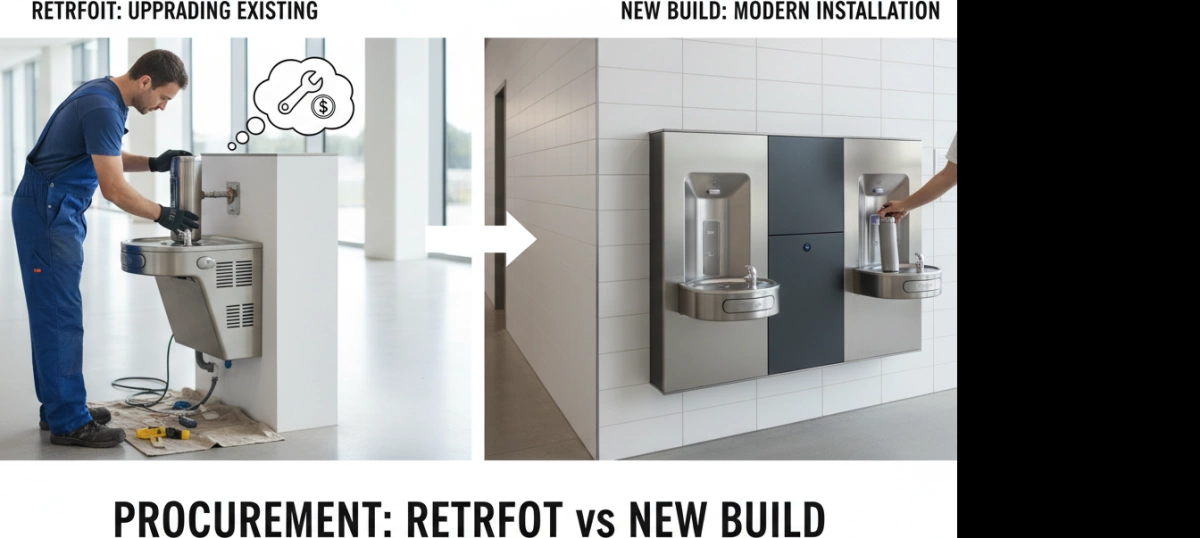
When deciding between a retrofit upgrade kit for existing drinking fountains and a full new build, installation time and complexity weigh heavily on your budget and scheduling.
| Factor | Retrofit Installation | New Build Installation |
|---|---|---|
| Labor Intensity | Lower—mostly replacing fountain fixtures | Higher—includes full plumbing, electrical work |
| Installation Time | Shorter—often same-day or under a day | Longer—days to weeks depending on scope |
| Downtime Impact | Minimal—fountains typically back in service quickly | Higher—facility may lose water access temporarily |
| Complexity Level | Moderate—depends on existing infrastructure condition | Complex—new rough-in dimensions, plumbing, HVAC considerations |
| Coordination Needed | Limited—usually involves fewer trades | Extensive—multiple trades and permits required |
Retrofitting with a hydration station retrofit kit minimizes disruption, allowing facility managers to plan upgrades with minimal operational downtime. However, older unit conditions may sometimes increase labor if unexpected repairs arise.
New build installations demand more planning around downtime, especially in compliance with ADA regulations and plumbing requirements. This is crucial to avoid costly overruns and delays.
Understanding these time and labor differences upfront helps optimize your procurement strategy while aligning with your facility’s operational priorities.
Long-Term Maintenance: Retrofit vs. New Build OPEX
When upgrading existing drinking fountains with retrofit bottle filler kits, expect higher maintenance costs over time. Old components in retrofits may cause frequent breakdowns, corrosion issues, or inefficient water flow, increasing facility management plumbing upgrades and downtime. Retrofits often inherit plumbing or chiller wear and tear, driving up repair bills.
| Aspect | Retrofit Bottle Filler | New Build Hydration Station |
|---|---|---|
| Maintenance Frequency | Higher due to aged parts | Lower with brand-new components |
| Warranty Coverage | Usually limited, excludes old parts | Full standard manufacturer warranty |
| Energy Efficiency | Depends on existing unit’s age | Optimized for modern, energy-smart models |
| Risk of Vandalism Impact | Varying, retrofit kits can be less robust | Designed with vandal-resistant features |
| Long-Term OPEX | Potentially higher repair costs | Predictable maintenance budget |
New build stations come with full warranties and energy-efficient designs that reduce operational expenses and improve sustainability. They meet NSF/ANSI 61 certified water quality tech and include laminar flow water dispensers optimized for hands-free use. This results in less downtime and reliable user experience.
Choosing between retrofit vs new build means weighing upfront CAPEX savings against ongoing OPEX risks. For facilities aiming for low maintenance and energy savings, new build hydration stations are a smart investment.
Explore efficient options like our water dispenser models designed for easy maintenance and energy savings.
Detailed Procurement Checklist: Scope of Work, Filtration Standards, and Vandal-Resistant Features
When drafting your Scope of Work (SOW) for upgrading drinking fountains with retrofit bottle filler kits, clarity on filtration and vandal-resistant requirements is critical. Here’s a quick checklist to ensure you cover all essential specs:
| Procurement Item | Key Points |
|---|---|
| Filtration Standards | Must meet NSF/ANSI 61 certified for safe drinking water. Consider advanced filtration options integrating reverse osmosis or carbon filters to enhance water quality and meet public facility sustainability goals. For in-depth filtration tech, see our reverse osmosis water filter guide. |
| Vandal-Resistant Features | Reinforced steel or tamper-proof mounting kits to prevent damage in high-traffic areas. Look for designs with vandal-resistant water dispensers and secure bottle filler frames compatible with existing units like Elkay or Haws for straightforward retrofits. |
| Scope Clarity | Define retrofit kit compatibility, including rough-in plumbing dimensions, electrical power needs, and ADA compliance. Specify touchless bottle filling station features to improve hygiene and user satisfaction. |
This focused SOW prevents procurement delays and ensures your upgrade meets operational and safety standards while reducing costly maintenance down the line.
Detailed Procurement Checklist: Tender Specifications
When drafting tender specifications for upgrading drinking fountains with bottle fillers, focus on these critical features:
| Specification | Requirement | Notes |
|---|---|---|
| Hands-Free Activation | Touchless sensor operation | Reduces cross-contamination risk |
| Laminar Flow Delivery | Certified laminar flow water output | Ensures clean, splash-free water |
| Certification Standards | NSF/ANSI 61 certified components | Compliance with drinking water safety |
| Vandal-Resistant Design | Robust materials and secure fittings | Essential for public facilities |
Hands-free activation isn’t just about convenience—it’s key for compliance with health protocols in high-traffic areas. Laminar flow dispensers provide smooth water flow without splashing, improving user experience and hygiene.
Certification like NSF/ANSI 61 confirms that the retrofit bottle filler meets safety standards for potable water. Make sure your tender clearly demands these certifications to avoid costly compliance issues later.
For more on water filtration and certification, check out our guide on good faucet water filter options.
Prioritize these specs to ensure your hydration station retrofit kit aligns with facility sustainability goals and ADA compliance expectations.
Detailed Procurement Checklist: Logistics & Lead Times
Managing supply chains and delivery expectations is crucial when upgrading drinking fountains with retrofit bottle filler kits. Start by confirming lead times for both retrofit installation kits and full new build units—delays can disrupt facility operations and extend downtime. Bulk procurement water filtration products often require careful scheduling, especially when supply chains face variability.
Always verify the availability of ADA compliant drinking fountain components, along with touchless bottle filling station features like hands-free activation and laminar flow dispensers. Ensure your suppliers can meet these specs on time while maintaining quality certifications such as NSF/ANSI 61. Clear communication with manufacturers helps avoid hidden delays and allows for accurate capital expenditure CAPEX budgeting.
Having a reliable logistics plan in place supports smooth installation workflows and maintains momentum on hydration station retrofit projects—especially for public facility sustainability goals. For deeper insights on filtration integration and supply management, reviewing the engineering behind integrated waterway boards may also prove valuable.
Strategic Decision Matrix: Choose Retrofit If Budget and Product Conditions Are Favorable
Retrofitting with a bottle filler upgrade kit is smart when existing fountains are structurally sound and comply with plumbing and electrical specs. It keeps upfront costs low—capital expenditure (CAPEX) is typically much less than full water cooler replacement cost. Retrofit installation cost bottle filling station projects usually mean less downtime and faster upgrades without full demolition.
When retrofit is best:
| Condition | Details |
|---|---|
| Fountain condition | Minimal rust, solid framing, NSF/ANSI 61 certified components intact |
| Budget | Tight CAPEX, prioritize cost-effective hydration station retrofit kit options |
| Compliance | Retrofits meet ADA compliance retrofit checklist, including alcove depth and hi-lo height |
| Infrastructure compatibility | Electrical power and plumbing rough-in dimensions are existing and meet requirements |
With product conditions aligned, retrofit solutions deliver quick, reliable upgrades while supporting facility management plumbing upgrades. They also enable maintaining public facility sustainability goals without fully replacing units. For best results, source retrofit kits compatible with major brands like Elkay and Haws.
Choosing retrofit helps you upgrade touchless bottle filling stations efficiently—without replacing entire fountains. Just verify infrastructure and unit conditions before buying to avoid surprises.
For more on integrating water filtration standards and maximizing retrofit benefits, check our full procurement guides.
Strategic Decision Matrix: When to Choose Which?
Scenario B: Choose New Build If Units Are Old or Renovation Is Planned
If your existing drinking fountains are outdated or part of a larger renovation, new build procurement is often the best route. Here’s why:
| Factor | Why New Build Wins |
|---|---|
| Condition of Units | Old units frequently have rust, leaks, or outdated components that raise retrofit costs and maintenance. |
| Compliance & Layout | Renovations often mean changing space or ADA compliance needs—new builds can be sized and positioned right from the start. |
| Installation Downtime | New builds with fresh plumbing and wiring minimize surprise delays compared to retrofits that uncover hidden issues. |
| Long-Term Cost | Although CAPEX is higher, new units come with warranties, better energy efficiency, and lower OPEX. |
| Customization | Full replacements allow for modern hydration stations with hands-free activation and laminar flow features that fit current specs. |
Choosing new build best fits facilities aiming for lasting upgrades aligned with public facility sustainability goals. Plus, a clear scope of work with tender specifications ensures you get exactly what’s needed without guesswork.
Considering a new build? Make sure your procurement plan covers rough-in plumbing dimensions, electrical power requirements, and integrates certified filtration solutions like those found in advanced water filter innovations (see tankless water filter systems).
This approach lets you rest easy on compliance and reliability while upgrading hydration capabilities across your facility.
OEM/ODM Custom Retrofit Solutions for Non-Standard Fountains
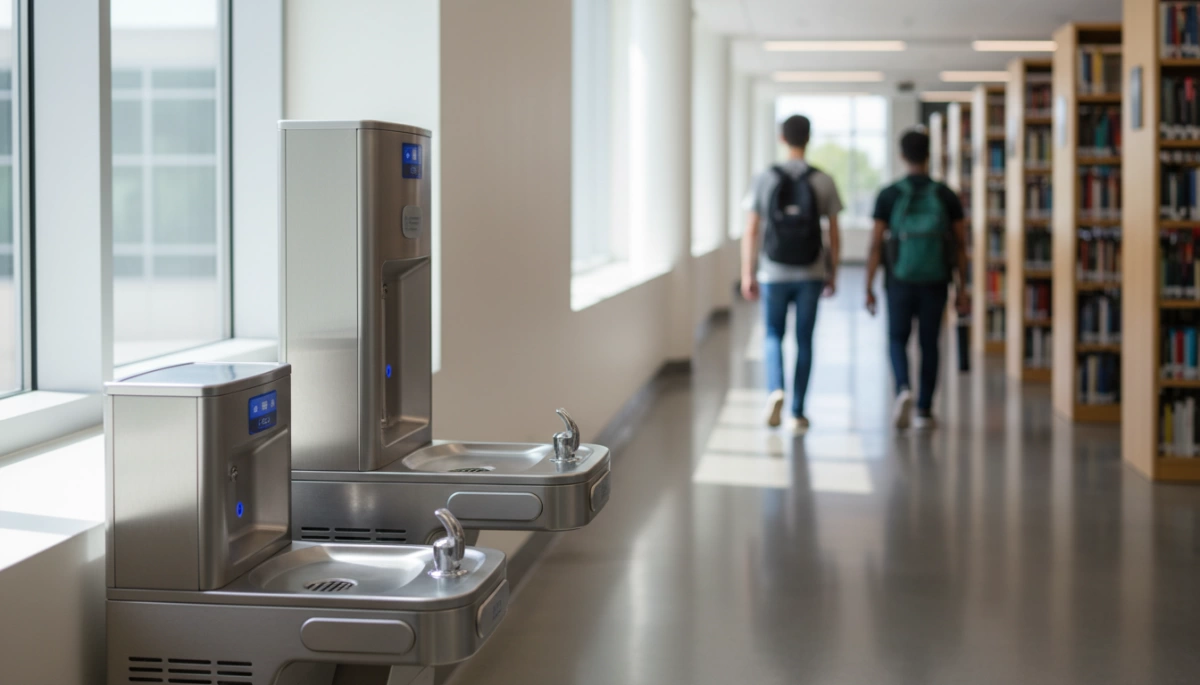
Driplife stands out by offering tailored OEM/ODM retrofit bottle filler procurement solutions for non-standard drinking fountains. If your existing units don’t fit typical upgrade kits, our custom engineering ensures a perfect fit without compromising ADA compliance or hydration station retrofit kit standards. This flexibility saves significant downtime and retrofit installation cost bottle filling station headaches, letting you upgrade older or uniquely designed fountains efficiently. Partnering with Driplife means you get reliable, custom-built retrofit kits designed specifically for your plumbing rough-in dimensions and electrical limitations, all while meeting NSF/ANSI 61 certified filtration standards integral to facility management plumbing upgrades. Explore how our customized approach optimizes bulk procurement water filtration upgrades with precise scope of work tailoring to your site.
Filtration Integration with Advanced Water Quality Systems
Driplife excels in integrating retrofit bottle filler procurement with cutting-edge water quality solutions. Our OEM water dispenser manufacturer expertise ensures seamless compatibility between hydration station retrofit kits and advanced filtration systems, meeting strict NSF/ANSI 61 certified standards. This allows facilities to upgrade existing drinking fountains while enhancing water purity and safety. Whether managing bulk procurement water filtration or specifying vandal-resistant water dispensers, our filtration integration supports public facility sustainability goals and improves overall user health. For projects requiring precise filtration performance, consider our smart RO filter technology, designed to fit effortlessly into retrofits without major infrastructure changes. This synergy between retrofit upgrades and filtration innovation sets Driplife apart in global procurement sourcing.
Cost-Benefit Analysis of Direct Manufacturer Partnerships for Bulk Orders
Partnering directly with Driplife for bulk procurement of retrofit bottle filler kits or new hydration stations delivers clear cost advantages. Cutting out middlemen means lower capital expenditure (CAPEX) on each unit, maximizing your budget for facility management plumbing upgrades. Bulk orders from our OEM water dispenser manufacturer also reduce lead times and simplify logistics, ensuring faster fulfillment without hidden markups.
Additionally, working with Driplife gives you access to customizable options and advanced filtration integration, supporting your public facility sustainability goals while keeping water quality high. This streamlined procurement approach not only saves on upfront costs but also lowers long-term operational expenses through reliable, certified components designed to last.
For a smart upgrade investment, direct manufacturer partnerships offer unmatched value and flexibility compared to traditional suppliers.