

















Fundamentals Of Water Flow Path Optimization Inside Shower Filter Cartridges
When I design a shower filter cartridge, I start with a simple question: how do I keep strong shower pressure while forcing water through a compact, efficient filtration path? The answer lives in basic fluid dynamics and disciplined internal water channel engineering.
Core Fluid Dynamics In Compact Cartridges
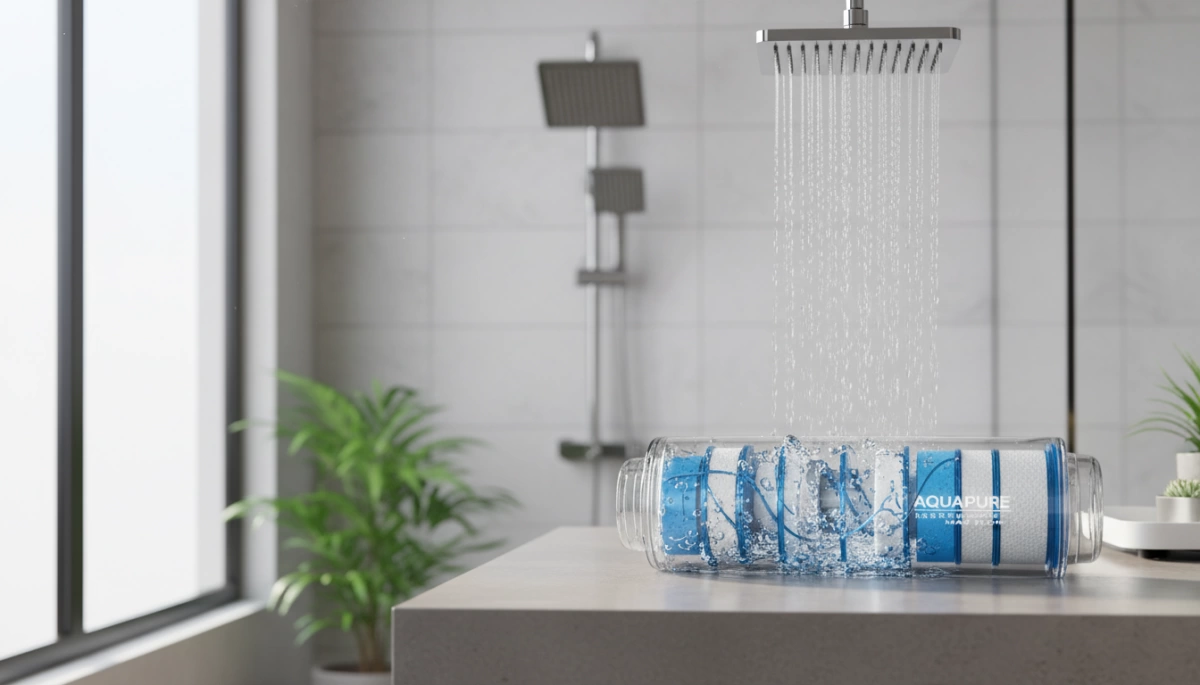
Inside a compact shower filter cartridge, water accelerates through narrow channels, turns around baffles, and passes through packed KDF and carbon media. That means:
- Every change in direction or diameter adds pressure loss through friction and minor losses.
- Surface roughness, sharp edges, and tight bends increase turbulence and waste available pressure.
- Hydraulic diameter and channel length directly control pressure drop and energy use.
A good hydraulic design shower cartridge uses smooth internal geometries, controlled velocities, and short “resistance distance” for a low pressure loss shower filter design.
Laminar vs Turbulent Flow In Shower Filters
For laminar flow optimization in water filters, we want stable, predictable flow where possible:
- Laminar flow reduces friction and noise and helps maintain pressure. It is ideal in inlet/outlet zones and main channels.
- Turbulent flow increases mixing and contact with filtration media but raises pressure drop.
- The goal is controlled turbulence in the media bed and laminar or near-laminar flow in feed channels.
By shaping internal ports and transitions, I focus on turbulence reduction in filtration media where channeling is a risk, and introduce only as much mixing as needed for efficient contaminant removal flow paths.
Pressure Drop And Flow Rate Balance
US customers expect high-flow shower filter design that does not feel restrictive. To balance pressure drop and flow rate:
- I size internal passages to keep velocity moderate at typical US shower flows (1.5–2.5 gpm).
- I avoid abrupt contractions/expansions that create energy-wasting vortices.
- I distribute flow across more area in the media zone to keep inline shower filter hydraulics efficient.
The result is a shower filter pressure maintenance profile that still delivers strong residence time optimization in water filters.
Reynolds Number In Narrow Channels
Inside narrow channels, Reynolds number helps define the flow regime:
- Re = (ρ·V·D) / μ tells me if flow is laminar, transitional, or turbulent in each section.
- In very tight passages, even moderate flow rates can push Re into turbulent ranges.
- I adjust channel diameter, length, and surface finish to keep Re in the right regime for each zone.
Understanding narrow channel Reynolds number in cartridges lets me tune internal flow path filtration engineering instead of guessing.
Limits Of Straight-Through Flow Paths
A simple straight-through flow path is easy to mold and assemble, but it wastes filtration potential:
- Water tends to shortcut and channel, leaving large portions of media underutilized.
- Contact time is low, so chlorine and heavy metal removal suffers at higher flow rates.
- Pressure drop can still be high if the straight path is narrow or poorly transitioned.
This is why I favor spiral flow shower filter cartridge and helical flow channels in shower filters over simple straight cores. A more advanced, yet manufacturable, spiral flow water filtration cartridge design gives longer path length, more even media exposure, and controlled pressure drop in a compact, US-market-ready shower filtration cartridge.
Water Flow Path Challenges Inside Shower Filter Cartridges
When we design water flow path optimization inside shower filter cartridges, the first headache is how water actually moves once it hits the media. If the flow turns chaotic and turbulent too fast, it can create “channeling” – water cuts a few shortcuts through the media instead of spreading out. That means some of the KDF or carbon media is overworked while other areas barely see any flow, which kills efficiency and shortens real-world cartridge life.
A lot of pressure loss inside a compact shower filter cartridge comes from sharp turns, sudden changes in channel size, and tight, restrictive ports. Every elbow, step, and rough surface adds friction. If the hydraulic design of the shower cartridge ignores this, you end up with good lab numbers but a weak shower stream in a typical U.S. home, especially in older buildings with already marginal water pressure.
Hard water and sediment make this worse fast. Scale buildup in narrow internal water channels and small outlet holes slowly chokes the flow, increasing turbulence and pressure drop. Fine sediment can clog the top layers of media and screens, forcing water to squeeze through a few tiny paths instead of a smooth, even cross-section. This is why we test against real hard-water use cases, similar to what you see in hard water faucet and plumbing applications, not just clean tap scenarios.
There’s always a trade-off: longer filtration paths and more stages help with efficient contaminant removal, but every extra turn or chamber adds hydraulic resistance. If we push the spiral or multi-stage architecture too far, we get great lab removal rates but unhappy users because the shower feels weak. Poor internal flow path design shows up instantly in user experience as:
- Noticeable pressure drop compared to a bare showerhead
- Uneven spray pattern or “spitting” from the head
- Faster clogging and more frequent cartridge changes
For U.S. customers who expect a strong, comfortable shower and simple maintenance, we have to engineer low pressure loss shower filter designs that control turbulence, avoid channeling, and keep the flow stable even as sediment and scale build up over time.
Advanced Water Flow Path Design Strategies in Shower Filter Cartridges
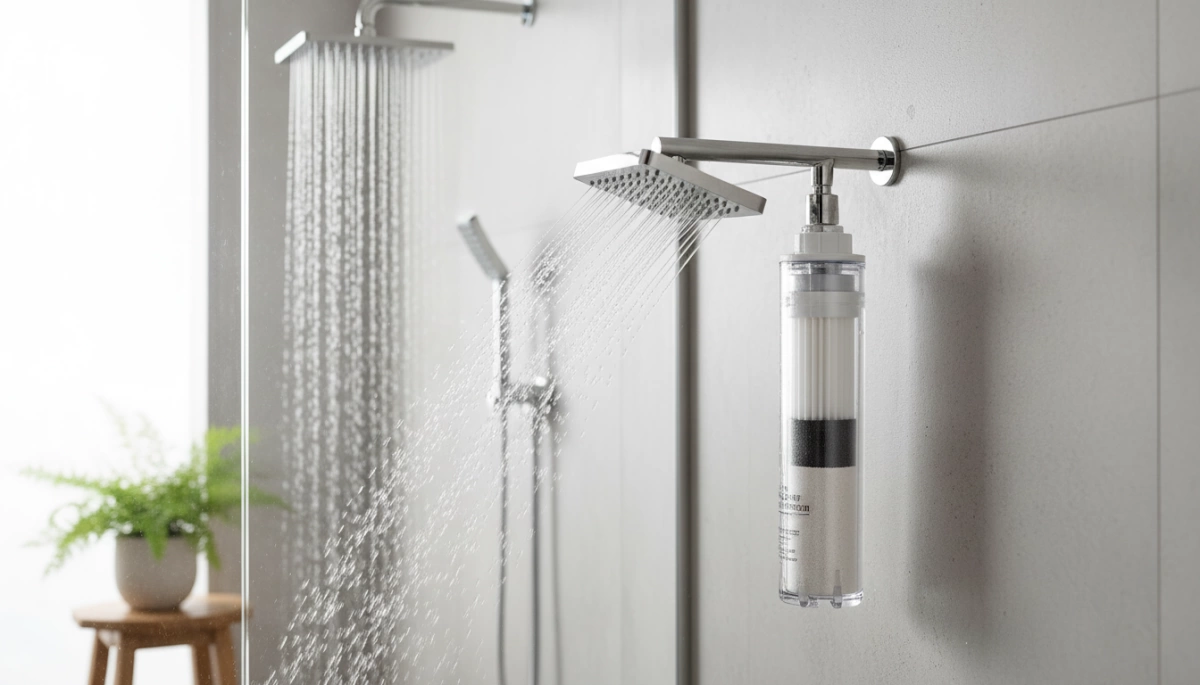
When I design water flow path optimization inside shower filter cartridges, I focus on shaping how every drop moves through the media, not just how much water gets through.
Spiral and Helical Flow Paths
Spiral flow shower filter cartridge designs use a curved flow path instead of a straight shot from inlet to outlet. By wrapping the internal water channel around the core, I can:
- Stretch the path length for better contact time with KDF and carbon media
- Promote even media utilization instead of channeling in just one zone
- Maintain a compact shower filter cartridge design that still hits high-flow specs
Helical flow channels in shower filters take this further, creating a gently twisting path that keeps velocity steady and contact uniform. This kind of internal water channel engineering is key for efficient contaminant removal flow path performance without killing pressure.
Laminar Flow Optimization and Smooth Transitions
Laminar flow optimization in water filters starts with simple rules: smooth walls, gentle curves, and no sharp steps. Inside a hydraulic optimized shower filter cartridge, I use:
- Wider, smoother transitions between chambers to reduce turbulence spikes
- Rounded inlets and outlets that cut pressure drop minimization cartridge losses
- Gradual cross-section changes that keep the narrow channel Reynolds number in cartridges in a controlled range
That combination delivers low pressure loss shower filter design while still giving chlorine and heavy metal removal a real chance to work.
Vortex and Swirl Structures for Controlled Mixing
In some stages, turbulence reduction in filtration media is the priority. In others, controlled mixing actually helps. I use vortex filtration structure features like:
- Swirl vanes or small impeller-inspired ribs to spin the flow just before high-activity media
- Short mixing zones that break up boundary layers without creating big pressure penalties
The result is fluid dynamics shower filtration that boosts contact at the media surface while staying compatible with everyday inline shower filter hydraulics.
Multi-Channel and Layered Architectures
For high-flow shower filter design, a single channel often isn’t enough. Multi-channel shower cartridge flow paths split the stream into several smaller routes through different media layers:
- Parallel channels reduce local velocity and pressure loss
- Layered internal architectures combine KDF, carbon, and specialty media in a staged path
- Even media utilization in filter cartridges extends life and keeps performance stable
This multi-stage cartridge flow engineering works especially well in compact shower filter cartridge design where I need both high efficiency shower filtration media and strong shower filter pressure maintenance.
Housing Geometry, Ports, and Media Packing
Finally, hydraulic design shower cartridge performance depends heavily on the shell and ports. I tune:
- Inlet and outlet port geometry to minimize sudden expansions and contractions
- Internal ribs and support grids to guide flow instead of blocking it
- Media packing density so water doesn’t tunnel through or completely choke off
The same mindset I use for water path material and safety in drinking systems applies here too; well-engineered internal flow path filtration design keeps performance high and safeguards water contact surfaces, just as careful water path material safety engineering for drinking-water components does in point-of-use systems.
Engineering Methods for Water Flow Path Optimization Inside Shower Filter Cartridges
When I design shower filters, I rely on hard data, not guesses. Engineering methods are what let us dial in water flow path optimization inside shower filter cartridges so you get strong pressure and real filtration performance at the same time.
CFD and Internal Water Channel Engineering
I start with CFD simulation for shower filter cartridges to map exactly how water moves through every internal water channel. With CFD, I can:
- Spot dead zones where media isn’t used and fix them
- Reduce turbulence where it hurts flow, and keep it where mixing improves contaminant contact
- Compare spiral flow shower filter cartridge layouts versus straight-through designs before cutting any tooling
This same approach is how we tune carbon and advanced media structures in our filters, similar to how carbon fiber filter media structure and adsorption logic is modeled for efficient contaminant removal.
Pressure Drop Minimization and Cross-Section Tuning
To keep a low pressure loss shower filter design, I refine channel cross-sections and internal path geometry until we hit tight hydraulic targets:
- Widening key sections to lower velocity and minimize pressure drop
- Smoothing transitions to cut energy loss from sharp turns and fittings
- Using multi-channel shower cartridge flow paths where one channel would be too restrictive
The goal is simple: pressure drop minimization in the cartridge without sacrificing contact time.
Residence Time Optimization for Better Filtration
For chlorine, heavy metals, and VOCs, residence time optimization in water filters is critical. I use:
- Longer effective path lengths via helical flow channels in shower filters
- Even media utilization so every granule of KDF or carbon sees consistent flow
- Controlled turbulence reduction in filtration media so water doesn’t “short-circuit” through channels
This balance between laminar flow optimization in water filters and just enough mixing is how we get efficient contaminant removal flow paths.
Flow Rate vs Pressure Curve Testing
After simulation, I run real flow rate versus pressure curves on shower filter prototypes:
- Testing across typical U.S. shower pressures (40–80 psi)
- Comparing inline shower filter hydraulics to standard showerheads
- Verifying shower filter pressure maintenance at 1.5–2.5 gpm, even in compact shower filter cartridge designs
These pressure-flow performance curves tell me exactly where to refine path shape or internal water channel design.
Real-World Shower Operating Validation
Finally, I validate under real shower operating conditions:
- Hot water, varying municipal quality, and hard water loads
- Sediment and scale exposure to confirm anti-clogging shower filter flow paths
- Long-term tests to monitor pressure stability and media life
If a design keeps flow strong, resists clogging, and maintains performance over time, then I know the internal flow path filtration engineering is truly optimized for everyday U.S. homes.
Performance Benefits of Optimized Water Flow Paths in Shower Filter Cartridges
When I design a shower filter cartridge, I focus hard on the internal water flow path. If the hydraulic design is wrong, you feel it instantly in weak pressure, fast clogging, and poor filtration. If it’s right, you get strong, clean, consistent showers for months.
Strong Pressure With Efficient Internal Flow
Optimized internal water channel engineering keeps your shower feeling powerful while still filtering aggressively.
- Smooth, low-resistance channels support a high-flow shower filter design without that “trickle” effect.
- Pressure drop minimization in the cartridge means your shower still feels strong, even in older U.S. homes with average plumbing.
- Laminar flow optimization in water filters (fewer sharp turns, better port geometry) keeps energy in the stream instead of wasting it in turbulence.
Quick view: Pressure vs Design
| Design feature | Effect on shower pressure |
|---|---|
| Smooth, wide internal channels | Higher flow at the same pressure |
| Fewer sharp direction changes | Less energy loss, steadier spray |
| Balanced inlet/outlet port geometry | Reduced internal pressure drop |
Longer Cartridge Life From Even Media Use
A smart hydraulic design prevents “channeling,” where water races through one path and ignores the rest of the filtration media.
- Spiral flow shower filter cartridges and helical flow channels spread water across KDF and carbon media evenly.
- Even media utilization reduces early exhaustion, so you actually use the full capacity you paid for.
- Multi-channel shower cartridge flow paths help avoid dead zones and extend cartridge replacement intervals.
Better Chlorine and Heavy Metal Removal Without Choking Flow
In U.S. city water, chlorine and heavy metals are big pain points. Internal flow path filtration engineering can boost removal performance without killing your pressure.
- Efficient contaminant removal flow paths increase residence time optimization in water filters, so water stays in contact with KDF and carbon just long enough.
- Laminar flow shower filtration optimization ensures more consistent treatment across the entire media bed.
- Hydraulic optimized shower filter cartridges hit the sweet spot: strong spray plus reliable chlorine and heavy metal reduction.
Less Clogging And Easier Maintenance
Hard water and fine sediment are common across the U.S., especially in older buildings and well systems. Good inline shower filter hydraulics are built to stay open and stable.
- Turbulence reduction in filtration media reduces particle pileups at tight corners.
- Anti-clogging shower filter flow paths use wider lead-in channels and better debris distribution to slow buildup.
- Vortex filtration structures and controlled swirl zones can keep small particles suspended and moving instead of packing into one spot.
Clogging Risk Comparison
| Flow path style | Clogging risk | Maintenance impact |
|---|---|---|
| Tight, straight-through narrow paths | High | Frequent cleaning/replacement |
| Smooth, spiral/helical architecture | Low | Longer intervals, less hassle |
Water And Energy Efficiency Gains
For households that care about saving water and energy, hydraulic design matters just as much as the filtration media.
- Low pressure loss shower filter design lets you use a water-saving showerhead without feeling starved for flow.
- Efficient internal hydraulics reduce the need to crank the valve fully open, which lowers hot water demand and supports energy-efficient systems like next‑generation tankless RO and filtration setups.
- Compact shower filter cartridge design with advanced filtration path architecture delivers strong performance with less water wasted bypassing the media.
In short, when the flow path inside the cartridge is engineered properly, you get cleaner water, better pressure, longer life, and lower operating cost—all in the same high-flow shower filter design.
OEM And Manufacturer Considerations For Water Flow Path Optimization
When I work with OEM partners on water flow path optimization inside shower filter cartridges, I’m focused on three things: consistent shower pressure, real contaminant reduction, and clean, scalable manufacturing.
Design Guidelines For High-Flow Shower Filter Cartridge OEMs
For high-flow shower filter cartridge OEMs, the hydraulic design has to be locked in from day one:
- Aim for a low pressure loss shower filter design that still supports U.S. household flow rates (typically 1.5–2.5 GPM at real-world line pressures).
- Use internal water channel engineering that keeps Reynolds numbers in a controlled range, so you get stable flow without extreme turbulence in the media bed.
- Pair KDF and carbon media flow optimization with a compact shower filter cartridge design so the unit works with standard shower arms and handheld heads.
- Build pressure-flow performance curves early and compare them to what users expect from high-flow shower filter design, not just lab conditions.
If you’re already selling under-sink or faucet filters, you’ll recognize the same balance we use in our bathroom faucet water filter designs: strong flow, low pressure drop, and efficient contaminant removal.
Balancing Advanced Flow Path Design With Manufacturability
Advanced internal flow path filtration engineering only works if you can actually build it at scale:
- Keep spiral flow shower filter cartridge geometries simple enough for standard injection molding; avoid ultra-thin ribs and undercuts that kill yield.
- Use repeatable media packing methods so even media utilization in filter cartridges doesn’t depend on operator “feel.”
- Standardize O-rings, end caps, and inline shower filter housings so you can reuse components across models and keep tooling costs under control.
- Validate laminar flow optimization in water filters with quick pressure drop tests on the line, not just CFD simulation reports.
Scaling Spiral And Multi-Stage Flow Architectures
When we scale spiral flow water filtration cartridge design and multi-stage cartridge flow engineering for mass production, we focus on:
- Helical flow channels in shower filters that can be molded in two- or three-part tools without complex slides.
- Modular inserts that create vortex filtration structures or turbulence reduction in filtration media, while still snapping into standard housings.
- Multi-channel shower cartridge flow paths that use mirrored geometry, so one proven design can support multiple SKUs and brands.
- Inline shower filter hydraulics that stay consistent even when you tweak media blends for different markets or certifications.
Aligning With Global Market Expectations
Global demand for high efficiency shower filtration media is rising, and expectations are different in each region:
- In the U.S., customers expect shower filter pressure maintenance first, then chlorine and heavy metal reduction as the key benefit.
- In regions with harder water, anti-clogging shower filter flow path design and sediment handling become just as important as taste and odor.
- OEM shower filter cartridge design must meet local plumbing codes and thread standards while still delivering the same internal hydraulic optimized shower filter cartridge performance.
- We design efficient flow path contaminant removal so it scales across inline shower water treatment cartridge lines, from entry-level to premium, without sacrificing the core user experience.