

















Tired of guessing whether your apartment’s tap water is actually safe to drink?
If you’re renting, you probably deal with chlorine taste, old pipes, and mystery contaminants—but you can’t exactly install a whole-house system or start drilling under the sink. That’s where choosing the right water filter for apartment living becomes a game changer.
In this guide, you’ll see exactly which renter-friendly water filters (from simple pitchers to countertop RO systems) work best in small spaces—without tools, plumbing changes, or landlord drama. You’ll learn how to match a no installation water filter to your city’s water quality, your budget, and your daily routine, so you can stop hauling bottled water and start trusting what comes out of your tap.
Ready to find the best water filter for apartment life and finally get clean, great-tasting water with zero hassle? Let’s dive in.
Why Your Apartment Tap Water Needs a Second Look
If you rent, you probably assume your tap water is “fine” because it’s city treated. Still, most apartment renters quickly notice the chlorine taste, odd odor, or cloudy look that makes you question every glass. That’s exactly why a water filter for apartment living isn’t a luxury anymore—it’s basic peace of mind.
In many buildings, especially older ones, water travels through aging pipes before it reaches your faucet. Along the way it can pick up:
- Chlorine and chloramine that leave a pool-like taste and smell
- Sediment and rust that make water look hazy or leave grit at the bottom of your glass
- Possible metal particles from old plumbing, especially in older cities
As a renter, you can’t just install a big under-sink system or drill into cabinets without risking your deposit. Landlord rules and lease restrictions usually mean:
- No permanent plumbing changes
- No drilling into walls or counters
- No bulky systems that are hard to remove when you move out
On top of that, small apartment kitchens and studio layouts change everything. You’re dealing with:
- Limited counter space and tiny sinks
- Minimal cabinet storage
- Shared kitchens where you can’t take over the whole area
That’s why you need a renter friendly water filter that’s compact, portable, and no-install—something you can set up in minutes, remove without tools, and take with you to your next place without leaving a trace.
Big Problems With Apartment Tap Water
If you rent, you’re drinking whatever comes through old building pipes and city treatment — and that’s not always what you want in your glass.
Chlorine and chloramines in city water
Most U.S. apartments get city water treated with chlorine or chloramine. They kill germs, but they also leave bleach-like taste, odor, and dry skin. A good water filter for apartment living should handle chlorine removal so your water actually tastes clean.Lead and heavy metals from old pipes
Older buildings and outdated plumbing can leach lead, copper, and other heavy metals into your tap. Even low levels of lead aren’t safe, especially for kids and pregnant women. This is where a renter friendly water filter that’s certified for lead removal becomes non‑negotiable.PFAS and “forever chemicals”
In some U.S. cities, PFAS (forever chemicals) are a real concern. They’re linked to long‑term health issues and don’t break down naturally. Standard cheap filters usually don’t touch PFAS — you need a higher-performance apartment drinking water filtration system like a quality countertop filter or RO unit.Sediment, rust, and strange taste or smell
Old building lines can send rust, sediment, and pipe flakes straight to your faucet. That’s why water looks cloudy, smells “metallic,” or tastes off. A non permanent water filter with sediment and carbon stages can clear that up fast.How bad water hits your health, cooking, and coffee
Unfiltered apartment water can mean:- More stomach sensitivity or skin irritation
- Flat‑tasting coffee, tea, and cooking
- Hard to trust your tap, so you overspend on bottled water
A solid apartment water filter system fixes this at the source so your drinking water, food, and coffee all taste better — without plumbing changes or landlord approval.
What Makes a Water Filter Renter Friendly
When I talk about a renter friendly water filter, I’m really talking about something that works in an apartment without causing problems with your lease or your landlord.
No drill, no plumber, no landlord drama
A good water filter for an apartment should be:
- No-drill and non-permanent – no holes in cabinets, no under-sink cutting, no wall mounts.
- Tool-free – it should twist on, click in, or plug in by hand.
- No plumber required – if you need a pro to install it, it’s not truly renter friendly.
Compact water filters for small kitchens
In U.S. apartments, counterspace is prime real estate. A real small apartment water filter should:
- Fit on a tight countertop or inside a fridge door
- Not block your dish rack, microwave, or coffee maker
- Have a simple, clean design that doesn’t junk up a studio kitchen
Portable filters you can take when you move
For renters, a portable water filter is an asset you can keep:
- Easy to pack and move to your next place
- Works with most standard faucets or just as a standalone unit
- No special parts left behind when you move out
Quick setup and easy removal
A no installation water filter needs:
- Setup in minutes, not hours
- Fast disconnect when your lease is up
- Clear, simple instructions so anyone in the household can handle it
Filters that work with standard apartment faucets
Most U.S. rentals use standard faucet sizes, but shapes can be weird:
- Look for removable faucet adapters and universal fittings
- Avoid systems that only work with specialty taps or require permanent changes
If you need deeper filtration (like lead, PFAS, or TDS reduction), a plug-and-play reverse osmosis system designed for renters can still stay tool-free while delivering the same core performance as a built-in RO system, similar to what’s described in this guide to what reverse osmosis removes.
Best Types of Water Filters for Apartments
When you’re renting, the “best” water filter for an apartment really means: no drilling, no hassle, fits your tiny kitchen, and actually improves taste and safety. Here’s how the main renter‑friendly options stack up.
Water Filter Pitchers for Renters
A water filter pitcher for apartments is the easiest way to upgrade your tap with zero installation.
Pros in small spaces
- No tools, no landlord approval needed
- Fits in most fridge doors or shelves
- Great starter option for solo renters, couples, and students
- Easy to take with you when you move
Cons in small spaces
- Takes up fridge space (tough in shared apartments)
- Limited capacity if multiple people drink a lot of water
- You have to remember to refill it and wait for filtration
How much pitchers really hold & how fast they filter
Most apartment pitcher filters:
- Hold 6–10 cups (about 1.5–2.5 liters) of filtered water
- Take 5–15 minutes to fully filter a full reservoir, depending on the cartridge design
- Need filters replaced every 1–3 months, based on use and quality
If you want a renter‑friendly design with a comfortable handle and solid build, a model like our water filter pitcher with wooden handle shows how you can balance compact size, decent capacity, and simple maintenance.
Who pitcher filters are best for
- Solo renters & students: Cheap, simple, small footprint
- Couples: Works if you don’t mind refilling a couple of times a day
- Light water drinkers: If you mostly cook with tap and drink some filtered water
If your apartment kitchen is tiny and you want grab‑and‑go cold water, a pitcher filter is usually the first move.
Faucet Mounted Water Filters for Apartments
A faucet mounted water filter for renters gives you on‑demand filtered water right from the tap, with no permanent changes.
How faucet filters attach and detach (no tools)
Most removable faucet filters for rentals:
- Screw onto the faucet using a simple threaded adapter
- Usually tighten by hand—no wrench needed
- Can be removed in a minute when you move out
- Often include multiple adapters to fit standard US apartment faucets
On‑demand filtering vs tap water flow
You typically control flow with a small switch:
- Filtered mode: Water runs through the cartridge for drinking, coffee, tea
- Unfiltered mode: Normal tap water for washing dishes, cleaning, etc.
- Flow rate is slower in filtered mode, but you get water instantly—no waiting like a pitcher
When a faucet filter makes more sense than a pitcher
Choose a faucet mounted filter if:
- You hate refilling pitchers
- More than one person is drinking a lot of water
- You cook often and want filtered water on tap for boiling pasta, washing produce, and making coffee
- Your counter and fridge space are already packed
For many renters, a faucet filter is the sweet spot between convenience, cost, and performance.
Countertop Water Purifier Systems for Apartments
A countertop water filter for small apartments sits next to your sink or on a counter and gives you more capacity without touching the plumbing.
There are two main types:
Gravity-Fed Countertop Filters
These are the “fill the top, collect from the bottom” style.
- No electricity needed
- You pour tap water into the top tank, it filters slowly into the bottom
- Great for families or roommates who want several liters ready to go
- Very renter‑friendly: just place it and use it
Electric Countertop Units
Some electric countertop purifiers:
- Use pumps or powered filtration to speed things up
- May include UV or advanced carbon stages
- Offer higher flow and sometimes chilled or hot water options
How countertop filters save fridge space
Instead of stuffing a pitcher into a shared fridge, a countertop unit:
- Stays at room temperature on the counter
- Provides a larger reservoir of filtered water
- Keeps your fridge open for food, not gear
When a countertop purifier beats a faucet filter
Go with a countertop water purifier for apartments when:
- Your faucet is non‑standard and won’t accept a faucet filter
- You want more capacity than a pitcher without installing under‑sink systems
- You share the apartment and everyone drinks a lot of water
- You want a simple, visible “water station” everyone can use
Countertop Reverse Osmosis Systems for Apartments
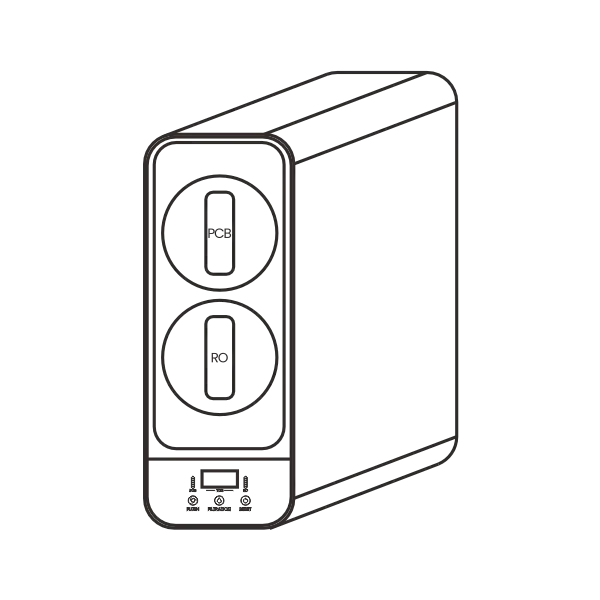
A countertop reverse osmosis (RO) system for apartments is the premium, no‑installation alternative to under‑sink RO. It’s ideal when you want serious contaminant removal but can’t change plumbing.
How countertop RO works with no under-sink install
Most plug‑and‑play countertop RO systems:
- Sit on the counter and either
- Connect temporarily to your faucet with a quick adapter, or
- Use a fill tank (you pour tap water in, the unit purifies it)
- Use a built‑in RO membrane and pre/post filters
- Plug into a standard outlet (for powered models)
- Require no drilling, no permanent valves, and no landlord approval
What countertop RO removes
A good compact RO system for renters can drastically reduce:
- PFAS (“forever chemicals”)
- Lead and other heavy metals
- Fluoride (depending on membrane and design)
- Nitrates, TDS, and many dissolved solids
- Chlorine, bad taste, and odor
If you’re picky about water quality or live in an older building with questionable pipes, this is where apartment drinking water filtration really levels up.
Who actually needs countertop RO
Countertop RO makes sense for:
- Health‑focused renters who worry about PFAS, lead, and other long‑term contaminants
- Families with kids, especially in older US apartment buildings with aging plumbing
- Serious coffee and tea drinkers who want consistent low‑TDS water for flavor and equipment protection
- Renters who can’t install under‑sink RO but want similar performance
If you’re renting long‑term or planning to move but still want a high‑end, portable drinking water system, a countertop RO system for apartments is the top of the line.
What Apartment Water Filters Actually Remove
A good water filter for an apartment does a lot more than just “make water taste better.” The right system can target the exact problems most renters deal with in city buildings and older complexes.
Here’s what apartment water filter systems can actually remove or reduce:
Chlorine & Chloramine
Most U.S. apartments use city water treated with chlorine or chloramine.- Result: Strong pool-like taste, chemical smell, dry skin.
- Fix: Activated carbon filters (in pitchers, faucet filters, and countertop units) are great for chlorine removal and noticeably improve taste and odor.
Lead, Mercury & Heavy Metals
Older buildings and old pipes are a big risk for lead and other metals.- Look for filters certified to reduce lead and heavy metals (often via carbon + special media).
- Under-sink alternatives like advanced faucet or ultrafiltration faucet filters are especially useful for renters dealing with older plumbing.
PFAS, VOCs & “Forever Chemicals”
Some city systems now show PFAS and VOCs in their water reports.- Standard carbon helps with some VOCs.
- For serious PFAS removal, you typically need reverse osmosis (RO) or higher-grade carbon designed for PFAS.
Sediment, Rust & Micro Particles
Old pipes = rust flakes, sand, and other particles in your tap.- Sediment pre-filters and UF (ultrafiltration) membranes catch these so they don’t end up in your glass, coffee maker, or ice tray.
- This also protects the main filter from clogging too fast.
Minerals vs. “Stripped” RO Water
Not every apartment drinking water filtration system treats minerals the same way:- Standard filters (pitcher, faucet, countertop carbon) usually keep healthy minerals like calcium and magnesium, so water still tastes “normal.”
- RO systems strip almost everything — good and bad — which drops TDS and can make the water taste very “flat.”
Remineralization for Better Taste
If you go with a countertop RO system for renters, pick one with:- A remineralization cartridge to add back calcium/magnesium
- Smoother taste for drinking
- Better flavor for coffee, tea, and cooking
Bottom line: when you’re choosing a renter friendly water filter, match the filter tech (carbon, UF, RO, remineralization) to the specific contaminants you care about, not just the marketing label.
How to Choose the Best Water Filter for an Apartment
Picking the right water filter for your apartment comes down to knowing your water, your habits, and your budget. Here’s how I’d approach it step by step.
1. Check Your Local Water Quality
Start with data, not guesses.
- Look up your city’s Consumer Confidence Report (CCR) on your water utility’s website.
- Focus on: lead, chlorine/chloramine, PFAS, hardness, and TDS.
- If your building is old or you don’t trust the plumbing, assume there may be lead and pipe sediment even if the city water is clean.
2. When to Buy a Water Test Kit Instead
A home water test kit makes sense if:
- You’re on well water or a small private system.
- Your building is very old and you’re worried about lead.
- You want to confirm specific issues like PFAS or fluoride (for deeper info on how filtration handles fluoride, I lean on the same performance principles used in these fluoride water filter efficiency tests).
Go for lab-based tests if you’re seriously health focused or have kids at home.
3. Match the Filter to Your Household Size
Think about how much apartment drinking water you actually use daily.
- Solo / light use: pitcher or faucet mounted filter is usually enough.
- Couples: larger pitcher, faucet filter, or small countertop water purifier.
- Families or heavy coffee/tea drinkers: high-capacity countertop RO system for apartments or a gravity-fed countertop filter.
Bigger households burn through cartridges faster—choose systems with long-life filters.
4. Choose Filters for Specific Contaminants
Match the tech to the problem:
- Chlorine / bad taste & odor: activated carbon pitcher or faucet filter.
- Lead and heavy metals: certified faucet, countertop, or RO system labeled for lead removal.
- PFAS / “forever chemicals”: look for PFAS-specific certification or reverse osmosis (including countertop RO for renters).
- Microbes: if boil advisories are common, consider RO with good pre-filtration or systems that pair with UV water treatment similar to those used in UV microbial safety systems.
Always check certifications (NSF/ANSI or equivalent) for the contaminants you care about.
5. Balance Upfront Price vs Filter Costs
I always look at total cost per gallon, not just sticker price.
- Cheap pitcher + expensive short-life filters can cost more long term.
- Countertop RO or premium faucet filters cost more upfront but often have longer-life cartridges and lower cost per gallon.
- Ask yourself: how many gallons per month will you realistically drink and cook with?
6. Know How Often You Need to Change Filters
Real-world replacement is based on time or gallons, whichever comes first.
- Light use: you might hit the time limit (like 6 months) before gallons.
- Families: you’ll hit the gallon limit first.
- If flow slows down, taste drops off, or the filter looks dirty, it’s time to swap—even if the calendar says you’ve got time left.
I recommend setting phone reminders tied to your expected cartridge life.
7. Don’t Forget Portability (Students & Short-Term Rentals)
If you move a lot, prioritize portable water filters and non-permanent water filter systems:
- Pitchers and gravity countertop units: easy to pack and go.
- Removable faucet filters with adapters: perfect for temporary rentals.
- Plug-and-play countertop RO: ideal if you want top-tier filtration but can’t touch the plumbing.
For students and frequent movers, I lean toward compact, no-installation water filters that you can disconnect in seconds and take to the next apartment.
Water Filter Ideas for Different Apartment Setups
Tiny Studios & Micro Apartments (Single Renters)
In a tiny studio, every inch matters. For a water filter for apartment setups this small, I always lean toward ultra-compact, non-permanent options.
Best ultra-compact options for single renters:
| Setup Size | Best Filter Type | Why It Works |
|---|---|---|
| Micro studio | Slim water filter pitcher | Fits in mini fridge doors, no install, low cost |
| Tiny kitchen | Faucet mounted water filter | Filters on demand, no counter space needed |
| Work-from-home pro | Small countertop water filter | Stays on counter, higher capacity, plug & drink |
What I’d pick if I lived alone in a studio:
- Slim pitcher filter with strong chlorine/lead reduction
- Or a removable faucet mounted filter for rentals if your faucet is compatible
- Always go for renter friendly water filters with tool-free install
Shared Apartments & Roommate Setups
Roommates drink differently: someone guzzles water, someone only uses it for coffee, someone forgets to refill the pitcher.
Filters that work with different habits:
| Household Type | Filter Style | Key Benefit |
|---|---|---|
| 2–4 roommates | Large countertop water purifier | Shared access, no one “owns” the filter |
| Mixed habits | Combo: big pitcher + faucet filter | Both fridge cold water + instant tap filter |
| Heavy coffee/tea drinkers | Countertop RO system for renters | Cleaner water, better taste for brewing |
Tips that keep peace at home:
- Put a larger capacity pitcher on a shared shelf and set a “who refills” rotation
- Use a faucet mounted filter in the kitchen so nobody can “forget” to filter
- Pick a easy maintenance water filter so nobody argues about cleaning
Family Apartments with Higher Water Use
Families burn through drinking water fast, so you need volume and flow, not just a tiny pitcher.
Best water filter for family apartments:
| Family Size | Recommended System | Why It Works |
|---|---|---|
| 2–3 people | Large family-size pitcher + faucet filter | Backup when pitcher is empty |
| 3–5 people | Countertop water filter with high flow | Constant access, fewer refills |
| Health-focused families | Countertop reverse osmosis for apartment | Strong removal of lead, PFAS, TDS, better taste |
What I prioritize for families:
- High flow rate so no one waits for water
- Big tank / large pitcher capacity
- Filters that handle lead, PFAS, chlorine for kids’ safety
If you’re comparing materials and build quality, it’s worth checking how faucet water filters are made and what plastics and metals are used in contact with water, like in this overview of faucet water filter production materials.
Temporary, Sublet, or Student Housing
If you’re in a dorm, short-term lease, or bouncing between rentals, you need non permanent water filters you can pack up in minutes.
Best options for students and short stays:
| Situation | Filter Type | Why It’s Ideal |
|---|---|---|
| Dorm or sublet | Student apartment water filter pitcher | No install, easy to leave behind if needed |
| 6–12 month lease | Compact countertop water purifier apartment | Sits on counter, moves with you |
| Moving every semester | Small portable drinking water system | Lightweight, fits in a suitcase or car |
What works best here:
- Low cost filters that are easy to leave or replace
- Tool-free, no installation water filters (no drilling, no landlords involved)
- Systems with long-life cartridges so you’re not replacing filters every month
If you ever need bulk solutions for multiple student units or rentals, working with a dedicated water filter supplier makes it easy to standardize renter-friendly systems across properties.
Installation Tips for No-Install Apartment Water Filters
Setting up a renter friendly water filter should be fast, tool free, and landlord safe. Here’s how to handle the most common “no installation” apartment water filter setups the right way.
How to Set Up a Pitcher Filter the Right Way
A water filter pitcher is the easiest apartment water filter system to get going, but you still want to do it right so it actually works:
Wash everything first
- Rinse the pitcher, reservoir, and lid with mild soap and cool water.
- Never use hot water on the cartridge itself.
Pre–soak or flush the filter cartridge (check the manual)
- Most carbon filters need a 10–15 minute soak in clean tap water.
- After soaking, rinse under cold water for 30–60 seconds to wash out loose carbon dust.
Assemble carefully
- Seat the cartridge firmly into the reservoir—no wobble, no gaps.
- Make sure rubber or silicone rings are in place so unfiltered water can’t bypass the filter.
Discard the first 1–2 fills
- The first full pitcher or two usually looks grayish from carbon fines.
- Run and dump until the water runs clear and tastes clean.
Place it smart
- Keep it in the fridge or a cool, shaded spot to slow bacterial growth.
- Don’t overfill the top reservoir; let it drain fully before moving.
How to Attach and Remove Faucet Mounted Filters
A faucet mounted water filter is a great non permanent water filter option for renters who want filtered water on demand:
Check your faucet type first
- Works best with standard threaded kitchen faucets.
- Usually does not fit pull-down sprayers or super modern designer faucets.
Install the adapter (tool free)
- Unscrew the faucet aerator by hand.
- Match the included adapter to your faucet threads (male/female).
- Hand-tighten only—no wrench, no scratches, no landlord issues.
Attach the faucet mounted filter
- Screw the filter body onto the adapter until snug.
- Do not over-tighten; that’s how you crack plastic threads.
Test and use the diverter
- Turn on the tap slowly and check for leaks.
- Flip the switch/lever to toggle between unfiltered tap and filtered water.
- If it leaks around the threads, remove, re-seat the washer, and tighten gently.
Easy removal when you move out
- Unscrew the filter and adapter.
- Reinstall the original aerator so the faucet looks untouched.
- This is the core of a removable faucet filter for rentals.
Connecting a Countertop Purifier or Countertop RO to Your Tap
Countertop water purifiers and countertop RO systems give you higher performance without under-sink work—perfect under sink alternatives for renters:
Hook up the diverter valve
- Unscrew your faucet aerator and install the diverter (like a faucet filter adapter).
- Make sure the rubber washer sits flat so you get a tight seal.
Connect the tubing
- Push the tubing into the quick-connect fitting until you feel it “click.”
- Give it a light pull to confirm it’s locked in.
Prime the system
- Turn on cold water slowly.
- Flip the diverter to send water into the countertop unit.
- For countertop RO, run water for 10–15 minutes the first time to flush the membrane and filters.
Place the unit safely
- Keep the system on a stable counter close to the sink so the tubing doesn’t tug.
- Avoid bending or sharply kinking the tubing—that kills flow and can cause leaks.
For RO systems that chill or enhance water
- If you ever pair RO with cooling or hydrogen options, similar principles from an under-sink RO benefits guide still apply—flush well and protect the filters from hot water.
Avoiding Leaks and Low Water Pressure Issues
Most complaints with apartment drinking water filtration come down to two things: leaks and weak flow. You can prevent both:
Always start with low water pressure
- Open the tap slowly after installing any no installation water filter.
- Sudden high pressure can blow out seals or tubing.
Check all rubber washers and O-rings
- A missing or twisted washer is the most common leak cause.
- If you see water creeping around the threads, remove, reposition, and re-tighten by hand.
Use cold water only on filters
- Hot water can damage carbon and RO materials and cause odd tastes.
- Stick to cold for filtration, then heat if needed.
Address low flow
- For faucet and countertop units:
- Check if the built-in pre-filter is clogged.
- Run the tap without the filter attached—if flow is still low, your building pressure is likely weak.
- For pitchers:
- If it’s filtering super slow, the cartridge may be clogged or not fully soaked; re-soak or replace.
- For faucet and countertop units:
Keeping Setup Tool Free and Renter Friendly
The best water filters for renters don’t require any permanent changes to your kitchen:
No drills, no screws, no holes
- Avoid anything that mounts to cabinets or walls with hardware.
- Stick to countertop, faucet mount, and pitcher designs.
Hand-tighten everything
- If you feel like you need a wrench, you’re probably overdoing it.
- Hand tightening protects plastic and keeps faucets looking new.
Save original parts
- Keep the faucet aerator, washers, and adapters in a labeled bag.
- When it’s time to move, you can restore the faucet in minutes.
Choose truly portable options
- Pitchers, gravity-fed countertop filters, and plug-and-play RO units are ideal portable drinking water systems for renters.
- No tools, no plumber, and you can pack them with you to your next place.
A clean, tool free setup is what makes a renter friendly water filter work in real life. Follow these steps and your apartment water filter system will stay leak free, efficient, and totally landlord safe.
Maintaining Your Apartment Water Filter
Keeping your water filter for an apartment in good shape matters just as much as choosing the right one. A renter friendly water filter is only effective if it’s maintained on time and cleaned the right way.
How to Know When Your Filter Is Done
Most apartment water filter systems give you clear signs that it’s time to swap cartridges:
- Taste or smell changes – chlorine or “metallic” taste comes back.
- Flow rate drops – water trickles instead of flowing smoothly.
- Usage limit reached – hit the gallon or month limit in the manual.
- Built‑in indicators – some countertop RO systems or pitchers have LED or mechanical reminders.
If your water suddenly tastes off, don’t ignore it. When in doubt, replace the filter.
Common Problems: Slow Flow & Clogged Cartridges
Slow flow on a faucet mounted water filter or countertop water purifier usually comes down to:
- A clogged cartridge from sediment, rust, or hard water.
- Very old filters that have exceeded their rated capacity.
- Low apartment water pressure making small filters struggle.
Fix it fast: replace the cartridge, flush according to the manual, and make sure all connections are fully open.
Cleaning Pitchers, Housings & Spigots Safely
For pitchers and countertop systems in a small apartment kitchen, keep things simple and safe:
- Wash pitchers, lids, and reservoirs with mild dish soap and warm water (not hot).
- Never use bleach or harsh chemicals directly on filter cartridges.
- Wipe spigots and faucet adapters weekly to prevent slime or mold.
- Let everything air dry fully before reassembling.
Consistent cleaning protects taste and keeps your apartment drinking water filtration system performing like new.
Tracking Filter Changes Without an App
You don’t need an app to stay on top of filter changes:
- Write the install date on the filter with a marker.
- Stick a note on the fridge with the next change month.
- Use your phone calendar with a simple recurring reminder.
- For high‑end systems like RO, follow the manufacturer’s schedule closely for each stage.
If you’re running a more advanced system with UV or RO stages, it’s worth understanding how pieces like UV light in a water purifier work so you know which parts are critical to keep on schedule.
Why Maintenance Matters So Much
Neglecting maintenance wrecks performance, even on the best water filter for apartments:
- Contaminant removal drops sharply once filters are overloaded.
- Bacteria can grow in dirty housings and stagnant water.
- Taste gets worse, and you might be no better off than tap water.
- RO systems can suffer from tank and pressure issues if not serviced correctly (see how reverse osmosis tank pressure affects performance).
If you want real protection from chlorine, lead, PFAS, and other contaminants in your apartment tap water, staying strict with maintenance is non‑negotiable.
Troubleshooting Common Apartment Water Filter Problems
Even the best water filter for an apartment can act up sometimes. Here’s how I deal with the most common renter-friendly water filter issues without calling a plumber.
Faucet Adapter Does Not Fit Your Tap
For a faucet mounted water filter in an apartment, adapter fit is the #1 headache.
What to do:
- Check your faucet type first: These filters usually only work with standard threaded faucets, not pull‑down sprayers or weird designer taps.
- Use the included adapter kit: Most removable faucet filters come with multiple adapters—test each one by hand, no tools.
- Add a rubber washer: If it’s “almost” fitting but leaks, a thicker washer or O‑ring can seal the gap.
- Worst case: If your tap is not compatible at all, switch to a countertop water filter or pitcher filter that doesn’t need a faucet connection.
Weak Flow on Countertop or Faucet Filters
Slow flow on a countertop water purifier or faucet mounted filter is usually easy to fix.
Common causes & fixes:
- Clogged cartridge: If you’ve had the filter for a while, the media may be loaded with sediment. Replace the filter—especially important in older apartment buildings with rusty pipes.
- Low building water pressure: High floors often see weaker pressure. Use a model designed for low pressure or a gravity fed countertop filter.
- Kinked or twisted hose (for countertop RO systems): Straighten the hose and make sure it’s not pinched behind the sink.
- Wrong faucet setting: On faucet filters, make sure you’re in “filter” mode only when needed; switch back to “tap” when filling pots to avoid wearing the cartridge out.
Weird Taste Even After Installing a Filter
If the water tastes off after installing an apartment drinking water filter, I always check these:
- Did you flush the filter? Most cartridges need to run for 2–5 minutes (or a few gallons) to rinse carbon dust and air. Until then, taste will be odd.
- New plastic or rubber parts: Some housings have a mild “plastic” taste that fades after a couple days of use and regular flushing.
- Filter not targeting your contaminant: If you’re dealing with PFAS, lead, or heavy chlorine, you need a certified chlorine removal water filter or a system rated for lead/PFAS—sometimes a countertop RO system is the better choice.
- Stale water: If you’re in a small apartment and don’t drink much, don’t let water sit in a pitcher for days. Empty, rinse, and refill daily for fresh taste.
If you prefer a cleaner taste after RO, consider remineralizing your water to smooth out flavor and mouthfeel; a simple guide like this on how to add minerals back to filtered water can help.
Air Bubbles, Noise, or Dripping Connections
Apartment kitchen setups aren’t always perfect, so small leaks and noises are common with portable water filters.
Air bubbles or gurgling:
- Normal right after installation—air is escaping from the system.
- Run water for a few minutes in filter mode until the sound settles down.
Dripping at the faucet or hose:
- Hand‑tighten connections: Over‑tightening can damage threads; under‑tightening will leak. Go snug, not brutal.
- Check washers and O‑rings: If they’re twisted, missing, or flattened, replace them.
- Align the faucet diverter (for countertop systems): Make sure it’s straight and not cross‑threaded.
When It’s Time to Replace the Whole Unit
Sometimes the best move in a rental is to stop fighting an old filter and swap it out.
Replace the entire apartment water filter system when:
- It leaks constantly even after changing washers and tightening correctly.
- Plastic is cracked from drops or age—especially around the housing or spout.
- Filter replacements cost more than a new unit, which happens often with very old models.
- Your needs changed: Maybe you now need a PFAS filter for renters, lead removal, or a compact RO system for better coffee and baby formula. Upgrading can be smarter than patching.
In a rental, I always choose a non‑permanent, portable water filter that’s easy to uninstall and take with me. If a unit is giving you more hassle than clean water, it’s time for a better renter friendly water filter that actually fits your apartment lifestyle.
Hard Water, Showers, and Other Apartment Water Issues
Hard water and older plumbing can make apartment life rough on your skin, hair, and fixtures. You usually can’t change the building’s pipes, but you can control the water you actually use every day.
Options for Renters Dealing With Hard Water
You probably have hard water if you see:
- White chalky spots on faucets, dishes, and shower doors
- Soap that doesn’t lather well
- Dry, tight skin after showers
Renter-friendly hard water options:
| Option | What It Helps With | Renter-Friendly? |
|---|---|---|
| Shower filter | Skin, hair, chlorine, some sediments | ✅ No tools, easy to remove |
| Faucet-mounted drinking filter | Taste, chlorine, some scale protection | ✅ Attaches to most faucets |
| Countertop water filter/RO unit | Drinking, coffee, cooking (no scale) | ✅ No under-sink install |
| Descaling spray/cleaner | Fixtures and glass only |
Budget and Eco Perks of an Apartment Water Filter
Using a water filter for your apartment isn’t just about taste — it’s a money and eco win too.
Filter Cost vs. Bottled Water
If you’re buying bottled water now, a renter friendly water filter pays for itself fast:
- Average bottled water: $0.50–$1.00 per bottle
- Average filter cost (pitcher, faucet, or countertop system): $0.05–$0.15 per gallon over its filter life
- Even a premium countertop water purifier for apartments or compact RO system for renters usually beats the cost of a few cases of bottled water each month
For most renters in the US, switching to an apartment drinking water filtration system saves $20–$60+ per month, depending on how much bottled water you normally buy.
Real Monthly Savings
Here’s a simple breakdown:
- 2 people drinking 3 bottles each per day (~180 bottles/month)
- At $0.60 per bottle = $108/month
- A good apartment water filter system averages $10–$20/month when you spread out filter costs
That’s $80–$90+ in monthly savings without changing your drinking habits.
Cutting Plastic Waste in Small Apartments
In a small space, bags of bottles and cases of water get annoying fast. A portable water filter for small spaces:
- Shrinks trash and recycling bags
- Frees up floor, closet, and fridge space
- Cuts hundreds of plastic bottles per person, per year
This is a simple way to lower your footprint without feeling like you’re sacrificing anything.
Choose Long-Life Filters for Better Value
To keep your system truly budget-friendly and low-maintenance:
- Look for long life cartridges (3–12 months use, or 300–1,000+ gallons)
- Choose easy maintenance water filters with quick-swap cartridges
- For RO, consider plug and play RO systems with multi-stage filters that don’t need constant changing
If you want to see how higher-end systems work, check out how efficient countertop reverse osmosis systems reduce waste while delivering clean water and long filter life in a compact form factor: how countertop reverse osmosis systems work.
With the right non permanent water filter, you cut your water costs, shrink plastic waste, and keep your small apartment a lot less cluttered.
Working with Reliable Water Filter Brands and Manufacturers
When you’re choosing a water filter for an apartment, brand reliability is not something to gloss over. You’re trusting that filter with your drinking water every single day, so the company behind it needs to be solid.
Why Brand Reliability Matters for Water Safety
A reliable, renter friendly water filter brand will:
- Back performance with data, not just marketing claims
- Use proven filtration tech (like activated carbon, RO, or multi-stage systems) similar to what you’d see in a well-built household water purifier
- Offer clear specs: what the filter removes, capacity, and replacement schedule
- Maintain consistent quality control across batches
If a brand can’t show test reports or specifics on what its filters actually remove, I don’t trust it with my apartment drinking water.
Certifications to Look For in Apartment Water Filters
For U.S. renters, a “best water filter for apartment” almost always has at least one of these:
- NSF/ANSI 42 – chlorine removal, better taste and odor
- NSF/ANSI 53 – lead, heavy metals, some PFAS and VOCs
- NSF/ANSI 58 – for reverse osmosis systems
- NSF/ANSI 401 – for “emerging contaminants” like some pharmaceuticals
These certifications tell you the filter has been independently tested to do what it claims. For chlorine removal and taste improvement, I always look for filters that work like this chlorine removal filter setup, not just “basic carbon.”
Why Renter-Focused Manufacturers Stand Out
Manufacturers that design specifically for apartment water filter systems have a clear edge. They:
- Build no-installation water filters that don’t need tools or plumbing changes
- Keep units compact for small apartment kitchens
- Make filters easy to disconnect when you move
- Focus on easy maintenance so you don’t need a toolbox or a YouTube degree
This “renter first” mindset shows up in things like universal faucet adapters, countertop RO that just plugs in, and cartridges you can swap in seconds.
OEM & Private Label Options for Property Managers and Landlords
From a B2B angle, OEM water filters for apartments and private label water filters are a smart play for property owners and managers:
- Standardize a non-permanent water filter solution across units
- Add value to rentals with built-in, renter friendly water filter systems
- Order in bulk from a water filter manufacturer in China to control cost
- Customize branding, packaging, and specs for your building or management company
This approach works especially well for new developments or renovated buildings where clean, filtered water is now a selling point, not an afterthought.
Why driplife Works Well for Apartment Water Filters
When I design a water filter for an apartment, I start with one mindset: renters need real performance in a compact, no‑drama package. That’s exactly where driplife stands out.
Designed for Small Spaces and Renters
driplife focuses on renter friendly water filter solutions that actually fit U.S. apartment life:
- Compact footprints that work in small kitchens, tiny counters, and shared spaces
- No‑installation water filter designs that avoid drilling, tools, or plumbing changes
- Simple, modern styling that looks clean next to your coffee maker or electric kettle
Whether you’re in a studio in New York or a student apartment in Austin, our small apartment water filter layouts are built to stay out of your way and still deliver serious filtration.
Apartment-Ready Countertop RO and Pitchers
For apartments, I push two main product lines:
Countertop RO system for renters
- Plug‑and‑play, connects to most standard faucets
- Ideal when you want RO performance (PFAS, lead, TDS reduction) without under‑sink work
- Great for health‑focused renters, coffee lovers, and families
Best pitcher filter for apartments
- Slim fridge‑door designs to save shelf space
- Fast flow cartridges for daily drinking, cooking, and coffee
- Perfect for solo renters, couples, and student housing
These apartment water filter system options give you an under‑sink alternative with zero permanent changes to the unit.
If you’re comparing tap vs other drinking options, it also helps to understand the basics of still water vs tap water differences, especially when deciding what kind of filtration level you really need.
Quality Control, Certifications, and Durability
As a Chinese water filter for apartment manufacturer & supplier, I know U.S. renters and property managers care about trust:
- Filters built under strict QC processes, from housings to cartridges
- Targeting international certifications (like NSF/ANSI standards) for specific contaminants
- Durable components designed for repeated install/removal cycles in rentals
The goal is simple: reliable apartment drinking water filtration that keeps performing even with heavy everyday use.
OEM and Private Label Options for Properties and Brands
From the B2B side, driplife offers flexible OEM water filter for apartment services:
- Private label water filter programs for U.S. brands and e‑commerce sellers
- Custom branding, packaging, and feature sets tailored to your target renters
- Options to align with your building’s sustainability or wellness positioning
Property managers and building owners looking to add a compact drinking water station or in‑unit apartment tap water treatment can rely on us to handle design and production.
Built for Bulk Orders and Long-Term Supply
For developers, operators, or distributors who need scale:
- Stable bulk water filter supply with consistent specs over time
- Long‑term cartridge supply planning so replacements are always available
- Product lines that stay compatible, reducing confusion and support issues
driplife is set up to be a long‑term partner for apartment water filter solutions, from individual renters to large multi‑family portfolios.