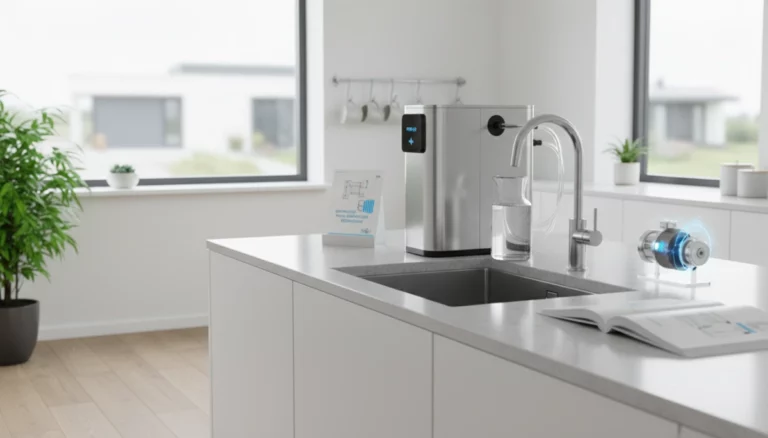


















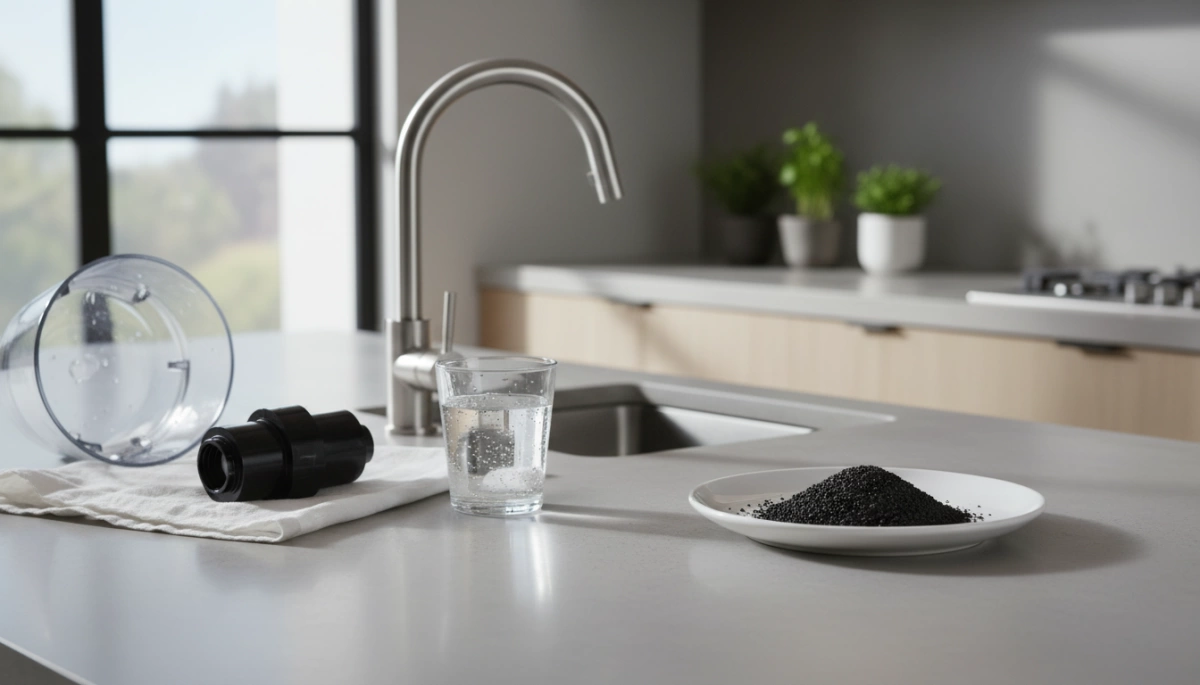
Understanding the Black Stuff from a Water Filter
If you’re seeing black stuff from your water filter, you’re not alone—and it’s usually not as scary as it looks. In most homes, those black particles in filtered water are tiny bits of activated carbon fines (also called carbon dust) from the filter itself, not dirty water coming from your pipes.
When you install a new filter, especially a carbon-based filter like the ones in under sink systems, pitchers, faucet filters, and refrigerator water dispensers, it’s common to see:
- Black specks in water after a new filter
- A light black residue at the bottom of a glass
- A quick burst of black dust from the water filter during the first few uses
Here’s what’s usually going on:
- Most modern filters use activated carbon to remove chlorine, odors, and some chemicals.
- During manufacturing and shipping, some of that carbon breaks into fine black particles.
- If the filter isn’t flushed long enough, those carbon fines wash into your glass as black specks in drinking water.
You’ll notice this most with:
- Under sink water filters – short burst of black stuff right after installation or cartridge change.
- Pitcher filters (like Brita) and faucet-mounted filters – visible black flecks in the first few fills or if you shake the pitcher.
- Refrigerator filters – black stuff in refrigerator water dispenser after putting in a new filter and not running enough water through.
In most cases, this black material is just loose carbon from the filter media, not a sign your water source is contaminated. The key is proper flushing and setup, which I’ll walk you through in detail in the next steps.
Main Causes of Black Stuff from a Water Filter
When you see black particles in filtered water, it almost always comes down to a few predictable causes:
Carbon dust and carbon fines from new filters
Most carbon-based water filters (under sink, pitcher, fridge, faucet) use activated carbon. When a filter is brand new, some loose carbon dust and carbon fines shake loose and end up as black specks in water after a new filter install. This is normal, but only short-term, and it’s exactly why every manufacturer tells you to flush the filter before drinking.Granular activated carbon vs. carbon block shedding
Filters with granular activated carbon (GAC) tend to shed more loose particles than tightly packed carbon block filters.- GAC = more movement, more carbon dust from water filters
- Carbon block = better bonded media, fewer fines
If you want less black residue from an under sink filter, go with a good-quality carbon block design.
Poor or rushed flushing after installing the filter
If you don’t run enough water through a new cartridge, you’ll see black sediment in tap water for a while. Always follow the flushing time in the manual (often 2–5 gallons). A countertop RO water filter system with proper pre-flushing can cut down on visible fines compared with basic carbon-only options.Old or degraded water filter cartridges breaking down
When a filter is way past its service life, the media can start to break apart internally, releasing more black flecks or grayish particles. If the water suddenly looks dirtier than your tap, or flow drops and you see more specks, the cartridge is likely overdue for replacement.Installation mistakes in under sink water filter systems
Cross-threaded housings, loose O-rings, or misaligned cartridges can let unfiltered water bypass the media, carrying source water sediment or dislodged carbon into your glass. If you recently installed or moved an under sink water filter and now see black stuff, recheck every connection and make sure the cartridge is fully locked in.Source water sediment and plumbing issues that look like carbon
Sometimes the black material isn’t carbon at all. It can be:- Manganese or iron particles from the municipal line or a well
- Plumbing corrosion flakes from old galvanized or black iron pipes
- Dark sediment from a disturbed main or recent plumbing work
Comparing your filtered water to your raw tap and checking overall water quality (a basic meter helps; see this guide on how to use a TDS tester: https://driplifecorp.com/how-to-use-a-tds-tester-a-complete-guide/) can help you tell if the issue is the filter itself or your plumbing/source water.
In short, black stuff from a water filter usually comes from carbon media (new or worn), missed flushing, or outside sediment that just looks like carbon. The fix starts with identifying which of those buckets you fall into.
Water Filter Types That Commonly Show Black Stuff

Different water filter types can leave black particles in filtered water, but most of the time it comes down to how the carbon media is built and how well the filter is made.
Carbon-Based Water Filters and Black Stuff in the Water
Any filter that uses activated carbon can shed carbon dust from the water filter, especially when it’s new or not flushed long enough. That includes:
- Granular activated carbon (GAC) filters – These are more likely to send black specks in water because the loose granules move around.
- Carbon block filters – These are more tightly packed and usually release fewer activated carbon fines, especially if they’re higher quality.
If you want strong filtration with minimal black residue, a well-designed carbon block system (for example, part of an under sink reverse osmosis filtration system) usually performs better than basic granular carbon.
Under Sink Water Filter Black Stuff Problems
With under sink water filters, black residue usually shows up when:
- A new carbon cartridge isn’t flushed long enough
- The cartridge is low-quality and sheds easily
- The filter has aged and the media is starting to break down
If you see black residue under sink filters, I always recommend:
- Flushing the new cartridge per the manual
- Checking that the cartridges are fully seated and not rattling
- Upgrading to better bonded carbon block filter cartridges if the problem keeps coming back
Pitcher Filters and Faucet-Mounted Filters with Black Specks
Pitcher filters (like Brita-style) and faucet-mounted filters commonly show:
- Black flecks in the pitcher or glass
- Black dust in Brita water after replacing the cartridge
This is usually harmless carbon fines from the new filter. The fix is simple:
- Run several full pitchers or minutes of water through the new cartridge
- Discard that water until the black specks in drinking water are gone
Cheaper generic replacement cartridges for pitchers and faucet filters tend to shed more carbon because the carbon is less tightly packed and quality control is weaker.
Refrigerator Water Dispenser Filters Shedding Black Particles
If you see black stuff in refrigerator water dispenser lines or ice:
- It’s usually carbon particles from the fridge filter
- It often happens right after installing a new filter or when the filter is overdue for replacement
Make sure you:
- Flush the filter for the full time in the manual (often 2–5 gallons)
- Replace the filter on schedule to prevent media breakdown
Why Some Brands and Cheap Filters Shed More Carbon Dust
Not all filters are built the same. Some brands and cheaper filters shed more carbon dust because:
- They use looser granular activated carbon instead of dense carbon block
- There’s less bonding and compaction, so the media moves and grinds
- Quality control and pre-rinsing at the factory are minimal
If black sediment in tap water after filtration keeps happening, it’s often a sign the filter brand is cutting corners. In that case, I’d shift to:
- A higher-quality carbon block filter
- Or a more advanced system like a countertop ice and water purifier that’s engineered to keep carbon fines low while improving taste and safety.
Is the Black Stuff from a Water Filter Harmful?
Most of the black stuff from a water filter is just activated carbon fines—tiny carbon particles used to trap chlorine, odor, and organic chemicals. For most households in the U.S., this is more of an appearance and taste issue than a health risk.
Safety of Activated Carbon Particles in Drinking Water
- Activated carbon is widely used in home water filters, including under-sink systems, pitchers, refrigerators, and faucet filters.
- Small amounts of carbon dust from a water filter are generally considered non-toxic if swallowed.
- You might notice:
- Cloudy water right after installing a new filter
- Black specks in water after a new filter or right after a filter change
- The main downside is:
- Off taste or odor
- Unattractive black particles in filtered water
What Health Agencies Say About Carbon Dust in Water
U.S. and international health bodies don’t list activated carbon fines as a major drinking-water hazard. The concern is more about what the filter removes (like lead, VOCs, chlorine) than about the carbon itself. When you see black specks in drinking water from a new filter, it usually means:
- The filter wasn’t flushed long enough
- There’s excess loose carbon from manufacturing
That’s why most brands tell you to flush the filter for a few minutes before drinking.
When It’s Mostly an Aesthetic Issue
In normal situations, black residue from an under sink filter or pitcher is:
- Safe but annoying
- A sign you need to:
- Flush longer
- Reseat the filter
- Replace an overdue cartridge
If the water is clear after flushing and you only see occasional black sediment in tap water from the filter, it’s almost always aesthetic, not dangerous.
Rare Cases: Mold or Contamination
There are times when the black stuff from a water filter is not carbon and can be a problem:
- Mold or biofilm
- Looks slimy or fuzzy, sometimes with green/white patches
- Can be smelly or musty
- Often appears in old, never-changed filters or dirty pitchers
- Plumbing debris (iron, manganese, corrosion flakes)
- Black, brown, or orange grit that shows up in both filtered and unfiltered water
If you notice slimy black stuff, bad odor, or particles in all faucets, stop drinking the water, replace the filter, and consider a water test or a plumber visit.
For safer, cleaner filtration at the faucet, I usually recommend a well-designed under-sink carbon system with proper pre-filtration, like our water purifier for sink faucet DL-F03, which is built to reduce carbon shedding and give more stable water quality over time.
How to Tell If the Black Stuff Is Carbon Fines or Something Else
If you’re seeing black stuff from a water filter, you want to know fast if it’s harmless carbon fines or a real water problem. Here’s how I walk through it step by step.
1. Visual Check of Black Specks in Filtered Water
Look closely at the black particles in your glass:
Carbon fines / carbon dust
- Tiny, irregular specks
- Matte, charcoal-looking, usually sink slowly
- Often appear as a light “cloud” right after you run the water
Metal flakes (plumbing corrosion)
- Shiny, reflective, more like chips or flakes
- May look silver, gray, or dark with a metallic sparkle
Iron or manganese sediment
- Can look dark brown, black-brown, or rusty
- Often mixed with orange or brown sediment in tap water
If it looks like soft charcoal powder, it’s usually black particles in filtered water from the carbon media, not the pipes.
2. Texture and Feel: Carbon vs Slime vs Metal
Carefully rub a few particles between clean fingers or on a white tissue:
Carbon fines (from a carbon filter)
- Feel like soft, dusty charcoal
- Smear into a gray/black streak
- Break apart easily
Mold or biofilm
- Slimy, squishy, or stringy
- May smear like gel, not like powder
- Sometimes has a musty smell
Metal or scale
- Hard, gritty, sharp edges
- Don’t smear; feel like sand or tiny pebbles
If it’s dry, powdery, and smears like soot, you’re almost certainly dealing with activated carbon fines, not mold.
3. Timing and Pattern: New Filter vs Old Filter
Pay attention to when the black specks in water show up:
Right after installing a new filter
- A lot of black particles at first, then quickly taper off
- Common with new under sink water filters, fridge filters, and pitchers
- Often means the filter just needs more flushing
Later in the filter’s life (past rated capacity)
- Black residue under sink filter housings
- Increasing particles over time instead of decreasing
- Can signal media breakdown or an overused cartridge
New filter + short-term carbon dust = usually normal. Old filter + growing black stuff = time to replace.
4. Compare Filtered vs Unfiltered Tap Water
Do a quick side-by-side test:
- Fill one clear glass with unfiltered tap water.
- Fill another glass with filtered water from the same faucet.
Check:
- Only in filtered water?
- Likely carbon dust from the water filter or internal filter wear.
- In both filtered and unfiltered?
- Could be a plumbing, well, or municipal line issue (iron, manganese, or other sediment).
If both glasses show similar black sediment in tap water, a whole-house solution (like a sediment or ceramic water filter system) may be a better fit.
5. Signs It Might Be Mold, Biofilm, Iron, or Manganese
Watch for these red flags that the black stuff from your water filter may not be simple carbon dust:
Possible mold / biofilm
- Slimy or fuzzy particles on the cartridge or in the filter housing
- Musty, earthy, or “swampy” smell
- Visible growth inside a pitcher or under sink filter that’s sat unused
Iron or manganese
- Staining in sinks, toilets, or tubs (orange, brown, or black stains)
- Dark particles in both filtered and unfiltered water
- Water may taste metallic or “dirty”
If you see slime, smell something off, or notice staining around the house, it’s time to stop drinking the water until the system is cleaned, the filter is replaced, and—if needed—your water is tested.
How to Fix Black Stuff from Your Water Filter (Step by Step)

If you’re seeing black stuff from your water filter, fix it in order—don’t just swap parts randomly. Here’s the simple, practical approach I recommend.
1. Flush the Water Filter to Remove Carbon Dust
Most black particles in filtered water are just carbon dust (carbon fines) from a new or recently replaced cartridge.
Do this first:
- Pitcher / Faucet / Fridge filters
- Run 2–4 full pitchers or 2–5 minutes of water through and dump it.
- Keep flushing until the water runs clear and no new black particles appear.
- Under sink and whole-house carbon filters
- Open the cold-water tap fully.
- Flush for 5–10 minutes (or whatever the manual says).
- If you installed a more complex system, follow a guide like this under sink water filter installation walkthrough and extend the flush if you still see black specks.
If the black particles fade and disappear after a proper flush, it was just normal carbon dust.
2. Reinstall or Tighten Under Sink Water Filter Connections
If you still have black particles after flushing, check your under sink setup:
- Turn off the water supply before touching anything.
- Remove the filter housing, then:
- Make sure the cartridge is fully seated in the housing.
- Check O-rings for cracks, twisting, or misalignment.
- Tighten housings hand-tight plus a small turn (don’t over-torque).
- Turn the water back on and flush again for a few minutes.
Loose housings or misaligned cartridges can let media shed into the line and cause black residue under sink filters.
3. Replace Worn-Out or Damaged Filter Cartridges
Old filters can break down and shed more carbon:
- Replace the cartridge if:
- It’s past its rated gallons or months.
- Flow rate has dropped a lot.
- You see persistent black particles even after flushing.
- Use the correct OEM or high-quality compatible cartridge—cheap generics often shed more carbon fines.
If you’re running a bigger system (like a whole-house filter), treat replacement intervals seriously so you don’t get black sediment in tap water throughout the home.
4. Upgrade to Better Bonded Carbon Block Filters
If you’re constantly fighting black specks in drinking water, upgrade the filter style:
- Choose carbon block filters instead of loose granular activated carbon (GAC).
- Look for:
- “Low-dust” or “reduced carbon fines” in the specs.
- NSF certification (42/53) from reputable brands.
- For full-home protection with less shedding and better taste, I usually point people to a solid whole-house water filter setup with high-quality carbon blocks.
Bonded carbon blocks shed less, last longer, and keep carbon dust from making it into your glass.
5. Set a Simple Maintenance Schedule
Black specks often show up when filters are ignored. Keep it simple:
- Follow manufacturer change intervals (time OR gallons, whichever comes first).
- Put reminders in your phone for:
- Pitcher/fridge filters: every 2–6 months
- Under sink systems: every 6–12 months
- Whole-house carbon filters: usually 6–12 months, depending on usage and water quality
- When you replace a cartridge:
- Install correctly
- Flush thoroughly every time
Consistent maintenance prevents filter media breakdown and random bursts of carbon dust from your water filter.
6. When to Call a Plumber or Get Your Water Tested
Not all “black stuff” is carbon. Get help if:
- Black particles show up without a filter installed.
- You see slimy, fuzzy, or stringy black material (could be mold or biofilm).
- You notice metallic-looking flakes, or black plus orange/brown sediment (possible plumbing corrosion, iron, or manganese).
- There’s a strong odor, odd taste, or any health symptoms linked to the water.
In those cases:
- Call a licensed plumber to inspect plumbing, fixtures, and your filter housing.
- Get a lab water test (or through your local utility or a certified lab) to check for metals, minerals, or microbial issues.
If it’s just carbon fines, flushing and a good filter upgrade will usually solve it. If it’s something else, testing and pro support are the safest path.
Black stuff from water filter vs other water problems
When you see black stuff from a water filter, you need to figure out what it actually is before you fix it. Not everything dark in your water is carbon, and the solution changes depending on the source.
Carbon fines vs mold in water filters
Most black particles in filtered water are just carbon dust (activated carbon fines):
Carbon fines
- Look: tiny, matte black specks, like pencil lead dust
- Feel: dry, gritty, crushes to powder between your fingers
- Smell: no odor
- Behavior: usually shows up right after a new filter install and fades after flushing
Mold or biofilm
- Look: black, dark green, or brown spots, streaks, or slimy clumps
- Feel: soft, slimy, or jelly-like, may smear
- Smell: musty or earthy smell from pitcher, under sink housing, or fridge reservoir
- Behavior: more common in old filters, rarely in a properly flushed new one
If it’s mold-like, the fix is immediate: replace the filter, sanitize the housing, and don’t drink from it until cleaned.
Black dust vs orange or brown sediment from pipes
Sometimes what looks like “black stuff from a water filter” is actually pipe or well sediment:
| Type | Color / Look | Likely Source | Typical Fix |
|---|---|---|---|
| Carbon fines / black dust | Fine black specks, uniform, matte | Carbon filter media | Proper flushing, better carbon block filter |
| Orange / brown sediment | Rust-colored grit or flakes | Iron, rusty pipes, old plumbing | Plumber check, pre-filter/sediment filter |
| Black-brown streaky sediment | Mixed dark and rusty particles | Iron + manganese, older lines | Water test, whole-house or sediment filtration |
If you see orange or brown particles from both filtered and unfiltered taps, it’s likely a plumbing or source water issue, not just a filter problem. In that case, a better filtration setup (like adding sediment pre-filtration before your drinking system or comparing different filtration methods) may be the smarter move.
Black specks vs metallic flakes from corroded plumbing
Not all dark specks are carbon:
Carbon fines (from filter)
- Shape: irregular, powdery, crumbly
- Magnetic?: usually not magnetic
- Will not shine or glint under light
Metallic flakes (from pipes, heater, fittings)
- Shape: flat, shard-like, or curly flakes
- Shine: metallic, reflective, may look silver, gray, or dark
- Magnetic?: sometimes slightly magnetic
- Often show up in both hot and cold water if corrosion is widespread
If you see shiny metal specks, stop drinking the water until you:
- Call a licensed plumber to inspect plumbing and water heater
- Consider a water test if you suspect heavy metals
How the fix changes based on the particles
Here’s how I look at it in my own systems: the right fix depends 100% on what those black specks really are.
| What it looks like | What it usually is | Main fix |
|---|---|---|
| Fine black dust after new filter install | Carbon fines / carbon dust | Flush longer, follow install steps, upgrade filter |
| Ongoing black dust from older filter | Degrading carbon media | Replace cartridge, shorten change interval |
| Slimy black spots inside pitcher or housing | Mold / biofilm | Discard filter, deep clean, sanitize, replace |
| Black + orange/brown sediment | Iron/manganese + carbon or pipe sediment | Water testing, pre-filter or whole-house filtration |
| Shiny gray/black flakes | Corroded plumbing or heater components | Plumber inspection, possible plumbing repairs |
Once you know if it’s carbon fines, mold, pipe sediment, or metal, you can choose the right mix of:
- Better filter quality (bonded carbon block vs loose granular carbon)
- Better maintenance (timely changes, proper flushing)
- Plumbing or system upgrades (sediment pre-filters, whole-house filtration, or in some cases, system redesign like moving to RO or UF setups similar to what’s used before bottle filling stations)
Bottom line: don’t guess. Look, feel, compare filtered vs unfiltered water, and then fix the real cause—not just the symptom.
Preventing Black Stuff from Water Filters Long Term
If you’re tired of seeing black stuff from your water filter, the good news is you can pretty much prevent it with a few simple habits.
Choose Higher Quality Filters That Shed Less Carbon
Not all carbon filters are built the same. If you
FAQ About Black Stuff from a Water Filter
What causes black particles in a new water filter?
Most of the time, the black stuff from a water filter in a new cartridge is carbon dust (carbon fines). During manufacturing and shipping, tiny pieces of activated carbon break loose inside the filter. When you first run water through it, those black particles wash out into your filtered water. This is very common with pitcher filters, faucet filters, and under sink carbon filters and usually goes away after a proper flush.
Are carbon fines in filtered water safe to drink?
In normal amounts, carbon dust from a water filter is generally considered safe to drink. Activated carbon is widely used in home water filtration and is not toxic. That said, it can:
- Make the water look dirty or cloudy
- Slightly affect taste or leave black specks in your glass
If you see a lot of black particles in your filtered water, I recommend flushing the filter until the water runs clear before you rely on it for drinking.
How long should I flush my under sink water filter?
Most under sink systems need a 3–10 minute flush when the filter is first installed or replaced, but you should:
- Check the label or manual for the exact time
- Run cold water only
- Let it run continuously (don’t start/stop repeatedly)
If you still see black particles in filtered water after that, flush another few minutes. If it continues, pull the cartridge, reinstall it carefully, and test again. For under sink setups, a properly installed system like our under sink water filter is designed to clear carbon fines quickly when flushed as directed.
Can the black stuff in my filter be mold instead of carbon?
Yes, in some cases. The black stuff from a water filter can be:
- Carbon fines – dry, grainy, sandy, and rubs off like dust
- Mold or biofilm – slimy, stringy, or fuzzy, sometimes with odor
If it’s slimy, smells musty, or shows up in clumps on the filter housing, that’s a red flag. In that case:
- Stop drinking the water
- Replace the filter cartridge
- Clean or sanitize the housing
- Consider getting your water or system inspected
Why do some water filters leave more black residue than others?
The amount of black residue under sink filters or pitcher filters produce comes down to:
- Type of carbon media (granular activated carbon vs bonded carbon block)
- Filter quality and manufacturing
- How well the filter was flushed
Cheaper filters, or those with loose granular activated carbon, tend to shed more carbon dust. Higher-quality, well-bonded carbon filters release fewer carbon fines and clear faster when flushed. That’s why I’m careful about media selection and bonding when designing our faucet tap water filter products.
You’ll also see more carbon if you skip or shorten the initial flush.
When should I replace my water filter cartridge to avoid black specks?
To avoid black specks from old or degraded cartridges, follow this:
- Replace on the manufacturer’s schedule (often every 3–6 months or after X gallons)
- Replace sooner if you notice:
- Drop in water flow
- Bad taste or odor
- Persistent black particles after flushing
If a filter is used far past its rated life, the media can break down and release more particles. A simple maintenance schedule (for example, changing under sink cartridges every 6 months) keeps the water cleaner and reduces the chance of black stuff from the water filter showing up in your glass.