













Are you tired of endless plastic waste or questioning the safety of your tap water?
Upgrading to a water dispenser with filter is one of the smartest investments you can make for your health and convenience.
But let’s be honest—the options can be overwhelming.
Between Reverse Osmosis (RO), UV purification, and instant hot/cold features, how do you know which one actually delivers?
In this guide, I’m going to cut through the noise.
You’ll discover the top-rated technologies for 2025, how to avoid marketing gimmicks, and exactly which countertop and freestanding models provide the cleanest hydration for your specific needs.
Let’s dive right in.
Why Choose a Water Dispenser with Built-In Filter?
Let’s be real: do you actually trust everything coming out of your kitchen tap? If you are tired of that faint chlorine smell or worried about what your city’s aging pipes are adding to your glass, you aren’t alone. Upgrading to a water dispenser with filter isn’t just a luxury anymore; it is a necessary investment in your family’s health and daily convenience.
Serious Health Advantages
It is not just about getting rid of that funky metallic aftertaste. A high-quality filtered water cooler or countertop water purifier with filter acts as a critical barrier against invisible threats. We are talking about advanced filtration that targets the stuff standard pitchers often miss:
- Chlorine & Chloramines: Removes the chemical taste that ruins your morning coffee.
- Lead & Heavy Metals: Filters out dangerous contaminants often leached from old plumbing.
- PFAS (Forever Chemicals): Tackles these microscopic, persistent chemicals increasingly found in US water supplies.
- Microplastics: Blocks tiny plastic particles that have no place in your body.
Convenience vs. Cost: The Smart Switch
Stop lugging heavy cases of bottled water from the grocery store. It is bad for your back and terrible for your wallet. While a standard pitcher might seem cheap initially, the wait time is frustrating, and the frequent filter replacements add up. A water dispenser with filter gives you instant access to pure water without the hassle.
Comparison: Where is Your Money Going?
| Feature | Bottled Water | Standard Filter Pitcher | Filtered Dispenser |
|---|---|---|---|
| Cost Per Gallon | High ($1.22 avg) | Moderate ($0.20+) | Lowest (<$0.08) |
| Convenience | Low (Heavy lifting) | Low (Constant refilling/waiting) | High (Instant access) |
| Plastic Waste | Massive | Minimal | Zero Daily Waste |
| Filtration Level | Varies widely | Basic (Taste/Odor) | Advanced (RO/Ultra) |
Eco-Impact and Modern Fit
Forget the clunky, ugly office coolers of the past. Modern units, specifically tankless water dispensers, are designed to fit seamlessly into sleek, modern kitchens. Many countertop models require absolutely no plumbing—just plug them in and fill the reservoir. You get the superior purity of a reverse osmosis countertop dispenser without drilling holes in your granite or calling a plumber. It is the easiest way to ditch single-use plastics and modernize your hydration habits instantly.
Understanding the Technology: How It Works
When you invest in a water dispenser with filter, you aren’t just buying a cooler; you are essentially putting a miniature water treatment plant in your kitchen or office. Whether it is a countertop water purifier with filter or a standing unit, the goal is simple: turn inconsistent tap water into something pure and safe.
We rely on a multi-stage approach to ensure every drop is clean. Here is what happens inside the machine:
Filtration Stages: The Defense Line
Most premium systems use a step-by-step process to strip away contaminants while keeping the water tasting fresh.
- Sediment Filter: The first line of defense. It acts like a sieve, trapping physical particles like rust, sand, and dust that often travel through aging US pipe infrastructure.
- Activated Carbon Block: This is crucial for taste. It absorbs chlorine, volatile organic compounds (VOCs), and weird odors. If your water tastes like a swimming pool, this fixes it.
- Reverse Osmosis (RO) or Ultrafiltration (UF): The heavy lifters. An RO water dispenser forces water through a semi-permeable membrane (0.0001 microns) to remove dissolved solids, heavy metals (like lead), and PFAS. UF is similar but retains some minerals while blocking bacteria.
- Post-Filter/Remineralization: Since RO is so effective it removes healthy minerals too, advanced units add calcium and magnesium back in for a crisp, alkaline finish.
High-quality drinking water filters often combine these stages into a single, easy-to-change cartridge to save space.
Advanced Additions: UV and Hydrogen
Beyond standard filtration, modern tech ensures the water stays clean.
- UV-C Self-Cleaning: A UV water dispenser uses ultraviolet light to sterilize the internal tanks and lines, preventing biofilm and bacteria growth without using chemicals.
- Hydrogen/Alkaline Options: Some units electrolyze the water to boost pH levels or add hydrogen, catering to specific wellness preferences.
Comparing Systems: Gravity vs. RO vs. Carbon
Not all filters are built the same. Here is a quick breakdown to help you decide which tech fits your lifestyle.
| Feature | Gravity-Fed Filters | Carbon-Block Systems | RO Water Dispensers |
|---|---|---|---|
| Mechanism | Water drips through filter naturally. | Pressure pushes water through carbon. | High pressure forces water through a membrane. |
| Filtration Level | Basic (Chlorine & some sediment). | Good (Chlorine, taste, some cysts). | Best (99% of contaminants, including Fluoride & PFAS). |
| Speed | Slow (requires waiting). | Fast (instant flow). | Moderate (often uses a tank or pump). |
| Installation | None (pour and wait). | Minimal (faucet or inline). | Varies (Countertop is plug-and-play). |
| Best For | Budget buyers & patience. | Better taste & basic safety. | Tankless water dispenser with RO for total purity. |
If you are looking for a setup that requires zero plumbing but offers top-tier filtration, a reverse osmosis countertop dispenser is usually the sweet spot between performance and convenience.
Key Types of Filtered Water Dispensers
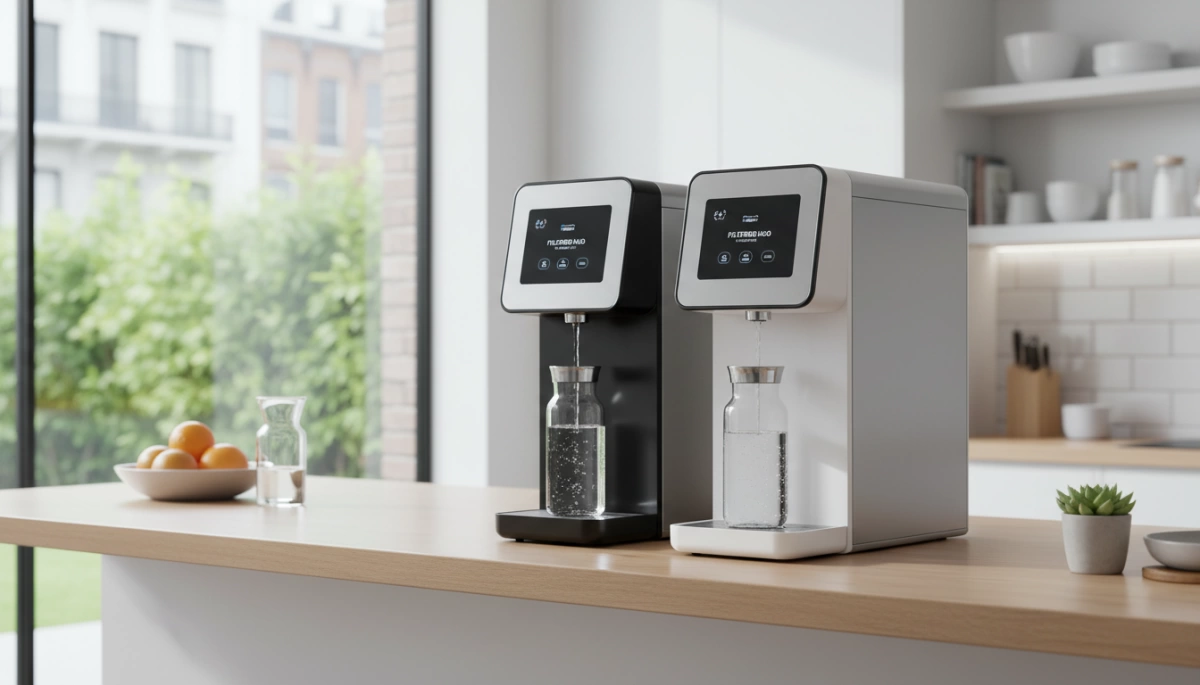
Choosing the right water dispenser with filter really comes down to your space, your water source, and how many people will be using it. In the US market, we are seeing a massive shift away from generic plastic coolers toward specialized units that fit specific lifestyle needs. Here is a breakdown of the main categories available today.
Countertop Models (Compact & Installation-Free)
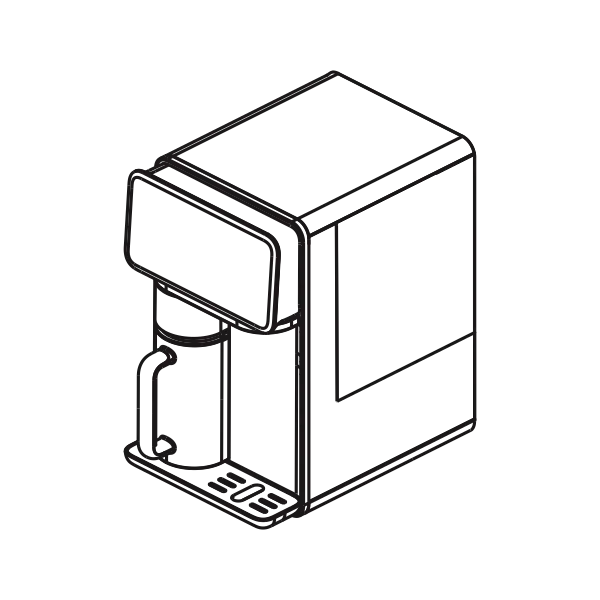
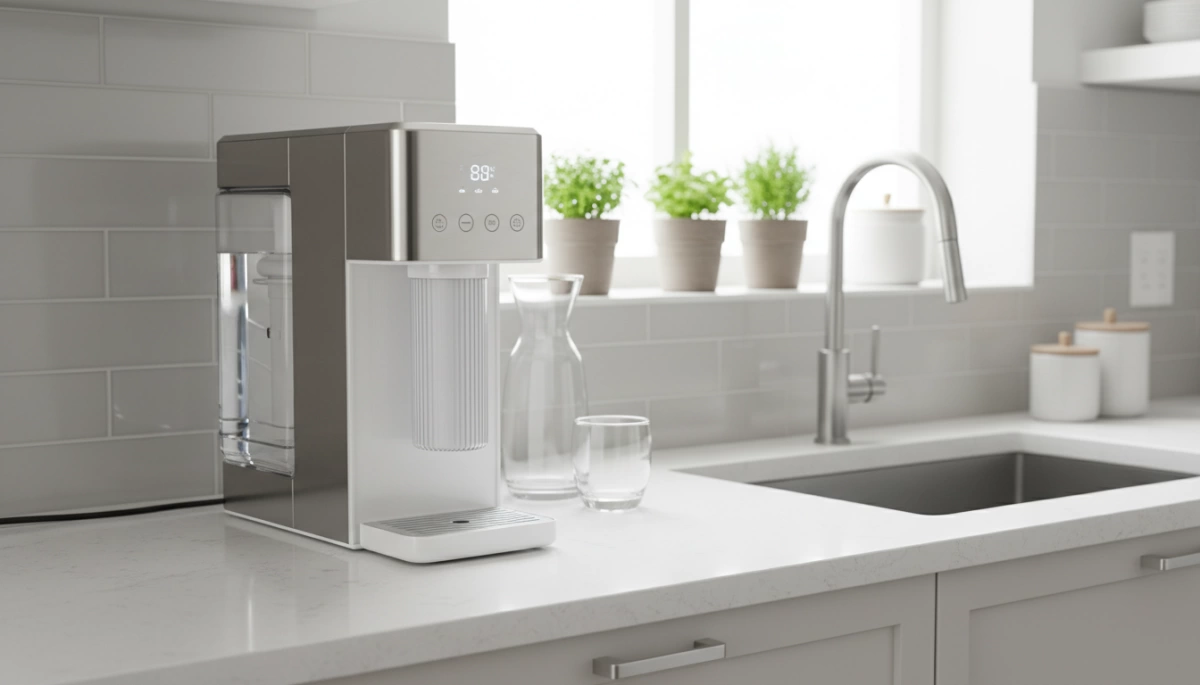
For renters, students, or anyone with a smaller kitchen, a countertop water purifier with filter is often the best entry point. These units sit right next to your coffee maker and usually require zero plumbing. You simply fill a removable tank, and the system pushes the water through internal filters.
- Best For: Apartments, dorms, and RVs.
- Key Benefit: No installation required; just plug and play.
- Tech: Many are actually a reverse osmosis countertop dispenser, giving you high-end filtration without drilling holes in your granite.
Freestanding and Bottom-Loading Dispensers
If you have the floor space and a high demand for water—like a busy family living room or a small office—a freestanding hot and cold water dispenser with filtration is the way to go.
- Bottom-Loading: Gone are the days of breaking your back lifting heavy 5-gallon jugs. Modern units hide the water source in the bottom cabinet.
- Capacity: These handle high daily volumes, ensuring you don’t run out of cold water during a summer heatwave.
Bottleless (Point-of-Use) RO Systems
This is the segment growing the fastest for homeowners who want a permanent solution. A bottleless water cooler filter connects directly to your home’s cold water line. These are often tankless water dispensers with RO (Reverse Osmosis), providing an endless supply of purified water without ever needing a refill. Because these systems rely on complex filtration, understanding the specific types of water purification methods they use—like RO or Ultrafiltration—is key to ensuring you get the water quality you expect.
Multifunction Units
We are moving beyond just “hot and cold.” The latest trend is the multifunction water purifier dispenser that acts as a comprehensive beverage station. These premium units are designed to declutter your kitchen by combining multiple appliances into one sleek machine.
- Ice Making: An ice making water purifier produces bullet or nugget ice using filtered water, so your drinks taste better.
- Sparkling Water: Some high-end models function as a sparkling water dispenser with filter, offering carbonated water on tap, which is a huge money-saver if you regularly buy seltzer.
of Options
| Type | Installation | Best Use Case | Key Feature |
|---|---|---|---|
| Countertop | None (Plug & Play) | Apartments, Small Kitchens | Portable and compact |
| Freestanding | Minimal | Families, Offices | High capacity, bottom-loading |
| Bottleless (POU) | Plumbing Required | Homeowners, High-Traffic | Endless water, advanced RO |
| Multifunction | Varies | Modern Smart Kitchens | Ice, sparkling, and temp control |
What to Look for When Buying a Water Dispenser with Filter
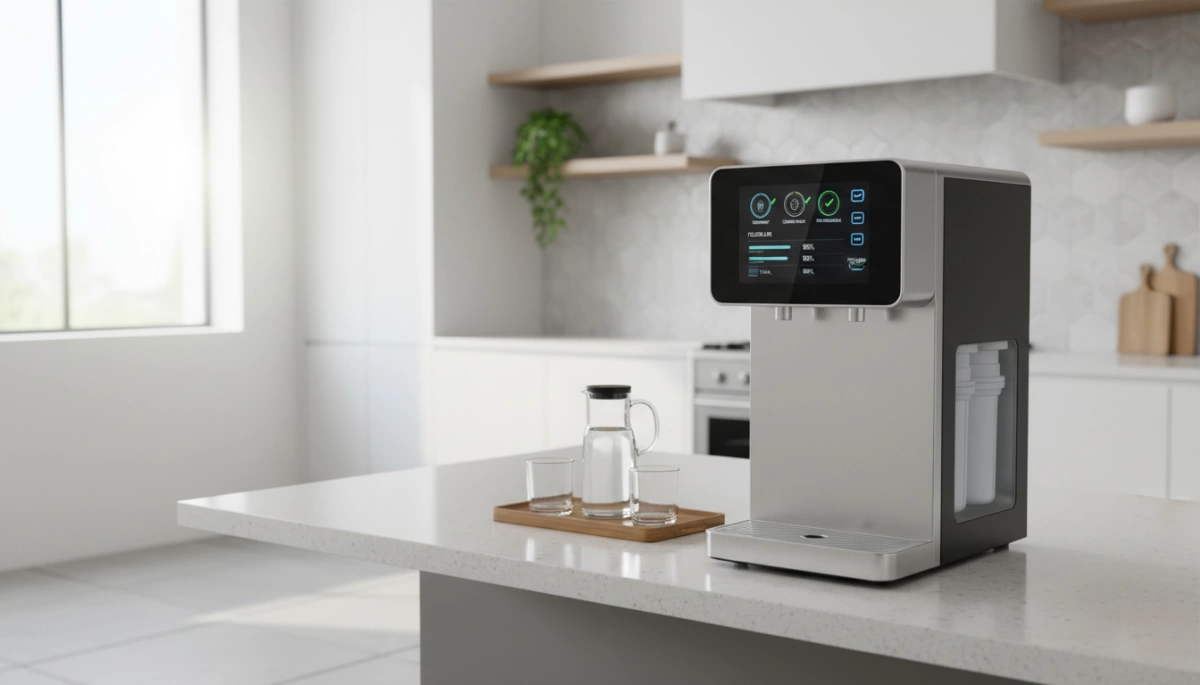
Selecting the right water dispenser with filter isn’t just about picking the sleekest design; it is about matching the machine’s capabilities to your daily hydration needs. As someone who deals with these units daily, I can tell you that looking beyond the price tag is crucial for long-term satisfaction. Here is exactly what you need to scrutinize before making a purchase.
Filtration Performance & Certifications
Not all filters are created equal. You need an NSF certified water dispenser to ensure the unit actually removes what it claims to. Look for these specific NSF/ANSI standards on the spec sheet:
- NSF 42: Reduces aesthetic impurities like chlorine taste and odor.
- NSF 53: Targets health effects, removing contaminants like lead and cysts.
- NSF 58: The standard for Reverse Osmosis (RO) systems, reducing total dissolved solids (TDS).
- NSF 401: Handles emerging contaminants like prescription drugs and pesticides.
Flow Rate & Capacity
If you have a large family or a busy office, flow rate matters. You don’t want to wait 60 seconds to fill a standard sports bottle. Check the GPD (Gallons Per Day) rating for RO units.
- Daily Output: High-performance units offer 150–2000 GPD.
- Tank vs. Tankless: Tankless designs offer continuous water but require higher pressure; tank-based systems ensure immediate availability but take up space.
Temperature & Convenience
A premium hot and cold water dispenser with filtration should offer more than just two temperature settings. Look for models with instant hot water dispenser filter capabilities for tea or coffee, and adjustable cold settings.
- Child Safety Locks: Essential for the hot water spout to prevent accidental burns.
- Dispensing Height: Ensure the dispensing area is tall enough to fit your favorite reusable bottles.
Smart Features & Maintenance
Modern units are smarter than ever. Look for digital displays that track your water quality (TDS levels) in real-time and alert you exactly when to change the filter. For hygiene, a UV water dispenser is a game-changer. These units use UV-C light to automatically sanitize the internal tank and lines. Understanding the benefits of UV water purifiers can help you decide if this chemical-free self-cleaning tech is a priority for your home.
Cost of Ownership
Don’t just look at the sticker price. Calculate the long-term cost.
- Filter Lifespan: Does the filter last 6 months or 12 months?
- Replacement Cost: Are proprietary filters expensive?
- Energy Efficiency: Look for Energy Star ratings to keep electricity bills low.
If you are leaning towards a compact unit to save space, reviewing the specific benefits of a countertop RO system will help you determine if the smaller footprint meets your filtration standards.
Top Features That Set Premium Models Apart
When you are ready to upgrade your kitchen or office, moving beyond a basic pitcher to a high-end water dispenser with filter changes the game completely. We aren’t just talking about cleaner water anymore; we are talking about efficiency, lifestyle integration, and superior engineering. The difference between a standard cooler and a premium machine lies in the details—features designed to save you time and ensure safety.
If you browse through a modern range of water dispensers, you will notice that the best units function as a central hydration hub for the entire home or workplace. Here is what you should expect from top-tier models.
Instant Hot, Cold, and Specialty Options
Waiting for a kettle to boil or a pitcher to cool down is a thing of the past. A premium hot and cold water dispenser with filtration gives you precise temperature control on demand.
- Instant Hot: Perfect for tea, coffee, or instant oatmeal (usually 185°F–203°F).
- Ice-Chill Cold: Refreshing water at the push of a button (typically 37°F–50°F).
- Multifunctionality: The true heavy hitters in this space go even further. We are seeing a massive demand for the ice making water purifier—a single unit that dispenses filtered water and bullet ice. There are even sparkling water dispensers with filters for those who prefer carbonated beverages without the plastic waste.
Tankless RO: Endless Freshness
Traditional systems often use large holding tanks that can stagnate if not cycled frequently. A tankless water dispenser with RO (Reverse Osmosis) is the gold standard for hygiene and efficiency.
- Direct-to-Glass: Water is filtered the second you press the button, ensuring it never sits in a reservoir.
- Space Saving: Without a bulky internal tank, these units have a sleeker, slimmer profile.
- High Output: Premium commercial and residential units offer filtration rates from 150 up to 2000 GPD (Gallons Per Day), meaning you will never run dry, even during a busy office lunch hour.
Smart IoT Integration and Durability
In 2026, your appliances should be as smart as your phone. High-end bottleless water cooler filter systems now come equipped with IoT (Internet of Things) capabilities.
- Real-Time Monitoring: Digital displays or smartphone apps tracking TDS (Total Dissolved Solids) levels and filter life.
- Voice Control: Integration with smart home assistants for touch-free dispensing.
- Build Quality: We prioritize food-grade 304 stainless steel and bacteriostatic materials over cheap plastics. This ensures the unit withstands years of use while preventing biofilm buildup.
Standard vs. Premium Feature Comparison
| Feature | Standard Dispenser | Premium/Advanced Model |
|---|---|---|
| Filtration | Basic Carbon / Sediment | RO (Reverse Osmosis) + UV + Remineralization |
| Water Types | Ambient / Cool | Hot, Cold, Ambient, Ice, Sparkling |
| Capacity | Limited (Gravity/Tank) | Tankless / High Flow (150–2000 GPD) |
| Maintenance | Manual Tracking | Smart IoT Filter Change Alerts |
| Safety | Mechanical Child Lock | Digital Lock + UV Self-Cleaning |
Investing in a countertop water purifier with filter that includes these advanced features ensures you aren’t just buying a machine, but a long-term health appliance that adapts to your daily needs.
Best Water Dispensers with Filters: Recommendations for Every Need
Finding the perfect water dispenser with filter isn’t about finding the most expensive unit; it’s about matching the machine to your lifestyle. Whether you are tight on counter space in a New York apartment or outfitting a busy office breakroom, there is a specific model designed to handle the load.
Here is a breakdown of the top categories to help you zero in on the right choice for your hydration needs.
Top Picks by Category
- Best Overall Countertop RO Dispenser
For most households, a reverse osmosis countertop dispenser hits the sweet spot. These units are typically installation-free—just plug them into an outlet and fill the feed tank. They offer the highest level of purity (removing up to 99% of contaminants) without requiring under-sink plumbing. Look for models with a high recovery rate to minimize water waste. - Best Multifunction Unit (Hot/Cold/Ice)
If you want to replace multiple appliances at once, an ice making water purifier is a game-changer. These all-in-one machines provide chilled water, boiling water for tea, and bullet ice on demand. It’s the ultimate convenience for home bars or entertaining, though these units tend to have a slightly larger footprint. - Best for Large Families or Offices (Freestanding)
When volume is the priority, a freestanding bottleless water cooler filter is the way to go. These connect directly to your water line (POU), meaning you never have to refill a tank. They are designed for high throughput, often boasting durable compressors that can keep up with the demands of 10+ people daily. - Best Budget-Friendly Filtered Dispenser
You don’t need to spend a fortune to get cleaner water. A simple gravity water filter dispenser uses the weight of the water to push it through carbon blocks. While they don’t offer the microscopic filtration of RO systems, they effectively improve taste and reduce chlorine for a fraction of the cost. - Best Advanced Filtration with UV and Remineralization
For the health-conscious, a UV water dispenser that includes an alkaline stage is ideal. These systems don’t just strip the water clean; they polish it with UV-C light to neutralize bacteria and add essential minerals like calcium and magnesium back in. If your local water supply is heavy in “forever chemicals,” looking for a unit with a specialized water filter to remove PFAS is crucial for long-term health.
The Professional’s Choice: Driplife’s Innovative Models
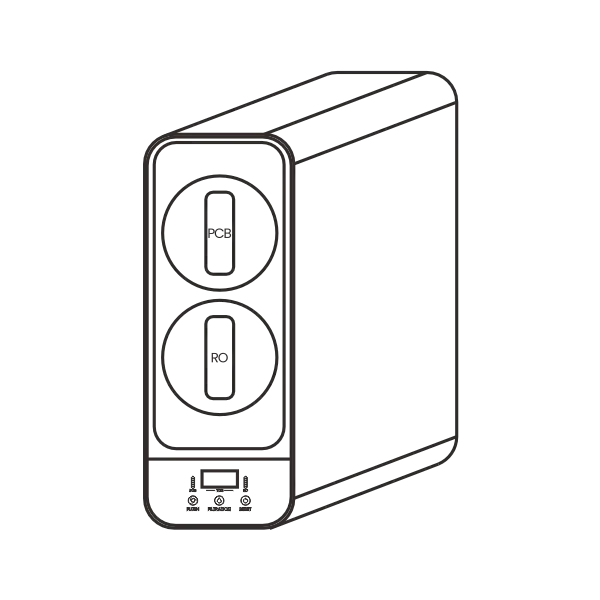
While there are many retail brands out there, it is worth noting the equipment that drives the industry. At Driplife, we specialize in manufacturing the core technology found in professional-grade units. Our 4-in-1 countertop models and standing RO units are engineered for durability and precision.
We focus on tankless water dispenser with RO designs that prevent secondary pollution—a common issue in older models with stagnant holding tanks. Whether it is a sleek countertop unit for a modern kitchen or a robust standing unit for commercial use, our focus is on combining high-efficiency filtration with smart user interfaces, setting the standard for what a modern dispenser should be.
Maintenance and Long-Term Ownership Tips
Owning a water dispenser with filter isn’t just about the initial purchase; it’s about keeping that water crisp and safe for years to come. I always tell my clients that a little proactive care goes a long way in preserving the machine’s life and ensuring you’re actually getting the filtration you paid for.
How to Replace Filters and Clean the Unit
Modern dispensers are designed with user-friendliness in mind. Gone are the days of needing a plumber or a wrench to swap out a cartridge. Most systems, especially a countertop water purifier with filter, utilize “twist-and-pull” quick-change technology. You simply turn the old filter, pull it out, and lock the new one in place—usually taking less than 30 seconds.
Routine Cleaning Checklist:
- Exterior: Wipe down the body with a damp cloth to remove dust and kitchen grease.
- Drip Tray: Empty and wash the drip tray weekly to prevent bacteria buildup.
- Nozzles: Sanitize the dispensing spouts regularly using a mild food-grade sanitizer or vinegar solution.
- Tanks: For models with internal reservoirs, performing a flush every 6–12 months is recommended. If you are using a compact table top RO water purifier, follow the manufacturer’s specific descaling instructions to protect the internal pumps.
Signs It’s Time for a Filter Change
While many premium models feature digital filter change indicators, it is crucial to recognize the physical signs that your RO water dispenser or carbon filter needs attention. Relying solely on a timer isn’t always accurate because water quality varies by region.
Watch out for these red flags:
- Reduced Flow Rate: If it takes twice as long to fill your glass, the sediment or carbon block is likely clogged with trapped particulates.
- Taste or Odor Changes: A sudden return of chlorine taste or a metallic tang means the filter media is saturated and no longer absorbing contaminants effectively.
- Visual Turbidity: If the water looks cloudy or has floating particles, change the filter immediately.
Calculating True Cost of Ownership
When evaluating a filtered water cooler or dispenser, the sticker price is only half the story. To understand the real value, you need to calculate the Total Cost of Ownership (TCO). This helps you compare a budget-friendly filtered dispenser against a premium model that might have cheaper consumables.
The TCO Formula:
Total Cost = Initial Device Price + (Annual Filter Cost × Years of Use)
For example, a cheap unit might cost \$150 but requires \$100 in filters every year due to low capacity. Conversely, a higher-end tankless water dispenser with RO might cost \$400 upfront but only requires \$50 in annual maintenance because of high-capacity membranes. Over five years, the “expensive” unit often becomes the cheaper option, while saving you thousands compared to bottled water delivery services.
Next Step: Would you like me to create a comparison table showing the estimated maintenance costs of top-tier RO systems versus standard carbon filter dispensers?
The Manufacturer’s Edge: Why Quality Matters
When you invest in a water dispenser with filter, the company behind the machine is just as important as the features listed on the box. Partnering with experienced OEM (Original Equipment Manufacturer) and ODM (Original Design Manufacturer) specialists isn’t just about business logistics—it’s your guarantee of safety and longevity.
In the US market, consumers expect appliances to last. A dedicated manufacturer ensures that every component, from the pump to the filtration housing, meets strict quality standards. This is the difference between a unit that leaks after six months and one that provides clean water for years.
Advantages of Professional Manufacturing
- Material Safety: We prioritize certified food-grade materials (BPA-free) to ensure no plastic taste or harmful leaching occurs.
- Consistent Performance: Rigorous testing protocols ensure that every countertop water cooler dispenser leaving the factory offers stable temperature control and flow rates.
- Customization & Innovation: Experienced teams can rapidly adapt to new trends, such as integrating smart monitoring or tankless designs.
At Driplife, we leverage 15+ years of expertise to set the standard in water filtration. Our large-scale production capabilities allow us to innovate constantly, delivering professional-grade RO water dispenser systems that combine durability with cutting-edge technology. When you choose a manufacturer with a proven track record, you aren’t just buying a product; you’re securing peace of mind.
Frequently Asked Questions
Do filtered water dispensers remove fluoride and PFAS?
This depends entirely on the filtration technology inside the unit. A standard carbon filter generally won’t cut it for these specific contaminants. To effectively remove fluoride and PFAS (often called “forever chemicals”), you need a reverse osmosis countertop dispenser or a system equipped with specialized filters designed for these heavy hitters. If removing these specific toxins is your priority, always check the manufacturer’s specs or look for NSF 53 or 58 certifications, which confirm the unit can handle dissolved solids and chemical compounds.
Are countertop models truly installation-free?
Yes, most countertop water purifier with filter models are designed to be plug-and-play. They typically feature a refillable water tank, meaning you don’t need to mess with plumbing or drill holes in your granite. You simply fill the tank from your tap, plug the unit into a standard electrical outlet, and let the machine do the rest. This convenience is a major reason why modern table-top water dispensers have become a staple in apartments and rented offices where permanent modifications aren’t an option.
How often should filters be replaced?
The lifespan of a filter varies based on your local water quality and daily usage, but here is a general rule of thumb:
- Sediment and Pre-Carbon Filters: Every 6 to 12 months.
- RO Membranes: Every 12 to 24 months.
- Post-Carbon/Remineralization Filters: Every 6 to 12 months.
Many of the best filtered water dispenser 2026 models now come with smart indicators on the digital display that tell you exactly when it’s time to swap them out, taking the guesswork out of maintenance.
Can these dispensers provide hot water for tea and coffee?
Absolutely. A hot and cold water dispenser with filtration is designed to replace your kettle. These units usually offer instant hot water ranging from 185°F to near boiling (around 203°F), which is perfect for brewing tea, coffee, or making instant oatmeal. Because the water is filtered right before heating, your beverages will taste significantly cleaner compared to using tap water.
What’s the difference between RO and regular carbon filtration?
Think of regular carbon filtration as a sieve that catches large debris, chlorine, and bad tastes; it’s great for basic polishing. RO (Reverse Osmosis), however, is a much finer barrier. It forces water through a semi-permeable membrane to remove up to 99% of dissolved solids, heavy metals, bacteria, and viruses. Understanding the benefits of reverse osmosis water is key if you are dealing with hard water or specific contamination concerns that a simple carbon filter cannot address.
Are there child-safe options?
Safety is a top priority for any appliance that dispenses near-boiling water. Almost every reputable instant hot water dispenser filter system comes equipped with a child safety lock on the hot water button. This usually requires a two-step action (like pressing and holding or sliding a switch) to dispense hot water, preventing accidental burns for curious little ones.