


















Understanding the Chemical Taste Culprits in Municipal Water
Have you ever filled a glass from the tap only to be hit with a smell that reminds you of a swimming pool? That sharp, chemical tang is the most common complaint we hear regarding city water quality. To solve the problem, we first have to identify exactly what is causing that “off” flavor profile.
Chlorine and Chloramines: The Lingering Disinfectants
Municipal water treatment facilities play a crucial role in keeping our water supply free of bacteria, but they rely heavily on chlorine and chloramines to do it. While these disinfectants ensure the water is safe to travel through miles of piping, they are the primary source of that distinct chlorine taste in tap water. Even in small amounts, these chemicals leave a lingering bleach-like odor that ruins the natural taste of water, coffee, and tea.
Disinfection Byproducts and VOCs Explained
The chemical profile of your water isn’t just about the additives; it’s also about what those additives create. When chlorine reacts with naturally occurring organic matter in the water supply, it generates disinfection byproducts and Volatile Organic Compounds (VOCs). These compounds are often harder to detect by smell alone but contribute significantly to a synthetic or plastic-like aftertaste.
Secondary Contributors: Heavy Metals and Organic Compounds
If your water has a sharp, metallic bite, you are likely tasting dissolved solids. Aging infrastructure can leach contaminants into the supply, introducing:
- Lead and Arsenic: Dangerous heavy metals that carry a subtle metallic taste.
- Rust: Often results in a bitter or iron-like flavor.
- PFAS: Known as “forever chemicals,” these industrial pollutants are increasingly found in city water supplies.
Why Simple Carbon Filters Fail at Complete Removal
Many homeowners try to fix these issues with standard pitcher filters or refrigerator attachments. While these simple activated carbon filters can reduce some surface odors, they are physically incapable of handling dissolved solids.
The pore size of a standard carbon filter is too large to trap microscopic contaminants like heavy metals, fluoride, or dissolved salts. To truly eliminate the “chemical taste” of city water, you need a system capable of filtration down to 0.0001 microns—a level of precision only achieved by Reverse Osmosis technology.
How Reverse Osmosis Works to Remove the Chemical Taste
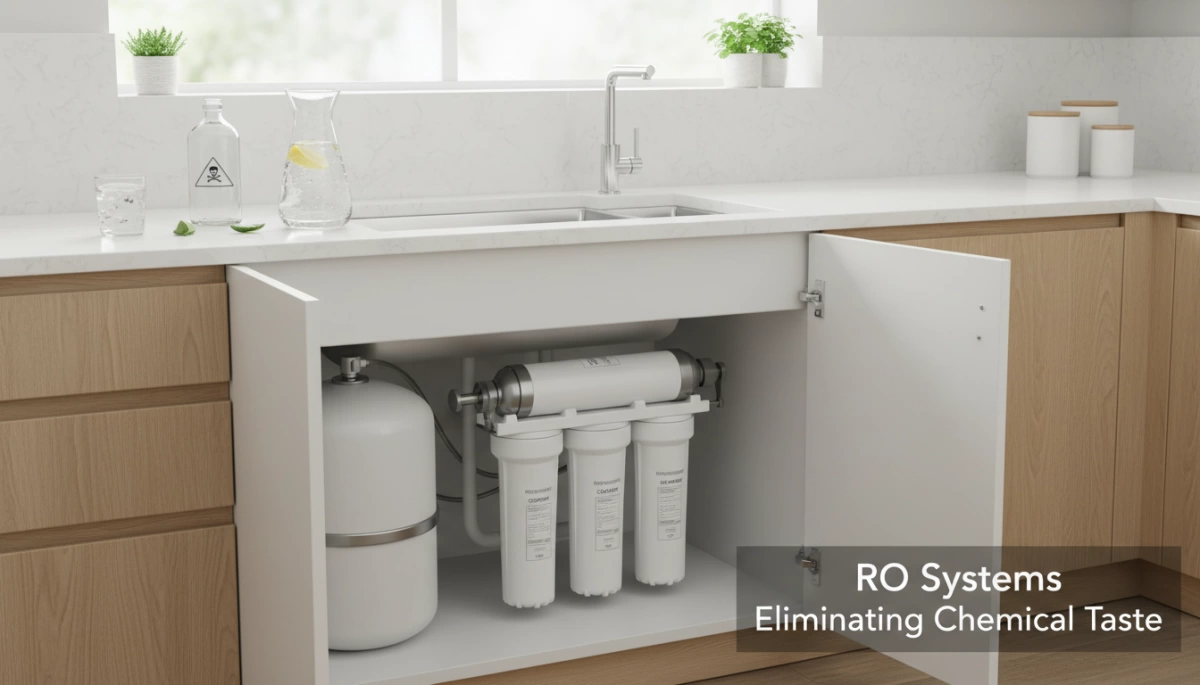
Eliminating that distinct “chemical” flavor from city water isn’t magic; it is a matter of precise engineering and pressure. The multi-stage RO filtration process works by forcing water through a series of barriers, each designed to target specific taste-ruining culprits. Unlike basic filtration that just strains the water, an RO system separates pure water molecules from the chemical soup of municipal additives.
The 4-Stage Defense Against Bad Flavor
Most high-performance systems, including the ones we design at DripLife, utilize a composite approach to ensure nothing slips through. Here is how each stage contributes to reverse osmosis water taste improvement:
- Sediment Pre-Filter: This is the bodyguard of the system. It physically blocks rust, sand, and pipe debris. While these particles don’t always cause the chemical taste, removing them protects the finer filters downstream.
- Activated Carbon Block: This is where the heavy lifting for odor removal happens. The activated carbon pre-filter works by adsorption, acting like a magnet for chlorine, chloramines, and volatile organic compounds (VOCs). This stage strips away the “swimming pool smell” before the water even reaches the main membrane.
- The RO Membrane: This is the heart of the system. With a pore size of 0.0001 microns, the membrane rejects over 99% of dissolved contaminants. While carbon handles the smell, RO membrane contaminant removal handles the dissolved solids—like fluoride, arsenic, and heavy metals—that contribute to a metallic or bitter aftertaste.
- Post-Carbon Polishing: Water can sometimes taste “stale” if it sits. The final stage is a post-carbon polishing filter that gives the water a final sweep, ensuring it hits your glass with a crisp, sweet finish.
Comparing Multi-Stage Filtration to Single-Stage Options
Many homeowners start with simple pitchers or faucet attachments, but these are often limited to a single stage of carbon filtration. While they might reduce the smell of chlorine, they cannot remove dissolved solids or microscopic parasites. If you are debating between a comprehensive under-sink solution or wondering what is the best countertop water filter system for a smaller space, the difference always comes down to the membrane. Without the high-pressure membrane stage found in RO systems, you are essentially just masking the flavor rather than purifying the source. For a true bottled-quality taste, the multi-stage barrier is non-negotiable.
The Before-and-After: What to Expect from RO-Purified Water
Immediate Elimination of Bleach and Chemical Notes
When you switch to a high-performance RO system, the first thing you notice is what is missing. That distinct “swimming pool smell” caused by municipal chlorine treatment vanishes immediately. Our systems utilize precise 0.0001-micron filtration to strip away the volatile organic compounds (VOCs) and disinfectants that create that harsh, chemical bite. You are left with a pure, crisp water taste that feels lighter on the palate, free from the lingering aftertaste of city sanitation chemicals.
Flavor Improvements in Coffee, Tea, and Cooking
This purity drastically changes your kitchen routine. If you are a coffee enthusiast or love brewing delicate teas, you know that water quality is just as important as the beans or leaves. Chlorine taste in tap water masks the subtle notes of a good roast and can make tea taste bitter. Using water from our under-sink reverse osmosis filtration system ensures that your beverages taste exactly as intended. Even your soups, stocks, and pasta will have a cleaner flavor profile without that underlying metallic tang often found in unfiltered water.
Debunking the “Flat” Taste Myth
There is a common misconception that highly purified water tastes “flat.” In reality, what some describe as “flat” is simply the absence of heavy minerals and dissolved solids that clutter your taste buds. This initial “empty” sensation is actually the feeling of true purity—water that is essentially a blank canvas. Unlike bottled water that sits in plastic for months, our tankless systems deliver fresh water instantly. However, if you prefer a specific mineral mouthfeel, a reverse osmosis water filter with remineralization can restore beneficial calcium and magnesium, giving you that familiar spring-water finish while keeping the chemical taste out.
Enhancing RO Water for the Perfect Natural Taste
While the primary job of a Reverse Osmosis system is to strip away harmful contaminants, the ultimate goal is water that is enjoyable to drink. We know that stripping water down to its bare molecules can sometimes leave it tasting “flat” or slightly acidic due to the removal of dissolved solids. To counter this and achieve a pure crisp water taste, the final stage of the filtration journey is crucial. This is where we turn science into a refreshing experience, ensuring the water from your tap rivals premium bottled brands.
Remineralization: The Secret to Spring-Like Flavor
The most effective way to correct the “empty” taste of ultra-pure water is through remineralization. Since the RO membrane is non-discriminatory—removing beneficial minerals alongside toxins—we need to reintroduce what makes water taste good.
- Restoring Balance: A remineralization filter for RO adds back trace amounts of healthy minerals like calcium and magnesium.
- Flavor Profile: These minerals are responsible for the “sweet” and smooth notes found in natural spring water.
- pH Correction: Pure RO water can be slightly acidic (below pH 7). Remineralization neutralizes this, raising the pH for a smoother mouthfeel.
Modern Solutions for Customized Taste
Gone are the days when you had to settle for clinical-tasting water. When evaluating the best under-sink RO system features, you will find that high-end units focus heavily on the final water flavor profile. By utilizing composite filters and post-carbon polishing, we ensure that any lingering “closed tank” tastes are eliminated.
For homeowners who are serious about their hydration, this attention to detail transforms tap water from a utility into a beverage you actually crave. Whether you are brewing coffee or drinking it straight, restoring the mineral balance ensures the water feels natural and refreshing on the palate.
Why Choose a Premium RO System for City Water Challenges
When you are tired of that distinct swimming pool smell in your tap water, upgrading to a professional-grade filtration system is the only way to guarantee consistent purity. While simple pitchers might mask the odor temporarily, they often lack the power to remove the dissolved solids responsible for that lingering chemical taste.
Tankless Design for Instant Freshness
We have moved beyond the era of bulky storage tanks that take up your entire cabinet. Traditional tanks can actually re-introduce bacteria and stale flavors if water sits too long. Our modern tankless RO systems filter water on demand, ensuring every drop is fresh. This design saves about 70% of under-sink space and eliminates the risk of secondary pollution, which is critical for maintaining a crisp, clean flavor profile.
High-Flow Performance and Efficiency
Nobody wants to wait minutes for a glass of water. Our high-capacity 800 GPD systems are engineered for speed, filling a cup in approximately 6 seconds. This high flow rate is paired with exceptional efficiency; unlike older units that wasted gallons of water, DripLife systems operate at a 3:1 pure-to-drain ratio, making them an eco-friendly choice for US households.
Comparing Filtration Methods
To understand why premium RO is superior for eliminating chemical tastes, look at the difference in technology compared to standard options:
| Feature | Standard Water Pitcher | Premium Tankless RO System |
|---|---|---|
| Filtration Precision | ~1-5 microns (Carbon only) | 0.0001 microns (RO Membrane) |
| Contaminant Removal | Reduces chlorine taste | Removes 99.99% of 1,000+ contaminants (Lead, PFAS, Fluoride) |
| Water Quality | Improved smell, residual solids remain | Bottled-quality purity with reduced TDS |
| Consistency | Effectiveness drops quickly | Consistent taste for 12-24 months |
The DripLife Advantage
We integrate smart technology directly into our under-counter water filter solutions to give you peace of mind. Our systems feature Smart TDS Faucets that display water quality in real-time, proving that the chemical dissolved solids have been removed. Additionally, the composite filters last up to 24 months, providing a long-term solution to city water challenges without the hassle of frequent maintenance. Quiet operation ensures that while the system is working hard to purify your water, it won’t disturb your kitchen environment.
Maintenance Tips to Keep Your RO Water Tasting Fresh
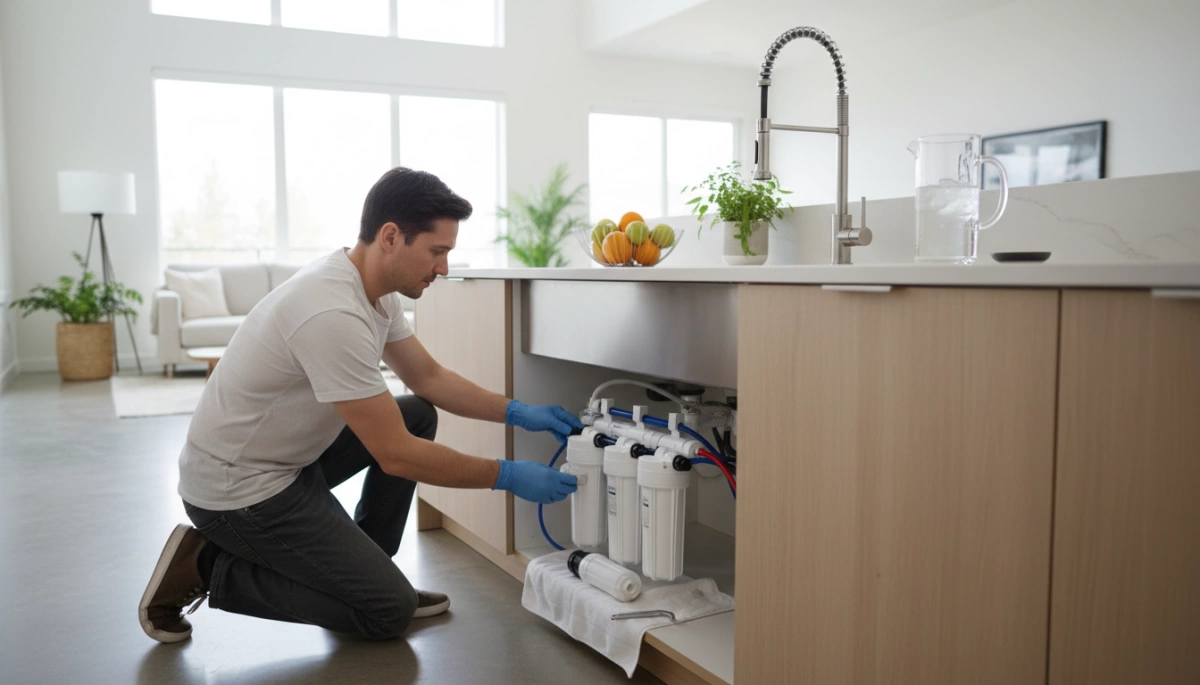
You invested in a high-performance system to banish that swimming pool smell, so keeping it running at peak efficiency is non-negotiable. If you neglect the filters, that city water chemical odor will eventually creep back in as the membranes become saturated. Consistent maintenance is the only way to ensure the fresh water taste remains crisp year-round.
Stick to a Strict Schedule
Unlike basic pitchers that need monthly attention, our tankless systems are built for longevity, but they aren’t magic. You need to replace the composite PPC filter (which handles the heavy lifting of sediment and carbon adsorption) every 12 months. The 0.0001-micron RO membrane, responsible for stripping out the dissolved solids, typically lasts up to 24 months.
- Watch the Smart Faucet: Don’t guess. Our faucets feature a real-time filter life indicator that tells you exactly when it’s time to swap.
- Monitor TDS Levels: A sudden spike in the Total Dissolved Solids reading on your display is a clear sign the membrane is losing its edge.
Flushing for Pure Flavor
When you install a new filter, you might notice the water looks cloudy or tastes slightly “dusty” at first. This is just loose carbon fines clearing out. Always flush the system for about 5 to 10 minutes (or until the TDS reading stabilizes) after any replacement. This ensures you aren’t drinking residue and gets you back to that pure crisp water taste immediately.
For those handling the upkeep themselves, reviewing a guide on top under-counter water filters and installation tips can ensure you are sealing everything correctly to prevent leaks and bypass issues.
Preventing Stagnation
One of the biggest advantages of our tankless design is eliminating the bacteria growth common in storage tanks. However, if you haven’t used the system for a few days (like after a vacation), run the tap for 30 seconds before filling your glass. This flushes out any standing water in the lines, ensuring every cup is fresh and free from metallic or plastic aftertastes.
Frequently Asked Questions About RO Water Taste
Does reverse osmosis remove good minerals along with the bad taste?
Yes, the filtration process is incredibly thorough. Because the RO membrane contaminant removal capability works at 0.0001 microns, it strips away virtually all dissolved solids, including beneficial minerals like calcium and magnesium. While some worry about this, the reality is that the minerals found in tap water are inorganic and difficult for your body to absorb. You get the vast majority of your essential minerals from a balanced diet, not your hydration source. The trade-off—removing 99.99% of harmful contaminants like lead and arsenic—is well worth the loss of trace minerals.
Why does my RO water taste slightly acidic?
If you notice a slightly tangy or “crisp” profile, it is because the water is highly pure. When alkaline minerals are removed, the pH of the water can drop slightly below neutral (7.0). Additionally, pure water readily absorbs carbon dioxide from the air, forming mild carbonic acid. This is not harmful; in fact, it is a clear sign that your system is effectively removing the heavy solids that usually buffer the pH.
Can I adjust the flavor profile of my RO system?
Absolutely. If you find flat tasting RO water unappealing, you have options. Many homeowners add a post-stage remineralization filter. This cartridge reintroduces healthy amounts of calcium and magnesium back into the clean water, restoring a neutral pH and a “spring water” mouthfeel. If you are still deciding which filtration method suits your palate best, understanding the difference between RO and UF filtration can help you decide if you prefer total purification or a method that retains natural minerals.
How do I know if my RO membrane needs replacing based on taste?
Taste is often the first indicator of a saturated filter. If you start noticing the return of a chlorine taste in tap water or a metallic tang, the membrane or the activated carbon pre-filter has likely reached its capacity. However, relying on taste alone can be risky. That is why our DripLife systems feature smart faucets with real-time TDS (Total Dissolved Solids) monitoring. Instead of waiting for a bad taste, you can see the purity level on the screen and get a direct alert when it is time to swap the filter.