

















Bath Water Filter vs Shower Filter: What’s the Real Difference?
When people search for a bath water filter vs shower filter, they’re usually dealing with the same core worries: chlorine in the water, dry or itchy skin, irritated scalp, or concerns about kids soaking in unfiltered tap water. The confusion comes from the fact that both products sit in the same room and claim to “purify” bathroom water—but they’re built for different jobs.
Clear Definitions: Bath Filter vs Shower Filter
Shower water filter
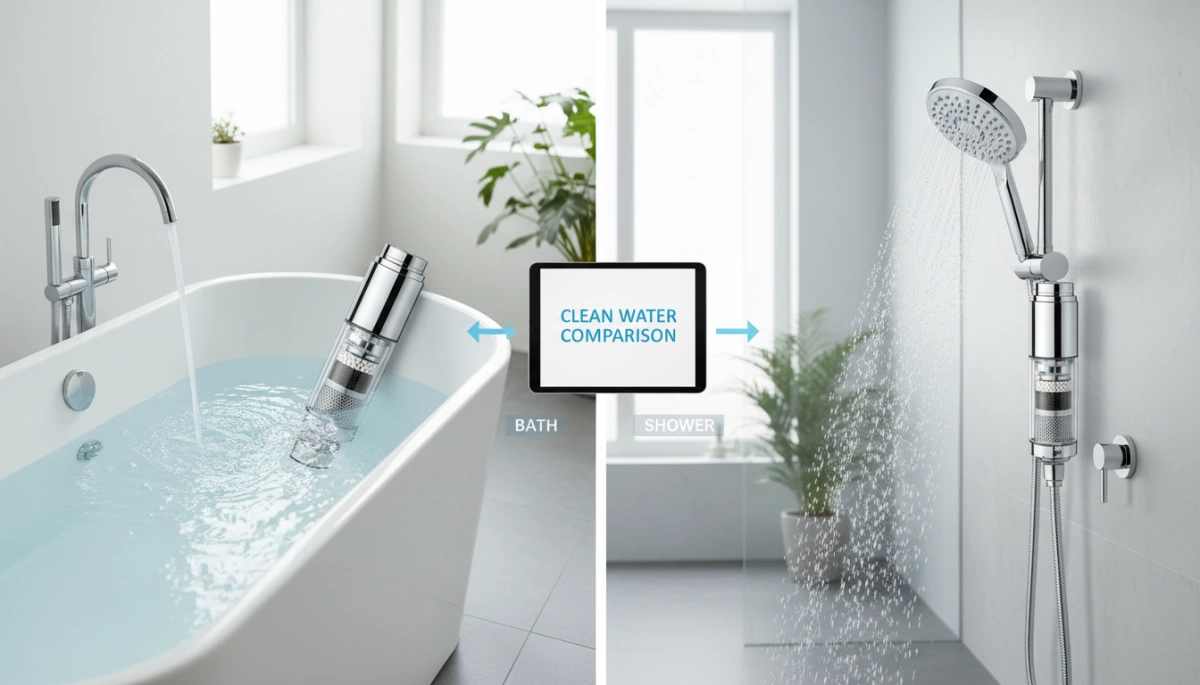
A shower filter (or shower head filter) installs on the shower arm or between the pipe and your showerhead. It’s a point-of-use bathroom filter that treats water as it flows to your shower, usually in real time at a relatively high pressure.Bath water filter
A bath tub water filter (or tub faucet filter) connects to the bathtub faucet or sits in the tub itself. It’s designed to treat the larger volume of water used for soaking baths—especially important for babies, kids, and sensitive skin.
Both are bathroom water filtration options, but they’re optimized for different usage patterns.
How Each Fits into a Typical Bathroom Setup
Shower filter placement
- Screws onto a standard shower arm or between arm and showerhead
- Ideal for people who mainly shower
- Often an inline shower filter or a multi-stage shower head filter
Bath water filter placement
- Attaches to a tub spout or bath faucet with an adapter
- Sometimes a floating dechlorinating bath ball that sits in the tub
- Best for people who take frequent baths, have infants, or want a bath water filter for babies
In some homes, a tub faucet filter becomes the main solution because there is no separate shower line.
Key Goals: What Both Types of Filters Try to Fix
Whether you choose a shower filter or bath filter, the main targets are usually:
- Chlorine removal (and sometimes chloramine)
- Heavy metals (like lead, mercury, copper)
- Sediments (rust, sand, fine particles)
- VOC and odor reduction (the “pool water” smell)
- Basic protection for skin and hair from tap water impurities
Many KDF shower filters, vitamin C shower filters, and multi-stage shower head filters are designed to tackle chlorine and some metals, while high-flow bath filter systems focus on reducing chlorine and sediment in large, fast-filling volumes.
Why People Are Confused About Bath vs Shower Filtration
Most shoppers lump everything into “shower filter” and assume it covers baths too. That’s where the confusion comes in:
- A shower water filter vs bath filter is not just about shape—
it’s about flow rate, contact time, and how you actually use your bathroom. - Filling a tub with a shower filter is possible, but slower and not always ideal for high-flow filling.
- A dechlorinating bath ball sounds simple, but it doesn’t work like a full multi-stage point-of-use bathroom filter.
- Many brands market shower filters heavily and treat bath filters as niche add-ons, so buyers assume baths are “automatically covered.”
If you understand that showers = high-pressure, shorter exposure and baths = large volume, long soaking exposure, it becomes much clearer why bath filters and shower filters exist as distinct categories—and why choosing the right one depends on how you actually clean, soak, and live in your bathroom every day.
How Shower Filters Work in Real Life (Shower Water Filter vs Bath Filter Differences)
In real life, a shower water filter sits directly in your shower line and treats water on the spot—either as an inline shower filter between the pipe and your existing shower head, or as a multi-stage shower head filter where the filter is built into the head itself. Both options aim to reduce chlorine, chloramine, heavy metals, sediment, and odors before the water hits your skin, hair, and lungs.
Inline vs Showerhead-Style Filters
Inline shower filter
- Installs between the wall pipe and your current shower head
- Great if you already like your shower head (rainfall, handheld, high-pressure, etc.)
- Usually has more room for media, so better multi-stage filtration and longer life
Showerhead-style filter
- Filter and head are one unit
- Simple swap install; good for renters and busy families
- Often adds features like different spray modes, but sometimes with slightly less media capacity
Both types do the same core job: point-of-use filtration right where you shower.
Common Filter Media in Shower Filters
Most shower head filters and inline shower filters use a mix of:
- Activated carbon – Targets chlorine, some VOCs, and improves taste/odor (works best with cooler water and reasonable contact time).
- KDF (Kinetic Degradation Fluxion) – Copper-zinc alloy that helps reduce chlorine, heavy metals (like lead and mercury), and controls bacteria.
- Vitamin C – Popular in vitamin C shower filters for direct chlorine/chloramine neutralization, especially in hot water.
- Multi-stage systems – Stack media (sediment screens, KDF, carbon, calcium sulfite, etc.) for broader contaminant reduction and better performance at typical shower temperatures.
If you’re serious about contaminant reduction, always look for multi-stage shower head filters with a clear breakdown of media and, ideally, third-party data or certifications. For a deeper understanding of how different filter technologies handle specific contaminants like lead, check out this guide on methods water filters use to remove lead.
Flow Rate, Contact Time, and Real Performance
Performance in a shower filter vs bath filter setup comes down to two big factors:
- Flow rate – Most U.S. showers run about 1.5–2.5 GPM (gallons per minute). Higher flow = less contact time with the media.
- Contact time – The longer water touches the filter media, the better chlorine and chemical reduction you’ll get. That’s why:
- Overly “high-pressure” heads that push more than 2.5 GPM can hurt performance.
- A good design balances strong flow with a smart internal path so water doesn’t “shortcut” past the media.
Real-world shower use in the U.S. looks like:
- Temperature: Warm–hot (often 100–105°F), which can reduce carbon performance but is where KDF and vitamin C shine.
- Duration: 8–15 minutes per shower for most adults.
- Pattern: Daily or near-daily use, which makes filter capacity and monthly cost important.
Because showers are hot and steamy, a shower filter does double duty—protecting your skin and hair from direct contact and also cutting down on chlorine vapors in steam, which matters for anyone with asthma, allergies, or chemical sensitivity.
How Bath Water Filters Work in Real Life
Bath water filters work right at the tub, treating water as it comes out of the faucet or while it sits in the tub. In real life, that means you’re dealing with much higher flow and a lot more total water than a shower, so the design of the filter really matters.
Types of Bath Water Filters
In the U.S., you’ll mostly see three styles:
Faucet-mounted tub filters (tub faucet filters)
These attach directly to your bath spout. Water is forced through a cartridge (often carbon + KDF + specialty media) before it hits the tub. This is the most effective way to cut chlorine, sediments, and heavy metals at bath-level flow rates, and it’s the approach I recommend for families and sensitive skin.Inline tub filters
Installed on the pipe feeding the tub, usually behind the wall or right before the spout. They work like a beefed-up shower filter but sized for higher flow. Great if you want the tub to behave like a “mini” point-of-entry system just for that fixture.Dechlorinating bath balls and floating filters
These sit or float in the tub after it’s filled. They usually use vitamin C or simple media to neutralize chlorine. They’re easy and portable, but they’re passive and limited.
For a deeper dive into why a tub spout filter is so effective at improving bath water quality, I’ve broken down the benefits and real performance in this guide on the benefits of a tub faucet filter and improved bath water quality.
High Flow, Big Volume, and Filtration Limits
A bathtub in the U.S. may run 4–7 gallons per minute and fill 30–60+ gallons. That has big implications:
- The water moves fast, so contact time with the filter media is short.
- The filter has to handle a big volume per use, which impacts cartridge capacity and lifespan.
- “Cute” or under-sized bath filters often underperform because they’re simply not built for this load.
That’s why faucet-mounted or inline tub filters need larger media beds and high-flow designs to actually reduce chlorine, sediments, and odors at realistic bath flows.
Limits of Passive or Floating Bath Filters
Passive bath solutions (bath balls, floating pouches, simple additives) are better than nothing, but they’re not in the same performance category as a proper faucet filter:
- They mainly target free chlorine, often ignoring chloramine, VOCs, and metals.
- Performance depends on how long you soak and how well you stir the water.
- They don’t filter sediment or rust particles; those are already in the tub.
- Results can be inconsistent, especially in cities with complex disinfectant mixes.
I treat these as supplements, not primary filtration, especially for babies, eczema, or very sensitive skin.
When a Bath Faucet Filter Makes More Sense Than a Shower Filter
A bath faucet filter is often the smarter move than a shower filter if:
- You mostly take baths (or your kids do) and showers are rare.
- You’re focused on babies, toddlers, or anyone who spends 20–40 minutes soaking.
- Your priority is reducing overall body exposure to chlorine, sediments, and heavy metals in a large volume of water.
- You fill the tub using the tub spout, not a shower diverter—so a shower filter wouldn’t treat that water anyway.
In a lot of U.S. family homes, the best call is to treat the tub faucet first, then layer in a shower filter later if adults are taking daily showers. That way, you get high-impact chlorine reduction where it matters most: long soaks and kids’ baths.
Installation and Compatibility: Bath Water Filter vs Shower Filter
Shower filter installation on standard shower arms
Most shower filters are built for US-standard 1/2″ NPT shower arms, so installation is usually:
- Unscrew your old shower head
- Hand-tighten the inline or showerhead-style filter onto the arm
- Reattach the shower head to the filter (if inline)
If your bathroom follows typical US plumbing, a shower water filter vs bath filter install is almost always easier on the shower side. No tools beyond plumber’s tape in most cases.
Bath faucet filter installation and adapter needs
Bath faucet filters are trickier because tub spouts vary a lot:
- Some spouts are threaded; some are slip-fit with no threads
- Decorative or waterfall-style spouts often need special adapters or won’t fit at all
- A tub faucet filter may require:
- Size adapters
- Diverter-style attachments
- Extra clearance below the spout
If you want the best bathtub water filter experience, always check the exact spout style before you buy.
Using a shower filter on a tub spout (hybrid setup)
If your tub has a shower arm above it, you can:
- Install a multi-stage shower head filter or inline filter on the shower arm
- Run the shower to fill the tub for baths
This hybrid solution gives you:
- Better chlorine removal for bath and shower with one device
- Easier installation vs dedicated bath faucet hardware
The trade-off: filling the tub with the shower takes longer, and you need to angle the head correctly to avoid splashing.
Impact on water pressure and flow
Both shower filters and bath filters can affect pressure and flow:
- Shower filters:
- Slight drop in pressure is normal
- High-restriction media (like super-dense carbon blocks) can feel weak
- Bath faucet filters:
- Need to be high-flow to avoid super slow tub fills
- Overly tight filtration can double or triple fill time
If you’re used to strong hotel-style showers, choose high-flow bathroom filters designed not to choke your water. This same logic is why we tune flow carefully in our other filtration products, like our high-flow water cooler filters.
What to check before buying
Before you pick a bath water filter vs shower filter, confirm:
- Thread size: Most shower arms = 1/2″ NPT; many imported or custom fixtures are different
- Faucet style: Straight tub spout, waterfall, pull-down, slip-fit, diverter, etc.
- Space and clearance:
- Enough room between wall and shower arm for an inline unit
- Enough drop under the tub spout for a faucet-mounted filter
- Orientation: Some filters must hang vertically to work right
If these basics line up, installation is straightforward—and you avoid buying a great filter that just doesn’t fit your bathroom.
Filtration Performance: Shower Water Filter vs Bath Filter
When I compare a shower water filter vs a bath filter, I look at one thing first: how much junk they actually remove per gallon, not just how fancy they look.
Chlorine & Chloramine Reduction
- Shower filters (especially KDF + vitamin C + activated carbon) are designed to cut free chlorine fast, even at higher temps and higher pressure.
- Some advanced multi-stage shower head filters can also reduce chloramine, but you need the right media (vitamin C, catalytic carbon). Always check for chloramine-specific claims, not just “chlorine removal.”
- Bath tub water filters on the faucet can do very well with chlorine because they see a large volume at once and often have more media.
- Dechlorinating bath balls are weaker: they rely on passive contact in the tub water and usually don’t touch chloramine effectively.
Heavy Metals & Sediment Removal
- A good KDF shower filter can reduce heavy metals like lead, mercury, and nickel while also inhibiting bacterial growth inside the filter.
- Sediment reduction in shower filters is solid for sand, rust, and fine particles, which helps protect your skin, hair, and plumbing.
- Bath faucet filters can pack more sediment and carbon media, so they often win if your tub water is visibly dirty or gritty.
- Floating or hanging bath devices don’t do much for metals or sediment—they’re mostly for chlorine.
If you’re worried about metals house-wide (kitchen + bathroom), pairing bathroom filters with a faucet filter or whole-house setup is smart; you can see how hard water faucet filters protect plumbing and fixtures in more detail in this breakdown: role of hard water faucet filters in household plumbing.
VOCs & Odor Control: Showers vs Baths
- Showers create steam, so VOCs and chlorine byproducts can become airborne fast. A strong activated carbon or multi-stage shower filter is more critical here because you’re breathing that in.
- Baths are lower temperature and less steamy, so inhalation exposure is lower, but you’re soaking longer. A bath faucet filter with solid carbon is great for odor and taste reduction in the tub.
Contact Time, Media Capacity & Who Wins
- Shower filters:
- Less contact time (water moves fast), but designed to work under high pressure.
- Great for daily, high-frequency use.
- Bath faucet filters:
- Higher media volume and capacity, more water is processed per session.
- Better for big, single draws like filling a tub.
If we’re talking pure media capacity, a high-flow bath faucet filter usually wins. For real-world everyday performance, a good multi-stage shower head filter often makes the bigger difference because you use it more often and inhale the steam.
Lifespan, Replacement & Real Cost per Month
Always think in cost per gallon, not just sticker price.
- Shower filters
- Typical lifespan: 3–6 months or around 10,000–15,000 gallons, depending on quality and water conditions.
- In many US homes, that works out to roughly $5–$12 per month for a solid multi-stage shower filter cartridge.
- Bath filters
- Faucet-style bath filters: rated for larger total gallons, but you might change them every 3–6 months if you bathe kids or multiple family members often.
- Dechlorinating bath balls: media usually needs replacing every 2–4 months, but performance is lighter, so “cheap” can mean less protection.
In short:
- For daily showers, steamy air, and overall exposure, a high-quality shower water filter gives you the best performance-to-cost ratio.
- For families who fill the tub a lot (babies, toddlers, sensitive skin), a strong bath faucet filter is worth it as a second line of defense, especially if you want the best bath water filter experience possible.
Hard water and limescale issues
Hard water is loaded with calcium and magnesium. Those minerals don’t just leave white limescale on your shower glass and faucets—they also make skin feel tight and dry, and they can wreck hair color and curl pattern over time. When you compare a bath water filter vs shower filter, hard water is where expectations often get confused.
What shower filters can and can’t do for hard water
Most hard water shower filters are not true water softeners. Here’s the real story:
What a good shower filter can do:
- Reduce chlorine, chloramines, and some heavy metals that make hard water feel harsher
- Use media like KDF and vitamin C to make water feel gentler on skin and hair
- Cut down on some scale adhesion, so fixtures and glass don’t crust up as fast
- Improve smell and overall comfort, especially in steamy hot showers
What a shower filter can’t do:
- It can’t fully remove calcium and magnesium (the actual hardness) like a salt-based softener
- It won’t completely stop white spots, scale rings, or clogged showerheads
- It can’t turn very hard water into true “soft water” on its own
Think of a shower head filter or inline shower filter as a comfort upgrade, not a full hard water solution.
How bath filters handle mineral-heavy water
Bath faucet filters and tub filters face a tougher job:
- Bathtubs use a lot more water than a quick shower, so there’s way more hard minerals to deal with
- High tub faucet flow means less contact time, so real hardness reduction is limited
- Most bath water filters focus on chlorine and chemical reduction, not full softening
Dechlorinating bath balls and passive bathtub dechlorination methods can make bath water feel better for sensitive skin, but they do not truly soften water or remove the bulk of hardness minerals.
When you actually need a water softener instead
You should look at a whole house water softener (point-of-entry) if:
- You have visible scale on fixtures, dishes, appliances, or glass no matter what you do
- Your water test shows over ~10–12 grains per gallon (gpg) hardness
- You’re dealing with clogged showerheads, short water heater life, or stiff laundry
- Skin issues persist even after installing a shower filter or bath filter
In those cases, a softener handles the minerals, and point-of-use bathroom filters (shower and bath) handle chlorine, metals, and byproducts. For brands building full solutions, this layering is similar to how high-efficiency pre-filtration systems are used to protect RO membranes upstream.
Best setup if you’ve got hard water and sensitive skin
For U.S. households with hard water and skin issues (eczema, itchiness, dryness), here’s the setup that actually works:
If you own your home (very hard water):
- Install a whole house softener for true hardness control
- Add a multi-stage KDF + vitamin C shower filter for chlorine and heavy metal reduction
- If you bathe kids or babies, use a high-flow bath faucet filter focused on dechlorination
If you rent (can’t install a softener):
- Use a high-quality shower filter for hard water comfort (chlorine + metals + some scale mitigation)
- For baths, use a tub faucet filter rather than relying only on a dechlorinating bath ball
- Keep expectations realistic: you’re improving feel and skin comfort, not fully removing hardness
Bottom line:
- Shower filters and bath water filters are ideal for chlorine, heavy metals, and skin comfort.
- Water softeners are what you need for true hard water and limescale control.
- The best real-world setup often combines both, especially for sensitive skin, eczema, and color-treated hair.
Skin and Hair Benefits: Bath Water Filter vs Shower Filter
Filtered shower and bath water make a real difference for skin and hair, especially with chlorine-heavy or hard city water in the U.S.
Dry Skin, Itchiness, and Eczema Relief
Unfiltered water (especially hot, chlorinated water) strips natural oils and can aggravate:
- Dry, tight skin after showering
- Itchy patches and redness
- Eczema flare-ups and contact dermatitis
A good shower water filter vs bath filter setup reduces chlorine, chloramines, and sediments so your skin barrier isn’t under constant attack. For babies and sensitive skin, a bath water filter for babies or bath filter for sensitive skin helps keep bath time from becoming an irritation trigger.
Color-Treated Hair and Curls
Chlorine and metals in tap water rough up the hair cuticle and can:
- Fade color-treated hair faster
- Loosen or frizz natural curl patterns
- Make hair feel dull, brittle, and hard to manage
A multi-stage shower head filter (with KDF, carbon, or vitamin C) protects dye jobs and curls by cutting down on oxidants and impurities before they hit your hair, making it a smart shower filter for colored hair and curly textures.
Scalp Health and Dandruff
If your scalp is flaky, tight, or always “angry,” water quality might be part of it:
- Chlorine + hot water = increased dryness and irritation
- Sediment and metals can clog follicles and worsen scalp issues
- Sensitive scalps often calm down once chlorine and harsh contaminants are reduced
A hard water shower filter with KDF media is especially helpful, as KDF is known for targeting chlorine and some metals. You can see how KDF works in more detail in our breakdown of how KDF technology enhances shower water purity.
Why Steamy Showers Can Be Harsher Than Baths
Hot, steamy showers are often tougher on skin and hair than baths because:
- You inhale chlorine vapors and byproducts released in steam
- Higher heat opens pores and cuticles, so chlorine and contaminants penetrate deeper
- Long, hot showers give more exposure to chlorine vapor in shower steam than sitting in a warm (not scalding) bath with filtered or dechlorinated water
Using a shower head filter or inline shower filter vs shower head filter combo cuts down both direct skin contact and what you breathe in, making showers closer to a filtered bath in terms of comfort and protection.
Health and safety considerations for families
Bath water filters for babies and young kids
For babies and young kids, a bath water filter for babies is one of the easiest ways to lower their exposure to chlorine, chloramine, and heavy metals during bath time. Their skin barrier is thinner, they soak longer, and they often put bath water in their mouths, so I treat bathtub water more like drinking water than “just bath water.”
When parents ask what matters most, I usually suggest:
- Strong chlorine and chloramine reduction (not just “improves water quality”)
- No added fragrances or harsh chemicals in the filter media
- High-flow bath faucet filter that can handle filling a full tub without wearing out in a month
If your family’s main concern is skin sensitivity and kid safety, this is exactly the type of scenario driving the skin-care–driven demand for bath water filtration in the U.S. market, which I break down further in our article on bath water filtration for sensitive skin and families.
Shower filters for asthma and allergy concerns
For adults with asthma, allergies, or chemical sensitivities, a shower filter usually delivers the biggest health win. Hot showers create more steam, which means more inhalation of chlorine byproducts. A good KDF or vitamin C shower filter can cut chlorine and some VOCs before they hit the air and your lungs.
Look for:
- Certified chlorine reduction (not just “improves shower feel”)
- High-temp performance so the media still works with hot showers
- Multi-stage shower head filter or inline shower filter with carbon + KDF + vitamin C if possible
Inhalation of chlorine byproducts in hot showers
In a hot shower, chlorine and some disinfection byproducts (DBPs) can vaporize into the steam. That’s why you may smell “pool water” more in the shower than at the sink. In many U.S. homes, this is the main exposure route, not just skin contact.
A chlorine shower filter helps by:
- Reducing free chlorine before it reaches the showerhead
- Lowering chemical odor in steam
- Making showers more comfortable for people with reactive airways, sinus issues, or migraines
If you’re deciding between a filtered shower vs filtered bath purely for health, showers usually win on the inhalation side.
Safety of dechlorinating bath balls and bath additives
Dechlorinating bath balls and powdered bath additives can help, but they’re not all equal:
- Many use vitamin C (ascorbic or sodium ascorbate), which is generally safe and effective for chlorine removal for bath and shower.
- Performance depends on water volume, contact time, and how often you replace the cartridge or ball. A passive ball swirled briefly in a big tub won’t match a real tub faucet filter.
- Avoid products with strong fragrances, dyes, or unnecessary chemicals, especially for babies, eczema, or sensitive skin.
For families, I treat dechlorinating bath balls as a nice extra, not a primary solution. A bath faucet filter + gentle bath routine is the safer, more consistent way to protect kids’ skin and reduce tap water impurities in the bathroom.
Lifestyle Fit: Which Filter Suits Your Routine?
If You Mostly Shower: Best Shower Filter Setups
If 90% of your routine is quick showers, a shower water filter should be your first move. It hits the highest exposure point: hot, steamy water on your skin, hair, and lungs.
Strong setups for shower-first households:
Inline shower filter + your own shower head
- Best if you already like your current rainfall or handheld head
- Go for multi-stage KDF + activated carbon + vitamin C to target chlorine, chloramine, heavy metals, and odors
- Great balance of chlorine removal and minimal pressure drop
All-in-one shower head filter
- Cleaner look, faster install on a standard 1/2″ shower arm
- Good choice for renters who want quick, reversible changes
- Look for strong reviews on shower head filter effectiveness and real pressure feedback
Hard water shower filter setup
- If you see white spots and scale, you need a filter that at least reduces scale (or works with a softener), not just chlorine
- Pairing with a calcium-focused solution like the approach described in this calcium water filter breakdown can help you understand how to tackle mineral-heavy water throughout your home
If You Mostly Take Baths: When a Bath Filter Is Worth It
If you or your kids are in the tub more than the shower, a bath water filter starts to make more sense than focusing only on the shower.
Worth installing a bath faucet filter when:
- You have babies, infants, or sensitive skin soaking in the water
- You’re dealing with noticeable chlorine smell or dry, itchy skin after baths
- You often do long soaks (20+ minutes) where skin has more time to absorb contaminants
- You want targeted point-of-use bathroom filtration without changing the whole house
Best options:
- Tub faucet filter / bath faucet adapter filter
- Attaches directly to the bath spout
- Designed for higher flow and bigger volume than a shower
- Dechlorinating bath ball or bath additive
- Easy to use, but treat it as a supplement, not your only filtration, if your tap water is rough
Mixed-Use Bathrooms: Shower + Tub Strategy
Most U.S. families use both the tub and shower, especially with kids. In that case, you usually get the best results by prioritizing shower filtration, then adding bath coverage where it counts.
Smart mixed-use strategy:
- One good shower filter for daily showers (adults + older kids)
- One bath faucet filter for baby, toddler, or eczema-prone skin
- If budget is tight:
- Start with a shower filter (biggest daily exposure)
- Add a bath filter later for the tub your kids use most
You can also use a shower filter on a tub spout if your bathroom has a shower/tub combo with a standard threaded outlet, but always check compatibility and flow before you commit.
Travel, Rentals, and Easy-Move Filter Options
If you rent or travel a lot, you want portable, easy-install options:
- Inline shower filter that screws onto most U.S. 1/2″ shower arms in minutes
- Handheld filtered shower head you can uninstall and take with you
- Dechlorinating bath ball for hotels and rentals where you can’t touch the plumbing
- Compact tub faucet filter with adapters, as long as the landlord is okay with simple, non-destructive changes
For renters, I always suggest:
- Start with a shower filter (maximum impact, minimal hassle)
- Use portable bath dechlorination (ball or additive) when traveling or bathing kids in different tubs
The bottom line:
- Mostly showers? Go hard on a high-quality shower water filter.
- Mostly baths? Invest in a bath faucet filter and use dechlorinating tools for extra coverage.
- Both? Stack them smartly so you get real protection without overcomplicating your setup.
Market positioning: shower filter vs bath filter
In the real world, “shower water filter vs bath filter differences” mostly come down to habits and how people actually use their bathrooms.
Why shower filters dominate the market
Shower filters lead the category because:
- Most U.S. households shower way more than they bathe.
- They’re easy to install on a standard 1/2″ shower arm, so no plumber needed.
- A shower head filter feels like a direct upgrade: better-feeling water, less smell, less skin/eye irritation.
- Brands can stack features (multi-stage media, vitamin C, KDF, carbon) in one compact, high-value product.
For a lot of buyers, a hard water shower filter or chlorine-removal shower filter is the “first step” into bathroom filtration, especially in apartments and rentals.
Why bath water filters are niche but growing
Bath water filters stay more niche because:
- Not every home has a usable tub, and many adults rarely take baths.
- Tub faucet filter installation can be trickier (different spout shapes, diverters, adapters).
- Many people don’t realize a bath water filter for babies or sensitive skin is even an option.
But this segment is growing fast with:
- Parents looking for a bath filter for infants and kids with eczema.
- Health-conscious buyers wanting point-of-use bathroom filters on every water outlet their skin touches.
- People frustrated with weak “dechlorinating bath ball” performance and wanting a real high-flow bath tub water filter mounted on the faucet.
How buyers perceive shower vs bath filtration performance
Most customers assume:
- Filtered shower = more “intense” protection, because of steam, inhalation, and daily use.
- Filtered bath = more “gentle” protection, because kids sit and soak in that water for 20–30 minutes.
Common perception:
- Shower filters are seen as the “main defense” for chlorine vapor in shower steam, scalp health, and colored hair.
- Bath filters are seen as the “extra-safe option” for babies, sensitive skin, and long soaks.
Why brands position bath filters as add-ons, not replacements
Category-wise, brands usually:
- Lead with a multi-stage shower filter as the hero product.
- Position tub faucet filters or bath solutions as add-ons, not replacements:
- “If you shower: start with a shower filter.”
- “If you bathe kids or yourself often: add a bath filter.”
This “stacking” approach also matches how media capacity and design work: shower filters are optimized for continuous, pressurized flow, while bath filters are tuned for high-flow fill rates and more total water volume per use. In other words, they’re different tools for different jobs, not direct substitutes.
If you care about the engineering behind multi-stage media and adsorption performance, the same logic used in advanced carbon-based filter media design is what separates serious bath and shower filters from low-end gimmicks.
Cost and value: bath water filter vs shower filter
When you compare a bath water filter vs shower filter, the real story is cost over time, not just the price tag on day one.
Upfront cost: shower filter vs bath filter
- Shower filters (inline or showerhead-style) are usually the cheapest way to start, especially in a standard US bathroom.
- Bath faucet filters and high-flow tub solutions often cost more upfront because they’re built to handle bigger volumes of water in a short time.
In most cases:
- Shower filter system: lower initial cost
- Bath faucet filter system: moderate to higher initial cost (more metal, higher flow components)
Replacement cartridges and change intervals
Both shower and bath filters use cartridges, but they don’t all last the same:
Shower filters
- Typical lifespan: ~3–6 months for an average family that showers daily
- They see steady but lower volume use per session
Bath faucet filters
- Typical lifespan: ~2–4 months if you’re filling full tubs regularly
- Each bath uses a lot of water in one shot, so media is exhausted faster
Dechlorinating bath balls or soak-type products can be cheaper up front, but you often replace them more frequently or they don’t filter as thoroughly.
Total cost of ownership over 1–3 years
When I look at 1–3 years, I focus on system + cartridges:
- If you mostly shower, a good shower filter is usually the best value per year.
- If you bathe kids daily or you’re a “bath person,” a bath faucet filter can cost a little more over 1–3 years but makes sense because of the higher exposure while soaking.
Roughly:
- Shower-only household: lower annual spend
- Heavy-bath household (kids, postpartum moms, eczema baths): slightly higher annual spend but more protection where you actually soak
How to judge value: cost per gallon + real-world results
Ignore the marketing and check:
- Rated gallons per cartridge ÷ cartridge price = cost per gallon
- Compare that between a bath water filter vs shower filter, not just the box price
- Look for:
- Real chlorine/chloramine and heavy metal reduction claims
- Independent testing or at least clear media types (KDF, activated carbon, vitamin C, multi-stage, etc.)
For example, if you’re also filtering your kitchen sink, a high-capacity under-sink system can bring your overall cost per gallon way down compared to lots of scattered small filters. You can see the kind of capacity I’m talking about in a UF kitchen faucet water purifier system, then layer shower or bath filters where skin contact is highest.
Bottom line:
- Best “value” isn’t just the lowest price—it’s cost per gallon + how much your skin, hair, and family actually benefit in daily use.
Whole house vs bathroom-only filtration
When a whole house filter makes more sense
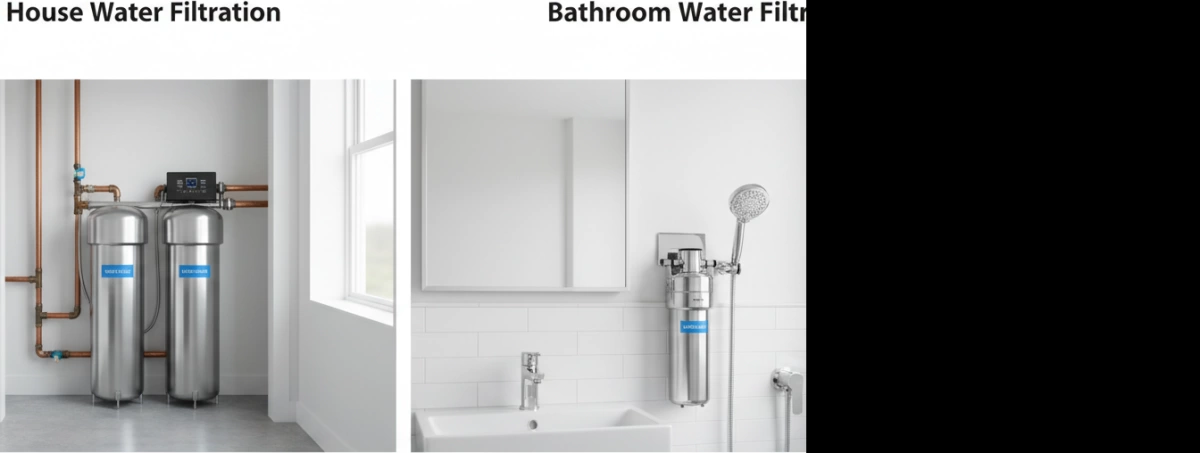
Whole house (point-of-entry) filtration beats a single bath water filter or shower filter when:
- Your city or well water has multiple issues (sediment, chlorine, strange odor, discoloration).
- You want every tap protected – kitchen, laundry, bathroom, even outdoor spigots.
- You’re a homeowner planning to stay put and want long-term plumbing and appliance protection.
- You’re dealing with iron staining, bad taste, or strong chlorine in both drinking and bathing water.
If your water report or lab test shows broad contamination, a whole house filter + bathroom filters is usually the smartest combination.
Stacking solutions: whole house + shower filter + bath filter
The best performance usually comes from stacking filters, not choosing only one:
- Whole house filter – handles bulk sediment, chlorine, and some chemicals before water enters your home.
- Shower filter – tightens up protection right where you inhale steam and rinse skin and hair.
- Bath faucet filter – targets high-flow tub fills so your bath water is dechlorinated and cleaner for kids and sensitive skin.
Think of it like this:
- Whole house = baseline protection
- Shower filter / bath filter = targeted skin, hair, and health protection
If you’re filtering only a bathroom faucet (for washing, brushing, or baby baths), a dedicated bathroom faucet water filter can slot into that stack as well.
Point-of-use vs point-of-entry: pros and cons
Point-of-entry (whole house filters)
- Pros
- Protects every tap, appliance, and pipe
- Great for sediment, chlorine, and overall water clarity
- Set-and-forget with less frequent changes
- Cons
- Higher upfront cost + usually professional installation
- Less targeted for skin/hair unless paired with bathroom filters
- Harder to take with you if you move
Point-of-use (shower filters, bath faucet filters, bath balls)
- Pros
- Low upfront cost, easy DIY install
- Direct impact on skin, hair, and inhalation where you actually bathe
- Perfect for apartments and rentals
- Cons
- Limited to specific fixtures
- Cartridges need more frequent changes
- Doesn’t protect other taps or appliances
Most U.S. families end up with a mix: whole house if they own + point-of-use to boost bathroom performance.
Best combo for renters vs homeowners
Renters (apartments, condos, short-term leases):
- Go bathroom-only:
- Inline or showerhead-style shower filter
- Bath faucet filter or dechlorinating bath option if you bathe kids
- Removable, no-plumber, no-permit solutions
- Focus on:
- Easy install/remove
- Universal compatibility
- Low commitment, strong chlorine and sediment reduction
Homeowners:
- If budget allows:
- Whole house filter for baseline chlorine/sediment
- Add a multi-stage shower filter in the main bathroom
- Add a tub faucet filter in the kids’ bath or soaking tub
- If budget is tight:
- Start with shower and bath filters in the most-used bathroom
- Upgrade to whole house once you’re ready for long-term protection
Bottom line:
- Renters: point-of-use (shower filter + bath filter) is usually enough.
- Homeowners: whole house + bathroom filters gives the best mix of value, comfort, and protection.
Choosing the Right Bath Water Filter vs Shower Filter
Key questions to ask before you buy
Before you decide between a shower water filter vs bath filter, get clear on a few basics:
Have you tested your water?
- City water: usually high in chlorine/chloramine and sometimes VOC byproducts.
- Well water: more likely to have sediment, iron, and metals.
A simple water test (or your local water report) helps you choose the right media and system. For a deeper look at common tap water issues, I recommend reviewing a solid overview of why water filtration is crucial in the home.
How do you actually use your bathroom?
- Mostly showers → prioritize a multi-stage shower filter.
- Mostly baths (kids, soaking) → lean toward a tub faucet filter or strong bath water filter.
- Mix of both → you may eventually need both.
What’s your budget?
- Look at upfront cost + cartridge cost + lifespan.
- Calculate cost per month or cost per gallon, not just sticker price.
Prioritizing skin, hair, or hard water issues
Focus on your main problem first, then layer solutions:
Skin / eczema / itchiness / baby skin
- Priority: chlorine & chloramine removal, plus sediment and some metals.
- Best choice: high-quality shower filter if you mainly shower; bath faucet filter if you give a lot of baths to kids or soak often.
- Look for KDF + activated carbon + vitamin C or similar multi-stage setups.
Hair, colored hair, curls
- Priority: chlorine reduction, heavy metals, and scale that roughens hair.
- A shower head filter or inline shower filter with multi-stage media helps protect color and curl pattern.
Hard water (spots, soap scum, stiff hair)
- Shower filters can reduce some scale and help hair/skin feel better, but they do not fully soften water.
- If water hardness is extreme, you may need a whole-house softener for plumbing + a shower and/or bath filter for targeted chlorine and contaminant reduction.
How to rank features: chlorine removal, flow, media, certifications
When you compare bath water filters vs shower filters, use this quick ranking:
Chlorine / chloramine removal
- Non-negotiable if you care about skin, hair, or kids’ baths.
- Check performance claims and, ideally, independent test data or standards.
Flow rate & pressure
- Shower filters: must maintain comfortable shower pressure.
- Bath filters: must handle high tub flow so you’re not waiting 20+ minutes for a bath.
Filter media type
- KDF – great for hot water, chlorine, some metals.
- Activated carbon – chlorine, some VOCs, odor.
- Vitamin C – strong for chlorine/chloramine in showers.
- Multi-stage systems – best for real-world use in US bathrooms.
Certifications & testing
- Look for NSF/ANSI standards for chlorine, taste/odor, or material safety.
- If a brand can show testing methods similar to those used for a carbon water filter system like the ones we design for high-performance home filtration, that’s a strong sign.
Cartridge lifespan & cost
- Check estimated gallons, months between changes, and price per replacement.
- Short-lived cartridges can quietly become the most expensive part.
When it makes sense to buy both a bath and shower filter
You don’t always need both. But buying both a bath water filter and a shower filter makes sense when:
You shower daily, but also:
- Have a baby or toddler bathing several times a week, or
- You or a partner soak in the tub for skin issues, recovery, or relaxation.
You’re dealing with:
- Sensitive skin / eczema / psoriasis in the family, or
- Serious hair concerns (color-treated, curly, or very dry hair).
You’re health-conscious about:
- Chlorine vapor and byproducts during hot showers, and
- Long soaks in chlorinated bath water for kids or yourself.
In that case, the strategy is:
- Install a multi-stage shower filter on the main shower for daily protection.
- Add a high-flow bath faucet filter (or a strong tub solution) for baths, babies, and skin-soak routines.
That combination gives you full bathroom coverage without jumping straight into a major whole-house renovation.
Positioning Driplife Shower Filters
Core features of Driplife shower filters
Our Driplife shower filters are built for real-world U.S. bathrooms, not lab demos. We position them as high-performance, affordable point-of-use filters that upgrade any standard shower in minutes. Core features include:
- Multi-stage filtration (typically 8–15 stages depending on model)
- KDF media to target chlorine, heavy metals, and scale-causing minerals
- Vitamin C filtration to neutralize chlorine and help protect skin and hair
- Activated carbon and sediment layers to reduce odors, rust, and fine particles
- High-flow internal design to keep pressure strong while maximizing contact time
Because we’re a manufacturing-focused brand, we engineer our cartridges with the same mindset we use for advanced systems like our smart TDS-driven filtration solutions: stable performance, consistent output, and predictable replacement cycles.
Installation and compatibility in US-style bathrooms
Driplife shower filters are designed around standard U.S. plumbing:
- 1/2″ NPT threads, compatible with most U.S. shower arms and shower heads
- Simple inline installation between the shower arm and your existing shower head
- Works with fixed, handheld, and rain-style shower heads (as long as they use standard threads)
- Tool-free or basic wrench-only install – no plumber needed in most homes
If you can unscrew your shower head, you can install a Driplife shower filter in a few minutes.
Performance focus: chlorine, heavy metals, sediment
We position Driplife shower filters primarily as a chlorine and contaminant reduction solution for daily showers. The filter media is optimized to:
- Reduce free chlorine and chloramine exposure in hot, steamy showers
- Help capture heavy metals like lead and some other metal ions
- Trap sediment, rust, and visible particles that can irritate skin and clog shower heads
- Cut down on bad odors and some VOCs that make tap water smell “chemically”
The goal is simple: cleaner, gentler shower water without wrecking your water pressure.
Who Driplife shower filters are best for
Driplife shower filters are a strong fit if you:
- Live in a U.S. city with chlorinated or chloraminated municipal water
- Struggle with dry, itchy skin, eczema, or sensitive skin
- Have color-treated hair, curls, or textured hair that reacts badly to chlorine
- Want a fast, renter-friendly upgrade with no permanent plumbing changes
- Need a cost-effective alternative to whole-house filtration in an apartment or condo
If your main pain points are chlorine, harsh shower water, and skin/hair irritation, a Driplife shower filter is usually the smartest first move before investing in bigger, whole-home systems.
Positioning Driplife Bath Water Filters
When I position Driplife bath water filters, I treat them as a dedicated solution for people who actually use the tub a lot—families with kids, sensitive skin users, and anyone who wants bath-level protection, not just a filtered shower.
Driplife Bath Faucet Filters & Tub Compatibility
Driplife bath faucet filters are built to connect directly to standard US-style tub spouts using adapters, so you can:
- Attach at the tub faucet and fill the whole bath with filtered water
- Keep your existing tub spout and fixtures
- Use them on straight-threaded tub faucets; specialty or waterfall spouts may need custom adapters or won’t be compatible
This positions Driplife as a practical tub faucet filter option, not a gimmicky bath gadget.
High-Flow Bath Filtration & Dechlorination
Baths use a lot of water fast, so the filter has to handle high flow without killing fill time. Driplife bath filters are designed to:
- Prioritize chlorine and chloramine reduction for full-tub dechlorination
- Support high-flow bath filtration so you’re not waiting forever to fill the tub
- Capture sediment and particles that can irritate skin or cloud the water
The positioning here is simple: real filtration performance at bath flow rates, not just a slow trickle meant for a sink.
Support for Families, Babies & Sensitive Skin
For US families, especially with babies or eczema-prone kids, the tub is often where water quality matters most. That’s where Driplife bath water filters stand out:
- Great fit as a bath water filter for babies and infants
- Helps reduce dryness, itchiness, and flare-ups linked to chlorine and tap water impurities
- Ideal for sensitive skin bath water solutions, especially when paired with a gentle body wash
It’s a family-first positioning: make bath time safer and more comfortable without changing your whole plumbing setup.
Covering Both Shower & Bath Routines with Driplife
I don’t position bath filters as a replacement for shower filters—they’re complementary. In a typical US bathroom setup, the best combo is:
- Driplife shower filter (KDF, vitamin C, multi-stage media) on the shower arm for daily showers
- Driplife bath faucet filter on the tub spout for dedicated bath protection
This way, you get full bathroom coverage: filtered shower vs filtered bath isn’t an either/or decision. It’s a point-of-use strategy that can also stack on top of whole-house filtration or multistage systems, similar to how increasing demand for multistage filtration technology in showers is shaping the market.
Real-world setup examples and recommendations
Sample setup for a small apartment with only a shower
In a small US apartment with a standard shower arm, I’d keep it simple and high-impact:
- Inline multi-stage shower filter on the existing shower arm (KDF + activated carbon + vitamin C if possible)
- Keep your current showerhead if you like the spray pattern
- Choose a compact, lightweight housing so it doesn’t stress the plumbing
- Aim for high-flow design (2.0–2.5 GPM) so you don’t kill your water pressure
This kind of shower head filter gives strong chlorine and sediment reduction with quick, clean installation—no tools beyond a wrench and plumber’s tape in most cases. If you’re evaluating similar point-of-use devices for your kitchen too, the same logic applies as when you’d choose the right tap-mounted water filter for your home: focus on thread compatibility, media type, and flow.
Sample setup for a family home with tub and shower
For a family bathroom with both a tub and shower, I’d cover daily showers + kids’ baths separately:
Shower:
- Install a multi-stage KDF + carbon + vitamin C shower filter for adults and older kids
- Pick a model with replaceable cartridges and clear lifespan specs (in gallons or months)
Tub:
- Add a bath faucet filter on the tub spout for baby baths and sensitive-skin soaks
- Make sure you have the right tub faucet adapter and enough clearance under the spout
- Skip relying only on a dechlorinating bath ball; use it as a backup, not your main filter
This combo gives strong chlorine reduction in both shower and bath, which matters a lot for babies, toddlers, and anyone with eczema or dry skin.
Sample setup for hard water plus skin sensitivity
If your city water is hard and you’ve got itchy, reactive skin, I’d stack solutions:
Step 1 – Deal with hardness (if possible):
- If you own the home, consider a whole house water softener or combined softener/filter
- If you rent, go with a hard water shower filter that targets scale and metals (KDF + media for limescale control)
Step 2 – Boost skin and hair protection:
- Install a vitamin C + KDF shower filter to knock down chlorine and chloramine
- For baths, use a high-flow bath faucet filter specifically rated for chlorine/chloramine
This setup is ideal if you notice white crust on fixtures, dull hair, and tight, itchy skin. Remember: soft water ≠ filtered water—you want both when you can.
How to upgrade your bathroom filtration over time
If you’re on a budget, you don’t have to buy everything at once. Here’s how I’d phase it in:
Start with the biggest win
- Only shower? → Get a good inline shower filter first
- Bathe kids daily? → Start with a bath water filter for babies/sensitive skin
Add coverage as you go
- Upgrade to a better multi-stage shower head filter when it’s time to replace
- Add a tub faucet filter once you’ve confirmed faucet compatibility and adapters
Long-term upgrade
- For homeowners, move up to a whole house or point-of-entry system once you know your water’s issues
- Then keep simple point-of-use bathroom filters (shower + tub) as your “polish layer” for skin and hair
Take it step by step: start at the shower, add the bath, then think whole home.
FAQs about bath water filters vs shower filters
Can I use a shower filter to fill my bathtub?
Yes, but with trade-offs.
- If your tub uses the same shower arm (with a diverter), you can run water through the shower filter into a bucket or use a handheld shower to fill the tub.
- Pros: You get the same chlorine and sediment reduction as your filtered shower.
- Cons: It’s slower, and you may not get full coverage for a deep bath because the water cools while filling. A dedicated bath faucet filter is usually better for full tubs and kids’ baths.
Do bath filters remove hard water minerals?
Most bath water filters and shower filters do not truly soften water.
- They usually target chlorine, chloramine, heavy metals, and sediments, not calcium and magnesium.
- You might notice water “feels” better on skin and hair, but that’s from contaminant reduction, not full softening.
- If scale on fixtures, spots on glass, and stiff laundry are your main issues, you need a water softener, not just a point-of-use bath or shower filter.
How long do shower and bath filters usually last?
It depends on water quality and usage, but typical ranges are:
- Shower filters: about 3–6 months or 8,000–12,000 gallons
- Bath faucet filters: often 2–4 months if you’re running full tubs regularly
- Dechlorinating bath balls: usually 3–6 months before the media is spent
Always follow the cartridge’s gallon rating, not just “months,” and watch for signs like reduced flow or chlorine smell returning. For a deeper breakdown of practical filter lifespans and media types, I walk through it in my guide to the best shower head water filters.
Do I still need a whole house filter if I install these?
Not always—but it can be a smart upgrade.
- Point-of-use filters (bath and shower) focus on skin, hair, and inhalation exposure right where you use water.
- A whole house filter treats all incoming water (showers, sinks, laundry), which helps with overall taste, odor, and plumbing protection.
- For most U.S. homes:
- Renters: start with shower/bath filters.
- Homeowners: consider whole house + shower filter if you want full coverage plus extra protection at the shower or tub.
How do I know my bath or shower filter is actually working?
Use simple checks:
- Smell test: less pool-like chlorine smell in hot showers or baths.
- Skin/hair test: reduced dryness, itch, or irritation after a couple of weeks.
- Test strips: inexpensive chlorine or chloramine strips can confirm reduction at the showerhead or tub spout.
- Time-based: change cartridges on schedule; don’t push them far past their rated gallons. If your shower head filter suddenly feels weak or odors return, it’s time to replace.
Is a dechlorinating bath ball enough on its own?
Usually not, especially for U.S. city water.
- Bath balls can lower chlorine in standing bath water, but:
- They don’t handle sediment or most heavy metals.
- They may struggle with chloramine, which many U.S. utilities use instead of plain chlorine.
- Performance drops as media wears out.
For babies, sensitive skin, eczema, or color-treated hair, I treat a dechlorinating bath ball as a backup or add-on—not the main solution. A proper bath faucet filter or multi-stage shower filter gives much more reliable protection.