














Market Drivers 2026–2030: Why Hot/Cold/Ice is the New Standard
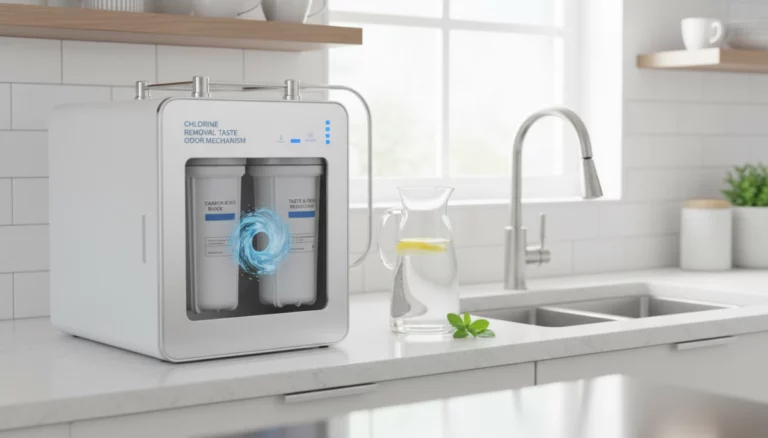
Are you sitting on aging water filtration inventory that’s slowly eating away at your profit margins? I’ve watched distributors struggle to move traditional, single-function under-sink units while consumer demand rapidly pivots. When we examine the 2026–2030 Outlook: How Distributors Can Plan Assortment for Tankless RO With Hot/Cold/Ice, the market data is crystal clear: basic filtration is out, and multi-functional hydration stations are the new baseline.
Buyers today don’t just want clean water; they demand instant convenience. As the market shifts, integrating on-demand boiling water, chilled water, and automated ice making into a single RO unit has evolved from a luxury novelty to a core consumer expectation. If your B2B water filtration inventory strategy doesn’t prioritize these all-in-one systems, your catalog risks immediate obsolescence.
The ‘Countertop Real Estate’ War
Let’s face it: whether it’s an urban apartment or a corporate breakroom, space is shrinking. End-users are fighting a daily war for countertop real estate, and they are ruthlessly cutting bulky, single-purpose appliances from their lives. Why would a homeowner or facility manager keep a separate electric kettle, a standalone ice maker, a filtered pitcher, and a clunky water cooler when a single countertop water filter with ice maker can do it all?
To win this market, your assortment planning must focus on consolidation. Partnering with a strategic enabler and forward-thinking OEM like Driplife allows you to offer high-margin hero products that replace three or four separate devices. We engineer sleek, high-flow tankless RO 600 GPD systems that don’t just save space—they redefine it. Offering an instant hot and cold RO dispenser with an integrated ice maker gives your retail and commercial clients a premium upgrade that easily justifies a higher price point and dramatically boosts your bottom line.
Health & Safety: The PFAS & Microplastics Factor
Are your current filtration SKUs capable of handling tomorrow’s contamination crises? Consumers and corporate buyers alike are terrified of “forever chemicals.” The explosive awareness of PFAS, microplastics, and heavy metal contamination is single-handedly accelerating the replacement cycle for legacy water filters. Standard carbon blocks simply don’t cut it anymore.
When forecasting future demand, distributors must stock systems equipped with advanced membrane fouling resistance technology and certified heavy-metal reduction. Tankless reverse osmosis is the only viable solution for absolute peace of mind.
Key health and safety drivers to pitch to your B2B buyers:
- Absolute Defense: 0.0001-micron RO membranes physically strip microplastics, PFAS, and trace pharmaceuticals from the water supply.
- Zero Stagnation: Tankless designs completely eliminate the bacterial breeding grounds commonly found in traditional RO storage tanks.
- Smart Monitoring: Modern units feature real-time TDS (Total Dissolved Solids) displays, providing users with visual proof of their water’s purity.
Energy Efficiency in Modern Tankless Systems
Old-school water coolers with massive compressor tanks run 24/7, bleeding electricity and driving up utility bills. Today’s commercial grade bottleless water coolers and premium residential RO systems must strictly align with aggressive eco-friendly standards. Modern tankless technology relies on instantaneous heating elements and advanced thermocooling, ensuring that energy is drawn only in the exact moment water is dispensed.
As a B2B distributor, offering a 4-in-1 water dispenser built on a sustainable water filtration supply chain gives you a massive competitive edge. End-users are actively looking to reduce their carbon footprint and their energy costs. Here is how modern tankless systems stack up against legacy tech, giving you a clear ROI narrative for your buyers:
| Feature | Legacy Tank RO & Coolers | Modern 4-in-1 Tankless RO |
|---|---|---|
| Energy Consumption | High (Continuous heating/cooling cycles) | Low (On-demand instant heating technology) |
| Water Waste Ratio | Often 1:3 or worse (High waste) | Up to 2:1 or 3:1 Pure-to-Waste (High efficiency) |
| Space Requirement | Massive (Eats up entire under-sink or floor space) | Minimal (Compact, plug-and-play countertop footprint) |
| Maintenance Profile | Labor-intensive, requires frequent tank sanitization | Quick-change, modular twist-and-pull filter cartridges |
Strategic Assortment Planning: Building the ‘Golden SKU’ Portfolio
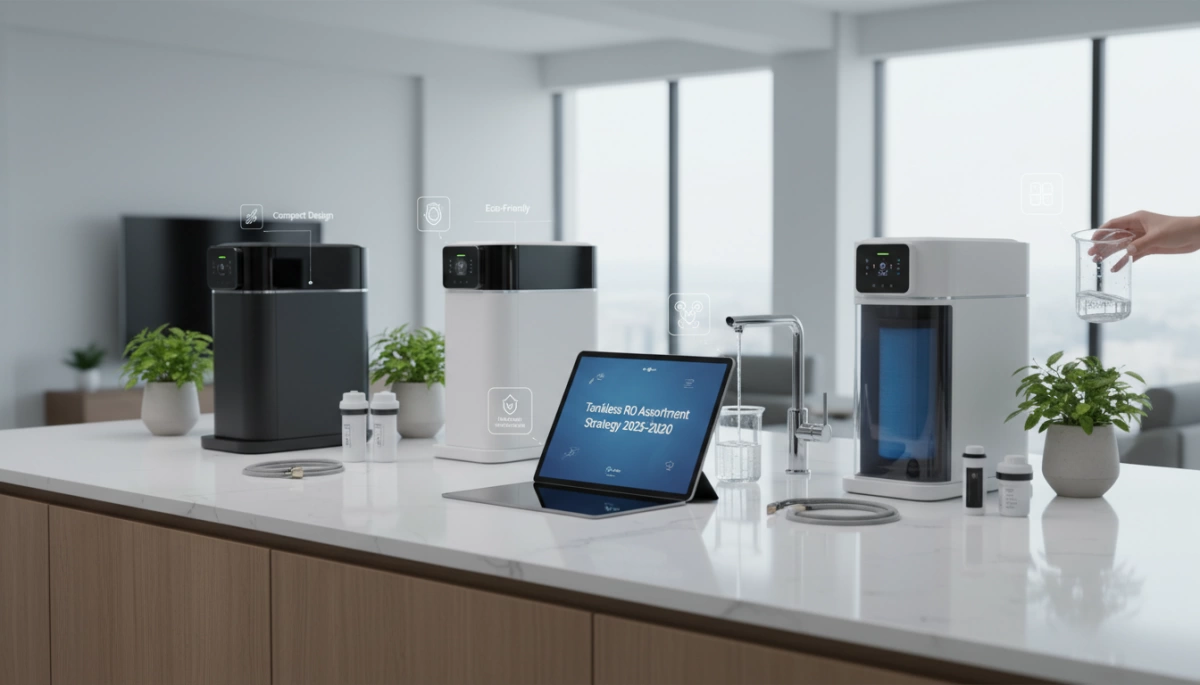
To secure a competitive edge through 2030, distributors cannot rely on a single product type. A robust distributor portfolio strategy for tankless RO requires a tiered approach that addresses different price points, installation requirements, and consumer lifestyle needs. We structure this as a “Golden SKU” portfolio, balancing high-volume movers with high-margin flagship units.
Tier 1: Mass Market Entry (Compact Tankless RO)
This tier represents your volume drivers—the bread and butter of your inventory. The modern consumer demands high-efficiency filtration without the bulk of traditional tanks. For this segment, we prioritize high-capacity under sink water filters that offer significant flow rates (up to 5.2 L/min) and a 2,000-gallon capacity. These units are designed for the “hidden” market—homeowners who want powerful filtration out of sight. Specifically, stocking a reliable 600-1200GPD under sink RO system allows you to capture the segment of buyers focused purely on water purity and space-saving design. These systems feature advanced membrane technology that reduces fouling, ensuring longevity and reducing warranty claims for the distributor.
Tier 2: The 4-in-1 Countertop System (High-Margin Hero)
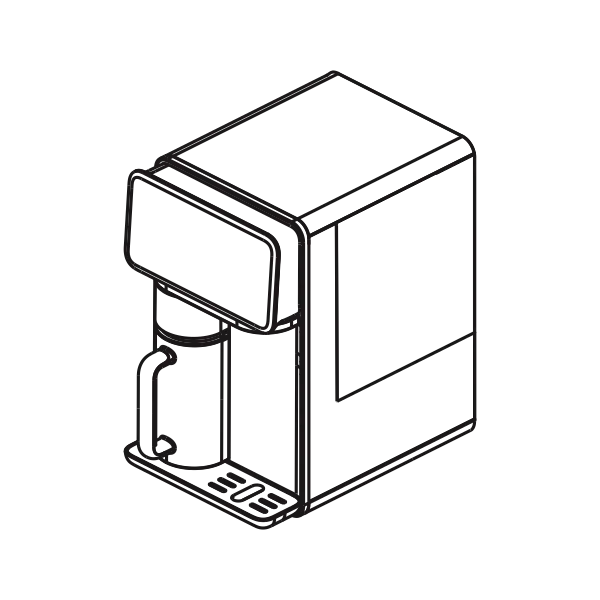
This is the centerpiece of assortment planning for countertop RO 2026–2030. As kitchen habits evolve, the demand for multifunctional appliances is skyrocketing. The “High-Margin Hero” in your catalog should be a 150 GPD Countertop Water Filter that goes beyond simple purification. We are talking about a 4-in-1 powerhouse that delivers Filtration, Cold Water, Hot Water, and Ice Making in a single footprint.
- Why it wins: It consolidates the kettle, the pitcher, and the ice tray into one sleek unit.
- The Distributor Advantage: These units command a higher retail price point and position your brand as an innovator. By offering SKU planning for hot cold ice RO systems, you differentiate yourself from competitors selling basic, single-function filters.
Tier 3: Commercial/Office Crossover Units
The final tier targets the “prosumer” and light commercial sector. This includes small offices, breakrooms, and luxury residential wet bars where demand is higher. Here, the assortment should expand to include robust under-sink distribution systems and soda machines capable of dispensing sparkling, cold, and hot water instantly. For public-facing installations, integrating durable solutions like a water fountain filter ensures you can service commercial contracts alongside residential sales. This tier requires equipment built with heavy-duty materials and higher service life expectancies to handle increased daily traffic.
Technical Vetting: Questions for Your OEM Partner
When locking down your assortment planning for countertop RO 2026–2030, you cannot afford to partner with just anyone. To dominate the US market with multi-functional units, you need a reliable OEM tankless reverse osmosis manufacturer who can deliver consistent quality at scale. I always tell distributors to look past the initial spec sheet and aggressively vet the factory’s actual capabilities.
Here is exactly what you must demand from your supplier.
Filtration Integrity & Membrane Fouling
US tap water is tough on equipment, and high TDS (Total Dissolved Solids) levels will quickly destroy weak filters. You must ask your supplier directly about their membrane fouling resistance technology. If the system is constantly clogging, your customer return rates will skyrocket. Make sure they use robust pre-filtration, like a high-grade carbon water filter system, to absorb chlorine and protect the main RO membrane from premature degradation.
Scalability & Supply Chain Security
A profitable B2B water filtration inventory strategy requires a rock-solid supply chain. If retail demand suddenly spikes for your hot/cold/ice units, can the factory actually keep up?
- Lead Times: Lock down guaranteed manufacturing and delivery windows.
- Component Sourcing: Ensure they aren’t relying on single-source suppliers for critical parts like cooling compressors or ice-making motors.
- Predictable Flow: A sustainable water filtration supply chain keeps freight costs manageable and ensures your stateside warehouses never sit empty.
Smart Water Purification R&D
By the end of the decade, a basic push-button water dispenser simply won’t cut it. Your ODM water purification solutions provider must have serious R&D muscle. We are looking at necessary features like app integration, real-time water quality monitoring, and automated filter replacement alerts. If your factory isn’t actively investing in smart water purification trends 2026, they will drag your entire product portfolio down.
The Distributor Vetting Checklist
Use this quick table when interviewing a potential 4-in-1 water dispenser supplier to ensure their capabilities align with your long-term goals:
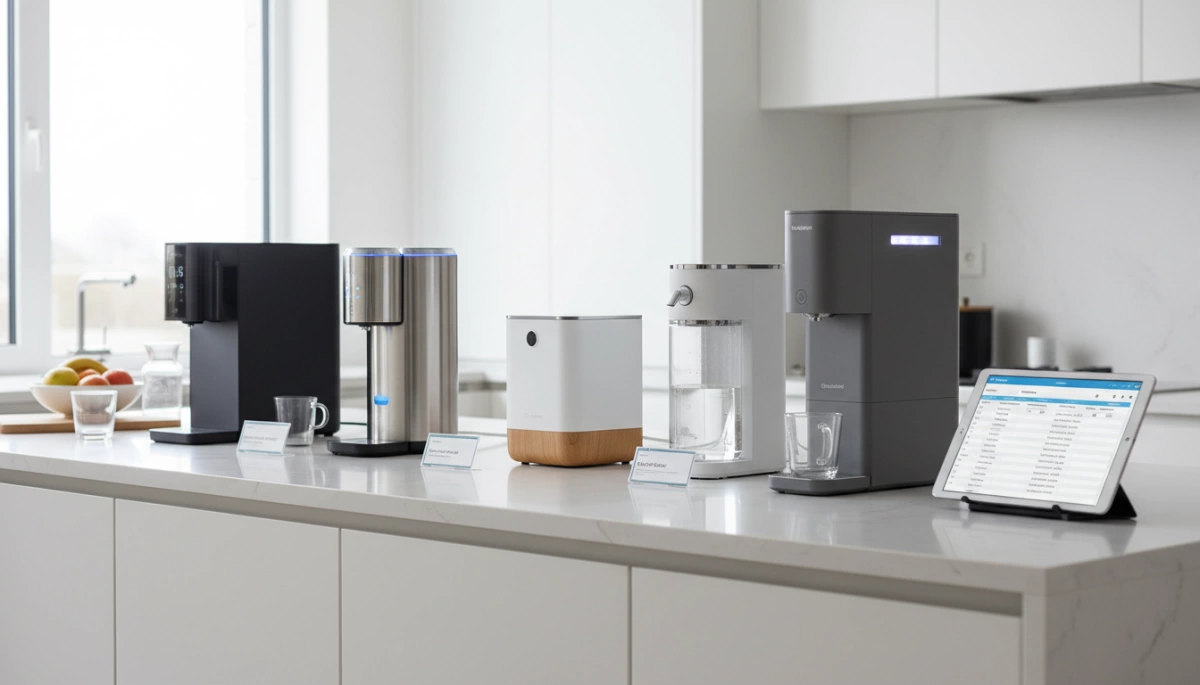
| Vetting Category | Key Question for the OEM | Target Benchmark |
|---|---|---|
| Membrane Tech | What is the tested RO lifespan in hard, high-TDS water? | 12–24 months minimum without significant flow drop. |
| Production Scaling | Can you scale manufacturing by 5x within a 90-day window? | Yes, with verified backup assembly lines and component stockpiles. |
| R&D Pipeline | How often do you release new firmware for smart systems? | Bi-annual updates for IoT-enabled models to patch bugs and improve UI. |
A successful distributor portfolio strategy for tankless RO relies entirely on the strength of your manufacturing partner. Ask the hard questions now so you aren’t dealing with container loads of defective units later.
The 2026-2030 Roadmap: A Phased Approach for Distributors
If you want to capture the countertop RO market over the next five years, winging it simply will not work. I constantly remind my distribution partners that a clear channel roadmap for water purifier distributors is the difference between leading the market and sitting on dead stock. We are breaking this down into three actionable phases to secure your assortment planning for countertop RO from 2026 to 2030.
Phase 1 (2026): Inventory Audit & Pilot Testing
Before scaling up, we need to clean house. 2026 is all about assessing your current B2B water filtration inventory strategy and testing the waters with the new standard.
- Clear the Clutter: Phase out bulky, traditional under-sink tanks. U.S. consumers want their cabinet space back.
- Audit Your Catalog: Review your current lineup. Grasping the top desktop water dispensers features and benefits helps you identify exactly where your current portfolio falls short.
- Run a Pilot Program: Bring in a small batch of 4-in-1 units from a reliable OEM tankless reverse osmosis manufacturer. Test these multi-functional hydration stations with your top-tier retail and commercial clients to gather immediate local feedback.
Phase 2 (2026-2028): Establishing the Ecosystem
Once the pilot proves successful, it is time to build out a robust, dedicated product line. This is the phase where your SKU planning for hot cold ice RO becomes your primary revenue driver.
- Lock in the Supply Chain: Partner with a capable ODM water purification solutions provider to guarantee steady, scalable inventory.
- Expand the Lineup: Introduce tiered pricing models. Secure high-flow tankless RO 600 GPD models for large suburban families, alongside compact countertop water filters with ice makers for urban apartments.
- Market Positioning: Shift your marketing to focus heavily on the convenience and footprint-saving nature of instant hot and cold RO dispensers.
Phase 3 (2029-2030): Dominance via Customization
By the end of the decade, standard features will just be the baseline. The future demand forecasting for countertop RO points directly toward personalization and smart tech integration.
- Private Labeling: Work directly with a private label water filter manufacturer to build your own exclusive brand identity. Own the market instead of just selling someone else’s name.
- Smart Integration: Align with smart water purification trends projected for 2030. Think IoT-enabled units that track filter life, auto-adjust ice output based on family habits, and sync seamlessly with smart home ecosystems.
- Niche Expansion: Roll out targeted commercial grade bottleless water coolers for office breakrooms, utilizing the exact same proven RO chassis.
A solid, long term distributor strategy for RO dispensers demands proactive execution. Staggering your approach through this roadmap keeps your capital fluid and ensures your inventory stays perfectly aligned with shifting U.S. consumer demands.
FAQ: Planning Your Water Filtration Inventory
Is the demand for ice-making water filters actually growing?
Absolutely. Here in the US, we love our ice. A countertop water filter with an ice maker is no longer just a luxury; it’s becoming the standard. People want clean, chilled water and crisp ice without sacrificing counter space to three different appliances. The consumer shift toward a single multi-functional hydration station is driving massive retail demand.
How does tankless RO technology improve profit margins?
It all comes down to cutting logistics costs while raising the retail price. Traditional systems are bulky. Tankless units eliminate the storage tank, which gives you:
- Compact packaging: Fit more units on a single pallet.
- Cheaper freight: Lower shipping costs per unit across the country.
- Premium pricing: A high-flow tankless RO 600 GPD system easily commands top dollar.
A smart B2B water filtration inventory strategy leverages these reduced overhead costs and higher selling prices to significantly boost your bottom line.
What are the lead times for OEM 4-in-1 systems?
Lead times depend heavily on your level of customization. When partnering with top water filter manufacturers driving industry innovations, standard bulk orders usually leave the facility in 30 to 45 days. However, if you are requesting custom tooling, specific UI changes, or a ground-up ODM water purification solution, you should factor in 60 to 90 days for that initial production run.
Can we private label these multi-functional units?
Yes, 100%. Working closely with an experienced OEM tankless reverse osmosis manufacturer allows you to easily apply your own branding to these multi-functional units. Private labeling your instant hot and cold RO dispenser inventory is the fastest way to build local brand equity, lock out competitors, and fully control your market pricing.