















The “Substitution Rule”: Can Bottle Fillers Replace Fountains?
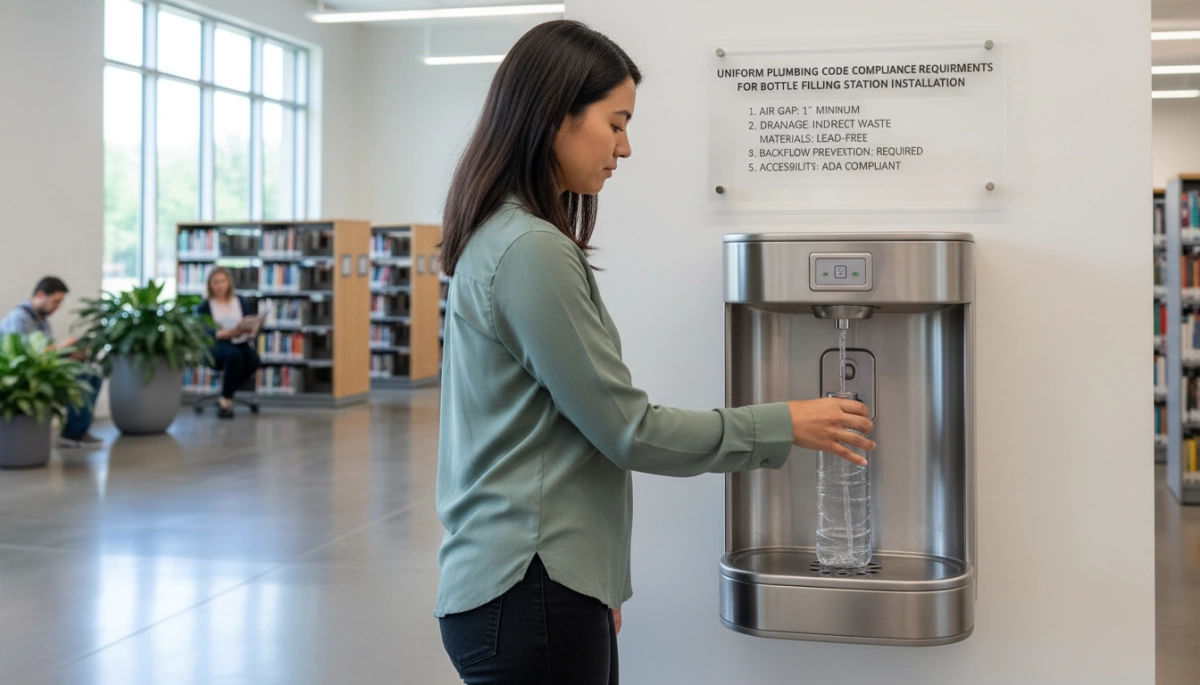
When planning a facility upgrade or new build, one of the most common questions I hear from contractors and facility managers is whether they can simply rip out traditional drinking fountains and replace them entirely with modern bottle fillers. While it is a popular upgrade, meeting the Uniform Plumbing Code Compliance Requirements for Bottle Filling Station Installation means we have to play by the substitution rules.
Defining UPC Section 415.2 and The 50% Allowance
You cannot completely eliminate traditional water fountains. Under UPC Section 415.2 (Drinking Fountain Substitution), the code provides specific allowances based on your building’s overall occupant load plumbing fixture requirements.
Here is exactly how the substitution rule works:
- The 50% Cap: You are permitted to substitute a maximum of 50% of the required drinking fountains with dedicated, standalone bottle filling stations.
- The Minimum Requirement: If your local plumbing code mandates two drinking fountains for your floor plan, at least one must remain a traditional fountain.
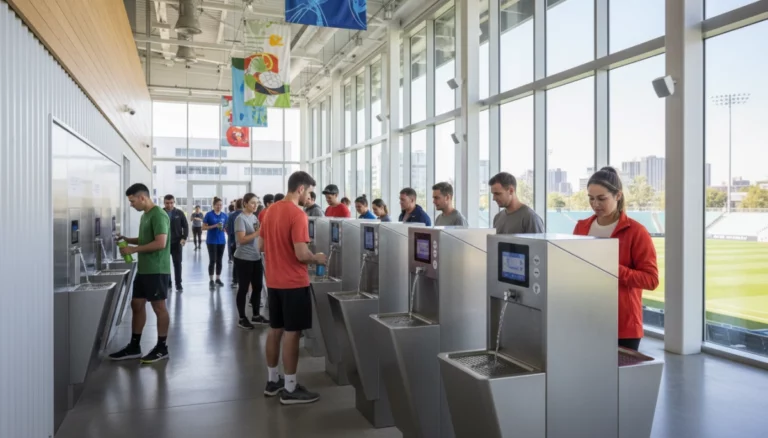
- The Smart Workaround: Installing a combination unit—where a bottle filler is mounted directly above or alongside a fountain bowl—satisfies the drinking fountain requirement while delivering the commercial hydration station specs your tenants actually want.
The “High-Low” Requirement
Even when applying the 50% substitution rule, you cannot ignore the physical layout of the remaining fountains. Any installation must meet the high-low drinking fountain combination standard to ensure equal access for all occupants.
| User Group | Installation Standard |
|---|---|
| Wheelchair Users | At least one “low” fountain must be installed, ensuring proper wheelchair accessible clear floor space and knee clearance. |
| Standing Adults | At least one “high” fountain must be provided for individuals who have difficulty bending. |
Whether you are mapping out a new plumbing distribution system or simply attaching a retrofit bottle filler kit to an existing dual-fountain setup, this high-low configuration is strictly enforced. If you opt to swap out a fountain for a dedicated bottle filler under the 50% rule, your remaining fixtures must still satisfy this dual-height accessibility mandate to pass your final plumbing inspection.
Critical Installation Specifications & Clearances
Getting the hardware on the wall is only half the job. To fully meet the Uniform Plumbing Code Compliance Requirements for Bottle Filling Station Installation, we have to nail the exact location specs, drainage setups, and system pressures.
UPC 415.0 Location Restrictions
You can’t install a commercial hydration station just anywhere. UPC Section 415.0 strictly prohibits placing drinking water fixtures inside restrooms or toilet facilities due to severe contamination risks.
When planning the layout, alcove dimensions are critical. If you are recessing the unit, the alcove must be wide enough so users do not block the main hallway traffic. Adhering to these strict positioning rules is the first step in securing your plumbing code approval bottle filler installation.
Drainage & P-Trap Drainage Requirements
When the local inspector reviews your plumbing permit public bottle filling station project, the waste lines get heavily scrutinized.
- Waste Connections: Many local codes require an indirect waste connection rather than a direct tie-in to the sewer. This air gap prevents hazardous sewer gases or backups from contaminating the drinking nozzle.
- Traps: Standard P-trap drainage requirements apply to all units. The trap must be installed close to the fixture and remain easily accessible for routine maintenance.
- Water Supply: You are required to connect to an approved potable water distribution system. Since municipal lines often carry heavy chemical disinfectants that degrade internal plumbing components over time, installing a dedicated chlorine removal filter at the main supply line keeps the system running cleanly and ensures the water actually tastes good.
Flow Rates & Pressure Standards
To hit the UPC public drinking fountain compliance spec, the building’s water supply must provide adequate and consistent pressure. A sluggish bottle filler creates long lines, while over-pressurized lines cause splashing and equipment damage.
| Specification Category | Standard UPC Compliance Requirement |
|---|---|
| Operating Pressure | 20 PSI (Minimum) to 105 PSI (Maximum) |
| Flow Rate | 1.1 to 1.5 GPM for efficient bottle filling |
| Waste Line Size | Minimum 1-1/4 inch O.D. |
| Protrusion Limits | Must not project unsafely into hallway circulation paths |
We always verify that the supply lines can handle these flow rates without causing pressure drops in the surrounding building plumbing. Consistent pressure ensures that touchless sensor activations shut off cleanly without causing a water hammer.
ADA & Accessibility Overlap (The “Invisible” Plumbing Code)
While the Uniform Plumbing Code dictates the “what” and “where” of water delivery, the Americans with Disabilities Act (ADA) governs the “how” of user interaction. Compliance isn’t just about plumbing connections; it’s about ensuring your bottle filling station installation is usable by everyone. Ignoring these physical accessibility standards can lead to inspection failures just as quickly as a leaking pipe.
Reach Ranges for Operable Parts
For a hydration station to be compliant, the activation mechanism—whether it’s a push button or a motion sensor—must be within accessible reach ranges.
- Height Limits: Operable parts must be no higher than 48 inches (1220 mm) above the finished floor for a forward or side reach.
- Operation: Controls must be operable with one hand and require no tight grasping, pinching, or twisting of the wrist. The force required to activate operable parts cannot exceed 5 pounds (22.2 N).
- Touchless Advantage: Many modern commercial units utilize touchless sensor activation, which inherently solves the “force” requirement, provided the sensor is positioned within the correct height zone.
Clear Floor Space for Wheelchair Access
Installation planning must account for the physical space required for a wheelchair user to approach the unit.
- Dimensions: A clear floor or ground space of at least 30 inches by 48 inches (760 mm by 1220 mm) must be provided in front of the unit.
- Approach: This space allows for either a forward or parallel approach, ensuring users can position themselves correctly to use the bottle filler without obstruction.
Protrusion Limits in Circulation Paths
When installing wall-mounted units in corridors or hallways, safety becomes a critical factor.
- The 4-Inch Rule: Objects projecting from walls with their leading edges between 27 inches and 80 inches (685 mm and 2030 mm) above the finished floor cannot protrude more than 4 inches (100 mm) into the circulation path.
- Recessed Installation: To meet this strict limit, many facilities opt for recessed installation kits or semi-recessed designs that keep the unit flush with the wall, maintaining a safe, barrier-free corridor.
Knee & Toe Clearance for Combo Units
If your installation includes a “high-low” drinking fountain combination alongside the bottle filler, specific clearances are mandatory for the lower unit.
- Knee Clearance: There must be at least 27 inches (685 mm) of vertical clearance from the floor to the bottom of the apron for knee space.
- Depth: The knee clearance must extend at least 8 inches (205 mm) deep under the unit at the 27-inch height.
- Toe Clearance: Additional space is required for toes, extending at least 17 inches (430 mm) deep from the front edge of the unit.
Integrating these physical standards with robust plumbing performance ensures a truly compliant installation. For large-scale projects, utilizing large-diameter tubing for high-flow RO systems can ensure that water delivery remains efficient even when meeting these complex spatial constraints.
Filtration & Material Safety in Bottle Filling Station Installation
When we map out Uniform Plumbing Code compliance requirements for bottle filling station installation, water quality is non-negotiable. Tying a commercial hydration station into a building’s potable water distribution system means the unit must pass strict national health and safety codes before anyone takes a sip.
Here are the critical filtration and material standards we strictly follow to ensure total compliance:
- Lead-Free Compliance (NSF 372): Every internal component touching the water supply must be certified lead-free. We guarantee all wetted surfaces in our lead-free plumbing fixtures meet NSF 372 standards to ensure absolute public safety.
- Water Quality Standards (NSF 42/53): It is not enough to just dispense water; it must be thoroughly filtered. Much like evaluating if countertop water filters are effective for residential use, commercial bottle fillers must rely on NSF 42 (chlorine, taste, and odor reduction) and NSF 53 (lead and cyst reduction) certified filtration to handle heavy public demand safely.
- NSF/ANSI 61 Compliance: This vital standard ensures that none of the drinking water system components leach toxic chemicals, VOCs, or heavy metals into the drinking water.
- Membrane Fouling Resistance Technology: To exceed standard health codes and minimize maintenance downtime, we engineer our filtration systems with media synergy. This advanced membrane technology actively resists fouling and bio-film buildup, ensuring high-capacity filtration remains effective and safe even in high-traffic facilities.
Sourcing Compliant Units: The OEM/ODM Advantage
Why Manufacturing Matters for Factory-Level Compliance
Compliance with the Uniform Plumbing Code (UPC) doesn’t start at the installation site; it begins on the production line. As a manufacturer with over 15 years of experience in the filtration industry, I can tell you that retrofitting a non-compliant unit is a nightmare compared to sourcing one engineered for the job. We operate a massive 60,000 ㎡ facility where every design decision—from the housing materials to the internal flow paths—is made with global standards in mind. When you source directly from a dedicated OEM/ODM partner, you ensure the hardware is built to meet rigorous plumbing code approval requirements before it ever ships.
Quality Assurance, R&D Testing, and Capacity
Reliability is the backbone of commercial plumbing. Our state-of-the-art R&D laboratory is where we validate the durability and safety of our systems. We don’t just guess; we test.
- Scale: We maintain an annual production capacity of 500,000 units, ensuring we can support large-scale commercial rollouts.
- Rigorous QC: Every unit undergoes strict quality control to prevent leaks, pressure failures, or material degradation that could violate code.
- Advanced Tech: We integrate proprietary solutions like Membrane Fouling Resistance Technology to ensure long-term performance in public settings.
Custom Solutions for Specific Local Plumbing Codes
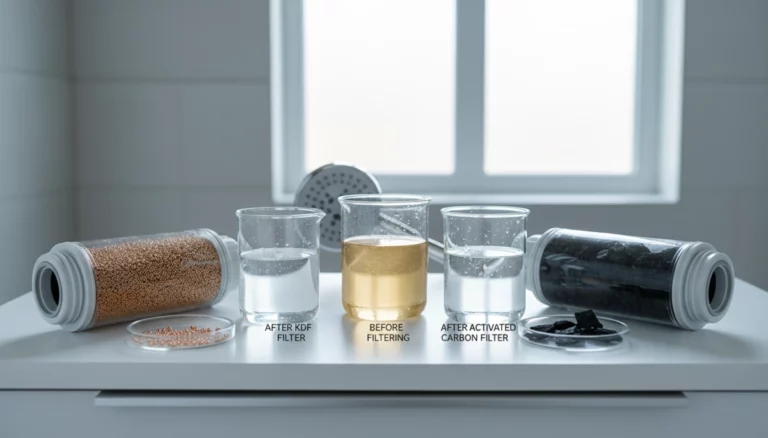
Local amendments to the plumbing code can vary significantly across different states and municipalities. Off-the-shelf products often fail to address niche requirements regarding backflow prevention or specific sanitation mandates. This is where our OEM/ODM capability shines. We can customize internal filtration configurations, such as incorporating UV or secondary sterilization integration engineering, to meet specific health and safety codes. Whether you need specific flow rate adjustments or specialized filtration media like KDF and Carbon synergy, we tailor the manufacturing process to ensure your bottle filling station installation passes inspection the first time.
Frequently Asked Questions (FAQs)
When navigating Uniform Plumbing Code Compliance Requirements for Bottle Filling Station Installation, we see the same questions pop up from facility managers and commercial contractors across the country. Here are the straight answers to ensure you secure plumbing authority approval for your drinking station projects without costly delays.
Are bottle filling stations explicitly required by the Uniform Plumbing Code?
Not always explicitly by the base UPC. The code dictates occupant load plumbing fixture requirements to ensure adequate access to drinking water. However, while the base code might just say “drinking fountains,” many states and municipalities have passed local amendments that specifically mandate bottle fillers in new construction or major renovations. Even if not strictly required in your zip code, they are the industry standard for modern facilities.
Can a bottle filling station completely replace all traditional drinking fountains?
No, it cannot. Under UPC Section 415.2 (Drinking Fountain Substitution), you are capped by the 50% allowance rule. You can substitute up to half of the legally required standard fountains with dedicated bottle fillers. The remaining units must stay as standard fountains—usually configured as a high-low drinking fountain combination—to ensure strict compliance with ADA Standards for Accessible Design.
Can I install a commercial hydration station in a restroom?
Absolutely not. UPC regulations strictly prohibit installing any drinking water fixtures inside public restrooms. This rule protects the potable water distribution system from severe cross-contamination and airborne pathogens. To pass a public building plumbing inspection, the unit must be located in a hallway or designated alcove outside the restroom footprint. Just as you wouldn’t mix up the comparison and positioning of water filter dispensers vs. countertop RO units in a commercial kitchen layout, you must keep hydration stations in their required hygienic zones.
What are the drainage and P-trap requirements for a retrofit bottle filler kit?
Upgrading an older fountain with a retrofit bottle filler kit comes with specific drainage rules:
- P-trap drainage requirements: The unit must connect to a properly vented P-trap to block dangerous sewer gases from backing up into the breathing zone.
- Indirect waste connection: Depending on your local inspector’s interpretation of commercial hydration station specs, you may be required to route the drain through an indirect waste connection.
- Clearances: The drain plumbing must remain tucked away to maintain wheelchair accessible clear floor space, ensuring a compliant, barrier-free installation.
Always verify your specific drainage setup with your local plumbing inspector before cutting into the wall.