
















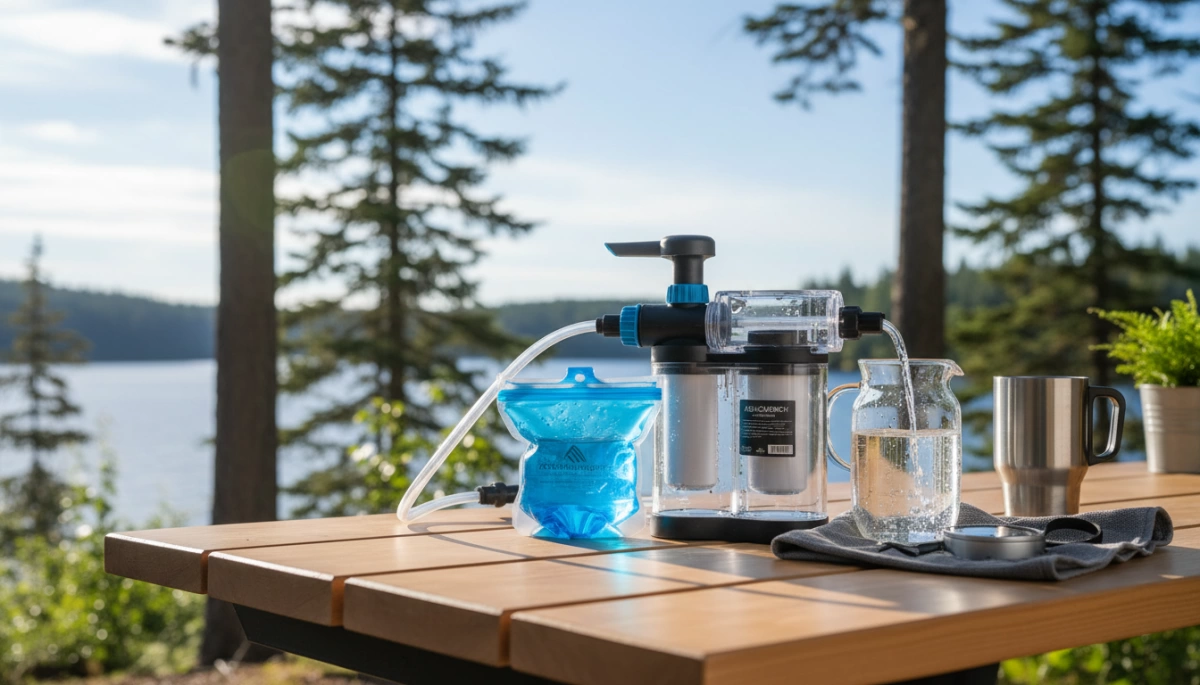
Nothing ruins a backcountry trip faster than a waterborne illness. But with a sea of squeeze filters, gravity systems, and portable water purifiers available in 2026, finding the best camping water filter for your specific needs can feel like a chore.
I’ve spent years field-testing these units in every environment imaginable—from silty desert rivers to pristine alpine lakes—to see which ones actually deliver a high flow rate and which ones clog when you need them most.
If you’re looking for a reliable, ultralight water filtration setup that won’t let you down, this guide is for you.
Let’s dive right in.
Why You Need the Best Camping Water Filter
I’ve spent enough time on the trail to know that even the clearest mountain stream can hide nasty surprises. Finding the best camping water filter isn’t just about gear—it’s about staying out of the emergency room. In the backcountry, “pristine” water is often a myth.
The Invisible Threats
When you’re miles from the nearest tap, you’re up against microscopic hitchhikers. Most backcountry water treatment focuses on these three categories:
| Contaminant | Examples | Impact |
|---|---|---|
| Bacteria | E. coli, Salmonella | Severe GI distress |
| Protozoa | Giardia, Cryptosporidium | Long-term illness |
| Viruses | Norovirus, Hepatitis A | High-risk in high-traffic areas |
Filter vs. Purifier: Know the Difference
Choosing between a backpacking water filter and a portable water purifier depends on where you’re hiking.
- Hollow Fiber Filters: These are the gold standard for North American trails. They excel at removing bacteria and protozoa (99.9999% effective) but don’t catch viruses.
- Water Purifiers: These use chemicals or advanced physical barriers to neutralize viruses. Use these if you are traveling internationally or in areas with poor human waste management.
Health and Sustainability
Beyond avoiding “backcountry belly,” using ultralight water filtration changes how you move through the wild:
- Hydration on Demand: You don’t have to carry 10 lbs of water; just filter from freshwater sources as you go.
- Reduce Plastic Waste: Stop relying on single-use bottles. A high-quality squeeze water filter can replace thousands of plastic bottles over its long lifespan.
- Weight Savings: A 2-ounce filter beats a 2-liter reservoir any day when you’re counting grams for a thru-hike.
Investing in reliable camping water purification ensures you spend your time enjoying the view, not eyeing the nearest bush for an emergency bathroom break.
Types of Camping Water Filters
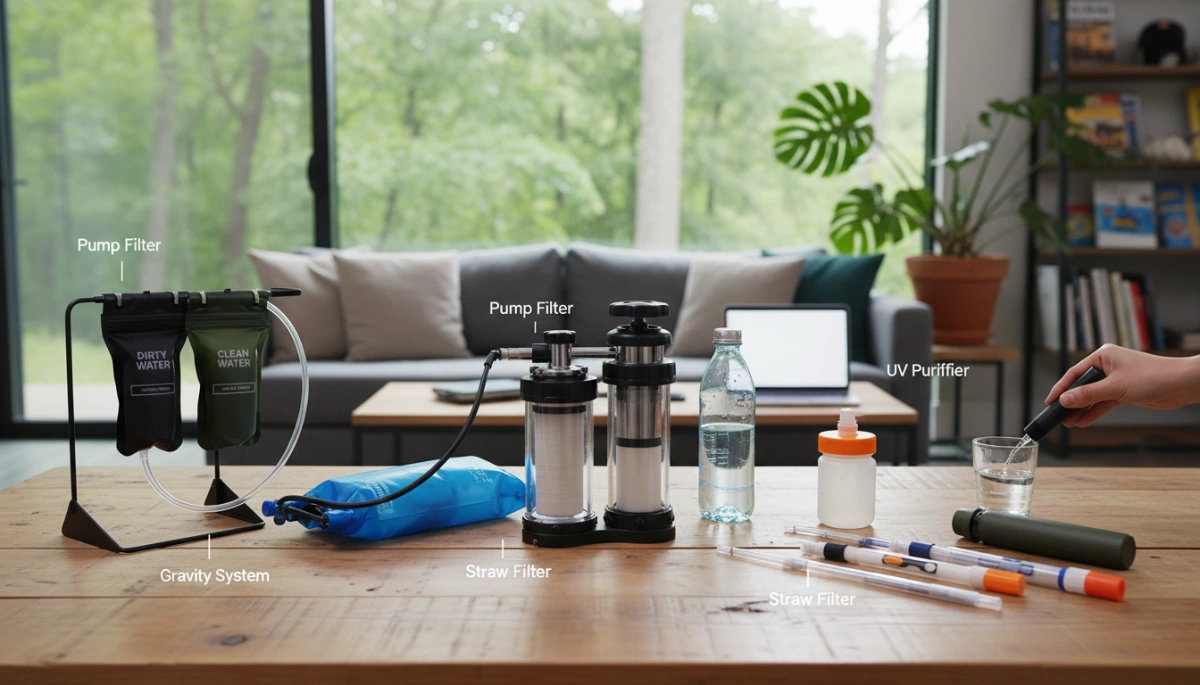
Choosing the best camping water filter depends entirely on how you travel. From my experience in the backcountry, the right gear balances weight with the effort required to get a clean drink. Whether you need ultralight water filtration for a thru-hike or a robust system for a family basecamp, there is a specific design built for the task.
Main Filtration Categories
- Squeeze Water Filter: These are the gold standard for backcountry water treatment. I love them because they are lightweight and offer a fast flow rate water filter experience. You simply fill a flexible pouch and squeeze it through a hollow fiber filter directly into your mouth or bottle.
- Gravity Water Filter: For group camping filtration, nothing beats a gravity system. I hang a large reservoir from a tree branch and let physics do the heavy lifting. It provides a steady stream of camping water purification without any manual pumping or squeezing.
- Pump Water Filter: When I’m dealing with shallow, murky, or sediment-heavy water, a pump is my go-to. These are highly sediment resistant and allow you to pull water from tiny seeps that other filters can’t reach.
- Straws and Bottle-Integrated Options: These are perfect for emergency kits or fast-paced day hikes. Just as a high-quality sink water filter dispenser provides peace of mind at home, these portable options ensure I’m never stuck without a safe source of hydration on the trail.
Comparison at a Glance
| Filter Type | Best Use Case | Primary Benefit |
|---|---|---|
| Squeeze | Backpacking & Solo Trips | Extremely lightweight and fast |
| Gravity | Group Basecamps | Hands-free, high-volume output |
| Pump | Murky or Shallow Sources | Durable and handles sediment well |
| Straw/Bottle | Trail Running & Emergencies | Instant access, no setup required |
Each portable water purifier has a specific role. While a squeeze water filter is great for the minimalist, a heavy-duty pump water filter is often the more reliable choice when the water source is questionable or full of grit. Finding the right balance ensures your backcountry water treatment is efficient and hassle-free.
How to Choose the Best Camping Water Filter
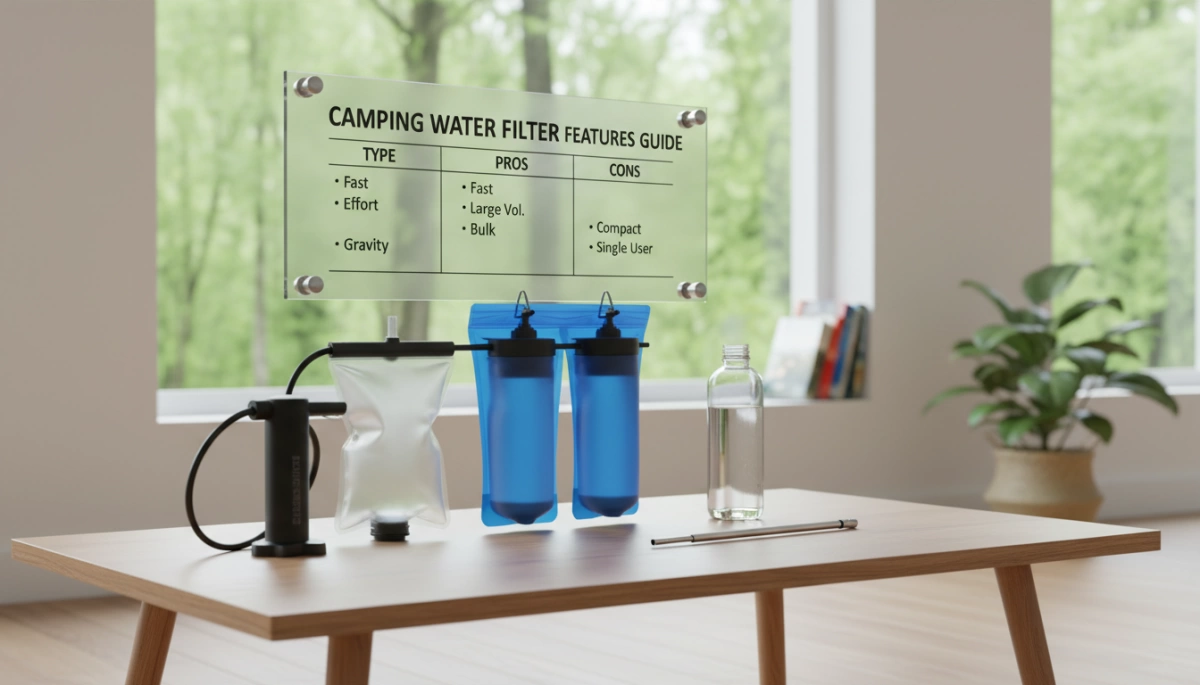
When I’m vetting the best camping water filter, I look at how it performs when I’m tired, miles from the trailhead, and losing daylight. Selecting the right gear depends on your specific trip style and the water sources you expect to find in the backcountry.
Micron Ratings and Filtration Effectiveness
The gold standard for a hollow fiber filter is a 0.1-micron rating. This is small enough to physically block 99.9999% of bacteria (like Salmonella and E. coli) and 99.9% of protozoa (like Giardia and Cryptosporidium). If you are traveling in areas with known viral risks, you may need a portable water purifier or a secondary ultraviolet water purifier system to ensure your drinking water is completely safe.
Flow Rate and Real-World Ease of Use
A high flow rate water filter is the difference between a quick pit stop and a frustrating chore. I look for filters that can process at least 1 to 2 liters per minute.
- Squeeze filters: Best for solo hikers who want ultrallyight water filtration and fast refills.
- Gravity systems: The top choice for group camping filtration—just hang it and let physics do the work.
- Pump filters: Best for drawing from shallow or silty puddles where a intake hose is necessary.
Weight, Packability, and Durability
In the wild, gear must be rugged but manageable. While I prefer a lightweight setup, I never sacrifice the ability to perform a field backflush for a few saved grams. If you can’t clean your filter in the wild, a single silty stream will render it useless.
| Selection Factor | Backpacking / Ultralight | Basecamp / Car Camping |
|---|---|---|
| Weight Priority | High (Target < 4 oz) | Low (Bulk is okay) |
| Primary Goal | Portability & Speed | High volume & Convenience |
| Best Filter Type | Squeeze water filter | Gravity water filter |
| Maintenance | Essential field backflush | Periodic deep cleaning |
Maintenance and Longevity
I always prioritize a long lifespan water filter that is sediment resistant. Look for models that include a cleaning syringe or a simple flip-cap mechanism. This allows you to restore the flow rate instantly and ensures your investment lasts for thousands of liters rather than failing after one season of heavy use.
Top Rated Camping Water Filters of 2026
After thousands of miles on the trail and countless nights at high-elevation basecamps, I’ve narrowed down the absolute best camping water filter options for every type of outdoor enthusiast. Whether you are an ultralight thru-hiker or managing a large group, these filters represent the gold standard in backcountry water treatment.
Quick Comparison of the Top Performers
| Model | Type | Best For | Key Feature |
|---|---|---|---|
| LifeStraw Peak Squeeze | Squeeze | Overall Performance | Extremely rugged, versatile threads |
| Katadyn BeFree | Squeeze | Ultralight Soloists | Massive flow rate, collapsible |
| Sawyer Squeeze | Squeeze/Gravity | Value & Longevity | Long lifespan water filter (Lifetime) |
| Platypus GravityWorks | Gravity | Group Camping | Hands-free, high capacity |
| MSR Guardian | Pump/Purifier | International/Viral Risk | Virus removing purifier, self-cleaning |
| Katadyn Hiker Pro | Pump | Murky/Silty Water | Sediment resistant filter, field-serviceable |
LifeStraw Peak Squeeze: The Best Overall Performer
The Peak Series Squeeze is my go-to for most trips. It utilizes a reinforced hollow fiber filter that is significantly tougher than previous generations. It handles pressure well without leaking at the seals, and the 0.1-micron membrane effectively removes 99.9999% of bacteria and protozoa. It’s the most balanced squeeze water filter on the market today.
Katadyn BeFree: The Top Ultralight Pick
If your priority is moving fast, the BeFree is unbeatable. The flow rate water filter tech inside this unit is incredible—it feels like drinking from a standard water bottle. While you should learn how to tell if your water is hard or soft regarding mineral content at home, in the wild, this filter focuses on high-speed flow and easy cleaning via the “shake-to-clean” method.
Sawyer Squeeze: Unbeatable Value and Lifespan
The Sawyer Squeeze remains a legend for a reason. It is a field backflush filter that can literally last a lifetime if maintained properly. I often recommend this for hikers who want a reliable, simple setup that can be used as a straw, a squeeze, or inline with a hydration bladder.
Platypus GravityWorks: The Best for Group Camping
For group camping filtration, the Platypus GravityWorks is king. Just fill the “Dirty” bag, hang it from a tree, and let gravity do the work. It delivers 4 liters of clean water in minutes without a single pump. It’s much more convenient than a table top RO water purifier when you’re miles from the nearest outlet, providing high-volume output for cooking and hydration.
MSR Guardian: Heavy-Duty Virus Protection
When I’m traveling in areas where human waste or viral contamination is a concern, I carry the MSR Guardian. It is a medical-grade portable water purifier that removes viruses, not just bacteria. It’s a pump water filter that actually cleans itself on every stroke, making it virtually impossible to clog, even in the nastiest water sources.
Katadyn Hiker Pro: Reliable Pump for Tough Water
For those dealing with “leaf soup” or high-silt environments, the Hiker Pro is the workhorse. It features a protector sleeve that keeps the main filter element from clogging too quickly. It’s a reliable, rugged design that has been a staple in the camping water purification world for decades because it just works.
How I Field-Tested the Best Camping Water Filter Options
I put these tools to work across diverse American landscapes, from the silt-heavy riverbanks of the Southwest to the crystal-clear alpine lakes of the High Sierras. My goal was to move past the marketing specs and see how this gear actually handles backcountry water treatment when you’re tired and thirsty.
Measuring Flow Rate and Clog Resistance
I tracked the flow rate of every backpacking water filter by timing how long it took to fill a standard 1-liter bottle. To test clog resistance, I pushed sediment-heavy water through each system to see which hollow fiber filters maintained speed and which choked on turbidity.
Evaluating Field Maintenance
A reliable portable water purifier has to be easy to fix on the trail. I tested the field backflush process for every model to ensure they could be restored without needing a specialized toolkit. During these tests, knowing the key differences between a water filter and a purifier was essential for determining which gear belonged in a group basecamp versus a solo ultralight kit.
- Real-world use: Tested in high-sediment and clear-water environments to simulate actual trail conditions.
- Durability: Checked for rugged design by handling filters with wet hands and storing them in cramped packs.
- Ease of Use: Evaluated the physical effort required for pump water filters versus the simplicity of squeeze water filters.
Maintaining Your Portable Water Purifier
A portable water purifier is only as good as its last cleaning. If you don’t maintain your gear, you’ll find yourself with a clogged hollow fiber filter halfway through a trip. I’ve learned the hard way that a little field maintenance saves a lot of frustration when you’re miles from the nearest trailhead.
Restoring Flow with Field Backflushing
When the flow rate water filter performance starts to drop, it’s usually due to sediment buildup. Field backflushing is the most effective way to clear the membrane.
- Squeeze and Straw Filters: Use the provided cleaning syringe to force clean water backward through the filter. Do this forcefully to dislodge trapped particulates.
- Gravity Systems: Simply reverse the bags, allowing clean water to flow back into the dirty reservoir for 30 seconds.
- Pump Filters: Most high-end pumps require a simple shake or a specific internal backwash trigger to clear the sediment resistant filter screen.
Pro-Tips for Long-Term Storage
Before you toss your backpacking water filter into the closet for the off-season, you must sanitize it. While I use a countertop reverse osmosis hot and cold water filter system for daily hydration at home, my trail gear needs a different kind of TLC.
| Maintenance Task | Frequency | Procedure |
|---|---|---|
| Field Backflush | Every 5-10 Liters | Force clean water through the outlet to clear debris. |
| Sanitizing | Post-Trip | Flush with a weak bleach solution (1 capful per liter). |
| Drying | Before Storage | Air dry completely for 48-72 hours to prevent mold. |
| Freeze Protection | Cold Weather | Keep the filter in your sleeping bag or jacket pocket. |
Preventing Permanent Damage
The biggest killer of a backpacking water filter isn’t dirt—it’s ice. If water stays inside the fibers and freezes, it expands and cracks the internal structure, rendering the 0.1 Micron protection useless. If you suspect your filter has frozen, replace it immediately. Just as you’d maintain a water filter from sink setups to ensure tap safety, keeping your portable gear clean and dry ensures a long lifespan water filter that won’t fail you when you’re off-grid. Always store your filters in a climate-controlled area, never in a cold garage or shed.
I get a lot of questions about the limits of these systems. Here is the reality of using a backpacking water filter in real-world conditions.
Common Backcountry Water Questions
Can these filters remove viruses?
I generally tell hikers that most hollow fiber filters are excellent for removing 99.9999% of bacteria and protozoa, but they aren’t typically built for viruses. In the US backcountry, viruses are rarely a concern. However, if I am traveling to regions with poor sanitation or high human impact, I switch to a dedicated virus removing purifier to ensure total safety.
How to handle freezing temperatures?
Freezing is the leading cause of gear failure for even the best camping water filter. If water trapped inside the membrane turns to ice, it expands and creates microscopic cracks in the fibers. Here is how I protect my gear:
- Body Heat: I keep the filter element in an internal jacket pocket during the day.
- Sleeping Bag: At night, I put the filter in a sealed bag and keep it at the bottom of my sleeping bag.
- Replacement: If I suspect a filter has frozen, I replace it immediately. You cannot see the internal damage, but the filtration is compromised.
Is chemical treatment a better backup?
I always carry chemical tabs as a backup for backcountry water treatment. They are ultralight and won’t break if dropped. However, chemicals do not offer turbidity reduction, meaning your water will still be cloudy or gritty. While many users are interested in how filtered water has fluoride removed in their home systems, camping gear is strictly focused on stopping the biological pathogens that cause immediate illness. For the best experience, a mechanical filter is superior for taste and clarity.