















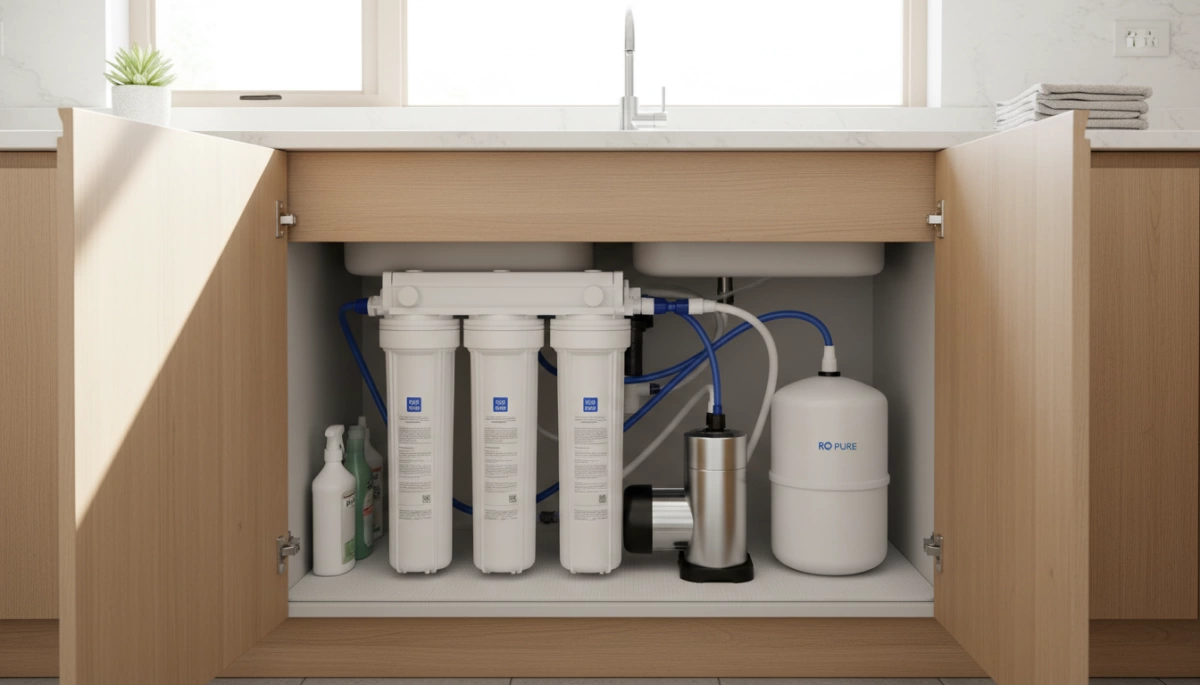
How Undersink Reverse Osmosis Systems Work
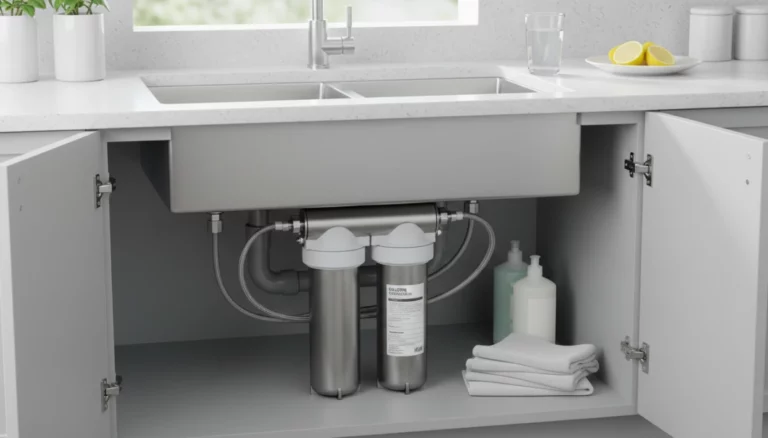
When I look at the landscape of home water treatment, reverse osmosis (RO) filtration remains the gold standard for purity. An undersink reverse osmosis water filter isn’t just a single filter; it is a sophisticated multi-stage laboratory-grade system condensed to fit inside your cabinet. By using pressure to force water through a semi-permeable membrane, these systems effectively strip away contaminants that standard pitchers or faucet filters leave behind.
Multi-Stage Filtration Process
To ensure the longevity of the system and the quality of your output, I design our systems to tackle pollutants in a specific, logical order:
- Stage 1: Sediment Filtration: A PP cotton filter traps large particles like sand, dirt, and rust. This protects the more sensitive components downstream.
- Stage 2: Pre-Carbon Block: This stage adsorbs chlorine, VOCs, and unpleasant odors. Removing chlorine is vital as it can degrade the RO membrane over time.
- Stage 3: The RO Membrane: The heart of the system. With pores as small as 0.0001 microns, it blocks microscopic threats, including heavy metals, arsenic, and PFAS.
- Stage 4: Post-Carbon Polishing: A final pass to refine the taste, ensuring the water is crisp and refreshing the moment it hits your glass.
Advanced Options: UV and Remineralization
For those seeking the ultimate water profile, I recommend adding specialized stages to the standard under sink water purifier setup:
- UV Disinfection: An ultraviolet light stage kills 99.9% of bacteria and viruses without using chemicals, providing an extra layer of bio-security.
- Remineralization Filter: Since RO is so effective it removes everything, this stage reintroduces essential minerals like calcium and magnesium. This balances the pH and creates alkaline RO water that tastes significantly better.
Superior Purity through TDS Reduction
The primary metric for any TDS reduction system is the “Total Dissolved Solids” count. Standard tap water often carries a high load of dissolved salts and inorganic solids. My reverse osmosis systems typically achieve a 90–99% rejection rate, dropping your TDS levels to near zero. This level of purity is why RO water is the preferred choice for health-conscious families and high-end culinary applications. By removing the “invisible” clutter in your water, you are left with H2O in its most honest form.
Key Benefits of Installing an Undersink Reverse Osmosis Water Filter
Investing in an undersink reverse osmosis water filter is one of the most effective ways to upgrade your home’s health and convenience. I’ve seen these systems become the gold standard for American kitchens because they provide a level of purity that standard pitcher or faucet filters simply cannot match.
Superior Removal of Dangerous Contaminants
The primary reason to switch to an under sink water purifier is its ability to handle “forever chemicals” and heavy metals. These systems are specifically engineered for Lead & PFAS removal, ensuring that common municipal contaminants don’t reach your glass. By achieving significant TDS reduction, you effectively strip away arsenic, fluoride, and nitrates that are often left behind by basic carbon filters.
Better Taste for Cooking and Drinking
Chlorine and chloramines used in city water treatment can leave a harsh, chemical aftertaste. A high-quality RO system removes these odors, resulting in crisp drinking water and better-tasting coffee and tea. For many families, the “flat” taste of pure RO water is a concern; in those cases, I recommend using a reverse osmosis water filter with remineralization to restore essential minerals and balance the pH for a refreshing, natural flavor.
Impact at a Glance
| Feature | Benefit to You |
|---|---|
| PFAS Removal RO | Eliminates “forever chemicals” linked to health issues. |
| On-Demand Flow | Instant access to purified water via a dedicated faucet. |
| Eco-Friendly | Cuts out thousands of single-use plastic bottles annually. |
| Pet Health | Provides cleaner, safer water for sensitive household pets. |
Long-Term Cost Savings and Sustainability
While the initial setup is an investment, the long-term savings are undeniable. You can stop spending money on heavy cases of bottled water and reduce your household’s carbon footprint.
- Savings: Pure water costs pennies per gallon compared to retail prices.
- Convenience: No more lugging heavy water jugs from the grocery store.
- Maintenance: Modern designs feature quick-change filters that make annual upkeep simple for any homeowner.
By installing a dedicated system, you ensure that every drop of water used for your family’s hydration and meal prep is free from emerging threats and bad odors.
Tankless vs. Traditional Tank RO Systems
When choosing an undersink reverse osmosis water filter, the biggest decision is whether to go with a bulky storage tank or a modern tankless design. Traditional systems rely on a pressurized tank that takes up massive under-cabinet space and can occasionally lead to “stagnant water” issues. In 2026, we are seeing a major shift toward Tankless RO systems because they provide a more hygienic, on-demand experience without the risk of bacterial growth in a storage vessel.
Performance and Space Comparison
| Feature | Traditional Tank RO | Modern Tankless RO |
|---|---|---|
| Space Footprint | Bulky; takes up 50%+ of cabinet | Slim; under-cabinet space-saving |
| Water Freshness | Stored water can go “flat” | Instant, fresh filtration |
| Flow Rate | Slows down as tank empties | Consistent High flow RO 800 GPD+ |
| Installation | Complex tubing and tank setup | Simple integrated waterway design |
Why Tankless Models are the 2026 Standard
The demand for high-performance kitchens has made the under sink water purifier without a tank the preferred choice for American homeowners. By removing the tank, we eliminate the risk of secondary pollution and provide a system that delivers a High flow RO (800 GPD to 2000 GPD) capacity. This ensures you have a steady stream of purified water for large families, even during peak usage hours.
- Freshness on Demand: Every drop is filtered the moment you turn on the tap.
- Leak Protection: Modern tankless units feature an integrated waterway manifold to minimize connection points.
- High Efficiency: These systems typically offer a much better pure-to-drain ratio than older tank models.
- Large Capacity: 800 GPD models are perfect for filling large pots or coffee reservoirs instantly.
By prioritizing a tankless RO system, you gain back your storage space while ensuring your family drinks the cleanest water possible.
Essential Features of a 2026 Undersink Reverse Osmosis Water Filter
When picking an undersink reverse osmosis water filter today, you shouldn’t settle for the slow, bulky tech of the past. The 2026 market is all about high efficiency, smart monitoring, and ease of use. We focus on systems that deliver high-purity water without the maintenance headache.
Performance and Efficiency Standards
The best systems now prioritize a low waste ratio RO design. Traditional units used to waste four gallons for every one gallon purified; modern tankless RO models have flipped that, offering 2:1 or 3:1 pure-to-drain ratios to save on your water bill.
| Feature | What to Look For | Why It Matters |
|---|---|---|
| Flow Rate | 600 GPD to 2000 GPD | Provides high-flow RO speed without a storage tank. |
| Certifications | NSF/ANSI 58 | Ensures the system actually removes lead, PFAS, and arsenic. |
| Drain Ratio | 2:1 or better | Minimizes water waste and improves eco-impact. |
| Filter Design | Quick-change filters | Allows for 3-second “twist and pull” DIY replacements. |
Remineralization and Water Quality
Standard RO can sometimes strip away everything, leaving water tasting “flat.” We integrate a remineralization filter in our top-tier setups to restore essential minerals like calcium and magnesium. This balances the pH and provides a crisp, refreshing taste that rivals the best bottled brands. Understanding the difference between spring water vs. purified water helps illustrate why adding these minerals back is vital for both flavor and health.
Smart Tech and DIY Integration
Modern homeowners want data, not guesswork. A premium undersink reverse osmosis water filter should include:
- Smart Faucet Display: Real-time TDS reduction monitoring right at the tap.
- Leak Detection: Built-in sensors that shut off the water supply if a leak is detected.
- IoT Connectivity: Mobile alerts that tell you exactly when a filter needs replacing.
- Integrated Waterway: A manifold design that reduces internal tube connections, significantly cutting the risk of leaks.
Choosing a high-flow RO 800 GPD system with an integrated waterway ensures you have enough on-demand purified water for a busy kitchen while keeping the space under your cabinet clean and organized.
Common Contaminants Removed by Undersink RO Filters
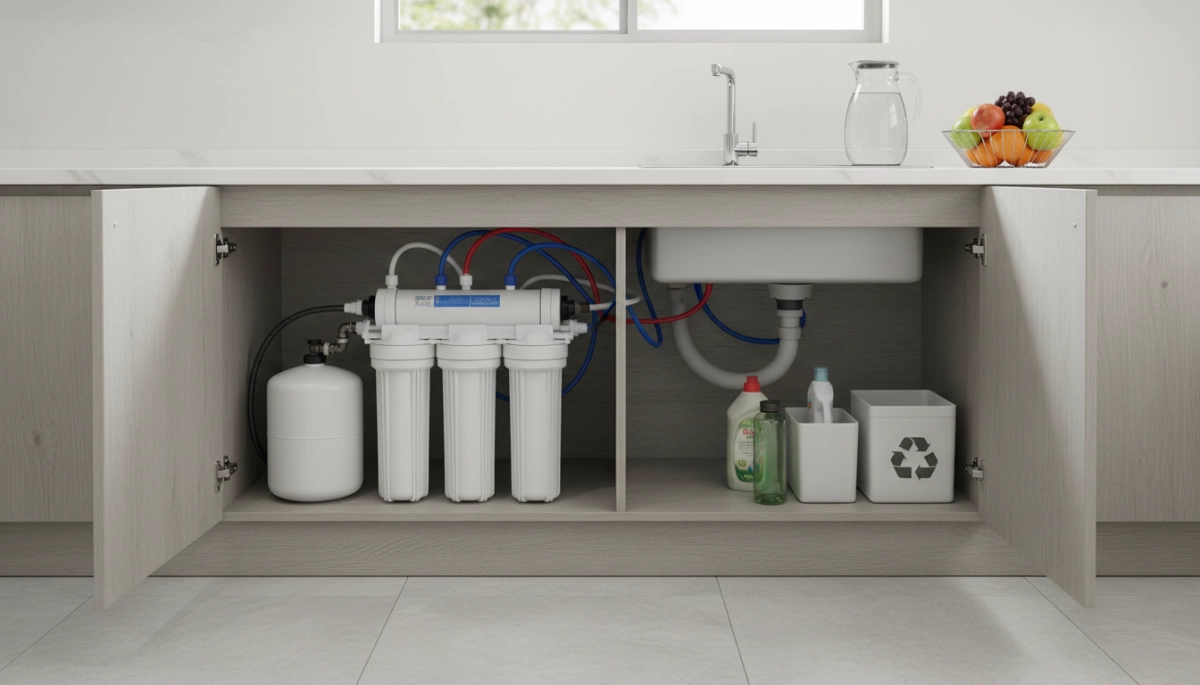
When I talk about reverse osmosis filtration, I’m talking about the most effective barrier against the “invisible” threats in American tap water. My under sink water purifier systems are engineered to target specific pollutants that standard carbon filters often miss, providing a comprehensive safety net for your home.
High Reduction Rates for Heavy Metals
A high-quality NSF certified RO membrane acts as a molecular sieve. I prioritize the removal of substances that directly impact long-term health, ensuring these common contaminants are stripped away:
- Lead: Removed at rates up to 99%, which is critical for homes with older plumbing infrastructure.
- Arsenic: Effectively filtered out to meet and exceed stringent safety standards.
- Fluoride: Reduced significantly for those who want total control over their mineral intake.
- Nitrates: Often found in suburban and rural areas due to fertilizer runoff, these are stripped away instantly.
Targeting PFAS and Microplastics
Modern challenges require updated technology. My PFAS removal RO stages address “forever chemicals” (PFOA/PFOS) that are increasingly detected in local water tables across the United States. By using a high-performance tankless RO system, you ensure that your water is filtered on-demand, maintaining peak purity. Many families find that switching to a tap with filter water is the most reliable way to eliminate the “swimming pool” taste of chlorine and the growing concern of microplastic ingestion.
The Importance of TDS Monitoring
Even with a top-tier TDS reduction system, I always emphasize the importance of regular water quality testing. Most of my modern units include built-in sensors, but manual testing helps you confirm the membrane is still hitting high rejection rates and tells you exactly when it’s time for a change.
| Contaminant | Average Reduction Rate | Health Benefit |
|---|---|---|
| Lead & Mercury | 98–99% | Protects neurological health |
| Chlorine/VOCs | 95%+ | Improves taste and skin/eye health |
| PFAS/PFOA | 96–99% | Removes persistent synthetic chemicals |
| Microplastics | 99.9% | Prevents ingestion of synthetic fibers |
| Chromium-6 | 90–97% | Neutralizes known carcinogens |
Installing Your Undersink Reverse Osmosis Water Filter: A DIY Guide
Installing an undersink reverse osmosis water filter is a straightforward weekend project that doesn’t require a professional plumber. My systems are designed with a DIY-friendly installation focus, utilizing quick-change filters and color-coded tubing to get your water flowing fast.
Essential Tools for a Successful Setup
Before you start, grab these basic tools to ensure a leak-free experience:
- Variable speed drill (with 1/4″ and 1/2″ bits for the faucet and drain).
- Adjustable wrench (for the feed water connection).
- Utility knife (to make clean, square cuts on the tubing).
- Philips head screwdriver.
Step-by-Step Connection
- Feed Water Adapter: Shut off your cold water supply and install the T-adapter. This provides the “source” for your reverse osmosis filtration.
- The Drain Saddle: Mount this on the sink drainpipe, ideally above the P-trap. This is crucial for managing the low waste ratio RO discharge efficiently.
- Dedicated Smart Faucet: Install the smart RO faucet through a pre-drilled hole or a new 1/2″ hole in your sink or countertop.
Troubleshooting Common Issues
Even with the best under sink water purifier, minor hiccups can happen during the first run. Here is how to handle them:
| Issue | Likely Cause | Solution |
|---|---|---|
| Vibrating Noise | Air trapped in the system | Flush the system for 10-15 minutes. |
| Slow Flow Rate | Low incoming pressure | Check that the feed valve is fully open. |
| Leak at Fitting | Tubing not fully seated | Push the tube firmly into the quick-connect port until it clicks. |
For homeowners dealing with specific microbial concerns in their source water, I recommend pairing your setup with effective UV water treatment systems to ensure 100% sterilization alongside the RO process. Proper installation ensures your TDS reduction system performs at peak efficiency for years to come.
Maintenance Tips for Your Undersink Reverse Osmosis Water Filter
To keep your under sink water purifier performing at its peak, following a consistent maintenance schedule is non-negotiable. Modern reverse osmosis filtration systems have moved away from bulky canisters in favor of quick-change filters, making the DIY upkeep process fast and mess-free.
Standard Filter Replacement Schedule
| Filter Type | Replacement Frequency | Key Role |
|---|---|---|
| Sediment & Carbon Pre-filters | 6–12 Months | Protects the membrane from chlorine and debris. |
| RO Membrane | 24–36 Months | The heart of TDS reduction and contaminant removal. |
| Post-Carbon / Remineralization | 12 Months | Polishes taste and adds healthy minerals. |
Recognizing Signs of Filter Exhaustion
You don’t always have to wait for the calendar to tell you it’s time for a change. Watch for these red flags that indicate your system is struggling:
- Slow Flow Rate: If your glass is taking forever to fill, your pre-filters or membrane are likely clogged with sediment.
- TDS Creep: A rise in Total Dissolved Solids (TDS) levels, often visible on a smart RO faucet display, indicates the RO membrane is no longer filtering effectively.
- Change in Taste or Odor: If you notice a hint of chlorine or an “off” flavor, your carbon stages are likely saturated.
Efficiency and Annual Costs
Investing in a system with a quick-twist design significantly reduces maintenance downtime. These filters can be swapped in under a minute without turning off the main water supply in many cases. If your specific configuration includes a UV water sterilizer, remember that the lamp requires annual replacement to ensure your water remains 99.9% bacteria-free. Keeping up with these small tasks ensures low annual maintenance costs while protecting your family’s health and the longevity of your investment.
High-Capacity Undersink RO Solutions
We provide high-performance OEM/ODM systems designed for users who need more than just a standard filter. Our undersink reverse osmosis water filter lineup focuses on high-capacity output and smart technology to serve large American families and commercial spaces efficiently.
Spotlight on High-Flow Tankless Designs
Our latest tankless RO models deliver between 600 and 2000 GPD, providing a continuous stream of purified water. By eliminating the storage tank, we have solved the issue of secondary contamination and reclaimed valuable under-cabinet space. These systems utilize the best methods for removing fluoride from water while maintaining a rapid flow rate that fills a cup in seconds.
| Model Capacity | Ideal Usage | Key Advantage |
|---|---|---|
| 600 – 800 GPD | Large Households | Fast flow, fits tight spaces |
| 1000 – 1200 GPD | Large Offices | Industrial-grade TDS reduction |
| 2000 GPD | Light Commercial | Constant supply for high demand |
Advanced Integrated Features
We don’t just filter water; we manage it with cutting-edge tech. Our high-capacity systems are engineered for durability and user convenience:
- Integrated UV Disinfection: Destroys 99.9% of microorganisms for an extra layer of safety.
- IoT Connectivity: Real-time monitoring of filter life and water quality via your smartphone.
- Multi-functional Outputs: Easily connect your system to a hot water dispenser with filter or a dedicated ice maker.
- Smart Faucet Support: Displays real-time TDS levels and filter replacement alerts right at the sink.
Our high-flow RO solutions ensure that whether you are prepping a massive family dinner or running a small cafe, your water supply never slows down. These units balance a 2:1 low waste ratio with professional-grade filtration, making them the most efficient choice for high-volume needs in 2026.
Comparing Top Undersink Reverse Osmosis Water Filter Systems in 2026
When I look at the current market, the evolution of the undersink reverse osmosis water filter has been incredible. In 2026, the gap between “budget” and “premium” systems has narrowed in terms of technology, but performance still varies wildly when you look at the specs. Choosing the right under sink water purifier comes down to balancing daily water demand against the efficiency of the unit.
For many of my customers, the choice depends on their specific water source. For instance, those using private sources often compare these units against the top water filter systems for well water to ensure they have enough pre-filtration for heavy sediment or iron.
Performance Comparison: GPD and Waste Ratios
The most significant innovation we’ve seen is the move toward high-efficiency, low waste ratio RO designs. Gone are the days of wasting four gallons of water for every one gallon of purified water.
| System Feature | Entry-Level Tankless | High-Flow Performance | Premium Smart RO |
|---|---|---|---|
| Flow Rate (GPD) | 400 – 600 GPD | 800 – 1200 GPD | 1600+ GPD |
| Pure-to-Drain Ratio | 1:1 or 1.5:1 | 2:1 | 3:1 |
| Filtration Stages | 3 – 5 Stages | 5 – 7 Stages | 7+ Stages |
| Smart Features | Basic LED | TDS & Leak Sensors | Full IoT Integration |
Evaluating Long-Term Value and Innovation
A high-quality TDS reduction system should be viewed as a long-term investment rather than a one-time purchase. While a high flow RO 800 GPD system might have a higher upfront cost, the savings on filter replacements and water bills are substantial. When people ask where to buy RO water for the best price, I always point them back to the math of owning a home system—the cost per gallon is pennies compared to the logistics and expense of retail water.
- Innovation: 2026 models now feature “Internalized Waterways” which eliminate most internal tubing, drastically reducing the risk of leaks.
- Maintenance: Look for systems with “twist-and-pull” filter designs. If you can’t change the filter in under 30 seconds, the design is outdated.
- Sustainability: High-efficiency membranes are now the standard, ensuring that your eco-footprint remains small while your water quality remains high.
Finding the best balance of performance and price means looking beyond the sticker price. I recommend prioritizing a Tankless RO system with at least an 800 GPD rating to ensure your family never has to wait for a glass of water, even during peak kitchen hours.
FAQs About Your Undersink Reverse Osmosis Water Filter
I get a lot of questions about whether an under sink water purifier is truly worth the investment. The technology has moved fast, so here are the straight answers to the most common concerns I hear from homeowners today.
Does reverse osmosis waste too much water?
In the past, RO systems were criticized for high water waste. However, our 2026 tankless RO system models feature advanced low waste ratio RO technology. Most of our high-efficiency units now operate at a 2:1 pure-to-drain ratio, meaning they produce twice as much clean water as they send to the drain—a massive improvement over older 1:4 systems.
Is remineralization necessary for healthy water?
Because RO is so effective at TDS reduction, it removes almost everything, including beneficial minerals. I always recommend adding a remineralization filter to your setup. This restores alkaline RO water properties, giving the water a crisper, more natural taste. Understanding the types of water purification methods available helps you see why adding those minerals back is the final step for perfect hydration.
Can I connect an undersink RO to my refrigerator?
Yes. You can easily run a 1/4″ line from your undersink reverse osmosis water filter to your fridge’s ice maker and water dispenser. Because our high flow RO 800 GPD systems provide a strong, steady stream, you won’t see the pressure drops common with smaller, older units.
What is the best system for hard water areas?
If you live in a region with high mineral content, a high capacity undersink purifier is essential. Look for these specific features:
- High-flow RO (800GPD/1000GPD): To maintain pressure despite heavy mineral loading.
- Advanced RO membrane: Specifically rated for lead & PFAS removal.
- Quick-change filters: To make the slightly more frequent maintenance in hard water areas a DIY-friendly task.