
















The Science of Activated Carbon: How Charcoal Filters Your Water
When you turn on your tap and smell chlorine or notice a metallic tang, you are experiencing the limitations of standard municipal water treatment. We utilize the power of a charcoal water filter system to address these issues at the molecular level. Activated carbon is not just regular charcoal; it is “activated” through high temperatures to create a massive surface area filled with millions of microscopic pores. These pores act as a magnetic trap for impurities, ensuring your drinking water is clean, crisp, and safe.
Adsorption vs. Absorption: How Contaminants Stick to Carbon
Understanding how an activated carbon water filter works requires a look at the process of adsorption. While absorption involves a substance being soaked into the body of a material (like a sponge), adsorption is a surface-level chemical reaction.
- The Molecular Trap: As water flows through the filter, contaminants like chlorine and organic pollutants chemically bond to the surface of the carbon.
- Massive Surface Area: A single gram of activated carbon can have a surface area exceeding 1,000 square meters, providing a vast “parking lot” for pollutants.
- Van der Waals Forces: These molecular attractions pull impurities out of the water and lock them into the carbon’s internal structure.
Granular Activated Carbon (GAC) vs. Carbon Block Filters
In our filtration designs, we select the carbon format based on specific performance needs to ensure maximum water taste and odor improvement.
| Filter Type | Primary Benefit | Best For |
|---|---|---|
| Granular Activated Carbon (GAC) | High flow rates and low pressure drop. | Rapid filtration in pitchers and faucet units. |
| Carbon Block Filters | Superior contaminant removal and no “channeling.” | Intensive purification for under-sink and countertop units. |
Why Coconut Shell Carbon is the Gold Standard for Purity
We prioritize coconut shell carbon in our filtration stages because of its unique physical properties. Compared to coal or wood-based carbon, coconut shells produce a significantly higher density of micropores.
- High Porosity: The micropore structure is perfectly sized for trapping small organic molecules and common disinfection byproducts.
- Eco-Friendly & Renewable: We use coconut shells as a sustainable resource that avoids the heavy metal leaching sometimes found in coal-based carbon.
- High Iodine Value: This technical measurement indicates the carbon’s superior ability to adsorb low-molecular-weight contaminants, making it the most efficient choice for a home water purification system.
By focusing on the high adsorption capacity of premium coconut shell media, we ensure that our systems do more than just filter water—they transform it.
Choosing the Best Charcoal Water Filter System for Your Home
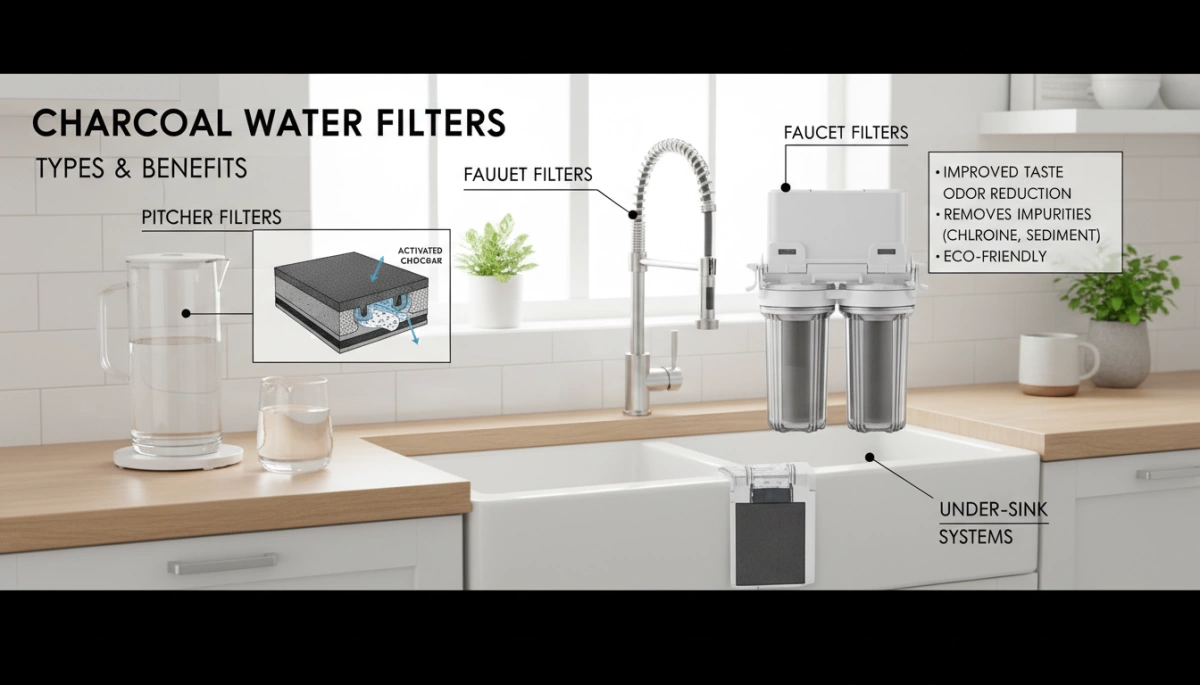
Finding the right charcoal water filter system depends entirely on your household’s daily water usage and your specific goals for water quality. We offer a range of solutions designed to fit into American kitchens and homes, whether you are looking for a quick fix or a permanent, high-volume installation.
Countertop and Pitcher Filters for Instant Use
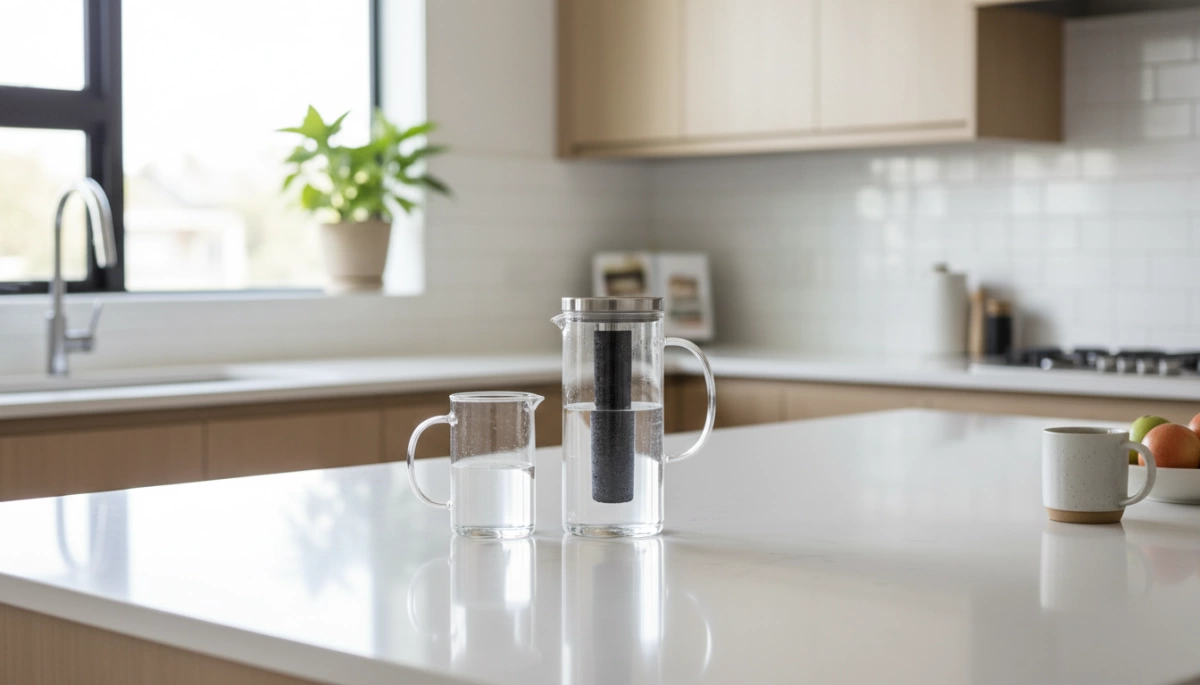
For many households, especially renters or small families, a portable alkaline water pitcher or a countertop unit is the most practical choice. These systems provide instant access to purified water without requiring a plumber.
- Convenience: No installation required; just fill and pour.
- Efficiency: Our pitchers utilize a 7-stage process where coconut shell carbon removes chlorine while mineral spheres add back essential electrolytes.
- Space-Saving: Designed to fit easily in standard US refrigerator doors or sit neatly on a granite countertop.
Under-Sink Carbon Systems for High-Volume Clean Water
If you do a lot of home cooking or have a large family, an under-sink charcoal water filter system is the most efficient way to get high-volume flow. These units are installed directly into your cold water line, delivering filtered water through a dedicated faucet or your existing tap.
- High Capacity: These filters can typically handle thousands of gallons before needing a replacement.
- Carbon Block Tech: Many under-sink units use a dense carbon block vs. GAC (Granular Activated Carbon) to ensure maximum contact time and superior contaminant reduction.
Whole-House Filtration: Protecting Every Tap from Chlorine
A whole-house system acts as a shield for your entire plumbing network. By installing a large activated carbon filtration tank at the main water entry point, you ensure that every drop of water—from your shower to your laundry—is free from harsh chemicals.
- Skin and Hair Health: Removing chlorine at the source prevents the “swimming pool” smell in the shower and keeps your skin from drying out.
- Appliance Longevity: Reducing chemical load can help extend the life of your dishwasher and washing machine.
Multi-Stage Filtration: Combining Charcoal with Reverse Osmosis
Sometimes, charcoal is most effective when it is part of a larger team. In a multi-stage water purifier, activated carbon often serves as a “pre-filter” to protect sensitive components like reverse osmosis membranes.
- Comprehensive Purity: While charcoal handles taste, odor, and chlorine, other stages tackle dissolved solids and minerals.
- Alkaline Finish: We often follow the carbon stage with remineralization to ensure your water has a healthy pH balance. Understanding the different water filter types is the first step in building a system that provides both safety and health benefits.
| System Type | Best For | Installation Effort |
|---|---|---|
| Pitcher | Renters & Small Households | None |
| Countertop | Instant Access/Apartments | Minimal |
| Under-Sink | Cooking & Heavy Drinking | Moderate |
| Whole-House | Skin, Hair & All Faucets | Professional |
What a Charcoal Water Filter System Actually Removes
A charcoal water filter system is your first line of defense against the most common complaints about municipal tap water. Using the power of adsorption water treatment, these filters trap impurities on the surface area of the carbon, significantly improving the quality and safety of your home’s water supply.
Chlorine and Odor Elimination
The most immediate change you will notice is the end of the “swimming pool” smell. We design our systems to act as a highly effective chlorine removal system, neutralizing the harsh chemicals used by cities to treat water. This results in:
- Better Taste: Pure, clean water without the chemical aftertaste.
- Neutral Odor: Fresh-smelling water perfect for drinking, brewing coffee, and cooking.
Targeting VOCs and Chemicals
Beyond just fixing the taste, a high-quality VOC removal filter targets complex organic pollutants. Our premium coconut shell carbon specifically traps:
- Volatile Organic Compounds (VOCs): Common industrial byproducts.
- Pesticides and Herbicides: Runoff that often finds its way into local water tables.
- Organic Pollutants: Particles that can cause cloudiness or “off” flavors.
Understanding the Limits of Carbon
While charcoal is a powerhouse for organic chemicals and taste, it has its limits when used alone. Standard carbon filters generally cannot remove 100% of bacteria, fluoride, or dissolved heavy metals on their own. This is why we don’t stop at just one layer. By choosing the top water sink purifiers for all budgets, you get the benefits of carbon paired with specialized mineralizing and ion-exchange stages. This multi-stage approach ensures that while the charcoal handles the chemicals, the rest of the system targets the contaminants that carbon can’t touch.
Top Benefits of Switching to a Charcoal Water Filter System
Upgrading to a charcoal water filter system is one of the most immediate ways to improve your home’s wellness profile. Beyond just “cleaning” the water, these systems target the specific chemical additives and organic compounds that affect everything from your morning coffee to your skin health. Since at present water pollution is serious in many municipal areas, a reliable carbon stage acts as a critical line of defense.
Elevated Flavor for Kitchen and Cafe
The primary job of activated carbon is chlorine removal and water taste and odor improvement. When you strip away the “swimming pool” scent of city water, the natural flavors of your ingredients shine through.
- Better Coffee and Tea: Eliminates the bitter, chemical notes caused by chlorine.
- Crisper Produce: Rinsing fruits and vegetables in filtered water prevents chemical absorption.
- Clearer Ice: Reduces the cloudiness and off-flavors often found in tap-water ice cubes.
Protecting Your Skin and Hair
Chlorine is a harsh oxidant used to treat city water, but it can strip the natural oils from your body. Using a home water purification system with high-quality carbon helps maintain the integrity of your skin and hair.
| Feature | Tap Water Effect | Charcoal Filtered Effect |
|---|---|---|
| Skin Texture | Can cause dryness and irritation | Helps maintain natural moisture |
| Hair Health | May lead to brittleness and color fading | Preserves shine and softness |
| Chemical Exposure | High absorption of VOCs and chlorine | Significant reduction in chemical contact |
Sustainability and Cost Efficiency
Switching to a charcoal water filter system is a direct win for both your wallet and the environment. Relying on an in-home system eliminates the need for single-use plastic bottles, which are both expensive and ecologically damaging.
- Reduced Plastic Waste: One cartridge can replace hundreds of standard 16oz plastic bottles.
- Lower Grocery Bills: The cost per gallon of filtered water is pennies compared to the high markup of bottled brands.
- Appliance Longevity: Reducing organic buildup can help prolong the life of small kitchen appliances like kettles and espresso machines.
By integrating a multi-stage approach, our systems ensure that the activated charcoal does the heavy lifting of chemical removal while preserving the minerals your body needs. It’s a simple switch that provides long-term protection against the common contaminants found in modern water supplies.
Buying Your Charcoal Water Filter System: What to Look For
When you’re investing in a charcoal water filter system, you can’t just take a manufacturer’s word for it. You need to look for specific certifications and performance metrics to ensure your home water purification system actually delivers on its promises. I always recommend checking for NSF/ANSI certifications to verify that the carbon is doing its job effectively.
Understanding NSF/ANSI Certifications
These standards are the gold standard for safety and performance in the United States. Look for these numbers on the packaging:
- Standard 42: This covers aesthetic effects, primarily focusing on chlorine removal and improving the taste and odor of your water.
- Standard 53: This is the big one for health. It ensures the system reduces specific contaminants like lead, copper, and water filters to remove PFAS.
- Standard 401: This addresses “emerging contaminants,” including trace pharmaceuticals and pesticides that traditional charcoal might miss.
Filter Lifespan and Capacity
Don’t get caught off guard by maintenance. A high-quality NSF certified water filter will have a clearly defined gallon capacity. For our standard alkaline pitchers, you can expect a lifespan of approximately 300 liters (about 60 days) per cartridge. If you are looking at countertop or under-sink units, that capacity jumps significantly. Always factor in the price of replacement carbon cartridges over a year to understand your true cost of ownership.
Installation and Long-Term Costs
I prioritize systems that don’t require a professional plumber. Most modern charcoal systems are designed for “tool-free” installation, especially faucet and pitcher models.
- Ease of Use: Choose systems with simple “twist-and-lock” mechanisms.
- Maintenance: Beyond the cartridge swaps, check if the housing is dishwasher safe or easy to wipe down.
- Affordability: Quality charcoal filtration shouldn’t break the bank. We keep our replacement 3-packs priced around $35.00 to ensure clean water remains accessible for every American household.
Driplife’s Advanced Charcoal Water Filter System
We’ve engineered our charcoal water filter system to do more than just strip away bad tastes. While many standard filters stop at basic carbon, we use a sophisticated 7-stage filtration process that starts with premium coconut shell carbon to aggressively target chlorine, heavy metals, and organic pollutants.
7-Stage Purification and Mineralization
Our system doesn’t just clean your water; it transforms it. By combining activated carbon with specialized mineralizing spheres, we ensure your water is safe, crisp, and nutritionally enhanced.
- Initial Stages: High-density meshes and activated carbon remove sediment, chlorine, and unpleasant odors.
- Ion Exchange: Resin layers target heavy metals like lead and copper.
- Alkalizing Layers: ORP balls and mineral stones adjust the chemistry of your water.
- Final Polishing: Microporous ceramic ensures every drop is clear and refreshing.
Alkaline Benefits and Safety
Most charcoal filters leave water in an acidic state. We’ve designed our system to boost pH levels to between 8.5 and 10.0, providing alkaline benefits that support better hydration and balance. Understanding the reasons why water filtration is crucial for daily wellness is exactly why we refuse to compromise on our material quality.
- BPA-Free Construction: Every pitcher and housing unit is made from food-grade AS, ABS, and PP plastics.
- Certified Standards: We strictly adhere to FDA and SGS standards to ensure all materials are non-toxic and safe for your family.
- Antioxidant Power: Our filters reduce ORP (Oxidation-Reduction Potential) to -100 to -200mV, helping to neutralize free radicals.
We focus on delivering a high-performance charcoal water filter system that fits the needs of the modern American home, combining laboratory-grade science with everyday ease of use. Every component is built to provide 300 liters of purified, mineral-rich water, ensuring your drinking water is always at its peak potential.
Maintenance Guide for Your Charcoal Water Filter System
Keeping your water tasting fresh requires a consistent maintenance routine. I always tell my customers that a charcoal water filter system is only as good as its upkeep. To ensure your 7-stage filtration continues to hit those 8.5–10.0 pH levels and remove chlorine effectively, you need to stay on top of your filter swaps.
Step-by-Step Guide for Replacing Carbon Cartridges
For our pitcher systems, the benchmark is approximately 300 liters or 60 days of use. Staying within this window ensures the activated carbon and ion exchange resins are performing at their peak.
- Step 1: Wash your hands thoroughly to avoid contaminating the new filter.
- Step 2: Remove the exhausted cartridge and set it aside for recycling.
- Step 3: Clean the pitcher or housing with mild, food-grade soap and rinse well.
- Step 4: Unpack the new replacement carbon cartridges and soak them in cold water for about 15 minutes to activate the media.
- Step 5: Securely click the new filter into the reservoir.
Flushing New Filters and Clearing Carbon Fines
When you first install a charcoal-based unit, you might notice dark specks in the water. These are carbon fines—tiny bits of coconut shell carbon that are completely harmless but should be flushed out for clarity. Understanding how a water purifier works makes it easier to see why this initial prep is vital for long-term performance.
- The Flush: Run two to three full cycles of water through the system before drinking.
- The Result: This clears the fines and settles the mineralizing spheres (like the ORP and magnesium balls) so they can start balancing your pH levels immediately.
Troubleshooting: Slow Flow and Air Bubbles
If you notice your system is lagging or you see tiny bubbles clinging to the side of the pitcher, don’t worry—these are common issues with a quick fix.
- Slow Flow: This is often caused by an air lock. Remove the filter, give it a gentle shake while submerged in water to release trapped air, and re-install it.
- Air Bubbles: New filters often trap air within the porous activated carbon. These usually disappear on their own after a few days of regular use.
- Clogged Media: If flow remains slow after flushing, ensure you aren’t using hot water, which can damage the DIY water filter installation and the structural integrity of the BPA-free plastic housing.
Common Questions About Your Charcoal Water Filter System
Understanding how your charcoal water filter system works ensures you get the cleanest, best-tasting water possible. Here are the answers to the most frequent questions we receive from our community.
Is activated carbon the same as regular charcoal?
While they start from the same organic materials, they are not the same. Regular charcoal is what you use for a backyard BBQ. Activated carbon undergoes a high-temperature heating process that opens up millions of tiny pores. This massive surface area is what allows for the adsorption of chemicals and odors. We use premium coconut shell carbon because it has a higher iodine value, meaning it traps more contaminants than cheaper wood-based alternatives.
How often should I really change my filter?
For our pitcher systems, we recommend replacing the cartridge every 300 liters (approximately 60 days). If you notice a slow flow or a return of the “swimming pool” chlorine smell, it’s time for a change. Keeping up with replacement carbon cartridges ensures your water stays alkaline and free of pollutants. If you are looking to filter water for sink setups or faucets, the lifespan may vary based on your daily gallon usage.
Can I use charcoal filters for well water?
Yes, but with a caveat. A charcoal water filter system is excellent for removing the “rotten egg” smell (hydrogen sulfide) and organic pesticides often found in rural areas. However, charcoal alone does not kill bacteria or viruses.
- For Town Water: Excellent for chlorine removal and improving taste.
- For Well Water: Use as a secondary stage to remove odors and chemicals after a primary disinfection system.
Why do I see black flecks in my new filter?
Those are “carbon fines”—small bits of dust from the manufacturing process. They are completely harmless and food-grade. To prevent them from ending up in your glass, always flush your new activated carbon water filter under cold water for about 30 seconds before the first use.
Does it remove essential minerals?
Unlike some systems that strip water of everything, our 7-stage process uses charcoal to pull out the bad stuff while our mineralizing spheres add back Magnesium, Calcium, and Potassium. This keeps your water healthy and creates a smooth, alkaline taste profile that basic filters can’t match.