

















You might already know that your morning shower exposes you to more chemicals than drinking tap water all day.
But here is the uncomfortable truth: standard activated carbon filters often fail the moment the water turns hot.
Chlorine removal performance isn’t just about the filtration media; it’s about surviving high temperatures and maintaining hot water filtration efficiency.
In this guide, we are going to move past the marketing fluff and look at the hard engineering behind KDF-55, Calcium Sulfite, and 15-stage shower filters.
We will analyze exactly why traditional methods struggle in a bath environment and show you the specific technology required to neutralize chloramines and protect your skin and hair.
Let’s get into the science.
The Challenge: Why Bath Water is Hard to Filter
Filtering bath water presents a distinct engineering paradox compared to drinking water. We are not just dealing with impurities; we are battling thermodynamics and fluid dynamics. To achieve a true chlorine reduction rate, we must overcome three specific hurdles that render standard filters ineffective in the bathroom.
Temperature Sensitivity and the Thermal Limit
Heat changes everything. Hot water filtration efficiency is the primary failure point for generic filters. When water temperature rises, the kinetic energy of the molecules increases, altering how filtration media interacts with contaminants.
- Pore Expansion: High heat can cause the pores of standard activated carbon to expand, reducing its grip on contaminants.
- Desorption Risk: In worst-case scenarios, hot water can actually wash previously trapped chemicals back into your stream.
- Media Degradation: Many organic filtration media break down or lose potency rapidly when exposed to consistent temperatures above 105°F.
Flow Rate vs. Contact Time
Effective filtration usually requires “dwell time”—the duration water sits in contact with the media. In a shower, we don’t have that luxury. We demand high pressure, meaning water rushes through the filter housing in a fraction of a second. A high performance shower filter cannot rely on slow absorption; it requires media capable of an instantaneous chemical reaction to neutralize contaminants on the fly without killing water pressure.
The Chloramine Complication
It is no longer just about chlorine. Many municipalities now stabilize their water supply with chloramines—a compound formed by bonding chlorine with ammonia.
- Stability: Chloramines are designed to resist breaking down, which makes them excellent for pipe transport but terrible for your skin.
- Filtration Resistance: Standard carbon filters often fail to break the ammonia bond in a high-flow environment.
- Health Impact: Without specific chloramine reduction technology, these compounds vaporize in steam, leading to respiratory irritation and transdermal chlorine absorption.
Analyzing Filtration Technologies: What Actually Works?
When we look at Chlorine Removal Performance in Bath Water Filters, we have to move beyond basic carbon blocks. Standard filters often fail in the bathroom because heat causes carbon pores to expand and release trapped contaminants. To truly purify hot, high-pressure water, we rely on advanced media designed specifically for thermal stability and rapid reaction times.
KDF-55: The Gold Standard for Hot Water
KDF-55 (Kinetic Degradation Fluxion) is the powerhouse of our filtration systems. Unlike standard carbon, which struggles with heat, KDF-55 utilizes a redox reaction (oxidation-reduction) to chemically convert free chlorine into harmless, water-soluble chloride. This process media is specifically engineered for hot water filtration efficiency, ensuring that even during a steamy shower, the filter does not release contaminants back into the water stream. It also effectively targets heavy metals like lead and mercury, preventing them from accumulating on your skin.
Calcium Sulfite: The Rapid Responder
In a shower environment, water moves fast. We need a medium that reacts instantly. Calcium sulfite dechlorination is the solution for high flow rate filtration. It works up to 100 times faster than activated carbon, neutralizing chlorine in fractions of a second. This ensures that we maintain high water pressure without sacrificing purity. By integrating Calcium Sulfite, we guarantee that the water is treated the moment it passes through the cartridge, regardless of how fast the flow is.
Vitamin C (Ascorbic Acid): Pros and Cons
Vitamin C filters are often marketed for their ability to neutralize chloramines. While effective, they have limitations regarding longevity and pH balance. Ascorbic acid degrades quickly, meaning cartridges often require frequent replacement compared to mineral-based media. While useful in specific setups, we find that a multi-stage mineral approach offers a more consistent and durable solution for the average household.
The DripLife Approach: Why 15-Stage Synergy Beats Single-Stage
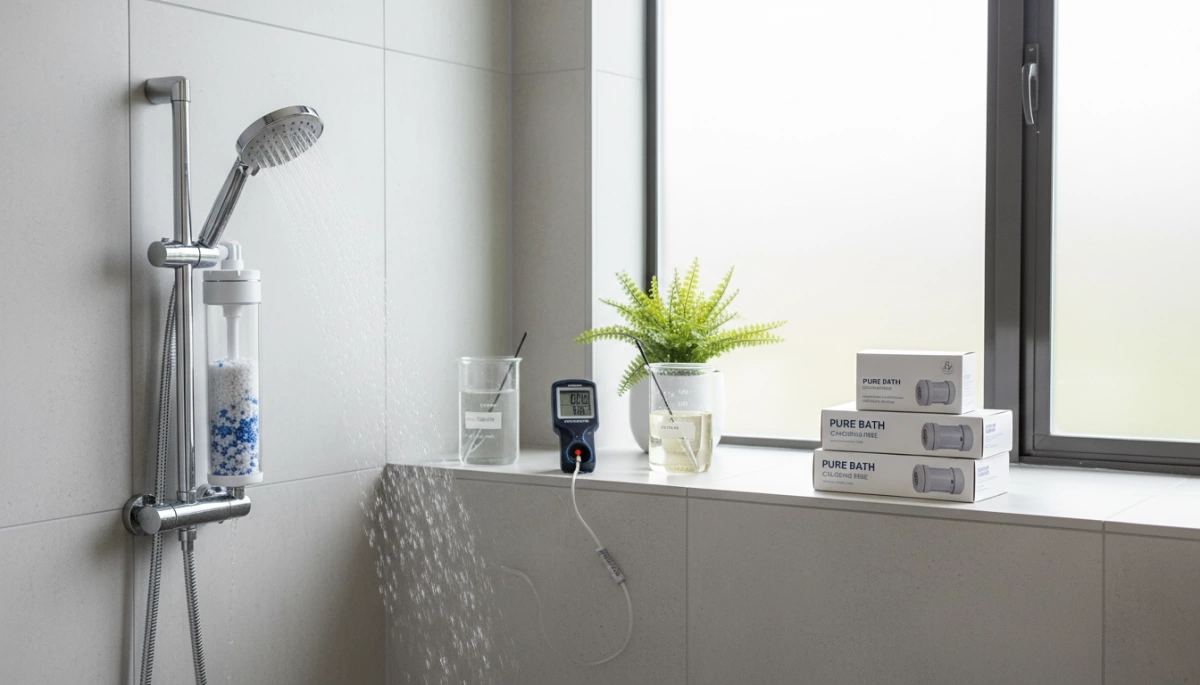
We don’t rely on a single method; we stack them. Our 15-stage shower filter combines the thermal stability of KDF-55, the speed of Calcium Sulfite, and the polishing power of Activated Carbon into one unit. This synergy ensures comprehensive coverage:
- Stage 1-5: Pre-filtration and sediment removal.
- Stage 6-10: KDF-55 and Calcium Sulfite for heavy chlorine and metal reduction.
- Stage 11-15: Revitalization using medicinal stones and final polishing.
This multi-layered architecture prevents the activated carbon thermal limit from becoming a failure point, delivering consistent chlorine removal performance in bath water filters throughout the cartridge’s 6-month lifespan.
Performance Metrics: How to Measure Efficacy
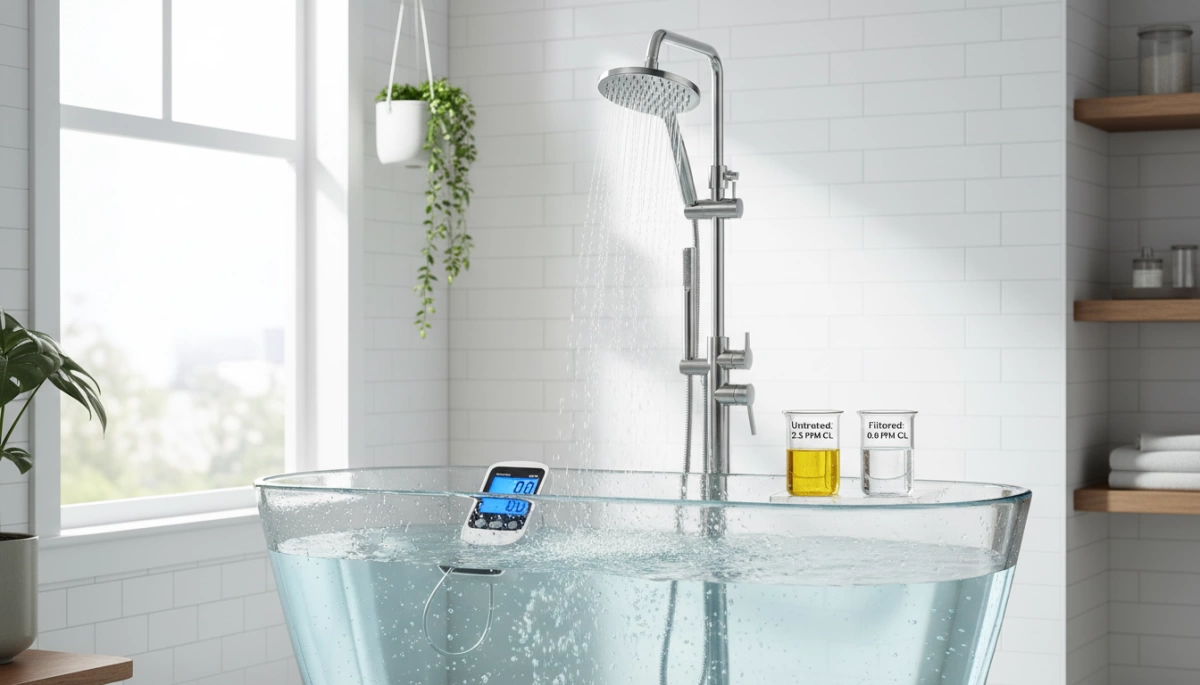
When evaluating Chlorine Removal Performance in Bath Water Filters, marketing fluff doesn’t cut it. We need to look at quantifiable data to ensure the water touching your skin is actually clean. At DripLife, we focus on specific technical benchmarks that define a high-quality filtration experience.
Reduction Rates: Analyzing 90-99% Removal Claims
The primary metric for any shower filter is the chlorine reduction rate. While many standard carbon filters claim high percentages, they often fail in hot water conditions. True performance is measured by how well the media—specifically KDF-55 and Calcium Sulfite—can neutralize chlorine instantly.
- Target Efficiency: We aim for a 90-99% reduction in free chlorine.
- Thermal Stability: High reduction rates must be maintained even when water temperatures exceed 100°F, a range where basic activated carbon often releases trapped contaminants.
Capacity and Lifespan: Gallon Limits vs. Time
A filter’s lifespan isn’t just about calendar months; it’s about volumetric capacity. Most users prefer a simple timeline, which is why we rate our cartridges for approximately 6 months of typical family use. However, the technical limit is defined by the saturation point of the media.
- Usage Load: Heavy usage (multiple daily showers) will deplete the media faster.
- Sediment Load: High levels of sediment can clog mechanical stages before the chemical media is exhausted.
Flow Rate Retention: Filtering Without Pressure Loss
One of the biggest complaints in the US market is pressure drop. High flow rate filtration is non-negotiable. We engineered our 15-stage system to ensure that despite the dense media layers, water flows freely.
- Design: Internal channeling prevents bottlenecks.
- Experience: You get the purification benefits without sacrificing the invigorating spray of your shower.
Certifications: Understanding NSF/ANSI 177 Standards
To validate claims, we look toward the NSF/ANSI 177 standard. This is the specific benchmark for shower filtration systems designed to reduce free available chlorine.
- Structural Integrity: Ensures the unit won’t crack or leak under high pressure.
- Chlorine Reduction: Verifies that the filter actually reduces chlorine by at least 50% throughout its rated capacity, though our internal goals are significantly higher for maximum skin and hair protection.
Health and Cosmetic Implications of Effective Chlorine Removal
When we talk about chlorine removal performance in bath water filters, we aren’t just discussing water chemistry; we are talking about the direct impact on your body. I’ve seen firsthand how switching to a 15-stage filtration system transforms a daily routine from a chemical exposure event into a genuine recovery session. The difference isn’t subtle—it is something you feel on your skin and see in the mirror.
Dermatological Benefits: Restoring the Barrier
Your skin has a natural protective barrier made of oils (sebum) that keeps it hydrated and healthy. Municipal chlorine is harsh; it is designed to strip organic material, which unfortunately includes these natural oils. This is why many people experience “tight” or itchy skin right after toweling off.
By utilizing an eczema relief shower filter equipped with KDF-55 and calcium sulfite, we neutralize the chemicals responsible for this irritation. Reducing transdermal chlorine absorption allows the skin to retain its natural moisture balance. For those suffering from sensitive skin conditions, this removal is critical for reducing flare-ups and maintaining skin friendly shower water.
Hair Health: Protection from Oxidation
If you have ever felt like your hair turns into straw after a few weeks of washing, chlorine is likely the culprit. It oxidizes hair proteins and strips away the protective cuticle.
- Color Retention: Chlorine acts as a mild bleach, causing expensive dye jobs to fade rapidly or turn brassy.
- Texture Preservation: Filtering out harsh chemicals prevents the drying effect that leads to split ends and breakage.
- Natural Shine: Without chemical residue coating the strands, hair regains its natural luster and manageability.
Respiratory Health: Breathing Easier
One often overlooked danger of hot showers is the steam. When chlorinated water heats up, the chemicals vaporize, often creating chloroform gas which we then inhale. This can irritate the lungs and exacerbate asthma or allergy symptoms. A high-performance filter captures these contaminants before they hit the air, ensuring the steam you breathe is as clean as the water washing over you.
Impact of Filtration on Personal Care
| Feature | Unfiltered Bath Water | Filtered (15-Stage System) |
|---|---|---|
| Skin Feel | Dry, tight, itchy | Soft, hydrated, elastic |
| Hair Texture | Brittle, frizzy, “straw-like” | Smooth, shiny, manageable |
| Scalp Health | Prone to dandruff and dryness | Balanced moisture, less irritation |
| Air Quality | Chemical smell (chlorine vapor) | Odorless, fresh steam |
Installation and Practicality
We designed our systems so you do not need a plumber to get top-tier Chlorine Removal Performance in Bath Water Filters. Practicality is just as important as purity, which is why we engineered a hassle-free user experience from setup to maintenance.
Universal Compatibility: Fitting G1/2 Connections
There is no need to guess if this will fit your bathroom. Our units utilize a Universal G1/2 connection, the standard thread size for almost every home in the United States. Whether you have a fixed overhead nozzle, a flexible handheld sprayer, or a luxury rainfall showerhead, our filter integrates seamlessly without requiring adapters.
Ease of Maintenance: Tool-Free Setup
We believe clean water should not be complicated. The installation process is completely tool-free; you simply twist the unit into place by hand. When it is time to refresh the system—typically every 6 months depending on usage—swapping out the internal cartridge is just as easy. This ensures your 15-stage shower filter maintains peak efficiency without becoming a chore.
Scale Inhibition: Preventing Limescale Buildup
Beyond removing chlorine, our multi-stage media acts as a hard water scale inhibitor. By neutralizing the minerals that cause scaling, we help protect your shower fixtures from clogging and extend the life of your plumbing. This means you get consistent water pressure and a cleaner shower environment with less scrubbing required.
Frequently Asked Questions About Bath Water Filters
Navigating the world of water filtration can be tricky. Here are the straight answers to the most common questions we get about maintaining chlorine removal performance in bath water filters.
Do shower filters reduce water pressure?
This is the number one concern for most homeowners. A well-engineered high flow rate filtration system should not noticeably drop your water pressure. While we pack 15 stages of filtration media into our units, the internal architecture is designed to maintain consistent flow. You get the purification without sacrificing that powerful spray you need to wake up in the morning.
How often should I change the filter cartridge?
To keep your chlorine removal bath water filter operating at peak efficiency, we recommend replacing the cartridge every 6 months. However, this can vary based on two factors:
- Water Quality: If your local water has extremely high sediment or heavy metal levels, the media may saturate faster.
- Household Size: A family of four taking daily showers will deplete the calcium sulfite and KDF-55 process media faster than a single user.
Do these filters remove chloramine effectively?
Yes, but it requires specific technology. Standard carbon filters struggle with chloramines (a mix of chlorine and ammonia) because the contact time in a shower is too short. That is why we utilize a multi-stage approach. By combining KDF-55 and calcium sulfite, our systems effectively break down the chemical bonds of chloramines, offering superior protection compared to single-stage filters.
Is KDF better than activated carbon for showers?
For hot water applications, KDF-55 is the clear winner. Here is the breakdown:
- Activated Carbon: Excellent for cold drinking water, but heat causes the pores to expand, allowing captured contaminants to release back into the water.
- KDF-55 & Calcium Sulfite: These use a redox reaction (oxidation-reduction) to neutralize chlorine and heavy metals instantly, even in high temperatures.
For the best results in hot showers, relying solely on carbon isn’t enough. You need a robust system like our aluminum alloy shower filter suitable for hard water dechlorination to handle the thermal challenges of bath water.