










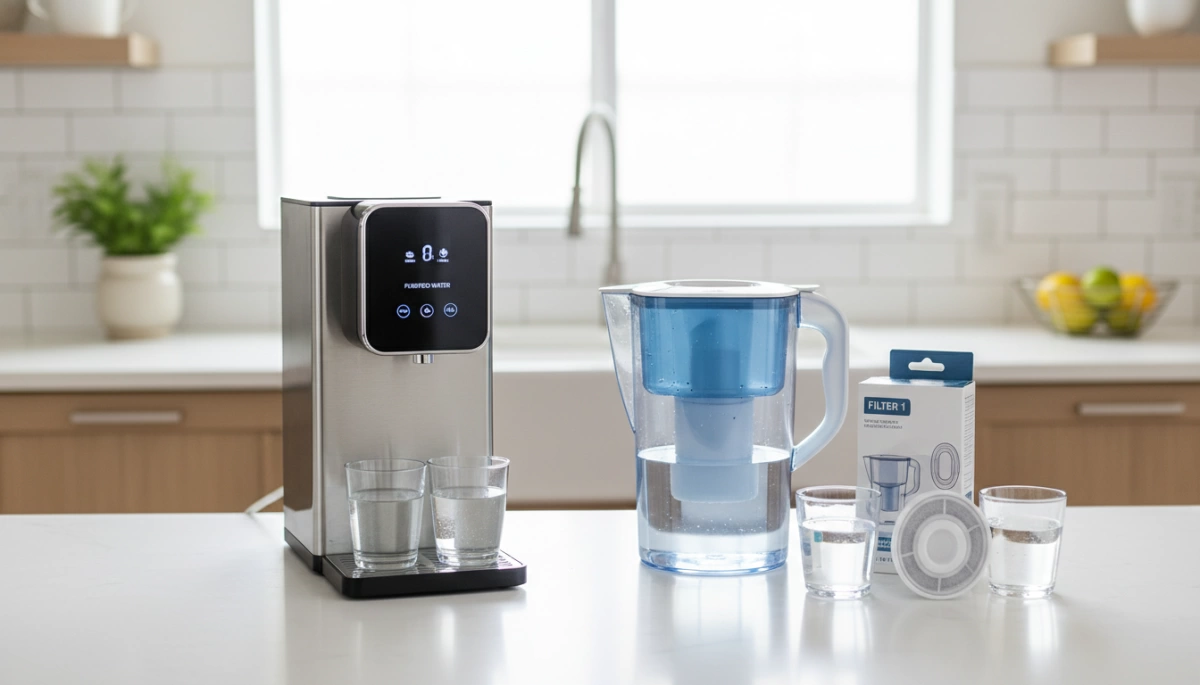
Understanding Water Filter Dispensers vs Pitcher Filters
If you’re worried about what’s actually in your tap water, but also tired of hauling bottled water, you’re probably comparing a water filter dispenser vs pitcher filter and trying to figure out what really fits your home.
What is a water filter pitcher?
A water filter pitcher is the classic fridge-friendly jug most of us know:
- You pour tap water into a top reservoir.
- Gravity pulls the water through an activated carbon filter (sometimes with ion exchange resin).
- Filtered water collects in the bottom reservoir, ready to pour.
It’s a compact, portable solution that usually holds around 6–12 cups. Pitchers are ideal as a budget friendly water filter option for singles, couples, or anyone who wants a simple refrigerator water filter pitcher that improves taste and reduces basic contaminants like chlorine.
What is a water filter dispenser?
A water filter dispenser works on the same basic principle but at a larger scale:
- You pour tap water into a bigger upper tank.
- The water flows down through a gravity fed water filter cartridge.
- Filtered water is stored in a large lower reservoir and dispensed through a spigot or tap.
This is essentially a countertop water dispenser filter or a gravity water dispenser for fridge with high capacity water filter home storage—often 18–27+ cups—designed as a family hydration station dispenser rather than a personal pitcher.
How gravity-fed, non‑plumbed filtration works
Both pitchers and dispensers are gravity fed, non‑plumbed systems:
- No plumbing, tools, or electricity.
- You add water manually; gravity does the work, pulling water through the filter media.
- The filter media (usually activated carbon plus other layers in better systems) traps chlorine, some heavy metals, and improves taste and odor.
Think of it as a reusable home water filtration solution that sits in your fridge or on your counter instead of being hard‑wired into your plumbing.
Design differences: pitcher vs dispenser
The key design difference is simple:
Pitcher filters
- Smaller, lighter, easy to lift and pour.
- Designed to fit in a fridge door or small shelf.
- Best for slow filtration pitcher setups where only 1–2 people are using it.
Filtered water dispensers
- Larger footprint for countertop or wide fridge shelf.
- Use a filtered water dispenser spigot instead of pouring.
- Built as large capacity filtered water dispensers for families, sharers, or home offices.
Because of this, a dispenser style almost always implies higher volume and family‑focused use: more people, more glasses per day, less refilling, and less fighting over who finished the pitcher.
Real world use: US, China, and urban homes
In real homes, I see a clear split in how people use these:
- In the US, pitcher filters are common in college housing, small apartments, and starter homes; large capacity filtered water dispensers show up in family kitchens and home offices where everyone refills all day.
- In China and dense urban markets, countertop gravity systems and fridge‑style dispensers often replace bottled water for everyday drinking, especially where people are more skeptical of tap water.
- In urban apartments and shared houses, a family size water filter option like a dispenser cuts down on refill fights and gives instant access filtered water without needing an under sink system.
The core idea is straightforward:
- If you want portable, compact, and simple, a water filter pitcher wins.
- If you want high volume, shared access, and less refilling, a gravity fed water filter dispenser is usually the better fit.
Filtration Performance: Pitcher vs Dispenser
When I compare a water filter dispenser vs pitcher filters, the real difference shows up in filtration performance, especially for American families worried about chlorine taste, lead, and PFAS.
Activated Carbon In Pitchers And Dispensers
Both pitcher filters and countertop water dispenser filters usually rely on activated carbon. In simple terms, carbon works like a sponge with millions of tiny pores that trap:
- Chlorine and chemical byproducts that cause bad taste and odor
- Some organic compounds from aging pipes and municipal treatment
- Certain industrial residues, depending on the filter design
The core tech is similar in both categories, but how much carbon you get and what it’s combined with matters a lot for performance.
Single-Stage Pitcher Filters vs Multi-Stage Dispensers
Most basic refrigerator water filter pitchers use a single-stage cartridge: mainly carbon, maybe a bit of ion exchange resin. It’s a solid upgrade for taste and chlorine, but it’s limited for tougher contaminants.
Higher-end large capacity filtered water dispensers usually move to multi-stage cartridges that may include:
- Granular or block activated carbon
- Ion exchange media for metals like lead
- Additional specialty media for PFAS or heavy metals
That multi-stage setup is where a gravity fed water filter comparison starts to tilt toward dispensers for performance, not just volume.
Contaminant Removal: Chlorine, Lead, PFAS, Taste & Odor
For most US tap water, taste and chlorine removal are the baseline. Both pitchers and dispensers do this, but:
- Chlorine & odor: Both categories perform well if you choose a reputable brand
- Lead reduction: Look for NSF/ANSI 53 certification; many basic pitchers don’t have it
- PFAS: Only specific models are tested for PFAS reduction; this is where premium multi-stage dispensers stand out
- Fine sediment & particles: Larger cartridges in dispensers usually handle higher loads without clogging as fast
If you’re comparing contaminant removal pitcher vs dispenser performance, bigger multi-stage cartridges simply have more media to work with, so they can do more per gallon.
NSF/ANSI Certifications And What They Really Mean
NSF/ANSI certifications matter more than marketing claims. For home users in the US, the main ones to look for are:
- NSF/ANSI 42: Aesthetic effects – chlorine, taste, odor
- NSF/ANSI 53: Health effects – lead and other harmful contaminants
- NSF/ANSI 401: Emerging contaminants – pharmaceuticals, some PFAS compounds
Certified pitcher filters and dispensers are both tested to meet these standards, but not every product is certified for all of them. A premium dispenser with multi-stage filtration and NSF/ANSI 53/401 gives a big edge over entry-level pitchers if you’re worried about lead or PFAS.
Consistency Over Time: Small vs High-Capacity Systems
A key difference in water filter pitcher pros cons vs dispensers is how consistent filtration stays as the cartridge loads up:
- Small pitcher cartridges can exhaust faster, especially in cities with older pipes
- Larger dispenser cartridges handle more gallons before performance drops
- With high capacity systems, you’re less likely to “push” a filter too far because change intervals are usually clearly defined in gallons and time
This is where cost effective home water filtration meets performance: a larger cartridge typically delivers more stable results over its full lifespan.
Gravity Limits vs Advanced Systems
Both pitchers and dispensers are gravity fed, so there are real-world limits:
- Flow is slower than faucet mount or under sink systems
- Very fine filtration (like ultra-tight PFAS or microplastic removal) can slow water down even more
- For very poor tap water, a gravity pitcher or dispenser might not be enough; a plumbed under sink system will usually outperform both
If you want instant access filtered water with strong performance, a high-capacity dispenser with a multi-stage gravity cartridge is a smart middle ground between basic pitchers and full under sink systems. For example, our countertop water cooler dispenser is designed around this balance: multi-stage filtration, higher volume, and better consistency without giving up everyday convenience.
Filtration Speed and Everyday Convenience
When I compare a water filter dispenser vs pitcher filters, speed and everyday convenience are where most people in the U.S. feel the difference first.
Pitcher Filtration Time vs Instant Access
Most gravity-fed pitcher filters (think typical Brita pitcher vs dispenser setups) take about 5–15 minutes per refill to drip through. That’s fine if you’re just topping up a refrigerator water filter pitcher for one or two people, but it gets old fast when:
- You’re cooking and need several pots of water
- You’ve got guests grabbing drinks back-to-back
- Your kids keep emptying the pitcher in one shot
A large capacity countertop water dispenser filter works differently day to day. Because the storage tank holds pre-filtered water, you get instant access filtered water from the spigot. The filtration happens in the background while you’re already enjoying clean water.
Refill Frequency: Pitcher vs Dispenser
For most households:
- Pitcher filters (6–12 cups): You may refill 2–5 times a day if you cook often or have a family that drinks a lot of water.
- Large capacity filtered water dispensers (18–27+ cups): You usually refill once a day, or even every other day, depending on usage.
In real life, that means less “who forgot to refill the pitcher?” and more consistent water availability. A family hydration station dispenser on the counter or in the fridge becomes a central spot everyone uses without thinking.
Everyday Convenience at Home and Work
For kids, guests, and home offices, a gravity water dispenser for fridge or countertop is simply easier:
- Kids can use the filtered water dispenser spigot themselves without lifting and pouring.
- Guests can serve themselves quickly during parties or dinners.
- In a home office, you always have ready-to-pour, cost effective home water filtration without waiting on slow gravity flow.
Slow filtration is a real drawback when you need bigger volumes fast, but it matters less if:
- You live alone and only refill a small pitcher once a day
- You mainly use filtered water for drinking, not much for cooking
- Your water demand is predictable and low
If you’re unsure how this fits into your bigger water setup, it helps to understand different home water filter types and how they compare, especially if you’re choosing between faucet mount vs water filter dispenser or under sink vs pitcher filter.
Capacity, Storage, and Household Fit
When I look at capacity, the comparison positioning of a water filter dispenser vs pitcher filter is pretty clear: they’re built for different household rhythms.
Most water filter pitchers hold around 6–12 cups (48–96 oz). That’s usually enough for:
- Singles who mostly drink at home in the evenings
- Couples with moderate water intake
- Small fridges where a refrigerator water filter pitcher has to live in the door
Countertop and fridge-style large capacity filtered water dispensers typically hold 18–27+ cups (1.1–1.7 gallons). That size lines up better with:
- Families with kids who refill bottles all day
- Roommates in shared houses
- Home offices that need an all-day family hydration station dispenser
Space is the next big filter:
- Pitchers fit cleanly in fridge doors or narrow shelves and work well in tight city apartments.
- Dispensers need a full fridge shelf or a stable countertop; they’re closer to a compact kitchen countertop water filter system than a simple jug.
Refill frequency is where the gravity fed water filter comparison really shows up in daily life:
- A pitcher might need refilling 3–6 times a day in a busy household.
- A high capacity countertop water dispenser filter might only need 1–2 refills a day, even for heavy water drinkers.
For U.S. apartments, small kitchens, and dorms, I usually steer people toward a BPA free water filter container in pitcher form if:
- You’re mainly 1–2 people
- Your fridge is already crowded
- You care more about saving space than having instant access filtered water for everyone
For suburban family homes, townhouses, or larger shared rentals, a high capacity water filter home setup with a dispenser fits better if:
- You’re filling multiple 24–32 oz bottles daily
- You host guests often
- You want less “who forgot to refill the pitcher?” drama
A simple way to match capacity to your daily drinking water habits:
- Add up how many 8 oz cups you realistically drink per person per day.
- Multiply by number of people.
- Aim for a dispenser or pitcher that holds at least half to three-quarters of that total so you’re not refilling nonstop.
If your tap water has more serious issues like high TDS or specific contaminants, pairing a gravity dispenser with more advanced treatment (similar to how we design high TDS dual-membrane RO solutions) can give you capacity and better quality at the same time.
Cost Breakdown and Long Term Value: Water Filter Dispenser vs Pitcher Filters
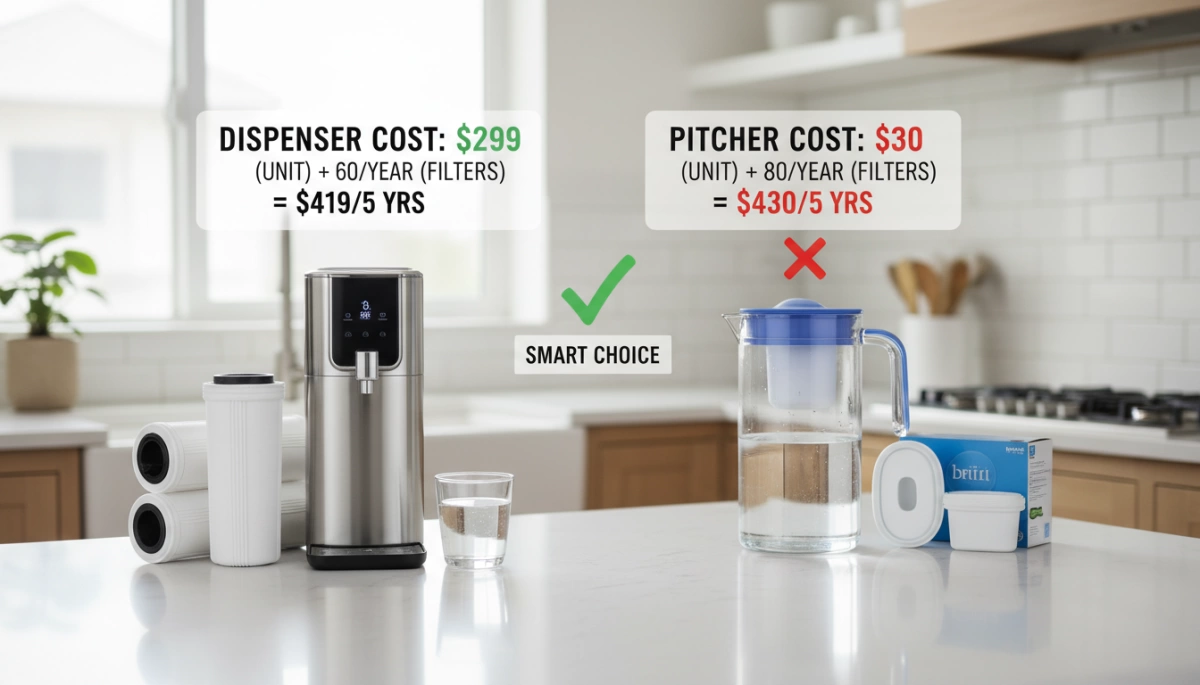
When I look at cost, I always compare pitcher filters vs water filter dispensers over at least 1–3 years, not just the sticker price on day one.
Upfront Price: Pitcher vs Dispenser
- A basic water filter pitcher usually runs lower, often in the budget-friendly range for first-time buyers.
- A large capacity filtered water dispenser or countertop water dispenser filter typically costs more upfront because of the size, materials, and multi-stage cartridges.
- If you drink a lot of water or have family-size water filter needs, that higher upfront price on a gravity water dispenser for fridge or counter often pays off in lower hassle and better performance.
Ongoing Filter Replacement Costs
- Pitcher filters use small, single-stage cartridges; they’re cheaper each time, but you replace them more often (every 1–2 months in many homes).
- Dispensers usually use larger, multi-stage cartridges; they cost more per piece, but they last longer and treat more gallons per filter.
- For cost effective home water filtration, I always check both the price per cartridge and the recommended change interval on the box.
Cartridge Size, Frequency, and Cost
- Small pitcher cartridges handle fewer gallons, so heavy water drinkers and families burn through them quickly.
- Larger dispenser cartridges offer high capacity water filter coverage, so you change them less often, which cuts down on both shipping and plastic waste.
- If you care about eco friendly drinking water alternatives, bigger cartridges and reusable home water filtration solutions will usually win.
Total Cost vs Bottled Water
- Both pitcher filters and dispensers beat plastic bottled water on cost once you get past the first few months.
- If a system costs you, say, $100–$200 per year including filters, that still usually undercuts regular cases of bottled water by a wide margin.
- Looking at total cost of ownership, gravity fed water filter comparison vs bottled water isn’t even close—home filtration is almost always cheaper and cleaner for your home and the planet.
If you want to understand how activated carbon and multi-stage cartridges keep those costs low while improving water quality, it’s worth taking a look at a carbon water filter system breakdown, especially if you’re comparing pitcher filter vs dispenser performance.
Lifespan and Durability: Pitchers vs Dispensers
- Pitcher bodies are lighter and more portable, but the hinges, handles, and lids can wear out faster with daily fridge-door use.
- A sturdy, BPA free water filter container in dispenser form usually has thicker plastic, stronger handles, and a better spigot, so it can handle family hydration station duties longer.
- In real U.S. kitchens, a well-made dispenser often becomes a long-term fixture, while cheaper pitchers tend to get replaced more frequently.
How to Calculate Cost Per Gallon
To compare any water dispenser vs pitcher filter on real value, I always break it down like this:
- Add up the total cost for one year: system price (spread over years) + filters for one year.
- Estimate total gallons per year: people in the home × average daily cups × 365.
- Divide yearly cost by yearly gallons to get cost per gallon.
That quick cost-per-gallon check makes it easy to compare Brita pitcher vs dispenser, under sink vs pitcher filter, or even faucet mount vs water filter dispenser options side by side so you know exactly what you’re paying for every glass.
Ease of Use, Cleaning, and Maintenance: Water Filter Dispenser vs Pitcher Filters
When I compare a water filter dispenser vs pitcher filter for everyday use, I look at how they feel to live with day in, day out—not just what’s on the spec sheet.
Day‑to‑day use: lifting, pouring, spigot
- Pitcher filters are lighter and easy to grab with one hand, but constant tilting and pouring can get old if your family goes through a lot of water.
- A countertop water dispenser filter or gravity water dispenser for the fridge lets you leave it in place and use the spigot for instant access filtered water—better for kids, guests, and quick refills.
- For family hydration station style setups, a large capacity filtered water dispenser with a smooth spigot is simply more convenient than a pitcher for busy kitchens and home offices.
Moving and refilling: pitcher vs dispenser
- A refrigerator water filter pitcher is easier to carry to the sink and fits well under most faucets, so refilling feels quick and light.
- A full dispenser is heavier and more awkward to move; most people slide it to the sink or use a removable reservoir instead of lifting the whole unit.
- If you refill once or twice a day for a high capacity water filter home setup, the extra weight can be worth it to cut down refill frequency compared to a pitcher.
Cleaning routine and avoiding odors
- Both pitcher filters and dispensers need a simple cleaning routine to avoid mold, slime, and musty smells:
- Wash the container, lid, and spigot (for dispensers) with mild dish soap weekly.
- Rinse cartridges, but don’t scrub the media directly unless the manufacturer says so.
- Let parts air‑dry completely when possible to cut down on biofilm and odor.
- For dispensers, pay special attention to the filtered water dispenser spigot and any seals—these small parts can trap gunk if you skip them.
- If you care about connection design and long‑term hygiene, it’s worth understanding different filter cartridge connection types and how they impact ease of cleaning and maintenance.
Filter changes and real‑world frequency
- Pitcher filters typically use smaller, single‑stage cartridges that need replacement every 40–60 gallons (about every 1–2 months for most U.S. households).
- Large dispensers often use bigger, multi‑stage cartridges, so you can stretch changes closer to 2–3 months at similar usage, which improves cost effective home water filtration.
- For both pitcher filter vs dispenser performance, I always follow the gallon rating, not just the calendar—heavy water drinkers may need more frequent changes to keep chlorine taste removal and lead reduction on spec.
- Look for clear filter life indicators or reminder apps if you tend to forget maintenance.
BPA‑free materials, build, and safety
- I always recommend BPA free water filter container designs with sturdy handles, tight lids, and crack‑resistant plastics—especially when kids are using them.
- For a kitchen countertop water filter system or gravity fed water filter comparison, make sure:
- All water‑contact plastics are food‑grade and BPA free.
- The spigot and seals are leak‑resistant and easy to remove for cleaning.
- Any NSF certified water filter pitcher or dispenser clearly lists which standards (like chlorine, taste, odor, lead, or PFAS reduction) it meets.
- Solid build quality isn’t just about looks; it keeps joints tight, reduces micro‑cracking, and helps your system stay hygienic longer.
Portability and how you actually use it
- Pitchers win for portability:
- Easy to carry between rooms, set on a desk, or take to a small office.
- Better for trips, dorms, or temporary setups where you don’t want a big footprint.
- Dispensers win as a “set it and forget it” family hydration station dispenser, staying parked in one spot and serving a crowd.
- If you need a reusable home water filtration solution that can move around a lot, a pitcher filter makes more sense; if you want a dedicated, high‑capacity station that cuts down on plastic bottled water alternative use, a dispenser is usually the smarter pick.
Pros and Cons: Water Filter Dispenser vs Pitcher Filters
Water Filter Pitcher Pros
- Low upfront cost – easiest, most budget friendly way to start with cost effective home water filtration.
- Compact and portable – fridge door friendly, easy to carry to the sofa, office, or bedroom.
- Simple to use – just fill, wait, and pour; great for first‑time filter users.
- Good basic performance – most NSF certified water filter pitcher models cut chlorine taste and odor, and some reduce lead.
Water Filter Pitcher Cons
- Slow filtration pitcher drawbacks – gravity flow plus small cartridges means you often wait for every refill.
- Limited capacity – 6–12 cups runs out fast for families or guests.
- More refills – higher refill frequency vs dispenser, especially for heavy water drinkers.
- Lower performance options – many entry pitchers don’t target PFAS or advanced contaminant removal.
Water Filter Dispenser Pros
- High capacity water filter for home – 18–27+ cups creates a true family hydration station dispenser.
- Instant access filtered water – pre‑filtered storage plus a filtered water dispenser spigot means no waiting during meal prep.
- Better for families and sharers – ideal countertop water dispenser filter for busy kitchens and home offices.
- Stronger filtration options – large cartridges can support multi‑stage, higher performance gravity fed water filter designs.
Water Filter Dispenser Cons
- Takes more space – needs fridge shelf or countertop space; not ideal for very small kitchens.
- Heavier when full – harder to move than a small refrigerator water filter pitcher.
- Higher upfront price – large capacity filtered water dispenser systems usually cost more than basic pitchers.
- Requires clear placement – you need room to use the spigot comfortably.
Quick Comparison Table: Pitcher vs Dispenser
| Factor | Water Filter Pitcher | Water Filter Dispenser |
|---|---|---|
| Performance | Basic; some lead reduction | Often stronger; better contaminant removal |
| Filtration Speed | Slower; wait per refill | Instant access from stored filtered water |
| Capacity | 6–12 cups | 18–27+ cups (large capacity) |
| Cost (Upfront) | Lower, budget friendly | Higher, but still cost effective long term |
| Space | Fridge door or small shelf | Fridge shelf or kitchen countertop |
| Everyday Convenience | Best for singles/couples, light use | Best for families, sharers, heavy water users |
If you care most about space and price, a pitcher usually wins. If your priority is performance, speed, and fewer refills, a gravity water dispenser for fridge or countertop is the better fit. For some homes, pairing a dispenser with a faucet mounted filter for cooking water makes sense, especially with options like a compact faucet tap water filter to boost kitchen convenience without taking extra space.
Who a Pitcher Filter Is Best For
A water filter pitcher is the right call if you want simple, low‑cost, everyday filtration without changing how your kitchen is set up. When I look at buyer behavior in the US, pitcher filters tend to fit people who just want better‑tasting tap water fast, at the lowest possible price, with almost no learning curve.
Signs a Pitcher Filter Fits Your Lifestyle
You’re a good match for a water filter pitcher if:
- You live alone or with one other person and don’t blow through gallons of water every day.
- You mostly care about better taste, chlorine reduction, and basic odor removal, not building a full “family hydration station.”
- You want a budget friendly water filter option and don’t want to commit to a bigger countertop water filter system yet.
- You’re renting, moving often, or in a dorm/office where you can’t install anything permanent.
Budget-Focused and First-Time Filter Users
For first‑time buyers, a pitcher filter is usually the easiest way to test if home filtration fits your habits:
- Lower upfront price than a large capacity filtered water dispenser or faucet system.
- Simple gravity fed water filter design—no tools, no plumbing, no learning curve.
- Replacement filters are easy to find at grocery and big‑box stores across the US.
If you’re currently buying plastic bottled water every week, a cost effective home water filtration pitcher is a clear upgrade—cheaper over time and less waste.
When Fridge-Friendly Design Is a Real Win
A refrigerator water filter pitcher shines in smaller US kitchens and apartments:
- Fits on the fridge door or a shallow shelf, so you always have cold, filtered water ready.
- No need to sacrifice countertop space for a big gravity water dispenser for fridge or counter.
- Great for people who mostly drink water at home and don’t need to fill big jugs all day.
When Portability Matters More Than Capacity
If you move around a lot during the day, a pitcher is simply more flexible than a heavy dispenser:
- Easy to carry between rooms, from kitchen to home office to backyard.
- Works well for small teams in a shared workspace who want instant access filtered water at their desks without installing anything.
- Light enough for kids or older family members to pour without struggling.
When a Basic Taste and Chlorine Upgrade Is Enough
A standard water filter pitcher is ideal when your main complaint is “my tap water tastes and smells off”:
- Designed to cut chlorine taste and odor so coffee, tea, and cooking taste better.
- Good starting point if your main concern is flavor, not heavy metals or PFAS yet.
- If you care more about advanced contaminant reduction (lead, PFAS, etc.), that’s where higher performance cartridges or systems come in, similar to how premium tankless RO filters upgrade basic filtration.
When You Might Outgrow a Pitcher Filter
Even if a pitcher is perfect on day one, there are clear signs you’ll outgrow it:
- You’re refilling it multiple times a day and still running out during meals or when guests come over.
- You’re building a bigger household (kids, roommates, extended family) and need a high capacity water filter home setup.
- You start caring about contaminant removal pitcher vs dispenser performance, and want better specs than a single small cartridge can offer.
When that happens, most buyers move up to a large capacity filtered water dispenser or a connected system, but starting with a pitcher is still a smart, low‑risk way to learn your real daily water habits.
Who a Water Filter Dispenser Is Best For
A high‑capacity water filter dispenser is the right move if you’re tired of refilling a small pitcher and running out of cold water when everyone’s thirsty at once. It’s built for real‑world, high‑demand use, not just the occasional glass.
Signs a Dispenser Fits Your Home
You’ll get more value from a countertop water dispenser filter or gravity water dispenser for the fridge if:
- You live in a larger household, share an apartment, or host often.
- You or your family drink a lot of water, iced tea, or make coffee all day.
- Your current pitcher is always empty or constantly “still filtering.”
- You want a dedicated “family hydration station” that everyone can access without lifting and pouring.
Best For Larger Households & Heavy Water Drinkers
Water filter dispensers shine for:
- Families with kids who refill bottles all day.
- Roommates or shared homes where 3–6 people use the same kitchen.
- Home offices where staff or guests regularly grab water.
The large capacity filtered water dispenser design means you fill it once, then everyone uses the spigot without fighting over a slow, small pitcher.
Instant Access at the Spigot vs Waiting on a Pitcher
With a dispenser, filtration happens upfront and you store multiple gallons of clean water, ready to go. That matters when:
- You’re cooking, making coffee, or mixing baby formula and don’t have time to wait.
- You’re filling big jugs, sports bottles, or pet bowls.
- You host guests and don’t want to refill a slow filtration pitcher every 10 minutes.
Instant access filtered water from a dispenser spigot simply beats the stop‑and‑wait routine of a slow filtration pitcher, especially during busy mornings and evenings.
Less Refills, Less Hassle in Busy Kitchens
Compared with a pitcher, refill frequency pitcher vs dispenser isn’t even close:
- Pitchers (6–12 cups) often need refilling multiple times a day.
- Dispensers (18–27+ cups) usually handle a full day or more for most families.
If you’re running a busy kitchen or home office, cutting refills in half (or more) is a real quality‑of‑life upgrade and a very cost effective home water filtration choice.
Eco‑Friendly Habits and Less Bottled Water
A large capacity home water filter dispenser makes it practical to get off plastic bottles for good:
- Everyone can refill reusable bottles easily.
- Cold, good‑tasting water is always available, so you’re less tempted to buy cases of bottled water.
- You build a daily eco friendly drinking water habit without sacrificing convenience.
Over time, this kind of reusable home water filtration solution is better for your budget and the planet than relying on disposable bottles.
When a High‑Capacity Dispenser Replaces Other Systems
For a lot of US households, a high capacity water filter home setup can delay or even replace the need for more complex systems:
- If your main goals are taste, chlorine reduction, and basic contaminant control, a gravity fed water filter dispenser can cover most daily drinking and cooking needs.
- It can be a simpler alternative to a faucet mount vs water filter dispenser setup if you don’t want to mess with tools or plumbing.
- In smaller homes and apartments, a well‑designed dispenser can stand in for a full countertop water filter system without taking over the whole counter.
If you decide you need even more performance later (for example, RO or advanced filtration for very hard water), you can look at a connected solution like a compact countertop cold water purifier system and still keep your dispenser as a convenient, high‑volume storage and serving station.
Comparison Positioning for 2026 Buyers: Water Filter Dispenser vs Pitcher Filters
Pitchers & Dispensers vs Bottled Water
By 2026, bottled water is the most expensive and least convenient way to get clean drinking water at home.
- Cost per gallon
| Option | Approx. Cost per Gallon | Notes |
|———————————|————————–|——————————————–|
| Bottled water (single-use) | $0.80–$1.50+ | Depends on brand, size, and store |
| Pitcher filter | ~$0.10–$0.25 | Budget friendly water filter option |
| Large capacity dispenser filter | ~$0.08–$0.20 | Better value at higher volumes | - Positioning: Both pitcher filters and large capacity filtered water dispensers are cost effective home water filtration options and strong plastic bottled water alternatives.
- For a typical U.S. family, a family size water filter dispenser can cut bottled water costs by hundreds of dollars a year while keeping PFAS and chlorine taste under control.
Pitcher & Dispenser vs Faucet, Under Sink, Plumbed
Gravity fed water filter comparison against more advanced systems:
- Faucet-mount filters
- Good for renters and light use
- Faster flow than a pitcher, but less capacity than a countertop water dispenser filter
- Best when you mainly use filtered water for cooking and drinking at the sink
- Under-sink RO or multi-stage systems
- Highest performance, especially for heavy contaminant issues and PFAS concerns
- Better for homeowners or long-term renters
- If you’re already looking at a high-end option, something like an under-sink RO system (for example, a high-capacity under-sink reverse osmosis system) can replace the need for bottled water completely
- Plumbed fridge / whole-kitchen systems
- “Set it and forget it” convenience
- Higher upfront cost, more installation work
- Pitchers and dispensers win on flexibility, no plumbing, and low entry cost
Trends: US, China, and Urban Markets
Across 2026 buyers, we see similar behavior in the water dispenser vs pitcher filter market:
- United States
- Big move away from bottled water toward reusable home water filtration
- Families in suburbs favor high capacity water filter home setups like countertop or fridge dispensers as a “family hydration station”
- China & dense urban markets
- Smaller kitchens but very high concern about tap water quality
- Strong interest in instant access filtered water plus compact footprints—gravity water dispensers for fridge shelves and slim countertop water filter systems are growing
- Common thread
- Buyers want simple, low-maintenance, eco friendly drinking water alternatives that still handle chlorine taste and key contaminants.
Why Many Buyers Upgrade from Pitcher to Dispenser
In real homes, especially in the U.S., a typical path is:
- Start with a refrigerator water filter pitcher or basic Brita-style setup
- Run into slow filtration pitcher drawbacks and constant refills
- Upgrade to a large capacity filtered water dispenser spigot for shared use
Main triggers to upgrade:
- Too many refills per day for families or roommates
- Guests over often, pitcher runs empty and filtration speed can’t keep up
- Kids or older adults struggle with lifting a full pitcher
- Desire for a dedicated family hydration station dispenser on the counter or in the fridge
Should You Skip Straight to a Dispenser or System?
Use this quick positioning guide:
- Start with a pitcher if:
- You live alone or as a couple and drink moderate amounts of water
- You want the lowest upfront cost and easy trial of home filtration
- Portability (bedroom, office, small fridge) is a big deal
- Skip to a dispenser if:
- You have 3+ people using filtered water daily
- You host often and need instant access filtered water at the spigot
- You’re already annoyed by constant refilling or waiting on gravity filtration
- Jump to an under-sink or plumbed system if:
- You have serious contaminant concerns (well water, heavy metals, PFAS)
- You cook a lot and want filtered water at the tap for everything
- You prioritize “always on” high performance over a low entry price
Future-Proofing Your Choice
Think 2–5 years ahead, not just today:
- Growing family or more roommates coming?
- Lean toward a high capacity water filter home dispenser or under-sink system now; you’ll outgrow a small pitcher quickly.
- Likely to move or rent short term?
- A gravity fed water filter dispenser or pitcher stays flexible—no plumbing, easy to pack, works in any kitchen.
- Water quality might change?
- If you might shift from city tap to well water or you’re worried about heavier contaminants down the road, plan for a path from pitcher/dispenser to a stronger system like under-sink RO or a combined setup.
In 2026, the clear positioning is this:
- Pitcher filters are entry-level, budget-friendly, and portable.
- Water filter dispensers are the practical everyday solution for most U.S. families and sharers who care about convenience, speed, and reduced bottled water use.
How Driplife Fits Into Pitcher and Dispenser Choices
When you’re comparing a water filter dispenser vs pitcher filters, Driplife sits in the sweet spot for buyers who want better performance than basic brands without paying “big-name” premiums. I run Driplife as a manufacturer and supplier, so we design our gravity fed water filter pitchers and large capacity filtered water dispensers from the ground up for real family use in the US, not just for nice photos on a product page.
Driplife Water Filter Pitcher Designs
Our water filter pitcher lineup improves on entry-level Brita-style pitchers in a few key ways:
- Multi-stage cartridges instead of basic single-stage for better chlorine taste removal, lead reduction, and PFAS-focused media options.
- Faster gravity fed filtration to cut the usual slow filtration pitcher drawbacks that frustrate busy households.
- Fridge-friendly footprints that fit US refrigerator doors and shelves, so you actually use the pitcher every day.
- BPA free water filter containers with reinforced handles, so lifting and pouring a full refrigerator water filter pitcher feels solid and safe.
If you’ve tried a basic Brita pitcher vs dispenser setup before and felt limited by speed or taste, our pitcher range is built to be the “no-drama” upgrade that still stays budget friendly.
Driplife Countertop and Fridge Dispensers
For families, sharers, and home offices, we put most of our product thinking into high capacity water filter home dispensers:
- Balanced capacity and footprint – family hydration station dispensers with 18–27+ cup capacity that still fit on standard US countertops or fridge shelves.
- Instant access filtered water via a smooth, drip-free filtered water dispenser spigot so you’re not waiting on a slow pitcher during meal prep.
- Gravity water dispenser for fridge or countertop setups that give you flexibility if you move, rent, or rearrange your kitchen.
- Durable builds designed for all‑day use in shared kitchens and offices, similar in mindset to our high-capacity water filter solutions for public settings.
These dispenser models are the right move when refill frequency, guest use, and busy cooking days make a small pitcher feel like a chore.
Multi-Stage Filtration and Longer Cartridge Life
Compared with basic pitcher filters, our cartridges are built for performance and value:
- Multi-stage filtration that combines activated carbon, ion exchange, and specialty media to improve contaminant removal pitcher vs dispenser performance across chlorine, heavy metals, and emerging concerns like PFAS.
- Larger media volume per cartridge so you change filters less often, cutting your cost effective home water filtration cost per gallon over time.
- Consistent flow rates designed to keep gravity fed water filter comparison performance steady instead of slowing to a trickle midway through the cartridge life.
You get the simplicity of a reusable home water filtration solution with closer-to-system-level performance, without needing a plumber.
Quality, Certifications, and Sustainability
US buyers care about safety and long-term value, so we build around that:
- NSF-style testing and compliance focus for chlorine taste removal comparison, lead reduction, and material safety to match the expectations you’d have for an NSF certified water filter pitcher or dispenser.
- BPA-free plastics and food-grade materials across both pitcher and countertop water dispenser filter lines.
- Plastic bottled water alternative positioning, so one family size water filter option can realistically replace cases of disposable bottles and cut waste.
We also prioritize long-life components and standardized cartridges, so you’re not locked into a short-lived product cycle.
Choosing the Right Driplife Model for Your Home
To match the right Driplife system to your kitchen and habits, I always recommend starting with three questions:
How many people and how much water?
- Singles and light users: a compact pitcher filter vs dispenser setup usually favors the pitcher.
- Families, sharers, and heavy water drinkers: a large capacity filtered water dispenser wins on convenience and refill frequency.
Where will it live?
- Tight apartments and small fridges: slim refrigerator water filter pitcher or low-profile gravity water dispenser for fridge shelves.
- Larger kitchens or home offices: countertop water dispenser filter systems with higher capacity.
What’s your main goal?
- Basic taste and chlorine upgrade on a budget: start with a Driplife pitcher.
- Less hassle, better performance, and a full-time family hydration station dispenser: go straight to a Driplife dispenser, or pair it with an under sink vs pitcher filter setup as your needs grow.
Whichever way you lean in the water dispenser vs pitcher filter market, we build Driplife pitchers and dispensers to be a clear, cost effective step up from entry-level options and a realistic, eco friendly drinking water alternative to bottled water for US homes.
Other Home Water Filter Alternatives
When I look at how real U.S. households actually use water, I see plenty of situations where a pitcher or countertop water dispenser filter isn’t the only (or best) answer. Here’s how I’d think through the main alternatives and how they compare to gravity fed water filters.
When a faucet-mounted filter beats a pitcher
A faucet-mounted filter makes more sense than a pitcher filter when:
- You want instant access filtered water directly from the tap with no waiting or refilling
- Your kitchen is small and you don’t want a pitcher or large capacity filtered water dispenser taking up fridge or countertop space
- You mainly use filtered water for cooking, coffee, and rinsing produce, not just drinking
- You’re dealing with taste and chlorine issues and want a budget friendly water filter option that’s always “on”
It’s a strong fit for renters and smaller apartments who don’t want installation work but still want a clear upgrade over bottled water and basic gravity fed water filter pitchers.
When to consider an under sink or connected countertop system
An under sink or plumbed countertop water filter system is the next step up when:
- You want high capacity water filter home performance without constantly refilling anything
- You’re focused on stronger contaminant removal (lead, PFAS, heavy metals, more advanced multi-stage filtration) than most basic pitchers or dispensers offer
- You have a busy kitchen and need filtered water at full tap speed for cooking, big families, or frequent guests
- You’re ready for a one-time install and don’t mind a bit of DIY or a plumber
Under sink and connected countertop systems usually win on performance, convenience, and long-term cost per gallon, especially if you’re replacing a heavy bottled water habit.
If you want a portable but higher performance solution, a portable reverse osmosis system can also make sense. I go deeper into that in this guide to portable reverse osmosis systems with practical tips.
Whole home filtration vs entry-level gravity options
Whole home filtration and basic gravity fed systems (pitchers and dispensers) solve different problems:
Whole home systems
- Treat all water entering the house
- Help with chlorine, sediment, and odor at every tap, shower, and appliance
- Protect plumbing and reduce scale depending on the setup
- Higher upfront cost, usually needs professional installation
Gravity fed pitchers and dispensers
- Treat only drinking and cooking water
- Much lower starting cost, easy to change later
- Simple way to test what level of filtration you actually need before going bigger
If you’re mainly worried about drinking water quality, a pitcher or large countertop water dispenser filter is usually enough. If you also care about shower comfort, laundry, and appliance protection, that’s when whole home filtration starts to make more sense.
Mix and match setups: building your own hydration system
A lot of U.S. families end up with a mix and match setup that fits their space and habits, for example:
- Dispenser + under sink filter: Under sink unit handles the heavy filtration; the family hydration station dispenser in the fridge or on the counter stores plenty of cold, ready-to-pour water
- Pitcher + faucet mount: Faucet mount for everyday cooking and dish use; refrigerator water filter pitcher for drinking and kids’ bottles
- Countertop water dispenser + tap pre-filter: A small tap filter reduces sediment and chlorine; the countertop water dispenser filter then polishes taste and adds extra stages
This layered approach keeps costs reasonable while covering different needs: instant flow at the tap, cold filtered storage, and backup options when one device is being cleaned or re-filtering.
For more detail on how a filtered dispenser fits into a kitchen setup, I explain the key benefits in this breakdown of table top water dispensers and their main features.
Budget, water quality, and space questions to ask
Before upgrading from a basic pitcher, I recommend running through a quick checklist:
Budget
- What’s your realistic monthly budget for filtration (filters + equipment)?
- Are you spending a lot on plastic bottled water alternatives already that a system could replace?
Water quality
- Do you just want chlorine taste removal and better odor, or are you dealing with possible lead, PFAS, or well water concerns?
- Have you checked your local water report or had a basic test done?
Space and layout
- Do you have room under the sink for a system and tank?
- Is there a clear spot on the kitchen countertop or in the fridge for a dispenser or large gravity water dispenser for fridge use?
Your answers will tell you if a simple BPA free water filter container, a faucet mount, or a plumbed system is the better upgrade.
Stepping up from basic pitchers when your needs change
You’ll know it’s time to step up from a basic water filter pitcher when:
- You’re refilling it multiple times a day and it’s getting annoying
- Your family or roommates are constantly running it empty
- You’ve started caring more about specific contaminant reduction than you did before
- You’re working from home more and need a reliable cost effective home water filtration setup all day
From there, your main upgrade paths are:
- Larger high capacity filtered water dispenser (more storage, same gravity fed simplicity)
- Faucet-mounted filter for instant flow
- Under sink or countertop connected system for stronger performance and less hassle
The key is to match your next step to how you actually live: how much you drink, how often you cook, how much space you have, and how serious your water quality goals are.