

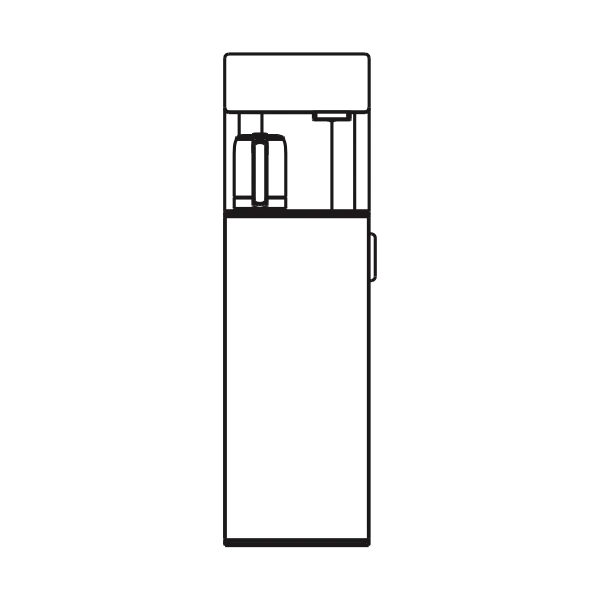














Defining the Metrics: The Difference Between Speed and Power
When sizing infrastructure for high-traffic environments like airports, schools, or gyms, facility managers often confuse delivery speed with cooling endurance. At DripLife, we distinguish these as two separate engineering challenges: the “Sprint” and the “Marathon.” Understanding the interplay between bottle fill rate GPM and compressor cooling capacity GPH is critical for ensuring user satisfaction and preventing equipment fatigue.
GPM (Gallons Per Minute) – The “Sprint”
Gallons Per Minute (GPM) measures the sheer velocity of water delivery. In a high-traffic scenario, this is the most visible metric to the user. It dictates how quickly a queue moves during a 5-minute passing period or a gym rush.
Standard residential units often struggle to reach 1.0 GPM, leading to frustration and bottlenecks. To combat this, we engineered the DripStation with an industry-leading flow rate of 1.5 GPM. This “sprint” speed allows users to fill a standard 20 oz bottle in roughly 6 seconds, significantly reducing wait times and improving the efficiency of the hydration station.
GPH (Gallons Per Hour) – The “Marathon”
While GPM handles the immediate demand, Gallons Per Hour (GPH) represents the system’s endurance. This metric defines the compressor’s ability to chill incoming water to the standard 50°F output temperature continuously over an hour.
If GPM is the speed of the car, GPH is the size of the gas tank and the efficiency of the engine. A high GPM without a matching GPH rating results in the “warm water phenomenon,” where the first three users get cold water, but the fourth receives lukewarm water because the cooling system cannot keep pace with the flow rate.
The “Recovery” Concept and Cold Water Tank Analogy
To visualize chilled water recovery rate, view the internal cold water tank as a thermal battery.
- Discharge (GPM): Every time a user activates the touchless sensor, they draw chilled water from the “battery.”
- Recharge (GPH): The compressor cycles on to cool fresh, ambient-temperature water entering the tank.
In high-traffic zones, the goal is to balance these two forces. If the discharge rate (1.5 GPM) consistently outpaces the recharge rate (Cooling Capacity), the thermal battery depletes.
| Metric | Role | Key Function | Ideal High-Traffic Spec |
|---|---|---|---|
| GPM | The Sprint | Speed of Dispensing | 1.5 GPM (DripLife Standard) |
| GPH | The Marathon | Cooling Endurance | Matches peak hourly usage |
| Recovery | The Balance | Thermal Regeneration | Fast cycle times to maintain 50°F |
Proper sizing requires a compressor robust enough to “recharge” the water temperature rapidly between uses, ensuring the DripStation delivers consistent hydration quality from the first fill to the hundredth.
The Physics of Cooling: Understanding AHRI Ratings
Standard Test Conditions (AHRI 1010)
When we evaluate the performance of a water bottle filling station, we rely on the AHRI 1010 standard rating. This industry benchmark ensures that cooling capacity claims aren’t just marketing fluff. Under these strict protocols, a unit’s gallons per hour cooling capacity is measured with specific parameters: an ambient air temperature of 90°F, an inlet water temperature of 80°F, and a drinking water temperature of 50°F. This standard allows facility managers to compare the hydration station BTU capacity across different manufacturers on a level playing field, ensuring the equipment can handle the thermal load it promises.
The Variable Factors: Inlet and Ambient Temperature
In the real world, installation environments rarely match the controlled conditions of a testing lab. Two critical variables dictate actual performance: the inlet water temperature delta and the surrounding air temperature. If the water entering the unit is warmer than 80°F—common in southern states during summer—the compressor must work harder to pull that temperature down to a refreshing 50°F.
Additionally, infrastructure stability plays a role. Just as we emphasize testing RO systems for burst pressure and water hammer to ensure structural integrity, the cooling system relies on consistent conditions to function correctly. Fluctuations in pressure or extreme inlet temperatures can strain the refrigeration cycle, impacting the unit’s ability to maintain the target temperature.
Why Rated GPH Drops in Hot Environments
Ambient air temperature correction is often overlooked during sizing. As the room temperature rises, the efficiency of the condenser drops because it cannot reject heat as effectively into the surrounding air. If a unit is installed in a non-climate-controlled gym or a hot warehouse, the rated GPH will decrease significantly.
- Heat Rejection: Higher ambient temps mean the refrigerant condenses less efficiently.
- Longer Cycles: The compressor runs longer to achieve the same cooling effect.
- Reduced Capacity: A unit rated for 8 GPH at 90°F might only deliver 5 or 6 GPH if the ambient temperature hits 100°F.
Understanding these physics prevents undersizing equipment in high-traffic, high-temperature zones.
Step-by-Step Sizing Guide: Calculating Your Requirement
Getting the right hardware prevents the dreaded “warm water” complaint. We approach sizing by looking at real-world data rather than just guessing. You need to balance the bottle fill rate GPM with the cooling engine’s ability to keep up. Here is the process we use to ensure hydration stations can handle the load.
Step 1: Determine Usage Pattern (Burst vs. Steady)
The first variable is human behavior. Not all high-traffic areas are the same. We categorize facilities into two main types to determine the stress on the cooling unit:
- Burst Usage Patterns: This happens in schools during passing periods or gyms after a group class ends. You might have 20 people lining up within a 10-minute window. This requires a high chilled water recovery rate and a larger pre-chilled storage tank.
- Steady Usage: In office buildings or airport terminals, traffic is consistent but spread out over the day. The compressor has time to recover between uses, so the instantaneous demand is lower.
Step 2: The Peak Hour Formula Calculation
Once you know the pattern, run the numbers. A commercial water cooler sizing guide always relies on the “Peak Hour Demand” metric. This tells you the maximum amount of cold water required during the busiest hour of the day.
The Formula:
People × Consumption per Person (Gallons) = Peak Hour Demand
Example for a School Hallway:
- Users: 100 students per hour.
- Consumption: 10 oz per student (approx. 0.08 gallons).
- Calculation: 100 × 0.08 = 8 Gallons Per Hour (GPH).
If your facility requires filtration, understanding the difference between a water filter vs purifier is also critical, as restrictive filters can impact the final delivery speed if not sized correctly for the pump.
Step 3: Matching the Compressor Capacity
Now, compare your Peak Hour Demand against the unit’s compressor cooling capacity GPH. If your calculation shows a demand of 8 GPH, you cannot install a unit rated for 5 GPH.
- Undersizing: Leads to the compressor running non-stop and eventually dispensing lukewarm water.
- Proper Sizing: Select a unit where the rated GPH exceeds your peak calculation.
For our DripStation, we utilize a 1.5 GPM flow rate to clear lines quickly, but for the water to stay cold, the chiller unit must be matched to that volume. Always verify the cooling performance specification under standard conditions (usually 90°F ambient / 80°F inlet) to ensure the unit won’t fail during a heatwave.
Technical Solutions for High-Traffic Zones
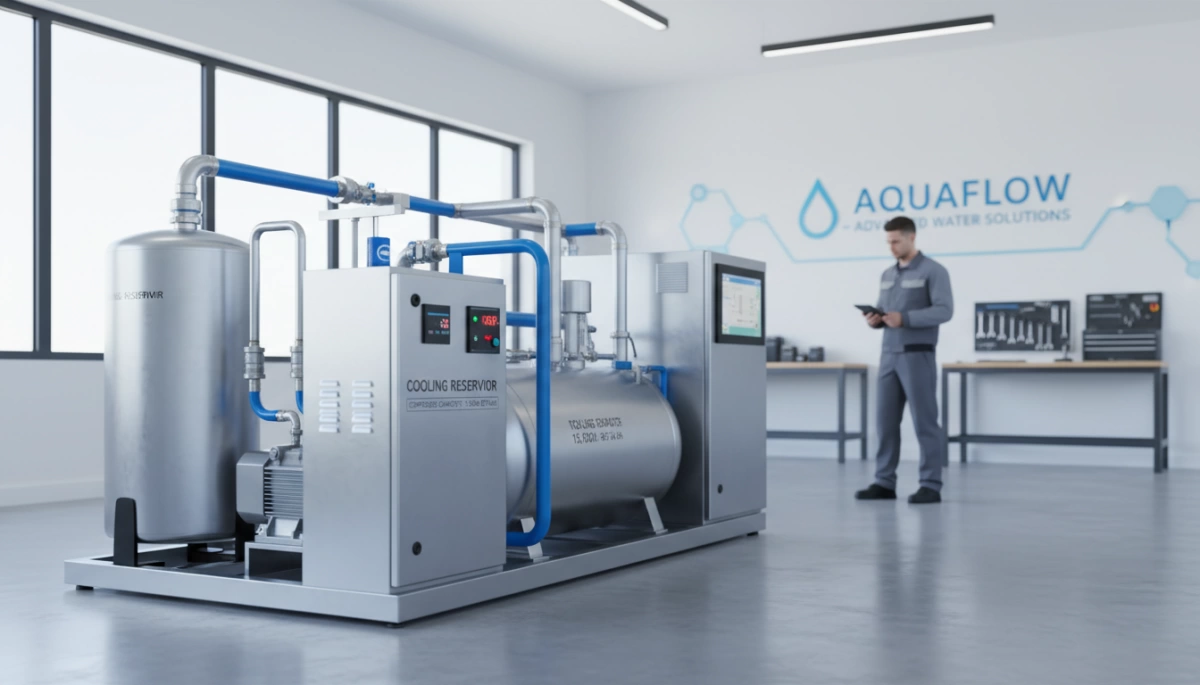
When equipping a facility that sees hundreds of users an hour, standard residential cooling logic doesn’t apply. We have to engineer solutions that handle burst usage patterns without compromising the delivery speed or temperature. Here is how we tackle the engineering challenges in high-demand environments.
High-Capacity Remote Chillers Benefits
In massive facilities like airports or stadiums, the heat generated by a compressor can be an issue if it’s housed directly within the filling station. Remote water chiller systems offer a robust solution by separating the cooling unit from the dispenser. This allows us to install a much larger compressor in a utility closet or ceiling space, significantly increasing the chilled water recovery rate.
By moving the heat source away from the user and utilizing a larger cooling engine, these systems ensure consistent 50°F chilled water output even during continuous use. This setup reduces noise at the hydration station and allows for easier maintenance access without shutting down the hallway.
Pre-Cooling and Tank Size Importance
The cold water tank acts as a thermal battery. In high-traffic zones, the tank size dictates how long the unit can sustain a rush before the water temperature starts creeping up.
- Thermal Buffer: A larger tank holds a reserve of pre-chilled water, smoothing out the demand on the compressor.
- Cycle Reduction: Proper tank sizing prevents high-capacity compressor cycling (turning on and off too frequently), which extends the lifespan of the refrigeration components.
- Recovery Efficiency: The system must balance the tank volume with the compressor’s BTU rating to ensure the water recovers temperature quickly between passing periods or gym classes.
Filtration Impact on GPM and Water Quality
Flow rate and filtration quality are often at odds. A denser filter captures more contaminants but creates higher resistance, lowering your GPM. Our DripStation is engineered to maintain a rapid 1.5 GPM fill rate while utilizing 3,000-gallon capacity, 5-micron carbon block filters. This ensures we meet NSF/ANSI 42 & 53 standards for lead and cyst reduction without creating a bottleneck.
If the filtration system isn’t matched to the pump pressure, users end up waiting too long, which defeats the purpose of a “quick” fill. Furthermore, maintaining high-quality filtration is essential for taste; it functions similarly to how RO systems eliminate the chemical taste of city water, ensuring the water is palatable enough to encourage hydration.
Balancing Flow and Purity:
| Factor | Impact on Performance | Ideal Specification |
|---|---|---|
| Filter Pore Size | Smaller pores increase resistance but improve purity. | 5-Micron Carbon Block |
| Flow Rate | Higher GPM reduces wait times but requires higher pressure. | 1.5 GPM (DripStation Standard) |
| Capacity | Low capacity requires frequent changes, causing pressure drops. | 3,000 Gallons |
| Material | Inferior materials can leach; we use 304 Stainless Steel. | Lead-Free Compliance |
Installation Best Practices for Maximum Cooling Efficiency
We see it constantly in facility retrofits: a high-spec machine installed in a suffocating environment. To ensure your compressor cooling capacity GPH actually delivers that crisp 50°F water during the lunch rush, the physical installation is just as critical as the hardware selection. You cannot simply shove a commercial unit into a tight alcove and expect it to perform like it’s on a test bench.
Ventilation Requirements for Compressors
The number one enemy of a chilled water recovery rate is heat buildup. Condenser ventilation requirements are non-negotiable; the heat extracted from the water must go somewhere. If you install the DripStation in a recessed wall without adequate airflow, the ambient air temperature correction factor kills your efficiency. The compressor will run hotter, cycle more frequently, and struggle to keep up with demand. We always recommend ensuring the louvered panels have clear clearance to prevent short-cycling the air.
Water Pressure Balancing and PSI Support
Our DripStation is engineered for a rapid 1.5 GPM flow rate, but it relies on your building’s plumbing to deliver that volume.
- Ideal Range: Maintain a steady dynamic pressure between 40 and 60 PSI.
- The Risk: Pressure below 40 PSI results in a weak stream that frustrates users, while pressure spikes above 90 PSI can damage the solenoid valves and fittings.
- The Fix: Install a pressure regulator on the supply line if your facility experiences fluctuations. This ensures consistent delivery speed without stressing the internal components.
Insulation of Supply Lines
Don’t let your water gain heat before it even enters the cooler. In hot mechanical rooms or ceiling plenums, the inlet water temperature delta can rise significantly if pipes are bare. We strongly advise wrapping all supply lines with closed-cell foam insulation. This simple step reduces the thermal load on the compressor and prevents condensation from dripping onto ceiling tiles or drywall.
| Installation Factor | Recommended Spec | Impact on Performance |
|---|---|---|
| Airflow Clearance | Min. 6 inches on vented sides | Prevents high-capacity compressor cycling and overheating. |
| Water Pressure | 40 – 60 PSI | Supports the 1.5 GPM fill speed without splashing. |
| Line Insulation | 1/2″ Wall Thickness | Minimizes heat gain and maximizes cooling performance specification. |
FAQs About Water Bottle Filling Station Capacity
What is the difference between GPH and GPM?
These two metrics measure completely different performance aspects. Bottle fill rate GPM (Gallons Per Minute) refers to the speed of delivery—how fast the water leaves the nozzle. For example, our DripStation operates at a rapid 1.5 GPM, ensuring users aren’t stuck waiting in line.
In contrast, compressor cooling capacity GPH (Gallons Per Hour) measures the chiller’s endurance. It indicates how many gallons of water the unit can cool to 50°F from an 80°F inlet temperature within one hour. You need high GPM for speed, but you need high GPH to keep that water cold during a rush.
How do I calculate the cooling capacity needed for a gym?
Gyms are classic peak demand hydration station environments. To size this correctly, you shouldn’t look at daily averages; look at the “burst” usage between classes.
- Estimate Peak Users: If a class of 20 people breaks at once, and each fills a 20 oz bottle.
- Calculate Volume: 20 users × 20 oz = 400 oz (approx. 3.1 gallons) needed in a 5-minute window.
- Match Capacity: You need a unit with a tank and recovery rate that can handle that 3-gallon surge without the temperature spiking.
Why does my water cooler run out of cold water so fast?
If the water starts cold but turns lukewarm quickly, your usage has outpaced the chilled water recovery time. The reservoir tank has emptied, and the compressor cannot cool the incoming water fast enough to keep up with the flow.
However, if the flow rate itself is slowing down, the issue might not be the compressor but a clogged filtration system. Utilizing filter life monitoring with smart sensors helps distinguish between a cooling capacity issue and a maintenance requirement, ensuring your station operates at full efficiency.
Does ambient temperature affect water cooler performance?
Absolutely. Ambient air temperature correction is a critical factor in sizing. Most chillers are rated based on a standard 90°F room temperature. If your unit is installed in a non-climate-controlled warehouse or a hot gym reaching 95°F+, the compressor has to work significantly harder to reject heat. This reduces the effective GPH output, meaning you may need a higher-capacity unit to achieve the same cooling results as you would in an air-conditioned office.