













Launching a standout product in the saturated hydration market requires more than just finding a factory; it demands a precise OEM manufacturing strategy.
You might already know that generic plastic housings and slow flow rates are the fastest way to kill a brand’s reputation.
In fact, the difference between a mediocre product and a category leader often comes down to two things: material engineering and filtration technology.
In this guide, I’m going to walk you through the exact roadmap for sourcing premium faucet water filters. We will cover everything from upgrading to SUS 304 Stainless Steel and leveraging Activated Carbon Fiber (ACF), to navigating complex NSF/ANSI certifications.
If you are ready to move from concept to a high-performance product, this strategy is for you.
Let’s dive in.
Pillar 1: Material Selection Strategy – Durability as a Differentiator
The Plastic vs. Steel Debate: Analyzing Risks
Is your brand suffering from high return rates due to cracked housings? That is the hidden cost of relying on standard ABS plastic. In our OEM faucet filter manufacturing experience, plastic threads strip easily and succumb to water pressure spikes (water hammer). While plastic lowers the initial BOM cost, the long-term expense of warranty claims and damaged brand reputation makes it a risky sourcing strategy for faucet filters.
Strategic Move: Food-Grade SUS 304 Stainless Steel
We advocate for a strategic pivot to SUS 304 stainless steel housing. This isn’t just about aesthetics; it is about food-grade material compliance and structural integrity. A stainless steel unit signals “premium” immediately to the US consumer and withstands daily wear far better than composites.
- Corrosion Resistance: 304 grade prevents rust in humid kitchen environments.
- Pressure Tolerance: Withstands higher burst pressures than ABS.
- Market Positioning: Elevates the product from a “gadget” to a permanent fixture.
Housing Engineering: Precision CNC & One-Piece Design
Leak-proof connections require precision that basic custom injection molding sometimes misses. We utilize CNC machining for our steel interfaces to ensure threads align perfectly with standard US faucets. Furthermore, we prioritize one-piece housing designs over complex assemblies. Every connection point is a potential leak path; reducing parts increases reliability.
Design Architecture Comparison:
| Feature | Multi-Part Assembly (Standard) | One-Piece Housing (Driplife Strategy) |
|---|---|---|
| Leak Risk | High (O-ring fatigue at joints) | Near Zero (Seamless body) |
| Pressure Rating | Low to Medium | High |
| Durability | Prone to cracking at seams | Impact Resistant |
| Consumer Perception | Disposable / Cheap | Premium / Durable |
By adopting a private manufacturing strategy focused on steel and integrated housing, we eliminate the most common failure points before the product ever reaches the customer.
Pillar 2: Filtration Technology – The Shift to Activated Carbon Fiber (ACF)
In our OEM Manufacturing Strategy for Faucet Water Filters, sticking to old tech is a recipe for failure. For years, the industry relied on Granular Activated Carbon (GAC). While GAC works fine for large under-sink units, it is outdated for compact faucet mounts. In small housings, loose granules often lead to “channeling,” where water bypasses the filter media entirely, resulting in poor filtration performance and inconsistent flow.
The ACF Advantage: Speed and Efficiency
We have pivoted our manufacturing focus toward Activated Carbon Fiber (ACF) technology. Unlike traditional granules, ACF consists of a fibrous web with a massive surface area. This structure allows for an absorption speed that is 10-12 times faster than standard carbon.
For the end-user, this solves the biggest complaint with faucet filters: low water pressure. With ACF, we can engineer a high flow rate faucet filter that purifies water instantly without reducing the stream to a trickle. This ensures that filling a pot or a glass is quick and frustration-free.
Compactness and Multi-Stage Integration
The efficiency of ACF allows us to shrink the product footprint. We can produce sleeker, more ergonomic designs that don’t crowd the sink, all without sacrificing gallon capacity. But we don’t stop at just carbon. Our engineering team specializes in creating a comprehensive 5-stage filtration system within these compact units.
- Sediment Mesh: Catches rust, sand, and large particles first.
- ACF Core: Targets chlorine, odors, and organic compounds.
- Mineral Balls: Adds beneficial minerals back into the water for better taste.
- Post-Filter Layers: Ensures no media migration.
This layering strategy is critical for achieving high lead and chlorine removal efficiency. Understanding how different materials interact is vital; for instance, knowing how top filtration methods handle lead removal helps us select the right media mix to meet strict safety standards while keeping the unit size manageable.
Pillar 3: Design & UX Strategy – Solving the Installation Headache
A robust OEM Manufacturing Strategy for Faucet Water Filters isn’t just about the filtration media inside; it’s about how the user interacts with the hardware. If a customer cannot install the unit within five minutes, the likelihood of a return skyrockets. We approach industrial design with a “zero-frustration” mindset, ensuring that the user experience (UX) builds brand loyalty rather than causing headaches.
Universal Compatibility and Adapter Sets
The US market features a massive variety of faucet architectures, from standard male/female threads to modern pull-down sprayers. To mitigate fitment issues, we engineer comprehensive adapter sets included in every box. This strategy ensures your private label water filtration product is compatible with the vast majority of standard household faucets right out of the package. By handling the complex geometry of adapter design in-house, we eliminate the guesswork for the end consumer.
Tool-Free Engineering Mechanisms
We prioritize tool-free engineering to streamline the setup process. Our design team utilizes snap-on or rotary installation mechanisms that allow users to attach the filter securely by hand. This eliminates the need for wrenches or plumber’s tape, making the product accessible to everyone regardless of their DIY skills.
- Snap-on mounts: Allow for quick connection and disconnection.
- Rotary locking: Ensures a secure, leak-proof seal without overtightening.
Reducing Returns with Intuitive Design
High return rates on e-commerce platforms are often caused by installation difficulties rather than actual product failure. By simplifying the physical interface, we directly reduce these claims. At Driplife, our designs focus on clear physical cues that guide the user, ensuring a proper seal on the first try.
Visual Flow Indicators
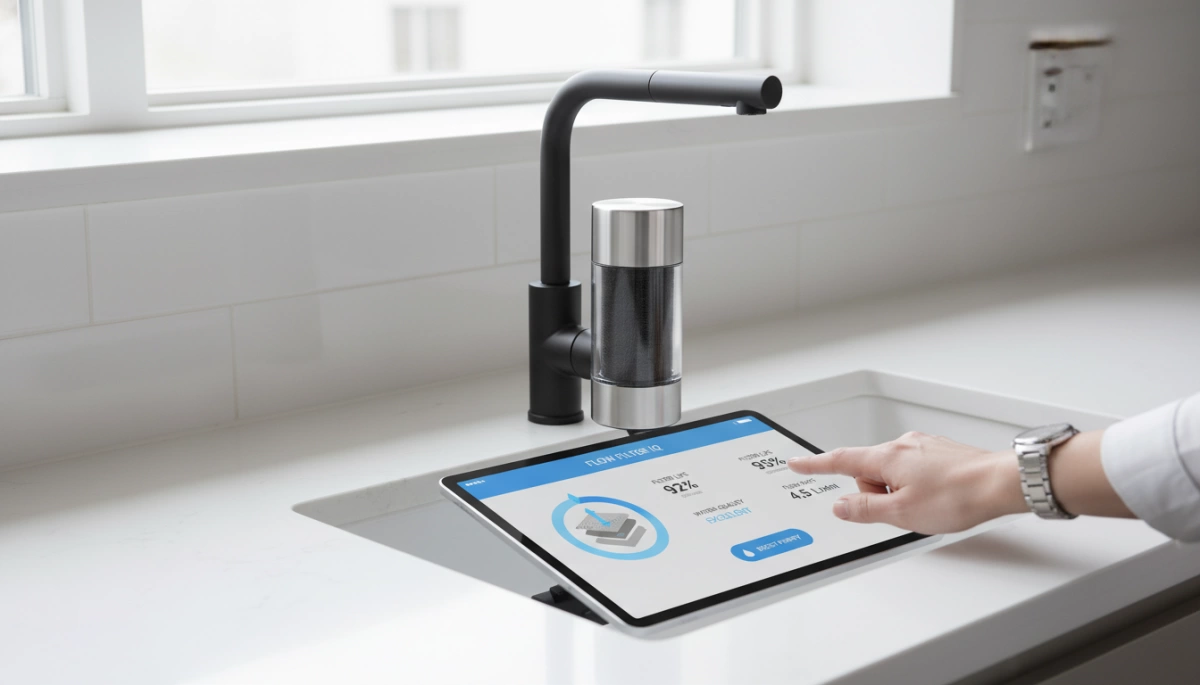
To encourage timely maintenance, we integrate visual tracking systems directly into the housing design. Whether utilizing a simple mechanical date dial or a digital monitor, these indicators track the filter cartridge replacement cycle. This feature not only ensures the user consistently gets high-quality water but also drives recurring revenue for your brand by reminding customers exactly when to order their next replacement.
Pillar 4: The Manufacturing Workflow & Quality Control (QC)
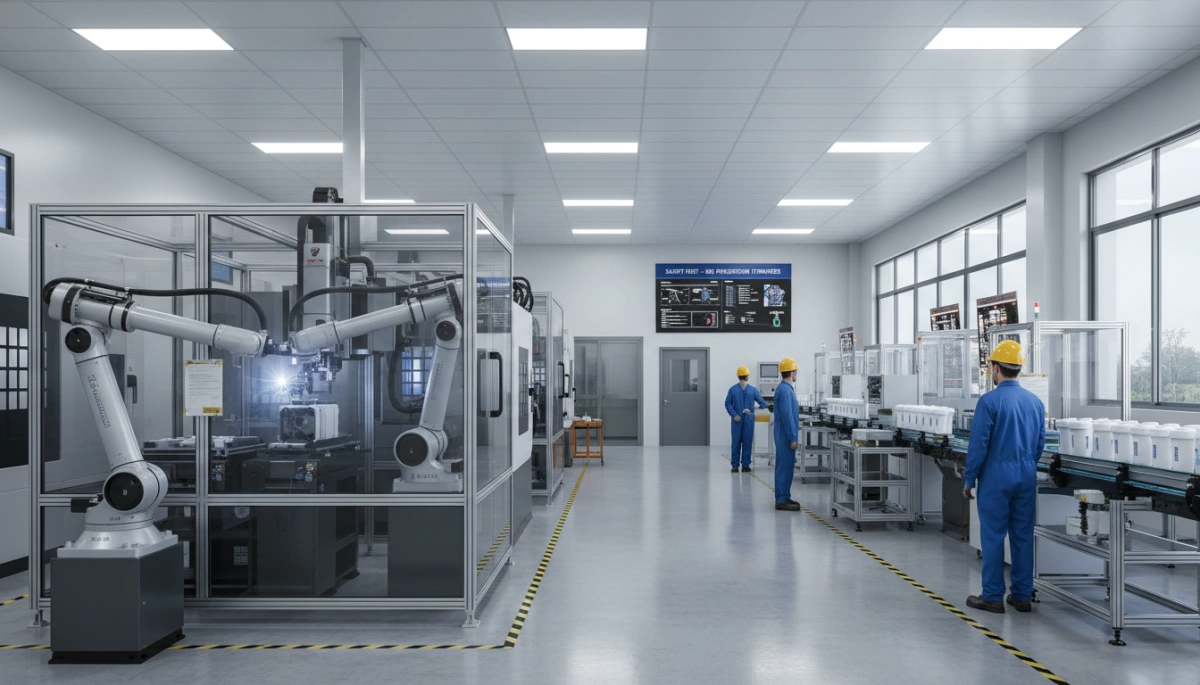
A robust OEM Manufacturing Strategy for Faucet Water Filters stands or falls on the precision of the production line. At Driplife, we believe that controlling every step of the manufacturing process—from the initial mold to the final seal—is the only way to guarantee a product that survives the competitive US market. We don’t just assemble parts; we engineer reliability through a vertically integrated supply chain.
Mold Design & Tooling Strategy
The choice between private and public molds defines your brand’s exclusivity and speed to market.
- Private Molds: Investing in custom injection molding allows for proprietary designs that competitors cannot copy. Since we handle mold making in-house, we significantly reduce the timeline and costs associated with creating unique tooling compared to outsourcing.
- Public Molds: For brands looking to test the market quickly, using existing tooling offers a lower barrier to entry, though it sacrifices unique aesthetics.
The QC Checklist: Pressure and Flow
Quality control is not a final step; it is embedded in the workflow. We rigorously test housing integrity to prevent the most common consumer complaint: leaking. Our QC protocol includes high-stress burst pressure testing to ensure the unit withstands fluctuations in household water pressure. Equally important is maintaining flow rate consistency. Understanding the engineering of multistage filtration is critical here, as we must balance dense filtration media with a user-friendly water output speed.
Contaminant Removal & Certifications
Hardware durability means nothing if the water isn’t clean. Our testing protocols verify lead and chlorine removal efficiency to ensure the filter performs as promised. We strictly adhere to NSF/ANSI 42 and 53 standards regarding material safety and structural integrity, alongside RoHS compliance for hazardous substances. This rigorous validation process ensures that your final product is not just a piece of plastic, but a certified health device ready for retail shelves.
Pillar 5: Supply Chain & Cost Optimization
A successful OEM Manufacturing Strategy for Faucet Water Filters relies heavily on a streamlined supply chain. It’s not just about making the filter; it’s about getting it to your warehouse without eating up your margins. In B2B water treatment manufacturing, efficiency in logistics is just as critical as the filtration technology itself.
Balancing MOQ and Customization
Launching a new product often requires testing the waters before diving in. We offer Minimum Order Quantity (MOQ) flexibility to help brands validate their market without overcommitting capital. By leveraging our established production lines, we can introduce custom features—like specific adapter sets or branded housing—while keeping initial batch sizes manageable for market testing. This approach allows you to scale up production based on real consumer demand rather than guesswork.
Lead Time Management
Raw material availability can make or break a launch schedule. Effective water filter supply chain management involves anticipating fluctuations in the cost and availability of plastics and activated carbon. With over 20 years of industry experience, we secure materials in advance to ensure stable lead times, protecting your brand from unexpected delays or price spikes in the global market.
Logistics and Packaging Strategies
Shipping “air” is the quickest way to drain profitability. We focus on smart packaging engineering to reduce landed costs:
- Compact Packaging Design: We engineer boxes that fit the product snugly to minimize volume weight, which is crucial for reducing international freight costs.
- Pallet Optimization: Our logistics team calculates stacking strategies that maximize container space for global distribution.
- Eco-friendly Materials: We utilize durable yet lightweight packaging materials that reduce waste while ensuring the product arrives in pristine condition.
Optimizing these logistics ensures that your unit economics remain healthy, giving you more room for marketing and growth in the competitive US market.
Why Partner with Driplife for Your OEM Strategy?
Executing a winning OEM Manufacturing Strategy for Faucet Water Filters requires more than just a factory with basic injection molding machines; it demands a partner who deeply understands the nuances of the US market and water safety standards. At Driplife, we bring over 20 years of industry expertise to the table, positioning us as a leader in B2B water treatment manufacturing. We don’t just assemble parts; we provide a strategic partnership that bridges the gap between a concept and a market-ready product.
Mastery of ACF and Premium Materials
Our manufacturing capabilities are defined by our technical leadership in Activated Carbon Fiber (ACF) technology. Unlike standard manufacturers relying solely on loose granular carbon, we have mastered the production of ACF blocks that deliver superior contaminant adsorption and higher flow rates—critical features for modern faucet filters. Furthermore, we differentiate your brand through our specialized production lines for SUS 304 stainless steel housings. While many competitors offer cheap plastic shells, we provide the option for food-grade, corrosion-resistant steel that appeals to premium buyers looking for durability and sustainability.
The One-Stop Solution: From Design to Delivery
We operate as a comprehensive one-stop solution, managing the entire prototype to production workflow under one roof. This integrated approach includes:
- In-House R&D & Industrial Design: We turn rough sketches into 3D models optimized for manufacturability.
- Precision Mold Making: Our internal tooling workshop ensures high-precision molds, reducing the risk of leaks and ensuring consistent part quality.
- Mass Production & Assembly: Automated lines handle everything from filter cartridge filling to final packaging.
Engineering Consultation for Specification Reviews
Our engineering team acts as your technical consultants, not just order takers. Before tooling begins, we conduct rigorous specification reviews to ensure your design meets functional requirements and aligns with NSF/ANSI standards. This proactive step prevents costly design flaws and ensures your product can withstand real-world water pressures. To better position your product specifications, understanding how to conduct a competitive analysis of local water filter brands allows us to tailor our manufacturing output to exploit market gaps and deliver a superior user experience.