















Understanding LED Filter Life Indicators
The Logic Behind Color-Coded Signals
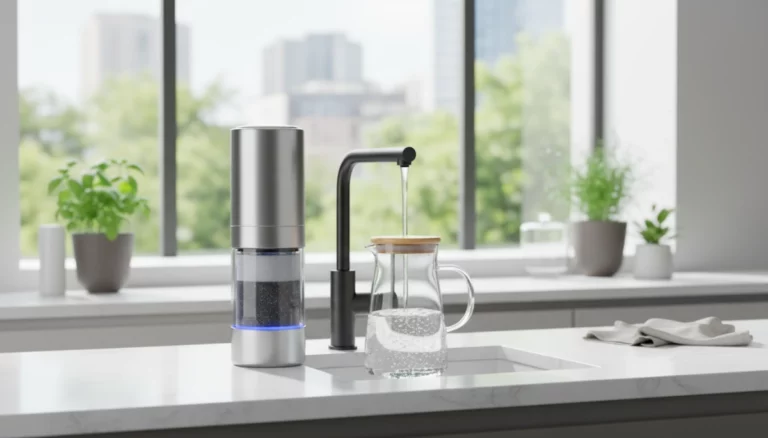
When we design a smart faucet filter life indicator, clarity is the priority. The most robust systems utilize a simple, intuitive traffic-light logic that communicates status instantly without requiring the user to interpret complex data. Typically, this involves a LED color-coded filter status ring integrated directly into the faucet base or handle:
- Blue: The system is functioning optimally, and the filter is fresh.
- Green: The filter is in good condition but has accumulated some usage.
- Red: The critical threshold has been reached, signaling an immediate need for a water filter replacement reminder.
This visual language is universal. It eliminates the guesswork for the end-user, ensuring that the 150GPD or 2000-gallon cycle capacity of our systems is utilized efficiently before a change is required.
Instant Visibility Meets Durability
In a high-humidity environment like a kitchen, complex electronics can sometimes falter. A standard color ring LED is often more reliable than a touch screen in these conditions. The sealed nature of an LED indicator makes it impervious to steam, wet hands, and splashes.
For our OEM partners, we emphasize that battery-free LED indicators or low-voltage hardwired solutions offer superior longevity. They provide “glanceable” information—you know the status of your water quality from across the room without needing to wake up a display.
Customization: Setting the Sensitivity
At Driplifecorp, we don’t just install standard timers. Through our internal Software Laboratory, we customize the firmware that drives these indicators. A generic timer isn’t enough for a high-performance Under-sink RO system. We program the customizable water purifier alerts based on specific parameters:
- Volume-Based Tracking: Triggering the red light exactly when the 2000-gallon cycle is nearing completion.
- Time-Based Fail-safes: Ensuring hygiene by prompting changes even if volume limits haven’t been hit.
- Reset Sequences: Defining the specific “hold for 3 seconds” or toggle sequence required to reset the system, preventing accidental resets.
Ideal User Profiles and Pain Points
The LED approach is designed for the minimalist and the busy household. These users do not want to analyze TDS numbers every time they fill a glass; they just want to know the water is safe. However, a common pain point is the “phantom reset”—where a user changes the filter but forgets to reset the indicator, leading to desynchronized tracking.
To combat this, our R&D team focuses on Intelligent Automatic Flushing and smart detection logic that can assist in maintaining system accuracy. By refining the filter change indicator reset process, we ensure the technology serves the user, not the other way around.
Advanced Digital Faucet UIs and Real-Time Data
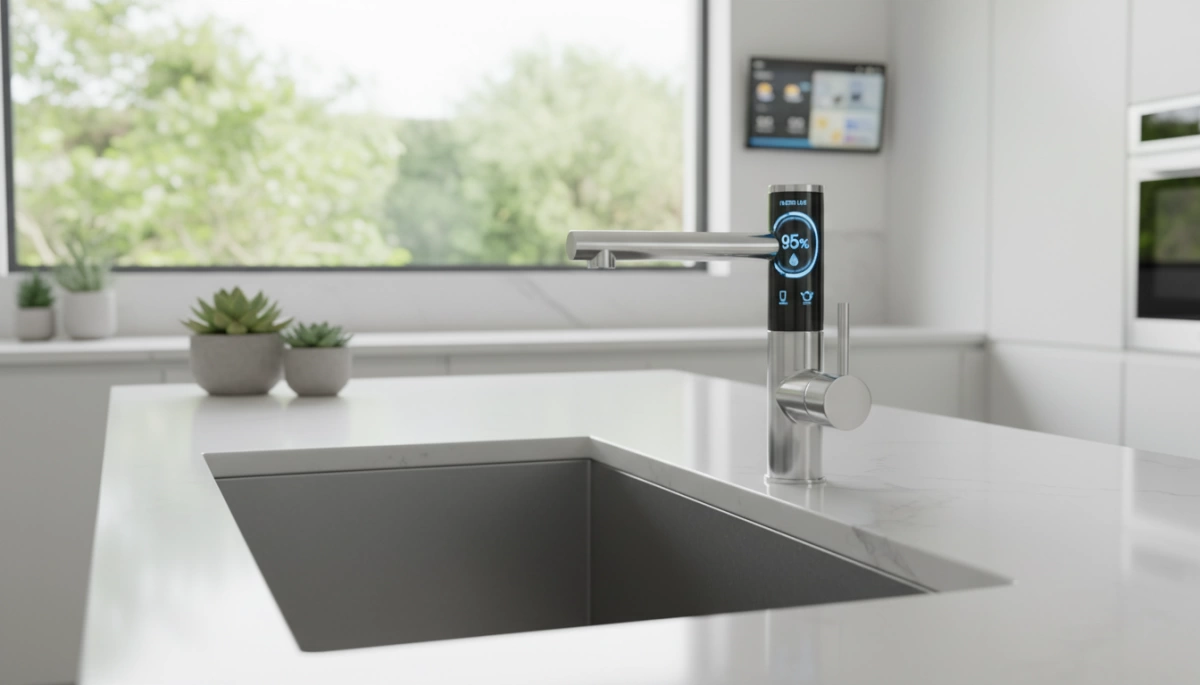
For brands targeting the premium market, a digital TDS display faucet offers a significant upgrade over standard indicators. We integrate high-definition LCD or OLED screens directly into the faucet body, transforming a simple hardware component into a smart interface. This technology allows for real-time filter lifespan monitoring, giving users immediate visual feedback on their water quality without needing a separate handheld meter.
Instead of relying on a generic timer, our RO system smart faucet UI utilizes flow sensors and TDS probes to deliver actionable data. This enables usage-based filter tracking, calculating remaining life based on actual gallons processed—whether it’s a standard 150GPD unit or a high-capacity 2000-gallon system. This precision filter life percentage eliminates the guesswork, ensuring filters are changed exactly when needed.
Key Advantages of Digital UIs:
- Sensor Accuracy: Displays live Total Dissolved Solids (TDS) readings.
- Smart Calculations: Tracks actual water volume rather than just time elapsed.
- Customizable Logic: Our Software Laboratory can adjust alert thresholds based on local water hardness.
This level of detail appeals to data-driven homeowners and smart home integrators who demand accuracy. However, this advanced functionality represents a premium tier. When evaluating the total cost of a home water filter, digital systems require a higher initial investment and may need occasional sensor maintenance to ensure the water quality TDS monitor remains calibrated.
Head-to-Head Comparison: LED vs Digital Faucet UI
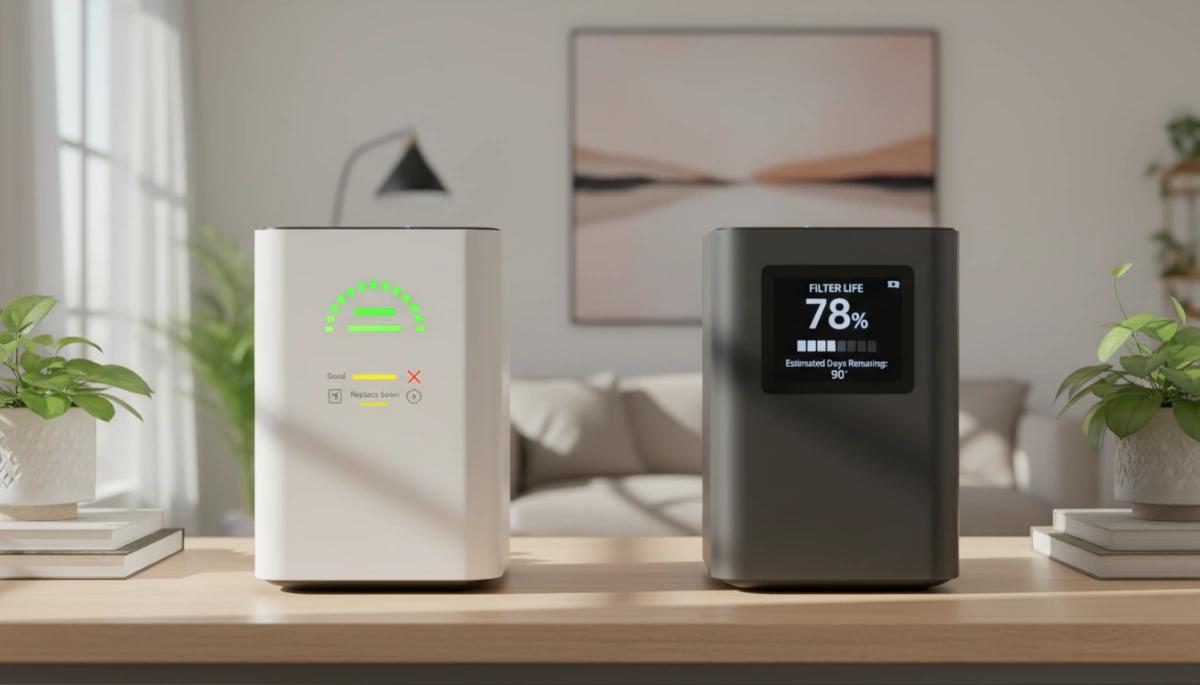
Choosing between a standard LED indicator and a fully digital interface defines the user experience of a water purification system. As a manufacturer supporting global brands, we see this choice often comes down to balancing budget with feature density. Here is how these two technologies stack up in a direct comparison.
User Experience and Visibility
The primary difference lies in how the user interacts with the device daily.
- LED Systems: Focus on “glanceability.” A color ring LED provides an instant status check without requiring the user to read anything. Blue usually means good, while red signals a need for action. It is intuitive and requires zero learning curve.
- Digital UI: Offers a tankless RO faucet display rich with data. This is for the user who wants to know exactly how clean their water is or precisely how many gallons remain before a change is needed. It transforms the faucet from a passive hardware piece into an interactive smart device.
Accuracy and Reliability
LED color-coded filter status lights generally rely on internal timers or basic flow counting. While effective for general maintenance, they are estimations.
In contrast, a digital TDS display faucet often pulls data directly from the system’s internal sensors. This allows for real-time filter lifespan monitoring based on actual water quality and precise volume usage rather than just time passed. For high-end applications, specifically when pairing with a premium under-sink reverse osmosis filtration system, the digital readout provides the necessary precision to justify the investment.
Power, Cost, and Customization
Integrating a smart faucet filter life indicator involves different engineering requirements.
- Power: Many LED indicators are battery-free LED indicator designs, powered by hydro-generators or simple coin cells. Digital screens (OLED/LCD) require stable power, usually hardwired to the main RO unit.
- Cost: LED is cost-effective, ideal for mass-market models. Digital UIs significantly increase the Bill of Materials (BOM) but allow for a higher retail price point.
- Customization: Our Software Laboratory can program customizable water purifier alerts for digital screens, including branding and specific TDS thresholds. LED customization is generally limited to color changes and blink frequency.
Comparison Matrix
| Feature | LED Color-Coded System | Digital Faucet UI (LCD/OLED) |
|---|---|---|
| Primary Feedback | Light Color (Blue/Red/Orange) | Text, Numbers, & Icons |
| Data Precision | General Status (Good/Replace) | Exact % & TDS Levels |
| Power Source | Battery or Hydro-power | Hardwired to Main Unit |
| Durability | High (Fully Sealed) | Moderate (Screen protection needed) |
| Best Application | Standard Residential Filters | Premium Smart Home RO Systems |
| Cost Tier | Entry to Mid-Range | High-End / Luxury |
Durability in Kitchen Environments
Kitchens are wet, humid, and messy. LED indicators are inherently more robust because they can be fully encapsulated in resin, making them waterproof. A digital TDS display faucet requires more sophisticated sealing to protect the screen and electronics from moisture ingress over time. When we design these for private labels, we ensure strict waterproofing standards, but the simplicity of LED remains the winner for sheer ruggedness.
How to Customize and Maintain Your Filter Life Indicator
Keeping your smart faucet running smoothly isn’t just about plumbing; it’s about managing the interface that keeps your water safe. Customizing the Filter Life Indicator ensures that you aren’t changing filters too early (wasting money) or too late (drinking contaminants). Whether you are rocking a simple LED setup or a high-end digital display, the maintenance logic remains similar, but the execution differs.
Mastering the Filter Change Indicator Reset
When you swap out a cartridge, the system doesn’t automatically know it has a fresh start; you have to tell it. Failing to perform a proper filter change indicator reset is the most common user error I see.
- For LED Color-Coded Systems: This is usually a manual sequence. typically, you need to locate a “Reset” button on the under-sink control box or a specific touch area on the faucet base. Press and hold this button for 3 to 5 seconds. You will usually see the LED ring flash blue or beep to confirm the timer has restarted.
- For Digital/LCD Systems: These offer more granular control. You will navigate through the on-screen menu (often using a touch key on the panel). Go to the “Filter Reset” menu, select the specific filter stage you just replaced (e.g., Stage 1 Sediment or Stage 3 RO Membrane), and confirm the reset. This updates the real-time filter lifespan monitoring data immediately.
Optimizing for Local Water Conditions
One size rarely fits all when it comes to water quality. A standard 6-month timer might be accurate for a home with city water, but if you are on well water with high sediment, that filter might be clogged in four months.
If your system allows for sensitivity adjustment (common in digital models), you should tweak the gallon threshold based on your local TDS (Total Dissolved Solids) readings. High mineral content wears down filtration media faster. Much like the necessity of a shower filter for hard water in mineral-heavy regions to protect your skin and hair, your kitchen unit faces the same battle against scale and hardness, requiring more frequent attention to the water quality TDS monitor.
Troubleshooting and Best Practices
Sometimes the tech glitches. If your smart faucet filter life indicator isn’t lighting up or is giving false readings, run through this quick checklist before calling support:
- Check Power Source: For battery-operated LED faucets, a dim or non-functioning light usually means the AA batteries in the control box are dead. For digital systems, ensure the power adapter under the sink hasn’t been bumped loose.
- Inspect Connections: Ensure the data cable connecting the faucet stem to the under-sink unit is clicked in tight. Moisture can sometimes corrode these pins if not sealed properly.
- Flush After Reset: Always flush the water for 5 minutes after a reset. This clears loose carbon fines and helps the flow sensor recalibrate for usage-based filter tracking.
By staying on top of these settings, you ensure that your customizable water purifier alerts are actually serving your household, rather than just being another blinking light in the kitchen.
Which One Should You Choose? Recommendations
Selecting the right Customizing the Filter Life Indicator: LED vs Digital Faucet UI strategy depends entirely on the end-user’s lifestyle and the product’s market positioning. As a manufacturer with over 15 years of R&D experience, we see a clear divide in the US market between users who want “set-it-and-forget-it” simplicity and those who demand granular data.
For brands targeting busy households or rental properties, the LED color-coded filter status is often the superior choice. It offers instant visibility without complexity. A simple blue or red light communicates everything a user needs to know while washing dishes, ensuring the system remains low-maintenance. This reliability pairs perfectly with the core benefits of under-sink water purifier systems, where the goal is efficient, invisible filtration that just works.
However, for the premium segment, a Tankless RO faucet display with digital metrics is essential. Users investing in high-end 4-in-1 systems (purification, cold, hot, ice) often expect a Smart faucet filter life indicator that validates the water quality in real-time. Our Software Laboratory designs these interfaces to display precise TDS readings and usage percentages, catering to data-driven homeowners who want assurance that their 2000-gallon cycle capacity is being tracked accurately.
Decision Framework: Simplicity vs. Precision
| User Lifestyle | Priority | Recommended UI | Why? |
|---|---|---|---|
| Busy Families | Speed & Durability | LED Indicator | Instant status checks via color rings; highly durable in humid environments. |
| Tech Enthusiasts | Data & Control | Digital Faucet UI | Real-time TDS monitoring and precise percentage tracking satisfy the need for data. |
| Rental Properties | Low Maintenance | LED Indicator | Simple “Red means change” logic reduces support calls and confusion. |
| Luxury Kitchens | Aesthetics & Tech | Digital Faucet UI | OLED/LCD screens add a high-tech, modern feel that complements premium appliances. |
Balancing purity and ease of use in tankless RO systems ultimately comes down to the user experience you want to deliver. Whether you choose the robust simplicity of LED or the advanced feedback of a digital screen, our manufacturing capabilities ensure the technology is integrated seamlessly for reliable performance.
Frequently Asked Questions About Faucet Filter Indicators
As a manufacturer with over 15 years of R&D experience, we often field questions about the nuances of smart faucet design and interface customization. Whether you are a brand looking to develop a private label solution or a homeowner curious about your system, understanding these technical details is crucial.
Can I upgrade my LED faucet to a digital one later?
Generally, switching from a standard LED color-coded filter status faucet to a fully digital TDS display faucet is not a simple plug-and-play upgrade for the end user. The RO system smart faucet UI relies on specific data transmission protocols from the under-sink unit’s mainboard.
- For OEM Partners: We can design the mainboard in our Software Laboratory to be compatible with both faucet types, giving you flexibility in your product lineup.
- For Users: Unless the system was explicitly built as a modular “universal” design, the electronic connections usually differ.
How accurate are digital TDS readings compared to handheld meters?
Our integrated water quality TDS monitor systems are highly precise. Unlike handheld meters that measure static water, our real-time filter lifespan monitoring sensors analyze water flow dynamically.
- Precision: The readings are typically within a ±2% margin of professional handheld devices.
- Calibration: During our manufacturing process, we calibrate sensors to ensure the precision filter life percentage and purity readings are reliable from day one.
To understand why tracking these metrics matters for your health, you can explore the benefits of faucet filtration systems in maintaining consistent water quality.
Do digital faucets require batteries or hardwiring?
This depends on the system architecture we design for the specific model.
- Battery-Free LED Indicator: Most of our premium under-sink RO systems, especially those with 2000-gallon capacities, supply power directly to the faucet via a data cable. This allows for bright LCD screens and OLED displays without ever needing a battery change.
- Battery-Powered: Simpler color ring LED faucets often use coin-cell batteries to function independently of the main unit’s power supply, making installation slightly faster but requiring maintenance.
What happens if I forget to reset the indicator after a filter change?
If the filter change indicator reset is not performed, the system will continue to calculate based on old data. The water filter replacement reminder will likely remain red or flashing, and the usage-based filter tracking will not restart.
- The Fix: You must manually trigger the reset sequence (usually holding a button for 3-5 seconds) to zero out the timer and volume counters.
- Intelligent Features: Some of our advanced customizable water purifier alerts include an “Intelligent Automatic Flushing” cycle that helps verify flow, but the life timer almost always requires manual confirmation to prevent accidental resets.