










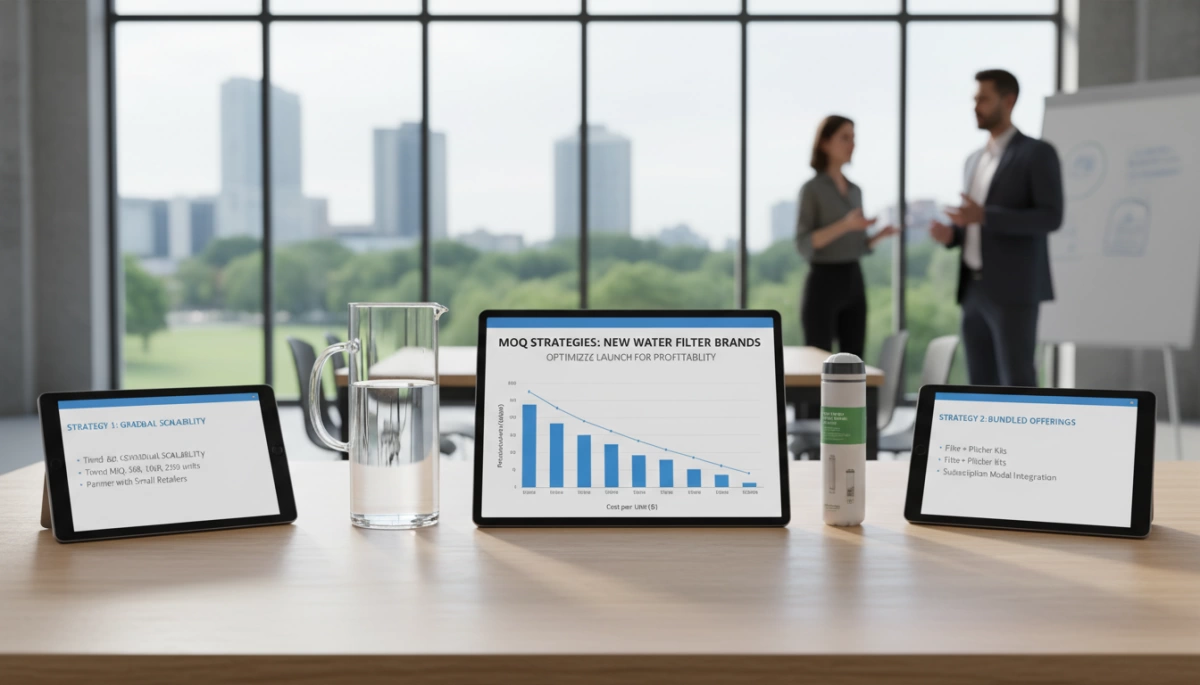
Understanding MOQ in the Water Filter Industry
For emerging businesses in the purification sector, mastering Minimum Order Quantity (MOQ) Strategies for New Water Filter Brands is the critical first step toward a viable supply chain. At Driplife, we see MOQ not just as a number, but as the intersection where factory efficiency meets startup agility.
Supplier-Set MOQ vs. Buyer-Set EOQ
To negotiate effectively, you must distinguish between the manufacturer’s constraints and your own financial targets.
- Supplier-Set MOQ: This is the baseline volume we, as manufacturers, require to cover setup costs, machine calibration, and labor allocation. Every time we switch production lines for a private label water purifier MOQ run—changing molds for filter housings or recalibrating RO membrane winding machines—there is a fixed cost that must be amortized across the batch.
- Buyer-Set EOQ (Economic Order Quantity): This is your ideal order size to minimize initial stock investment and holding costs while preventing stockouts.
The friction usually occurs when the factory’s need for batch production efficiency clashes with a startup’s desire to minimize inventory risk.
Typical MOQ Ranges by Product Type
In the OEM/ODM water filtration landscape, MOQs vary drastically based on the complexity of the unit and the raw materials involved. Simpler items generally require higher volumes to be profitable, while complex systems allow for lower entry points.
| Product Category | Typical Industry MOQ | Reason for Variance |
|---|---|---|
| Faucet & Pitcher Filters | 1,000 – 3,000+ units | Low unit cost requires high volume to cover tooling and packaging setup. |
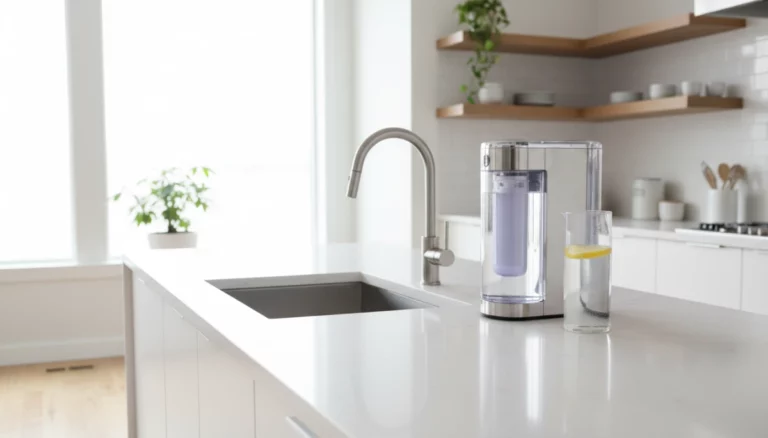
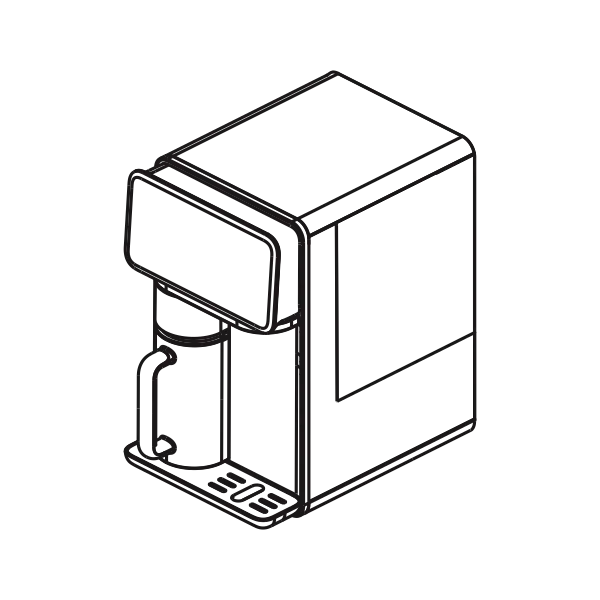
| Countertop Systems | 500 – 1,000 units | Moderate complexity; custom casing molds drive up the requirement. |
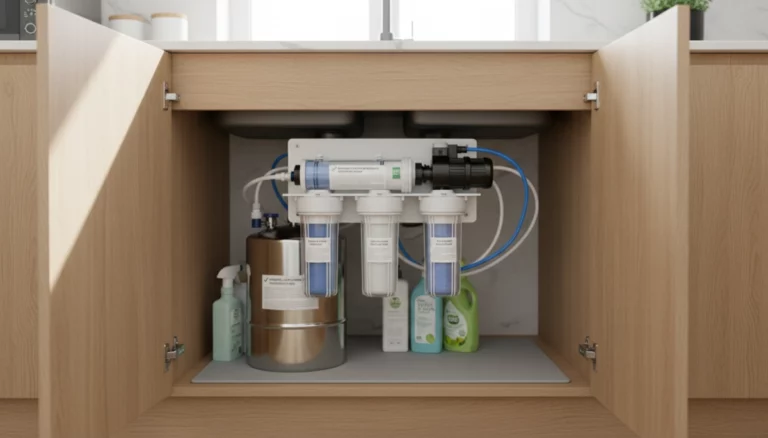
| Under-Sink Filtration | 300 – 500 units | Standardized housings (10-inch filters) allow for more flexible production runs. |
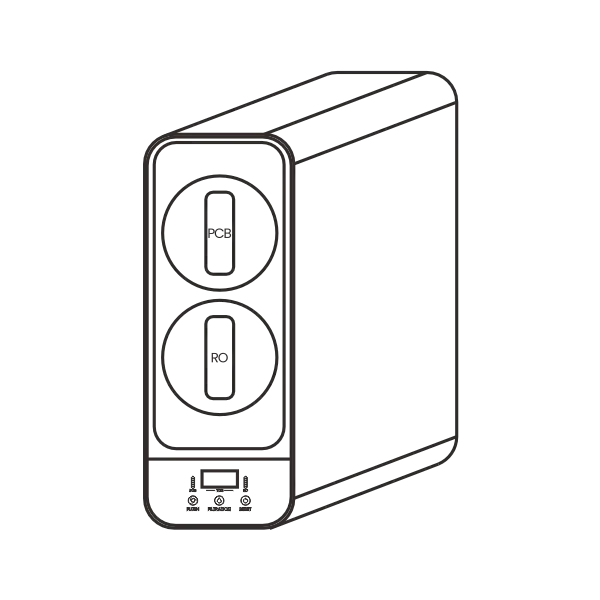
| RO Systems (50-800 GPD) | 100 – 300 units | High unit value and manual assembly components often allow for low MOQ water filter manufacturers to offer flexibility. |
The Cost vs. Volume Trade-Off
Startups often hunt for the lowest possible MOQ, but this comes with a premium. Reducing the order size below standard efficiency levels forces the manufacturer to pass on the setup costs to a smaller number of units.
- Lower MOQs: Reduce your upfront capital and storage needs, but significantly increase the per-unit cost, squeezing your profit margins.
- Economies of Scale: Committing to larger runs allows us to procure raw materials (like high-grade activated carbon or RO membranes) in bulk, lowering the unit price and improving your long-term competitiveness.
Understanding these mechanics is essential for negotiating MOQ with OEM suppliers. It is rarely about the manufacturer being difficult; it is about finding a balance where production remains sustainable while the new brand survives its market entry.
Common Challenges for New Water Filter Brands
Launching a startup water filter brand launch involves navigating a minefield of financial and logistical hurdles. While the demand for clean water solutions is high, the barrier to entry often centers on the rigid structure of manufacturing requirements. We see many entrepreneurs struggle not with product vision, but with the harsh realities of supply chain economics.
Capital Constraints and Cash Flow Risks
The most immediate threat is the initial stock investment. When suppliers enforce high MOQs, you are often forced to allocate a massive portion of your seed capital just to secure inventory. This ties up liquidity that is desperately needed for marketing, website development, and customer acquisition. If your cash is sitting in a shipping container, it isn’t working to grow your business.
Inventory Risks and Market Fit
Committing to large volumes increases the inventory risk for new water brand owners. If you order 2,000 units of a specific model and consumer preferences shift—or if the product has a minor design issue—you are left with unsellable dead stock.
- Unsold Stock: Warehousing fees accumulate quickly for slow-moving items.
- Defects: Discovering a quality issue in a large batch can be fatal for a young brand.
- Market Misfit: For instance, over-investing in complex countertop water filtration systems without testing feature preferences first can lead to stagnant inventory.
Navigating Certification Hurdles
In the US market, credibility hinges on standards like NSF/ANSI. However, obtaining these certifications involves expensive and time-consuming testing. For a startup ordering small batches, the cost per unit to certify a custom design is often prohibitive. Without leveraging a manufacturer’s existing certifications, you risk entering the market with unverified claims, which damages consumer trust.
Logistics and Warehouse Management
Finally, the logistics of moving product from a factory floor to a customer’s doorstep are complex. Lead time management is critical; a delay in production or shipping can cause you to miss key sales cycles. Furthermore, effective warehouse management becomes a headache when you are forced to store more product than your current sales velocity justifies, draining resources on storage space rather than growth.
Proven MOQ Strategies to Launch Successfully
Launching a new brand doesn’t mean you have to buy a warehouse full of inventory on day one. We have seen smart startups navigate this by starting with simplified designs. Instead of demanding custom molds for every single component immediately, utilize our standard, pre-certified housings and cartridges. This approach drastically reduces setup times and allows for batch production using in-stock components, helping you get to market faster without the heavy upfront costs of bespoke tooling.
Another effective tactic is pursuing trial order water filtration products. We encourage new partners to validate their market demand before scaling up to full container loads. By negotiating a pilot run, you minimize inventory risk while gathering real customer feedback. As a dedicated water filter supplier, we understand that trust is built through successful initial deliveries, not just massive contracts. Phased commitments allow you to schedule production increases as your sales grow, keeping your cash flow healthy.
Flexibility is key when discussing terms. If your initial volume is low, consider offering a slightly higher per-unit price to offset the manufacturer’s setup costs. This trade-off significantly lowers your total capital investment. You can also explore tiered pricing structures or mixed orders. For example, combining orders for RO systems with replacement filters allows you to meet the overall minimum order quantity water filtration requirement without overstocking a single SKU.
Key Tactics for Smarter Ordering:
- Leverage Standard Components: Use NSF-standard parts to reduce MOQ for custom water filters.
- Mixed SKUs: Combine different product lines to hit total volume targets.
- Price Flexibility: Accept higher unit costs temporarily to secure lower initial quantities.
- Phased Production: Agree to a long-term contract with smaller, scheduled delivery batches.
Partnering with the Right OEM/ODM Manufacturer
Selecting the right manufacturing partner is the most critical decision for a new brand. You aren’t just buying a product; you are hiring an external production arm. While it might be tempting to look for the smallest shop willing to take a tiny order, partnering with low MOQ water filter manufacturers that lack scale often leads to quality consistency issues down the road.
Benefits of Scalable Manufacturing Water Filters
Working with a high-capacity partner like us offers distinct advantages over smaller workshops. We operate a 20,000+ sqm manufacturing facility with integrated R&D and design teams. This scale allows us to absorb supply chain fluctuations that would crush smaller factories.
- Supply Chain Control: We handle everything from mold design to injection molding and assembly in-house. This reduces reliance on third-party component suppliers, stabilizing costs and lead times.
- Advanced R&D: Access to over 50 patents and established engineering teams means you don’t have to reinvent the wheel. You can leverage our existing high-tech solutions for your private label.
- Consistency: Large-scale production lines are automated and standardized, ensuring that the 1,000th filter is identical to the first.
Key Criteria for Selection
When vetting potential OEM/ODM water filter strategies, look beyond the price tag. Your supplier must meet international standards to ensure your brand doesn’t face liability or recall issues later. A capable partner should offer diverse filtration solutions, helping you navigate technical decisions—such as understanding the difference between RO and UF filtration—to align with your target market’s specific water quality needs.
Supplier Selection Checklist:
| Criteria | Generic Supplier | Strategic Partner (Driplife) |
|---|---|---|
| Quality Control | Basic visual inspection | ISO 9001, NSF/ANSI Standards, rigorous lab testing |
| Experience | Limited to assembly | 15+ Years in full-cycle water purification manufacturing |
| Distribution | Local/Regional focus | Global export experience (US, Europe, Southeast Asia) |
| Flexibility | Rigid MOQs | Solution-oriented approach for growing brands |
How Experienced Manufacturers Support New Brands
As a China water filter supplier focused on long-term partnerships, we understand the cash flow constraints of startups. We don’t just hand you a price list; we provide a roadmap.
- Pre-Certified Components: We use materials and components that already meet NSF and CE standards, saving you months of testing time and thousands in certification fees.
- Modular Customization: We allow new brands to differentiate products using custom packaging and branding on standard, proven housings. This lowers the entry barrier significantly compared to opening new molds.
- Technical Guidance: Our engineering team acts as your technical consultant, ensuring your product specs match your market claims before production begins.
Step-by-Step Guide to Negotiating Better MOQ Terms
Negotiating Minimum Order Quantities (MOQ) is less about demanding a lower number and more about aligning your business goals with the manufacturer’s production capabilities. As an OEM/ODM partner, we see the most success when a startup water filter brand launch is backed by a clear, data-driven strategy rather than just a request for a small batch.
Prepare Your Data Before the Meeting
Manufacturers operate on efficiency. When you approach a supplier to negotiate MOQ with OEM suppliers, bring concrete numbers. We need to see that you have forecasted your demand accurately and calculated your break-even point. Presenting a professional growth projection shows us that a smaller initial order is just the beginning of a long-term, high-volume relationship. This data reduces our perceived risk in allocating production lines to a new venture.
Build Rapport and Discuss Mutual Benefits
A transaction is one-off; a partnership is long-term. Start the relationship by requesting samples to verify quality standards. This demonstrates that you are serious about the product’s performance in the US market. Open the conversation by discussing how your brand plans to capture specific market segments. When we understand your vision, we are more likely to offer flexible terms to help you get there.
Proven Tactics to Reduce MOQ
If you need to reduce MOQ for custom water filters, you often need to offer something in return. Here are specific levers you can pull during negotiation:
- Offer Better Payment Terms: Cash flow is king in manufacturing. Proposing a higher upfront deposit (e.g., 50% or even 100% for very small runs) can motivate a supplier to accept a smaller order size.
- Commit to a Blanket Order: Instead of asking for 500 units once, sign a contract for 5,000 units to be delivered in batches of 500 over 12 months. This gives the factory the security of a large order while solving your inventory storage issues.
- Simplify Your Specs: Highly customized products require unique tooling and setup. By starting with a standard countertop water filter model and applying your branding via stickers or packaging rather than custom molds, you significantly lower the barrier to entry.
- Accept Longer Lead Times: Sometimes, a factory can squeeze a small order in between two massive production runs if you are flexible with the lead time MOQ negotiation.
Avoid Common Pitfalls
The biggest mistake new brands make is overpromising volume to secure a deal. If you project sales of 10,000 units for a reverse osmosis water filter under sink but only order 500, you damage your credibility for future negotiations. Additionally, do not focus solely on the unit price. A slightly higher unit price on a smaller batch is often worth it to validate the market without tying up capital in unsold inventory. Always calculate the total landed cost, not just the ex-factory price.
Risk Management and Scaling After Launch
Once your brand enters the market, the focus shifts from negotiation to inventory risk management. Over-ordering leads to cash flow stagnation, while under-ordering results in stockouts and lost customers. We recommend calculating your optimal order size by balancing your projected demand against holding costs. A simple approach is determining your Reorder Point (ROP): multiply your average daily unit sales by the supplier’s lead time, then add a buffer for safety stock. This ensures you only trigger batch production when necessary, keeping your capital fluid.
Implementing Lean Inventory Tactics
Adopting a lean approach helps navigate the early stages of growth. Instead of filling a warehouse immediately, rely on sales data to drive your procurement.
- Monitor Sell-Through Rates: Track how quickly specific SKUs, like countertop water filtration systems, are moving compared to under-sink units.
- Adjust for Seasonality: Water quality concerns often spike seasonally; adjust your forecasting to match these trends.
- Optimize Warehouse Management: High storage fees eat into margins. precise ordering schedules reduce the time stock sits idle.
From Trial Orders to Mass Production
Scaling requires a partner capable of growing with you. While we support startups with flexible initial terms, our 20,000+ sqm facility is designed for scalable manufacturing water filters. As your volume increases, we transition your account from pilot production to high-efficiency automated lines. This shift not only secures supply stability but often unlocks better unit pricing through economies of scale, allowing you to reinvest those savings into marketing and distribution.
FAQs: Navigating MOQs for Water Filter Startups
Navigating the complexities of manufacturing agreements can be tough for new businesses. Here are answers to the most common questions we receive about managing Minimum Order Quantities (MOQ) while launching a private label water filter brand.
What is a typical MOQ for private label water filters?
There is no single number, as MOQs depend heavily on the complexity of the product and the level of customization required. For standard filtration components like sediment or carbon cartridges, factories often require higher volumes—typically in the thousands—due to the speed of automated production lines. However, for complex units like under-sink RO systems, the MOQ is generally lower, often starting in the hundreds. At Driplife, we work with partners to find a balance that supports startup water filter brand launch goals without overwhelming inventory.
Can I combine different filter models to meet the manufacturer’s MOQ?
Yes, this is a highly effective strategy known as mixed ordering. Many low MOQ water filter manufacturers allow you to aggregate different SKUs to meet a total container load or production run requirement. For instance, you might combine orders for residential RO units with commercial filtration systems. This approach helps you maintain a diverse product catalog while satisfying the batch production water filter brands require to keep factory lines efficient.
How do certifications like NSF affect minimum order quantities?
Certifications play a significant role in production planning. Products requiring specific NSF/ANSI compliance often mandate strict adherence to approved material lists and manufacturing processes. If you are requesting a custom formulation or a new product that requires fresh certification testing, the lead time MOQ negotiation becomes more rigid, and initial volume requirements may rise to cover the certification costs. However, utilizing our pre-certified, standard components is a smart way to reduce MOQ for custom water filters while ensuring quality compliance.
Is it better to pay a higher unit price for a lower MOQ initially?
For most startups, the answer is yes. Accepting tiered pricing MOQ water purifiers allows you to lower your initial stock investment and mitigate inventory risk. Paying a slightly higher per-unit cost on a trial order water filtration products run is often cheaper than storing thousands of unsold units in a warehouse. This strategy gives you the flexibility to test the market and validate demand before committing to the larger volumes that unlock the lowest factory-direct pricing.