
















Understanding Family High Mineral Water at Home
If your tap or well water leaves white spots on dishes, a chalky film in kettles, or a bitter taste in your mouth, your family probably lives in a high mineral water area. I see this every day in hard water homes: the water looks fine, but TDS, calcium, magnesium, and hardness are quietly causing problems.
What “High Mineral” Really Means
When we talk about high mineral drinking water for families, we’re usually talking about:
- TDS (Total Dissolved Solids): A measure (in ppm) of everything dissolved in the water – minerals, salts, and other solids.
- Calcium & Magnesium: The main minerals that create hard water and limescale.
- Water Hardness: Often labeled “soft,” “moderately hard,” “hard,” or “very hard” based on how much calcium and magnesium are present.
In many homes, TDS above ~300–500 ppm with high hardness means you’re dealing with mineral rich water that affects daily family life.
Where High Mineral Water Is Common
High TDS and hardness usually come from groundwater that has passed through mineral-rich rocks. Families often see high mineral groundwater and tap water issues in:
- Suburban and rural areas that rely on wells or boreholes
- Regions with limestone or chalk bedrock (classic hard water problems)
- Older municipal systems where TDS and hardness are not aggressively reduced
If you notice bitter metallic taste in tap water, heavy scaling, or soap that doesn’t lather well, you’re likely in a high mineral region.
Everyday Impact on Your Family
High mineral water isn’t just a number on a TDS meter; it affects your home every day:
- Taste and smell: Water may taste bitter, metallic, or chalky, so kids and adults drink less.
- Health worries: Families worry about excess minerals, possible contaminants, and long‑term kidney or blood pressure concerns, especially for kids and elderly.
- Appliance scaling: Kettles, coffee makers, faucets, and cookware build limescale quickly, reducing performance and lifespan and forcing more frequent cleaning.
These family hard water problems add up in time, cost, and frustration.
Balancing “Good” Minerals vs. Excess TDS
Your family does need essential minerals like calcium and magnesium, but there’s a critical difference between:
- Balanced mineral content that supports hydration and health
- Excess dissolved solids (high TDS) that hurt taste, fuel scaling, and may carry unwanted substances
My goal, and the goal of any good high mineral water solution for families, is clear:
keep the beneficial minerals in a balanced range while reducing excessive TDS and hardness so your home water is clean, safe, and pleasant to drink every day.
Why Use RO for Family High Mineral Water Area Drinking Water Improvement
How reverse osmosis fixes high mineral water at home
In high mineral water areas, I use reverse osmosis (RO) because it actually pushes water through a tight RO membrane that blocks excess minerals and dissolved solids. That means RO strips out most of the calcium, magnesium, salts, and other dissolved solids (TDS) that cause hard water problems, while still giving my family clean, safe drinking water. For families dealing with high TDS home water issues or bitter metallic taste in tap water, RO is simply the most effective point-of-use solution.
RO vs. basic filters and water softeners
Basic faucet filters and pitchers only handle chlorine, some odor, and big particles. They barely touch TDS. Water softeners swap calcium and magnesium for sodium, which may help appliances but doesn’t give you ideal drinking water. In a family kitchen, I rely on:
- RO for high TDS groundwater and mineral rich water
- Softeners only for whole-house scale control, not for drinking
- Basic filters as a pre-filter, not the main protection
If you want real TDS reduction for home use, an RO system for high mineral regions outperforms simple carbon filters and softeners for drinking.
RO performance on heavy metals and chemicals
A good multi stage RO filtration system doesn’t just lower TDS. It also helps remove:
- Heavy metals like lead, arsenic, and chromium
- Fine sediments and micro-particles
- Chemical contaminants, pesticides, and many industrial residues
That’s why I trust family safe RO drinking water more than bottled water in many cases. For smarter monitoring and control, RO pairs well with IoT‑integrated smart water filter solutions that help track performance and filter life over time.
Clearing up myths about RO water waste and efficiency
Older RO systems did waste a lot of water, but modern RO for high TDS drinking water purification is far more efficient. With better RO membrane design and smart recovery ratios, many countertop RO purifier for families and under sink RO for hard water homes use far less water than people think. For a typical family:
- The “waste” water often goes down during normal use as the tank fills efficiently
- The tradeoff in water use vs. health protection is strongly in favor of RO
- New systems focus on higher recovery rates and lower wastewater ratios
Used correctly, a household reverse osmosis system delivers high mineral area drinking water improvement without the extreme waste people still talk about online.
Key Benefits of RO for Family Drinking Water in High Mineral Areas
When my own family dealt with high mineral drinking water, a good RO system was the only thing that actually changed daily life at the tap. Here’s what it really does for a home in a high TDS or hard water area.
Health benefits: less “junk” in your glass
Reverse osmosis for mineral rich water helps strip out the excess, not just the obvious dirt.
- Cuts down excess calcium, magnesium, and overall TDS that can stress kidneys in the long run
- Reduces heavy metals (like lead), fluoride, and other dissolved contaminants common in high TDS home water
- Supports safer hydration for kids, pregnant women, and older family members who are more sensitive
Better taste and smell every day
High mineral water often tastes bitter, metallic, or “chalky.” A household reverse osmosis system fixes that fast.
- Removes that bitter metallic taste in tap water from iron and other minerals
- Reduces chlorine and chemical odors that make water smell like a pool
- Makes coffee, tea, and soups taste cleaner and more consistent
Less limescale in kettles and cookware
Family hard water problems show up first on your kitchen gear.
- RO for high TDS groundwater cuts limescale in kettles, coffee makers, and instant hot dispensers
- Keeps glassware clearer and pans easier to clean
- Helps protect faucet aerators and small fixtures from clogging
If you also struggle with hard shower water, pairing RO drinking water with proper shower filter maintenance in hard water regions keeps the rest of the house under control too.
RO vs. bottled water cost for families
For a typical U.S. family, an RO system for high mineral regions usually beats bottled water on cost within a year.
| Option | Upfront Cost | Ongoing Cost (family of 4) | Notes |
|---|---|---|---|
| Bottled water (2–3 gal/day) | None | High monthly spend | Heavy to carry, lots of plastic waste |
| Countertop RO purifier for home | Low–medium | Low filter replacements | Great for renters and small kitchens |
| Under-sink RO for hard water | Medium | Low annual maintenance | Best long-term cost savings at the tap |
- RO vs bottled water cost savings grow fast in hard water regions where everyone avoids the tap
- Fewer grocery trips, less storage space, more control over water quality
Peace of mind for the whole family
A family safe RO drinking water setup brings real peace of mind in high mineral water areas.
- Reliable protection for babies’ formula, kids’ bottles, and elderly hydration
- Balanced mineral RO water (with a good remineralization stage) avoids the “too pure” worry
- Clear, clean taste means everyone actually drinks more water daily
If you’re comparing options, it’s worth understanding how RO compares to simpler filters like jugs or faucet units; this guide on the benefits and costs of water filter jugs gives a good baseline before you step up to a multi stage RO filtration system.
Choosing the Right RO System for Family High Mineral Water Areas
Match RO Specs to Your Local TDS Level
In a family high mineral water area, I always start with numbers, not guesses. Get a simple TDS meter and note your tap reading:
- Up to ~300 ppm TDS: Almost any basic RO can handle this, but I still prefer a system rated for at least 400–500 ppm for long-term stability.
- 300–800 ppm TDS (common in many U.S. hard water zones): Look for an RO membrane rated 75–100 GPD (gallons per day) and clearly tested for high TDS home water issues. The system should advertise strong TDS reduction for home use (90–95%+).
- 800+ ppm TDS or very hard groundwater: You need an RO system specifically marketed as RO for high TDS groundwater or high mineral region drinking water. Here, membrane quality and prefiltration are critical, so I avoid ultra-cheap units.
If local water reports show heavy metals (lead, arsenic) or nitrates, I treat that as a must-have for full household reverse osmosis benefits, not just taste improvement.
Filtration Stages That Matter in High Mineral Areas
For high mineral drinking water for families, the number of stages matters less than what those stages actually do. For a high mineral water solution, I focus on:
- Sediment pre-filter (5 μm or better): Protects the RO membrane from sand, rust, and grit in groundwater high minerals areas.
- Carbon pre-filter: Removes chlorine/chloramine and organics that can damage the membrane and affect taste.
- High-rejection RO membrane: The core of any RO purification system household setup; this is what actually lowers calcium, magnesium, and TDS.
- Post-carbon / polishing filter: Cleans up any remaining odor and improves taste, especially useful when you’re fighting bitter metallic taste in tap water.
- Optional remineralization cartridge: If you want balanced mineral RO water, this stage adds back a small amount of healthy minerals without bringing TDS back to “hard water” levels.
That combination gives you a multi stage RO filtration system that actually fixes family hard water problems, instead of just masking them.
Countertop vs. Under-Sink RO for Family Kitchens
Most U.S. families are choosing between a countertop RO purifier for families and an under sink RO for hard water homes. I look at lifestyle and kitchen layout:
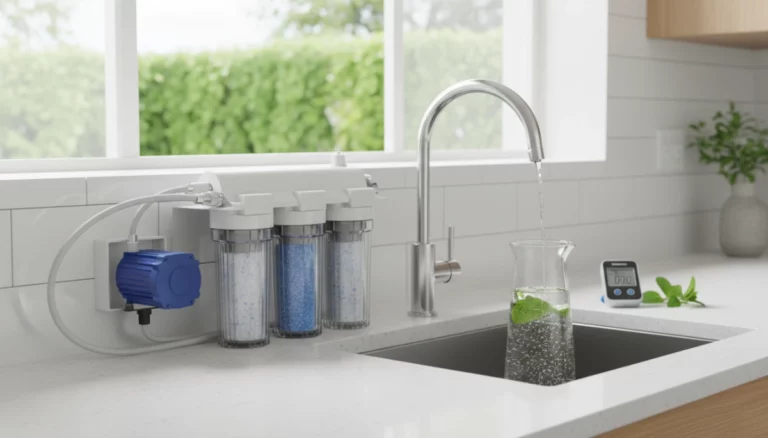
Countertop RO purifier (plug-and-play)
- Best if you’re renting, can’t drill, or have limited plumbing access.
- Great for apartments, small kitchens, or condos where you want a high TDS water improvement countertop RO purifier residential unit you can move with you.
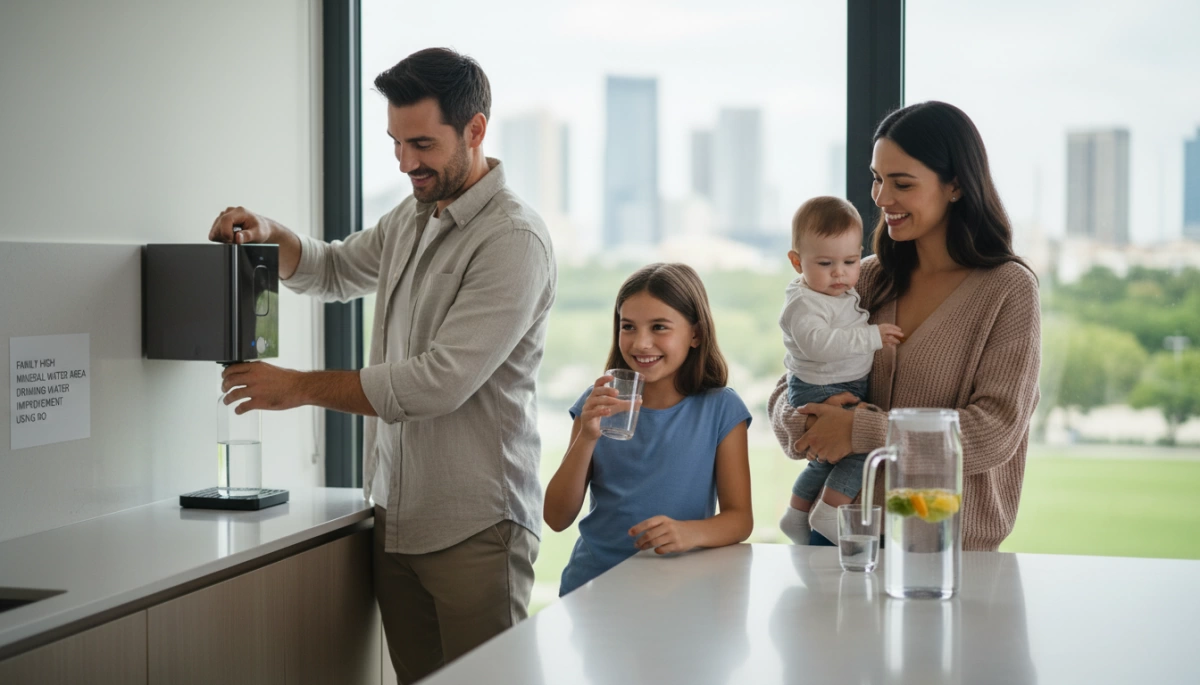
- Modern countertop systems, like a high mineral region drinking water appliance RO purifier countertop, often combine RO, heating, and sometimes even ice in one compact box. If you want a good reference point, check how a countertop 4-in-1 RO cold and hot water purifier with ice maker is designed to handle high TDS while still being family-friendly:
Countertop 4-in-1 RO cold and hot water purifier with ice maker
Under-sink RO system
- Best for homeowners and larger families that want a clean look with a dedicated RO faucet at the sink.
- Typically offers higher flow and larger storage tanks, useful if your family cooks with RO water and fills big pitchers daily.
- Ideal as a point of use RO for kitchen sink if you’re battling both appliance scaling from hard water and taste issues.
If you’re mostly doing drinking and coffee/tea, a high mineral water solution countertop RO purifier home is usually enough. If you also cook with RO, use it for pets, and fill bottles all day, an under-sink RO purification system household setup starts to make more sense.
Recovery Rate, Flow Rate, and Tank Size for Daily Family Use
In high TDS areas, system performance matters because RO membrane for high TDS water works harder:
Recovery rate (water efficiency)
- This is how much purified water you get compared to wastewater.
- Older systems might be 1:3 or worse (1 gallon pure, 3 gallons waste). Newer RO system efficiency and water waste designs often reach 1:1–1:1.5, which is much better for daily family use.
- In high TDS zones, I always pick a unit that’s clearly designed for RO system for high mineral regions, since efficiency drops fast with poor design.
Flow rate
- For a family, I like a minimum effective flow of 0.3–0.5 GPM at the faucet so you’re not waiting forever to fill a pot.
- Countertop units often use internal pumps to deliver strong flow, which is handy if your home water pressure is low.
Tank size
- 2–3 gallon effective storage is fine for 1–2 people.
- For 3–5 people, I aim for 3–4 gallon effective storage, or a smart-tank/pump system that refills quickly.
- If your family runs on water bottles, coffee, tea, and cooking all from RO, go bigger by default.
When I design or choose a high TDS drinking water purification countertop RO system, I balance all three: good recovery rate to avoid wasting water, solid flow so the family actually enjoys using it, and a tank (or tankless/pump design) sized to real daily demand. That’s how I make sure the system is truly a mineral heavy water household solution RO purifier, not just another gadget taking up space on the counter.
Remineralization After RO for Balanced Family Drinking Water
When we use RO for family high mineral water area drinking water improvement, we strip out almost everything: excess calcium, magnesium, heavy metals, and a lot of the “good stuff” too. That’s why remineralization matters. A simple post-filter that adds back a controlled amount of calcium and magnesium brings back better taste, smoother mouthfeel, and more natural, balanced mineral RO water for daily family drinking.
Why Remineralization Helps Taste And Mouthfeel
RO alone can leave water tasting flat or “empty,” especially if you’re used to high mineral drinking water for families from hard tap water. A remineralization cartridge fixes that by:
- Adding light calcium and magnesium for a clean, slightly sweet taste
- Improving mouthfeel so water feels “full” and satisfying
- Supporting better coffee, tea, and cooking flavor at home
For many of our U.S. customers who care about healthier drinks, this is the same reason they look into alkaline kitchen water options for health-focused families.
Keeping Essential Minerals Without High TDS Problems
In high TDS home water issues, the goal is not “zero minerals.” The goal is eliminating excess dissolved solids, off-tastes, and contaminants while keeping a gentle mineral balance. With a good RO remineralization stage you can:
- Remove excess calcium and magnesium from tap water at the membrane
- Add back a small, stable mineral level for family hydration and mineral balance
- Keep TDS low enough to avoid scale, while high enough to avoid that ultra-flat taste
Best Remineralization Filters For Family RO Systems
For a family safe RO drinking water setup, I usually recommend:
- Mineral cartridge with food-grade calcium/magnesium – simple, reliable, and affordable
- Alkaline remineralization filter – raises pH slightly for a smoother taste
- Coconut shell carbon + mineral combo – polishes taste and adds gentle minerals in one stage
These fit easily on a countertop RO purifier for families or an under sink RO for hard water homes, and they turn pure RO into balanced mineral RO water that people actually want to drink all day.
Avoiding Flat-Tasting Water While Protecting Long-Term Health
If your family comes from a high mineral region or deals with family hard water problems, switching to straight RO can feel like too big a jump. Remineralization gives you a smart middle ground:
- Better flavor and mouthfeel, so kids and adults drink more water
- Controlled mineral content instead of random high TDS from groundwater
- Long-term peace of mind: low contaminants, low scale, but not “over-purified” or metallic
Used right, a remineralized RO drinking water setup turns a high mineral water solution countertop RO purifier home system into a daily habit your family sticks with, not just an appliance that sits on the counter.
Driplife Countertop RO Solutions for High Mineral Family Use
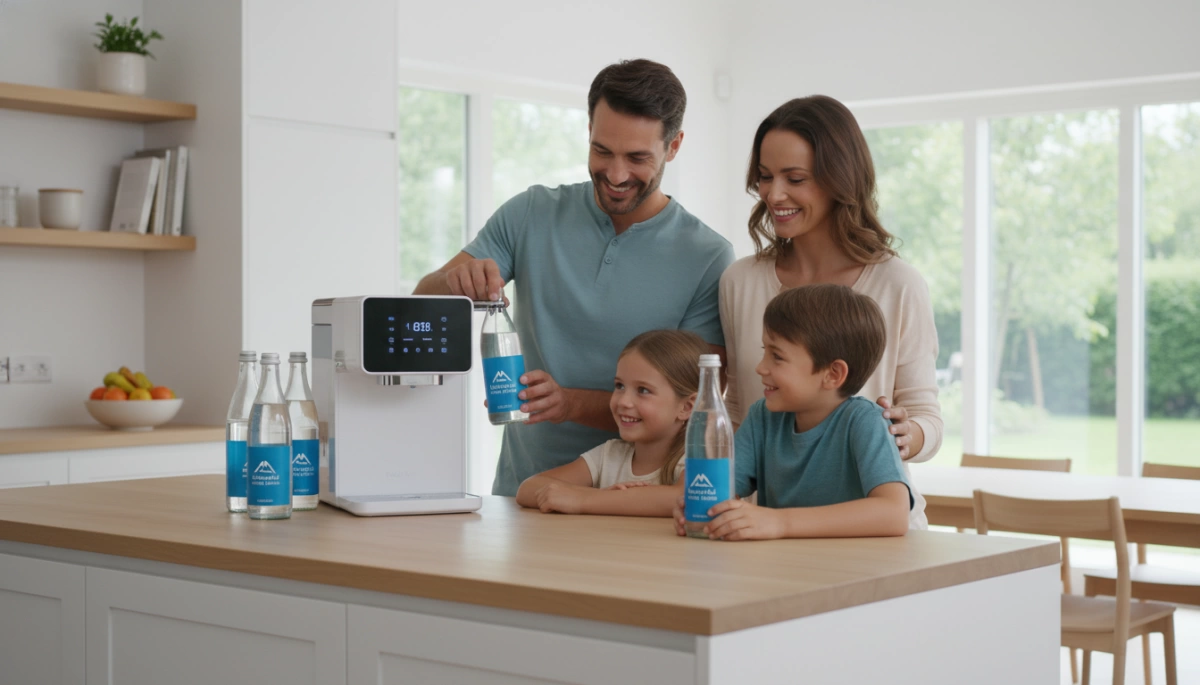
When a family lives in a high mineral water area, I want our Driplife countertop RO purifiers to feel like a simple, reliable upgrade—not a project. Our systems are built specifically for high TDS home water issues, hard water drinking problems, and that bitter, metallic taste a lot of U.S. households deal with.
RO technologies for high TDS and hard water
For high mineral drinking water for families, I use high-rejection RO membranes designed for high TDS groundwater, so they can handle elevated calcium, magnesium, and other dissolved solids. The goal is straightforward:
- Cut TDS to a safer, cleaner level for daily family hydration
- Remove excess calcium and magnesium from tap water without overcomplicating the setup
- Deliver family safe RO drinking water at the kitchen counter with point‑of‑use RO
Compared with a basic pitcher filter or a simple carbon unit, this style of household reverse osmosis benefits families in mineral‑heavy regions much more, especially when you’re dealing with scaling and taste issues.
Multi-stage filtration and remineralization
Every Driplife countertop RO purifier for families uses a multi stage RO filtration system to tackle high mineral content and other contaminants in steps:
- Sediment and pre‑carbon: dust, sand, rust, chlorine, and basic chemical odors
- RO membrane for high TDS: heavy metals, high mineral load, and most dissolved solids
- Polishing and remineralization: smooth taste, balanced mineral RO water, better mouthfeel
Our remineralized RO drinking water keeps TDS low but adds back light, essential minerals so the water doesn’t taste flat. This is the same philosophy we apply when we design other advanced systems, like our tankless RO solutions with competitive efficiency advantages.
Compact countertop designs for small kitchens
Most U.S. families don’t want to drill, re‑plumb, or give up a whole cabinet just to fix high TDS home water issues. That’s why our high mineral water solution countertop RO purifier line focuses on:
- Compact footprints that sit cleanly on a standard American countertop
- No permanent installation—ideal for renters, apartments, or small family kitchens
- Simple feed and drain options that work with typical U.S. faucets and sinks
If you don’t have room for an under sink RO for hard water homes, a countertop RO purifier home unit is usually the most practical hard water drinking solution.
Low-maintenance features families actually use
I design every high TDS drinking water purification countertop RO system to be as low‑touch as possible so busy families will actually keep up with it:
- Quick‑change cartridges accessible from the front or top
- Clear filter life indicators so you don’t have to guess
- Easy flush and cleaning routines with minimal tools
- Stable performance without constant adjustments or app‑micromanaging
The result is a mineral heavy water household solution RO purifier that can run quietly in the background, turning high mineral region drinking water into clean, balanced, daily drinking water without adding work to your week.
Step-by-Step RO Improvement Plan for Your Family Drinking Water
1. Test Your Home Water TDS And Hardness First
Before I recommend any RO system for high mineral drinking water, I always start with numbers:
- Get a simple TDS meter (usually $10–$20 online) and a basic hardness test kit with strips or liquid drops.
- Run the tap for 30–60 seconds, then test cold water from the kitchen sink.
- TDS under ~150 ppm is generally low; 150–300 ppm is moderate; 300–1,000+ ppm is a high TDS home water issue where reverse osmosis for mineral rich water starts making a big difference.
- Hardness over 120 ppm (7+ gpg) usually means family hard water problems like limescale, white spots, and a bitter mineral taste.
Write these results down. They guide everything else: which RO membrane for high TDS you need, how many stages, and whether remineralized RO drinking water makes sense for your home.
2. Plan A Countertop Or Under-Sink RO Installation
Once I know the TDS and hardness, I match the RO to the family and kitchen layout:
Countertop RO purifier for families:
- Best for renters, condos, and small kitchens.
- No drilling; connects to a faucet or has its own refill tank.
- Great if you want a high mineral water solution countertop RO purifier home style setup just for drinking and cooking.
Under sink RO for hard water homes:
- Cleaner look, dedicated faucet, more storage-friendly.
- Better if you cook a lot, have a large family, or want point of use RO for kitchen sink that’s always ready.
Check:
- Available space (under sink or on counter).
- Access to an outlet if the system uses a pump.
- Drain connection for RO reject water.
If you want something even simpler for backup use or travel, a high-efficiency water filter pitcher that filters fluoride like the one we offer as an advanced fluoride-filtering water pitcher can complement your main RO unit.
3. Set Filter Change Schedules And Membrane Care
A household reverse osmosis system only protects your family if you keep up with basic maintenance. I keep it simple and predictable:
- Sediment & carbon pre-filters: change about every 6–12 months, or sooner if your water is very dirty or has a strong chlorine smell. These protect the RO membrane from clogging and chemical damage.
- RO membrane for high TDS: usually lasts 2–3 years in most U.S. homes, sometimes longer if your incoming water isn’t extreme and you keep up with pre-filters.
- Post-carbon & remineralization cartridges: typically 12 months, especially if taste changes or flow drops.
Easy tips:
- Put all change dates in your phone calendar the day you install the system.
- If TDS at the RO faucet climbs above 50–80 ppm (depending on your tap water), it’s a red flag to check filters and membrane performance.
- If flow slows way down or you notice more appliance scaling from hard water, it’s time to inspect filters even sooner.
4. Track Taste, TDS, And Family Feedback
For family safe RO drinking water, I rely on both data and real-world feedback:
- Measure TDS at the RO faucet once a month and compare with the tap water TDS. You want a strong reduction in dissolved solids, especially in high TDS groundwater areas.
- If you use a multi stage RO filtration system with a remineralization cartridge, taste should be clean and smooth, not flat or salty.
- Ask your family:
- Does coffee or tea taste better?
- Are kids drinking more water without being reminded?
- Are kettles, humidifiers, and coffee makers showing less limescale?
If TDS creeps up, taste changes, or anyone notices a bitter metallic taste in tap water again, I check:
- Filter age and replacement schedule.
- Any leaks or kinks in tubing.
- Whether the RO tank is still filling fully and delivering steady flow.
This simple step-by-step RO improvement plan turns a high TDS drinking water purification countertop RO system or under-sink RO purifier into a reliable, long-term solution for high mineral area drinking water improvement, giving your family consistent taste, protection, and peace of mind.
Common Questions About Family High Mineral Water and RO
Does RO Remove Too Many Minerals for Kids and Elderly?
Reverse osmosis does strip out most minerals, but that’s not a downside when we’re talking about family drinking water in high mineral areas. The main job of RO for high TDS home water issues is to remove excess calcium, magnesium, sodium, and other dissolved solids that stress the kidneys and cause scaling. Kids and older adults should get their minerals from a balanced diet or supplements, not from unpredictable high mineral drinking water for families. When we use a remineralization cartridge after RO, we put back a controlled amount of healthy minerals and keep TDS in a safe, comfortable range.
Is Remineralized RO Better Than Standard RO for Daily Drinking?
For everyday family hard water problems, remineralized RO drinking water is my go‑to. Standard RO gives very low TDS water, which is clean but can taste flat. A balanced mineral RO water setup adds natural calcium and magnesium back after RO, improving taste, mouthfeel, and pH without bringing back the heavy mineral load. That’s the sweet spot for family safe RO drinking water: low contaminants, controlled TDS, and a clean, smooth taste everyone actually drinks.
How Much Water Does a Modern RO System Waste?
Older RO systems had a bad name for wasting water. Modern household reverse osmosis systems, especially efficient countertop RO purifiers for families, are much better. Good units often run around a 2:1 to 3:1 ratio (2–3 gallons of drain water per 1 gallon purified) and some high‑efficiency designs do even better. In high TDS groundwater areas, that trade‑off is still far cheaper and more eco‑friendly than buying bottled water every week. If you want a compact, low‑waste option, look at a modern countertop RO purifier for home kitchens with an upgraded recovery rate.
Is RO Suitable for Families in Chinese High Mineral Regions and Similar Areas?
Yes. RO for high TDS groundwater is exactly what families in Chinese high mineral regions and similar parts of the U.S. Midwest and Southwest need. These regions often deal with very high TDS, hardness, and a bitter metallic taste in tap water from old pipes and mineral‑rich wells. A multi stage RO filtration system with a strong RO membrane for high TDS and an optional remineralization filter delivers stable water quality regardless of seasonal changes in the local supply. For families in these hard water zones, a point of use RO system at the kitchen sink or a compact countertop RO purifier is the most direct, controllable high mineral area drinking water improvement solution.