
















You invested thousands in your kitchen equipment, but is your water supply silently ruining it?
Hard water is the number one enemy of commercial steamers, combi ovens, and high-end residential appliances.
In this guide, you’re going to learn exactly How RO Systems Protect Expensive Kitchen Steam Ovens and Kettles from costly damage.
We’ll move beyond basic filtration and show you why Reverse Osmosis is the only reliable defense against limescale buildup, corrosion, and premature failure.
Ready to save on maintenance and extend your equipment’s life?
Let’s dive right in.
The Science Behind Water Damage in Steam Ovens and Kettles
We often invest thousands in state-of-the-art kitchen technology, yet we overlook the one ingredient that runs through them all: water. As a manufacturer deeply invested in water purification solutions, I see firsthand how untreated water destroys high-performance appliances. The culprit is simple chemistry. When water heats up, dissolved minerals—specifically calcium and magnesium—precipitate out of the liquid and bond to surfaces. This is the root cause of mineral buildup, turning sleek heating elements into crusty, inefficient components.
Understanding Limescale Formation
The process starts the moment your appliance reaches operating temperature. Heat forces these minerals to crystallize, creating a rock-hard layer known as scale. Without effective limescale prevention, this buildup acts as an insulator. In my experience, this forces the appliance to work twice as hard to achieve the same temperature, spiking energy usage and causing hard water damage that accumulates silently over time.
Impact on Steam Ovens and Kettles
For precision appliances like steam ovens, the damage is catastrophic. The scale doesn’t just sit there; it clogs the fine mist jets and coats sensors.
- Reduced Heat Transfer: Scale layers block heat, leading to uneven cooking and longer preheat times.
- Clogged Jets: Steam oven maintenance calls often stem from calcified nozzles that can no longer spray effectively.
- Sensor Failures: Buildup tricks sensors, causing the unit to shut down or overheat.
Kettle scaling presents a similar issue. You will notice kettle scaling when the heating element becomes coated in white chalk. This coating eventually cracks the element’s protective layer, leading to electrical shorts and significantly slower boiling times.
Corrosion Threats and Appliance Longevity
Beyond scale, we have to talk about corrosion. Chlorides found in many water supplies are aggressive. Under high heat, they cause pitting—tiny holes in the metal surfaces of boilers and tanks. This type of hard water damage is irreversible. Ensuring appliance longevity and service life extension requires removing these corrosive elements before they ever enter your machine. If you want to protect your investment, understanding these threats is the first step toward a solution.
Why Standard Filters Fail and RO Is Essential
Many homeowners assume a simple fridge filter or a basic carbon pitcher is enough to protect their kitchen tech. The reality is, while those filters are great for improving taste, they do almost nothing for appliance longevity or limescale prevention. Standard sediment and carbon filters act like a screen door; they stop large particles and chlorine, but they leave dissolved minerals—the invisible culprits behind hard water damage—completely untouched.
For anyone investing in a high-end kitchen, understanding the capabilities of different systems is crucial. As detailed in our comprehensive guide to choosing under sink water filters, Reverse Osmosis (RO) is the only residential technology that effectively reduces Total Dissolved Solids (TDS). This distinction is vital for protecting sensitive equipment:
- Manufacturer Warranties: Many premium steam oven brands explicitly state water quality requirements in their fine print. If your water exceeds a certain grain per gallon (GPG) hardness, resulting scale buildup can often void your warranty coverage.
- Flash vs. Boiler Systems: Modern “flash” steam ovens spray water directly onto a superheated element to create instant steam. If that water contains dissolved minerals, the water evaporates instantly, leaving behind a hard crust of scale that clogs jets and ruins sensors. Boiler-based systems are slightly more forgiving but still suffer from significant efficiency loss over time without proper filtration.
Scale inhibitors, often found in basic inline filters, only temporarily suspend minerals to prevent them from sticking, but they do not remove them. In the high-heat environment of a steam oven or kettle, those inhibitors often break down, allowing minerals to precipitate out anyway. To truly protect your investment, you need the TDS reduction that only a robust RO system provides. Our manufacturing focuses on systems with high-capacity 2000-gallon cycles to ensure that the water feeding your appliances is fully purified, not just filtered.
How Reverse Osmosis Systems Deliver Superior Protection
Reverse osmosis (RO) goes far beyond the capabilities of standard carbon filters, offering a comprehensive shield for your high-value kitchen appliances. The process works by forcing water through a semi-permeable membrane that rejects up to 99% of total dissolved solids (TDS). While basic filters might catch sediment, our RO technology targets the microscopic impurities that cause the most damage to internal components.
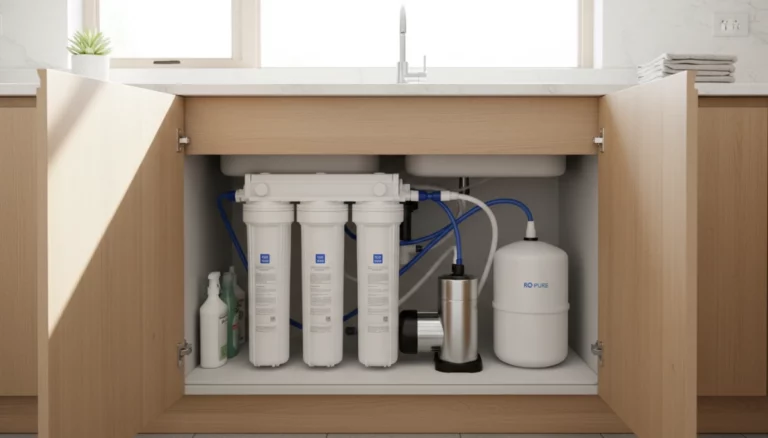
By integrating robust under sink water purification systems, you ensure that the water feeding your steam oven or kettle is stripped of the contaminants that lead to equipment failure. Here is how this level of filtration directly benefits your kitchen setup:
- Eliminating Scale-Forming Minerals: The primary enemy of heating elements is mineral buildup. RO systems remove these dissolved solids before they enter the appliance, ensuring heating coils and steam injectors remain free of insulating scale.
- Preventing Internal Corrosion: Aggressive ions and contaminants can cause pitting and rust within boiler tanks. Our filtration process removes these harmful elements, extending the lifespan of the machinery.
- Pure Steam Quality Benefits: When you cook with steam, the water quality directly impacts the food. Purified water generates clean steam with no off-tastes or odors, ensuring better flavor profiles and maximum nutrient retention in your dishes.
This multi-stage defense—spanning pre-filtration, membrane rejection, and post-treatment—guarantees that your expensive appliances operate on the clean, high-quality water they were designed for.
Real-World Benefits for Commercial and Home Kitchens
Investing in high-end kitchen equipment requires protecting that capital. From my perspective in the manufacturing industry, I see too many premium appliances fail prematurely due to poor water quality. Implementing a reliable RO system for high-end kitchens is a strategic move that ensures appliance longevity and drastically reduces operational costs.
The ROI of RO: Cost Savings Analysis
The math is simple. The cost of a dedicated filtration system is a fraction of the price of replacing a steam oven boiler or a commercial espresso machine. We design our Under Sink Water Distribution Systems to handle high volumes, ensuring that expensive heating elements remain free of the mineral scale that leads to early burnout.
| Expense Category | Without RO Protection | With Driplife RO System |
|---|---|---|
| Repair Frequency | High (Frequent descaling required) | Low (Routine filter changes only) |
| Energy Efficiency | Low (Scale insulates heating elements) | High (Optimal heat transfer) |
| Appliance Lifespan | 3–5 Years (Risk of corrosion) | 10+ Years (Service life extension) |
| Downtime | Unpredictable (Sudden failures) | Minimal (Planned maintenance) |
Operational Advantages and Food Quality
Beyond the savings, purified water directly impacts performance. Service life extension is critical, but so is daily consistency.
- Consistent Temperatures: Scale buildup creates “hot spots” and insulation layers, causing temperature fluctuations. RO water ensures precise heating.
- Pure Flavor: Impurities in tap water can alter the taste of steamed vegetables or artisan coffees. Our systems remove these variables.
- Reduced Downtime: In a commercial kitchen, a broken steamer during service is a disaster. Our high-flow systems (5.2L/min) keep up with demand, preventing the “starvation” issues common with smaller filters.
By integrating a hot water dispenser connected to an RO unit, you ensure that every drop used for cooking or brewing is free from the dissolved solids that wreak havoc on internal components. This proactive approach turns water quality from a liability into a competitive advantage.
Choosing and Implementing the Right RO System
When outfitting a high-end kitchen, the specifications of your water filtration setup are just as critical as the appliances themselves. You cannot feed a commercial-grade steam oven with a trickle of water; it demands consistent pressure and volume to function correctly.
Key Specifications for Demand-Heavy Setups
To ensure your equipment runs smoothly, focus on Flow Rate and Daily Output (GPD). A standard residential filter often struggles to keep up with the rapid fill requirements of a steam boiler or a large pasta pot.
- Flow Rate: Look for systems delivering at least 5.2L/min. This ensures your kettle fills instantly and your steam oven never “starves” for water during a cycle.
- Capacity: High-capacity systems, like our 2000-gallon cycle units, reduce the frequency of maintenance, keeping your kitchen operational longer.
Tankless Designs vs. Tank Systems
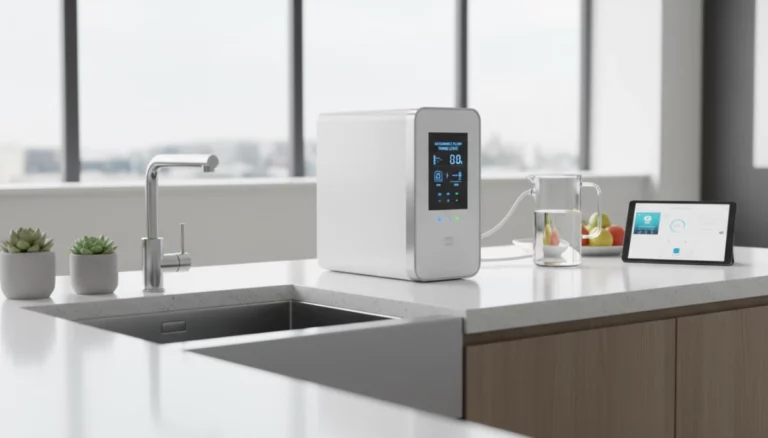
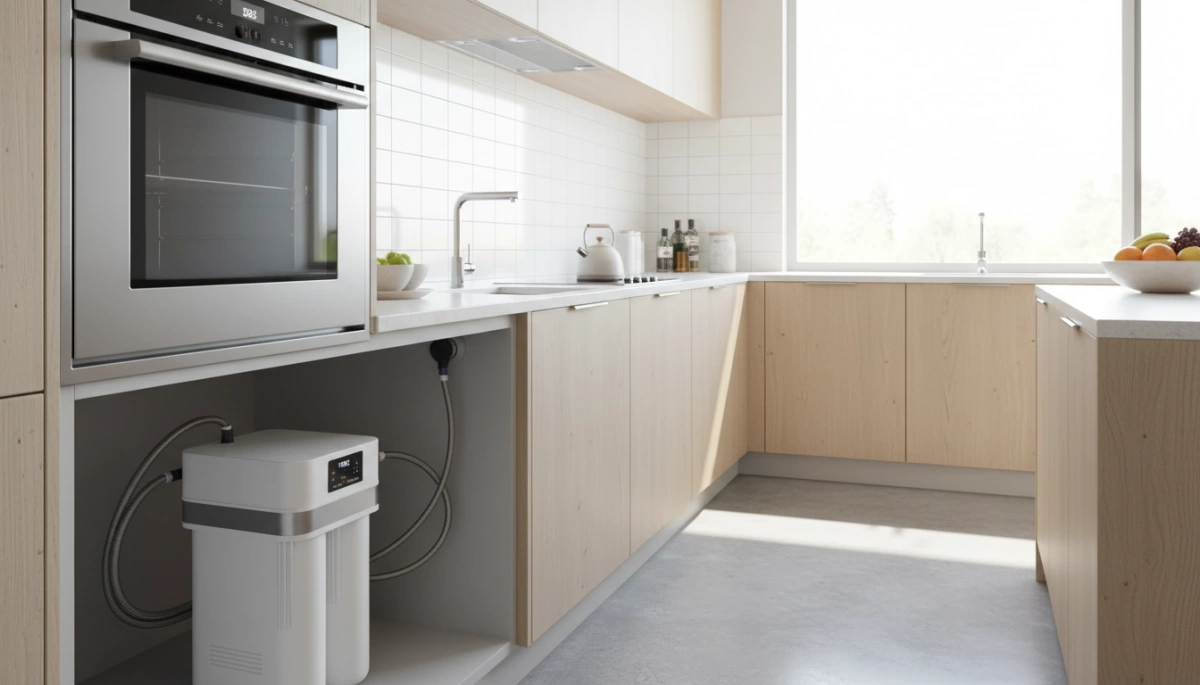
Space is a premium in modern US kitchens. Tankless designs have become the standard for efficiency, eliminating the bulky storage tank that takes up valuable cabinet real estate. More importantly, tankless systems provide fresh water on demand, removing the risk of secondary pollution that can occur in stagnant storage tanks. If you are weighing the benefits of portable units versus installed systems, reviewing the best countertop RO system features can help clarify which form factor suits your workflow.
Installation and The Driplife Advantage
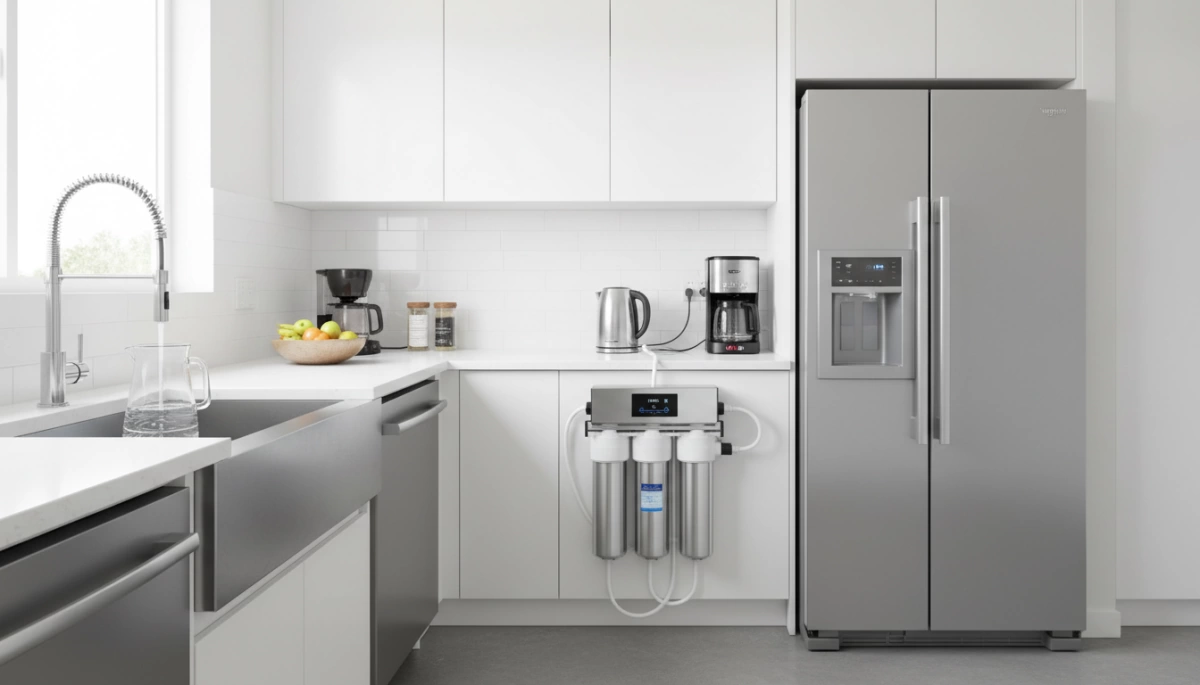
For protecting expensive appliances, an under-sink setup with direct plumbing to the steam oven is the most effective method. This creates a seamless “set it and forget it” solution.
At Driplife, we engineer our systems specifically for this level of performance.
- Quiet Operation: We utilize ultra-quiet technology with low-decibel pumps, ensuring the filtration process never disrupts the kitchen environment.
- Robust Build: Backed by our 60,000 sq. ft. manufacturing facility and rigorous lab testing, our units are built to withstand high pressure and continuous usage.
- Integrated Solutions: Our distribution systems can simultaneously supply purified water to your faucet, refrigerator, and steam oven, acting as a central hub for appliance longevity.
Maintenance Best Practices for RO Systems
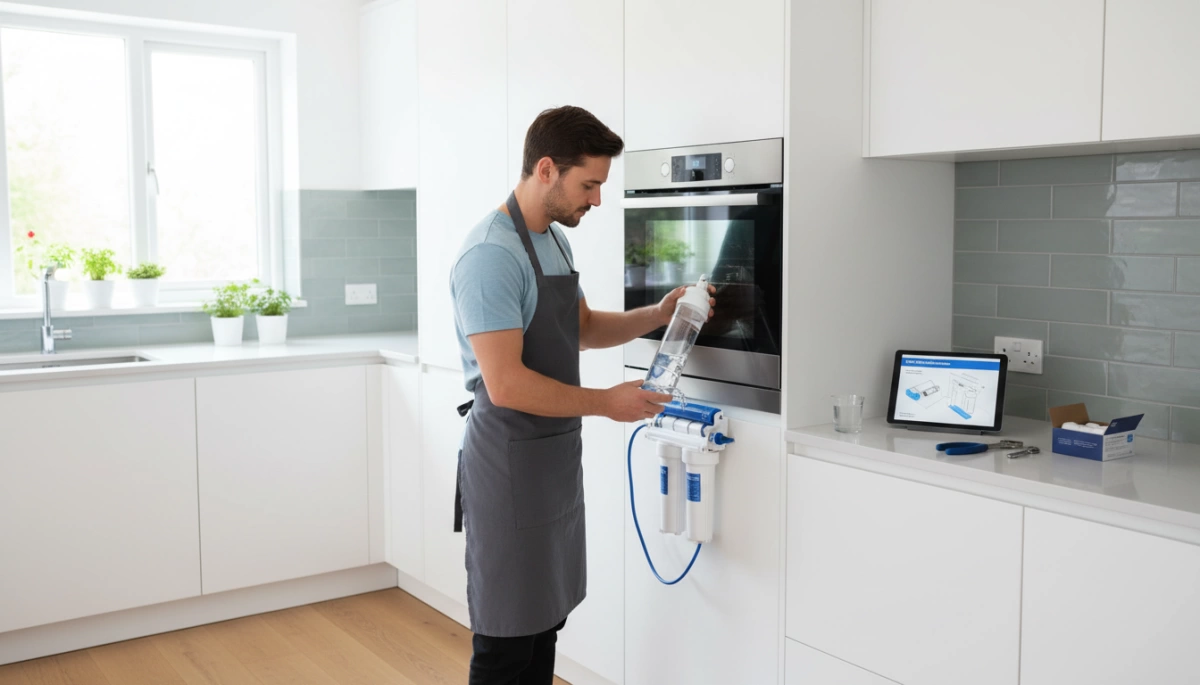
To guarantee steam oven maintenance is hassle-free and your expensive appliances remain safe from hard water damage, you have to treat the RO system as the heart of your kitchen’s water supply. A neglected filter system will eventually let minerals pass through, defeating the purpose of installation. We design our systems for durability, but they still require consistent attention to deliver that pure, scale-free water.
Routine Filter Changes and Scheduling
Sticking to a strict replacement schedule is the single most important factor for appliance longevity. You do not want to wait until the water tastes “off” or the flow slows down.
- Track Usage: Our high-capacity under-sink filtration systems are rated for a 2000-gallon cycle. For most busy kitchens, this offers a long service life, but you must track the volume to replace filters before they are exhausted.
- Pre-Filter Swaps: Change sediment and carbon pre-filters regularly to protect the main RO membrane from premature clogging.
- Membrane Integrity: The RO membrane is what provides the actual scale inhibition. If this degrades, calcium and magnesium will sneak into your steam oven’s boiler.
Monitoring TDS and Troubleshooting Flow
You cannot manage what you do not measure. I always recommend using a TDS (Total Dissolved Solids) meter to spot-check your water quality. If the TDS reading starts creeping up, it means the rejection rate of the membrane is dropping, and mineral buildup is imminent.
- Watch the Flow Rate: Our systems are engineered to deliver a fast 5.2L/min flow rate, ensuring your kettle or pot filler isn’t trickling. If you notice a significant drop in pressure, it is usually the first sign that a filter change is due.
- Sanitization: Periodically sanitize the lines and any storage tanks to ensure the water remains food-grade safe.
- Sourcing Parts: Always use authentic components. Working with professional water purifier suppliers ensures you receive compatible, high-quality replacements that match the original system specs, keeping your warranty and your appliances safe.
Important Considerations and Solutions
Managing Water Acidity and Compatibility
While removing minerals is critical for limescale prevention, it is essential to monitor the resulting water chemistry. Highly purified water can sometimes become slightly acidic—often referred to as “hungry water”—which may be aggressive toward certain metals like copper or brass found in older boiler sensors.
- Verify Requirements: Always check your steam oven or kettle manual to see if the manufacturer specifies a minimum TDS level for sensor operation.
- Stabilization: If your appliance requires a neutral pH, consider implementing a remineralization stage or a blending valve. This ensures you maintain appliance longevity by preventing corrosion while still blocking scale.
Eco-Friendly and High-Efficiency Options
Concerns about water waste in RO systems are valid for older models, but modern manufacturing has solved many of these inefficiencies. We focus on high-efficiency designs that minimize drain water while maximizing pure water production.
- Tankless Design: Unlike bulky traditional systems, our tankless units prevent secondary pollution and stagnation.
- On-Demand Power: With a 5.2L/min flow rate, our systems provide immediate access to purified water, ensuring your kitchen runs smoothly without waiting on a refill.
Choosing the right setup involves balancing protection with sustainability. Exploring advanced water filtration products allows you to find a solution that safeguards your expensive steam equipment without compromising on environmental responsibility.
Frequently Asked Questions About RO for Steam Appliances
Do I really need RO for a high-end home steam oven?
Absolutely. If you have invested significantly in a premium steam oven, protecting that investment is critical. Manufacturers often void warranties if equipment failure is traced back to poor water quality or scale buildup. An RO system acts as an essential shield, removing the impurities that clog delicate steam injectors and sensors, ensuring your appliance runs efficiently for years.
Will RO water cause corrosion in my boiler?
This is a common concern, but modern filtration technology addresses it effectively. While highly purified water can be aggressive if not managed, the primary threat to steam equipment is mineral accumulation, not the water itself. Our systems focus on delivering clean, purified water that prevents the heavy scale deposits known to destroy heating elements, striking the right balance for appliance longevity.
How often should I change filters for commercial kitchen use?
Maintenance schedules depend heavily on your daily volume. Our high-capacity under-sink units are rated for a 2000-gallon cycle, which provides substantial longevity even in demanding environments. However, in a commercial setting where you are constantly running steam cycles, you need to monitor usage closely. If you notice a drop from the standard 5.2L/min flow rate, it is likely time to replace the filter to maintain consistent steam production.
Can I install the RO system myself or do I need a pro?
For standard under-sink applications, our modern tankless water filter system designs are compact and generally straightforward to set up. However, when integrating filtration directly with expensive kitchen steam ovens or a centralized distribution system, we recommend professional installation. A pro ensures that the pressure requirements are met and that the plumbing lines are secure, preventing leaks and ensuring your expensive appliances receive the steady water supply they require.