
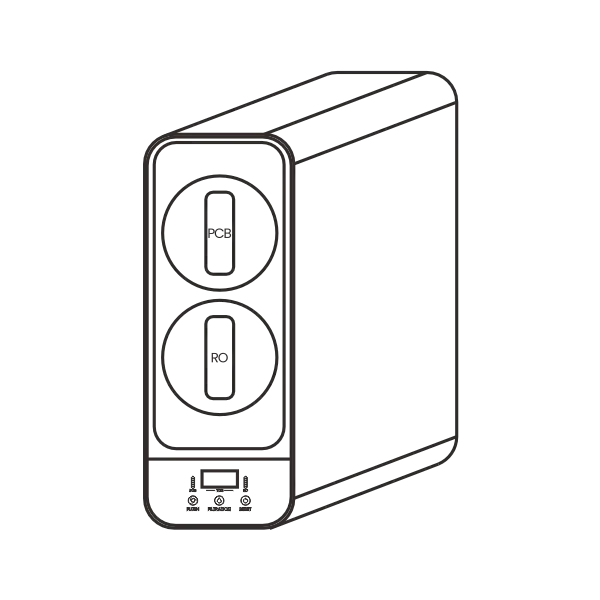

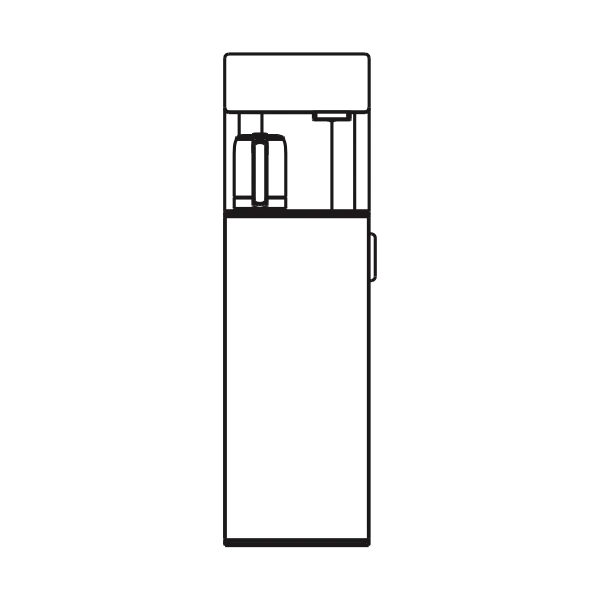













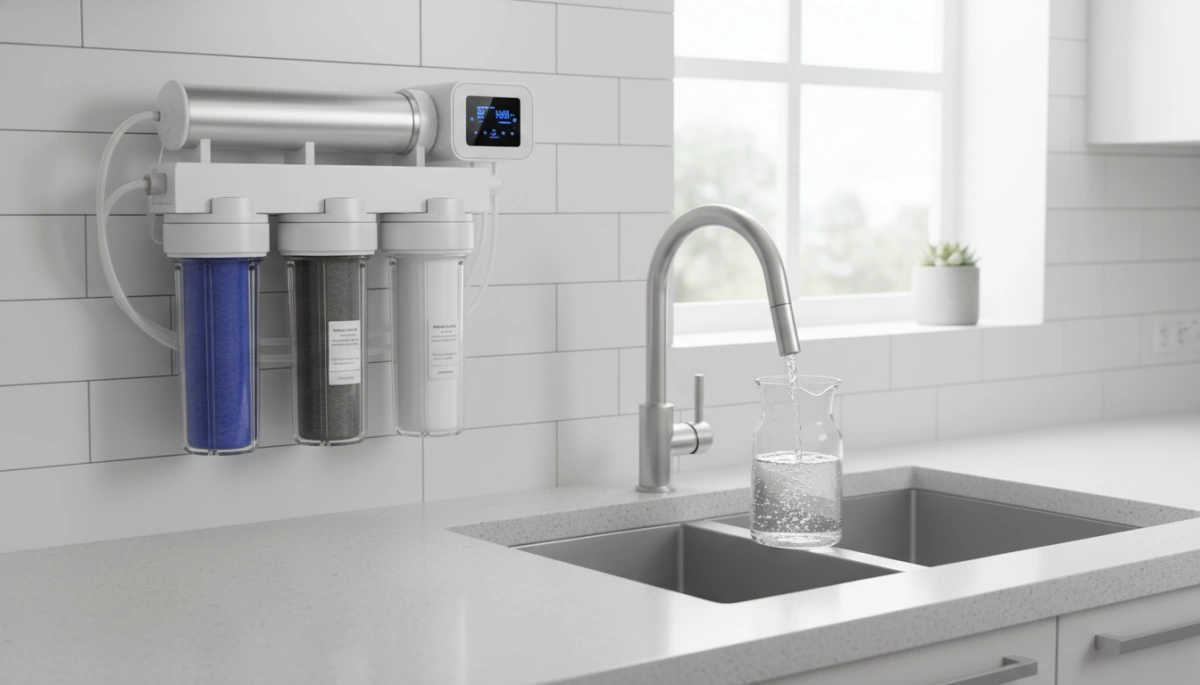
Multi Stage Filtration Logic in Tankless RO Systems
When buyers ask me how my under-sink tankless RO purifiers deliver high purity without a storage tank, I always start with the anatomy of Multi Stage Filtration Logic in Tankless RO Systems. It is not just “more filters in a row.” It is a deliberate filtration stage sequencing strategy that balances performance, cost, and reliability.
Why Stage Sequence Matters in Tankless RO Filtration
In a multi stage tankless RO logic design, each stage takes a specific load so the next stage can work in its optimal zone:
- Upfront sediment and composite pre-filters catch rust, sand, and large particulates so they never hit the RO membrane.
- Mid-position carbon blocks handle chlorine and VOCs at the right pressure and flow, protecting membrane chemistry.
- The RO membrane runs in a controlled pressure window to hit its rated GPD capacity and rejection rate.
- Post-polishing stages correct taste and residual odor after the heavy filtration work is done.
If the sequence is wrong, you get faster clogging, unstable flow, and lower rejection—even if the individual filters look good on paper.
How Filtration Logic Differs from Simple Multi-Filter Setups
A simple multi-filter setup just lines up cartridges. My tankless RO filtration design works more like a system:
- I size each stage by particle size, chlorine load, and expected inlet TDS, not just by marketing claims.
- I tune pressure drop across the integrated waterway and manifolds so the RO membrane sees stable inlet pressure.
- I design the drain-to-pure water ratio around the membrane’s operating curve, not a generic waste ratio guess.
This performance-oriented stage design lets the system deliver consistent purity under real U.S. municipal water conditions, not just lab specs.
Balancing Flow Rate, Pressure, and Purity
For a tankless design, I have to hit all three at once:
- Flow rate: High-flux membranes and low-resistance internal channels keep real-time flow strong.
- Pressure: Integrated manifolds and optimized orifices maintain the pressure the membrane needs to work correctly.
- Purity: Correct staging ensures the 0.0001 micron RO filtration accuracy is maintained over the service life.
The result is balanced filtration design: the consumer feels instant, stable flow while you, as a distributor or OEM partner, see fewer performance complaints and returns.
Protecting the RO Membrane with Staged Pre-Filtration
At the core of my advanced filtration logic RO architecture is membrane protection:
- Pre-filtration sediment filter logic strips out abrasive particles that cause premature membrane plugging.
- Properly placed activated carbon stages remove chlorine before it can oxidize the membrane and destroy rejection performance.
- This staged approach directly improves membrane life, service cost, and warranty risk.
For B2B buyers, this is the main reason Multi Stage Filtration Logic in Tankless RO Systems matters: better protection upfront means longer stable performance, lower maintenance cost, and a stronger long-term return on every installed unit.
Stage 1 Pre Filtration Logic in Tankless RO Systems
In a multi stage tankless RO logic setup, Stage 1 is all about protection. I use a sediment pre filter to catch rust, sand, and other large particles before they ever touch the carbon block or the RO membrane. This pre filtration sediment filter logic keeps the internal waterway clean, protects shutoff valves, and stops early clogging that would slow your under sink tankless RO purifier.
For most U.S. tap water, a 5 micron PP filter in an RO system hits the sweet spot. It’s tight enough to grab visible debris and pipe scale, but open enough to keep strong flow and stable pressure into the later stages. Go finer than that on average city water and you risk pressure drop and more frequent filter changes; go coarser and you let too much grit hit the RO membrane.
This balanced filtration design pays off in membrane life. By stripping out sediment first, the RO membrane doesn’t have to act like a dirt filter. That means less fouling, more consistent GPD capacity, and fewer times your system needs an aggressive automatic membrane flushing system to recover performance. In real daily use, that translates to steadier flow at the faucet and lower long‑term maintenance cost.
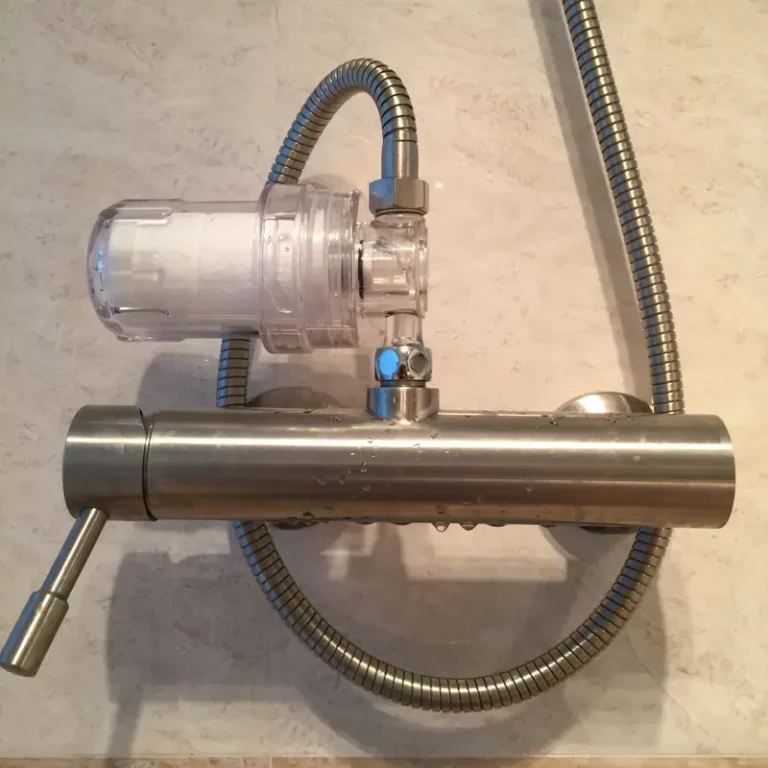
To save space in tight American under-sink cabinets, I often use composite filter cartridge technology that combines PP sediment and activated carbon in one compact element. The PP layer grabs the heavy particles, while the carbon layer starts dealing with chlorine and organics right away. This kind of space saving tankless RO architecture is ideal if you’re also running other compact gear nearby, like a charcoal shower filter head in the bathroom for whole‑home comfort.
Stage 2 Activated Carbon Logic in Tankless RO Systems
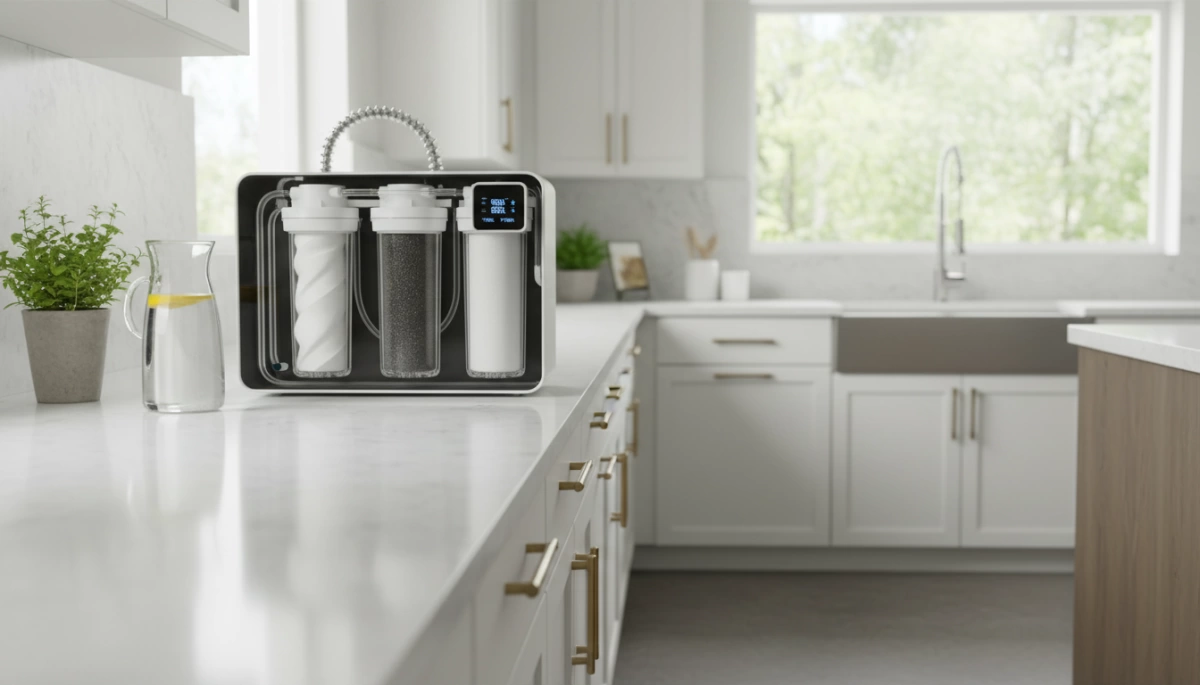
In a well‑designed multi stage tankless RO logic, the Stage 2 activated carbon block is all about protection and taste. This stage targets chlorine, VOCs, and bad odor before water ever touches the RO membrane. City water in the U.S. is typically disinfected with chlorine or chloramines. If we let that through, it will slowly attack the membrane surface, harden it, and lower rejection performance for heavy metals, PFAS, and other contaminants. That’s why an activated carbon block stage is not optional—it’s core to smart, performance‑oriented stage sequencing.
Our under sink tankless RO purifier uses a high‑density carbon block engineered for maximum adsorption capacity and stable flow. The internal structure forces water through tiny carbon pores, increasing contact time even at higher flow rates common in 400GPD–800GPD tankless RO systems. This balanced filtration design keeps pressure loss low while still stripping out chlorine, THMs, and common VOCs so the downstream 0.0001 micron RO membrane can focus on fine purification instead of chemical abuse.
Positioning is everything in multi stage RO filtration sequence. We place the activated carbon right after sediment pre filtration so large particles don’t clog the carbon surface, and just before the membrane where chlorine protection for the RO membrane matters most. That precise carbon placement supports higher rejection rates, longer membrane life, and cleaner‑tasting water at the faucet. If you’re curious how this chemistry affects your first pour of the day, it connects closely with how we manage TDS creep in tankless RO systems, which we break down in detail in our guide on why your first glass of RO water behaves differently.
Stage 3 RO Membrane Core Filtration Logic
In our multi stage tankless RO logic, the Stage 3 RO membrane is the core layer that does the real heavy lifting. This 0.0001 micron RO filtration accuracy blocks most heavy metals, bacteria, viruses, microplastics, and dissolved solids that earlier stages can’t touch. This is where “tap water” finally becomes clean, low‑TDS drinking water.
To keep under sink tankless RO purifiers fast enough for U.S. homes, we use high flux RO membrane technology, typically in the 400GPD–1000GPD range. A 400GPD tankless RO membrane usually covers small apartments or couples, while 600GPD–800GPD fits busy families that run the system all day for cooking, coffee, pets, and ice makers. Higher GPD capacity isn’t just about speed; it keeps pressure more stable at multiple faucets and fridges.
On the waste side, we tune the reverse osmosis waste water ratio so you’re not throwing money down the drain. Optimized drain to pure ratio control, smart flow restrictors, and staged pre filtration let us keep rejection rates high while cutting waste water. The filtration stage sequencing in our systems is designed to protect the membrane first, then let the RO run at a sweet spot where rejection rate, durability, and efficiency stay balanced over the long term.
If you want a deeper dive into how carbon and RO work together to remove chlorine, VOCs, and off flavors before the membrane, I break that down in detail in this guide on what a carbon filter really does for water.
Stage 4 Post Filtration and Polishing Logic
In multi stage tankless RO systems, Stage 4 post filtration and polishing logic is all about turning ultra‑pure water into water you actually want to drink every day. After the 0.0001 micron RO membrane does the heavy lifting, we use a dedicated post carbon polishing filter to clean up any remaining taste and odor so the water comes out smooth, neutral, and consistent.
Post carbon polishing for taste and odor
I design our under sink tankless RO purifiers with a final activated carbon stage right after the RO membrane. This post carbon polishing filter:
- Scrubs out any trace odors from the internal waterway and tubing
- Fine‑tunes the “flat” taste of RO water into a clean, refreshing profile
- Helps stabilize the taste from the first glass to the last, even at higher flow
This is where filtration stage sequencing really matters: placing polishing carbon after the membrane keeps it from clogging with sediment and lets it focus only on taste and smell.
Coconut shell carbon for crisp, balanced taste
For Stage 4, I prefer high‑quality coconut shell carbon because it delivers a more natural, crisp taste than generic carbon. In a well‑designed, space saving tankless RO architecture, this polishing stage can:
- Slightly soften the “bite” of very low TDS water
- Help keep pH closer to neutral, avoiding overly acidic‑tasting water
- Add a smoother mouthfeel that U.S. households usually expect from premium bottled water
If a customer wants a bit more “mineral” feel, we can pair this with a light remineralization stage after RO, tuned for local preferences.
Managing TDS creep in the first cup
Tankless RO systems often face TDS creep in the first cup—those first few ounces can show slightly higher TDS because water has been sitting behind the RO membrane. To keep performance oriented stage design intact, I focus on:
- Smart flushing and timing to push out higher‑TDS water before you drink
- Optimized drain to pure ratio so we don’t waste water while still controlling TDS rise
- Controller logic that balances efficiency with consistently low TDS at the faucet
If you care about aggressive low‑TDS performance, I recommend also checking how the system handles waste water and whether it targets a modern gold‑standard pure‑to‑waste ratio.
Smart flow routing to prevent stagnant water
In compact under sink tankless RO designs, smart flow routing is key to preventing stagnant water and secondary pollution. My integrated waterway manifold design:
- Minimizes dead zones where water can sit for days
- Shortens the path from RO membrane to post carbon polishing filter and faucet
- Works with automatic flushing logic so fresh water regularly sweeps the internal channels
This balanced filtration design keeps the system clean inside, preserves that fresh “just filtered” taste, and helps your multi stage tankless RO logic deliver the same quality on the first cup in the morning and the last glass at night.
Integrated Waterway Design in Tankless RO Filtration Logic
In our multi stage tankless RO logic, the integrated waterway manifold is the backbone of the system. By replacing loose tubing with a single molded manifold, we cut down potential leak points, keep the under-sink layout clean, and maintain a predictable multi stage RO filtration sequence from inlet to final outlet.
Integrated Manifolds vs. Loose Tubing
An integrated waterway manifold routes water through each stage in a fixed order, so every gallon sees the same optimized path. Compared with loose tubing and multiple fittings, this design:
- Uses fewer joints and push-fit connectors, which sharply reduces leak risk
- Keeps the under-sink tankless RO purifier compact and easier to install
- Makes service simpler because every filter stage locks into a clear, labeled position
Internal Channel Design and Flow Stability
Inside the manifold, we design channels with smooth bends and the right diameters to balance flow rate, pressure, and purity:
- Wide, low-resistance channels help high flux RO membrane technology deliver strong, stable flow
- Carefully sized inlets and outlets prevent pressure spikes across each filter stage
- Consistent flow keeps performance oriented stage design on track, from pre filtration to polishing
If you’re comparing how different systems route water, it helps to understand basic household water purifier layouts, since tankless RO takes that concept to a more advanced, integrated level.
Handling Water Hammer and High Inlet Pressure
Municipal water in the U.S. can run high pressure and see sudden spikes when valves open or close. Our integrated manifold and valve logic help protect the system by:
- Using reinforced manifold walls tested for hydrostatic pressure resistance
- Adding internal throttling and flow restrictors to soften water hammer
- Pairing with pressure regulators where local supply pressure is extreme
This protects seals, O-rings, and the 0.0001 micron RO membrane from long-term stress and secondary pollution.
Composite Filter Cartridges and Space Saving Design
To keep under-sink space free while still delivering advanced filtration logic RO, we use composite filter cartridge technology that can pack 3 to 5 stages into just 1 or 2 elements. A single cartridge can combine:
- Sediment and carbon block combo filter media for pre filtration
- Dedicated chlorine protection for RO membrane safety
- Post carbon polishing filter layers in the last stage
This space saving tankless RO architecture lets you get a full multi stage RO filtration sequence without clutter. For homes that already use a water dispenser with filter, this kind of clean taste RO architecture under the sink adds a higher level of purification without taking over the cabinet.
Smart Monitoring and Maintenance Logic in Tankless RO Systems
Smart monitoring is what makes modern multi stage tankless RO logic low-hassle for everyday U.S. homes. I design systems so you don’t have to guess when to change filters or worry if the RO membrane is protected.
Time vs. Volume Filter Tracking
A good under sink tankless RO purifier doesn’t rely on a simple timer only. We use a mix of:
- Time‑based tracking – counts months in service to catch aging, even in low-use homes.
- Volume‑based tracking – tracks actual gallons processed so heavy-use families and high TDS areas don’t run filters past their limits.
This balanced filtration design is much more accurate than basic multi filter setups and keeps each pre filtration stage, carbon block, and RO membrane working inside its safe range.
How Controllers Calculate Remaining Filter Life
The smart RO controller monitors flow sensors and timing to estimate remaining filter life in real time. It combines:
- Total gallons run through each stage
- Local inlet water TDS presets and hardness assumptions
- Safety factors for sediment and carbon loading
From there, it pushes clear filter alerts so you know exactly when the sediment and carbon block combo filter or RO membrane needs service, not “sometime this year.”
Automatic Membrane Flushing Logic
To protect the high flux 400GPD–1000GPD RO membrane, the controller runs an automatic membrane flushing system:
- Short flush at startup to clear stagnant water
- Post‑fill flush to push away concentrated brine
- Scheduled micro flushes to reduce scaling and fouling
These auto flush cycles cut down on fouling, scaling, and biofilm, so the 0.0001 micron RO filtration accuracy stays stable and the drain to pure ratio stays optimized over time.
User‑Friendly Alerts and App Support
I keep the interface simple and direct:
- Color LEDs and icons for each stage
- Clear messages for “replace pre filter,” “replace RO,” and “replace post carbon polishing filter”
- Audible or app-based reminders so you don’t miss maintenance windows
Paired with content like our countertop alkaline water filter breakdown, this smart monitoring and maintenance logic helps U.S. users keep their multi stage tankless RO logic running at peak performance with minimal effort and no guesswork.
Regional Water Quality and Custom Filtration Logic
In the U.S., multi stage tankless RO logic has to match local water, not just a generic spec sheet. City water in places like California often has high chlorine and moderate TDS, while well water in rural areas can carry sediment, hardness, and even iron. If I want stable performance and low maintenance, I start with the regional water report, then adapt the filtration stage sequencing.
For municipal water, I usually favor a 5 micron PP sediment and carbon block combo filter up front to catch rust, sand, and pipe scale, plus heavy chlorine. That pre filtration sediment filter logic protects the 0.0001 micron RO membrane from clogging and chemical damage. In harder regions or with private wells, I’ll step up to stronger pre filters, sometimes adding an extra sediment stage or a more robust activated carbon block stage designed to handle higher organics before the high flux RO membrane technology kicks in.
Taste expectations also change by region, so I often add a remineralization stage after RO or an extra post carbon polishing filter to deliver a more “bottled water” profile. Some U.S. customers want ultra-low TDS for espresso machines and kettles (and to avoid the scale issues described in this guide on how RO systems protect expensive kitchen steam ovens and kettles: RO protection for premium kitchen appliances), while others prefer a little mineral content for mouthfeel. That’s where flexible, space saving tankless RO architecture and composite filter cartridge technology help me mix stages without crowding the under-sink space.
As an OEM tankless RO manufacturer, I tune multi stage tankless RO logic market by market:
- For very high TDS Southwest city water, I lean on higher GPD membranes with optimized drain to pure ratio and strong chlorine protection for the RO membrane.
- For softer East Coast water, I may simplify pre filtration but boost post carbon flavors.
- For well water-heavy regions, I focus on sediment, hardness, and secondary pollution prevention in RO through carefully chosen materials and more aggressive pre filtration.
That’s the core of custom RO stage design in the U.S.: start with local water quality, then build balanced filtration design that delivers reliable purity, low maintenance, and the clean taste people actually want to drink every day.
Safety, Reliability, and Material Choices in Multi Stage Tankless RO Logic
When we design multi stage tankless RO systems, safety and reliability start with materials. Every water contact part needs to be built from BPA free, NSF compliant plastics and stainless components, so you’re not trading cleaner water for potential chemical leaching. For U.S. homes, where these systems often run all day under the sink, NSF and FDA-grade materials are non‑negotiable.
On the pressure side, a good tankless RO filtration design is built to handle real-world abuse. We run hydrostatic pressure resistance and burst tests on integrated manifolds and internal waterways to verify they can handle high city pressure, spikes from pressure reducers, and occasional water hammer without cracking. This is where integrated waterway manifold design is safer than loose tubing: fewer joints, fewer weak points, better long‑term reliability.
To prevent secondary pollution in RO systems, we pay close attention to seals and O‑rings. High‑grade EPDM or silicone O‑rings, properly compressed in precision grooves, stop micro‑leaks and keep unfiltered or stagnant water from bypassing the multi stage RO filtration sequence. A poor seal can undo the entire filtration logic, so we treat sealing as a core part of the design, not an afterthought.
Finally, we build quality into every stage. Each sediment, carbon, and RO element goes through stage-level QC checks for flow rate, pressure drop, and sealing, and then we test the fully assembled under sink tankless RO purifier for leaks, electrical safety, and TDS performance. That’s the only way to keep multi stage tankless RO logic performing the way it was engineered, minimize warranty claims, and make sure you get stable, safe drinking water at the faucet day after day.
Performance Metrics for Multi Stage Filtration Logic in Tankless RO Systems
When I compare under sink tankless RO purifiers, I always start with the numbers. The performance metrics tell you if the multi stage tankless RO logic is actually optimized, or just marketing.
Key Specs To Check In Tankless RO Datasheets
For a serious multi stage RO filtration sequence, I look at:
- GPD capacity rating: 400–600 GPD works well for most U.S. homes; 800–1000 GPD fits big families or light commercial use. Higher GPD means faster flow, but only if the filtration stage sequencing is balanced.
- Rejection rate: Aim for ≥90–95% TDS reduction and strong removal rates for lead, chromium, PFAS, and other heavy hitters. This shows the 0.0001 micron RO filtration accuracy is doing its job.
- Drain to pure ratio: A good tankless RO filtration design keeps waste around 1.5:1 to 2.5:1. If the ratio is too low, the membrane may foul early; too high, and your water bill goes up.
- NSF/ANSI standards: I expect clear claims on materials and performance, not vague “similar to” language. That’s how you avoid greenwashing and secondary pollution.
If you’re unsure how far your tap water is from these performance targets, it’s worth checking the early warning signs in your home with a quick guide like the one I wrote on signs you need a water filter.
GPD, Rejection Rate, And Waste Ratio Balance
Multi stage tankless RO logic is all about balance:
- Higher GPD + high rejection usually means a more advanced high flux RO membrane and stronger pre filtration sediment filter logic.
- Lower waste ratio should still leave enough flow across the membrane to flush away contaminants; this is where automatic membrane flushing systems matter.
- Stable TDS output over time tells you the pre filters and RO stage are working together, not fighting each other.
If any of these three (GPD, rejection, waste ratio) is way out of line, that system is likely cutting corners somewhere in the filtration stage sequencing.
Real-World Service Life For Each Filtration Stage
Under real U.S. city and well water conditions, I design and rate multi stage filters with realistic service life expectations:
- Sediment / 5 micron PP filter: About 6–12 months, depending on rust, sand, and local turbidity.
- Carbon block stages: Around 12 months for chlorine and VOC control in typical municipal water.
- RO membrane: Usually 2–3 years if the pre filtration design is solid and auto flush is tuned correctly.
- Post carbon / polishing filter: About 12 months to keep taste consistent and manage TDS creep.
I always recommend using the filter life tracking and alerts built into modern smart RO controllers instead of guessing; volume based filter life monitoring is much more accurate than a simple time sticker.
How Multi Stage Logic Impacts Maintenance Cost And Returns
From an owner and distributor perspective, the way we design multi stage tankless RO logic directly affects maintenance cost and return rates:
- Well-protected RO membranes (good sediment and carbon staging, plus automatic flushing) mean fewer membrane replacements and fewer warranty claims.
- Balanced filter sizing prevents one small stage from clogging early and driving up service calls.
- Integrated waterway manifold design and composite filter cartridges cut labor time for every filter change, which matters for installers and recurring service business.
- Clear performance specs reduce customer confusion and returns, because buyers know exactly what to expect from the under sink tankless RO purifier in daily use.
Done right, performance oriented stage design isn’t just about clean water. It keeps lifetime cost predictable for homeowners and keeps return rates low for distributors and OEM tankless RO manufacturers.