

















You might already know that legacy carbon blocks and basic mechanical filters are struggling to keep up with today’s tightening environmental regulations.
But what does the future of purification actually look like?
Well, you’re in for a treat, because we are breaking down the exact next generation filtration material development shaping the industry right now.
As a massive-scale manufacturing partner, we know that bringing lab-tested advanced water filtration technologies into reliable, real-world production is what separates leading brands from the rest.
In this post, you’re going to learn exactly how breakthroughs like PFAS removal filter media and nanomaterial water purification are moving from R&D labs directly into large-scale OEM water filter manufacturing.
If you are looking to elevate your product line with custom filtration solution development that actually performs at scale, this guide is for you.
Let’s dive right in!
Core Drivers Behind New Material R&D
Water quality regulations are tightening globally, and consumer expectations for safe, clean water are higher than ever. Are your current filtration systems equipped to handle emerging contaminants without draining excess power? As an OEM filtration supplier with over 15 years of dedicated R&D experience, we see firsthand why next generation filtration material development is no longer just an industry buzzword—it is a critical business imperative for brands wanting to stay competitive.
The push for innovation in our laboratories is driven by three urgent market demands:
- Tackling “Forever Chemicals” (PFAS): The regulatory push to eliminate PFAS from drinking water is accelerating rapidly. Traditional media often fall short against these resilient compounds. The market demands advanced water filtration technologies specifically engineered for strong chemical bond disruption, ensuring absolute water safety and compliance.
- Maximizing Energy Efficiency: Pressure drop is the enemy of system efficiency. A major focus of our custom filtration solution development is overcoming this hurdle. We engineer high-capacity RO membranes and low pressure drop filter media to deliver high-GPD (Gallons Per Day) purification. The goal is to achieve premium filtration without requiring high-energy, costly pumps.
- Sustainability and Circularity: The industry is actively shifting away from petroleum-based plastics. Sustainable water purification requires a hard pivot toward bio-based polymers, recyclable media, and waste-reducing system designs. Integrating eco-friendly filtration polymers is becoming the new baseline for forward-thinking distributors and global brands.
Breakthrough Materials in Next Generation Filtration
We are constantly pushing the boundaries of what water filters can handle. By integrating advanced water filtration technologies directly into our product lines, we are solving the most stubborn water quality challenges facing American households today.
Here is a look at the core materials driving our new material development:
- Nanomaterial Water Purification: We utilize advanced nanofibers and 2D materials, such as graphene and molybdenum disulfide. These structures feature highly tunable nanoscale pores that explicitly target heavy metals and micro-contaminants. The massive surface area guarantees superior filtration while maintaining incredibly high water flow rates.
- Next-Gen Reverse Osmosis: We are engineering high-capacity RO membranes built strictly for longevity and stability. By evolving traditional RO designs, these advanced membranes resist wear and tear over a much longer lifespan. We prioritize strict food-grade material selection for the RO water path, ensuring absolute safety while drastically reducing the frequency and cost of filter replacements.
- Enhanced KDF Filter Redox Process: Standard carbon blocks degrade fast in hot water. To fix this, we optimize Kinetic Degradation Fluxion (KDF) media using next-gen alloy formulations. This powerful electrochemical reduction process aggressively strips out chlorine and heavy metals in high-temperature environments—making it the ideal foundation for innovative shower filtration technology and advanced bath filter media.
- Eco-Friendly Filtration Polymers: We are actively shifting away from conventional plastics by developing bio-based, nature-derived resins. These biodegradable membranes naturally resist bacterial fouling while maintaining the rugged structural integrity required to handle high-pressure US municipal water systems.
The Integration of Smart Technology (IoT & AI)
We are pushing the boundaries of next generation filtration material development by merging advanced water filtration technologies with smart integration. The future of water purification relies on systems that actively communicate their status, moving away from the traditional “install and forget” mindset.
Filter Media as Active Sensors
Historically, water filtration has been a passive process. Water flows through the media, and contaminants are trapped. Today, we are transitioning from passive filtration to active monitoring. By integrating IoT and AI capabilities alongside our custom filtration solution development, the filter environment itself acts as a sensor. This allows the system to continuously evaluate the integrity and efficiency of the filtration materials in real-time, ensuring optimal performance from the first drop to the last.
Predictive Maintenance and Smart Alerts
One of the biggest pain points for US consumers and facility managers is knowing exactly when to replace a filter. Guesswork often leads to compromised water quality or wasted money on premature replacements. To solve this, we engineer our systems with predictive maintenance capabilities.
Our smart alert systems offer several distinct advantages:
- Real-time pressure monitoring: The system accurately measures pressure drops and media permeability as water passes through the unit.
- Data-driven replacement notifications: Instead of relying on a generic 6-month timer, the system alerts users precisely when the filter media has reached its true capacity.
- Maximized safety and revenue: This precision boosts end-user water safety while providing our OEM partners with a predictable, data-backed recurring revenue stream for replacement filters.
Smart Applications in Consumer and Commercial Systems
We actively integrate these smart water filter systems into high-end consumer and commercial products. A prime example is our 4-in-1 Countertop Water Filters, which combine filtration, cold water, hot water, and ice-making into a single unit. The embedded smart technology ensures that the high-capacity RO membranes and advanced filter media inside operate at peak efficiency, regardless of the function being used.
This same level of intelligent monitoring is highly scalable. We apply these smart diagnostic tools to larger, high-traffic commercial applications to maintain strict hygiene protocols and consistent water quality in environments like public bottle filling stations. By pairing next-gen materials with smart technology, we deliver reliable, high-performance solutions tailored to the exact needs of the market.
Scaling Innovation in Next Generation Filtration Material Development
Taking a breakthrough concept from a controlled laboratory environment and putting it into millions of American homes requires serious infrastructure. At Driplife, we specialize in bridging that exact gap.
The OEM and ODM Advantage
Breakthrough materials are only useful if they can be manufactured reliably and cost-effectively. Through our dedicated OEM water filter manufacturing and ODM filtration product design programs, we ensure that highly advanced media—from nanofiber meshes to bio-based resins—transitions smoothly into efficient mass production without losing its core performance metrics.
Advanced Water Filter R&D Capabilities
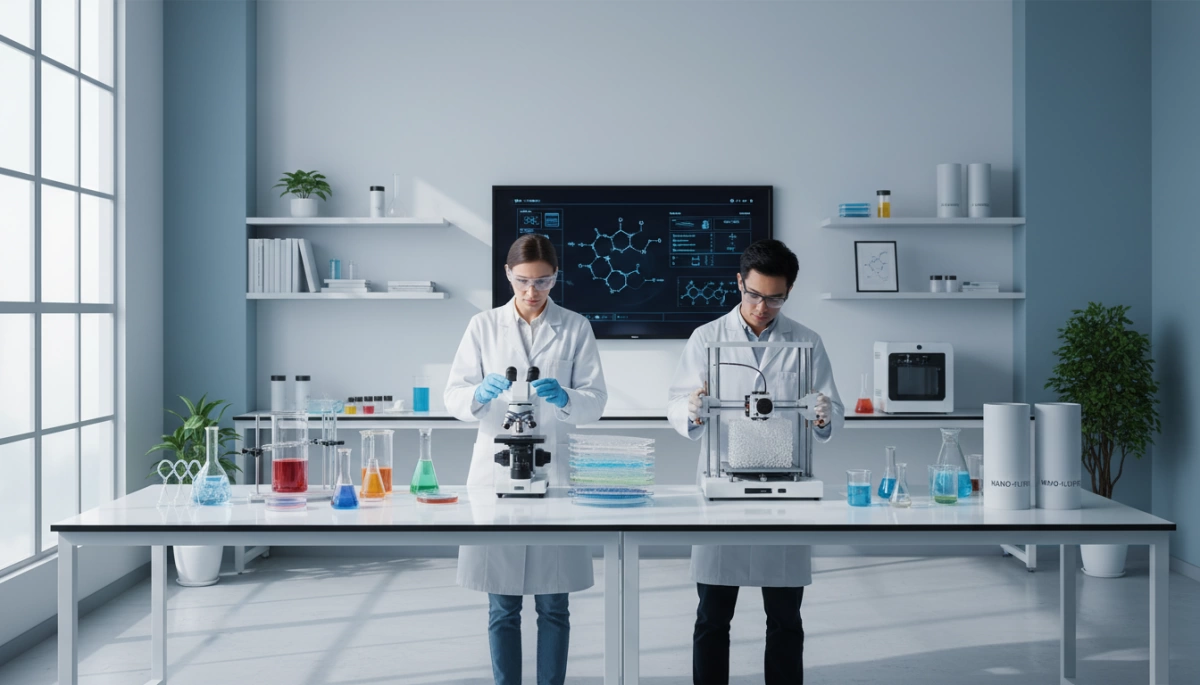
Innovation demands rigorous testing. Leveraging over 15 years of industry experience, our in-house laboratories utilize advanced software modeling and live-environment testing to drive custom filtration solution development. Whether we are fine-tuning the pressure drops of a new RO membrane or evaluating how KDF technology enhances shower water purity under real-world plumbing conditions, our engineers validate every single variable before a product hits the market.
Manufacturing Scale and Strict Quality Assurance
Scaling up is where many promising next-gen concepts fail, but our facilities are purposely built for rapid growth and uncompromised precision.
- High-Volume Production: Our extensive manufacturing footprint is capable of producing 500,000 units annually, allowing us to scale complex filtration solutions to meet nationwide demand seamlessly.
- Rigorous Quality Control: Every phase of new material development is backed by strict QA protocols. We monitor raw material integrity, structural stability, and flow rates at multiple checkpoints.
- Consistent Performance: What works in the lab must work on the assembly line. Our testing ensures that every single unit utilizing next generation filtration material development performs exactly as engineered, right out of the box.
Frequently Asked Questions (FAQs)
Promising Next Generation Filtration Materials
What are the most promising next-generation filtration materials being developed today?
In our 15+ years of OEM water filter manufacturing, we see the biggest leaps in advanced RO membranes and enhanced KDF media. High-capacity RO membranes now focus on long-term stability to reduce replacement frequency. Meanwhile, optimized KDF filters use an advanced redox process to aggressively tackle chlorine and heavy metals, even in high-temperature environments like our anodized aluminum shower filters.
Nanomaterial Water Purification
How do nanomaterials and nanofibers improve water flow rates and purification efficiency?
Nanomaterials provide a massive surface area with highly tunable pores. This means they trap microscopic contaminants without causing severe pressure drops. If you look at the core mechanics of how a water filter works, reducing flow resistance while maintaining high purification is the ultimate goal. Nanofibers achieve this, allowing for high GPD (Gallons Per Day) performance without needing heavy-duty, energy-draining pumps.
Eco-Friendly Filtration Polymers
Are bio-based filtration polymers as effective as traditional plastics?
Yes. The shift toward sustainable water purification has led to bio-based resins that match the durability of traditional plastics. These next-gen eco-friendly filtration polymers resist bacterial fouling and maintain strict structural integrity under pressure, helping brands move away from petroleum-based materials while keeping manufacturing scalable.
Smart Water Filter Systems
How does smart technology (IoT) integrate with new filtration media to improve user experience?
We integrate smart alert systems directly into our custom filtration solutions. By transitioning from passive media to active monitoring, these systems track real-time permeability and pressure. This predictive maintenance notifies users exactly when a filter needs replacing, ensuring optimal water safety and driving reliable recurring revenue for our global distribution partners.