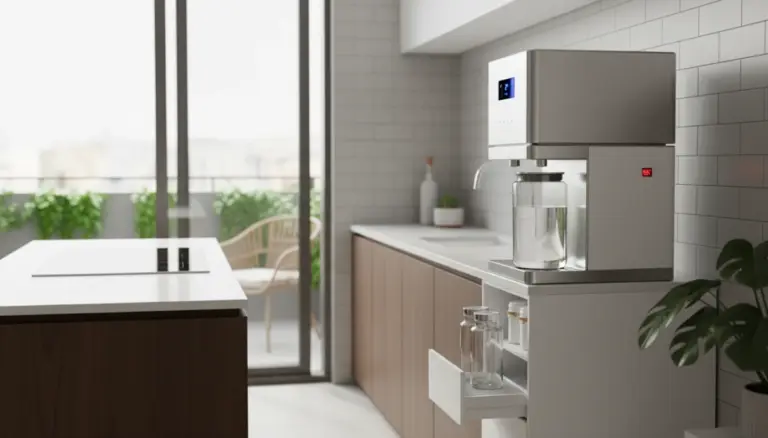
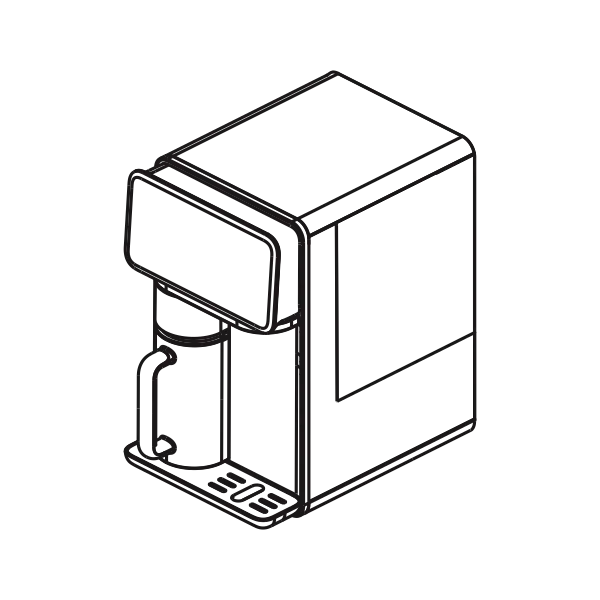

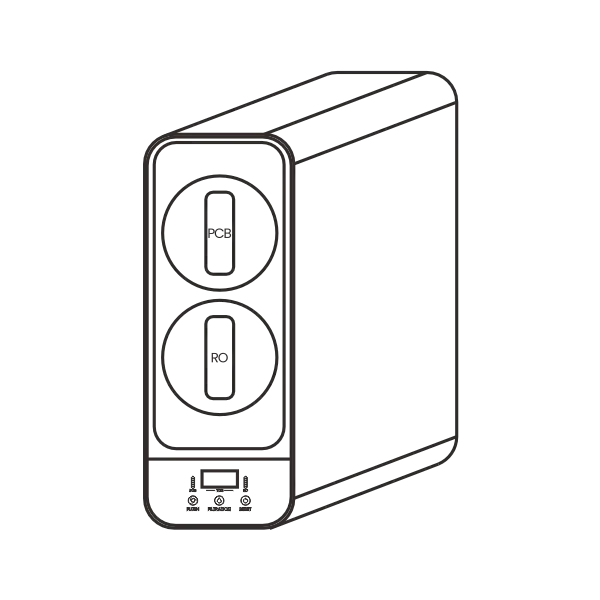












Model 1: Standard Private Labeling (The Fast-to-Market Approach)
For brands looking to enter the water purification market without the heavy lifting of R&D, our standard private label water purifier model is the most efficient route. In this setup, you leverage our pre-validated, market-ready OEM countertop RO water purifier manufacturing capabilities. Instead of spending months on engineering, you utilize our existing high-performance chassis—featuring proven instant heating technology and 4-stage RO filtration—as the foundation for your product line. This “plug-and-play” business model eliminates the technical risks associated with new product development.
We understand that brand identity is everything, even when using a standard model. Our cooperation framework allows for essential customization to make the product distinctively yours:
- Visual Branding: We apply your logo to the unit and customize the control panel colors to align with your brand guidelines.
- Packaging: Full support for custom packaging designs to ensure a premium unboxing experience for your customers.
- Documentation: User manuals and labels are tailored to your specific language and regulatory requirements.
Ideal for Startups and E-Commerce
This model is specifically designed for startups, Amazon FBA sellers, and regional distributors who need to validate a market quickly. If you are testing the waters with tankless RO system OEM cooperation, this approach balances risk and speed perfectly.
Pros and Cons of Private Labeling:
- Speed to Market: Drastically shortens lead times since the core product is already manufactured and tested.
- Low Barrier to Entry: We offer a flexible Minimum Order Quantity (MOQ), allowing you to start with smaller batches rather than committing to thousands of units upfront.
- Cost Efficiency: No expensive tooling or mold fees are required.
- The Trade-off: While cost-effective, the physical form factor remains shared with other non-competing markets, offering lower differentiation compared to a full ODM product development project.
Model 2: Deep Customization and ODM (The Brand Differentiator Approach)
For brands aiming to dominate a specific niche rather than just participating in the market, ODM product development is the strategic choice. In this model, we don’t just reprint a logo; we modify the core architecture and aesthetics to create a machine that is uniquely yours. This approach is essential for established brands looking to disrupt the US market with a proprietary design that competitors cannot easily replicate.
Functional Module Integration and Smart Features
Different demographics demand different utilities. We allow you to mix and match internal components to suit your target audience. Whether it is integrating our 3-second instant heating module integration for tea drinkers or adding cooling compressors for office environments, the functionality is tailored to your specs.
We also prioritize the user experience through UI/UX design customization. This ranges from redesigning the digital touch panel to developing a full IoT smart water system. By connecting the device to a mobile app, your customers can monitor real-time TDS levels and filter life, enhancing user retention.
Customizing Filtration for Local Palates
Water conditions vary wildly from state to state. We don’t believe in a “one filter fits all” approach. We adjust filtration recipes to address specific local contaminants or taste profiles. By fine-tuning the post-carbon or remineralization stages, we ensure the final output provides the health benefits of RO water while maintaining a crisp, premium taste.
The R&D Collaboration Process
Moving from concept to mass production requires a structured workflow. We utilize rapid prototyping services and 3D modeling to validate designs before committing to expensive tooling.
| Stage | Action Item | Deliverable |
|---|---|---|
| Concept | ID Design & Feasibility Study | 3D Renderings & Tech Specs |
| Prototyping | 3D Printing & Functional Testing | Working Prototype Unit |
| Tooling | Custom Mold Tooling Fabrication | T1 Samples (First off tool) |
| Validation | Pilot Run & Certification | Final Golden Sample |
While this model incurs tooling fees and requires a longer lead time than standard private labeling, the investment secures exclusive rights to the design, protecting your brand’s market position.
Model 3: SKD and CKD Solutions (The Tariff and Logistics Strategy)
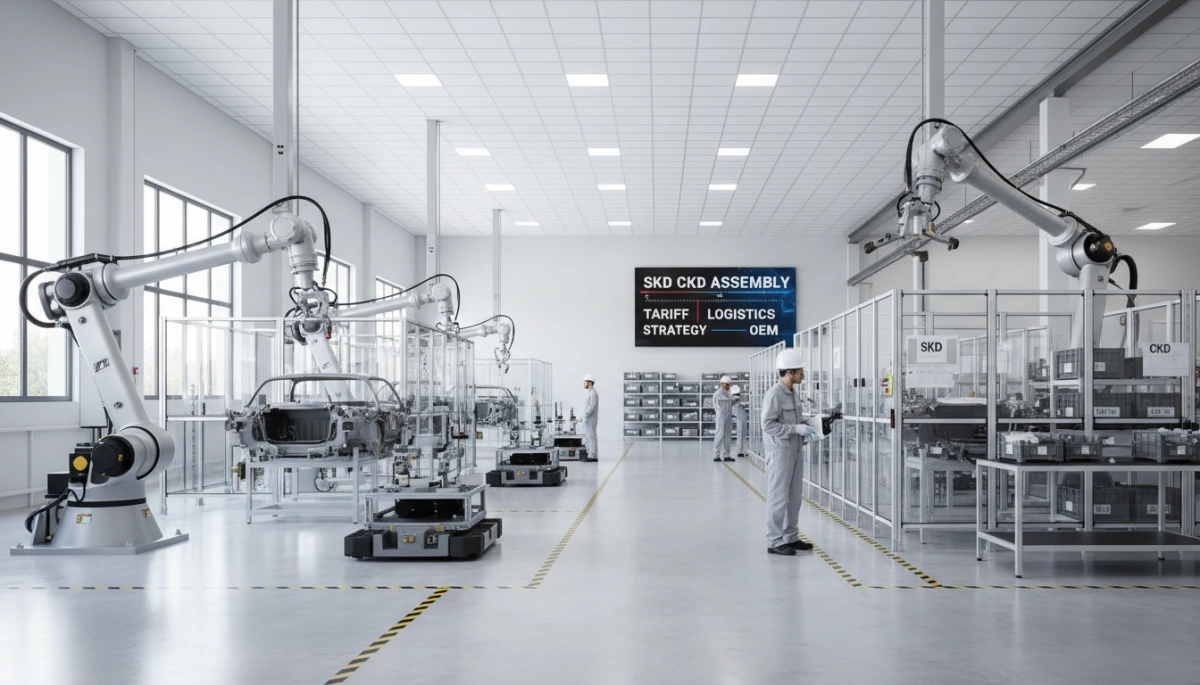
For brands facing high import duties or looking to optimize supply chain management, we offer flexible shipping configurations beyond standard finished goods. Instead of importing fully assembled units, our partners can leverage SKD (Semi-Knocked Down) assembly or CKD (Completely Knocked Down) models. This approach is particularly effective for OEM countertop RO water purifier manufacturing, allowing businesses to navigate complex international trade regulations while reducing landed costs.
Understanding the Assembly Levels
We break down the manufacturing process to fit your local capabilities.
- SKD (Semi-Knocked Down): The water purifier is partially assembled. For example, the internal instant heating module integration and filtration manifold are pre-assembled, but the outer casing and UI panels are packed separately. This requires minimal labor at the destination.
- CKD (Completely Knocked Down): The unit is shipped as individual components. This requires a full assembly line at your facility but offers the highest logistics density.
Business Benefits: Tariffs and “Made in Local Country”
Shipping components often allows products to fall under different HS codes with significantly lower import tariffs compared to finished consumer appliances. Furthermore, performing the final assembly in your local facility allows you to label the product as “Assembled in [Country],” which can be a powerful marketing tool for regional buyers. By integrating our manufacturing capabilities with your local operations, you drive innovation and development in your regional market.
Logistics and Cost Comparison
| Feature | Standard Finished Unit | SKD (Semi-Knocked Down) | CKD (Completely Knocked Down) |
|---|---|---|---|
| Shipping Density | Low (Bulky packaging) | Medium (Nested parts) | High (Maximized container space) |
| Import Tariffs | Typically High | Reduced | Lowest Possible |
| Labor Required | None | Low (Screwdriver assembly) | High (Full production line) |
| Lead Time | Shortest | Moderate | Longest |
Requirements for Local Assembly
While SKD and CKD models save on logistics, they transfer some responsibility to the buyer. To succeed with this model, your facility must have established assembly lines and rigorous Post-production quality assurance (QA) protocols. We provide the necessary technical documentation and SOPs, but your team must ensure the final units meet safety standards, particularly for air-tightness and electrical safety in tankless RO system OEM cooperation.
Model 4: Joint Innovation and Exclusive Tooling (The Enterprise Approach)
For established brands and large enterprises, standard off-the-shelf solutions often aren’t enough to capture significant market share. This is where our joint innovation model comes into play. We move beyond simple cosmetic changes to co-develop completely new chassis and proprietary technology from scratch. This approach allows partners to dictate every curve, dimension, and internal component of the countertop tankless RO water filter, ensuring the final product is distinctively theirs.
Co-Development and Custom Mold Tooling
In this high-level OEM cooperation model, we work side-by-side with your engineering and product teams. We aren’t just assembling parts; we are creating a unique architecture. This often involves custom mold tooling to achieve a specific form factor that fits modern American kitchen aesthetics or specific spatial requirements. Whether you need a compact footprint for urban apartments or a robust unit for commercial spaces, we handle the rapid prototyping and tooling production in-house.
IP Protection and Exclusive Rights
We understand that if you invest in a unique design, you need to own it. We prioritize intellectual property protection through strict Non-Disclosure Agreements (NDAs) and brand authorization agreements.
- Exclusive Mold Ownership: When you fund the tooling for a new chassis, that design belongs to you. We will not sell that specific model to any other client.
- Confidentiality: Your product roadmap and technical specifications remain strictly confidential throughout the R&D and manufacturing process.
Engineering High-Performance Specs
This model allows for the integration of specialized performance features that standard models might lack. We can engineer machines with high-flux capabilities for faster water dispensing or implement advanced noise-dampening structures for ultra-quiet operation. When designing these custom internal layouts, determining what are the functions of each filter element in a reverse osmosis water purifier is essential to ensure the new chassis accommodates the necessary filtration stages without compromising size or efficiency. This level of customization ensures your product solves specific user pain points effectively.
Critical Technical Considerations for Countertop RO Manufacturing
When we engage in OEM Cooperation Models for Countertop Tankless RO Water Filter Manufacturing, we aren’t just assembling plastic casings and filters; we are engineering a miniaturized water treatment plant that sits directly on a user’s counter. To ensure these compact units perform reliably over years of daily use, we focus heavily on three core technical pillars: hydraulic stability, thermal safety, and regulatory compliance.
Ensuring Tankless Stability with High-Performance Pumps
The shift toward tankless RO system OEM cooperation brings a specific challenge: there is no storage tank to buffer water pressure. The flow rate depends entirely on the real-time performance of the internal booster pump. In our manufacturing process, we utilize high-torque, low-vibration booster pumps designed specifically for compact spaces. These pumps must generate enough pressure to push water through a 0.0001-micron RO membrane instantly while keeping noise levels low enough for a quiet kitchen environment. If the pump fails or fluctuates, the user experiences a “sputtering” flow, which is unacceptable in a premium product.
Heating Safety and Instant Module Integration
For brands looking into instant heating cooling RO purifier OEM supply, safety is the absolute priority. Our thick-film heating technology heats water to boiling temperatures in just 3 seconds. Managing this rapid thermal exchange requires precise NTC (Negative Temperature Coefficient) thermistors and redundant safety protocols.
We integrate standard safety features into every chassis:
- Anti-Dry Burn Protection: The system automatically cuts power if insufficient water flow is detected, preventing the heating element from burning out.
- Child Locks: Digital or physical locks are essential to prevent accidental burns, especially for families with young children.
- Overheat Protection: A secondary thermal fuse acts as a fail-safe against runaway temperatures.
Whether you are designing a unit for a residential kitchen or a high-traffic office water filter setup, the internal components must withstand rigorous use without compromising user safety.
Certification and Compliance Standards
Entering the US or European market requires more than just a working prototype; it requires a paper trail of safety and quality. For home RO purifier contract manufacturing, we ensure that base models meet strict international standards. This includes NSF/ANSI 58 compliance for material safety and structural integrity, as well as electrical safety certifications.
Key Compliance Checklist for OEM Partners:
| Certification | Focus Area | Why It Is Critical |
|---|---|---|
| CE / CB | Electrical Safety | Mandatory for entering European and many international markets. |
| RoHS | Material Safety | Ensures no hazardous substances (like lead or mercury) are used in components. |
| FDA / Food Grade | Water Contact Surfaces | Guarantees that all tubing and tanks are safe for potable water. |
| Post-production QA | Performance Testing | Verifies air-tightness and filtration efficiency before shipping. |
By securing these certifications early in the supply chain management process, we reduce the risk of customs delays and liability issues for your brand. We handle the rigorous testing and documentation so you can focus on marketing a compliant, high-performance product.
The Driplife Advantage: Supporting Your Manufacturing Model
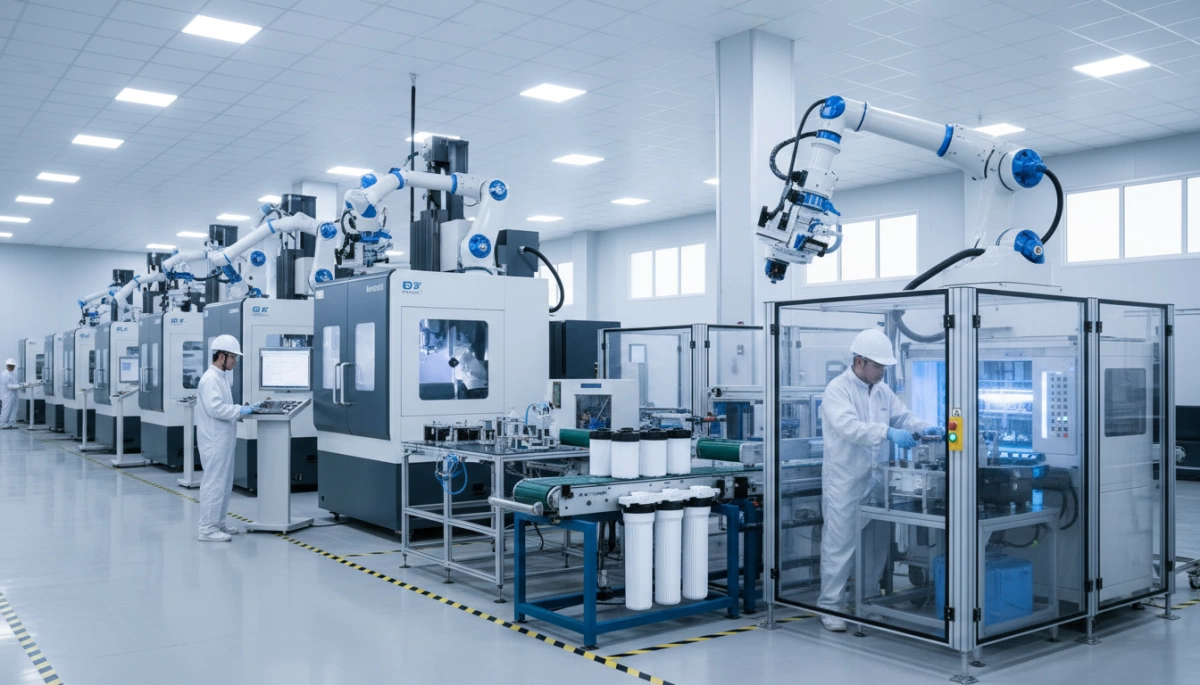
At Driplife, we don’t just assemble parts; we engineer complete water purification solutions. Our approach to OEM countertop RO water purifier manufacturing is built on a fully integrated supply chain. Unlike factories that rely heavily on outsourcing, we maintain our own in-house R&D centers and precision molding facilities. This vertical integration allows us to strictly control every aspect of supply chain management, ensuring that your custom designs move from concept to mass production without the bottleneck delays often seen in the industry.
We understand that hardware reliability is non-negotiable for your brand. That is why we implement rigorous post-production quality assurance (QA) protocols. Before any unit leaves our floor, it must pass a series of critical stress tests:
- Air Tightness Testing: Verifying seal integrity to ensure zero internal leaks.
- Water Hammer Testing: Simulating pressure spikes to guarantee the system can withstand real-world plumbing conditions.
- Component Durability: Testing the longevity of pumps and heating elements under continuous load.
We also recognize that business needs evolve. Whether you are a startup looking for a low MOQ entry point to test the market or an established enterprise requiring complex ODM product development, our production lines offer the flexibility to scale with you. We provide the technical backbone and manufacturing capacity you need to grow from a niche seller to a market leader.
Frequently Asked Questions About OEM Cooperation Models
Navigating the manufacturing landscape can be tricky. Here are the answers to the most common questions we get from partners looking to enter the OEM countertop RO water purifier manufacturing space.
What is the minimum order quantity (MOQ) for private labeling?
For standard private label water purifier projects using our existing chassis, we keep entry barriers reasonable. We understand that startups and Amazon sellers need to validate the market before committing to massive volumes.
- Standard Models: Typically starts at a lower volume (e.g., 100–300 units) for simple logo printing and packaging customization.
- Deep Customization: If you require specific color changes or firmware tweaks, the Minimum Order Quantity (MOQ) usually increases to cover the setup costs.
Can we customize the casing design for tankless RO systems?
Absolutely. This falls under our ODM product development services. If you want a unique look that stands out from generic models, we can design a new housing for you.
- Process: We start with industrial design sketches and move to rapid prototyping services.
- Cost: Be aware that creating a completely new casing requires custom mold tooling, which involves an upfront investment and a longer lead time compared to off-the-shelf OEM models.
- Range: You can explore our current range of countertop RO systems to see the baseline architectures we can modify.
How does the SKD model affect shipping costs and tariffs?
Opting for SKD (Semi-Knocked Down) assembly is a smart supply chain management move for established brands with local assembly capabilities.
- Shipping: We can pack components much tighter than finished units, significantly increasing container density and lowering per-unit freight costs.
- Tariffs: Many countries offer lower import duties on parts compared to fully assembled appliances. This strategy helps you achieve a “Made in [Your Country]” label while utilizing our core 0.0001 micron filtration technology.
What is the difference between OEM and ODM in water filtration?
While often used interchangeably, the difference lies in intellectual property and design ownership.
- OEM (Original Equipment Manufacturer): You sell our pre-developed, certified tankless RO system OEM cooperation models under your brand. It is the fastest route to market.
- ODM (Original Design Manufacturer): We design a product based on your specific requirements—like integrating a specific instant heating module or a unique UI. You own the design rights, and we handle the water appliance contract manufacturing.