You’ve likely heard the unsettling truth: invisible plastic particles are flowing out of faucets across the country.
But does your current setup actually stop them?
The reality is that standard kitchen taps deliver water straight from aging pipes, offering zero protection against these contaminants.
In this guide, you’re going to discover the proven Solution for Microplastics Found in Standard Kitchen Taps.
We’ll cut through the noise to compare Reverse osmosis microplastics removal against Ultrafiltration for nanoplastics, helping you find a high flow rate water purifier that fits your modern home.
If you want plastic free drinking water without the guesswork, this post is for you.
Let’s dive right in.
Understanding Microplastics in Your Kitchen Tap Water
We often assume that if water looks clear, it’s safe. However, the reality of kitchen tap water contamination is becoming harder to ignore. At Driplife, we see firsthand how water quality is evolving, and the invisible threat of synthetic polymers is a major concern for modern households. Before we discuss solutions, we need to understand exactly what is flowing out of standard taps.
Defining the Invisible Enemy
When we talk about plastic pollution, we aren’t just talking about bottles floating in the ocean. We are dealing with microplastic particle size microns that are often invisible to the naked eye.
- Microplastics: Fragments smaller than 5mm (about the size of a sesame seed).
- Nanoplastics: Particles smaller than 1 micrometer (<1 µm). These are the most concerning because their microscopic size allows them to bypass many standard barriers.
Sources and Treatment Gaps
How do these particles enter your home? Even if your local water treatment plant meets federal standards, municipal pipes and treatment gaps often leave the door open for contamination. Treatment facilities are primarily designed to remove bacteria and viruses, not synthetic fibers. Furthermore, aging plastic piping infrastructure can shed particles directly into the water supply as it travels to your house.
The Health Implications
While research is ongoing, the potential microplastics in drinking water health risks are driving many families to seek better protection. Ingesting these particles has been linked to potential issues such as:
- Inflammation in the digestive tract.
- Gut health risks due to the accumulation of foreign particles.
- Transportation of other chemical toxins that bind to the plastic surfaces.
Why Standard Faucets Fail
Here is the hard truth: a standard kitchen faucet is designed for flow control, not sub-micron filtration. The mesh aerator at the tip of your spout might catch large sediment or rust flakes, but it is completely ineffective against nanoplastics. Without a dedicated point-of-use water filtration system, your tap is essentially an open gate for these microscopic contaminants to enter your daily diet.
Evaluating Quick Fixes: Boiling and Pitchers

When we discover contaminants in our water, our first instinct is often to look for quick, easy solutions. However, when it comes to the solution for microplastics found in standard kitchen taps, common household hacks often fall short of providing real protection.
The Boiling Method: Effectiveness and Limitations
There is a widespread belief that boiling water remove microplastics. Recent studies suggest that boiling can trap some microplastics within limescale deposits, which can then be filtered out. However, this is largely effective only in hard water rich in calcium carbonate. For households with soft water—common across many parts of the United States—boiling does not remove these synthetic particles. It kills bacteria, but the plastic remains suspended in the water you drink.
Real Talk on Carbon Pitcher Filters
Standard water pitchers rely heavily on Granular Activated Carbon (GAC). While effective for taste and odor, we need to understand what a carbon filter does for water treatment versus what it misses. Most standard pitcher filters have a pore size ranging from 1 to 5 microns. While this catches larger debris, microplastic particle size microns can be significantly smaller, often entering the nanoplastic range (<1 µm). These tiny particles pass right through basic carbon filters, meaning your “filtered” water may still contain significant plastic load.
Comparison: Temporary Hacks vs. Permanent Solutions
To visualize why an upgrade is necessary, here is a breakdown of common methods versus professional filtration:
| Method | Microplastic Removal | Primary Function | Limitations |
|---|---|---|---|
| Boiling | Low (Dependent on water hardness) | Disinfection (Bacteria/Viruses) | Does not physically remove plastic in soft water; energy intensive. |
| Standard Pitcher | Low to Medium | Taste & Odor (Chlorine) | Large pore size allows nanoplastics to pass; frequent filter changes needed. |
| Advanced RO/UF | High (Up to 99.9%) | Total Purification | Requires installation; higher initial investment. |
When to Upgrade to Advanced Systems
If your goal is certified microplastics reduction, relying on a pitcher is likely insufficient. You should consider upgrading when you want to ensure the removal of sub-micron contaminants that standard gravity filters miss. Moving to a dedicated system, such as those discussed when evaluating if countertop water filters are effective, provides the pressure and density required to act as a true barrier against microplastics. For peace of mind and genuine water safety, transitioning from temporary fixes to high-precision filtration is the only reliable path forward.
Top Technologies for Microplastics Removal
When you are looking for the solution for microplastics found in standard kitchen taps, relying on basic mesh screens or standard pitcher filters isn’t enough. To physically remove particles that have broken down into the nanometer range, you need advanced filtration mechanics. We have spent over 15 years in R&D perfecting systems that tackle these microscopic contaminants without sacrificing water pressure or convenience.
How Reverse Osmosis (RO) Captures Nanoplastics
Reverse osmosis microplastics removal is widely considered the most effective method for purifying drinking water. The magic lies in the semi-permeable membrane. While microplastics can be as small as 1 micrometer (µm), the pore size of a high-quality RO membrane is approximately 0.0001 µm.
This creates a physical barrier that is significantly smaller than even the tiniest nanoplastics. In our tankless RO designs, water is forced through this membrane, leaving contaminants behind while pure water passes through. Because the microplastic particle size microns are much larger than the membrane pores, they are effectively flushed away, ensuring that what ends up in your glass is virtually plastic-free.
Ultrafiltration (UF) for High-Flow Needs
Not every household requires the intensity of RO, especially if you prefer to retain natural minerals in your water. Ultrafiltration for nanoplastics serves as an excellent middle ground. UF membranes typically have a pore size around 0.01 µm. This is still tight enough to block the vast majority of microplastics and bacteria while allowing for a faster flow rate.
For busy kitchens, a high flow rate water purifier utilizing UF technology can deliver clean water instantly without the wastewater associated with RO. Our systems are designed to balance this filtration efficiency with usability, offering outputs up to 5.2L/min so you aren’t waiting around to fill a pot.
Understanding NSF/ANSI 401 Standards
When shopping for a certified microplastics reduction system, you need to look beyond generic marketing claims. The industry benchmark is the NSF/ANSI 401 certified filter standard. This certification specifically addresses “emerging compounds/incidental contaminants,” which includes microplastics.
A filter with this certification has been rigorously tested to verify that it can reduce microplastics from tap water to a safe level. We prioritize these standards in our manufacturing process, ensuring that our OEM and ODM partners can offer products that consumers trust.
Comparing RO vs. UF vs. Carbon Blocks
Choosing the right technology depends on your specific water quality goals. Here is how the top technologies stack up against kitchen tap water contamination:
- Carbon Blocks: Great for taste, odor, and chlorine reduction. However, standard activated carbon often has pore sizes too large to capture the smallest nanoplastics effectively. They are best used as a pre-filter stage rather than the final defense.
- Ultrafiltration (UF): excellent for removing suspended solids, bacteria, and most microplastics while keeping flow rates high. It is a robust physical barrier for standard filtration needs.
- Reverse Osmosis (RO): The ultimate defense. It removes dissolved solids, viruses, and virtually all microplastics. Modern smart tap benefits and top models for your home often integrate compact RO systems directly under the sink to provide this level of purity on demand.
By understanding these differences, you can select a system that provides the right balance of protection and performance for your home.
Point-of-Use Solutions for Kitchens
When we talk about eliminating kitchen tap water contamination, the most effective strategy is installing a barrier right where the water exits. This approach, known as point of use water filtration, ensures that any microplastics or sediments picked up from aging municipal pipes or your home’s internal plumbing are captured immediately before they reach your glass. We focus on three primary integration styles, each catering to different household needs and installation capabilities.
Under-Sink Systems for Seamless Integration
For homeowners looking for a permanent fix without cluttering the counter, under-sink units are the gold standard. These systems are designed to handle high volumes of water—up to 2000 gallons per cycle in our advanced configurations. Unlike older, bulky setups, modern engineering has shifted toward the tankless RO system. This design eliminates the risk of secondary contamination in a storage tank and frees up valuable cabinet space.
- Space-Saving: Compact designs that fit standard US cabinetry.
- High Capacity: 150GPD purification capabilities support large families.
- Aesthetics: Completely hidden from view, maintaining your kitchen’s design.
Faucet-Integrated and Countertop Options
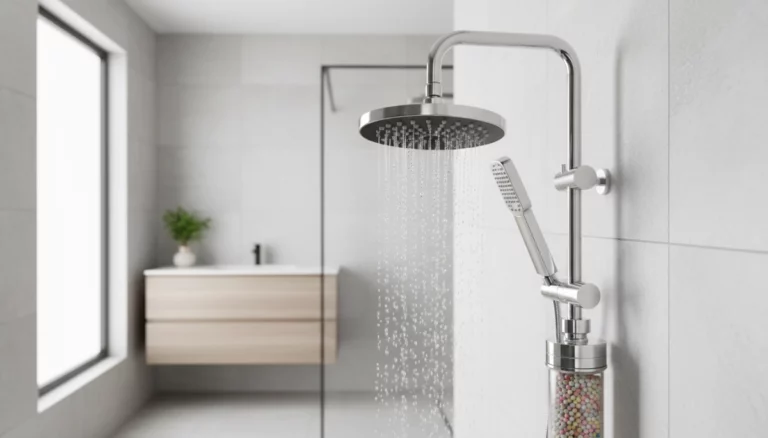
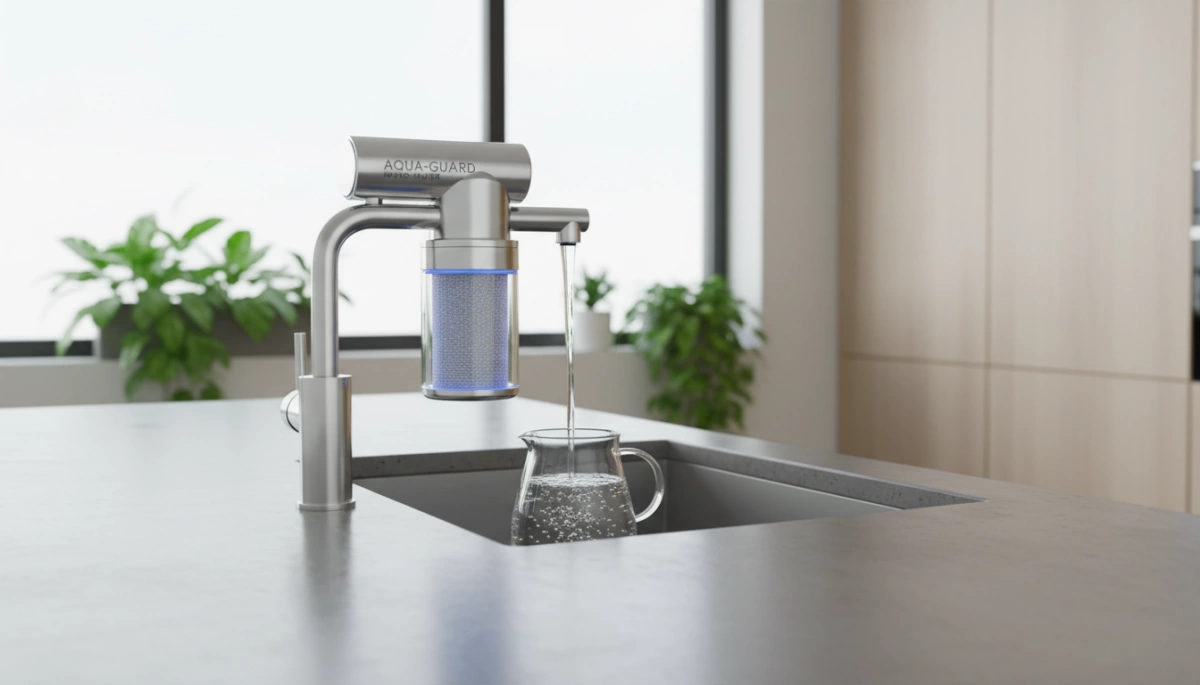
Not everyone can drill holes in their granite or mess with plumbing, especially renters. Faucet mounted filter microplastics solutions offer a quick upgrade, attaching directly to the standard tap. While we engineer specialized bathroom faucet filtration devices specifically for hygiene and skincare, kitchen-grade faucet filters are built with denser carbon blocks to target ingestible contaminants. Alternatively, countertop systems provide a plug-and-play solution, often requiring zero installation while delivering filtration performance comparable to under-sink units.
Evaluating Flow Rates and Noise Levels
A major pain point with traditional filtration is the “trickle effect”—waiting ages to fill a pot. We believe a high flow rate water purifier is essential for a functional kitchen. Our systems are engineered to deliver a robust 5.2L/min water output, ensuring you don’t sacrifice convenience for safety. Additionally, mechanical noise can be intrusive in open-plan American homes. By utilizing low-decibel pumps and vibration-reduction designs, we achieve an “Ultra Quiet” performance standard, so your water purification runs silently in the background.
Driplife’s Advanced Filtration Solutions
At Driplife, we don’t just assemble components; we engineer the solution for microplastics found in standard kitchen taps from the ground up. With over 15 years of R&D and manufacturing expertise, we operate state-of-the-art facilities that allow us to control every aspect of filtration quality. Our focus on OEM and ODM partnerships means we are the engine behind many major brands, adhering to strict online inspection standards to ensure every unit effectively blocks contaminants down to the sub-micron level.
High-Performance Tankless RO Systems
Traditional reverse osmosis systems often suffer from slow water flow and bulky storage tanks that can reintroduce bacteria. We solved this with our tankless RO system designs. These units deliver a high flow rate water purifier experience, boasting a water output of up to 5.2L/min. This means you get purified, microplastic-free water instantly without the wait, making it practical for busy American households that need volume for cooking and drinking.
Ultra-Quiet and Sustainable Design
We understand that modern kitchens are the heart of the home, which is why we prioritize Ultra Quiet technology. Our systems utilize low-decibel pumps and vibration-reduction designs to ensure purification happens silently. Beyond performance, choosing a Driplife system is a commitment to plastic-free drinking water. By installing a robust filtration system, you eliminate the need for single-use plastic bottles—a primary source of microplastic ingestion—while enjoying the countertop reverse osmosis water filter benefits of superior taste and safety.
Key Technical Advantages:
- Capacity: Up to 2000 gallons per cycle for long-lasting protection.
- Efficiency: 150GPD (Gallons Per Day) purification capabilities.
- Space-Saving: Compact, tankless profiles fit easily under standard sinks.
- Noise Control: Engineered for silent operation in open-concept living spaces.
Installation and Maintenance Costs
Implementing the solution for microplastics found in standard kitchen taps is an investment in health that pays off over time. Unlike complex industrial setups, our modern residential units are designed for straightforward integration into American homes. We focus on reducing the barrier to entry, ensuring that securing plastic-free drinking water is accessible and manageable.
DIY Installation for Under-Sink Systems
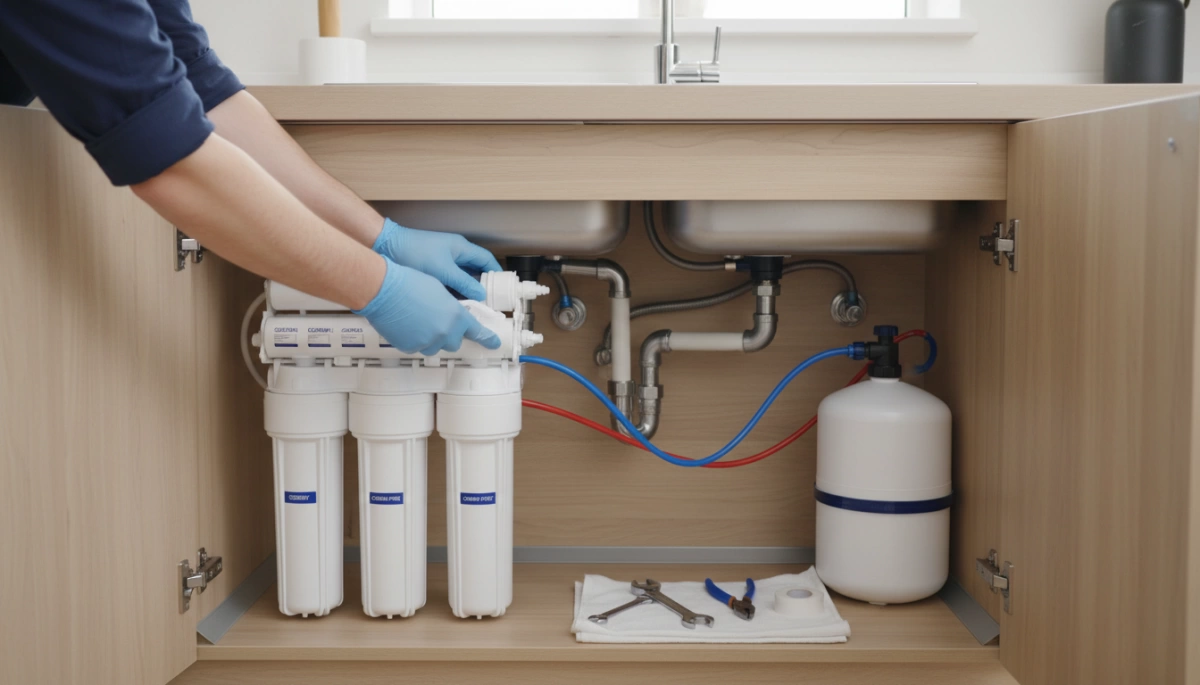
Gone are the days when installing a reverse osmosis system required a professional plumber. Our tankless RO system designs are compact and streamlined, fitting easily under standard kitchen counters without occupying the entire cabinet.
- Shut Off and Connect: Simply turn off the cold water supply valve and install the feed water adapter.
- Tubing Connections: Quick-connect fittings make attaching the tubing to the system and the dedicated faucet secure and leak-free.
- Flush the System: Run the water for a few minutes to clear the filters before the first use.
Because these units do not require a bulky storage tank, the installation footprint is significantly smaller, making them ideal for apartments and compact kitchens.
Calculating Efficiency and Replacement Costs
While the initial purchase is the primary cost, ongoing maintenance ensures your system remains effective at reverse osmosis microplastics removal. Standard filters typically need replacement every 6 to 12 months, depending on your local water quality and usage volume.
- Filter Lifespan: Our high-capacity filters can handle up to 2000 gallons per cycle, reducing the frequency of changes compared to standard pitchers.
- Cost vs. Bottled Water: When you calculate the price per gallon, a high flow rate water purifier costs pennies compared to buying bottled water, which often contains the very microplastics you are trying to avoid.
- Water Efficiency: Older RO systems used to waste a lot of water. Our modern technology optimizes the drain ratio, ensuring you get more purified water with less waste, lowering your utility bill.
Maximizing System Longevity
To ensure your unit continues to capture contaminants down to the smallest microplastic particle size microns, consistency is key. Ignoring filter changes can lead to clogging, reduced flow rates, and a breakthrough of contaminants. Understanding the specific maintenance needs of different types of water purification methods helps you plan ahead and keep your system running at peak performance. Regular maintenance protects the internal pumps and membranes, extending the total life of the machine and ensuring your family always has access to clean, safe water.
Frequently Asked Questions (FAQs)
Does boiling water actually remove microplastics?
Many people assume boiling is a cure-all, but boiling water does not remove microplastics. While boiling is excellent for killing bacteria and pathogens, plastic particles are physical solids that do not evaporate with the steam. In fact, boiling can concentrate contaminants as water volume decreases. The only exception is in very hard water, where limescale might trap some plastics that can be strained out, but for most homes, the plastic remains in the pot.
Do standard pitcher filters catch nanoplastics?
Most standard pitcher filters rely on basic granular activated carbon, which is designed primarily for taste and odor improvement (like chlorine reduction). These filters generally lack the density to capture nanoplastics or particles in the sub-micron range. To effectively trap these microscopic contaminants, you need filtration with a much smaller pore size, such as Ultrafiltration for nanoplastics or Reverse Osmosis.
What is the best under-sink filter for microplastics?
The most effective solution is a system that uses a physical barrier smaller than the plastic particles themselves. Reverse osmosis microplastics removal is the gold standard because the membrane pore size is approximately 0.0001 microns, blocking virtually all suspended solids. For high-volume households, a tankless 600-1200GPD under-sink RO system provides the necessary filtration precision without sacrificing water flow, ensuring you aren’t drinking dissolved polymers.
How do microplastics enter the water supply?
Kitchen tap water contamination occurs through several pathways before it even reaches your glass:
- Degradation: Larger plastic waste breaks down into micro-fragments in water sources.
- Synthetic Fibers: Washing clothes releases millions of microfibers into wastewater systems.
- Infrastructure: Aging municipal pipes and even some lower-quality plumbing materials can shed particles.
- Atmospheric Deposition: Airborne particles settle into reservoirs and open water sources.