

















The Science Behind Thermal Shock in Plumbing
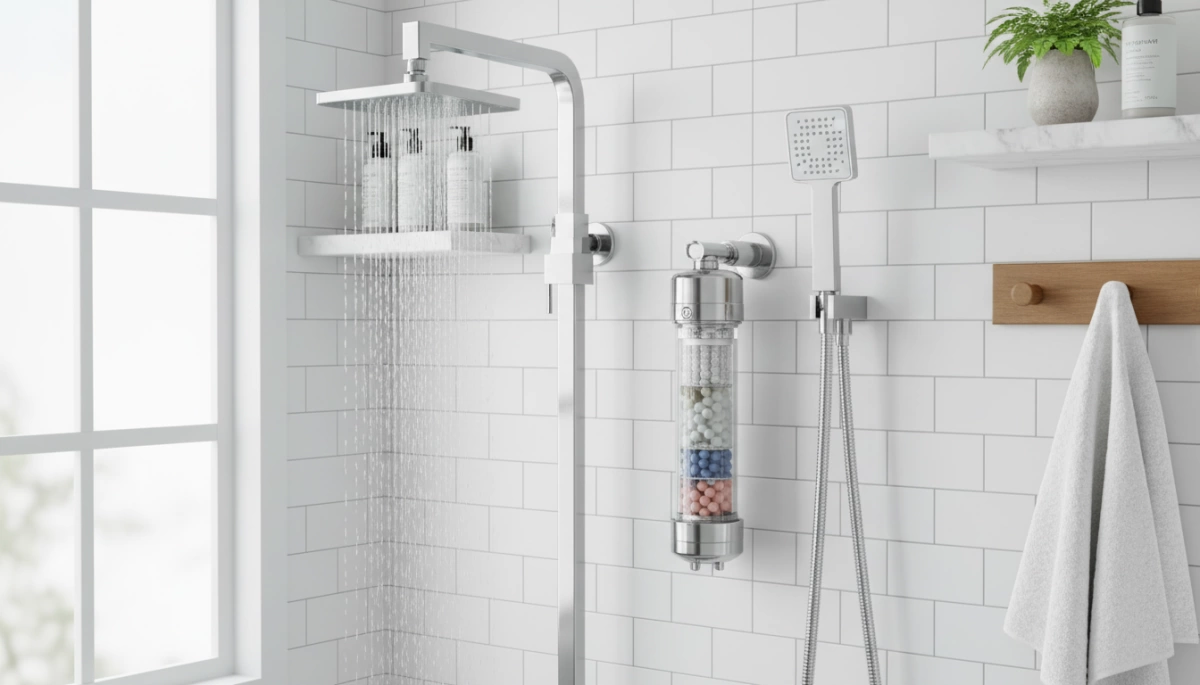
We often overlook the extreme stress our plumbing fixtures endure every single day. When you rapidly switch your shower from ice-cold to scalding hot, you are subjecting your shower filter to thermal shock. This isn’t just a temperature change; it is a physical assault on the material’s structural integrity. At DripLife, we understand that durability isn’t just about surviving water pressure—it’s about surviving the physics of heat.
Understanding Coefficient of Thermal Expansion (CTE)
Every material reacts to heat differently. This reaction is measured by the Coefficient of Thermal Expansion (CTE), which dictates how much a material expands when heated and contracts when cooled.
- High CTE (Plastics/ABS): These materials expand significantly under heat. If the housing expands too quickly while the metal connections remain rigid, the stress concentrates at the threads.
- Low CTE (304 Stainless Steel): Our food-grade stainless steel has a much lower and more stable CTE. It maintains its dimensions even during rapid temperature spikes, ensuring a secure, leak-free seal with your shower pipe.
When a filter housing expands at a different rate than the pipe it is screwed onto, the result is often a hairline fracture—the beginning of the end for many plastic units.
The ‘Hoop Stress’ Factor in Cylindrical Housings
The shape of a shower filter plays a massive role in how it handles pressure. Hoop stress refers to the force exerted circumferentially (perpendicular to the axis and radius) on the cylinder wall by the internal water pressure. Essentially, the water is trying to tear the housing apart from the inside out.
In standard plastic housings, high water pressure combined with heat weakens the polymer bonds, lowering the material’s tensile strength. If the hoop stress exceeds the material’s weakened holding capacity, the housing bursts. This is why we utilize 304 Stainless Steel; its tensile strength is exponentially higher than plastic, allowing it to shrug off hoop stress that would shatter lesser materials.
Thermal Fatigue: Why Failures Happen Over Time
It is rarely the first hot shower that cracks a plastic filter; it is the hundredth. Thermal fatigue is the cumulative damage caused by cyclic loading—the constant expansion and contraction day after day.
Think of it like bending a paperclip back and forth. Eventually, the material becomes brittle and snaps. Plastic housings suffer from this fatigue, leading to sudden, catastrophic failures after months of use. By constructing our housings from heavy-duty metal, we eliminate the risk of thermal fatigue, ensuring that the housing remains as robust on day 1,000 as it was on day 1.
Material Showdown: Best Plastics for Shower Filters
Standard Polypropylene (PP) vs. High-Heat Conditions
Polypropylene (PP) is often found in the bargain bin of plumbing materials. While it functions adequately in cold water applications, it fails to perform reliably as a high-temperature water filter housing. When you crank up the heat for a steamy shower, standard PP softens and loses its structural integrity. This material suffers from poor thermal resistance, meaning it expands significantly when hot and contracts rapidly when the water creates a thermal shock. Over time, this constant fluctuation leads to warping at the seams, and eventually, the threads deform, causing leaks that no amount of teflon tape can fix.
Engineering-Grade ABS: The Industry Sweet Spot
For manufacturers sticking to polymers, an engineering grade ABS shower filter represents the functional baseline. ABS (Acrylonitrile Butadiene Styrene) offers significantly higher tensile strength and superior dimensional stability of ABS compared to standard polypropylene. In the US market, where household water pressure can be aggressive, ABS serves as the industry “sweet spot” for balancing manufacturing costs with decent performance. It resists the immediate stress cracking that plagues cheaper plastics, making it the standard for most mid-range filtration units. However, while ABS handles static pressure well, it still fatigues faster than metal under repetitive thermal cycling.
The Role of Chrome Plating in Structural Rigidity
Chrome plating does more than just match your bathroom aesthetics; it effectively acts as a rigid exoskeleton for the housing. Chrome-plated ABS durability is higher than raw plastic because the metallic layer restricts the polymer’s natural tendency to expand outward under heat and pressure. This plating helps distribute hoop stress more evenly across the cylindrical body. However, the bond between the plastic substrate and the chrome layer is a critical failure point. If the thermal shock resistance isn’t perfectly calibrated, the difference in expansion rates can cause the plating to bubble or peel. Understanding how different additives interact with these materials, similar to the impact of VC scented filters on shower head longevity, is crucial for predicting when a plastic housing might fail.
Stainless Steel vs. Reinforced Polymers
When designing a filtration system that can withstand daily thermal cycling, the choice between metal and plastic is the most critical engineering decision we make. While many manufacturers lean on reinforced polymers to cut production costs, we have found that 304 Stainless Steel offers a level of resilience that plastics simply cannot match.
Corrosion Resistance vs. Weight Considerations
In the debate of Stainless Steel vs. Reinforced Polymers, weight is often the primary argument for using plastic. Polymers are lightweight, which reduces shipping costs and puts less strain on the shower arm. However, this weight reduction often comes at the expense of structural density.
Stainless steel is naturally heavier, but that density provides the dimensional stability required to resist warping. While engineering-grade plastics are generally resistant to rust, they are susceptible to polymer creep in hot water systems—a gradual deformation caused by long-term exposure to heat and pressure. In contrast, our 304 stainless steel housing is impervious to this type of thermal fatigue, offering superior corrosion resistance without the risk of structural degradation over time.
Cost-Efficiency Without Sacrificing Durability
There is a distinct difference between “cheap” and “cost-efficient.” Plastic housings allow for a lower initial purchase price, but they introduce a higher risk of failure. Water filter housing stress cracking is a common issue with plastic units that experience rapid temperature changes, leading to leaks and the eventual need for replacement.
True cost-efficiency is achieved through longevity. By investing in a metal housing, we ensure the system handles the internal pressure required for our 15-stage filtration process—which includes media similar to what you might see when learning what a carbon filter does for water—without the risk of the casing bursting.
Why High-Grade ABS Often Wins for Mass Market Applications
High-grade ABS often “wins” in the general marketplace purely due to manufacturing scalability and molding versatility. It allows brands to pump out thousands of units quickly with complex shapes that would be expensive to machine from metal. For standard, low-pressure applications, it is adequate.
However, for a high-performance shower filter that subjects the housing to constant thermal shock, ABS has limitations. The coefficient of thermal expansion in plastics is significantly higher than in metals, meaning the housing expands and contracts more aggressively than the copper or steel pipes it is connected to. This mismatch is the leading cause of thread failure. We stick to stainless steel because it maintains a secure, leak-free seal regardless of how hot the water gets.
Structural Design Features That Mitigate Stress
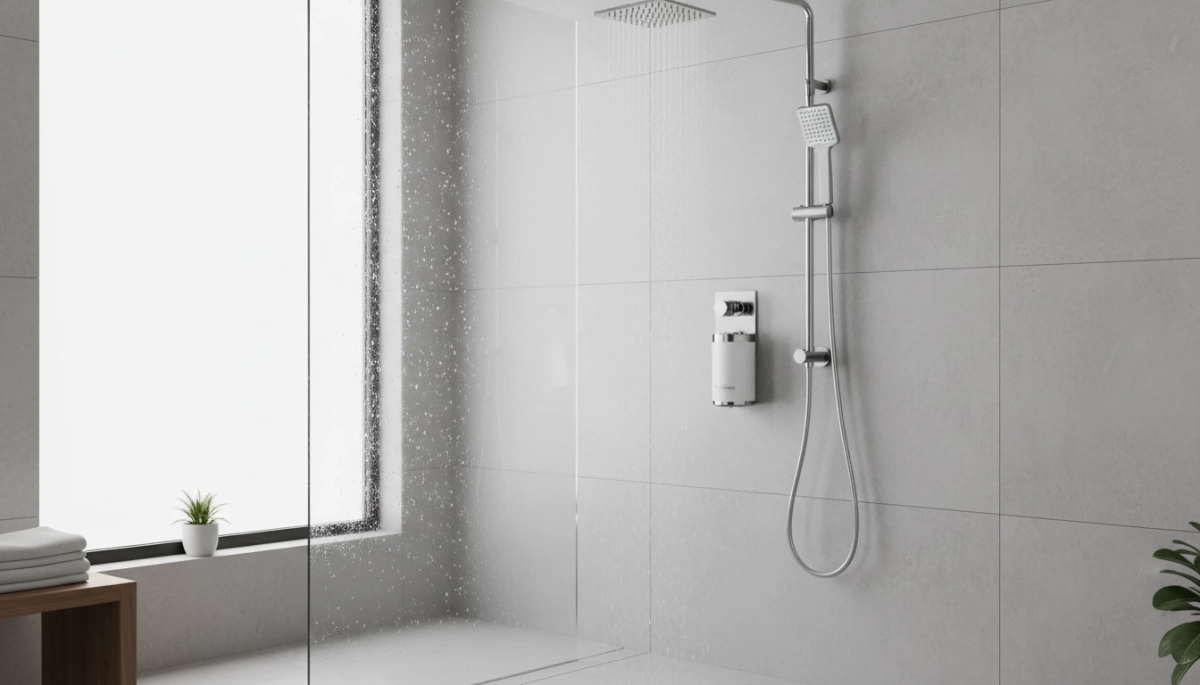
When we engineer a housing capable of withstanding daily hot-cold cycling, it isn’t just about picking a raw material; it’s about how that material is shaped to handle physical stress. Thermal Shock Resistance in Shower Filter Housing Materials relies heavily on geometric stability. If the design doesn’t account for expansion, even the strongest materials can fail under the pressure of a morning shower.
Importance of Uniform Wall Thickness
In my experience, the number one reason for water filter housing stress cracking is inconsistent wall thickness. When a housing has thick sections meeting thin sections, they cool and heat at different rates. This creates internal tension known as a stress riser.
- Thermal Balance: Consistent thickness ensures the entire unit expands and contracts evenly during rapid temperature change resistance cycles.
- Structural Integrity: Unlike injection molding wall thickness variations often found in cheaper plastic competitors, our commitment to 304 Stainless Steel ensures a uniform, dense structure that resists fatigue.
- Pressure Management: Uniform walls prevent weak spots that could bulge or burst under high hydrostatic pressure.
Protecting the G1/2 Thread Integrity
The connection point between your shower arm and the filter is the most vulnerable spot for leaks. G1/2 thread thermal deformation occurs when the threaded neck expands differently than the pipe it is screwed onto. This is a common failure in plastic units where the threads soften under heat and strip away from the metal pipe.
We utilize precision-machined 1/2″ threads designed for a tight, secure fit. By using high-grade metal, we ensure the threads maintain their shape and grip, providing reliable shower filter leak prevention even after years of use. A distorted thread doesn’t just drip; it can lead to the entire unit shearing off under pressure.
O-Rings and Gaskets: The Expansion Buffer
While the housing provides the rigid shield, the O-rings and gaskets act as the flexible buffer. They must compress and rebound as the housing expands with heat, filling the microscopic gaps that open up during thermal expansion.
| Component | Function | Benefit |
|---|---|---|
| High-Temp Seals | Resists hardening over time | Prevents brittle seal failure |
| Deep Groove Design | Allows controlled expansion | Stops O-ring extrusion |
| Compression Ratio | Maintains constant seal pressure | Ensures zero-leak performance |
Proper sealing is vital not just for preventing leaks, but to maintain the internal pressure required for our 15-stage filtration process. A secure housing protects the internal media, ensuring that the role of KDF in prolonging active carbon life is fully realized without water bypassing the filter stages.
Manufacturing Testing Protocols for Durability
When we engineer high-performance filtration systems, we don’t rely on guesswork. The difference between a housing that lasts a decade and one that cracks in six months comes down to rigorous lab validation. We subject our 304 Stainless Steel units to extreme stress scenarios to ensure they outperform standard plastic alternatives found in the market.
Cyclic Pressure Testing Standards
Cyclic pressure test standards are the ultimate measure of fatigue resistance. This test simulates the daily wear and tear of turning your shower on and off over years of use.
- The Process: The housing is subjected to rapid pressure fluctuations, cycling from 0 to 150 PSI thousands of times.
- The Failure Point: Standard ABS plastics often develop stress fractures at the seams or threads during this cycle due to material fatigue.
- The Metal Advantage: Our stainless steel housing maintains complete structural rigidity throughout these cycles, ensuring shower filter leak prevention long after plastic units would have failed.
Hydrostatic Burst Pressure Requirements
While cyclic testing checks for fatigue, hydrostatic burst pressure testing determines the absolute maximum pressure a unit can handle before catastrophic failure. In many US households, water pressure spikes can occur, and the housing must be able to withstand forces well beyond the operating norm.
We prioritize materials that exceed standard safety margins. By identifying gaps in the midrange shower filter market, we recognized that durability was the primary consumer complaint, leading us to adopt unyielding metal construction.
| Test Parameter | Standard Plastic (ABS) Limit | 304 Stainless Steel Performance |
|---|---|---|
| Operating Pressure | 20 – 80 PSI | 20 – 100+ PSI |
| Burst Threshold | ~300 PSI | >600 PSI |
| Thermal Deformation | High risk > 140°F | Negligible up to 1000°F |
NSF/ANSI Safety Considerations for Materials
Compliance with NSF 177 structural integrity guidelines is non-negotiable for safety. This standard dictates that the filter system must not only reduce contaminants but also remain structurally sound under pressure.
- Material Safety: We ensure our food-grade stainless steel is free from lead, mercury, and nickel, preventing secondary contamination.
- Dimensional Stability: Unlike polymers that may creep or warp under heat, steel maintains exact dimensions, ensuring the internal seal around the 15-stage cartridge remains tight.
- Impact Resistance: Accidental drops during installation or cleaning can shatter plastic; metal withstands impact without compromising the pressure vessel.
Frequently Asked Questions About Filter Durability
Why did my shower filter crack down the side?
This is a classic case of water filter housing stress cracking. In the US, we tend to run our showers hot, and that sudden shift from cold pipes to hot water creates thermal stress. Standard plastic housings expand and contract at different rates than the metal pipes they are attached to. Over time, this cycle causes thermal fatigue, leading to hairline fractures that eventually split open. We utilize 304 Stainless Steel specifically to stop this from happening, as metal handles these expansion cycles without losing structural integrity.
Can plastic housings really handle boiling water?
Technically, no. While you aren’t showering in boiling water, consistent exposure to high temperatures affects the dimensional stability of ABS. Plastic softens and creeps under sustained heat, which compromises the seal. For a true high-temperature water filter housing, you need material that stays rigid. If the housing deforms even slightly, the O-rings lose their seat, and you end up with a leak.
How does thermal shock affect the internal cartridge?
The shock itself attacks the outer shell, but the result ruins the filtration process. If the housing warps due to a lack of rapid temperature change resistance, the internal seal breaks. This allows water to bypass the filter cartridge entirely, meaning you are showering in unfiltered water. A rigid, thermal shock resistant shower filter housing is essential to keep the internal pressure consistent so water is forced through the media, not around it.
Is stainless steel always better than ABS for filters?
For durability and safety, absolutely. While ABS is cheaper and lighter, it cannot compete with the tensile strength of metal. Shower filter leak prevention is our top priority, and 304 Stainless Steel offers a “set it and forget it” reliability that plastic simply can’t match. It prevents the bursting and cracking issues common in cheaper units. If you are looking to upgrade your inventory with high-performance metal housings, contact us to see how we can improve your product’s longevity.