
















What Is Lead in Drinking Water?
Lead is a toxic heavy metal that can silently enter your drinking water as it travels through your plumbing. It usually doesn’t come from the water source itself, but from corrosion of old pipes and fixtures, especially in older buildings and city infrastructure.
How Lead Gets into Tap Water
Lead can leach into tap water when:
- Lead service lines connect your home to the water main
- Lead solder was used on copper pipes (common before 1986)
- Brass faucets, valves, and fittings contain lead that can dissolve into water
- Corroded plumbing releases particles due to aging, acidic water, or disinfectants
Key risk factors include:
- Homes built before 1986 (high chance of lead pipes or solder)
- Acidic or low-mineral water, which is more corrosive
- Stagnant water sitting in pipes for hours (overnight or all day)
If you live in an older neighborhood or a city with known lead service lines, your risk of lead in drinking water is higher, even if the water leaving the treatment plant is lead-free.
Health Risks of Lead Exposure
Lead is dangerous at extremely low levels. Agencies like the EPA and CDC agree there is no safe level of lead in drinking water, especially for children.
Serious health impacts include:
- For children and infants
- Reduced IQ and learning problems
- Behavioral issues and attention disorders
- Delayed growth and development
- For pregnant women
- Increased risk of miscarriage and preterm birth
- Lead transfer to the fetus, affecting brain development
- For adults
- Cardiovascular issues (high blood pressure, heart disease)
- Kidney damage
- Nerve and reproductive problems
Why Lead Is Especially Dangerous
Lead is particularly harmful because:
- It bioaccumulates in the body over time (bone, brain, and organs store it).
- Even low, ongoing exposure from tap water can slowly build up to dangerous levels.
- It can cause permanent neurological damage, especially in young children.
- You can’t see, taste, or smell lead in water—testing or using a certified lead-removal filter is the only way to know you’re protected.
As a manufacturer focused on safe drinking water, I design solutions with the assumption that any amount of lead is too much. That’s why understanding how lead enters your water is the first step to choosing the right way to remove lead from tap water and protect your family.
Do Water Filters Filter Out Lead?
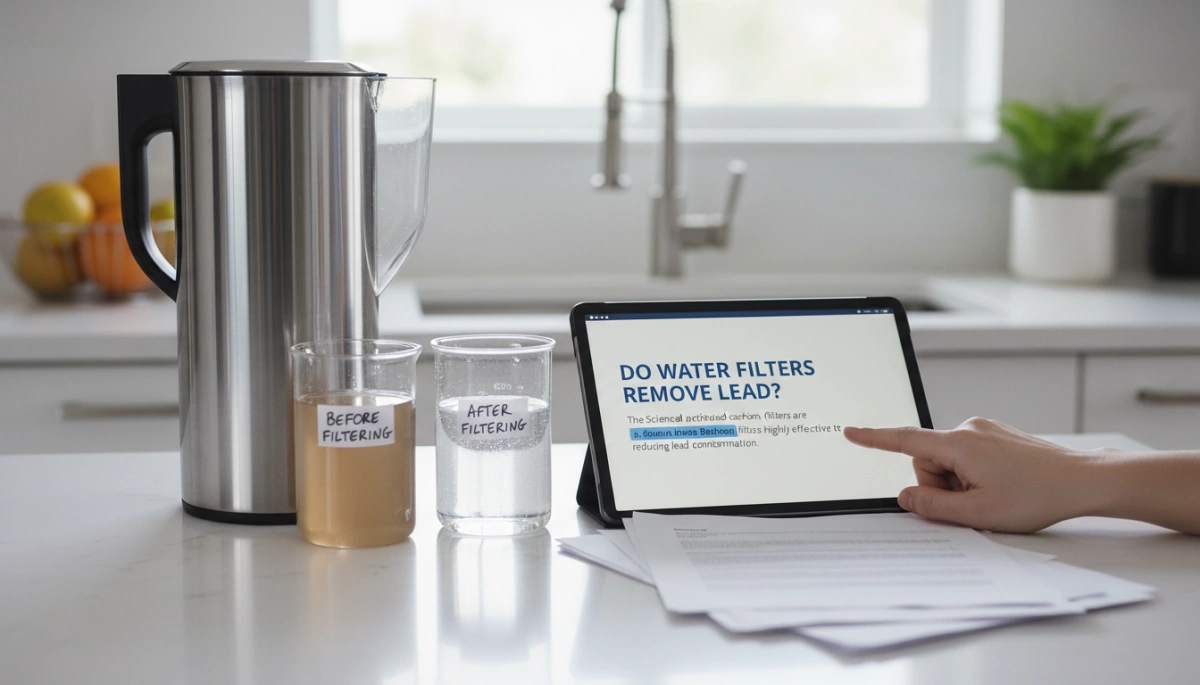
When it comes to lead in drinking water, not all water filters filter out lead—and that’s where a lot of people get misled.
Many common filters you see in stores are only tested for NSF/ANSI 42, which mainly covers taste, odor, and chlorine. Those can make your water taste better, but they’re not designed or certified to remove lead or other serious health contaminants.
If you want to remove lead from tap water, you need filters that are independently certified for it:
- NSF/ANSI 53 – for lead reduction using carbon block or other media
- NSF/ANSI 58 – for reverse osmosis lead removal systems
Anything claiming to be a “lead-reducing” filter without these certifications is basically asking you to trust marketing, not data. The same goes for expired or overused cartridges—once they’re past their rated life, their ability to reduce lead can drop fast, and you won’t see that just by looking at the water.
Both EPA and NSF are very clear:
- Rely on third-party certified water filters for lead
- Always check the performance data sheet to confirm NSF/ANSI 53 lead reduction or NSF/ANSI 58 for RO systems
If you’re looking at under-sink options, I build systems that focus specifically on lead reduction at the tap, like our under-sink water filter systems designed for lead and other heavy metals, so you’re not guessing whether your filter is actually doing the job.
How Do Water Filters Actually Remove Lead?
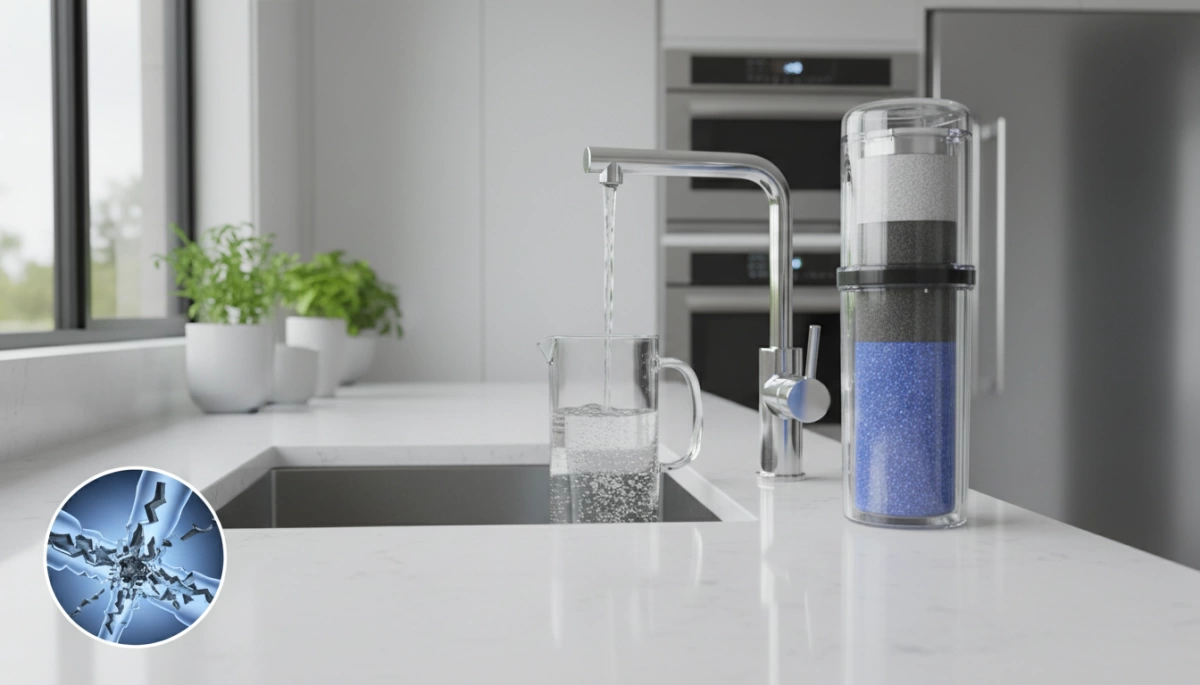
When people ask, “do water filters filter out lead,” the real answer comes down to how the filter works and whether it’s built for lead reduction, not just taste.
Core Mechanisms That Remove Lead
Most effective lead water filters use one or more of these methods:
- Adsorption (activated carbon block)
High-density carbon block filters have a ton of surface area. Lead particles and dissolved lead ions “stick” to the carbon surface as water passes through. This is why NSF/ANSI 53 lead reduction carbon blocks are so common in under-sink and faucet systems. - Ion exchange media
Special resins swap harmless ions (like sodium or hydrogen) for lead ions. This is especially useful for dissolved lead that you can’t see and can complement carbon in multi-stage systems. - Chemical binding
Some media are engineered to chemically bond with lead, locking it in place so it doesn’t pass through. This is often used inside high-performance NSF certified lead filters designed for serious contamination. - Membrane filtration (Reverse Osmosis)
Reverse osmosis lead removal uses a semi-permeable membrane with incredibly tiny pores. Most dissolved contaminants, including lead, are rejected and flushed away. A well-designed RO drinking water system can cut lead levels by 95–99%+ and also reduce many other heavy metals and dissolved solids. If you want a deeper dive into RO performance, I break it down in this guide on the pH of RO water, levels, testing, and adjustment: RO water pH overview.
Particulate vs. Dissolved Lead
Lead in tap water shows up in two main forms:
- Particulate lead – tiny pieces flaking off old pipes, solder, or brass fixtures
- Removed by: fine mechanical filtration (tight sediment filters, carbon blocks with small pore size, RO pre-filters)
- Dissolved lead – lead ions actually dissolved in the water
- Removed by: carbon block adsorption, ion exchange, RO membranes, and lead-selective media
A serious under sink water filter for lead will typically target both forms using multiple stages.
Reduction vs. “100% Removal”
No system honestly guarantees 100% removal all the time. The realistic goal is high lead reduction:
- Certified systems often show up to 99% lead reduction in lab tests
- Actual performance depends on:
- Water chemistry (pH, hardness, other minerals)
- Flow rate (slower flow = longer contact time = better lead removal)
- Maintenance (timely cartridge changes, proper installation)
If filters are not replaced on schedule, they lose efficiency and can even start releasing trapped contaminants. That’s why any certified water filter for lead will come with clear capacity and replacement guidelines.
When I design or select systems for U.S. homes, I always look for NSF/ANSI 53 or 58-certified lead reduction, multi-stage protection (carbon + ion exchange or RO), and realistic performance data—especially for houses with lead in drinking water risk from older plumbing.
Best Types of Water Filters Proven to Reduce Lead
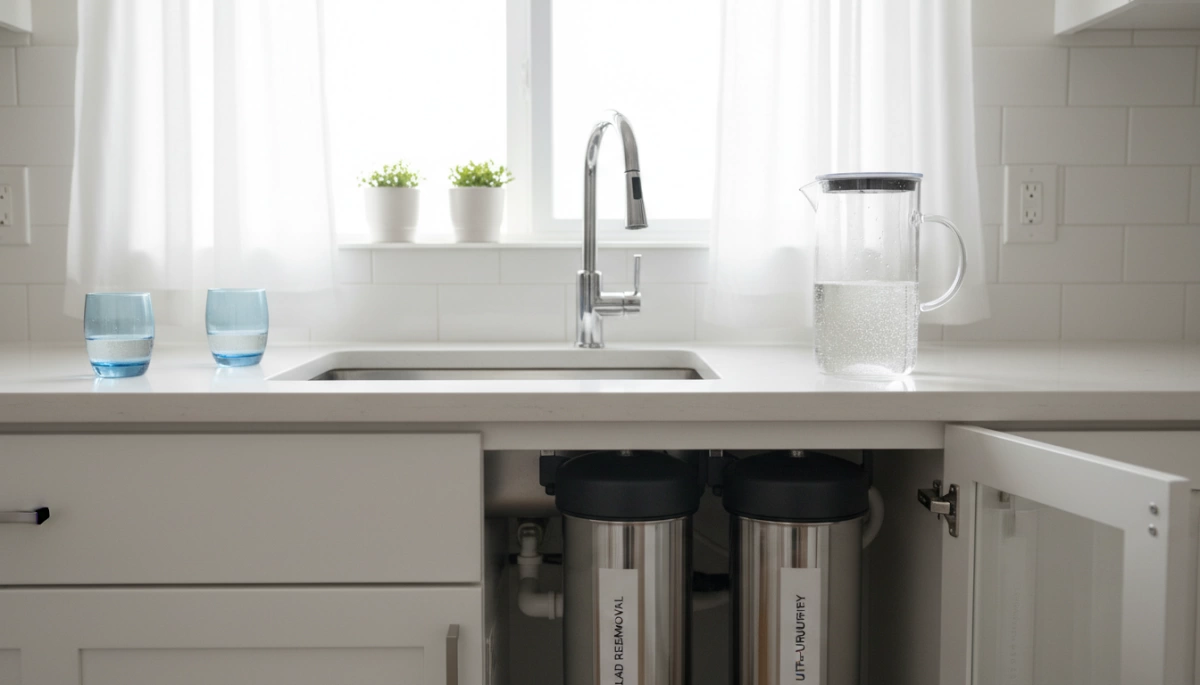
When people ask “do water filters filter out lead,” the honest answer is: only the right types do, and only when they’re properly designed and certified. Here are the main options I recommend if you’re trying to remove lead from tap water in a U.S. home.
Carbon Block Water Filters (Lead-Reduction Certified)
Activated carbon block filters are one of the best ways to reduce lead in drinking water, as long as they’re NSF/ANSI 53 certified for lead reduction.
Why they work for lead in drinking water:
- High-density carbon block traps tiny particles and adsorbs dissolved lead
- Often combined with lead-specific media (like ion-exchange resins) for stronger performance
- Can maintain good flow rate while still hitting strong lead reduction numbers
What to look for:
- NSF/ANSI 53 certification clearly stating “lead reduction”
- A performance data sheet showing % lead reduction and test conditions
- Solid construction (no cheap granular carbon that just improves taste)
For kitchens that need strong lead protection at the tap, a well-designed under-sink carbon block system, like our compact UF kitchen faucet water purifier system, can be a very practical and affordable solution.
Reverse Osmosis (RO) Systems
If you want one of the most powerful ways to remove lead from tap water, reverse osmosis systems are hard to beat.
How RO helps remove lead from tap water:
- Uses a semi-permeable membrane that blocks lead and many other dissolved contaminants
- Often part of a multi-stage system: sediment + carbon pre-filters + RO membrane + post-filter
- Properly certified systems can achieve up to 99%+ lead removal
Best for:
- Homes with known lead contamination or old lead service lines
- Families with young kids or pregnant women, where risk needs to be minimized
- People who want broad protection (not just lead, but many other contaminants too)
When evaluating RO systems, always check for NSF/ANSI 58 certification and verified lead reduction performance.
Faucet-Mounted & Countertop Lead Filters
If you rent, move often, or just don’t want to drill into cabinets, faucet-mounted and countertop filters can be a convenient way to remove lead from drinking water.
Pros:
- No major installation or plumbing changes
- Easy to remove when you move out
- Great for apartments, dorms, and temporary setups
Watch out for:
- Not all faucet or countertop units are true lead filters
- You must confirm NSF/ANSI 53 (lead reduction) on the packaging or spec sheet
- Some models only improve taste and odor, which does nothing for lead
Look for systems that clearly market “certified water filters for lead” with third-party testing, not just vague “heavy metal reduction” claims.
Under-Sink Water Filter Systems (High-Volume Lead Protection)
For most U.S. households with older plumbing or lead risk, a dedicated under-sink water filter for lead is often the most practical long-term solution.
Why under-sink filters work well:
- Installed right on the cold water line for your kitchen faucet or a dedicated drinking faucet
- Can use large, high-capacity carbon block cartridges designed for NSF/ANSI 53 lead reduction
- Provide consistent flow and volume for cooking, coffee, baby formula, and daily drinking water
At driplife, we focus on under-sink water filter lead solutions built around:
- Advanced lead-specific filtration media
- High-flow yet dense carbon block designs
- Easy cartridge replacement to maintain performance
For U.S. homeowners dealing with possible lead leaching from pipes or lead service lines, a robust under-sink system is usually the best balance of cost, convenience, and protection.
What Water Filters Cannot Do for Lead Removal
When we talk about do water filters filter out lead, it’s just as important to know which ones don’t.
1. Basic pitcher/carbon filters without NSF 53
Most cheap pitchers and basic carbon filters are only tested for taste, odor, and chlorine, not lead in drinking water. If a filter doesn’t clearly say “NSF/ANSI 53 certified for lead reduction”, assume it does not reliably remove lead from tap water. The packaging might say “improves taste” or “reduces contaminants,” but without NSF/ANSI 53, it’s not a true NSF certified lead filter.
2. Whole-house systems alone aren’t enough
Standard whole-house systems are great for sediment, rust, and chlorine, but most are not designed for lead leaching from pipes:
- They often miss dissolved lead, which is the bigger health risk.
- You usually still need a point-of-use lead filter (under-sink, faucet, or RO) at the kitchen tap where you drink and cook.
3. Expired or uncertified cartridges
Even a good carbon block filter for lead or under sink water filter for lead loses performance when the cartridge is overdue:
- Lead reduction drops off sharply once capacity is reached.
- An overused filter can also become a bacteria growth zone.
Stick to the replacement schedule and use genuine, certified cartridges.
4. Boiling water does NOT remove lead
Boiling doesn’t remove lead in tap water—it can actually make it worse:
- Water evaporates, but lead stays, so the lead concentration goes up, not down.
If you’re dealing with lead in drinking water, boiling is not a solution; you need a certified water filter for lead or a reverse osmosis lead removal system. For a deeper dive into how purification works vs filtration, you can check the comparison of purified water vs filtered water on our site: purified water vs filtered water – what’s the difference?.
How to Choose the Right Lead-Reducing Water Filter
If you want to remove lead from tap water, you can’t just buy any filter. Here’s how I’d choose a lead-reducing water filter for a U.S. home.
1. Non‑Negotiable: NSF/ANSI 53 or 58 for Lead
Always start with certification:
| What to Look For | Why It Matters |
|---|---|
| NSF/ANSI 53 – Lead Reduction | For carbon block / under-sink / faucet filters that reduce lead in drinking water. |
| NSF/ANSI 58 – Reverse Osmosis | For RO systems that give high-level lead removal (often 95–99%+). |
| Performance Data Sheet (PDS) | Shows tested lead levels in/out, capacity, and conditions. |
Never rely on marketing claims alone. The label should clearly say “NSF/ANSI 53 Certified for Lead Reduction” or “NSF/ANSI 58” plus a statement about lead.
2. Match the Filter to Your Situation
Different setups call for different lead water filter types:
| Situation | Best Option |
|---|---|
| Family home, cooking + drinking | Under-sink carbon block or RO system with NSF/ANSI 53 or 58. |
| Small apartment or rental | Faucet-mounted or countertop point-of-use lead filter (no drilling). |
| High water use kitchens | High-flow under-sink system with large capacity cartridges. |
Think about:
- Installation type: Under-sink, faucet, countertop.
- Flow rate: Do you hate slow water? Then look at the gallons-per-minute rating.
- Household size: Bigger families need higher capacity cartridges.
For example, our own under-sink water purification systems are designed for U.S. kitchens that need strong lead reduction without killing water pressure, with options tuned for different household sizes. You can see how they’re set up in our guide on under-sink water purification systems.
3. Don’t Ignore Maintenance and Cost
A certified water filter for lead only works if you actually replace the cartridges on time.
Key points:
- Filter lifespan (gallons or months) – check the label.
- Replacement cost – calculate yearly cost, not just upfront price.
- Ease of change – twist-off cartridges are far easier than tools and wrenches.
Quick checklist:
- Can you find replacement filters easily online in the U.S.?
- Are reminders available (app, sticker, calendar)?
- Is there clear support or documentation?
4. Test Your Water for Lead First
Before you buy, test your water for lead so you’re not guessing.
Simple options in the U.S.:
- State-certified lab test kits (ordered online or via your state’s health department).
- Local water utility – many offer free or low-cost lead testing.
- DIY test kits – useful as a screening tool, but lab results are more reliable.
Tips:
- Always test cold tap water, especially the first draw in the morning (worst-case for lead leaching).
- Keep your lab report. Use it to choose the best filter for lead-contaminated water and to confirm your filter is doing its job over time.
If your test shows elevated lead, I’d prioritize a NSF/ANSI 53 carbon block under-sink system or a reverse osmosis lead removal setup at the kitchen sink, since that’s where most drinking and cooking water comes from.
Lead Protection for Different Living Situations
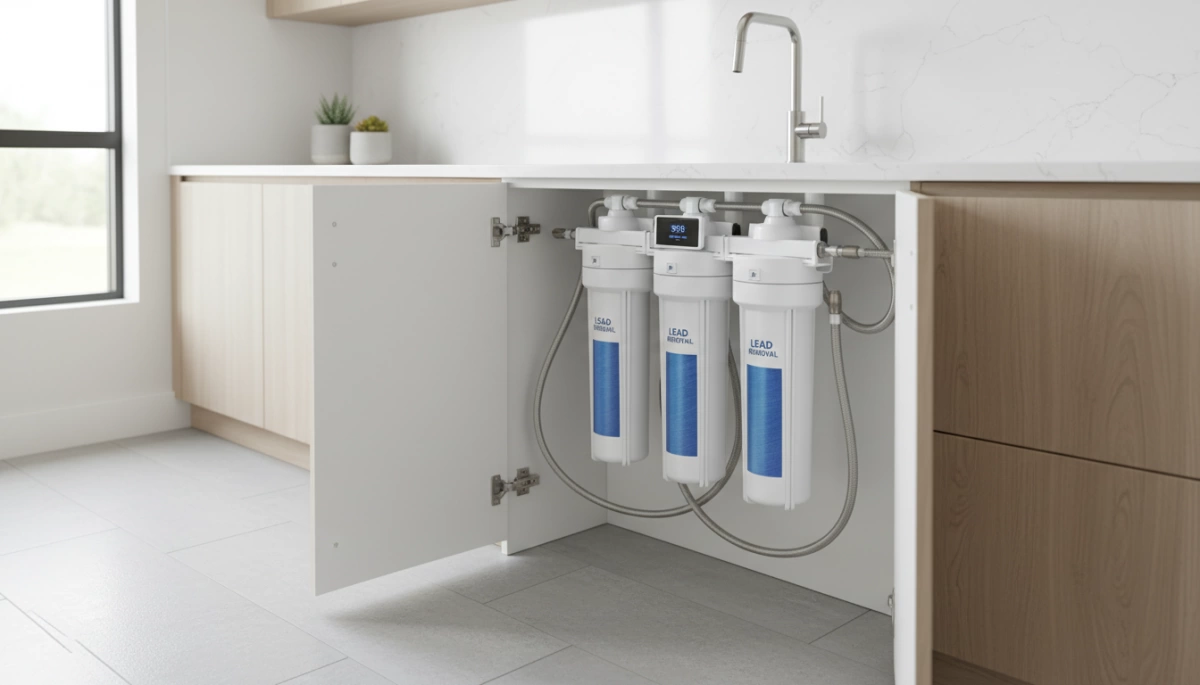
When people ask, “Do water filters filter out lead?”, the real answer depends a lot on where and how you live. Different living situations call for different lead-reducing setups, especially in the U.S. where many homes still have aging plumbing.
Older Homes With Potential Lead Pipes
If your home was built before 1986, assume there could be lead somewhere in the system (service lines, solder, or fixtures).
Best approach: Strong point-of-use protection at the kitchen sink.
Recommended setups:
- Under-sink lead filters
- NSF/ANSI 53 (lead reduction) minimum
- Ideal if you use the kitchen tap for drinking, cooking, baby formula
- Clean look, no counter space used
- We specialize in under-sink systems engineered for lead reduction, designed for OEM/private label customers who want reliable performance for U.S. households.
- Under-sink RO systems
- For very high-risk areas or when you want broad contaminant reduction (lead + more)
- Look for NSF/ANSI 58 for reverse osmosis lead removal
- Multi-stage filtration, usually including sediment, carbon block, and RO membrane
- If you want to understand how an undersink reverse osmosis system works step by step, this breakdown of an under-sink RO water purifier is a good guide.
Extra habits that help:
- Run the tap 30–60 seconds in the morning before drinking
- Always use cold water for cooking and drinking (hot water can leach more lead)
Apartments, Rentals & Temporary Housing
If you can’t change plumbing or drill into cabinets, you still have solid options to remove lead from tap water without permanent installation.
Good options for renters:
- Faucet-mounted lead filters
- Tool-free installation on most standard kitchen faucets
- Look for NSF/ANSI 53 lead reduction on the box and performance data sheet
- Easy to remove when you move
- Countertop filters with a diverter valve
- Sit on the counter; connect to faucet when needed
- Great for families who cook a lot but can’t install under-sink units
- Again, certification matters more than brand claims
Key things to check:
- Works with your faucet type (some pull-out sprayers don’t fit)
- Cartridge life and cost (especially if you’re filtering all your cooking water)
- Verified NSF certified lead filter status, not just marketing phrases like “lead safe”
Families With Young Children or Pregnant Members
For babies, toddlers, and pregnant people, lead protection is non-negotiable. There is no safe level of lead exposure, and kids absorb more lead than adults.
If anyone in the home is pregnant, planning a pregnancy, or under 6 years old:
Prioritize maximum protection:
- Under-sink RO system at the main drinking water tap
- Often removes 95–99%+ of lead when properly certified
- Ideal for making formula, cooking, and daily drinking
- A multi-stage RO with a quality carbon block and membrane offers strong protection across multiple contaminants, not just lead.
- High-performance carbon block under-sink filter (NSF/ANSI 53 for lead)
- Simpler install than RO, no storage tank or drain connection
- Great balance of performance, flow, and cost for many U.S. families
Best practices for high-risk households:
- Always use filtered water for:
- Mixing baby formula
- Drinking water for kids
- Cooking (pasta, rice, soups, etc.)
- Replace cartridges on time—expired filters can lose lead reduction performance.
Quick Comparison: Lead Filter Options by Situation
| Living Situation | Best Lead Filter Type | Why It Works Well |
|---|---|---|
| Older home, possible lead pipes | Under-sink carbon block or RO | Strong, consistent lead reduction at tap |
| High-lead-risk area + heavy usage | Under-sink RO system | Maximum reduction, multi-contaminant |
| Apartment / rental, can’t drill | Faucet-mounted or countertop lead filter | No-permanent-install, easy to move |
| Home with kids or pregnancy | Under-sink RO or NSF 53 carbon block | Highest protection for vulnerable users |
As a Chinese under-sink water filter manufacturer & supplier, I design our under-sink and RO lead solutions with these exact U.S. use cases in mind—older housing stock, renters who need flexibility, and families who demand real, certified protection instead of marketing claims.
Why Partner with a Trusted Manufacturer Like driplife
When you’re serious about removing lead from tap water, who builds your system matters just as much as the technology inside it. That’s where we come in.
Proven Expertise in Under-Sink Lead Filtration
driplife is a specialized Chinese under-sink water filter manufacturer and supplier focused on lead in drinking water and other health-related contaminants. We design and build under sink water filter lead systems specifically for:
- U.S. homes with older plumbing and lead service lines
- Brands and retailers needing reliable OEM and private-label lead filter solutions
- Installers who want stable performance and easy service
Advanced Lead-Specific Filtration Media
Our systems use lead-specific media, not just basic carbon:
- High-density carbon block filter for lead adsorption
- Ion exchange and specialty media for dissolved lead and other metals
- Multi-stage setups that combine sediment, carbon, and optional RO for stronger reverse osmosis lead removal
This lets us hit aggressive NSF/ANSI 53 lead reduction targets and design systems that can be integrated into broader RO solutions similar to those discussed in our guide to the health benefits of RO water and safe drinking.
Rigorous Testing and Certification Support
We engineer our NSF certified lead filter lines around:
- Independent, third-party testing for lead reduction performance
- Support for NSF/ANSI 53 and 58 compliance and documentation
- Detailed performance data sheets for U.S. regulatory and retail needs
If you’re building a point-of-use lead filter product line, we help you get from prototype to compliant, market-ready system faster.
Built for Global Standards and U.S. Expectations
Every system is developed to align with:
- International drinking water safety regulations
- U.S. market expectations on performance, durability, and user safety
- Practical needs: simple cartridge changes, clear replacement schedules, and reliable flow for everyday kitchen use
Whether you’re looking for the best filter for lead contaminated water for your own brand or need a dependable under-sink water filter lead supplier, partnering with dripl


