















The Rise of Smart Water Ecosystems: Market Trends and Opportunities in 2026
We are witnessing a fundamental shift in how consumers interact with their home appliances. It is no longer enough to simply filter water; the modern market demands intelligence, connectivity, and proactive management. As we look toward 2026, the integration of IoT-enabled water purifier technology is transitioning from a luxury feature to a baseline expectation for premium brands.
Surging Demand for Connected Purifiers
The era of “install it and forget it” is fading. Today’s homeowners expect connected water purification systems that provide real-time visibility into their health and hydration. We see a massive uptick in requests for devices that offer smart home water purifier connectivity, allowing users to track water quality and consumption directly from their smartphones.
- Real-time Visibility: Consumers want instant access to TDS levels and filter status.
- Ecosystem Integration: Seamless compatibility with existing smart home networks is a top priority.
- User Control: The ability to adjust temperature or dispensing modes via mobile apps.
IoT and AI as Premium Differentiators
In a crowded market, AI-driven water filtration serves as the ultimate differentiator. Brands that leverage these technologies can offer superior user experiences that go beyond basic purification. By utilizing intelligent water quality sensors, manufacturers can transform a standard appliance into a sophisticated health monitoring tool. This shift allows for new business models, where value is driven by data insights and automated service rather than just hardware sales.
Cloud Limitations vs. Strategic Pivot to Edge Computing
While cloud connectivity started the revolution, edge computing in water filtration is where the future lies. Relying solely on the cloud can introduce latency and dependency on internet stability. By pivoting to the intelligent edge, we process critical data directly on the device. This ensures that features like leak detection and auto-shutoff function instantly, regardless of Wi-Fi status, providing a level of reliability that purely cloud-based systems cannot match.
Understanding the Intelligent Edge in Water Filtration
The concept of edge computing in water filtration represents a fundamental shift in how we design connected appliances. Rather than treating a water purifier as a passive device that simply relays data to a remote server, the “Intelligent Edge” empowers the hardware to process information locally. At Driplife, our dedicated Software Laboratory focuses on on-device data processing, ensuring that critical decisions—like shutting off a valve during a leak or adjusting UV sterilization intensity—happen instantly on the machine’s internal processor, independent of internet speed.
Comparing Architectures: Traditional vs. Edge-IoT Systems
To understand the value of this shift for OEM brands, it helps to compare the old model with modern connected water purification systems.
- Traditional Cloud IoT: The device collects data (like TDS levels) and sends it to the cloud. The cloud analyzes it and sends a command back. If the Wi-Fi drops, the “smart” features often fail.
- Edge-IoT Architecture: The device analyzes smart water filter real-time monitoring data locally. It makes immediate decisions and only syncs with the cloud for long-term storage or app updates.
This distinction is crucial when we look at the principle behind installing a water purifier on a faucet, where physical sensors and flow meters must react instantly to water pressure changes to prevent damage.
Core Benefits of Edge Intelligence
Moving intelligence to the edge offers three distinct advantages for the US market:
- Reduced Latency: There is zero lag. When a sensor detects a flow anomaly, the system reacts in milliseconds, not seconds.
- Offline Functionality: Smart home water purifier connectivity shouldn’t depend on a stable router. Edge devices continue to track filter life, monitor quality, and dispense accurately even during an internet outage.
- Enhanced Security: By processing sensitive usage data locally, we minimize the amount of raw information transmitting over the web, offering better privacy for the end-user.
We integrate these capabilities into our high-capacity platforms, ensuring that whether it’s a 4-in-1 countertop unit or a robust under-sink system, the intelligence is built directly into the hardware foundation.
Key Advantages Driving Business Growth
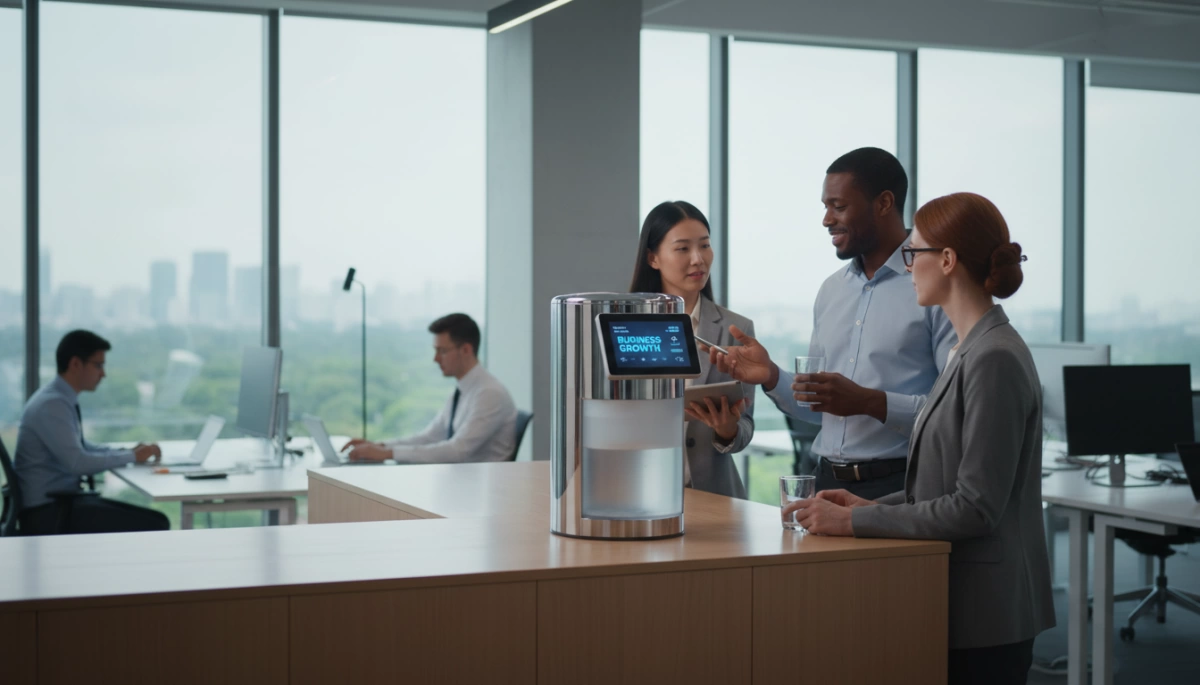
Integrating edge computing isn’t just a tech flex; it’s a strategic move that directly impacts the bottom line. By processing data locally on the device, we unlock a level of efficiency that cloud-only systems struggle to match. For brands looking to dominate the market, the shift toward edge intelligence water treatment offers tangible commercial benefits that go beyond simple water filtration.
Predictive Maintenance & Operational Efficiency
Downtime kills customer satisfaction. With a predictive maintenance water purifier, we move from reactive repairs to proactive care. Sensors constantly monitor critical metrics like flow rates, pressure, and component health. Instead of waiting for a breakdown, the system alerts the user or service provider before a part fails. This drastically cuts service costs and ensures the unit is always running at peak performance.
Enhanced Reliability & User Trust via Local Intelligence
Edge computing in water filtration means the machine doesn’t turn “dumb” when the internet goes out. Critical functions happen instantly on the device, not on a server miles away.
- Instant Response: Leak detection and auto-shutoff trigger in milliseconds.
- Offline Functionality: Users can still access core features and data without Wi-Fi.
- Data Privacy: Sensitive usage data is processed locally, reducing cybersecurity risks.
New Revenue Opportunities: Subscriptions and Data Insights
Connected water purification systems open the door to recurring revenue models. By tracking actual gallon usage rather than just time, brands can offer precise, usage-based filter subscription services. This ensures customers never run out of clean water while securing long-term loyalty for the brand.
Sustainability Impact: Optimizing Water Usage
Modern consumers in the US are increasingly eco-conscious. Sustainable water management IoT features allow users to track their water footprint in real-time. Smart algorithms can optimize the wastewater ratio in RO systems based on current water quality, significantly reducing waste compared to static systems. For those utilizing high-capacity units, understanding the benefits of under-sink water purifier systems enhanced with IoT can lead to even greater efficiency and space savings.
Scalability for Global Markets
Scaling smart technology requires robust manufacturing backing. With our facility’s capacity to produce 500,000 machines annually, we ensure that adding IoT-enabled water purifier technology doesn’t create supply chain bottlenecks. Whether deploying in residential US suburbs or demanding commercial environments, the hardware is built to handle the data and the volume.
Driplife’s Edge in IoT-Integrated Smart Water Solutions
At Driplife, we understand that modern water filtration requires more than just a membrane and a pump. It requires intelligence. With over 15 years of experience in the industry, we have transitioned from a traditional manufacturer to a technology-driven partner for global brands. Our dedicated Software Laboratory and R&D center allow us to bridge the gap between heavy-duty hardware and the IoT-enabled water purifier market.
We operate a massive 60,000 sq. ft. facility capable of producing 500,000 machines annually. This scale ensures that when we integrate edge computing in water filtration, we do it with supply chain stability and strict quality control. We don’t just bolt on Wi-Fi modules; we engineer the firmware and hardware to work in unison, providing OEM IoT water filter integration that is reliable and scalable for the US market.
Flagship Platforms: The Intelligent 4-in-1 and Beyond
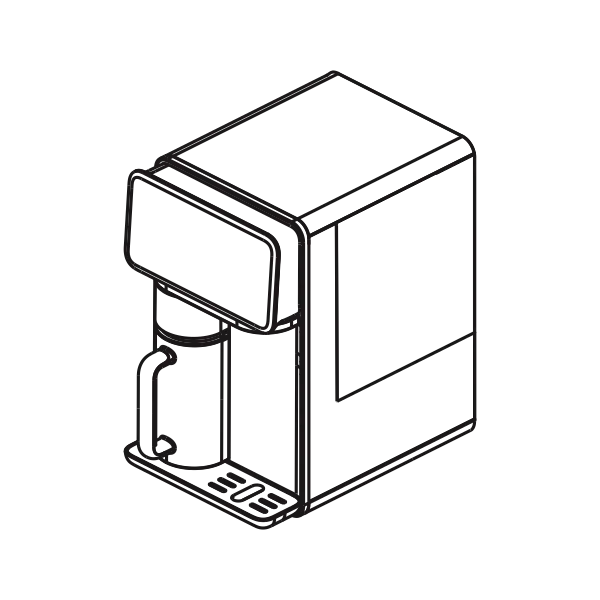
Our manufacturing prowess is best demonstrated in our countertop series, specifically our multi-functional systems. These units are designed to be the hub of a healthy kitchen, combining purification with instant utility.
- Integrated Functionality: We manufacture systems that offer 4-in-1 capabilities, delivering Purified, Cold, Hot, and Ice water from a single compact unit.
- Smart Monitoring: Utilizing smart water filter real-time monitoring, our systems track filter life based on actual usage and water quality, not just a simple timer.
- High-Performance RO: Our systems utilize tankless RO smart technology, ensuring fresh water on demand without the risk of secondary pollution found in traditional tanks. For brands looking to deploy the best reverse osmosis water filter system under their own label, our platform offers a turnkey solution.
Technical Strengths & Proprietary Software
The core of our connected water purification systems lies in our proprietary development. Because we control the entire cycle—from industrial design and mold tooling to injection molding and final assembly—we can implement private label software customization that generic assemblers cannot match.
Key Technical Advantages:
| Feature | Benefit for OEM/ODM Partners |
|---|---|
| Factory-Direct API Support | Seamless integration with your brand’s existing mobile app ecosystem (iOS/Android). |
| Leak Detection Smart Purifier | Auto-shutoff valves triggered by real-time sensor data to prevent property damage. |
| UV Sterilization Integration | Automated cleaning cycles programmed into the firmware for enhanced hygiene. |
| 150GPD – 600GPD Capacity | High-flow options suitable for busy American households and offices. |
OEM/ODM Advantages: Custom Apps and Compliance
We simplify the complex process of launching a smart product. Our team supports factory-direct technical API support, allowing your brand to offer features like remote filter life tracking and water consumption analytics directly to your customers.
We ensure all intelligent water quality sensors and components meet rigorous international standards. Our facility enforces strict online inspection and quality control, ensuring that every smart unit leaving our production line is ready for the consumer. Whether you need a fully custom chassis or a specific software interface for predictive maintenance, Driplife provides the industrial ecosystem to make it happen.
Implementing Edge-IoT: Practical Steps for Brands
Transitioning from traditional hardware to an IoT-enabled water purifier lineup requires more than just adding a Wi-Fi chip. It demands a strategic overhaul of how the product gathers, processes, and communicates data. At Driplife, we leverage our dedicated Software Laboratory and 15+ years of manufacturing experience to guide OEM/ODM partners through this digital transformation. The goal is to create a seamless ecosystem where hardware and software work together to deliver edge intelligence water treatment.
Implementation Roadmap: From Hardware Sensors to Connectivity
The journey starts with the physical infrastructure. We begin by embedding intelligent water quality sensors directly into the flow path of our systems. This includes integrating high-precision TDS monitoring IoT modules and flow meters into robust hardware bases, such as our high-capacity water filter from sink units.
Once the sensors are in place, the focus shifts to connectivity and logic:
- Sensor Integration: Installing sensors for TDS, flow rate, and pressure without compromising the hydrostatic integrity of the unit.
- Edge Processing Unit: Embedding microcontrollers capable of edge computing in water filtration to process data locally.
- Connectivity Modules: Adding reliable Wi-Fi or Bluetooth modules for smart home water purifier connectivity.
- API & App Development: Utilizing our factory-direct technical API support to build custom mobile apps (iOS/Android) for the end-user.
Overcoming Integration Challenges: Cybersecurity and Energy Efficiency
Two major hurdles often stall IoT projects: data security and power consumption. In the US market, consumer trust is paramount. We address cyber-security data protocols by prioritizing local data processing (Edge) over constant cloud transmission. This reduces the attack surface and ensures that sensitive usage data remains secure.
On the efficiency front, sustainable water management IoT involves optimizing how the device uses power. Our R&D team focuses on low-energy communication protocols that allow for real-time monitoring without draining resources, which is critical for battery-operated components or eco-conscious product lines.
Real-World Applications: Monitoring, Notifications, and Analytics
The payoff for this integration is a superior user experience and operational insight. For the consumer, it means remote filter life tracking that eliminates the guesswork of maintenance. Instead of relying on generic timelines, the system analyzes actual water volume and quality to predict exactly when a charcoal water filter system needs replacement.
For the brand, the advantages include:
- Predictive Maintenance: Proactive maintenance notifications alert users before a failure occurs, reducing support tickets.
- Leak Detection: Leak detection smart purifier features trigger auto-shutoff valves to prevent property damage.
- Usage Analytics: Aggregated data helps brands understand consumption patterns, enabling optimized supply chain logistics for replacement filters.
Frequently Asked Questions About IoT Smart Water Filters
Edge Computing vs. Cloud-Based Filtration
The main difference lies in where the data processing happens. With edge computing in water filtration, the analysis occurs directly on the device’s local processor rather than sending raw data to a remote server. This architecture ensures that critical functions, like leak detection smart purifier protocols, react instantly without latency. In contrast, cloud-based systems rely heavily on internet speed. Our dedicated R&D and software development teams focus on optimizing these local algorithms to ensure our machines are intelligent regardless of server status.
Benefits of IoT Integration for OEM Brands
For brands partnering with us, OEM IoT water filter integration offers a massive competitive advantage. It transforms a standard appliance into a connected water purification system that drives user engagement.
- differentiation: Stand out with custom apps and smart features.
- User Loyalty: Direct communication through mobile notifications.
- Data Insights: Understand usage patterns to improve future product cycles.
Offline Functionality and Connectivity
Absolutely. Smart home water purifier connectivity is designed to enhance the experience, not restrict it. Thanks to edge intelligence water treatment, the core filtration processes, pump operations, and safety checks run independently of the internet. If the Wi-Fi goes down, the machine continues to purify water and monitor safety locally, syncing the historical data once the connection is restored.
Reducing Costs with Predictive Maintenance
Predictive maintenance water purifier technology drastically cuts down on unnecessary service calls. Instead of relying on generic time-based schedules, remote filter life tracking analyzes actual water volume and quality to determine the exact moment a replacement is needed. This prevents wasting filters that still have life left and avoids the hardware damage caused by overusing clogged filters, ensuring the reverse osmosis smart technology operates at peak efficiency for longer.
Data Security in IoT Devices
Security is a valid concern for any connected device. We prioritize cyber-security data protocols in our software architecture. By leveraging edge computing, we process sensitive usage data locally on the machine, minimizing the amount of information transmitted to the cloud. This approach, combined with encrypted communication channels, ensures that intelligent water quality sensors provide convenience without compromising user privacy.