

















Decoding the Ratio: What Does 2:1 Actually Mean?
Traditional water filtration has long been plagued by inefficiency. For decades, standard systems operated on a wasteful 1:4 scale, flushing four gallons of water for every single gallon purified. That is obsolete technology. In 2026, the 2:1 ratio is the new benchmark for high-efficiency reverse osmosis, redefining how we manage resources in the modern home.
The Math Simplified
The shift to a 2:1 pure-to-waste ratio drastically alters the equation of water consumption.
- Old Standard (1:4): You produce 1 cup of clean water; you waste 4 cups.
- Gold Standard (2:1): You produce 2 cups of clean water; you waste only 1 cup.
This represents a water saving efficiency increase of over 800% compared to traditional models. Instead of watching your utility bill climb due to wasted runoff, a 2:1 system ensures the majority of water entering the unit ends up in your glass, not the sewer.
The Technology Behind It
Achieving this level of efficiency isn’t magic; it is precision engineering. The key differentiator is the integration of a powerful internal booster pump. Unlike passive systems that rely solely on line pressure, this pump optimizes the pressure against the filtration membrane.
By maintaining consistent, high pressure, the system forces water through the 0.0001 micron filtration layer more effectively. This advanced fluid dynamics reduces the volume of water required to flush contaminants, turning sustainable home appliances into a practical reality rather than just a marketing buzzword.
Three Reasons Why 2:1 is the “Gold Standard” for 2026
As we look toward 2026, the benchmark for home water filtration isn’t just about purity anymore—it’s about efficiency. The shift from wasteful legacy systems to modern technology is driven by three critical factors that impact your wallet, the planet, and your daily convenience.
1. The Economic Impact (ROI)
For years, traditional RO systems operated with a dismal 1:4 ratio, meaning they wasted four gallons of water to produce just one gallon of clean water. That is literally money pouring down the drain. By switching to a high-efficiency reverse osmosis system with a 2:1 pure-to-waste ratio, you effectively save up to 600% more water.
- Water Bill Savings: In many US municipalities where water rates are climbing, reducing wastewater volume directly lowers monthly utility costs.
- Filter Longevity: Advanced systems often utilize smart pressure management, which can help extend the membrane service life, reducing the frequency and cost of replacements.
Investing in a modern undersink reverse osmosis water filter is no longer just a health decision; it is a smart financial move that pays for itself over time.
2. Environmental Stewardship
Water scarcity is a growing concern across the United States. A water footprint reduction of this magnitude makes a tangible difference. When you choose a system that produces two cups of pure water for every one cup of wastewater, you are actively participating in conservation.
- Sustainable Tech: This efficiency aligns with the rising demand for sustainable home appliances that minimize resource consumption.
- Eco-Friendly Operation: By maximizing water recovery, we reduce the strain on municipal treatment plants and local water tables.
3. Performance & Speed (The 600 GPD Connection)
High efficiency requires power. You cannot achieve a 2:1 ratio with a weak gravity-fed system. This standard is inextricably linked to a high 600 GPD flow rate (Gallons Per Day).
- Internal Booster Pump: To force water through the 0.0001 micron filtration membrane efficiently, our systems use a powerful internal pump.
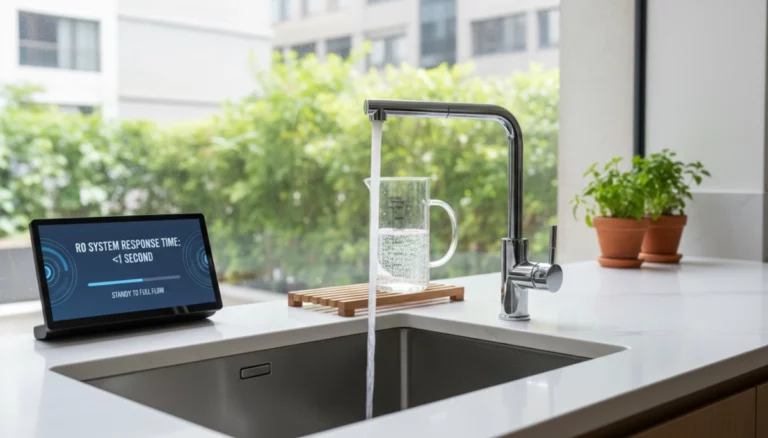
- Instant Gratification: This power translates to speed. You get a cup of fresh water in approximately 8 seconds.
- No Stagnation: The high-speed flow supports a tankless design, ensuring you never have to wait for a storage tank to refill.
Tankless Design: The Best Friend of the 2:1 Ratio
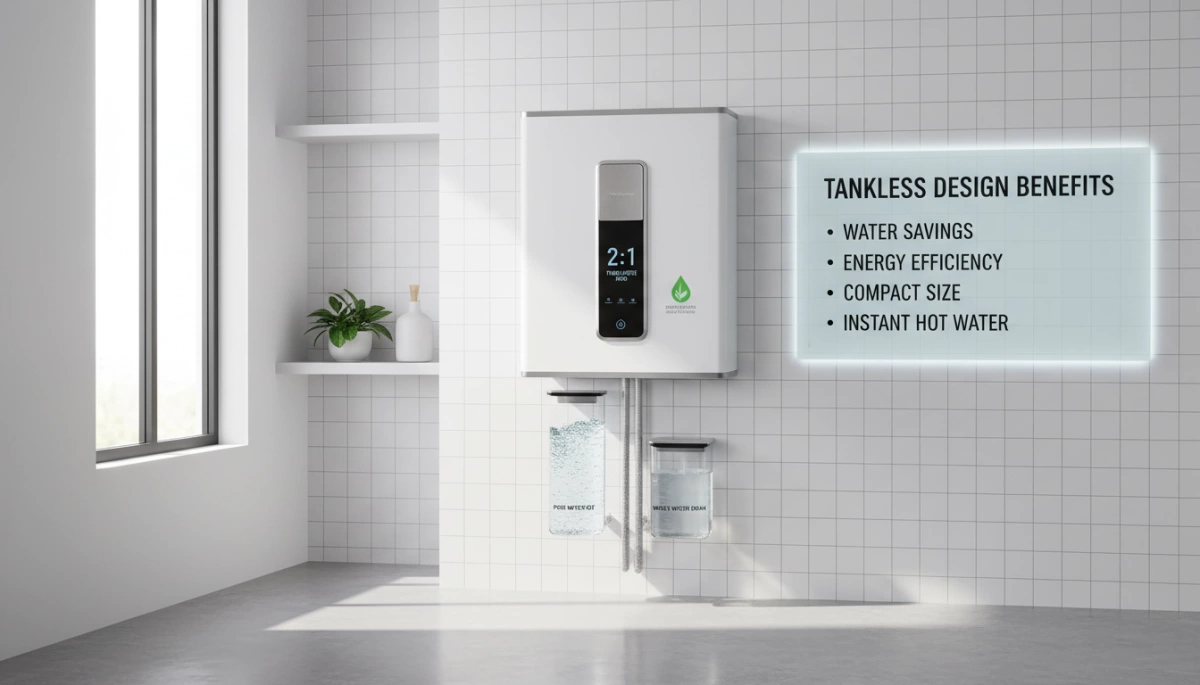
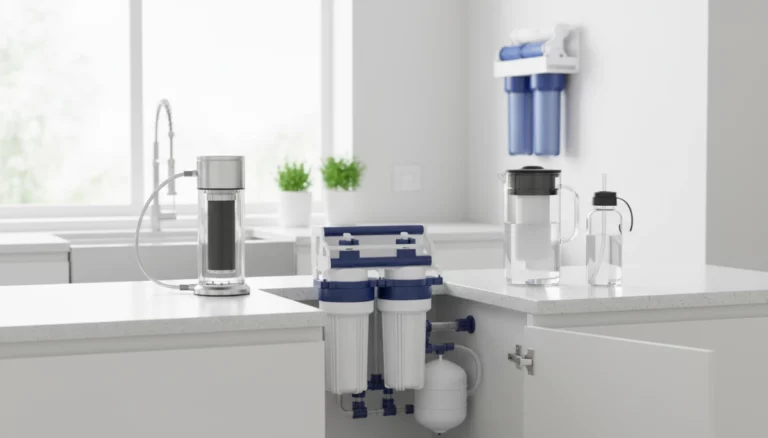
You cannot separate the 2:1 efficiency ratio from the modern tankless water filter system. They go hand-in-hand. In the past, reverse osmosis meant sacrificing half your cabinet space to a bulky storage tank that slowly accumulated water. Today, we have engineered a smarter way to handle filtration that aligns perfectly with the needs of American households looking for sustainable home appliances.
Space vs. Waste
The logic here is simple: efficiency equals compactness. Traditional systems with a 1:4 ratio required a storage tank because they couldn’t produce water fast enough for on-demand use. By achieving a 2:1 pure-to-waste ratio, we utilize high-pressure pumps and advanced membranes that generate clean water instantly.
This shift transforms the under-sink water purifier from a plumbing nightmare into a sleek, compact unit. You get your cabinet space back for cleaning supplies or storage, while the system operates with a significantly reduced water footprint.
Eliminating Secondary Pollution
One of the biggest hidden downsides of traditional RO systems is “secondary pollution.”
- The Problem: Water sits in a rubber-lined storage tank for hours or days. Over time, this stagnant water can develop a stale taste or even accumulate bacteria if the tank isn’t sanitized regularly.
- The Solution: A tankless design produces fresh water the second you open the faucet. There is no holding tank, meaning the water you drink was filtered moments ago, ensuring the highest hygiene standards.
The Driplife Advantage
As a manufacturer, we don’t just assemble parts; we engineer solutions. The “Driplife Advantage” in tankless design centers on our integrated waterway technology. Instead of a mess of tubes and connectors that are prone to leaking, we mold water channels directly into the manifold.
This approach minimizes pressure loss, which is crucial for maintaining that high-efficiency 2:1 drain ratio. As a dedicated water purifier company, we focus on creating future-proof home technology that balances raw performance with the durability required for daily use in busy kitchens. We ensure that high efficiency doesn’t come at the cost of reliability.
Case Study: The Driplife G3 Series
We didn’t just aim for the 2:1 pure-to-waste ratio with the G3 Series; we built the entire system around it. This model represents the practical application of high-efficiency reverse osmosis, proving that you don’t need to sacrifice performance for sustainability. By utilizing an advanced internal booster pump and precise flow regulation, the G3 consistently delivers that gold standard efficiency, drastically reducing the water footprint compared to older tank-based units.
Meeting the Standard and Going Beyond
While the drain water ratio is the headline feature, the G3 is designed as a comprehensive tankless water filter system. We integrated a massive 600 GPD flow rate, ensuring that the high recovery rate doesn’t result in a slow trickle at the faucet. This combination of speed and efficiency is exactly the kind of product differentiation needed when figuring out how to launch your own private label undersink RO brand in a competitive market.
Here is how the G3 pushes the envelope:
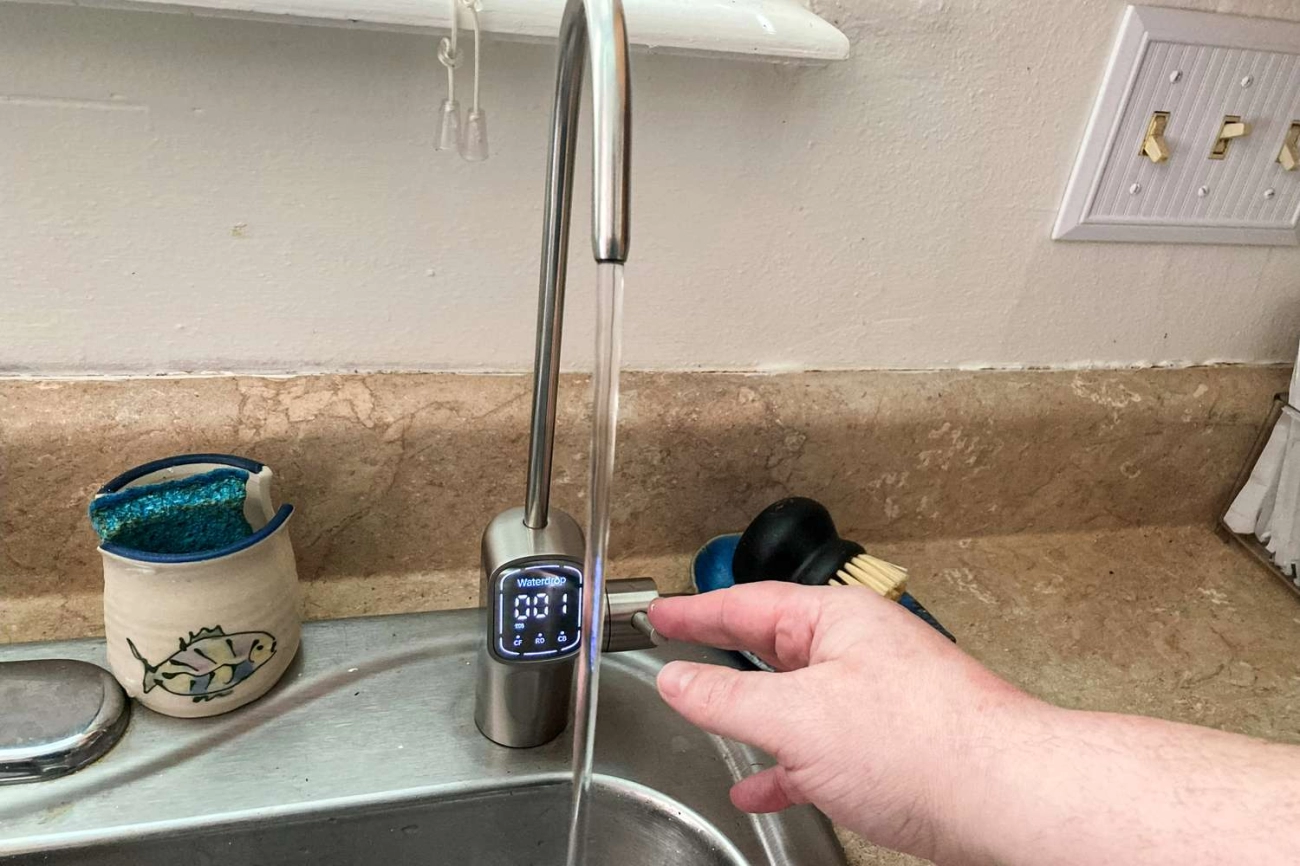
- Smart TDS Monitoring: We embedded sensors that provide real-time data on water quality. You aren’t guessing if the 0.0001 micron filtration is working; the smart faucet tells you the exact Total Dissolved Solids (TDS) level instantly.
- Integrated Waterway: To minimize leak risks—a common fear in US households—we replaced the clutter of internal tubing with a solid, integrated manifold. This reduces failure points and makes the unit significantly more compact.
- DIY Installation: We know American homeowners value autonomy. The G3 features a twist-and-pull filter replacement design and color-coded connections, making it a true DIY project that eliminates the need for a plumber.
By combining sustainable tech with user-centric features, the Driplife G3 Series demonstrates that the future of water filtration is lean, smart, and efficient.
What to Look for When Buying a System in 2026
Buying an under-sink water purifier isn’t just about grabbing the cheapest unit on the shelf anymore. By 2026, smart homeowners are prioritizing sustainable home appliances that deliver performance without draining their wallets or the local reservoir. While a portable drink bottle with water filter is excellent for on-the-go hydration, your home system requires a more robust set of criteria to ensure it can handle high-volume daily demands.
Here is the essential checklist for buyers who want to future-proof their kitchen:
- Drain Ratio: This is your top priority for water bill savings. If the spec sheet doesn’t explicitly state a 2:1 pure-to-waste ratio (or better), you are looking at outdated technology. A superior drain water ratio is the hallmark of eco-friendly water filtration.
- Filtration Accuracy: Don’t settle for less than 0.0001 micron filtration. This level of precision is necessary to effectively remove dissolved solids, heavy metals, and emerging contaminants, ensuring the water is truly pure.
- Certification: Always verify third-party testing. Look for NSF/ANSI certifications or equivalent validations that prove the system actually removes what it claims to remove.
- Noise Level: Since a tankless water filter system relies on an internal booster pump to maintain a 600 GPD flow rate, operation can get noisy. Look for models designed with vibration dampening and low decibel ratings so your kitchen stays quiet.
Frequently Asked Questions About 2:1 RO Systems
Why is a 2:1 ratio better than traditional 1:4 ratios?
The difference comes down to water saving efficiency. Traditional systems are incredibly wasteful, dumping up to 4 gallons of water down the drain for every single gallon of clean water produced. A drain water ratio of 2:1 flips this dynamic, producing 2 cups of pure water for every 1 cup of wastewater. This saves up to 600% more water, making it a crucial upgrade for any eco-conscious home.
How does the internal booster pump improve efficiency?
High-precision filtration requires significant pressure to push water through the 0.0001 micron filtration membrane. Our systems utilize an advanced internal booster pump that maintains steady pressure, ensuring a consistent 600 GPD flow rate without the water wastage seen in gravity-fed or low-pressure units.
Can I install a 2:1 RO system myself?
Absolutely. We designed the Driplife G3 series for the modern DIYer. The system features a “Twist-and-Pull” filter replacement mechanism that takes about 3 seconds. The under-sink water purifier connects easily to standard plumbing, eliminating the need for expensive professional installation.
What savings can I expect on my water bill?
By switching to a high-efficiency reverse osmosis system, you drastically cut your water consumption. If you use an RO wastewater calculator, you’ll see that moving from a 1:4 ratio to a 2:1 ratio prevents thousands of gallons of waste annually, directly translating to noticeable water bill savings.
Is the Driplife G3 suitable for small kitchens?
Yes. The tankless water filter system design is specifically engineered to save space. By eliminating the bulky storage tank found in old-school units, we free up up to 70% of your under-sink cabinet space, making it perfect for compact apartments and minimalist kitchens.
How does smart TDS monitoring work?
Our smart faucet features an integrated screen that displays TDS real-time monitoring data. This tells you the purity level of your water instantly. Understanding the difference between purified and filtered water is easier when you have live data confirming that contaminants like lead and PFAS are being effectively removed.
What certifications should I look for in 2026 models?
For 2026, prioritize systems constructed with certified lead-free materials and those that meet strict safety standards. You should also look for clear indications of membrane service life and filtration accuracy to ensure the system performs as advertised.
Are tankless systems more hygienic than tank systems?
Yes, they are significantly more hygienic. Traditional tanks store water for hours, which can lead to bacterial growth or secondary pollution. The rise of tankless RO filters is largely driven by the desire for fresh water that is filtered the moment you open the tap, ensuring it never sits stagnant.
What does 600 GPD mean for daily use?
600 GPD flow rate (Gallons Per Day) refers to the speed of production. In practical terms, this means you can fill a standard cup of water in about 8 seconds. It provides a fast, continuous flow that meets the demands of a large family without the wait times associated with smaller systems.
How does the 2:1 ratio impact environmental footprint?
Adopting a 2:1 ratio is a massive step toward water footprint reduction. By minimizing wastewater, you reduce the strain on municipal water treatment facilities and conserve natural resources. It turns your kitchen into a hub for sustainable home appliances, aligning your daily habits with broader ecological goals.