
















Understanding Family Oriented Hydration Appliance Demand
If you’re a parent or homeowner in the U.S. right now, you’ve probably asked yourself at least once: “Is our tap water really safe enough for the whole family?” That simple question is exactly what’s driving family oriented hydration appliance demand across the country.
What “Family-Oriented” Really Means
When I say family-oriented hydration appliances, I’m talking about all-age water solutions designed for real households, not just single users:
- Safe drinking water for kids and babies
- Easy access for busy parents, teens, and seniors
- Shared family water dispensers that work for everyone at home
- Systems that fit family lifestyles: cooking, bottles, coffee, lunch boxes, sports bottles
A truly family-centric water appliance isn’t just a filter; it’s a shared household water system that’s:
- Safe enough for infants
- Simple enough for kids
- Convenient enough for rushed mornings
- Reliable enough for heavy daily use
Why Parents Are Rethinking Tap Water
U.S. families are looking harder at tap water contamination concerns—not just taste:
- News about PFAS in drinking water, lead, and heavy metals in home water
- Older plumbing in many neighborhoods
- Chlorine taste and odor that kids refuse to drink
So parents are moving from “tap is fine” to “I want proof and protection.” That shift is pushing growth in:
- Home water filtration for families
- Reverse osmosis for households
- Apartment-friendly, point-of-use water filters
Informational vs. Commercial Intent
I see two clear mindsets in today’s family hydration appliance market:
- Informational intent
Families searching things like:- “Is my tap water safe for kids?”
- “PFAS in my city water”
- “Reverse osmosis vs carbon filter for home”
They want clarity, simple explanations, and trustworthy education before buying.
- Commercial intent
Searches like:- “Best family water purifier”
- “Under-sink family water filter”
- “Home water dispenser for families”
Here, parents are ready to choose a family water purifier and compare features, cost, and certifications.
The brands that win are the ones that answer both needs: clear, honest information plus practical, easy-to-buy solutions.
Key Market Signals Driving Demand
In the U.S., several signals show why family oriented hydration appliance demand is rising fast:
- Health-first mindset: More interest in health-focused family hydration, not just “good enough” water.
- Bottled water fatigue: Families want a bottled water alternative that cuts plastic waste and recurring costs.
- Convenience pressure: Busy routines are pushing demand for convenient home water access that’s always ready.
- Eco-conscious habits: Parents care about sustainable home hydration, BPA-free materials, and plastic waste reduction at home.
- Inclusive hydration trend: Growing preference for family-centric water appliances that serve kids, adults, and seniors in one system.
In short: families want safe, convenient, eco-friendly, and affordable water at home—without guesswork. That’s exactly where modern, family-oriented hydration appliances are stepping in.
Health And Safety Needs For Every Family Member
Safe Drinking Water For Kids And Babies
For kids and babies, “good enough” tap water isn’t enough. Their bodies are smaller, they drink more water per pound, and their immune systems are still developing. I always tell parents to treat safe drinking water for kids like baby food:
- Go for a multi-stage family water filter that targets chlorine, lead, and microplastics.
- For formula and baby food, use water from a trusted family water purifier (RO, distillation, or certified carbon filtration).
- Make sure the system is tested to remove PFAS, heavy metals, and bacteria wherever possible.
If you want ultra-pure water as a base for baby formula or kids’ drinks, high-end tech like 0 TDS distilled water systems using vapor compression steam distillation can be a strong choice in households with serious contamination concerns.
Hydration For Seniors And Vulnerable Family Members
Seniors, pregnant women, and anyone with health issues are more sensitive to what’s in the water. A senior-friendly water dispenser with easy controls and a gentle flow helps them drink more often without effort. Key things I focus on:
- Consistent taste and temperature so they actually want to drink.
- Simple, visible access to hot water for tea, soups, and meds.
- All-age water purification systems with clear indicators and easy operation, no complicated steps.
PFAS, Heavy Metals, And Tap Water Concerns
Across a lot of U.S. cities, tap water contamination concerns are real. Families are reading about:
- PFAS in drinking water (“forever chemicals”) linked to immune and hormonal issues.
- Heavy metals in home water like lead, arsenic, and mercury from old pipes or local infrastructure.
- Disinfection byproducts, microplastics, and farm run-off.
This is why home water filtration for families has shifted from “nice to have” to “must-have.” Systems that combine reverse osmosis, activated carbon, and UV sterilization (like a solid RO UV water purifier for home) are becoming the default for health-focused families. You can dive deeper into the health benefits of RO systems in this guide on the benefits of reverse osmosis water for home.
Long-Term Family Health And Water Quality
Daily water quality quietly shapes long-term family health. Over years, exposure to contaminants can contribute to:
- Higher risk of certain cancers and thyroid issues.
- Developmental and learning problems in kids.
- Kidney, liver, and cardiovascular stress in adults.
A family-centric water appliance isn’t just about taste; it’s about building a safer baseline for the next decade of your family’s life. Clean, consistent water supports better family wellness and hydration, stronger immune systems, and peace of mind every time you fill a glass.
Lifestyle Shifts Driving Household Hydration Solutions
Today’s family oriented hydration appliance demand is being driven by how families actually live, not just by specs on a box. In most U.S. homes, everyone is on a different schedule, which means your water setup has to work for all ages and all routines without slowing anyone down.
Busy routines & grab-and-go habits
Between school, work, sports, and commuting, most families don’t have time to fuss with slow pitchers or last-minute bottled water runs. That’s why:
- Parents want shared household water systems that give instant, filtered water for bottles, lunchboxes, and coffee.
- Teens need fast refills before practice.
- Everyone expects convenient home water access from one central spot instead of juggling cases of plastic bottles.
A countertop RO or kitchen water filter system that keeps up with this pace is quickly becoming a basic family lifestyle appliance, not a “nice-to-have.”
Wellness & daily hydration goals
There’s a clear shift toward health-focused family hydration. Parents track their own water intake and want their kids to build good habits, too. That’s pushing demand for:
- Clean, better-tasting water that encourages more sipping all day.
- Systems that support eco-friendly family hydration instead of sugary drinks.
- Hydration that ties into fitness and wellness routines, not just “whatever comes out of the tap.”
If you’re focused on wellness at home, a reliable family water purifier or multi-stage family water filter becomes part of your daily health toolkit.
Multi-generational & nuclear family patterns
More U.S. homes are either multi-generational or have young kids and aging parents visiting often. That creates a real need for all age water solutions that are:
- Easy enough for kids to use safely.
- Comfortable and accessible for seniors.
- Strong enough to handle heavy daily demand from several people.
In these setups, family-centric water appliances that can serve everyone—from infants to grandparents—are in much higher demand than single-user gadgets.
Convenience expectations in modern homes
Modern homes run on convenience. If an appliance isn’t simple, it doesn’t get used. Families now expect:
- Low maintenance water purifiers with simple filter swaps (understanding things like filter cartridge connection types helps here).
- Space-saving, apartment friendly water purifiers that don’t take over the counter.
- Fast, intuitive controls that kids and guests can figure out in seconds.
All of this is why family oriented hydration appliance demand keeps growing: families want home wide water access that fits busy lifestyles, supports wellness goals, and makes staying hydrated the easy default, not another chore.
Sustainability And Bottled Water Alternatives For Families
More U.S. families are walking away from bottled water because it’s expensive, wasteful, and honestly, unnecessary once you have a solid family water purifier at home.
Why families are moving away from bottled water
Parents are realizing bottled water isn’t the “healthy” upgrade it was marketed to be:
- It’s still just tap or filtered water in plastic most of the time.
- You have to keep buying, hauling, and storing cases.
- Kids build a habit of grabbing a bottle instead of refilling a reusable one.
A family-oriented hydration appliance (like a countertop RO water filter system) gives you the same or better quality, on demand, without the clutter and constant spend.
Environmental impact of daily plastic use
Every case of bottled water adds up:
- Single-use bottles stack up in recycling bins and trash, and many still end up in landfills or oceans.
- Plastic production burns energy and fuel before you ever open the cap.
Switching to an all‑age water solution at home turns your kitchen into the main refill station, cutting plastic waste and modeling eco-friendly family hydration for your kids.
Cost: bottled water vs home filtration
Over a year, the math is pretty simple:
- Bottled water for a family of 3–5 can easily run $500–$1,500+ per year.
- A good home water filtration for families setup (filters + maintenance) usually comes in far lower annually once installed.
If you’re looking at RO, a well-designed household hydration solution with bundled replacement filters can deliver strong margins for us as a brand while still beating bottled water over time, especially when paired with smart filter replacement schedules as discussed in this breakdown of bundling branded replacement filters with RO units.
Eco-friendly family hydration habits
Once you have a family-centric water appliance, sustainable habits are easy to lock in:
- Keep reusable bottles by the sink or dispenser for grab-and-go.
- Use a shared family water dispenser as the default drink station instead of the fridge door or pantry.
- Teach kids to refill before school, sports, or bed.
- Choose BPA-free hydration solutions and avoid disposable cups when possible.
This is where family oriented hydration appliance demand is really coming from: people want convenient home water access that supports health, saves money, and cuts plastic without adding more work to an already busy family routine.
Types of Family Oriented Hydration Appliances
Family water purifiers for everyday use
For most homes, a family water purifier is the core hydration device. These systems sit under the sink or on the counter and give you safe drinking water for kids and adults straight from a dedicated faucet. A solid setup often uses reverse osmosis for households paired with carbon filtration to cut PFAS, heavy metals, chlorine, and bad taste. If you’re considering RO, a home reverse osmosis water filter with proven performance and an easy filter schedule is usually the best everyday option for a U.S. family kitchen.
Shared family water dispensers (hot & cold)
A shared family water dispenser with hot and cold options works like a central “hydration station” in the kitchen, playroom, or home office. For families, I always look for:
- Child lock water dispenser for hot water safety
- Enough flow rate for heavy family usage
- BPA-free tanks and lines
It’s a simple way to support kids’ hydration habits and make tea, baby formula, or instant meals faster.
Home water filtration for kitchens, bathrooms, and more
If your tap water tastes off or you’re worried about tap water contamination concerns, you can extend home water filtration for families beyond the kitchen:
- Kitchen water filter system for cooking and drinking
- Shower filters to reduce chlorine on skin and hair
- Bathroom faucet filters for brushing teeth and rinsing
Countertop systems with antiscaling technology in countertop filtration also help protect kettles and coffee makers while keeping the setup compact for apartments and smaller homes.
Whole-house vs point-of-use filtration
For family oriented hydration appliance demand, the big choice is whole house water filtration system vs point-of-use water filter:
- Whole-house filtration
- Filters all incoming water (showers, laundry, faucets)
- Better for multi-generational household hydration and larger homes
- Higher upfront cost, but full-home protection
- Point-of-use filtration (under-sink family water filter, countertop water purifier for families)
- Lower cost and easier install
- Focused on drinking and cooking water
- Great for renters, condos, and urban homes
Most U.S. families start with point-of-use as a bottled water alternative for families, then upgrade to whole-house once they understand their household water quality testing results and long-term needs.
Key Features Families Look For In Hydration Appliances
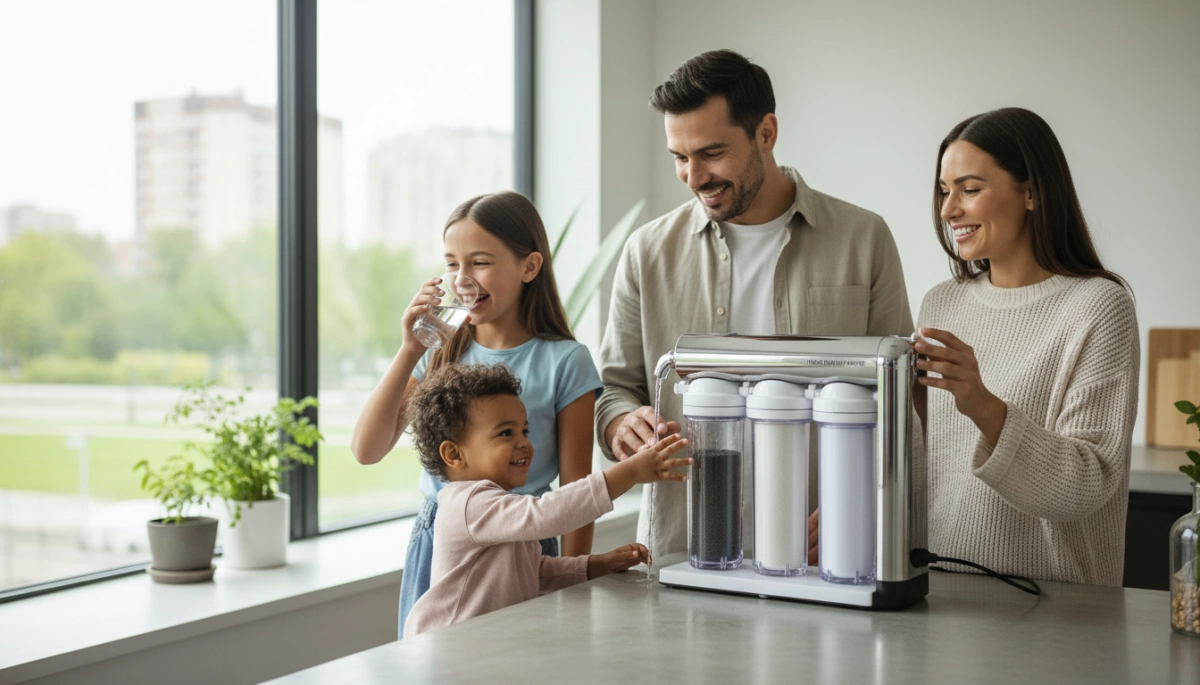
When I design or choose family-oriented hydration appliances, I focus on four non‑negotiables: safety, filtration performance, ease of use, and low maintenance. Here’s what matters most for U.S. households.
All-age friendly & child-safe design
A family water purifier has to work for kids, teens, adults, and seniors:
- Child lock on hot water (no burn risk)
- Easy-push levers or buttons for weaker grip strength
- Clear icons and labels, not confusing tech jargon
- BPA-free materials and certified food-grade plastics
Quick check:
| Feature | Why Families Care |
|---|---|
| Child lock water dispenser | Prevents burns for curious kids |
| BPA-free construction | Safer daily contact with drinking water |
| Front-facing controls | Easy for kids and seniors to reach |
Multi-stage family water filter (made simple)
Most families don’t want lab talk; they want clean water and a simple story. A solid multi-stage family water filter usually looks like this:
- Sediment filter – catches sand, rust, and dirt
- Carbon filter – improves taste, removes chlorine and odors
- Advanced stage – can target PFAS, heavy metals, and fluoride depending on the system
If you’re specifically worried about fluoride exposure, it’s worth understanding how filtered water with fluoride reduced actually works and what methods are most effective (see this breakdown of how to reduce fluoride in water with different filtration methods).
Filtration performance: taste, odor, contaminants
Families judge performance in three quick sips:
- Taste: no chlorine bite, no metallic aftertaste
- Smell: no “pool” or “musty” smell
- Clarity: no visible particles or cloudiness
Basic performance table:
| Concern | What To Look For |
|---|---|
| Tap water contamination concerns | NSF/ANSI certifications on the product |
| PFAS in drinking water | Filters tested specifically for PFAS reduction |
| Heavy metals in home water | Lead, mercury, chromium reduction claims |
For contaminants like fluoride, heavy metals, and PFAS, I always look for clear test data or third‑party certifications, not just marketing claims. Resources that focus on filtered water with fluoride removed and its health impact can help you set realistic expectations.
Ease of use, cleaning, and maintenance
Families in the U.S. run on tight schedules, so low-maintenance water purifiers win:
- Tool-free filter changes (twist-and-click cartridges)
- Front-loading filters so you don’t have to move the unit
- Simple cleaning: wipe-down exterior, removable drip tray
- Clear filter replacement schedule (monthly/annual reminders)
Maintenance snapshot:
| Item | Ideal for Families |
|---|---|
| Filter replacement steps | Under 5 minutes, no plumber needed |
| Filter life indicator | Light or app alert, not guesswork |
| Cleaning routine | Quick weekly wipe; deep clean every 1–3 months |
When a hydration appliance hits all of these—all-age friendly, strong filtration, and easy upkeep—it fits naturally into real family life and actually gets used every day.
Smart And Connected Family Hydration Solutions
Smart family water purifiers with app control
Smart, family-oriented hydration appliances are quickly becoming standard in U.S. homes. With a smart family water purifier, I can check water quality, turn dispensing on/off, and lock hot water for kids right from an app. For busy parents, app control means:
- Remote child lock and temperature control
- Real-time TDS / filter status check
- Usage history for the entire household hydration solution
Usage tracking and hydration reminders
Connected, all-age water purification systems help families build better hydration habits. Through the app, I can:
- Set daily water intake goals for kids and adults
- Get push notifications to drink more during the day
- Track which shared family water dispenser is used most in the home
This turns the purifier into a simple, everyday wellness tool instead of just another kitchen appliance.
Filter life monitoring and alerts
Most families don’t want to think about filter schedules. Smart multi-stage family water filters fix that with:
- Automatic filter life monitoring
- Clear alerts when it’s time to replace
- Order links or QR codes to buy the right filter fast
This keeps safe drinking water for kids and seniors consistent, without guessing or running the filter past its limit.
Integration with smart home and kitchen devices
Today’s family-centric water appliances can plug into the rest of a smart home setup. That can include:
- Voice control via Alexa or Google Assistant
- Usage data alongside other wellness metrics
- Coordination with plastic-free water filter systems for whole-home sustainability
For modern U.S. families, smart and connected hydration isn’t a luxury—it’s how we keep water access convenient, safe, and aligned with a tech-forward lifestyle.
Benefits Of Family Oriented Hydration Appliances
Better hydration habits across all ages
A family oriented hydration appliance makes water the easiest choice in the house. When clean, cold (and even hot) water is always ready in one shared family water dispenser, everyone drinks more—kids, teens, adults, and seniors. Clear indicators, large buttons, and visible water levels help turn “drink more water” from a reminder into a daily habit.
Health-focused family hydration and prevention
Family-centric water appliances give you a controlled, consistent water source instead of guessing what’s coming out of the tap. A multi-stage family water filter (often using reverse osmosis plus carbon) helps reduce contaminants and supports health-focused family hydration, which can lower long-term risks tied to poor water quality and sugary drink habits.
Improved taste and trust in home water
When water tastes and smells clean, your family actually wants to drink it. By removing chlorine taste, odors, and common impurities, a family water purifier restores confidence in your tap. If you want a deeper dive into purity and taste, I break down the differences in this guide comparing spring water vs purified water and their source composition.
Lower long-term costs vs bottled water
For most U.S. households, a bottled water alternative for families pays off fast:
| Option | Upfront Cost | Ongoing Cost (Family of 4) | 3-Year Outlook |
|---|---|---|---|
| Bottled water (cases) | $0 | $600–$1,200 / year | Highest long-term cost |
| Countertop RO system | $200–$500 | $80–$150 / year filters | Strong savings after year 1 |
| Under-sink family water filter | $300–$800 | $100–$200 / year filters | Lower cost + higher capacity |
A quality countertop reverse osmosis system can replace hundreds of plastic bottles a year while cutting costs; I explain how the savings add up in this breakdown of the benefits of countertop reverse osmosis water systems.
Practical Challenges Families Face With Water At Home
For most U.S. families, water issues at home are real, daily pain points—not theory.
1. Bad taste, smell, and visible impurities
Parents don’t want to argue with kids about “gross” tap water. Common complaints include:
- Chlorine taste and pool-like smell
- Cloudiness or floating particles in glasses
- Metallic or “earthy” aftertaste from older pipes
When water looks or tastes off, nobody trusts it—no matter what the city says.
2. Confusing filtration terms and tech talk
Families hear “reverse osmosis,” “carbon block,” “UV,” “TDS,” “multi-stage family water filter” and just tune out. Most people only want to know:
- Is this safe drinking water for kids and seniors?
- Does it actually remove PFAS, heavy metals, and other junk?
- How often do I need to change filters and what does that cost?
That confusion slows down decisions and leaves a lot of homes stuck with bottled water.
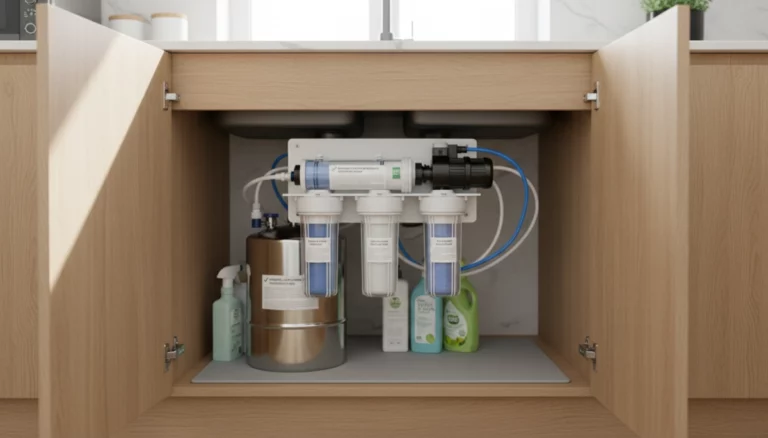
3. Limited space in kitchens and apartments
In many U.S. homes—especially apartments and townhomes—space is the biggest enemy:
- Under-sink areas are packed with trash cans and cleaners
- Countertops are already crowded with coffee makers, air fryers, and baby gear
- Landlords often don’t allow permanent changes
That’s why compact, under-sink systems and slim tankless under-sink purifiers with hot, cold, and soda options are becoming the preferred household hydration solutions.
4. Reluctance to commit to plumbing changes
Families are understandably hesitant to:
- Drill into countertops or sinks
- Pay for a plumber on top of the unit cost
- Risk leaks or damage in a rental
So they look for family oriented hydration appliances that:
- Install quickly with minimal tools
- Don’t require major pipe work
- Are easy to remove if they move homes
All of this drives demand for shared family water dispensers and apartment-friendly home water filtration for families—systems that deliver safe, great-tasting water without turning the kitchen into a construction site.
How Hydration Appliances Solve Real Family Pain Points
Family oriented hydration appliance demand is exploding because families are tired of bad-tasting tap water, confusing tech, and high bottled water bills. I build and choose household hydration solutions with one goal: make clean, good-tasting water easy for every age in the house.
Simple, Step‑By‑Step Filtration Anyone Can Understand
Most parents don’t want a chemistry lesson – they want to know what the filter removes and how it keeps their kids safe. A good family water purifier breaks it down into clear, simple stages, for example:
- Stage 1 – Sediment filter: catches sand, rust, and dirt so water looks clear.
- Stage 2 – Carbon filter: improves taste and smell, cuts chlorine and many common chemicals.
- Stage 3 – RO or advanced filter (optional): targets PFAS, heavy metals, and other tiny contaminants for extra protection.
I always explain the filtration path in plain language, not lab talk. If you’re curious about how pre-sediment stages work, this guide to choosing the right micron rating for pre-sediment filters gives a good, simple breakdown.
Instant Hot And Cold Water For Daily Routines
With a shared family water dispenser, you get instant hot and cold water on demand, so you’re not waiting on a kettle or filling the fridge with bottles:
- Mornings: hot water for coffee, tea, and oatmeal while you pack lunches.
- Afternoons: chilled water for kids after school and sports.
- Evenings: quick hot water for baby formula (with safe temp controls) and bedtime tea.
A hot and cold water dispenser for home with a child lock on the hot side is a must-have for younger kids.
Built For Heavy Family Usage
Families open the tap or dispenser dozens of times a day. A family-centric water appliance has to handle that without losing pressure or flavor:
- High flow rate so filling large bottles and cooking pots doesn’t take forever.
- Durable components that stand up to constant use in bigger or multi-generational households.
- Stable performance even when the dishwasher, washing machine, and shower are running.
When I design or pick shared family water systems, I always look at rated capacity (gallons per day) and real-world reviews from busy households, not just lab specs.
Low‑Maintenance For Busy Schedules
If a system is high-maintenance, families simply won’t keep up with it. A true all‑age water solution has:
- Clear filter replacement schedule (with simple indicators or app alerts).
- Quick-change filters that don’t need tools or a plumber.
- Easy wipe-down surfaces and accessible drip trays for fast cleaning.
For families that go camping or travel often, I usually pair home filtration with portable water filters, and this roundup of the best portable water filters for outdoor adventures is a solid place to start.
Bottom line: family oriented hydration appliances solve real pain points by keeping things simple, fast, reliable, and low-maintenance, while delivering safe drinking water for kids, adults, and seniors every single day.
Choosing The Right Family Oriented Hydration Appliance
1. Start With Your Local Water Quality
Before buying any family water purifier, I always tell people to look at their water first:
- Check your city’s water report (usually on your local utility’s website).
- If you’re on a well or just want clarity, get a home water quality test that checks for PFAS, heavy metals, and chlorine.
- Match the filtration level to the problem:
- Chlorine taste/odor only → good carbon filter.
- PFAS, heavy metals, high TDS → reverse osmosis for households or advanced multi-stage filtration.
If you’re unsure what type of filtration you really need, this breakdown of purified vs filtered water is a good starting point.
2. Match Capacity To Your Family Size
Family oriented hydration appliance demand is all about how much water you actually use in a day:
- 1–2 people: compact countertop water purifier for families or a small under-sink system.
- 3–4 people: mid-size under-sink family water filter or home water dispenser for families with a decent tank size.
- 5+ or multi-generational households: larger-tank shared family water dispenser or even a whole house water filtration system if you want filtered water at every tap.
Look at gallons per day (GPD) or flow rate—heavy users need a system that won’t slow to a trickle at dinner time.
3. Under-Sink vs Countertop vs Dispenser
Each setup fits a different lifestyle and home layout:
- Under-sink family water filter
- Great for: homeowners, clean kitchen look, main use is drinking + cooking.
- Pros: hidden, strong filtration (RO UV water purifier for home options), direct to faucet.
- Cons: needs some plumbing, not ideal for renters who can’t modify cabinets.
- Countertop water purifier for families
- Great for: renters, apartments, small kitchens.
- Pros: no drilling, easy install, portable.
- Cons: takes up counter space, usually lower flow than under-sink.
- Hot and cold water dispenser for home
- Great for: busy families who want instant hot water for baby bottles, tea, ramen, and cold water for bottles.
- Pros: child lock water dispensers, all-age water solution, shared access point, ideal for family rooms.
- Cons: needs floor space and a plug; some models use more energy.
4. Balance Budget, Running Costs, And Long-Term Value
I always look beyond the price tag and focus on what it actually costs per month to keep the system running:
- Upfront cost: under-sink RO usually costs more than basic pitchers, but it’s a more serious bottled water alternative for families.
- Filter replacement schedule:
- How often do you replace filters?
- How much do they cost each time?
- Can you buy them easily in the U.S. or online?
- Energy efficiency: hot/cold dispensers should have an energy efficient water purification mode or eco setting.
- Bottled water vs home filtration: most families in the U.S. save big within 6–18 months by ditching cases of water and switching to a low maintenance water purifier at home.
If you’re looking at higher-end reverse osmosis and care about performance and salt rejection, this TDS water filter systems spec breakdown shows what a serious household system can deliver.
When you line up your water quality, family size, home layout, and true long-term costs, it becomes much easier to choose the right family-centric water appliance that actually fits your daily life.
Decision Checklist For Family Oriented Water Appliances
Before you bring any “family oriented” hydration appliance into your home, run through this quick checklist. It’ll save you money, headaches, and buyer’s remorse.
Must-have safety and quality certifications
For any family water purifier or shared family water dispenser, I always look for:
- NSF/ANSI certifications (like 42, 53, 58, 401) for:
- Chlorine, taste, and odor reduction
- Lead and heavy metal reduction
- PFAS and pharmaceutical reduction (if listed)
- Materials safety: BPA‑free plastic, food‑grade stainless steel in all water contact parts
- Electrical safety for hot and cold dispensers: UL or ETL listed
- Clear contaminant claims: The performance sheet should show what the system is actually tested to remove—not vague “99.9% of impurities” marketing
If a “family-centric water appliance” doesn’t clearly show test data and certifications, I move on.
Filter replacement costs and availability
A multi-stage family water filter is only as good as your ability to keep it maintained:
- Check filter life (gallons or months) vs your family size and usage
- Confirm replacement filter prices and how many stages you’ll be replacing each time
- Make sure filters are easy to buy in the U.S. (brand website, Amazon, major retailers)
- Look for systems with simple, tool-free filter swaps and a clear home water filter replacement schedule
If the annual filter cost is close to what you spend on bottled water now, it’s probably not worth it.
Noise levels, size, and placement in your home
Family hydration appliances live in real homes, not showrooms:
- Noise:
- Check decibel ratings for under-sink RO, water chillers, and hot & cold dispensers
- If it’s going in an open kitchen or living area, you’ll want quieter operation
- Size & placement:
- Measure under-sink space before buying an under-sink family water filter or under-sink water chiller
- For countertop and table-top water dispensers, measure height under cabinets and depth on the counter
- Make sure kids and seniors can reach the taps comfortably, and that any child lock water dispenser is still easy for adults to use
Questions to ask before buying any family water purifier
Here’s what I’d ask any brand or dealer upfront:
- What contaminants is this tested and certified to reduce in U.S. tap water?
- What’s the total yearly cost of filters and basic maintenance for my family size?
- How easy is installation? (DIY vs plumber, drilling required, apartment‑friendly or not)
- What’s the warranty and who handles service if something fails?
- Is this system sized for heavy family usage (big water bottles, cooking, coffee, baby formula, etc.)?
- Is there a hot and cold option or table-top water dispenser if I want instant tea, coffee, and kids’ drinks out of one unit? (You can compare features using guides like this breakdown of table-top water dispensers, features, and benefits.)
If a brand can’t answer these cleanly and confidently, it’s not the right family oriented hydration appliance for your home.
Trends Shaping The Future Of Family Oriented Hydration Appliance Demand
Inclusive home hydration for all ages
Family oriented hydration appliance demand is shifting fast toward all‑age water solutions. Households want one shared system that works just as well for a toddler, a teenager, a busy parent, and a grandparent. That means:
- Comfortable dispense height for kids and seniors
- Simple, one-touch controls instead of confusing menus
- Stable flow and temperature, even during heavy family use
Shared household water systems that cover whole-house water filtration plus a home water dispenser for families in the kitchen are quickly becoming the new baseline.
Kid-friendly and senior-friendly system design
Design is getting smarter and safer. Families now look for:
- Child lock water dispenser features on hot water
- Clear icons, bigger buttons, and easy-pour spouts for seniors
- BPA-free, food-grade materials for safe drinking water for kids
As a brand, I focus on systems that remove friction—no heavy bottles to lift, no tricky instructions, just straightforward family-centric water appliances that everyone can use.
Eco-conscious filtration and bottled water alternatives
The future is strongly eco-friendly family hydration. More families are dropping plastic bottles and moving to bottled water alternatives for families that cut waste and long-term cost. High-efficiency reverse osmosis for households and advanced carbon filters are being paired with energy-saving coolers and chillers. When we build systems, we prioritize:
- Lower power draw
- Long-lasting filters
- Minimal plastic contact and parts
Eco-conscious features are no longer “nice to have”—they’re a main driver of family oriented hydration appliance demand.
Market outlook for household hydration solutions
Over the next decade, I expect the family hydration appliance market in the U.S. to grow around:
- Smart family water purifier systems with app control and usage data
- Apartment-friendly, countertop water purifier for families instead of bulky hardware
- Stronger focus on taste, especially for families bothered by chlorine (this is where a dedicated family cold drinking water solution with countertop cooling RO systems really stands out)
As tap water contamination concerns like PFAS and heavy metals keep making headlines, demand for reliable home water filtration for families will only get stronger—especially from brands that specialize in family lifestyle appliances and stand behind their systems for the long haul.
How Reliable Brands Support Family Hydration Needs
When families invest in a family-oriented hydration appliance, they’re not just buying a gadget—they’re trusting a brand with their daily drinking water. A reliable, family-centric water appliance brand has to deliver more than “good enough” filtration.
What To Expect From A Trusted Family Water Purifier Brand
From my point of view as a manufacturer, a trusted family water purifier or shared family water dispenser should always offer:
- Clear safety standards: NSF/ANSI-tested components, BPA-free materials, and food-grade water-contact parts.
- Honest performance claims: Real numbers on contaminant reduction (chlorine, lead, PFAS, etc.), not vague “99% cleaner” marketing.
- All-age friendly design: Simple controls, clear indicators, and safety features like child lock water dispenser buttons for hot water.
- Transparent running costs: Upfront info on filter life, replacement schedules, and ongoing cost per gallon.
When we design household hydration solutions, we look at how families actually live: kids refilling bottles all day, parents making coffee, seniors needing easy access to safe drinking water.
After-Sales Service, Warranty, And Tech Support
For family hydration appliances, support is as important as filtration:
- Solid warranty: At minimum 1–2 years on the core system, plus coverage on key components.
- Real customer service: Easy-to-reach support in the U.S., not endless phone trees.
- Straightforward troubleshooting: Simple instructions and videos so homeowners can handle minor issues themselves.
- Predictable filter replacements: Auto reminders, subscriptions, and clear part numbers.
If you’re choosing a home water dispenser for families, look for brands that spell out warranty terms clearly and offer responsive tech support—especially for busy households that can’t afford downtime.
Role Of Experienced Manufacturers In Product Safety
Experienced manufacturers in the family hydration appliance market usually:
- Test systems for heavy use common in multi-generational homes.
- Engineer multi-stage family water filter setups that balance performance with flow rate.
- Focus on leak protection and electrical safety, especially for countertop and floor-standing dispensers.
- Keep up with evolving tap water contamination concerns, including PFAS and heavy metals.
That’s why I push for strong internal QA and third-party lab testing. Families need to trust that every glass from their home water filtration for families is safe and consistent.
Why Families Prefer Dedicated Hydration Appliance Specialists
More families are moving away from “generic” appliances and toward specialists that focus only on water:
- Specialists tend to innovate faster in smart family water purifier tech, like filter life alerts and app-based monitoring.
- Systems are usually designed around family convenience demand: higher capacity, faster flow, and better ergonomics.
- Support teams understand real-world family issues—from kids’ hydration habits to senior-friendly controls.
If you want an easy, shared household water system with reliable hot and cold water access, a dedicated hydration appliance brand is often the best bet. For example, our own drinking water filter systems and countertop water cooler dispensers are built specifically around family usage patterns, heavy daily demand, and long-term value in American homes.