

















The Chemistry of Soap Scum Residue
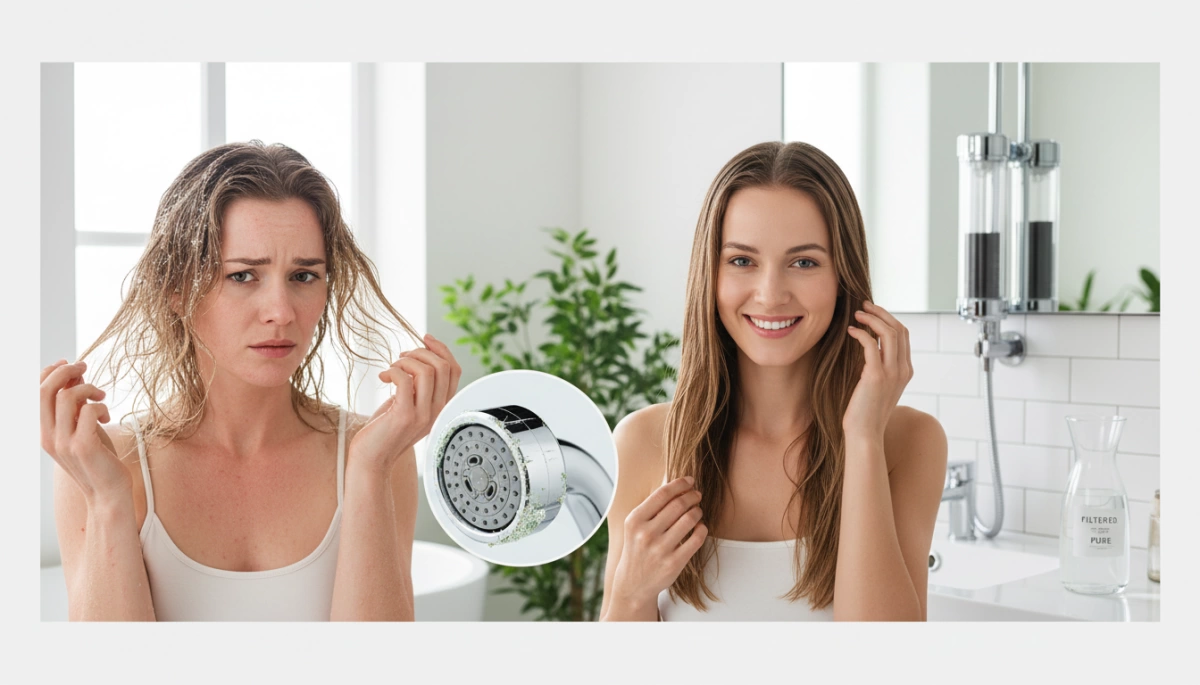
Ever wonder why your expensive cleanser just won’t lather? It is rarely the fault of the product; it is usually the chemistry occurring in your pipes. When we analyze Hard Water Effects on Skin and Hair and Filtration Solutions, we have to start at the molecular level. The frustration of washing without feeling clean is a direct result of invisible interactions between water hardness and your hygiene products.
Calcium and Magnesium Buildup Reactions
Here is the reality: the water in most US homes is loaded with dissolved minerals. When the fatty acids in your soap meet the calcium and magnesium buildup in your water, they don’t mix—they clash. Instead of creating a rich lather that lifts away dirt, this chemical reaction creates an insoluble substance known as “soap curd” or lime soap.
- The Reaction: Positively charged calcium ions bind to negatively charged soap molecules.
- The Result: A sticky, waxy film that clings to your skin and shower walls.
- The Cost: You end up using twice the product for half the cleaning power.
The Squeaky Clean Myth vs. Hydromineral Balance
We have been conditioned to believe that “squeaky clean” is the ultimate goal. In reality, that squeak is the sound of friction caused by soap scum residue left behind on your skin. True cleanliness shouldn’t strip your natural oils. This residue disrupts your hydromineral balance, effectively sealing the surface and preventing moisture from penetrating the dermis. If your skin feels tight immediately after a shower, it is not clean—it is coated in mineral sludge.
pH Problems and Skin Barrier Disruption
Your skin maintains a natural acid mantle with a pH around 5.5, which is crucial for keeping bacteria out and moisture in. Hard water, however, is highly alkaline (often pH 8.5 or higher). Constant exposure to this high pH causes significant skin barrier disruption. When we wash with hard water, we aren’t just rinsing; we are chemically altering the skin’s environment. This shift weakens the skin’s defenses, leaving it vulnerable to irritation, dryness, and inflammation, making it nearly impossible for moisturizers to do their job effectively.
Hard Water Effects on Skin Health
When we wash with hard water, we aren’t getting the deep clean we think we are. The minerals left behind create a film that disrupts our skin’s natural balance, leading to a host of dermatological issues that moisturizers alone cannot fix.
Clogged Pores and Acne Breakouts
The primary culprit here is soap scum residue. When the calcium in hard water reacts with your cleanser and natural skin oils, it solidifies rather than dissolving. Instead of washing away, this waxy substance settles deep into your pores.
- Trapped Bacteria: This layer traps bacteria, dead skin cells, and dirt against the face.
- Blocked Absorption: Expensive skincare products cannot penetrate this mineral barrier.
- Persistent Acne: The result is often breakouts and “body acne,” even with a rigorous hygiene routine.
Eczema, Psoriasis, and Hard Water Dermatitis
For those with sensitive skin conditions, hard water acts as a constant irritant. The high mineral content and typically elevated pH strip away natural oils, leading to severe skin barrier disruption. This allows moisture to escape and external irritants to enter, triggering flare-ups known as hard water dermatitis.
Many municipal water supplies also add chlorine, which exacerbates this dryness. Installing filters designed to tackle chlorine taste and chemical absorption can often provide significant relief for eczema sufferers by removing these harsh drying agents alongside the minerals.
Premature Aging from Free Radicals
It is not just about dryness; it is about aging. Hard water often contains trace amounts of iron and other heavy metals. These minerals can act as pro-oxidants (free radicals) when left on the skin, breaking down collagen and elastin.
- Collagen Breakdown: This leads to sagging skin and the formation of fine lines.
- Loss of Radiance: The mineral film prevents light reflection, making skin look dull or gray.
- Oxidative Stress: Continuous exposure accelerates the aging process significantly.
By understanding how a water purifier works to eliminate these specific contaminants, you can better protect your skin’s structural integrity and long-term health.
Hard Water Damage to Hair Cuticles and Scalp
Hard water doesn’t just sit on the surface; it fundamentally changes the structure of your hair. When we analyze hard water skin hair impact, the damage to the hair shaft is often the most visible sign. The minerals in the water interact with the proteins in your hair, leading to brittleness and a lack of shine that no amount of conditioner can mask.
The Shingle Effect and Frizz
Healthy hair cuticles lie flat, much like shingles on a roof, creating a smooth surface that reflects light. Calcium and magnesium buildup disrupts this structure. These minerals bond to the hair shaft and force the cuticles to lift and stand outward. We call this the “shingle effect.”
- Rough Texture: The raised cuticles snag on neighboring strands, causing severe tangling.
- Moisture Loss: Open cuticles allow internal moisture to escape, leading to dry, straw-like hair.
- Frizz: The rough surface creates friction and static, resulting in unmanageable frizz.
Understanding the chemistry of your water is the first step to fixing this; for instance, managing high TDS source water reduces the heavy mineral load that causes these structural issues.
Color Fading and Brassiness
If you color your hair, hard water is a silent budget killer. The minerals act as oxidizers, attacking the color molecules deposited in the hair cortex.
- Iron: Causes blonde and light-colored hair to turn brassy or orange.
- Copper: Can leave a greenish tint on light hair.
- Premature Fading: Cuticle damage from hard water prevents the hair from holding onto color, causing expensive salon treatments to wash out weeks earlier than they should.
Mineral Deposits on Scalp vs. Dandruff
A common misconception is confusing mineral buildup with dandruff. Real dandruff is often caused by a fungus or oily skin, whereas mineral deposits on scalp are the result of residue left behind by water. The calcium creates a barrier that blocks natural oils (sebum) from moisturizing the scalp. This leads to dry, itchy flaking that looks like dandruff but won’t go away with anti-dandruff shampoo. This “fake dandruff” is actually crystallized mineral residue and soap scum that hasn’t rinsed clean.
Limitations of DIY Chelating Agents vs. Filtration
We have all seen the internet “hacks” promising to fix dull hair and dry skin with kitchen ingredients. While these methods might offer a quick cosmetic fix, the debate of chelating agents vs. filtration ultimately comes down to a temporary band-aid versus a permanent cure. Relying on topical treatments to fight water chemistry is an uphill battle that rarely solves the core issue.
Why Apple Cider Vinegar is Temporary
Apple Cider Vinegar (ACV) rinses are frequently touted as the ultimate solution for hard water buildup. The logic is sound: the acidity helps dissolve mineral deposits and lowers the pH of the hair cuticle, smoothing it down. However, this solution is fleeting.
The moment you rinse that vinegar out with your standard shower water, you are immediately re-introducing calcium and magnesium back onto the hair shaft and scalp. It becomes a repetitive cycle of stripping the hair and then re-coating it with minerals. Furthermore, frequent use of acidic rinses can be drying and irritating to the scalp if not diluted correctly. You aren’t changing the water quality; you are simply trying to manage the damage after it has already occurred.
The Cost of Wasted Beauty Products
Hard water is a silent budget killer in the bathroom. The chemical reaction between hardness minerals and soap prevents proper lathering, forcing you to use significantly more product to get clean. We often see money literally going down the drain in the form of wasted toiletries.
- Increased Consumption: You likely use 2x to 3x the amount of shampoo and body wash just to generate a decent lather.
- Ineffective Treatments: Expensive conditioners, masks, and serums cannot penetrate the mineral barrier coating your hair and skin. They sit on top of the buildup and wash away without providing deep hydration.
- Moisturizer Overload: To combat the dryness caused by mineral residue, consumers often purchase heavier, more expensive lotions that wouldn’t be necessary with soft water.
Instead of constantly restocking products that can’t perform effectively, investing in a high-quality shower water filter serves as a more logical financial decision. By removing the minerals at the source, your soaps lather freely, your expensive treatments actually work, and your skin retains its natural moisture without heavy intervention.
Best Filtration Solutions for Skin and Hair
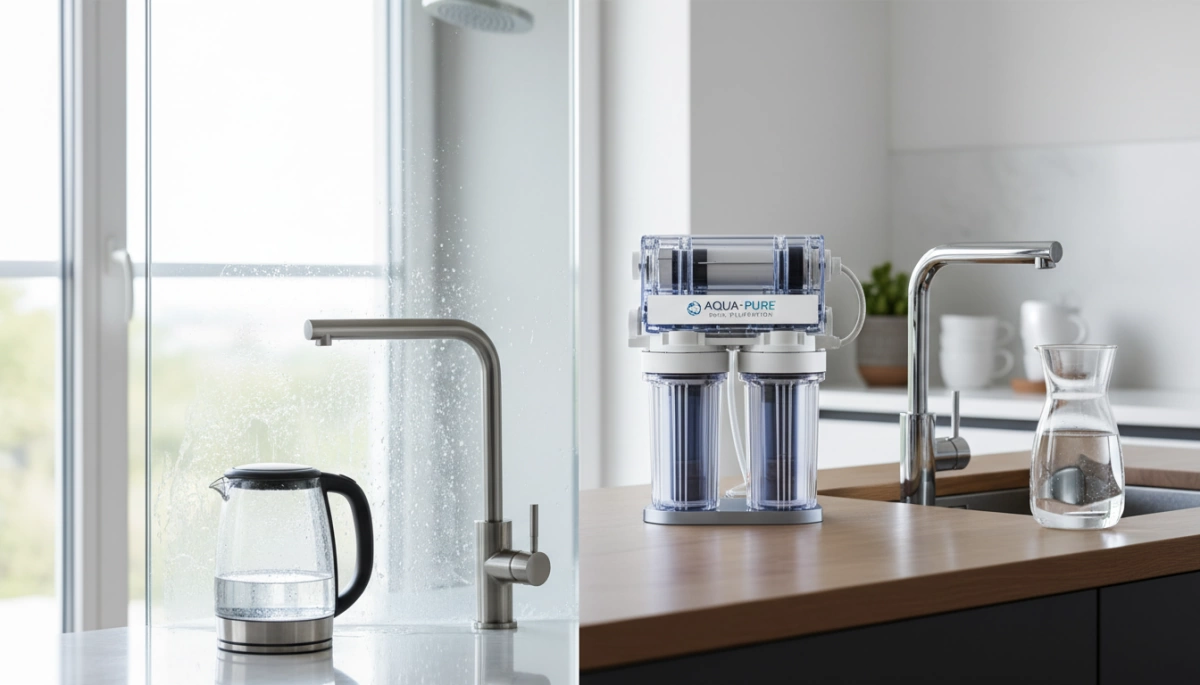
Addressing the root cause of dryness and damage means fixing the water quality before it hits your body. While topical treatments help, they are often just band-aids. To truly mitigate Hard Water Effects on Skin and Hair and Filtration Solutions, we need to deploy targeted hardware that alters or removes the mineral content causing the trouble. Here is how we tackle the problem using modern filtration technology.
KDF-55 Shower Filters for Immediate Relief
For renters or those not ready for a whole-home overhaul, KDF-55 shower filtration is the most effective point-of-use solution. Unlike standard carbon filters that lose effectiveness in hot water, Kinetic Degradation Fluxion (KDF) media uses a copper-zinc formulation that works perfectly in high temperatures.
- Chlorine Removal: It converts free chlorine into harmless chloride, preventing chlorine-induced dryness.
- Heavy Metal Reduction: Significantly reduces water-soluble lead, mercury, and nickel.
- Bacteriostatic: The media inhibits the growth of bacteria inside the filter cartridge.
This is a quick fix that screws directly onto your existing pipe. While many of us already understand the benefits of countertop reverse osmosis water systems for our drinking supply, we often neglect the water we shower in. A KDF-55 filter bridges that gap, offering immediate protection for your skin barrier.
Salt-Free Water Conditioners and NAC Technology
If you dislike the slippery feel of traditional soft water, a salt-free water conditioner is the way to go. These systems utilize Nucleation Assisted Crystallization (NAC). Instead of physically removing calcium and magnesium, NAC technology alters their structure.
- Template Assisted Crystallization: The media acts as a catalyst to transform dissolved hardness minerals into microscopic crystals.
- Scale Prevention: These crystals remain suspended in the water but lose their ability to adhere to surfaces.
- Mineral Retention: You keep the beneficial minerals in the water without the negative scaling effects.
This is superior scale prevention technology for protecting plumbing and preventing that “sticky” friction on hair strands. It effectively neutralizes the minerals that cause hard water dermatitis without adding sodium to your water supply.
Whole House Filtration Systems for Total Detox
For comprehensive protection, whole-house water softener benefits cannot be overstated. These systems treat water at the point of entry, ensuring that every faucet, showerhead, and appliance receives treated water.
- Consistent Protection: Eliminates calcium and magnesium buildup in the shower, laundry, and dishwasher simultaneously.
- High-Flow Capacity: High-flow filtration systems ensure you don’t lose water pressure, even when multiple showers are running.
- Material Safety: When selecting these units, ensuring high-quality construction is vital, much like why BPA-free materials matter in countertop filters to prevent secondary contamination.
A whole-house setup is the only way to achieve a total detox for your home’s water supply, completely preventing mineral deposits on scalp and skin. It turns every tap in your house into a source of beauty water.
Comparison: Unfiltered Water vs. Filtered Water
The difference between washing with unfiltered municipal water and filtered water is night and day. Most of us don’t realize how much the Hard Water Effects on Skin and Hair and Filtration Solutions impact our daily routine until we make the switch. The heavy mineral content in unfiltered water actively fights against your hygiene products, while filtered water allows them to work as intended.
Soap Usage and Lather Differences
If you feel like you are constantly burning through expensive shampoos and body washes, your water is likely the culprit. Calcium and magnesium buildup reacts with the fatty acids in soap to form insoluble curds—better known as soap scum residue. This reaction prevents the soap from lathering effectively.
In unfiltered water, I find myself pumping the bottle three or four times just to get a decent foam. With filtered water, the minerals are neutralized or removed, meaning a dime-sized amount of product produces a rich, thick lather. This doesn’t just feel better; it saves significant money on toiletries over time.
Skin Hydration and Hair Texture Results
The physical results of using a filtration system are immediate. Unfiltered water strips the skin’s natural oils, leaving that “squeaky” feeling which is actually a sign of skin barrier disruption. By installing a specialized shower filter for hard water, you prevent these minerals from settling on your body.
Here is a breakdown of the tangible differences you will feel:
| Feature | Unfiltered Hard Water | Filtered Water |
|---|---|---|
| Lather Quality | Flat, difficult to generate foam | Rich, creamy, and voluminous |
| Soap Consumption | High (product is wasted fighting minerals) | Low (product works efficiently) |
| Post-Wash Skin | Tight, itchy, and dry | Soft, supple, and hydrated |
| Hair Texture | Brittle, frizzy, prone to tangling | Smooth, shiny, and manageable |
| Residue | Sticky soap scum on skin and tub | Clean rinse with no buildup |
Filtered water restores the hydromineral balance, allowing your hair cuticles to lie flat rather than being roughed up by mineral deposits. The result is hair that retains moisture and skin that doesn’t require heavy lotions immediately after drying off.
Frequently Asked Questions About Hard Water and Beauty
Navigating the effects of hard water skin hair impact can be confusing. I often hear similar concerns from homeowners trying to figure out why their expensive beauty routines aren’t working. Here are the straight answers to the most common questions regarding mineral-heavy water.
Does hard water cause permanent hair loss?
Technically, hard water does not cause permanent hair loss (like male pattern baldness), but it is a major culprit behind hair thinning and breakage. The calcium and magnesium buildup creates a hard crust on the hair shaft, making strands brittle and prone to snapping off near the root.
Furthermore, mineral deposits on the scalp can clog hair follicles. If a follicle is blocked by calcification, it cannot support healthy growth, leading to shedding. While the follicle isn’t “dead,” the hair quality degrades significantly. Once you switch to filtered water, you typically see a reduction in shedding as the scalp environment normalizes.
Can a water softener reverse skin damage immediately?
You will feel an immediate difference in how your products perform, but healing skin barrier disruption takes time. When you wash with soft water, you stop adding new soap scum residue to your skin, allowing your pores to breathe instantly.
However, true reversal of chronic dryness or hard water dermatitis follows your skin’s natural regeneration cycle, which is roughly 27 to 28 days.
- Day 1: Skin feels less tight after showering; soap lathers better.
- Week 1: Reduction in itching and flaking.
- Month 1: The natural hydromineral balance is restored, and texture improves significantly.
How do I know if I have hard water without a test kit?
You don’t always need a strip test to know you have a problem. The physical signs of mineral residue skin hair issues are usually obvious if you know where to look. If you notice these red flags, it might be time to look into a sink water filter system to protect your skin and plumbing.
Look for these common indicators:
- Soap Scum: A persistent white or gray film on shower doors, tubs, and faucets that is hard to scrub off.
- Lack of Lather: Your shampoo and body wash don’t foam up easily; you find yourself using double the amount of product.
- The “Squeaky” Feeling: Your skin feels “squeaky” clean (which is actually friction from residue) rather than slippery and hydrated.
- Spotty Dishes: Glassware comes out of the dishwasher with cloudy white spots.
- Dry, Itchy Skin: You feel the need to apply lotion immediately after toweling off.