

















You might assume that running tap water through a filter guarantees purity…
But does the material safety of the machine itself matter?
Absolutely.
In fact, relying on low-grade plastic housings can lead to secondary contamination, effectively undoing all the work of your filtration system.
As industry experts in water purification, we know that BPA-Free is just the baseline, not the gold standard.
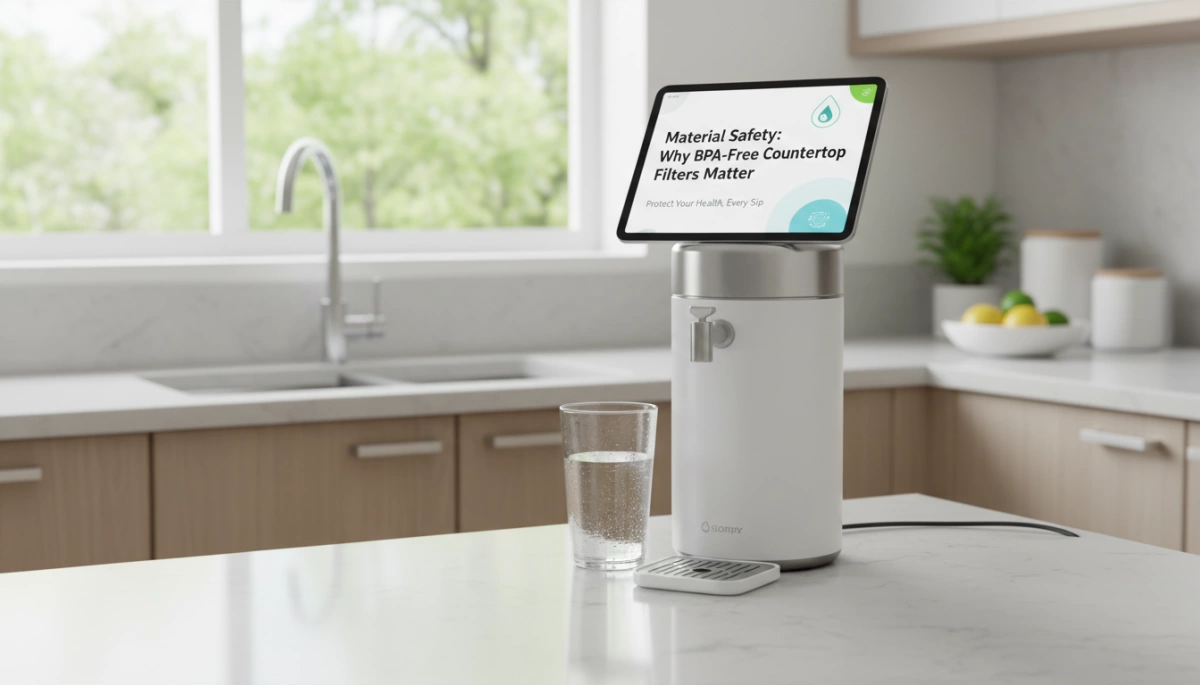
In this guide, you’ll discover the critical difference between standard plastics and food-grade polypropylene, the hidden dangers of chemical leaching, and why a SUS304 stainless steel tank is non-negotiable for true health.
Let’s get to the truth about your water.
The Science of Leaching: Why Countertop Systems are Unique
When we engineer water filtration systems, we often focus intensely on the filter media itself—the Reverse Osmosis membrane or the carbon block. However, the housing that holds your water is just as critical as the filter that purifies it. In the world of countertop filtration, Chemical leaching in water is a distinct challenge because of the fundamental design of these units. Unlike flow-through under-sink models, countertop systems rely on reservoirs. If the materials constructing these reservoirs are not chemically inert, the system effectively re-contaminates the very water it just purified.
The Contact Time Factor and Water Reservoirs
The primary differentiator in countertop safety is “dwell time.” In a standard piped connection, water moves rapidly through the system. In a countertop RO unit, water is stored in a raw water tank before filtration and often holds purified water in an internal pathway or carafe.
This prolonged contact time creates a higher probability for Secondary contamination risks. If the plastic housing contains Bisphenol A (BPA) or other stabilizers, the static nature of the water allows these chemicals to migrate from the container wall into the liquid. We design our systems, such as the G2 series, with Food-grade polypropylene (PP) and certified BPA-free materials specifically to negate this risk. We understand that water is a universal solvent; given enough time, it will absorb elements from its surroundings. Therefore, the surrounding material must be completely safe.
Temperature Sensitivity in Warm Kitchens
Kitchen environments are rarely temperature-controlled laboratories. They are subject to heat from ovens, dishwashers, and direct sunlight. This thermal fluctuation places stress on the structural integrity of lesser plastics.
Thermal stability in plastics is a non-negotiable requirement for our engineering team. When standard plastics heat up, their molecular bonds can loosen, accelerating the release of additives. This process is exacerbated by Hydrolysis, where water breaks down the chemical bonds of the plastic over time.
- Sunlight Exposure: UV rays can degrade non-stabilized plastics, causing Microplastic shedding.
- Appliance Heat: Proximity to coffee makers or toasters can raise the localized temperature of the water tank.
We utilize materials with high Hydrolysis resistance to ensure that even in a warm kitchen environment, the structural integrity of the filter housing remains compromised, preventing any chemical byproducts from entering your drinking supply.
Health Impact of BPA/BPS Exposure
The conversation around material safety often stops at “BPA-Free,” but for us, that is just the baseline. The real concern lies in Endocrine disrupting chemicals (EDCs). BPA is a known disruptor that mimics estrogen, potentially leading to developmental and reproductive issues. However, many manufacturers simply swap BPA for Bisphenol S (BPS), which poses similar health risks.
Why Material Compliance Matters:
- Hormonal Balance: EDCs interfere with the body’s natural hormonal signaling.
- Bio-accumulation: These chemicals can build up in the body over time.
- Vulnerability: Infants and children are significantly more susceptible to the effects of chemical leaching.
At DripLife, we ensure that our Plastic Safety standards go beyond simple marketing labels. By utilizing strictly food-grade materials for all water-contact parts, we ensure that the 0.0001μm precision of our RO membranes is not undone by the container holding the water. Purity must be maintained from the moment water enters the raw tank until it reaches your glass.
BPA-Free vs. Material Integrity: What to Look For

When we talk about material safety, simply seeing a “BPA-Free” sticker isn’t enough. True material integrity goes beyond marketing buzzwords; it requires a deep dive into the chemical composition of the plastics holding your drinking water. We prioritize transparency because a filter is only as effective as the materials housing it. If the casing degrades, the purification process is compromised.
The Regrettable Substitution: BPA vs. BPS
Many manufacturers rush to remove Bisphenol A (BPA) only to replace it with Bisphenol S (BPS) or Bisphenol F (BPF). This is often called a “regrettable substitution.” These alternatives are structurally similar to BPA and can still act as endocrine disrupting chemicals (EDCs).
We don’t play that game. When selecting materials for a high-performance system, the goal is to avoid the bisphenol class entirely, not just swap one risk for another. You need assurance that the plastic won’t release synthetic compounds into the water you just spent four stages purifying.
Food-Grade Polypropylene (PP) Standards
For components that must remain plastic, food-grade polypropylene (PP) is the industry benchmark for safety. Unlike standard plastics, food-grade PP offers exceptional hydrolysis resistance, meaning it does not break down or degrade when constantly exposed to water.
We use these high-grade materials in our countertop reverse osmosis water filters to ensure structural stability. This material also boasts high thermal stability in plastics, which is crucial in a kitchen environment where temperatures fluctuate. It ensures that the housing remains inert and does not leach chemicals, even if the ambient temperature rises.
Understanding NSF/ANSI 61 Certifications
If you are serious about water safety, you need to understand NSF/ANSI 61 certification. This is the premier standard for drinking water system components. It doesn’t just check if the filter works; it tests the materials themselves to ensure they don’t leach contaminants like lead, volatile organic compounds (VOCs), or other toxins into the water.
- Toxicology Review: Analyzes every material in contact with drinking water.
- Leaching Tests: Simulates aggressive exposure conditions to verify safety.
- Material Compliance: Ensures the plastic meets strict FDA and health authority guidelines.
Verifying that a product meets these rigorous standards is the only way to guarantee that the “purified” water in your glass hasn’t been re-contaminated by the machine itself.
The Driplife Difference: Stainless Steel & Advanced Engineering
At DripLife, we believe that a BPA-Free countertop filter is just the baseline. True material safety requires re-engineering how water is stored and moved inside the machine. We moved beyond standard industry practices to ensure that the purity achieved by our RO membrane isn’t compromised by the container holding it.
Internal Storage Innovation: SUS304 Stainless Steel
Plastic reservoirs are the industry standard because they are cheap, but we prioritize material compliance and longevity. In our advanced systems, we utilize SUS304 stainless steel tanks for internal storage, particularly in models designed for heating. Unlike plastic, stainless steel offers superior thermal stability in plastics counterparts, ensuring that even when water is heated, there is zero risk of chemical leaching.
Why SUS304 Matters:
- Inert Nature: Does not react with water, regardless of temperature.
- Durability: Resistant to cracks and degradation over time.
- Taste Preservation: Keeps water tasting crisp without that “plastic” aftertaste.
Bacterial Resistance and Biofilm Prevention
One of the hidden dangers in water filtration is biofilm accumulation. Microscopic scratches in plastic surfaces can become breeding grounds for bacteria. By using high-grade materials like food-grade polypropylene (PP) and stainless steel, we create smoother surfaces that resist bacterial adhesion.
To further mitigate secondary contamination risks, we integrate UV sterilization technologies that work in tandem with our materials. This dual-approach ensures the environment inside your filter remains sterile.
| Feature | Standard Plastic Tank | DripLife Advanced Engineering |
|---|---|---|
| Surface Texture | Porous, prone to micro-scratches | Smooth, polished, resistant to buildup |
| Biofilm Risk | High over time | Minimal to Zero |
| Cleaning | Difficult to sanitize fully | Self-cleaning UV integration |
Plug-and-Play Safety and Hose Elimination
Traditional under-sink systems are a nightmare of tubing. Every inch of plastic hose is a potential point for microplastic shedding and stagnant water. We engineered our countertop RO systems with an integrated waterway board. This design eliminates the need for complex internal hosing.
By removing these hoses, we reduce the surface area that water contacts, drastically lowering the potential for leaching. This “hose elimination” design also prevents leaks and makes the system truly plug-and-play. If you encounter any issues with setup or have concerns about internal components, our technical support team is ready to assist with detailed material specifications.
Engineering Benefits:
- Zero Stagnation: Water flows directly through an integrated manifold.
- Leak Protection: Fewer connection points mean fewer accidents.
- Material Safety: Water only touches certified, safe components.
The Synergy of Filtration and Housing
Protecting the RO Membrane from Secondary Contamination
You can have the most advanced engine in the world, but if the chassis is rusting out, the car isn’t safe. The same logic applies to water filtration. A high-quality Reverse Osmosis (RO) membrane removes contaminants down to 0.0001 microns, stripping away heavy metals, viruses, and bacteria. However, this purity is incredibly fragile. If the purified water flows immediately into a housing made of low-grade plastic, you face secondary contamination risks.
The water is hungry after purification; it acts as a solvent. If it sits in a container that isn’t chemically stable, it will pull elements from the plastic walls. This renders the filtration process pointless. We treat the housing not just as a container, but as the final guardian of water quality. By using inert filtration housing, we ensure that the water you drink is exactly as pure as it was the moment it passed through the membrane.
The Critical Link Between Membrane and Shell
The relationship between the filtration media and the external shell is symbiotic. The housing must withstand the hydraulic pressure of the RO process without degrading or flexing, which could cause micro-cracks where bacteria hide. Just as we optimize internal components like the role of KDF in prolonging active carbon life, the external housing must actively protect the purified water ecosystem.
Reverse osmosis material safety relies on this structural integrity. If the shell material is susceptible to hydrolysis or thermal expansion, it compromises the seal around the membrane. This can allow raw water to bypass the filter entirely or cause biofilm accumulation in the gaps. We engineer our shells to be as robust as the filtration technology inside them, ensuring no chemical leaching occurs even under constant water contact.
Driplife’s Total Purity Solution
At Driplife, we don’t believe in “good enough” materials. Our approach to Material Compliance involves a multi-layered safety strategy that goes beyond standard BPA-free labels. We integrate Plastic Safety protocols directly into our manufacturing of the G2 series to guarantee zero interaction between the container and your water.
Our Total Purity Checklist:
- Certified Food-Grade Materials: Every component touching the water is strictly BPA-free and tested for safety.
- Integrated UV Sterilization: We embed UV LED technology to actively suppress bacterial growth in the tank, preventing the “stale water” issue common in other countertop units.
- Seamless Design: By minimizing joints and eliminating internal hoses where possible, we remove the hiding spots for contaminants.
We ensure that the water sitting in your countertop system is as safe as the water in a sealed glass bottle. High-efficiency filtration requires high-standard housing—anything less is a compromise we aren’t willing to make.
Checklist: How to Verify Material Safety Before You Buy
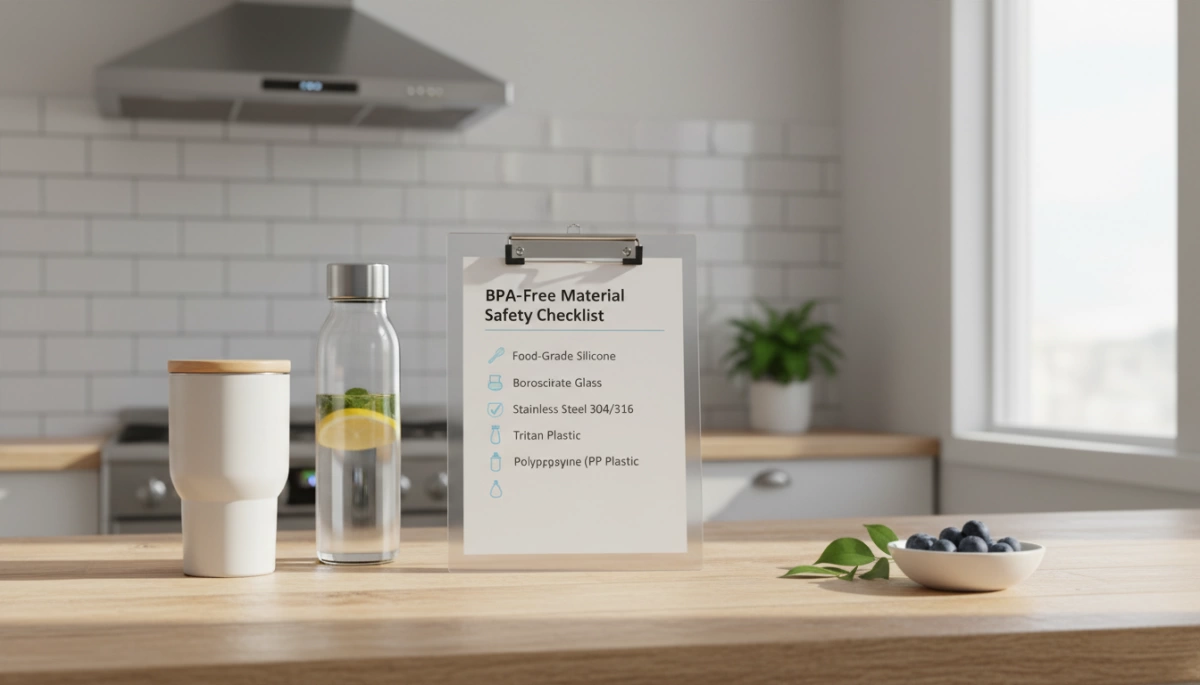
When you are shopping for a countertop RO system, looking at the filtration specs isn’t enough. You need to know exactly what materials are holding that water before you drink it. As someone deeply involved in the manufacturing of purification systems, I know that the difference between a safe device and a chemical hazard often lies in the fine print. Here is the checklist I recommend using to ensure Material Compliance and total safety for your family.
Checking for Explicit BPA-Free Labels
Never assume a product is safe just because it filters water. You need to look for a clear, unambiguous “BPA-Free” label on the packaging and the technical specifications. If a manufacturer isn’t shouting about their Plastic Safety, there is usually a reason. We make sure our G2 series is explicitly labeled because we use certified materials for every part that touches your water. If you can’t find that declaration, walk away.
Identifying Food Grade Materials
Beyond just being BPA-free, the plastic components—specifically the housings and tubing—must be made from Food-grade polypropylene (PP) or similar inert materials. This ensures that the plastic possesses high hydrolysis resistance and won’t break down when in contact with water over long periods. Understanding how a water filter works internally helps you realize that water sits in these chambers for hours; if the material isn’t food-grade, you risk chemical leaching right back into your clean water.
The Stainless Steel Test for Storage Tanks
For systems that use an internal reservoir, the material of that tank is critical. Plastic tanks are cheaper but can be prone to biofilm accumulation if not manufactured perfectly. I always advise looking for systems that utilize a SUS304 stainless steel tank or high-quality antibacterial food-grade plastics for storage. This is similar to the logic behind choosing a glass water filter dispenser, where the goal is to use inert materials that do not react with the water or alter its taste.
Verifying NSF, WQA, or FDA Compliance
Finally, look for third-party validation. A trustworthy brand will have its materials tested against Health Standards like NSF/ANSI 61 certification or FDA compliance for food contact substances. For our DripLife systems, we adhere to strict SGS and FDA standards to prove that our claims aren’t just marketing fluff. These certifications verify that the system is free from Endocrine disrupting chemicals (EDCs) and safe for daily use.
Quick Verification
- Label Check: Does it explicitly say “BPA-Free”?
- Material Type: Is it listed as Food-Grade PP or ABS?
- Tank Material: Is the internal storage SUS304 Stainless Steel or antibacterial material?
- Certifications: Are there logos for FDA, SGS, or NSF compliance?
Frequently Asked Questions About Material Safety
Is BPA-free plastic safe for hot water?
Just because a plastic is labeled “BPA-free” doesn’t automatically make it suitable for high temperatures. While it lacks Bisphenol A, standard plastics can still suffer from hydrolysis or release other additives when heated if they lack thermal stability. For countertop units that dispense heated water, we strictly utilize high-grade, heat-resistant polymers or metal components to prevent chemical leaching. If you are looking into units specifically designed for heating, reviewing the specs of dedicated hot water filter systems ensures the materials are engineered to remain inert even near boiling points.
Does stainless steel affect water taste?
High-quality SUS304 stainless steel tanks do not impart any metallic taste to the water; in fact, they preserve freshness better than plastic alternatives. Lower-grade plastic reservoirs are often the culprit behind that “stale” or “chemical” aftertaste due to micro-leaching or biofilm accumulation on porous surfaces. Stainless steel is non-porous and resistant to bacterial adhesion, ensuring the water tastes exactly as the reverse osmosis process intended—crisp and neutral.
How often should plastic components be replaced?
In a well-engineered system, the structural housing and internal flow paths, such as our integrated waterway boards, are designed to last the entire lifespan of the machine without degradation. You generally do not need to replace these structural parts. However, sticking to the replacement schedule for the filter cartridges is critical. Clogged filters can increase internal pressure, theoretically stressing components over time. Regular filter changes prevent secondary contamination risks and ensure the system operates within safe pressure limits.