
















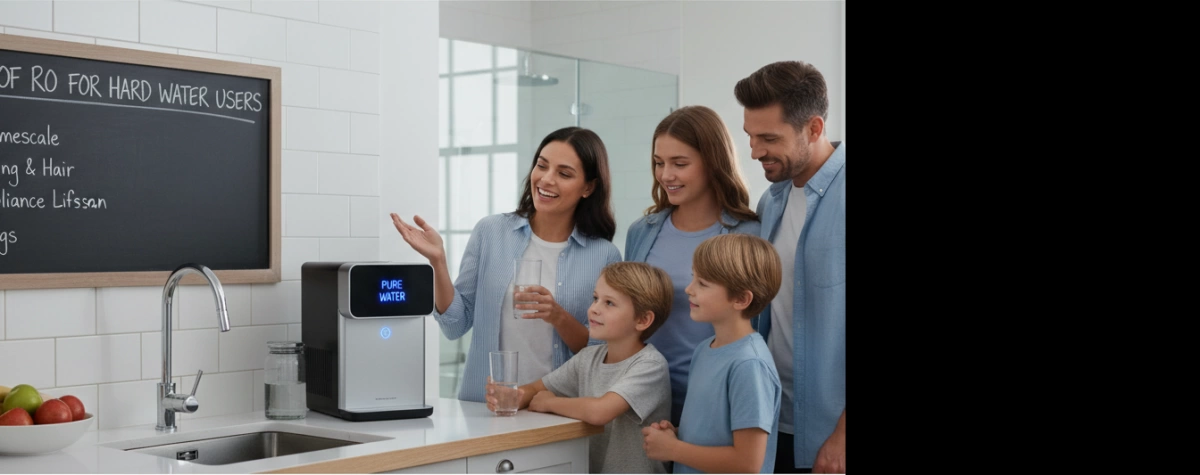
You might already know that hard water wreaks havoc on plumbing and appliances…
But do your clients understand why a standard water softener isn’t the final answer for their drinking glass?
In fact, simply softening water often trades one problem (limescale) for another (high sodium content).
To truly solve the issue, you need to explain the precision power of Reverse Osmosis.
In this post, I’m going to show you exactly how to position RO as the ultimate solution for hard water sufferers.
We’ll cover everything from Total Dissolved Solids (TDS) reduction to the critical importance of 0.0001 micron filtration.
This isn’t just sales fluff; it’s the technical breakdown you need to prove the value of pure water.
Let’s dive in.
The Elevator Pitch: Softening vs. Purification
We understand the daily battle against hard water—the crusty faucets, the spotted glassware, and that heavy, metallic taste in your morning coffee. However, there is a fundamental misunderstanding we need to clear up immediately: water softening is not the same as water purification.
While a traditional softener is designed to protect your pipes by swapping calcium for sodium, it doesn’t actually clean your drinking water. At DripLife, we focus on Reverse Osmosis (RO) because it doesn’t just treat the symptoms of hard water; it removes the root cause entirely.
Using the ‘Bouncer’ Analogy for Easy Understanding
Think of your water supply as an exclusive club.
- Water Softeners: They act like a lenient dress code enforcer. They see a “troublemaker” (Calcium or Magnesium) and simply ask them to put on a different jacket (Sodium). The troublemaker is still inside the club (your water), just disguised.
- Reverse Osmosis (RO): Our systems act as the ultimate bouncer. We utilize a 0.0001-micron filtration membrane. This barrier is so microscopic that it physically blocks the entrance for heavy metals, bacteria, and dissolved minerals.
With our technology, the “troublemakers” don’t get disguised—they get kicked out. The result is scale-free living and water that is genuinely pure, not just chemically altered.
Explaining TDS: Why Softeners Don’t Lower It
Many homeowners are shocked when they test their softened water and see high numbers. This is where Total Dissolved Solids (TDS) reduction becomes the critical metric.
- The Softener Reality: Because softeners exchange ions rather than removing them, the total amount of dissolved solids in your water often remains the same or even increases.
- The DripLife Difference: Our RO systems are engineered to strip away these solids.
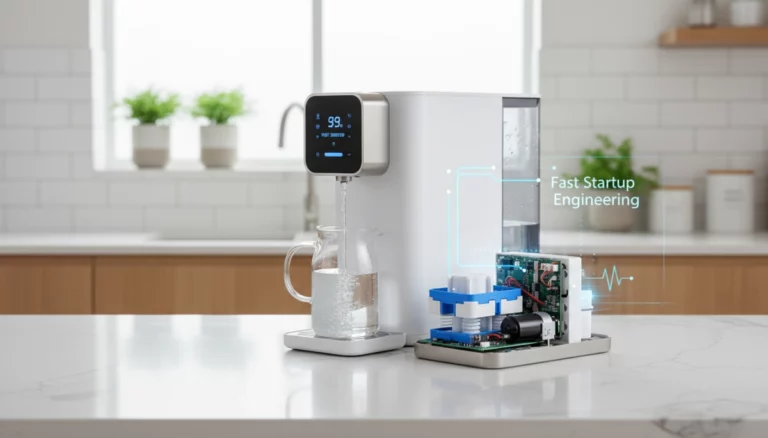
We believe you shouldn’t have to guess if your water is clean. That’s why our systems feature Smart TDS Monitoring directly on the faucet. You can watch the TDS numbers drop in real-time, confirming that the invisible mineral load has been eliminated.
The Salty Truth: Addressing Sodium Exchange
There is a hidden trade-off with traditional softening: salt. To neutralize limescale, softeners add sodium to your water supply. While this is fine for washing clothes, it isn’t ideal for healthy hydration.
If you are trying to watch your sodium intake or simply want the crisp, neutral taste of pure water, adding salt is counterproductive. Our high-efficiency water filtration process removes the hardness minerals without replacing them with sodium. We provide a clean slate—removing over 1,000 contaminants—so you drink water, not a chemistry experiment.
The Sensory Upgrade: Taste and Smell Arguments
When dealing with hard water, most people focus on the visible damage to pipes and appliances. However, the most immediate benefit of installing a Reverse Osmosis (RO) system is the dramatic improvement in flavor and odor. While a standard water softener swaps minerals to protect your plumbing, it doesn’t necessarily make the water pleasant to drink. Our tankless RO systems focus on dissolved mineral removal, transforming tap water into a premium beverage experience.
Better Coffee, Tea, and Crystal Clear Ice
If you are serious about your morning brew, hard water is your enemy. The high mineral content in hard water binds with the compounds in coffee and tea, preventing proper extraction and leading to a flat or bitter taste. Improving coffee taste water starts with stripping away those interfering solids.
Our 600 GPD and 800 GPD models use 0.0001 micron filtration to ensure that the water entering your coffee maker is virtually free of calcium and magnesium. This purity allows the true notes of your beans or tea leaves to shine through. Furthermore, removing these impurities is the only way to get crystal-clear, restaurant-quality ice cubes that don’t leave white flakes in your glass. This level of purity is also essential if you plan on making seltzer water at home, as carbonation tastes crispest with neutral water.
The ‘Pure’ Canvas: Cooking with Neutral Water
Think of water as a primary ingredient in your kitchen. When you cook with hard water, you are adding a heavy dose of dissolved rocks to your soups, stocks, and bakery items. This can affect the texture of dough and alter the flavor profile of delicate dishes.
Using RO water provides a neutral base—a “pure canvas”—that allows your ingredients to speak for themselves. With our high-flow tankless design, you don’t have to wait for a reservoir to fill; you get a steady stream of purified water instantly, making it easy to fill large stockpots for pasta or soups without the metallic undertones of hard water.
Eliminating Odors Softeners Miss (Sulfur & Chlorine)
A common misconception is that a water softener filters water. It does not; it treats hardness. It will not remove the smell of chlorine (often compared to a swimming pool) or the “rotten egg” smell associated with sulfur. These are hard water contaminants that require fine filtration, not ion exchange.
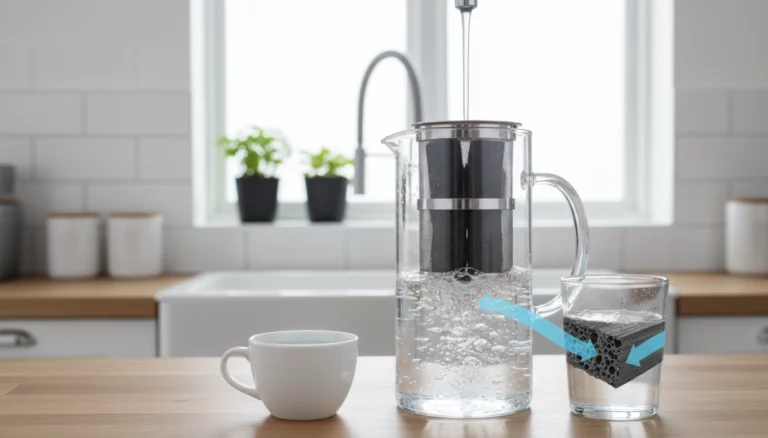
DripLife RO systems utilize multi-stage composite filters designed to trap organic compounds and chemicals that softeners let pass through.
- Chlorine Removal: Eliminates chemical aftertastes.
- Odor Neutralization: Removes sulfur and earthy smells.
- Real-Time Verification: Our smart faucet displays the TDS (Total Dissolved Solids) level, giving you visual proof that the impurities causing bad smells are gone.
By handling these sensory issues, an RO system does what a softener cannot: it makes your water enjoyable to consume, not just safe for your pipes.
Health & Safety: The Invisible Contaminants
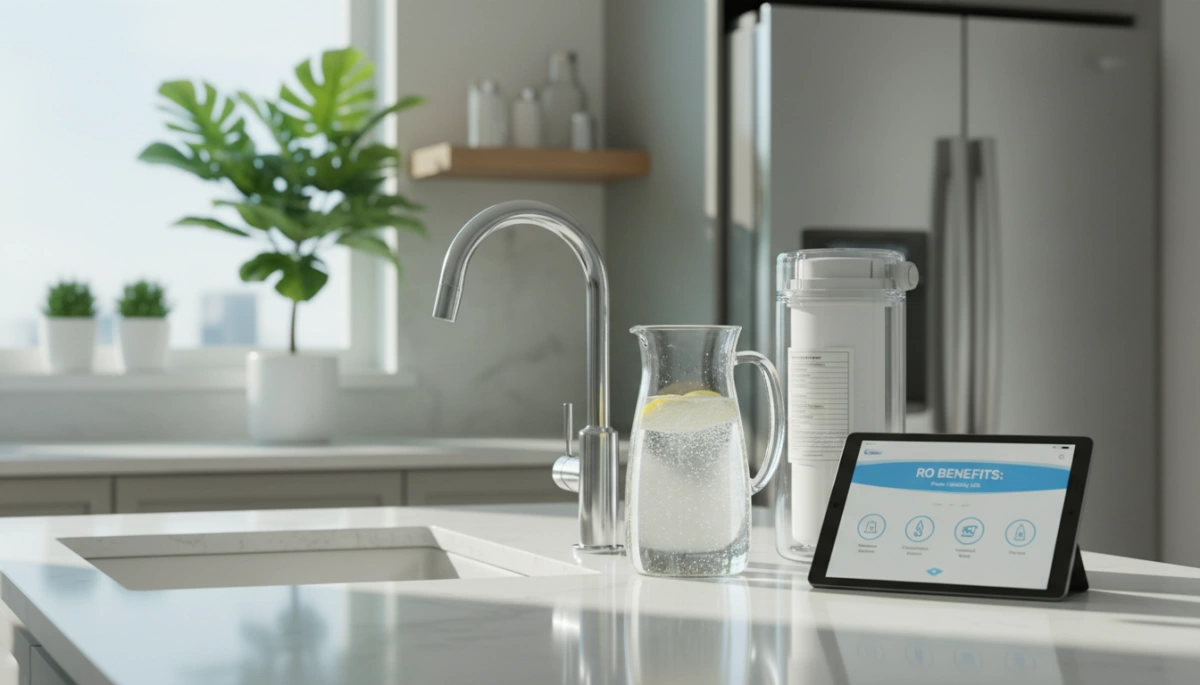
When we talk about hard water, we usually complain about the crusty limescale on the faucet or the spots on our glassware. But honestly, mineral buildup is just the visible tip of the iceberg. The real concern isn’t just the calcium you see; it’s the hard water contaminants you don’t see. While hard water minerals themselves aren’t necessarily toxic, the high Total Dissolved Solids (TDS) environment can mask other dangerous impurities that standard filters or softeners simply ignore.
Beyond Hardness: Lead, Arsenic, and Nitrates
High TDS levels often correlate with other unwanted dissolved substances entering your home’s supply. While a standard softener might swap minerals to stop scaling, it does absolutely nothing to filter out dangerous heavy metals or agricultural runoff. Our systems are engineered to tackle the heavy hitters that actually impact your health:
- Lead: Leached from aging infrastructure.
- Arsenic: Naturally occurring in groundwater but highly toxic.
- Nitrates: Common in rural areas due to fertilizer runoff.
If you are relying solely on a softener, you might be drinking “soft” water that still carries a toxic load. Installing a dedicated under-sink water filter ensures you aren’t just preventing scale, but actively purifying the water your family consumes.
The 0.0001 Micron Barrier Explained
This is where the engineering makes a difference. To understand the power of 0.0001 micron filtration, you have to look at the scale. A single strand of human hair is about 75 microns wide. The pores in our RO membranes are nearly a million times smaller than that.
Think of it as an incredibly tight security gate. Water molecules are small enough to squeeze through, but larger contaminants are physically blocked and flushed away via our efficient 1.5:1 drain ratio.
- Viruses and Bacteria: Blocked.
- Heavy Metals: Rejected at the molecular level.
- Dissolved Solids: Drastically reduced.
This level of precision is the only way to guarantee that the water filling your cup in seconds—thanks to our 800 GPD high-flow design—is truly clean, not just “soft.”
The Low-Sodium Diet Argument
Here is the catch with traditional whole-house water softeners: they use ion exchange. They literally trade calcium and magnesium for sodium. If you are on a salt-restricted diet or just care about heart health, drinking softened water can be a hidden source of significant sodium intake.
Sodium removal from water is a critical benefit of our Reverse Osmosis units. Even if you have a softener installed to protect your pipes, you need an RO system at the kitchen sink to strip out that added salt. It gives you the best of both worlds: soft water for your plumbing, and pure, sodium-free hydration for your body.
The Financial Angle: ROI and Appliance Safety
Living with hard water drains your wallet in ways you might not notice immediately. Beyond the soap scum and dry skin, the financial impact of scale buildup and bottled water reliance is significant. Switching to a modern filtration solution isn’t just a health upgrade; it’s a smart financial move that pays dividends over time.
Calculating Savings: Ditching Bottled Water
If your tap water tastes like metal or chalk due to high TDS, you are likely spending hundreds of dollars a year on bottled water. A tankless RO system eliminates that recurring cost entirely. With capacities hitting 800 GPD, our systems provide an unlimited supply of purified water for pennies per gallon. You get the convenience of filling a cup in seconds without the waste and expense of single-use plastics.
Protecting High-End Appliances
Hard water is the enemy of any appliance that heats water. Limescale buildup destroys heating elements in espresso machines, steam irons, and electric kettles, leading to premature failure and costly repairs. By stripping out the minerals that cause scale, appliance protection becomes a built-in benefit of your water system. Understanding the full scope of reverse osmosis benefits helps you see this investment as insurance for your expensive kitchen gear.
Debunking the Water Waste Myth: High-Efficiency Systems
A common objection to RO is water waste, but technology has moved on from the inefficient systems of the past. Traditional units often wasted 3 to 4 gallons for every gallon purified. In contrast, our high-efficiency water filtration technology utilizes a 1.5:1 pure-to-drain ratio. This means you get superior filtration performance and limescale prevention while keeping your water bill in check and your environmental footprint low.
Overcoming the ‘Flat Taste’ Objection
A common hesitation for homeowners switching from hard water is the fear that purified water will taste “flat” or unnatural. This misconception often stems from older systems where water sat stagnant in a rubber storage tank, absorbing a plastic-like flavor. With our tankless design, water is filtered on demand, ensuring every glass is aerated and fresh. The removal of heavy dissolved solids doesn’t rob the water of flavor; it eliminates the metallic, chalky aftertaste associated with high mineral content, leaving you with a clean, crisp profile that enhances rather than masks natural flavors.
The Role of Alkaline Remineralization Stages
While the primary job of the 0.0001-micron filtration is to act as a strict barrier against contaminants, the final stages of our composite filtration system are crucial for taste refinement. High-quality RO systems often utilize a post-filter or a composite stage to polish the water before it hits your glass. This process ensures that while we strip away the harmful hard water contaminants and limescale-causing ions, the water retains a smooth mouthfeel. Understanding the full benefits of reverse osmosis water involves realizing that “pure” doesn’t mean “empty”—it means free from the interference of unwanted chemicals.
Balancing pH for Healthier Hydration
Hard water is often highly alkaline due to excess calcium and magnesium, but that doesn’t necessarily equate to healthy hydration if it comes with scale and sediment. Our goal is to bring the water closer to a neutral, pure state that is compatible with the body’s needs. By removing the extreme mineral load, we prevent the “heavy” sensation in the stomach that some people experience with tap water. The result is alkaline drinking water qualities in terms of smoothness and drinkability, encouraging you to drink more throughout the day without the resistance caused by the distinct taste of untreated hard water.
Installation and Lifestyle Fit
Space-Saving Tankless Designs for Modern Kitchens
Homeowners dealing with hard water are often used to losing valuable space to bulky softeners in the garage or basement. We refuse to let that clutter take over the kitchen cabinet too. Our tankless RO system benefits the modern home by eliminating the massive storage reservoir found in traditional units. This compact footprint saves up to 70% of under-sink space, leaving plenty of room for cleaning supplies or a waste disposal unit.
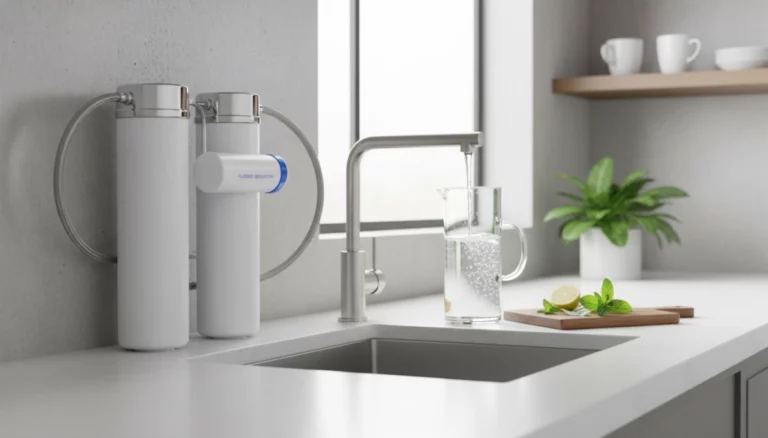
Beyond saving space, the tankless design addresses a critical hygiene factor. Stagnant water in storage tanks can lead to secondary pollution, a risk we eliminate completely. For those seeking to further streamline their kitchen utility, integrating a hot water filter under sink alongside the RO unit creates a comprehensive, space-efficient hydration station that delivers purity on demand.
Commercial-Grade Quality for Home Use
We engineered our systems to bring industrial-strength performance into the residential kitchen. Hard water is tough on appliances, so we built a high-efficiency water filtration engine capable of withstanding the challenge while delivering exceptional speed.
- High Capacity Output: With models offering 600 GPD and 800 GPD (Gallons Per Day), the water flow is fast enough to fill a cup in seconds. There is no waiting for a tank to refill.
- Integrated Waterway: To prevent leaks—a common fear with high-pressure systems—we utilize an integrated waterboard design. This reduces internal pipe connections and minimizes the risk of water damage.
- Smart Maintenance: The system features a 3-second Quick-Change filter mechanism. You don’t need a plumber or special tools; simply twist and replace the filter from the front panel.
- Real-Time Validation: The smart faucet displays the TDS level instantly, giving you visual proof that the 0.0001 micron filtration is effectively removing dissolved solids.
Frequently Asked Questions About RO and Hard Water
When you are dealing with stubborn mineral buildup, questions always pop up about how these systems hold up against the heavy workload. Here is the straight talk on combining reverse osmosis with hard water environments.
Can I use RO without a water softener in hard water areas?
Absolutely. While a whole-house softener treats water for your pipes and showers, a point-of-use RO system is designed to handle high Total Dissolved Solids reduction right at your kitchen sink. You do not strictly need a softener to operate our units.
Our high-capacity 600 GPD and 800 GPD models are built to process water with higher mineral content. The system forces water through the membrane, separating pure water from the concentrated “brine” containing the hardness minerals. Because our systems utilize a low 1.5:1 drain ratio, they efficiently flush away those captured minerals rather than letting them settle and scale up the system immediately. Understanding how reverse osmosis water filters work reveals why they are the ultimate barrier against contaminants, regardless of your home’s pre-existing softness levels.
Does Reverse Osmosis remove healthy minerals?
Yes, and that is exactly what it is designed to do. The 0.0001 micron filtration precision of the RO membrane is non-discriminatory; it removes calcium and magnesium (the “hard” minerals) just as effectively as it removes lead, arsenic, and fluoride.
To get truly “soft” and pure water that protects your coffee maker and leaves no residue, you have to remove the dissolved solids. The primary goal here is limescale prevention and contaminant elimination. For those concerned about dietary intake, the vast majority of your essential minerals come from a balanced diet, not your tap water. The trade-off is crystal clear, safe water versus water that leaves chalky deposits on everything it touches.
How much maintenance does an RO system need on hard water?
Hard water does make any filter work harder, but modern tankless designs have simplified the maintenance significantly. In a standard setup, high hardness might clog a membrane faster, but our systems feature smart monitoring that takes the guesswork out of the equation.
- Real-Time Tracking: The smart faucet and machine display show your actual TDS levels and filter life status, so you are not changing filters based on a generic calendar but on actual water conditions.
- 3-Second Quick-Change: When the system alerts you that the capacity is reached, swapping the filter takes just three seconds. You twist and pull—no tools required.
- Auto-Flushing: The system automatically flushes the membrane to prevent mineral scaling on the surface, extending the lifespan even in hard water zones.
You get the benefits of commercial-grade purification without the headache of complex plumbing maintenance.