
















Why Long Term Storage Stability of Shower Filter Cartridges Matters
If you buy shower filter cartridges in bulk, you’re probably asking yourself three things:
Will these filters still perform after 12–24 months in my warehouse? Will I end up with dead stock? And how do I protect my margins while protecting my customers’ water quality?
That’s exactly where long term storage stability of shower filter cartridges comes in. Storage stability is the difference between:
- Filters that still hit their chlorine removal efficiency after a year on the shelf
- Versus filters that slowly lose redox potential, pick up moisture, or absorb warehouse odors before they ever reach a shower
From a B2B perspective, shower filter shelf life isn’t just a technical spec. It directly affects:
- Customer trust: Underperforming filters lead to complaints, returns, and bad reviews
- Cash flow: Poor water filter inventory management creates expired or questionable stock you can’t confidently sell
- Compliance and risk: Aging media and compromised packaging can push performance out of spec and expose your brand
Before you commit to large orders of shower filter cartridges, you should always check:
- Documented cartridge shelf life under real-world storage conditions, not just ideal lab numbers
- Storage stability test data (including any accelerated aging tests for filters) that support long term claims
- Packaging design: moisture barrier, hermetic sealing filtration packaging, use of desiccants, UV protection, and carton strength for bulk storage
- Recommended warehouse storage protocols for filters: temperature range, humidity limits, palletizing, and FIFO rules
- Supplier support: clear guidance for bulk shower filter storage, including what conditions void the shelf life
When you understand and control shower filter cartridges storage conditions up front, you cut dead stock, protect performance, and get predictable, repeatable results from every shipment.
How Long Term Storage Stability of Shower Filter Cartridges Is Defined
What “shelf life” means for shower filter cartridges
When I talk about the long term storage stability or shelf life of shower filter cartridges, I mean how long a sealed, unused cartridge can sit in storage and still perform like new once you install it.
In practice, shelf life is the period where the cartridge still meets:
- Chlorine removal efficiency and flow specs
- No off-odors or strange tastes
- Safe materials (no cracking plastics, no degraded seals)
For most quality shower filters, we design for a storage-safe window of 2–3 years under proper conditions, even if the in-use life is only 3–6 months.
Key factors that decide storage stability
Long term shower filter shelf life depends on four things working together:
| Factor | What It Affects | Why It Matters in Storage |
|---|---|---|
| Filtration media | Chlorine removal, redox potential | Media degradation over time cuts performance |
| Housing & seals | Leaks, cracking, safety | Cheap plastics fail under heat and time |
| Packaging | Moisture & oxygen exposure | Good moisture barrier packaging for filters prevents early activation |
| Storage conditions | Temperature, humidity, light | Poor warehouse control can ruin a good cartridge |
When I design for bulk shower filter storage in the U.S., I assume mixed climates and non-AC warehouses, so we overbuild both the media protection and the packaging.
Unopened vs in-use shower filter cartridges
Unopened and in-use cartridges behave very differently in terms of storage stability filtration media shower filters:
Unopened cartridges
- Protected by hermetic sealing filtration packaging
- Media stays dry, with KDF-55 oxidation prevention and reduced calcium sulfite moisture sensitivity
- Best for long term storage stability and B2B water filter inventory management
In-use cartridges
- Constantly exposed to water, oxygen, and temperature swings
- Activated carbon adsorption capacity is actively consumed
- Microbial growth risk increases as time passes, especially with warm water
Simple rule:
- Unopened = managed by packaging and warehouse
- In-use = managed by actual water quality and usage
That’s why we treat cartridge shelf life for shower filtration products and service life once installed as two separate specs when we support B2B partners in the U.S. looking to protect their bulk shower filter storage.
Filtration Media Inside Shower Filter Cartridges
When I look at long term storage stability of shower filter cartridges, I always start with the filtration media mix. The media inside decides not only how well the filter performs on day one, but also how stable it stays after months or years in a warehouse.
KDF-55 (copper-zinc media)
KDF is great for chlorine and heavy metal reduction, and it’s one of the more storage-stable media when it’s kept dry and sealed. Over long term storage, exposure to oxygen and moisture can dull its surface (tarnish) and slowly reduce redox potential, which can lower chlorine removal efficiency. Good anti-oxidation packaging and low-humidity storage go a long way toward keeping KDF performance stable.Activated carbon (block or granular)
Activated carbon is powerful for taste, odor, and chemical reduction, but it’s like a sponge for airborne VOCs and warehouse odors. In long term shower filter cartridges storage, open or poorly sealed packaging lets carbon adsorb contaminants before the customer ever uses it. That eats into its adsorption capacity and shortens effective shower filter shelf life. Tight, low-odor, moisture barrier packaging is non-negotiable here.Calcium sulfite
Calcium sulfite is extremely fast at knocking down chlorine, which is why we use it in many high-performance cartridges. The tradeoff: it’s highly moisture sensitive. In bulk shower filter storage, excess humidity can cause clumping, caking, and even partial reaction before use. Once it clumps, water can channel around it in the housing, so you lose contact time and real-world performance.Other media (ceramic balls, PP cotton, specialty resins)
Sediment pads and PP cotton are generally stable as long as the plastic housing isn’t heat-damaged. Ceramic and mineral balls can pick up surface dust or slight discoloration but usually hold up well if kept clean and dry. Specialty resins (scale inhibitors, heavy metal resins) may slowly lose capacity if stored hot or damp, so controlled warehouse conditions matter.Media combinations and storage stability
Most modern shower cartridges, including systems we design, combine KDF, activated carbon, and calcium sulfite in layered or mixed beds. That combination gives strong performance but also means you’re managing different storage risks at once:- Keep moisture out to protect calcium sulfite and prevent KDF-55 oxidation.
- Block odors and VOCs to protect activated carbon adsorption capacity.
- Avoid heat and UV to keep plastics and internal seals intact so no air or moisture sneaks in.
When these media are matched with proper moisture barrier packaging, hermetic sealing, and temperature-controlled filter storage, cartridge shelf life for shower filtration products is long, predictable, and safe for B2B water filter inventory management in the U.S. market.
Moisture Impact on Long Term Storage Stability of Shower Filter Cartridges
Moisture is the number one enemy of long term storage stability for shower filter cartridges. In a typical U.S. warehouse, ambient humidity can swing hard between seasons. If cartons sit near loading doors, concrete floors, or poorly insulated walls, that humidity slowly creeps through standard cardboard and weak plastic bags. Over time, this kills shower filter shelf life, especially for bulk shower filter storage that needs to sit for months before going to retailers, online orders, or project sites.
When moisture gets into the cartridge, it starts to “pre-activate” the filtration media before the customer ever installs it. That means:
- Some media start reacting with oxygen and trace contaminants in the air instead of in the water.
- Capacity is partially spent before use, so chlorine removal efficiency retention drops.
- Fine dust in the bed can cake together, increasing flow resistance once the filter is installed.
Calcium sulfite is especially moisture-sensitive. In damp storage, it absorbs water, swells, and clumps. Once it clumps, it doesn’t fluidize properly in the cartridge, and water channels around it instead of through it. That leads to uneven filtration, higher pressure drop, and frustrated customers who feel their “new” filter never worked right. When we design cartridges that use calcium sulfite, we treat humidity resistant cartridge storage as non‑negotiable.
Activated carbon has a different problem during long term storage. It’s a magnet for airborne VOCs and odors, even in a warehouse. If the bag or pouch isn’t a real moisture barrier packaging for filters, the carbon will slowly adsorb fumes from forklifts, packaging inks, cleaning chemicals, or nearby stored goods. That means:
- Part of the adsorption capacity is wasted before the cartridge ever sees a drop of water.
- Filters can carry a “warehouse smell” into the first few showers, which customers in the U.S. notice immediately.
To keep cartridge media dry and maintain long term storage stability, I always push for:
- Hermetic sealing and real barrier films (not thin, vented bags) to block humidity, oxygen, and VOCs.
- Desiccant packs inside inner bags or cartons for bulk shower filter storage in variable climates.
- Palletization and shrink-wrapping to limit direct air exchange and floor moisture.
- Warehouse humidity control for filters (dehumidifiers, sealed rooms, and clear storage zones away from dock doors).
If you’re already managing other water filtration products, like countertop systems or faucet filters, the same rules apply to shower cartridges: keep them sealed, dry, and off the floor. That’s exactly how we protect the filtration media inside our own lines and related products, including premium countertop and faucet filter systems, so B2B partners can hold inventory without worrying about hidden moisture damage eating into cartridge shelf life.
Oxidation Risks in Long Term Storage of Shower Filter Cartridges
When we talk about long term storage stability of shower filter cartridges, oxidation is one of the main silent killers—especially for KDF-55 media. KDF works by redox (exchange of electrons). If cartridges sit in storage with too much oxygen exposure, the copper‑zinc granules slowly oxidize on the surface, creating tarnish that reduces their redox potential. In practice, that means less power to break down chlorine and fewer heavy metal reactions once the filter is finally installed.
Over time, this surface tarnish can turn bright KDF-55 media dull or darkened. For B2B buyers managing bulk shower filter storage, that visual change is a red flag. Oxidized media often shows lower chlorine reduction efficiency and can shorten actual shower filter shelf life versus what’s printed on the box. Even if the cartridge has never been used, poor storage stability of filtration media can show up as weaker chlorine removal, inconsistent performance, and more customer complaints.
To keep KDF-55 oxidation and overall filtration media degradation under control, packaging and handling matter as much as the media itself. For long term storage stability, we focus on:
- Low-oxygen packaging: hermetic sealing, tight end caps, and, where needed, vacuum packaging or nitrogen flushing.
- Barrier materials: multi-layer films that limit oxygen transmission and protect plastic housings from UV.
- Careful handling: avoid opening cartons early “just to check,” keep boxes sealed until installation or final QA, and minimize long exposure to hot, dry air in warehouses.
These same principles apply across filtration products, from shower filters to high-flow water filters for coolers and commercial systems. When we design cartridge vacuum packaging and warehouse storage protocols for filters, the goal is simple: lock in the redox performance you paid for, and make sure your shower filter cartridges deliver full chlorine reduction even after months in storage.
Temperature And Light Effects on Shower Filter Storage Stability
Temperature and light make or break the long term storage stability of shower filter cartridges. In U.S. warehouses and garages, we see big swings—summer heat, winter freezes, and skylight UV—all of which can shorten shower filter shelf life if you’re not ahead of them.
High temperature impact on housings and seals
Prolonged high heat is one of the fastest ways to damage shower filter cartridges in storage:
- Plastic housings can warp, soften, or develop hairline stress cracks.
- Rubber O-rings and silicone seals dry out, flatten, or lose elasticity, leading to leaks once installed.
- Elevated temperatures can speed up filtration media degradation over time, especially activated carbon and KDF-based blends.
- Tight, hot spaces near boilers, heaters, or sun-facing walls are the worst spots for bulk shower filter storage.
For long term storage stability, I keep filter cartons in climate-moderated zones and avoid any location that regularly runs above about 95°F.
Freezing and thawing risks
Freezing isn’t just a concern for in-use filters; it matters in storage too:
- Any residual moisture in cartridges can expand when frozen and stress the housing.
- Repeated freeze–thaw cycles can weaken welds and threaded joints.
- Plastic becomes more brittle at low temperatures, raising the risk of cracks during handling.
If you store shower filter cartridges in colder regions, avoid unheated exterior sheds and containers. Keep pallets in indoor zones where temperatures stay above freezing to protect the long term storage stability of your inventory.
UV exposure and plastic degradation
Direct light, especially UV, quietly breaks down shower filter housings over extended storage:
- UV exposure can cause yellowing, chalking, and surface embrittlement of plastic.
- Brittle housings are more likely to crack during installation or shipping.
- Printed labels and markings on cartridges and cartons can fade, complicating batch tracking and water filter inventory management.
I always keep bulk shower filter storage away from windows, dock doors, and skylights, and I prefer cartons and pallet wraps that provide UV protection for plastic filter housings.
Stable temperatures extend storage life
The more stable the environment, the better your long term storage stability:
- Aim for a consistent, moderate range—roughly 50–77°F with limited daily swings.
- Avoid stacking filters near HVAC exhausts, radiators, or direct sunlight that create hot spots.
- Pair good temperature control with humidity control for truly humidity resistant cartridge storage.
In my own operation, we use simple temp/humidity loggers and adjust storage zones the same way we do for other sensitive filtration products like our transparent glass water purifier pitcher. That same disciplined approach dramatically extends cartridge shelf life for shower filtration products and helps B2B buyers avoid costly dead stock.
Packaging Design For Long Term Storage Stability of Shower Filter Cartridges
Smart packaging is the first line of defense for long term storage stability of shower filter cartridges. If the factory gets this wrong, even a perfect warehouse can’t save the product. I always design packaging so the cartridge shelf life is protected from oxygen, humidity, light, and rough handling during shipping and storage.
Why Factory Packaging Matters More Than Warehouse Conditions
Even in a clean, temperature-controlled warehouse, poor packaging will let in moisture and air that slowly damage the filtration media. Good shower filter cartridges storage starts at the production line with:
- Tight, sealed primary bags or wraps around each cartridge
- Strong outer cartons that resist crushing and punctures
- Clear labeling of batch, production date, and storage instructions
When this is engineered well, B2B buyers get far more predictable shower filter shelf life and fewer surprises in long-term water filter inventory management.
Hermetic Sealing And Vacuum Packaging
For bulk shower filter storage, I prefer hermetically sealed or vacuum-packed cartridges whenever possible. This sharply reduces:
- Oxygen exposure, which slows KDF-55 oxidation and redox potential loss
- Moisture ingress, which protects calcium sulfite from clumping and early degradation
- Pre-adsorption of odors and VOCs on activated carbon before the first use
Cartridge vacuum packaging and proper heat sealing create a controlled micro-environment around each unit, extending storage stable filtration media performance even in tougher logistics routes.
Multi-Layer Anti‑Oxidation And Anti‑UV Films
To prevent filtration media degradation over time, the film around the cartridge can’t be just any plastic. I use multi-layer barrier films that combine:
- High oxygen barrier layers for KDF-55 oxidation prevention
- Moisture barrier layers for humidity resistant cartridge storage filtration
- UV-blocking layers to protect plastic housings and seals from light damage
This anti-oxidation packaging for filtration cartridges and UV protection for plastic filter housings keep the cartridge’s performance closer to “fresh from the line,” even after long-term storage.
Desiccants And Moisture Absorbers In Bulk Cartons
Inside master cartons, moisture control is non-negotiable for long term storage stability of shower filter cartridges. I typically specify:
- Desiccant packets sized to carton volume and transit duration
- Moisture indicator cards so warehouse teams can spot humidity issues quickly
- Moisture barrier packaging for filters when shipping through humid or coastal routes
These simple additions go a long way in bulk filter storage conditions, especially for long-distance, ocean-freight shipments where warehouse humidity control for filters isn’t guaranteed.
How To Inspect Packaging Integrity On Arrival
When you receive a shipment, you don’t need lab tools to do a useful first check. I recommend your team quickly look for:
- Torn, crushed, or water-stained outer cartons
- Loose or unsealed bags, broken hermetic seals, or vacuum packs that have gone “puffy”
- Rust-like discoloration on media through clear windows (possible oxidation)
- Damp desiccant packs or tripped moisture indicators
If you’re also handling drinking water systems or RO units, the same mindset applies to bundled filters and add-ons—especially if you’re using strategies like bundling branded replacement filters with RO units to grow margin. Strong, storage safe filtration cartridge packaging technology protects both your inventory and your reputation.
Best Warehouse Practices for Long Term Storage Stability of Shower Filter Cartridges
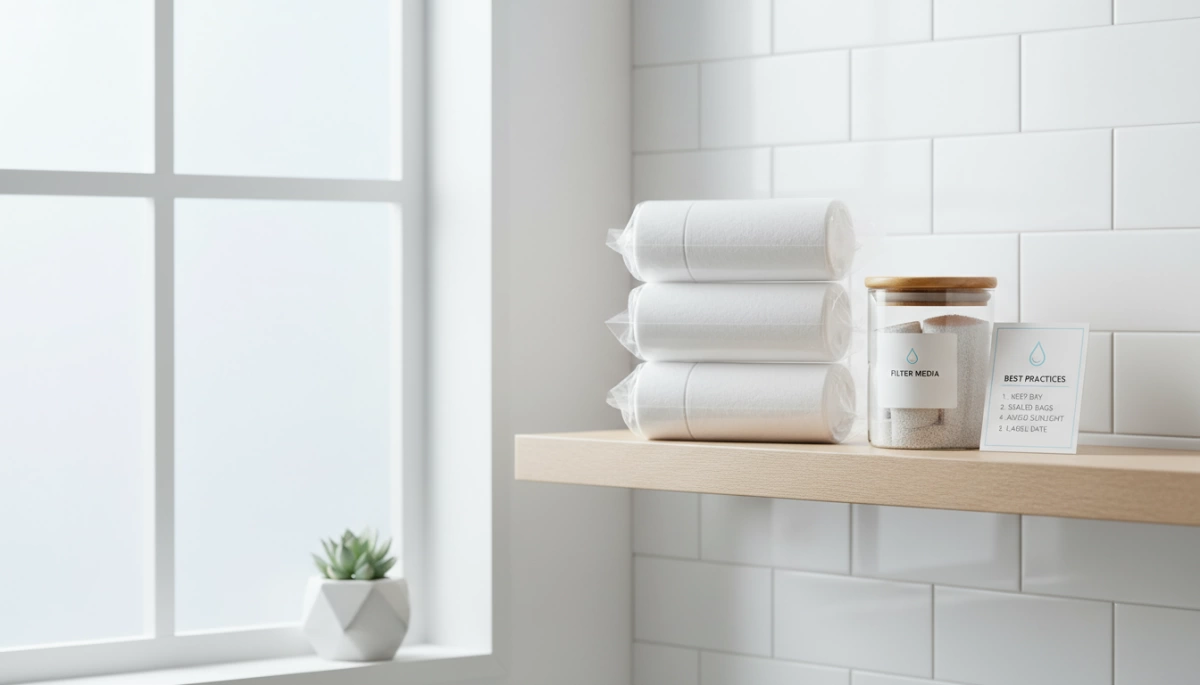
For long term storage stability of shower filter cartridges, I treat my warehouse like a controlled environment, not a garage. That’s what keeps shower filter shelf life predictable and avoids expensive write-offs.
Ideal Temperature And Humidity
For bulk shower filter storage, I stick to:
- Temperature: 59–77°F (15–25°C) as the target, never above 95°F (35°C)
- Humidity: 35–60% RH, with dehumidifiers in humid states and data loggers tracking 24/7
These ranges slow down filtration media degradation over time, help prevent KDF-55 oxidation, and reduce calcium sulfite moisture sensitivity issues like clumping and caking.
Racks, Pallets, And Aisles
How you set up racks and pallets directly affects shower filter cartridges storage:
- Use standard pallets with full board support, no broken slats
- Keep at least 4–6 inches between pallets for airflow and inspections
- Avoid over-stacking cartons to the point of crushing or deforming housings
- Maintain clean, wide aisles so operators don’t drag or drop cartons
Good palletizing and rack layout keeps cartons stable, avoids point loads on housings, and supports consistent water filter inventory management.
Keep Cartons Off The Floor
I never store shower head filters directly on concrete:
- Concrete wicks moisture, even in “dry” warehouses
- Floor storage exposes cartons to spills, pests, and condensation
- Pallets and racks create a dry air gap, which protects packaging, labels, and seals
Keeping cartons off the floor is one of the simplest and cheapest ways to extend cartridge shelf life for shower filtration products.
Protect From Sunlight And Heat Sources
UV and heat are silent killers for plastic filter housings and gaskets:
- Store away from windows, dock doors, and skylights
- Avoid placing pallets near heaters, boilers, or hot machinery
- If skylights or windows can’t be avoided, use UV-blocking films or curtains
The same common sense you’d use when storing premium drinking water systems or higher-end water treatment equipment applies here: stable, cool, and shaded conditions keep filtration media and plastic housings in spec for the long haul.
Inventory Management for Long Term Storage Stability of Shower Filter Cartridges
Smart inventory management is just as important as product quality if you want reliable long term storage stability of shower filter cartridges. If you’re holding stock for months at a time, the way you rotate, label, and move product directly affects shower filter shelf life and performance.
Use FIFO To Protect Shower Filter Shelf Life
For bulk shower filter storage, I always set up a simple, non‑negotiable rule: FIFO (First In, First Out). That’s the foundation of water filter inventory management.
- Put the oldest production dates in the most accessible locations.
- Train staff to always pick from the “oldest” lane first.
- Use clear signs and color tags so nobody has to “guess” which pallet goes out next.
This keeps storage time predictable and prevents hidden pallets of aging shower filter cartridges.
Label And Track Batches Clearly
Good labeling is what makes FIFO actually work in a real warehouse. At minimum, every carton and pallet of shower filter cartridges should show:
- Production date (or manufacturing date code)
- Batch/lot number
- Expiration or “use by” date (if provided by the supplier)
On our side, we add this data into a simple spreadsheet or WMS so we can pull quick reports by batch, storage time, and customer. If there’s ever a quality question, we can trace back to a specific lot of media, packaging, or even a shipment of shower head water filters in seconds.
Set A Maximum Storage Time
Even with ideal bulk filter storage conditions, no filtration media is “forever.” To keep filtration media degradation over time under control, I recommend:
- Setting an internal maximum storage time (for most shower head filter cartridges, 18–24 months in proper storage is a realistic target unless the manufacturer states otherwise).
- Flagging inventory that is within 3–6 months of that limit so sales and operations can prioritize it.
- Agreeing with your supplier on a reasonable cartridge shelf life for your exact media mix and packaging.
The goal is simple: once a cartridge reaches your agreed storage limit, it should already be installed or sold, not still sitting on a rack.
Handling Slow-Moving Or Aging Stock
Slow-moving shower filter cartridges are where long term storage stability gets tested. I deal with them proactively:
- Run targeted promos or bundle offers to move older lots first.
- Use aging stock as internal test samples to verify chlorine removal efficiency retention and general performance.
- If stock is near or past your storage limit, talk with the manufacturer about testing, rework options, or safe disposal—don’t quietly push borderline product into the market.
When you treat inventory dates as a hard quality control rule, not a suggestion, you keep your brand reputation intact and your customers in the U.S. get shower filters that actually perform as promised.
Quality Control Testing for Long Term Storage Stability of Shower Filter Cartridges
When I talk with B2B buyers about long term storage stability of shower filter cartridges, I always start with testing. If the quality control isn’t tight, any “shower filter shelf life” promise is just marketing.
Incoming media testing: moisture and quality
Before we ever assemble a cartridge, we test every batch of filtration media for storage stability:
- Moisture content checks on activated carbon and calcium sulfite to prevent clumping, mold risk, and early capacity loss.
- Oxidation checks on KDF-55 so the redox media hasn’t already started to tarnish before it goes into production.
- Physical properties (grain size, hardness, dust levels) to make sure the media will not break down in bulk shower filter storage and shipping.
This upfront control cuts down on filter media degradation over time and protects your water filter inventory management from nasty surprises months later.
Accelerated aging tests for long term storage simulation
To back up real-world cartridge shelf life claims, we run accelerated aging tests that simulate months or years of storage in a compressed timeline:
- Elevated temperature and humidity to stress-test storage stability of filtration media in shower filters.
- Packaged vs. unpackaged comparisons to measure how much protection comes from moisture barrier packaging for filters.
- Functional testing after aging to confirm chlorine removal efficiency retention and flow performance.
These tests let us set realistic expiration dates instead of guessing.
Seal integrity and leak testing on packaged cartridges
Long term storage stability lives or dies on package integrity. We routinely:
- Check seal strength and vacuum level on hermetically sealed pouches and bulk bags.
- Run leak and burst tests on finished cartridges to confirm no slow air or moisture ingress during storage.
- Inspect connection types and housings for stress points, similar to how we evaluate filter cartridge connection types in real-world installations.
If the packaging can’t hold up on the rack, the media inside won’t stay stable.
How test data supports shelf life claims
For me, long term storage stability of shower filter cartridges is all about data:
- We combine incoming media data, accelerated aging results, and seal integrity tests to define maximum storage time under normal warehouse conditions.
- We use that data to write clear storage specs (temperature, humidity, handling) that B2B teams can actually follow.
- When you’re negotiating bulk shower filter storage or long-term contracts, these reports give you proof that the cartridge vacuum packaging, anti-oxidation materials, and overall design can genuinely support the stated shelf life.
This kind of testing is what turns “marketing shelf life” into a real, defensible storage stability number you can build your inventory strategy around.
Long Term Storage Stability of Shower Filter Cartridges in Global Shipping
Long term storage stability of shower filter cartridges doesn’t just depend on your warehouse. Global shipping is a rough ride, and if we don’t plan for it, you’ll feel it later as returns, clogging, or weak performance.
Risks During Ocean Freight And Long Transits
During long ocean freight, bulk shower filter storage faces:
- High humidity and salt air that creep into cartons and start filter media degradation over time.
- Big temperature swings from hot days to cool nights, which drive condensation inside packaging.
- Extended transit times that push real shower filter shelf life close to its limit before you even receive stock.
For B2B buyers, this means you must treat transit time as part of the cartridge shelf life for shower filtration products, not separate from it.
Vibration, Stacking, And Handling Damage
Shower filter cartridges storage takes a beating in transit:
- Constant vibration can grind media together, creating fines that later cause pressure drop or cloudy water.
- Heavy stacking can crush cartons, stressing housings, seals, and hermetic sealing filtration packaging.
- Rough loading and unloading can crack housings or loosen end caps, which kills long term storage stability.
We design export-ready packaging with reinforced cartons and proper palletizing filter cartons so the filters arrive ready to sell, not rework.
Container Climate Control And Condensation
Long term storage stability of shower filter cartridges in containers depends on basic climate control:
- Aim for temperature controlled filter storage where possible, or at least shaded, well-ventilated locations.
- Use desiccants and moisture barrier packaging for filters to reduce humidity inside cartons.
- Watch for “container rain” – when hot, humid air condenses on the container roof and drips onto cartons.
For U.S. importers, we recommend pairing moisture-resistant packaging with practical warehouse humidity control for filters as soon as the container is opened.
Best Practices For Importers And Distributors
When your shipment arrives, you protect shower filter shelf life by how you handle day one:
- Inspect packaging integrity right on the dock for crushing, water stains, or broken seals.
- Pull a random sample of cartridges from different pallets to check for moisture, oxidation marks, or damaged housings.
- Log arrival date, container number, and batch codes to plug into your water filter inventory management system and FIFO workflow.
- Move stock quickly into proper bulk filter storage conditions: cool, dry, off the floor, and away from sunlight or heat.
If you’re bringing in shower filters along with other filtration products, it helps to align your shipping and storage plans with how the filtration media behaves in hot water applications, similar to what we explain in our comparative analysis of KDF vs activated carbon in hot water.
How Manufacturers Like Driplife Support Long Term Storage Stability of Shower Filter Cartridges
When I design shower filter cartridges for long term storage stability, I’m thinking like a warehouse manager as much as a manufacturer. The goal is simple: B2B buyers can bulk buy without worrying about dead stock or surprise failures in the field.
Manufacturing standards that protect media during storage
To keep shower filter cartridges storage‑stable, we lock in strict process controls:
- We use low‑moisture KDF, high‑quality activated carbon, and controlled calcium sulfite to reduce filtration media degradation over time and protect chlorine removal efficiency.
- Cartridges are dried to spec, sealed quickly, and checked so KDF-55 oxidation prevention and calcium sulfite moisture sensitivity are both managed from day one.
- We run batch testing on pressure resistance, seal integrity, and media stability so the shower filter shelf life we state is realistic, not marketing.
If you want a deeper look at how properly designed filtration media actually works in real use, I often point partners to resources like our breakdown on how shower head filters work.
Export-ready crating and carton reinforcement
For bulk shower filter storage and global shipping, the packaging is part of the product:
- We use reinforced cartons, tight palletizing, and corner protection so filters can handle stacking, vibration, and long ocean freight.
- Cartons and inner boxes are designed for bulk filter storage conditions: moisture barrier layers, strong tape, and clear orientation marks.
- For long routes into the US, we specify export‑ready crating options so cartons don’t crush, split, or expose cartridges to humidity spikes.
Documentation and guidance for B2B warehouse teams
I never want a warehouse team guessing about shower filter cartridges storage:
- Each shipment includes handling instructions, ideal temperature and warehouse humidity control for filters, plus notes on keeping cartons off the floor and away from sunlight.
- We provide storage SOPs and simple checklists so non-technical staff can protect cartridge shelf life without lab tools.
- Batch numbers, production dates, and recommended “use by” timelines are printed clearly to support water filter inventory management and FIFO.
What to ask your shower filter supplier about storage stability
Before you commit to large orders, push your supplier on long term storage stability:
- Ask for written shelf life claims for unopened and in-use cartridges, plus any accelerated aging tests they’ve run.
- Confirm if they use cartridge vacuum packaging, hermetic sealing, desiccants, or anti-oxidation packaging materials for their shower filtration products.
- Request their standard warehouse storage protocols for filters, including temperature, humidity, and maximum storage time before installation.
- Check if they offer support when you face slow-moving stock, and whether they can help you evaluate older inventory for safe use vs. replacement.
If a supplier can’t answer these storage stability questions clearly, they’re asking you to take all the risk on your own stock.
Troubleshooting Stored Shower Filter Cartridges
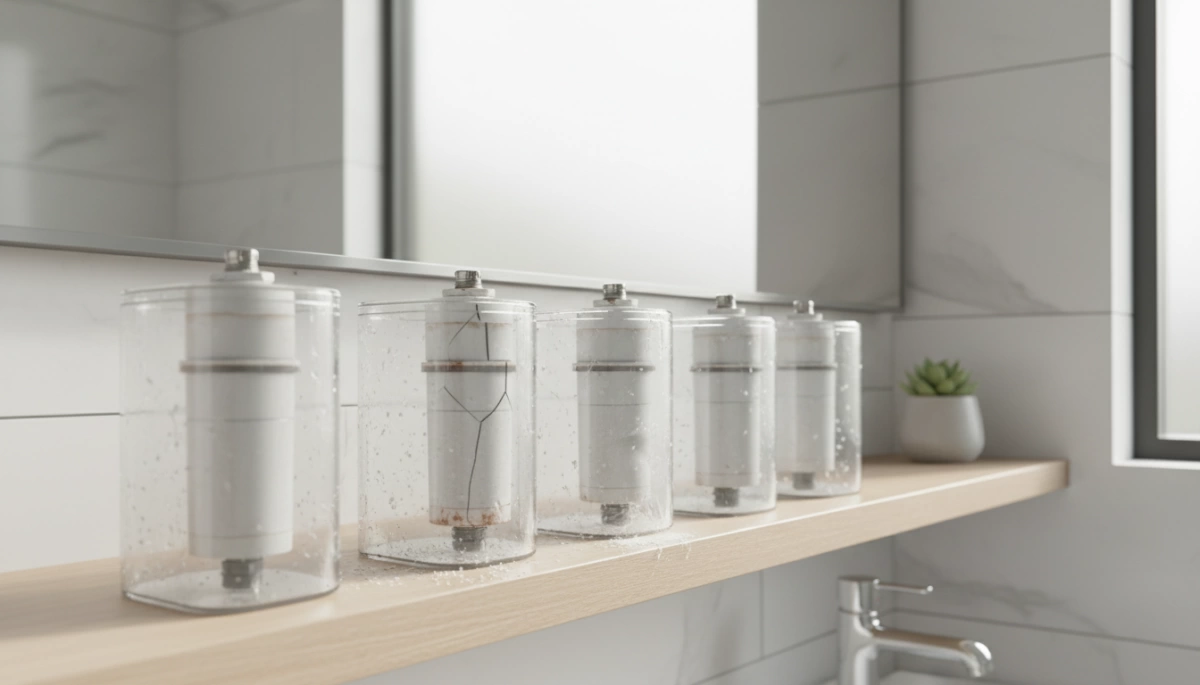
When I’m checking long term storage stability of shower filter cartridges in our warehouse, I treat every pallet like it’s a quality inspection. Catching issues early protects our brand and our customers.
Spotting Storage Damage Fast
When bulk shower filter storage shipments arrive—or before we ship out—I always check:
- Cartons and pallets: Look for crushed corners, torn shrink-wrap, wet spots, mildew smell, or taped-over tears. That’s a red flag for poor warehouse humidity control for filters.
- Individual boxes: Soft, warped, or stained boxes usually mean moisture exposure or condensation issues during transit.
- Labels: Smudged ink, mold spots, or fading can point to high humidity or direct water contact.
Visual Signs: Moisture, Oxidation, Packaging Failure
For cartridges that claim long term storage stability, I look closely at:
- Moisture issues: Fogging or droplets inside bags, clumped calcium sulfite media, rust-like spots on metal, or musty odor all signal humidity-resistant cartridge storage failure.
- Oxidation on KDF-55: Heavy tarnish, green/black patches, or powdery corrosion on exposed KDF media suggests redox potential loss and possible chlorine removal efficiency problems.
- Activated carbon problems: Strong off-odors (fuel, chemicals, perfume) can mean activated carbon adsorption capacity was wasted on airborne VOCs in storage.
- Packaging failures: Broken hermetic seals, punctured vacuum packaging, loose caps, cracked housings, or separated O-rings all compromise cartridge shelf life for shower filtration products.
Reject, Rework, Or Use Safely
I use a strict decision line to protect water filter inventory management:
- Reject immediately when:
- There’s visible mold, standing water, severe clumping, cracked housings, or major seal breaks.
- Pallets show widespread damage across a batch, not just one corner.
- Rework (if agreed with supplier):
- Re-boxing intact cartridges from damaged outer cartons.
- Re-labeling clean, dry units where only the outer label was affected.
- Safe to use:
- Packaging is intact, media looks dry and free-flowing, no strong unusual odors, seals are tight, and housing shows no stress marks or UV fading.
When in doubt on borderline stock, I contact the manufacturer for guidance and keep photos and batch numbers on file.
Preventing Repeat Storage Problems
To keep shower filter shelf life on track and avoid repeat issues in future orders, I lock in a few habits:
- Tight receiving protocol: Every shipment gets a basic inspection checklist: pallet condition, carton integrity, humidity/moisture signs, random open-box checks.
- Clear storage rules: Keep bulk filter storage conditions cool, dry, off the floor, away from docks, sunlight, heaters, and restrooms.
- Better packaging specs: Push suppliers for moisture barrier packaging for filters, stronger cartons, and defined storage stability filtration media standards in writing.
- Data + feedback loop: Log issues by batch, warehouse zone, and season; share patterns with the supplier so they can improve their storage-safe filtration cartridge packaging technology and export-ready crating.
These steps protect long term performance of stable filtration media storage and keep my B2B customers from dealing with surprise failures months after the stock lands in their warehouse.
Practical Checklist For Long Term Storage Stability Of Shower Filter Cartridges
For B2B buyers in the U.S., I treat long term storage stability of shower filter cartridges as a daily discipline, not a one-time setup. A simple, consistent checklist keeps your shower filter shelf life on track and protects your water filter inventory investment.
Daily Checks (5–10 Minutes)
Run these quick checks at the start of each shift:
- Walk the aisles: Look for wet spots, leaks, open doors, or sunlight hitting cartons. Any direct heat or UV on boxes is a red flag for bulk shower filter storage.
- Spot-check packaging: Pull 2–3 cartons per pallet. Confirm cartons are dry, not crushed, and factory seals on inner bags are intact.
- Check temperature & humidity: Confirm your warehouse readings are in your target range (typically 50–77°F and 40–60% RH for filter storage stability).
- Look for floor contact: Make sure every pallet of shower filter cartridges is fully on racks or pallets, not touching the concrete floor.
Log any “out of spec” conditions right away and correct them before they hit cartridge shelf life.
Monthly Checks (Deeper Inspection)
Once a month, go a level deeper to protect long term storage stability:
- Verify instruments: Calibrate or replace your thermometers and humidity meters so your warehouse humidity control for filters stays accurate.
- Random carton opening: From older lots, open a few inner boxes or bags. Check for moisture, corrosion, clumping media, or plastic odor that suggests heat exposure.
- Review inventory age: Run an age report to confirm FIFO is actually happening and to spot any slow-moving shower head filter stock.
- Inspect palletizing: Confirm stack heights, banding, and wrap are still protecting cartons from crushing and vibration.
Key Parameters To Log
Keep a simple log (spreadsheet or WMS) to track long term performance of stored filtration media:
- Temperature: Record min/max daily; flag any spikes outside your target range.
- Relative humidity: Daily readings; note trends that might affect calcium sulfite moisture sensitivity or activated carbon adsorption capacity.
- Stock age: Track production date, arrival date, and current age in days for each batch.
- Incidents: Note any water leaks, HVAC failures, or packaging damage with batch numbers.
Over time, this data lets you connect storage conditions with any filter media degradation complaints from the field.
Simple SOPs Without Lab Equipment
You don’t need a lab to keep shower filter cartridges storage stable. Set up clear, no-nonsense SOPs:
- FIFO rule: Always pick oldest production date first. Post “FIFO only” signs in the filter area.
- One storage zone: Store all shower filter inventory in a temperature-controlled zone, away from docks and exterior doors.
- Moisture control routine: Dehumidifier use, door-closed policy, and immediate clean-up of spills are mandatory.
- Receiving inspection: On arrival, check outer cartons, pallets, and shrink wrap. If you also stock countertop products like our glass water filter pitcher systems, apply the same checklist to keep filtration media reliable across categories.
Train every warehouse team member on these SOPs and make them sign off during onboarding.
Aligning With Supplier Recommendations
To keep your checklist aligned with real storage stability limits for shower filtration products:
- Use supplier specs as your baseline: Follow written guidelines for max storage time, allowable temperature/humidity, and pallet stacking limits.
- Add your local rules: Adjust for your climate, building, and HVAC limits while staying inside those supplier specs.
- Review annually: When you get updated documentation or see trends in filter returns, update your SOPs and logs.
- Ask targeted questions: Request clarity on topics like KDF-55 oxidation prevention, acceptable storage life of calcium sulfite media, or how long unopened cartridges can sit before chlorine removal efficiency starts to drop.
This practical, tight checklist keeps long term storage stability of shower filter cartridges under control and gives you documented proof that you’re handling your bulk filter storage conditions the right way.