















Are you struggling to keep your water filtration product line competitive? You might already know that market demands are shifting rapidly away from bulky, inefficient units.
But how exactly does your current catalog stack up when performance benchmarking against traditional RO systems?
As an industry expert with over 15 years of R&D manufacturing experience, I know that relying on outdated specs—like low flow rates, massive storage tanks, and high wastewater ratios—can cost you major distribution contracts.
In this post, you’re going to see the exact data comparing legacy units to modern, high-capacity direct-flow technology.
If you’re looking to upgrade your OEM/ODM portfolio with smarter, space-saving solutions that actually meet modern engineering standards, this guide is for you.
Let’s dive right in.
Core Limitations of Traditional RO Systems
When conducting performance benchmarking against traditional RO systems, the flaws of legacy technology become immediately apparent. As a professional water filtration OEM manufacturer, we constantly see distributors and commercial brands struggling with the operational and environmental inefficiencies of older models. To understand the urgent market shift toward advanced direct flow reverse osmosis technology, we must first analyze the traditional RO system disadvantages holding product catalogs back.
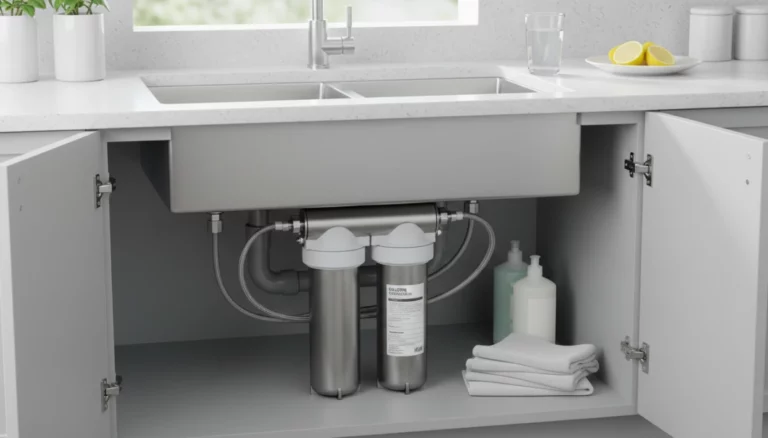
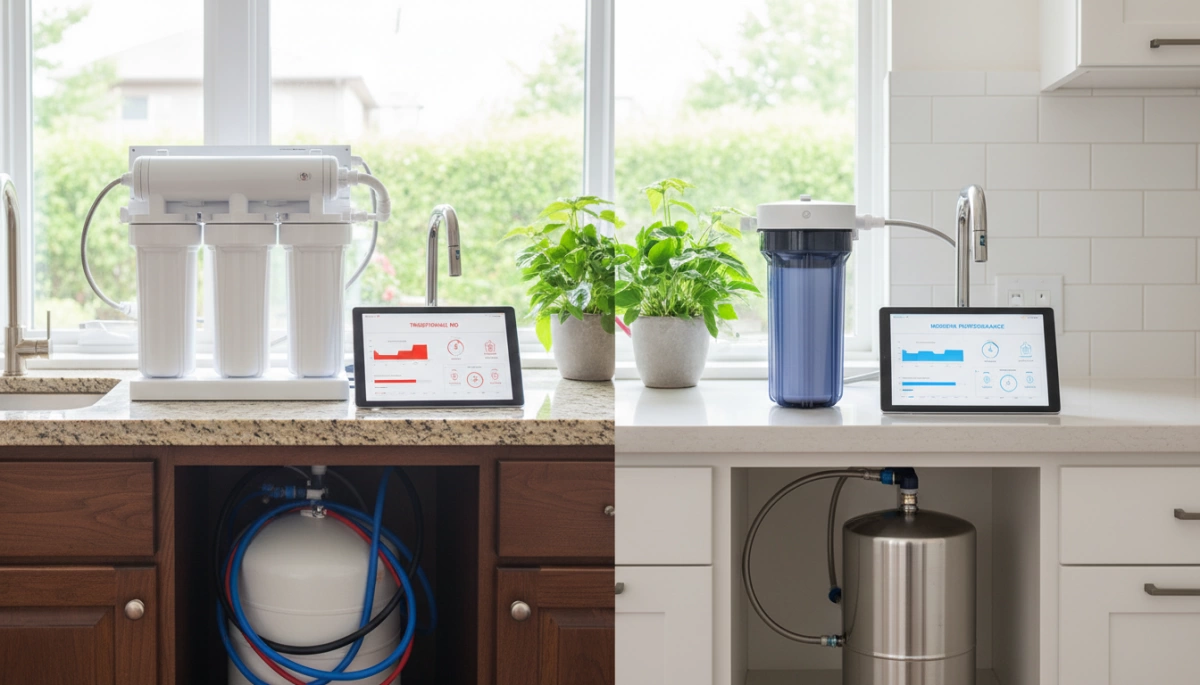
- Bulky Storage Tanks: Legacy systems rely on large, pressurized tanks that consume valuable under-sink real estate. More importantly, these stagnant water reservoirs create a breeding ground for bacteria, introducing severe secondary contamination risks.
- Low Flow Rates: Standard 50-75 GPD membranes create a massive performance bottleneck. A reverse osmosis flow rate comparison clearly shows that these older units cannot meet the rapid, on-demand water needs of modern households or commercial spaces.
- High Wastewater Ratios: Traditional units operate at highly inefficient 1:3 or 1:4 wastewater ratios. This RO system wastewater ratio wastes significant water resources and drives up utility costs, making them environmentally and economically unviable.
- Lack of Intelligent Monitoring: Older models depend entirely on manual filter replacement tracking. Without integrated smart water filter alert systems, end-users frequently miss critical maintenance windows, leading to degraded water quality, damaged membranes, and lost recurring revenue for distributors.
Key Performance Benchmarking Against Traditional RO Systems
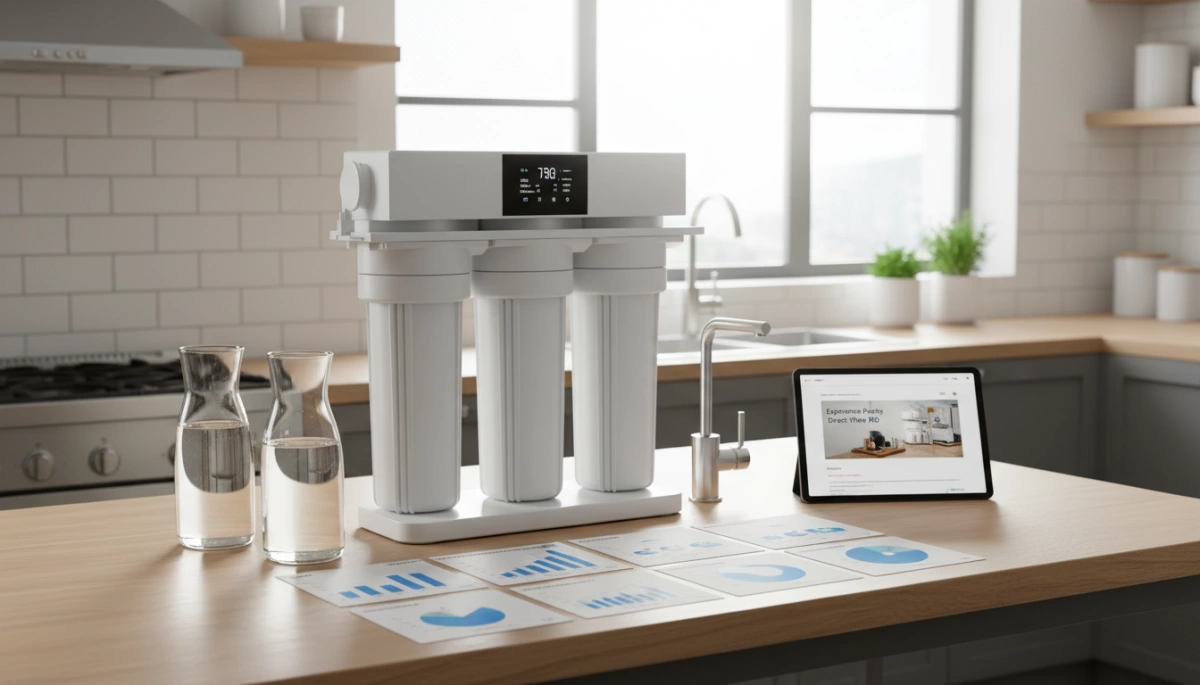
When we look closely at the data, the gap between legacy units and modern water filtration is massive. Conducting a true performance benchmarking against traditional RO systems reveals exactly why the US market is moving away from clunky, outdated setups. We are no longer just filtering water; we are optimizing the entire delivery and user experience.
Flow Rate Comparison: The High GPD Standard
For decades, the standard 50-75 GPD (Gallons Per Day) membrane was the industry norm. It forced users to rely on storage tanks just to fill a single glass of water quickly. Today, we utilize advanced direct flow reverse osmosis technology to completely bypass the need for a tank.
Here is how the numbers stack up:
- Traditional Output: 50-75 GPD with sluggish recovery times.
- Modern Benchmark: High-capacity systems capable of up to 2000 Gallons daily.
- Response Speed Advantage: Achieving rapid flow rates of 5.2L/min directly from the tap, virtually eliminating wait times.
Space Efficiency and Architectural Integration
American homes and businesses value cabinet space. A major part of our benchmark evaluation involves footprint reduction. The classic multi-stage setup with a heavy, pressurized storage tank consumes almost the entire area under a sink.
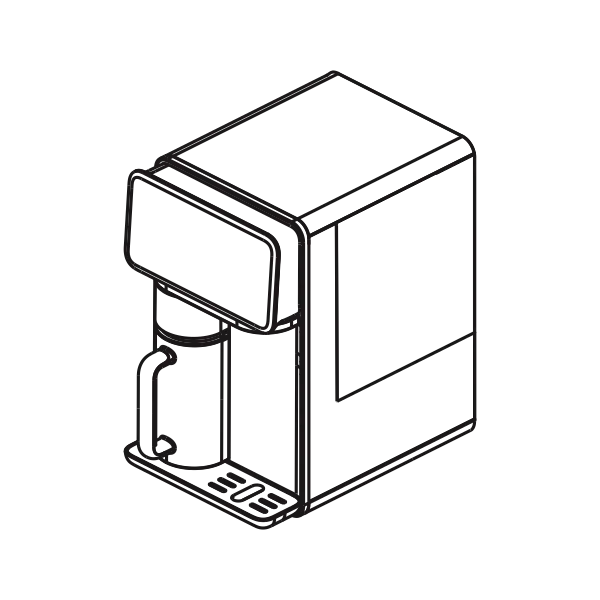
By engineering space-saving under counter water filters, we entirely eliminate the storage tank. This tankless vs traditional RO systems approach reclaims up to 70% of under-sink space. We’ve also integrated this compact technology into premium countertop models. For example, our modern 150 GPD countertop units now feature 4-in-1 filtration while simultaneously dispensing cold water, hot water, and even ice—all from a single, compact footprint.
High GPD RO Membrane Stability
A common issue with legacy membranes is rapid performance degradation over time. As they process water, their efficiency drops, leading to slower flow rates and higher wastewater ratios. Through advanced water filtration R&D, we’ve solved this curve.
RO Membrane Lifespan Benchmark:
| Metric | Traditional RO Membrane | Modern High GPD RO Membrane |
|---|---|---|
| Flow Consistency | Drops noticeably after 3-4 months | Maintains stable flow up to 12-24 months |
| Material Degradation | Rapid wear under constant pressure | Reinforced layers for high-pressure stability |
| Maintenance Cycle | Frequent, unpredictable replacements | Extended, predictable lifecycle |
This high GPD RO membrane stability ensures that the unit performs on day 300 exactly as it did on day one, providing a massive competitive performance positioning advantage for distributors.
Smart Technology and User Experience
The days of writing the installation date on a filter with a sharpie are over. Transitioning from analog setups to integrated smart water filter alert systems fundamentally changes the end-user experience.
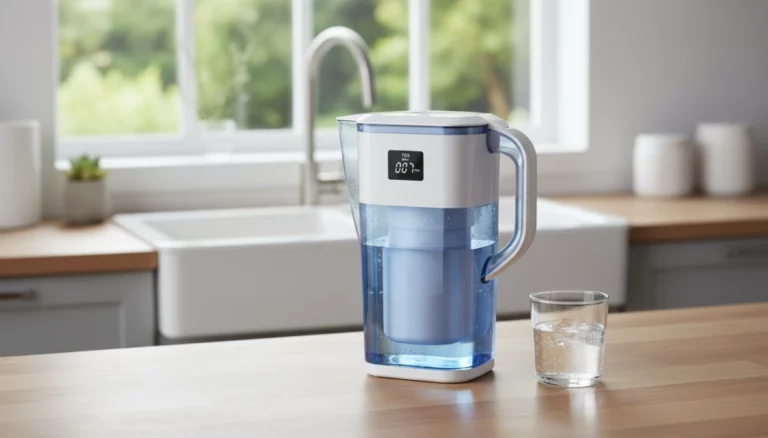
Instead of guessing when a filter is degraded, users benefit from real-time monitoring. By deploying smart water purifiers, we can track exact water volume processed and membrane health. The system alerts the user precisely when a change is needed. This eliminates premature filter disposal (saving money) and prevents people from drinking from expired filters (protecting health). For brands and distributors, this technology drastically reduces post-sale support calls and builds long-term reliability.
The Manufacturing Engine Behind Modern Benchmarks
Hitting strict performance benchmarks against traditional RO systems requires more than just a good design. It demands a robust manufacturing backbone. As a dedicated water filtration OEM manufacturer with over 15 years of R&D experience, we know that scaling advanced direct flow reverse osmosis technology requires serious infrastructure.
Transitioning from legacy systems to modern, tankless units means engineering precision at scale. Here is how our production capabilities drive these industry benchmarks:
- State-of-the-Art Infrastructure: Our 60,000 ㎡ manufacturing facility provides the necessary space for advanced R&D, rigorous testing, and streamlined assembly lines. This ensures absolute consistency across all high-performance RO systems.
- High-Capacity Water Purifier Production: Manufacturing 500,000 units annually allows us to leverage economies of scale. We deliver premium, cost-effective solutions to our global B2B partners without compromising on quality control.
- Integrated Tech Capabilities: Building modern systems requires precision electronics alongside fluid dynamics. Our facilities are equipped to seamlessly integrate advanced features, such as smart TDS monitoring sensor calibration technology in countertop RO units, ensuring every system performs flawlessly right off the line.
Driving Competitive Performance Positioning
When distributors partner with us, they aren’t just buying a product; they are tapping into a high-volume manufacturing engine designed to outperform outdated technology. By controlling the entire process—from initial product design to global logistics—we guarantee that every unit meets the exact flow rate, capacity, and smart monitoring standards required by today’s demanding United States market.
Strategic Advantages for Global Brands and Distributors
When we dive into performance benchmarking against traditional RO systems, the pivot to modern direct-flow reverse osmosis technology isn’t just about better water quality—it is a massive win for your bottom line. As an OEM manufacturer, we see exactly how these upgrades give distributors a serious competitive edge in the US market. Upgrading your inventory translates directly to better sales and lower overhead.
Here is how modernizing your lineup creates a distinct advantage:
- Meeting Eco-Friendly Demand: American consumers are actively looking for sustainable, high-efficiency appliances. By offering systems with better reverse osmosis energy efficiency and drastically lower wastewater ratios, you easily capture the growing market for green water purifiers.
- Slashing Post-Sale Support Costs: Traditional setups generate endless maintenance calls due to guesswork. Modern units integrate smart water filter alert systems that tell the user exactly when to swap a cartridge. This reliability drastically cuts down your customer support overhead. We already see this trend dominating the market, as the smart home appliance influence on water dispensers proves that automated, hands-off monitoring is exactly what today’s buyers expect.
- Enhancing Product Catalogs: Moving away from bulky legacy tanks opens the door to premium, custom water filtration solutions. You can easily expand your offerings with high-capacity, multi-functional units—such as under-sink soda makers or integrated hot and cold distribution systems—giving your customers the ultimate all-in-one beverage station.
Winning with Commercial RO Performance Metrics
Relying on outdated tech hurts your brand’s reputation. By offering high-capacity water purifier production models, you provide your clients with systems that simply work better and last longer. When you align your product catalog with top-tier commercial RO performance metrics, you position your brand as a modern, reliable leader in water filtration.
FAQs on Performance Benchmarking Against Traditional RO Systems
What is the true wastewater ratio difference between traditional and modern RO systems?
Traditional RO setups are notorious for wasting water, often pushing a 1:3 or 1:4 pure-to-drain ratio. That means for every gallon of clean water, up to four gallons go down the drain. When benchmarking tankless vs traditional RO systems, the technology differentiation is massive. Our modern direct flow reverse osmosis technology drastically cuts this waste. By optimizing the filtration process, we achieve highly efficient ratios that lower utility costs and meet the eco-friendly demands of the US market. This energy efficiency comparison directly translates to better value for the end-user.
How does a tankless high GPD system maintain membrane stability over time?
It all comes down to advanced water filtration R&D. Older systems relied on bulky storage tanks because their membranes couldn’t process water fast enough on demand. Understanding exactly how a water filter works at the microscopic level allows us to engineer systems specifically for high GPD RO membrane stability.
- Consistent Output: Our membranes are built to handle rapid, high-pressure filtration without degrading.
- High Flow Rates: We maintain a steady 5.2 L/min flow rate over the filter’s entire lifecycle.
- Durability: This rigorous engineering ensures the RO membrane lifespan benchmark stays high, preventing the rapid performance drops seen in legacy systems.
Why is upgrading from traditional RO systems critical for B2B distributors today?
Relying on outdated technology hurts your bottom line. Upgrading gives your brand a distinct competitive performance positioning. Today’s consumers want space-saving under sink RO units, not cluttered cabinets.
- Reduced Maintenance: Integrating smart water filter alert systems eliminates the guesswork for users and drastically cuts down your post-sale support tickets.
- Scalability: Partnering with our high-capacity water purifier production facility—capable of manufacturing 500,000 units annually—guarantees consistent quality.
- Market Relevance: Offering custom water filtration solutions with 4-in-1 capabilities (hot, cold, ice, and ambient) keeps your product catalog fresh and highly profitable.