














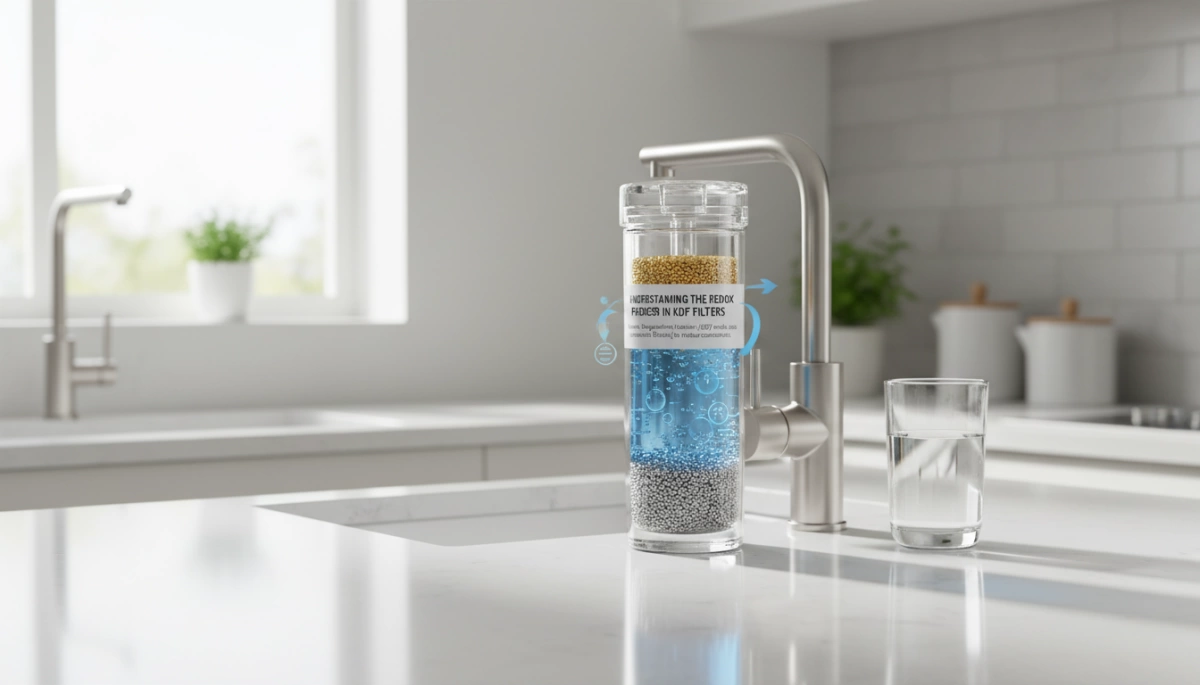
Ever wonder why your water still smells off or why standard filters clog so quickly? I see this struggle all the time. The solution usually comes down to understanding the redox process in KDF filters.
What is Kinetic Degradation Fluxion (KDF) Media?
At its core, KDF is an advanced bimetallic filtration media. I use it to trigger a highly effective electrochemical water purification process directly inside the water system.
Copper-Zinc Water Filter Media
KDF is composed of a high-purity copper-zinc alloy. Depending on the specific water contaminants we need to tackle, we rely on two primary industrial grades:
- KDF 55: Specifically engineered to neutralize free chlorine and control bacterial growth.
- KDF 85: The go-to solution for aggressive well water, targeting dissolved iron and hydrogen sulfide (that rotten egg smell).
Galvanic Cell Water Treatment
The core principle behind KDF is oxidation-reduction filtration chemistry. When water flows through this copper-zinc media, it acts as a miniature galvanic cell. This creates a natural electron exchange water treatment environment, forcing electrochemical reactions that neutralize harmful contaminants on contact.
The Science of Redox: How KDF Media Works at the Molecular Level
Understanding the redox process in KDF filters requires looking at the actual chemistry happening inside the tank. We rely on oxidation reduction filtration chemistry to change the molecular structure of contaminants, making them harmless before the water reaches your faucet.
Defining Redox: Reduction and Oxidation
“Redox” is simply a combination of two words: reduction and oxidation. In this specific type of electron exchange water treatment, oxidation happens when a substance loses electrons, and reduction happens when a substance gains them. This back-and-forth trading of electrons is the engine that drives the purification process.
The Cathode and Anode
At the heart of this system is a high-purity bimetallic filtration media. We use a specific copper-zinc alloy because these two metals have very different electrochemical potentials.
- Copper (The Cathode): Acts as the positive pole.
- Zinc (The Anode): Acts as the negative pole.
The Electron Exchange
When city water or well water flows through this copper zinc redox media, an immediate reaction occurs. The interaction between the water and the dissimilar metals creates a micro-electrolytic field. This effectively turns the filter bed into a miniature galvanic cell water treatment system, neutralizing impurities through a continuous electrical charge. This robust chemical stability is exactly why this media performs so well even under the thermal stress of a hot water filter under sink.
Chemical Mechanics
The actual cleanup happens through a rapid, ongoing molecular electron transfer. Here is how the electrolytic field water purification plays out:
- Zinc donates electrons: The zinc anode constantly pushes electrons into the water flow.
- Contaminants accept electrons: Harmful elements in the water aggressively grab these free electrons.
- Molecular transformation: Once the contaminants absorb the electrons from the zinc, their core chemical structure fundamentally changes, converting them into harmless, easily filterable components.
Target Contaminants: What the Redox Process Eliminates
Understanding the Redox Process in KDF Filters comes down to seeing the exact contaminants it neutralizes in your daily water supply. When we design systems for the US market, we rely on the KDF redox reaction process because it doesn’t just trap pollutants—it chemically alters them.
Using highly effective copper-zinc redox media, this electron exchange water treatment targets the most common issues found in both municipal city lines and rural well water.
Here is how this electrochemical water purification breaks down specific threats:
- Free Chlorine: Most city tap water is heavily chlorinated. Through a rapid chlorine conversion mechanism, KDF media changes toxic, drying free chlorine into harmless, water-soluble chloride ions. The result is clean water without the chemical odor.
- Heavy Metals: Aging US infrastructure frequently leaches lead, mercury, and nickel into residential pipes. The heavy metal precipitation process forces these dissolved metals to bond directly to the surface of the KDF media. This action pairs perfectly with anti-scale technology in shower water filtration systems, ensuring your water is free from both hard scaling and dangerous metal contaminants.
- Hydrogen Sulfide: For homes on well water struggling with a “rotten egg” smell, this media is highly effective. The oxidation process converts hydrogen sulfide gas into an insoluble, solid sulfide that is easily flushed out during standard backwashing.
- Microorganisms and Bacteria: We use KDF as a bacteriostatic filter media because standard carbon filters can quickly become bacterial breeding grounds. The process creates a micro-electrolytic field throughout the water that immediately disrupts cellular function, preventing bacteria and other microorganisms from surviving or multiplying inside the tank.
Synergistic Filtration: Pairing KDF with Carbon and RO
We rarely rely on copper-zinc water filter media all by itself. The true power of the KDF redox reaction process shines when we pair it with activated carbon and reverse osmosis (RO). This bimetallic filtration media acts as the ultimate team player, handling the harsh contaminants upfront so your primary filters perform better and last much longer.
Here is exactly why we combine these technologies in modern electrochemical water purification setups:
- Protects Primary Media: KDF acts as a heavy-duty pre-filter catalyst. By handling the chlorine conversion mechanism and heavy metal precipitation process early on, it prevents standard carbon from exhausting quickly. This is absolutely crucial to extend RO membrane lifespan in setups like portable reverse osmosis systems, shielding the delicate membranes from aggressive chemical degradation.
- Bacteriostatic Properties: Pure carbon filters are excellent for taste, but they can become breeding grounds for bacteria over time. Because of its unique electron exchange water treatment, KDF operates as a highly effective bacteriostatic filter media. It actively prevents bacterial fouling inside the cartridge, ensuring the core of your tap water filter stays completely sanitary.
- High Temperature Tolerance: Activated carbon degrades fast when exposed to hot water. KDF, however, thrives in it. This specific oxidation-reduction filtration chemistry makes copper zinc redox media the only reliable choice for high-temperature shower filters or hot water lines where standard filtration simply fails to hold up.
Integrating KDF Technology into Commercial and Household Systems
When we design water treatment solutions for American homes and businesses, integrating copper-zinc water filter media is a core strategy. Understanding the redox process in KDF filters allows us to deploy this technology exactly where it makes the biggest impact. Here is how we apply this bimetallic filtration media to solve real-world water challenges.
High-Temperature Shower Filters
Standard carbon filters degrade quickly when exposed to hot water, making them useless in bathrooms. KDF media, on the other hand, is built for these exact conditions.
- Built for Heat: The electrochemical water purification process remains highly stable and active at elevated shower temperatures.
- High Flow Capacity: It easily handles the heavy water flow typical of US showerheads without dropping your water pressure.
- Chemical Neutralization: By leveraging the science behind KDF 55 in shower filtration systems, the media actively converts harsh free chlorine into harmless chloride ions right before the water hits your skin.
Under-Sink & RO System Protection
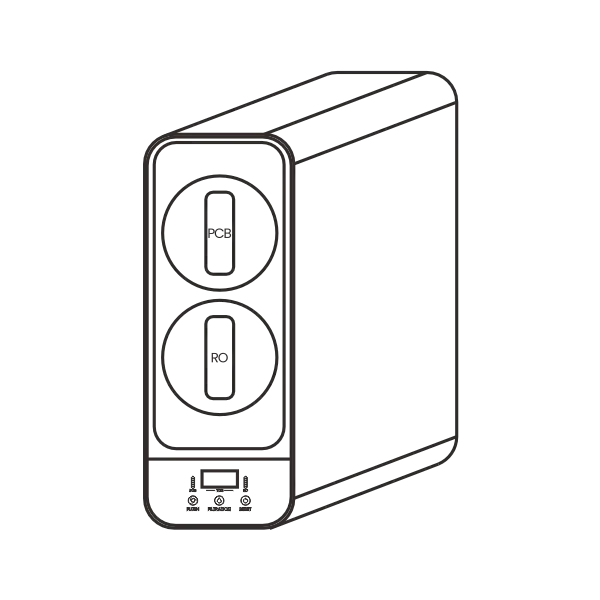
Reverse Osmosis (RO) systems provide top-tier purification, but their delicate semi-permeable membranes are highly vulnerable to chlorine damage.
- The First Line of Defense: We place KDF cartridges directly ahead of the RO membrane to act as an aggressive protective shield.
- Membrane Preservation: The oxidation-reduction filtration chemistry completely neutralizes chlorine before it can cause permanent membrane degradation.
- Cost Efficiency: Relying on the KDF redox reaction process as a pre-filter catalyst is the most reliable way to extend RO membrane lifespan and cut down on expensive replacement parts.
FAQs: Understanding the Redox Process in KDF Filters
As we integrate KDF technology into our systems, I regularly hear questions from customers about how it actually performs in everyday American homes. Here are the clear-cut answers to the most common questions regarding the KDF redox reaction process.
KDF Redox vs. Carbon Absorption
How does the redox process differ from standard carbon absorption?
- Standard Carbon: Acts like a sponge. It physically traps and absorbs chemicals into its porous surface until it fills up.
- KDF Redox: Relies on oxidation-reduction filtration chemistry. Instead of trapping toxins, this electron exchange water treatment fundamentally changes them. Through a rapid chlorine conversion mechanism, it swaps electrons to turn toxic chlorine into harmless, water-soluble chloride ions that simply wash away.
Standalone Filter or Multi-Stage System?
Can KDF media be used as a standalone filter, or does it require a multi-stage system?
While you can use copper zinc redox media alone for specific industrial tasks, I always design it into a multi-stage system for residential use. KDF is the ultimate team player. It handles the heavy metal precipitation process and neutralizes chlorine up front, acting as a shield. This protects sensitive secondary filters from degrading. Understanding this multi-stage synergy is critical if you are exploring how to launch your own private label under-sink RO brand built for longevity.
Lifespan of the Electron Exchange
How long does the electron exchange last before KDF media is exhausted?
Because electrochemical water purification uses a chemical electron swap rather than physical pore space, KDF media lasts significantly longer than traditional carbon.
- Under-Sink & RO Systems: Typically maintains its electron exchange capacity for 1 to 3 years, depending on local municipal water conditions.
- Whole House Systems: Can last up to 6 years with proper, routine backwashing to clear out the precipitated metals.
Safety for Residential Drinking Water
Is the KDF redox reaction safe for residential drinking water?
Absolutely. The KDF process is completely safe, highly regulated, and meets strict NSF/ANSI standards for drinking water. It does not leach harmful chemicals into your tap. Instead, it naturally reorganizes the molecular structure of existing contaminants. Whether purifying your kitchen tap or serving as the heavy-lifter alongside media for optimizing Vitamin C release rates in shower filter cartridges, KDF delivers a clean, reliable, and chemical-free defense for your home.